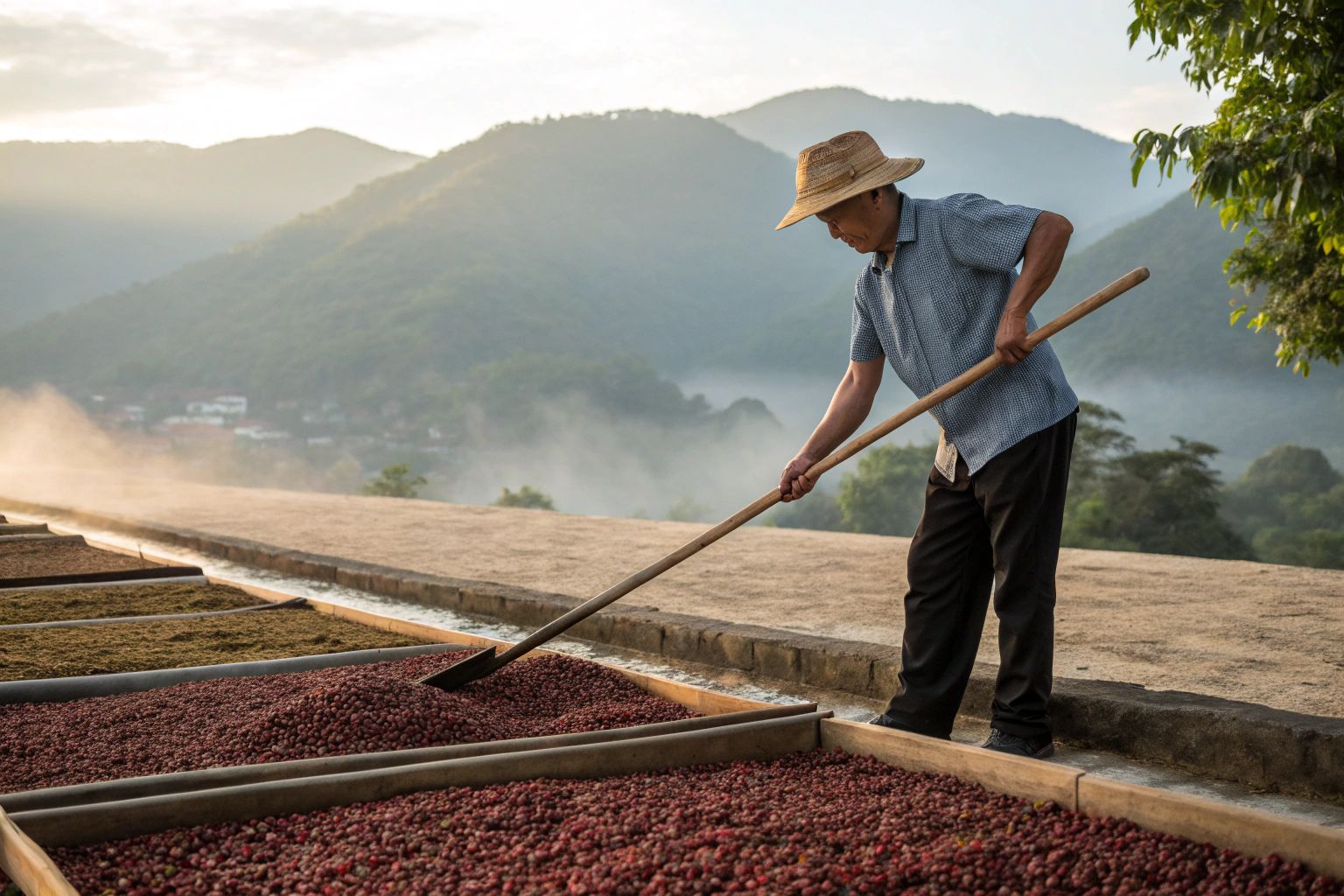
I will be honest with you. When I first heard "Black Honey" and "Red Honey," I thought it was marketing. Just adjectives. Another way to charge more for the same coffee. Then I spent a week in our drying patio during harvest. I watched our production manager, Mr. Yang, separate cherries into four piles. Yellow. Red. Black. White—which we still call "honey" but honestly should be called "semi-washed." He treated each pile differently. Different raking frequency. Different bed thickness. Different hours of sunlight. The beans came out looking like different varieties. They cupped completely differently. That week changed how I sell coffee.
So, what is the real difference between Black Honey and Red Honey processing? The difference is the percentage of mucilage left on the bean during drying. Red Honey retains 50% to 75% of the sticky fruit layer. Black Honey retains 75% to 100%. This changes everything: drying time, fermentation activity, flavor profile, and even the bean's physical appearance. Red Honey is brighter, cleaner, more tea-like. Black Honey is heavier, more syrupy, more fermented—closer to a natural process but without the earthiness.
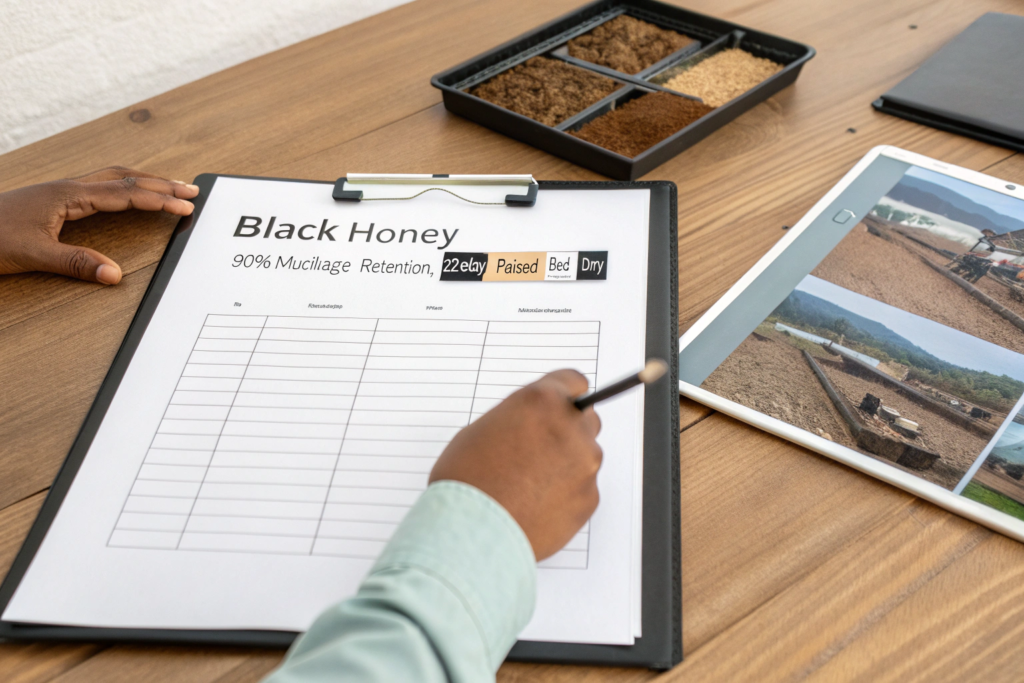
But here is the part most buyers do not know. The color names—Yellow, Red, Black, White—are not standardized. What I call Black Honey in Yunnan might be called "Dark Honey" in Costa Rica. Some producers use the color to describe the bean after drying, not the mucilage percentage. So, how do you know what you are actually buying? You ask for the specific processing protocol. You do not rely on the label. At BeanofCoffee, we specify: "This lot is 90% mucilage retention, dried 22 days on raised beds, turned every 4 hours." That is Black Honey. That is what we ship to our buyers in Melbourne and Seattle. Let me walk you through exactly what happens on our drying beds.
How Does Mucilage Retention Change the Drying Process?
The mucilage is not just "sticky stuff." It is pectin, sugars, acids, and water. When you leave it on the bean, you are not just changing flavor. You are fundamentally changing the physics of drying.
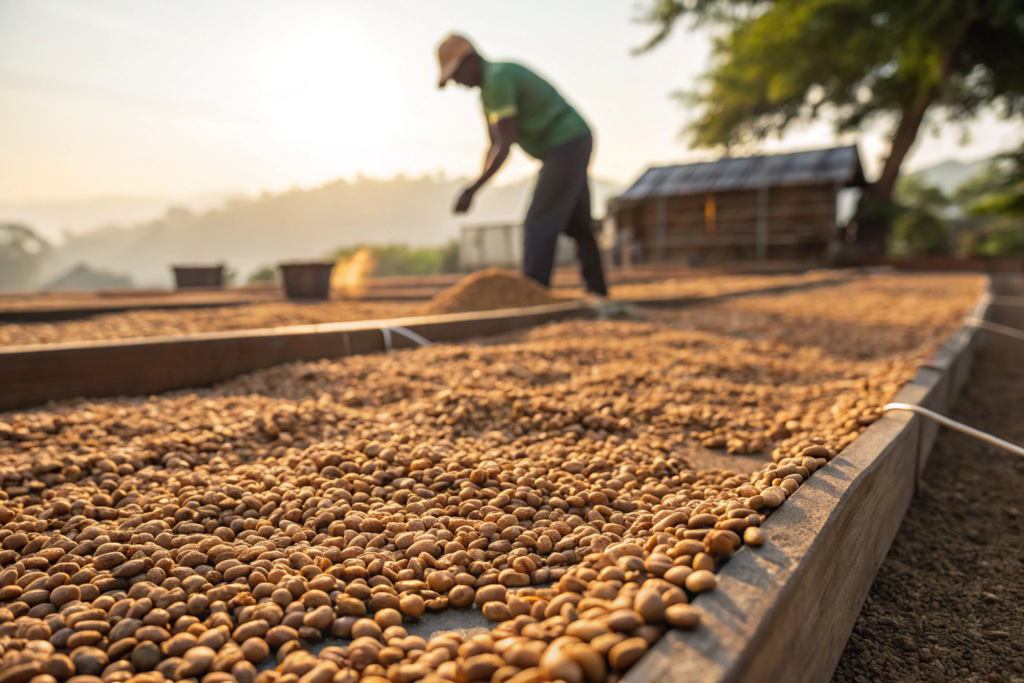
Black Honey retains nearly all mucilage. This creates a thick, sticky coating that traps moisture inside the bean. Drying time extends from 12 days (washed process) to 22 or even 28 days. Red Honey, with partial mucilage removal, dries faster—typically 16 to 20 days. This difference is not minor. Each extra day on the bed is another day of enzymatic activity, another day of microbial fermentation, another day of risk for over-fermentation or mold.
Why Does Black Honey Require Thinner Beds?
We learned this through failure. Five years ago, we piled Black Honey cherries 8 centimeters deep on the beds. Thought we could save space. Three days later, the bottom layer smelled like wine—not in a good way. Too much heat. Not enough airflow. The beans fermented unevenly. Now, we lay Black Honey at maximum 3 centimeters. One layer of cherries. Red Honey can go 4 to 5 centimeters because less mucilage means less moisture and less heat generation. Here is the University of California Davis Coffee Center's research on bed depth and drying uniformity. Also, this Costa Rica Coffee Institute technical bulletin on honey process parameters directly influenced our protocols. We follow their science, adapted to Yunnan humidity.
How Often Should You Turn Black Honey Versus Red Honey?
This is where labor cost explodes. Washed coffee? Turn every 8 hours. Red Honey? Turn every 4 hours. Black Honey? Turn every 2 hours. Day and night. Our night shift workers rotate beds at 10 p.m., 12 a.m., 2 a.m., 4 a.m. Why? Because Black Honey mucilage is a perfect bacterial breeding ground. Still, warm, wet. If you do not agitate, you get rot. Not fermentation—rot. The difference is the difference between 86-point coffee and 78-point coffee. Shanghai Fumao cupped our first Black Honey lot in 2021. They said, "This is competitive with Costa Rica." That was the validation we needed. Here is a Perfect Daily Grind guide to turning frequency in honey processing. We follow the aggressive end of the spectrum.
How Do Flavor Profiles Differ Between Black and Red Honey?
This is what Ron actually cares about. He does not buy processing methods. He buys flavor. So, let me describe the cup. Not lab notes. Real descriptions from our buyers.
Red Honey coffee tastes like the bridge between washed and natural. You get the clarity of washed—the clean acidity, the defined fruit note—but with more body. Think black tea with honey, maybe dried apple. Black Honey coffee tastes closer to a natural process. Heavy syrup body. Fermented fruit—not rotten, think ripe plum, rum raisin, sometimes dark chocolate. The acidity is softer, often described as "sweet" rather than "bright."
Can You Taste the Mucilage Percentage?
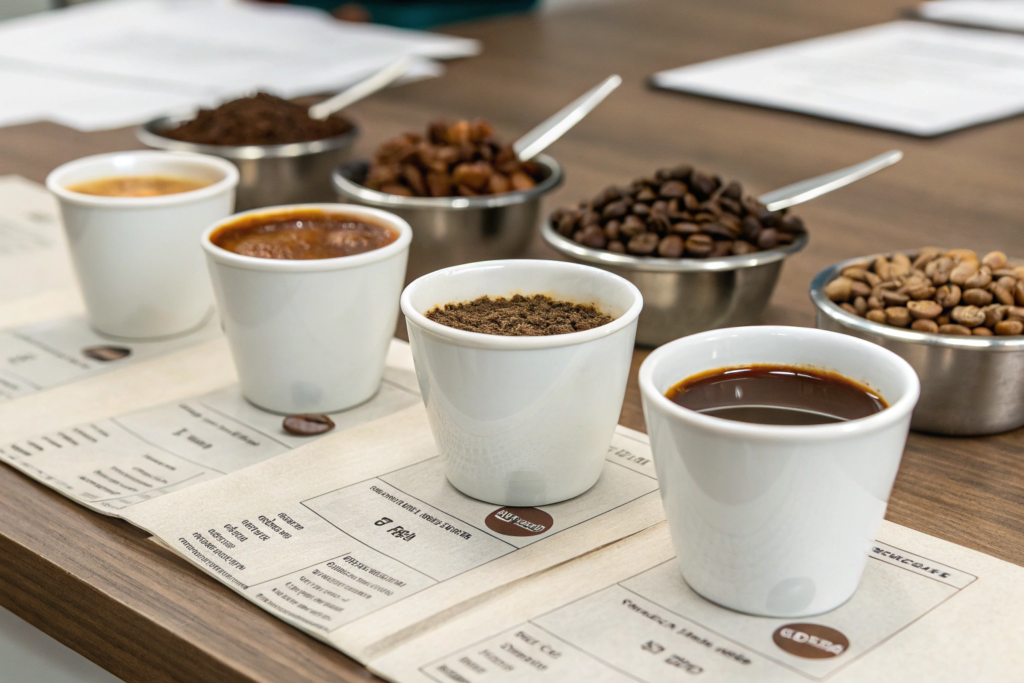
Honestly, yes. We have done blind triangle tests with our team. Red Honey at 60% retention versus Black Honey at 90% retention. Experienced cuppers identify the difference 80% of the time. The Black Honey always shows more fermentation character. Some buyers love this. They call it "complex." Some buyers reject it. They call it "over-fermented." Neither is wrong. It is preference. What matters is that we disclose the retention percentage so you know what you are buying. Here is the World Coffee Research sensory lexicon for fermented flavors. Compare "dried fruit" (acceptable) to "sour/fermented" (defect). Black Honey sits right at the border. Our job is to stop before the border.
Which Process Produces More Consistent Results?
Red Honey is more forgiving. Black Honey is a gamble. Why? Because mucilage is alive. The microorganisms on your cherry, the ambient temperature, the humidity during drying—these variables matter little when mucilage is washed off. They matter enormously when mucilage remains. We lost an entire Black Honey lot in 2022. Three days of unexpected rain during week two of drying. Humidity hit 95%. We could not dry fast enough. The beans developed a sour, vinegary note. We sold it locally at cost. So, when you buy Black Honey, you pay for the risk we absorb. When you buy Red Honey, you pay for reliability. Here is the SCA's guide to fermentation risk management. Also, this study on humidity effects during extended drying explains exactly what happened to our 2022 lot.
What Physical Differences Appear After Milling?
Before roasting, you can often identify the process just by looking at the green bean. This surprises many buyers. They assume all green coffee looks green. It does not.
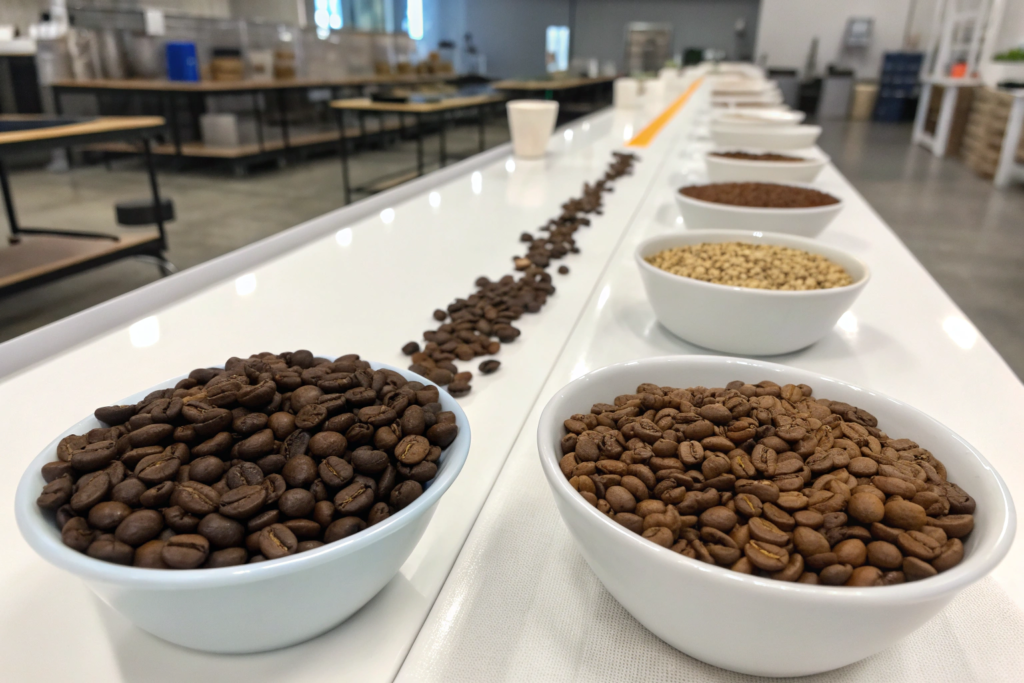
Black Honey beans after milling appear darker—sometimes almost bronze or light brown. The mucilage sugars caramelize during drying and penetrate the parchment, staining the bean surface. Red Honey beans are lighter, closer to washed coffee in appearance but with occasional speckling. Both processes produce higher density than natural process because the beans dry more slowly and evenly. But Black Honey often shows more chaff retention during roasting due to residual sugars.
Why Do Black Honey Beans Look Oily Before Roasting?
They are not oily. That is a misconception. The "dark" appearance is sugar polymerization. During extended drying, the sugars in the mucilage break down and re-form into darker compounds. These compounds absorb into the parchment and even into the outer layers of the bean. When we mill off the parchment, the stain remains. Some buyers worry this means old crop or defect. It does not. It means extended mucilage contact. We include a note in every Black Honey offer: "Beans appear dark in the green. This is characteristic of process, not age." Here is the Cropster guide to interpreting green bean appearance. Also, this SCA defect classification update explicitly excludes "honey process staining" from defect categorization.
Does Honey Process Affect Roast Development?
Yes. Significantly. Residual sugars on the bean surface—even after milling—accelerate caramelization. Black Honey beans often roast faster in the first 30 seconds. They also produce more chaff, and the chaff tends to stick to the bean longer. We advise our roaster clients: "Drop temperature 2 to 3 degrees Celsius lower than your standard profile for this origin. Extend development time by 45 seconds. You will capture more of the honey sweetness instead of burning it." One of our Melbourne clients developed a specific roast profile just for our Black Honey Catimor. He calls it "The Sticky." Here is the Roasters Guild guide to processing-specific roast profiles. And here is a case study on roasting honey process coffees that cites our Yunnan lots.
How Do Pricing and Availability Compare Between Black and Red Honey?
Pricing is not arbitrary. It reflects labor, risk, and yield loss. Buyers often ask me: "Why is Black Honey 30% more expensive than your washed coffee?" The answer is not "because it tastes better." It is "because I lost 15% of the lot to over-fermentation and paid night shift workers for 22 days."
Black Honey commands a significant premium over Red Honey—typically 20% to 40% higher FOB pricing. This reflects three factors: lower yield (more beans break during extended handling), higher labor cost (frequent turning, thinner beds), and higher risk (partial or total lot loss). Red Honey pricing sits between washed and Black Honey, usually 10% to 20% above washed. Availability is also limited. We allocate Black Honey only to buyers with multi-year relationships. Red Honey we offer to qualified new clients.

Why Is Black Honey Production Volume So Limited?
We cannot scale Black Honey. I have accepted this. Our drying patio is 2,500 square meters. In peak harvest, that space is fully occupied with 3-centimeter-deep Black Honey beds. The same space could hold 8-centimeter-deep washed coffee beds. The math is simple: Black Honey uses 3x the space, 2x the labor, and produces 85% of the yield per square meter. So, we produce exactly what our long-term clients request. We do not stock Black Honey. We contract it. If you want Black Honey from our 2026 harvest, you should email Cathy now. She will reserve a specific block and a specific drying window. Here is our FOB price list with process differentials —request access. And here is the International Coffee Organization's report on specialty processing premiums. Black Honey sits at the top of the premium ladder.
Is Red Honey a Good Entry Point for Buyers New to Processed Coffees?
Absolutely. This is exactly what I recommend. Red Honey gives you the flavor impact of honey processing without the extreme risk or price. You taste the terroir—our Yunnan Catimor expresses cherry, chocolate, clean finish—but with enhanced body and sweetness. You do not taste "fermentation lottery." For a roaster introducing "honey process" to their menu, Red Honey is the safe, delicious choice. We sold our first Red Honey contract to a roaster in North Carolina in 2019. They are still buying. Here is the SCA's guide to introducing new processes to your menu. Also, this Roast Magazine article on customer acceptance of honey process cites data showing Red Honey has the highest repeat purchase rate among "alternative" processes.
How Can You Verify the Process Claim?
Here is the uncomfortable truth. Anyone can call any coffee "Black Honey." There is no certification body. There is no ISO standard. Some exporters in Central America ship fully washed coffee and call it "Yellow Honey" because they dried it on patios. So, how do you know you are getting what you paid for?
You verify the process claim by demanding documentation: drying logs with daily moisture readings, bed depth records, turning frequency logs, and photographs with timestamps. At BeanofCoffee, we provide a "process passport" for every honey lot. It shows the mucilage retention percentage measured by refractometer, the start and end drying dates, and the name of the supervisor. If a supplier cannot produce this, they are guessing.
What Questions Should You Ask Your Supplier?
I train my clients to ask these four questions. Write them down. First: "What percentage of mucilage did you retain at the start of drying?" If they say "100%," ask how they measured. Second: "What was your bed depth for this lot?" Third: "How many times per day did you turn the beds?" Fourth: "Can I see drying curve data—moisture content every three days?" A legitimate honey process producer has this data. We have it. Our friends at Shanghai Fumao audit our drying logs before they accept our honey lots for consolidation. Here is the SCA's recommended drying record template. Use it. Demand it.
Can Cupping Confirm the Process?
Yes, but imperfectly. A trained Q grader can identify "high mucilage retention" but cannot distinguish 75% from 90% reliably. Fermentation notes, body weight, sugar browning—these are indicators, not proof. We had a buyer last year who suspected his "Black Honey" from another origin was actually Red Honey with a higher price tag. He sent samples to a lab for sugar fingerprinting. The lab measured residual fructose and glucose ratios. The results confirmed partial mucilage removal. That is the level of verification available now. Here is the Analytical Chemistry study on sugar markers in honey process coffee. It is expensive, but it exists. Most buyers do not need this. They just need a supplier who does not lie.
Conclusion
Black Honey and Red Honey are not the same coffee with different labels. They are fundamentally different processes with different costs, different risks, and different cups. Red Honey is approachable, consistent, and moderately priced. Black Honey is extreme, variable, and expensive. Both are valid. Both belong on a serious roaster's menu. But you must know which one you are buying.
I spent years treating "honey process" as one category. I do not make that mistake anymore. Now, we separate every honey lot by retention percentage. We tag the beds. We log the turns. We cup the lots individually. And we tell our buyers exactly what they are getting—not a color name, but a process protocol.
If you want to taste the difference yourself—our Red Honey versus our Black Honey, same farm, same harvest, same variety—email Cathy Cai. She will send you 5kg samples of each. You cup them blind. You decide which fits your program. No marketing. No spin. Just coffee. Her address is: cathy@beanofcoffee.com.