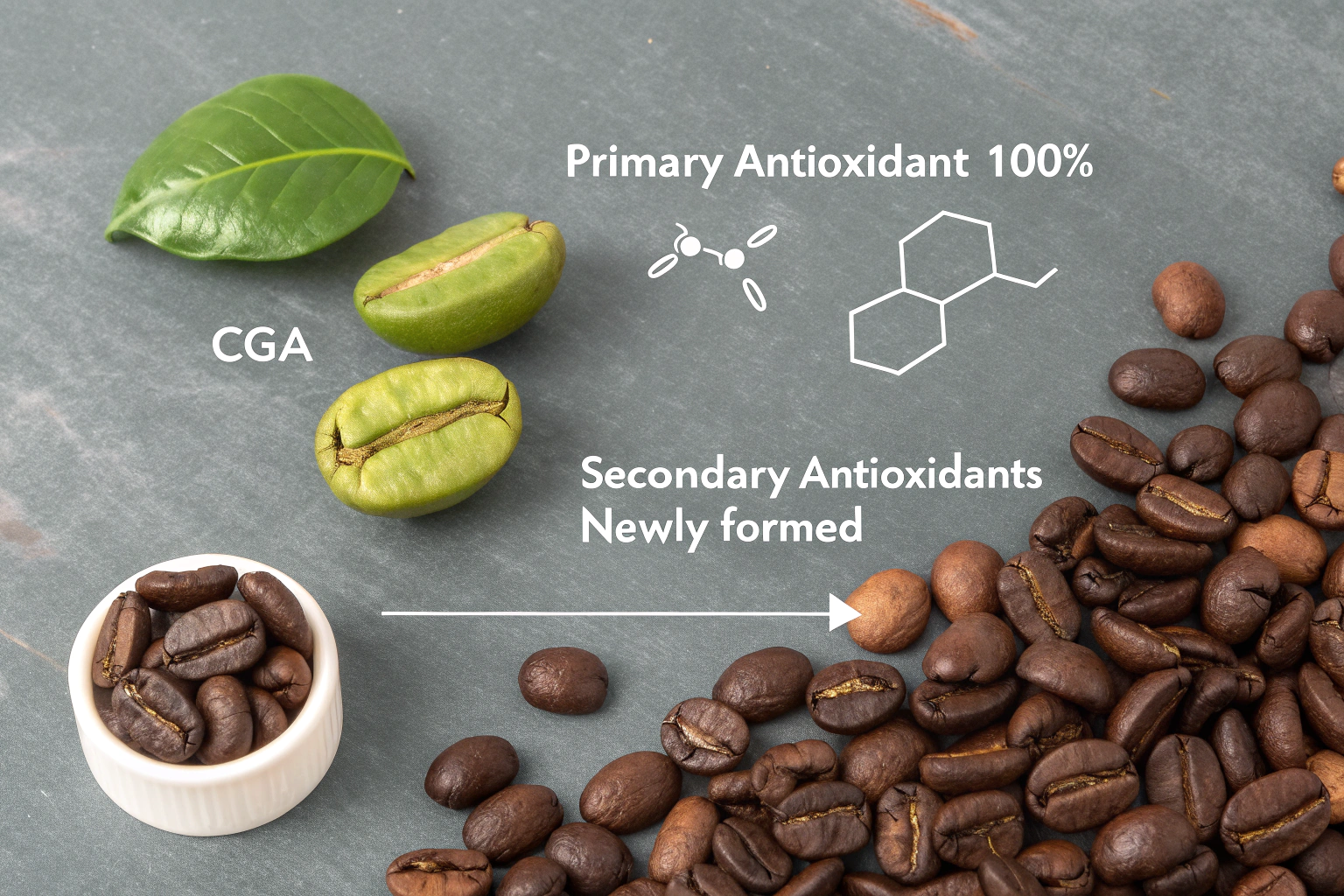
For years, my buyers in North America and Europe have asked me one question that never gets old. "If I buy your green beans and roast them dark, do I lose the health benefits?" Honestly, I used to give them a simple answer. "Light roast has more antioxidants." But then I dug deeper. I talked to the Q graders at Shanghai Fumao. I read the studies. What I found surprised me. The relationship between roast level and antioxidants is not a straight line. It is a curve. And sometimes, it flips entirely.
So, what is the real impact? Light roast coffee contains significantly higher concentrations of chlorogenic acids—the primary natural antioxidant in green coffee. But medium and dark roasts often exhibit equal or higher total antioxidant activity due to the formation of melanoidins during the Maillard reaction. You do not necessarily lose antioxidant power by roasting darker. You simply change the source of that power.
But here is the part that confused me for years. How can you destroy something and then create something else that does the same job—or even a better job? That is the chemistry of roasting. And honestly? It matters to your business. Because if your customers are buying coffee for health reasons, you need to know what roast to recommend. So, let me walk you through exactly what happens inside the bean when heat is applied.
How Much Chlorogenic Acid Survives the Roasting Process?
Chlorogenic acid, or CGA, is the superstar of green coffee. It is the compound most studies link to weight management, blood sugar regulation, and anti-inflammatory effects. But here is the hard truth: CGA is heat-sensitive. It does not like the roaster.
Light roasting destroys approximately 50% to 60% of the original chlorogenic acids present in green beans. Medium roasting destroys 70% to 75%. Dark roasting? You lose up to 90% or more of the CGA content. A 2017 study of Arabica beans from four origins confirmed that longer roasting times consistently degrade polyphenols, with losses ranging from 7.3% to 32.1% depending on the degree of roast.
But let me pause here. Does that mean dark roast is worthless? No. It just means we are measuring the wrong thing if we stop at CGA.
Does Any Chlorogenic Acid Remain in Dark Roasts?
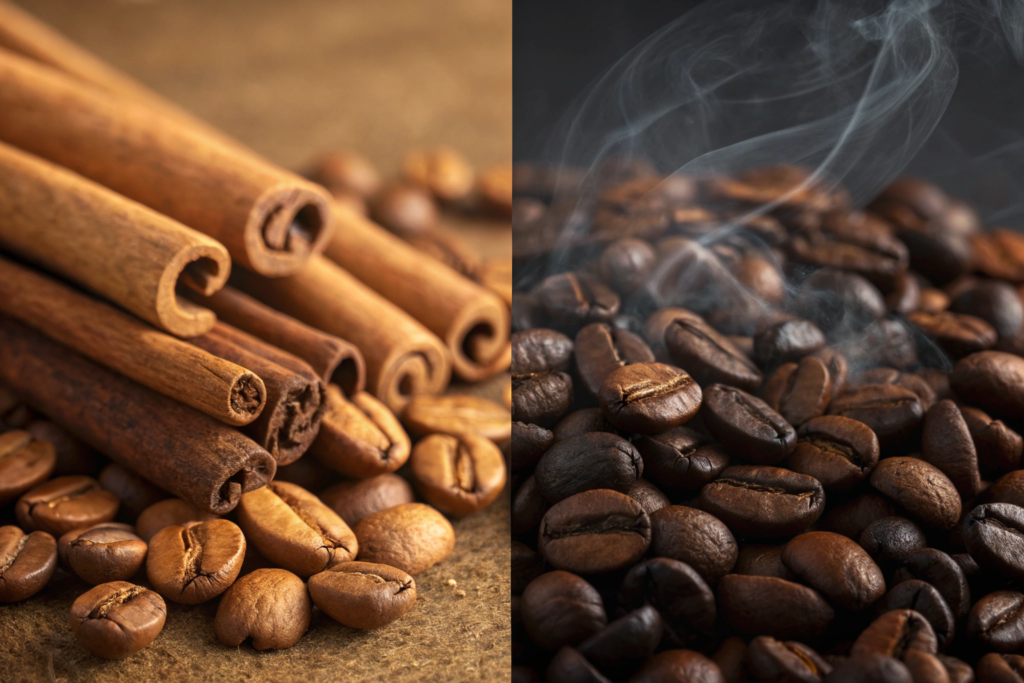
Yes, but very little. I want to be precise here because this matters for suppliers who market "high antioxidant" claims. In a study measuring CGA content across roast levels, green beans started with high concentrations. Medium-light roasts retained some. Dark roasts retained nearly none. But—and this is the twist—another study found that the medium roasted coffee actually showed the highest total phenol content (16.55 mg/g), not the light roast. So, what is happening? The answer is that we are measuring different things. Phenols are not just chlorogenic acid. Roasting creates new phenolic compounds from other precursors. So, if your lab only tests for CGA, dark roast looks like a failure. If your lab tests total phenols, the story changes. Our partners at Shanghai Fumao helped us understand this distinction years ago. Here is the USDA database on chlorogenic acid content in foods. And here is a technical paper explaining CGA degradation kinetics during thermal processing.
Why Do Some Studies Say Medium Roast Has the Most Antioxidants?
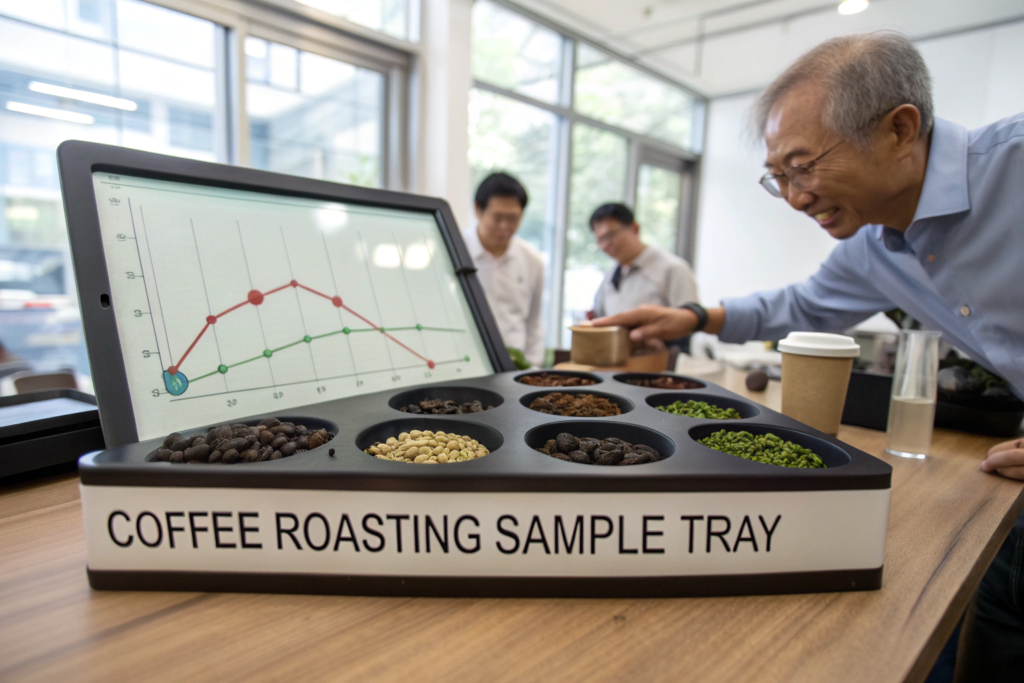
This confused me until I read the methodology carefully. A 2022 study of 52 commercial coffee samples found that medium roasted coffee had the highest total phenolic content—even higher than light roast. How? Two possibilities. First, the "light roast" samples in that study may have been very light—barely first crack. At that stage, some phenolic compounds are not yet fully extracted or measurable. Second, medium roast optimizes the balance between surviving CGA and newly formed Maillard compounds. So, the peak of "total measurable antioxidants" often sits in the medium range, not at the extremes. This is why I tell my buyers: do not obsess over "light = healthy." The curve peaks in the middle. Check the Korean Coffee Research Institute's findings on optimal roast windows for visual confirmation of this bell curve.
Do Dark Roasts Have Any Antioxidant Advantages Over Light Roasts?
Here is where I changed my own opinion. For years, I believed dark roast was just "burnt coffee" with no health value. The data proved me wrong. And honestly, as a supplier, I had to adjust how I talk to buyers who prefer dark profiles.
Dark roasts consistently demonstrate higher antioxidant activity per gram than light roasts when measured by certain assays, despite having significantly lower chlorogenic acid content. This is not opinion. This is replicated science. The Maillard reaction generates melanoidins—brown, high-molecular-weight compounds—that function as potent antioxidants in their own right.
What Exactly Are Melanoidins and Why Do They Matter?
Melanoidins are the browning compounds formed when amino acids and reducing sugars react under heat. Think of the crust of bread, the sear on steak, or the dark surface of a roasted coffee bean. These compounds are not present in green coffee at all. They are created by roasting. A 2012 study on instant coffee confirmed that the melanoidin fraction contributes significantly to total antioxidant capacity and even protects against DNA oxidative damage. Here is the practical takeaway: if you are roasting for a customer who wants maximum free radical scavenging, a medium-dark to dark roast may actually outperform a light roast. The trade-off? You lose the specific anti-inflammatory properties of chlorogenic acid. So, it is not "better" or "worse." It is different. Read this comprehensive review of melanoidins in food. Also, see how melanoidin structure determines antioxidant function.
Can Antioxidant Activity in Dark Roast Compensate for Lost Polyphenols?
This is the million-dollar question. The 2017 Dybkowska study put it plainly: antioxidant activity increases with roasting degree despite reduced polyphenols. The formation of melanoidins compensates for the loss. But "compensates" does not mean "equals" in a biological sense. In a test tube, dark roast coffee can look incredibly powerful. In the human body, we do not fully know how melanoidins behave during digestion. Some evidence suggests they bind to proteins and become less available. However, the same study also showed that lightly and medium roasted coffees are nutritionally the most favored overall. So, my advice? If your customer drinks coffee for general wellness, medium roast is the safe, data-backed recommendation. If they want the absolute highest lab-measured antioxidant activity, dark roast wins. Check the European Food Information Council's breakdown of Maillard products. Also, this human trial on coffee melanoidin absorption is worth your time.
Does Roast Level Affect Other Health-Related Compounds Beyond Antioxidants?
Antioxidants are not the only game in town. When buyers ask me about "healthier coffee," they are often really asking about stomach comfort, pesticide residues, and caffeine. Roast level affects all of these.
Dark roast coffee is significantly less acidic than light or medium roast and stimulates less gastric acid secretion, making it a better choice for individuals with reflux or sensitive stomachs. Additionally, dark roasting degrades up to 99.8% of pesticide residues and over 90% of ochratoxin A—a fungal contaminant—present in green beans. However, dark roasts also contain up to four times higher levels of polycyclic aromatic hydrocarbons (PAHs), though these levels remain far below those found in grilled meats.
Which Roast Is Easiest on the Stomach?
This is personal for me. My wife cannot drink light roast. She gets heartburn within 15 minutes. Dark roast? She drinks it all day. The science backs this up. A study published in Molecular Nutrition & Food Research found that dark roast coffee is less effective at stimulating gastric acid secretion compared to medium roast blends. The compound responsible for acid stimulation is degraded by longer roasting. So, if you are selling to roasters who cater to sensitive stomachs, tell them: go darker, not lighter. Our logistics partner Shanghai Fumao ships our dark roast samples to buyers who specifically request low-acid profiles. Here is the National Institute of Diabetes and Digestive and Kidney Diseases guide on GERD triggers. Also, this study on N-methylpyridinium and acid inhibition explains the mechanism.
Should You Worry About Carcinogens in Dark Roast?
Yes and no. Dark roasts do contain acrylamide and PAHs. Acrylamide forms during the Maillard reaction. It is a known neurotoxin and probable carcinogen in animal studies. However, the levels in coffee are relatively low. One analysis showed that even the darkest roast coffee contains only a fraction of a nanogram of benzopyrene per cup—over 1,000 times less than a serving of grilled chicken. So, is dark roast "dangerous"? No. But if you are roasting extremely dark—French roast, Italian roast, charcoal-level—you are creating more of these compounds. The balance is clear: moderate dark roast is safe. Burnt is not. Review the FDA's guidance on acrylamide in food. Also, this systematic review of PAHs in roasted coffee provides quantitative risk assessment.
Which Roast Level Should Roasters Choose for Maximum Health Benefits?
Now we arrive at the practical question. You are a roaster. You have customers asking for "the healthiest coffee." What do you tell them? After reviewing the data and 15 years of cupping, here is my honest answer.
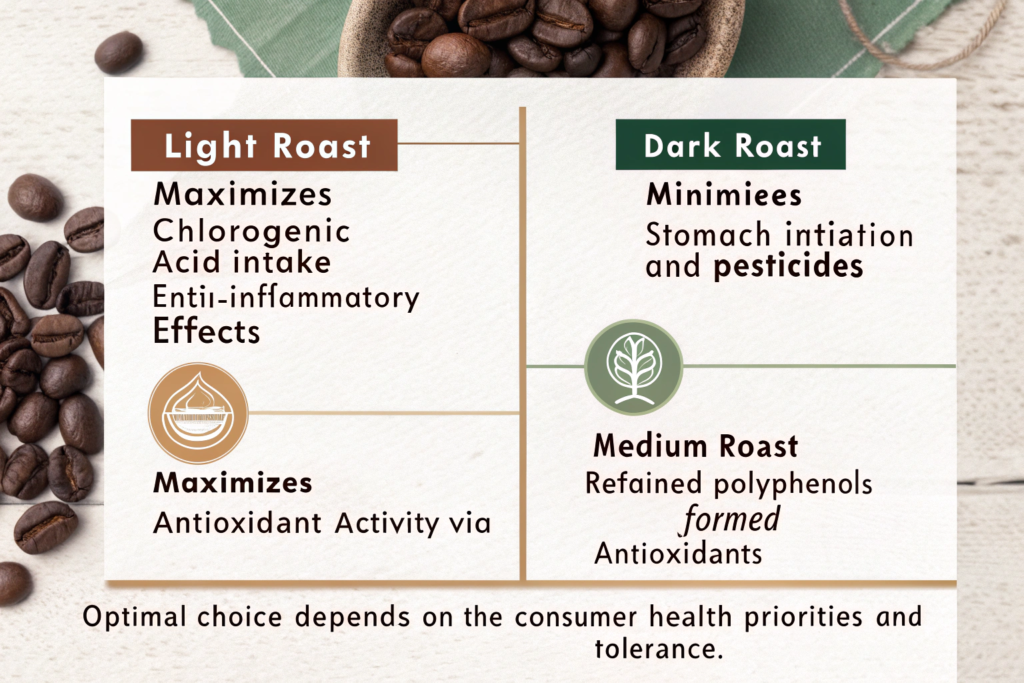
There is no single "healthiest" roast level. Light roast maximizes chlorogenic acid intake and anti-inflammatory effects. Dark roast minimizes stomach irritation and pesticide residues while maximizing measurable antioxidant activity via melanoidins. Medium roast offers the best balance of retained polyphenols, newly formed antioxidants, and sensory acceptance. The optimal choice depends entirely on the consumer's health priorities and tolerance.
Is There an Optimal Roast Window for Antioxidant Balance?
The Korean study I mentioned earlier attempted to answer this precisely. They analyzed Green, Medium-Light, Medium, and Medium-Dark roasts. Their conclusion? The "optimal roasting condition" is Medium (ME) , beyond which there is a significant reduction of both bioactive compounds and antioxidant activity. This aligns with the Jordanian study that found medium roast had the highest total phenol content. So, if you are a roaster looking for a single, defensible "sweet spot," aim for a full Medium roast—City+ to Full City. You preserve some CGA. You generate substantial melanoidins. You avoid the sharp drop-off into Dark. Here is the Specialty Coffee Association's roast level classification chart. And here is a sensory and chemical analysis of roast profiling that visualizes this window.
What Should You Tell Your End Customers?
I tell my buyers: be honest about the trade-off. Do not claim light roast is "better" because it has more chlorogenic acid. That is only half the story. If your customer drinks coffee for weight management, the 2018 study showed dark roast was actually more effective for weight loss in overweight subjects—six pounds lost in one month versus none with light roast. Why? Unknown. Possibly gut microbiome effects. Possibly N-methylpyridinium. The point is, the human body is not a test tube. So, I recommend you offer both. Let the customer choose based on taste and how their body feels. That is honest. That is transparent. And that builds long-term trust.
Conclusion
So, what is the real impact of roast levels on antioxidant levels? It is a paradox. Light roast has more of the antioxidants you start with. Dark roast creates new antioxidants you never had. Medium roast sits in the middle, catching both tails of the curve.
I have learned not to pick sides. When a buyer asks me, "Should I buy your green beans and roast them light for health?" I hand them the studies. I show them the numbers. And then I ask them: What does your customer need? Less acid? More chlorogenic acid? Better lab scores? Stomach comfort? The answer is different for everyone.
But here is what never changes: you cannot roast what you do not have. You need beans that are clean, dense, and traceable. You need a supplier who does not hide the farm gate.
If you want to cup our Yunnan Arabica and Catimor yourself—light, medium, or dark—email Cathy Cai directly. She will send you green samples and the corresponding SGS reports. No pressure. Just data. Her address is: cathy@beanofcoffee.com.