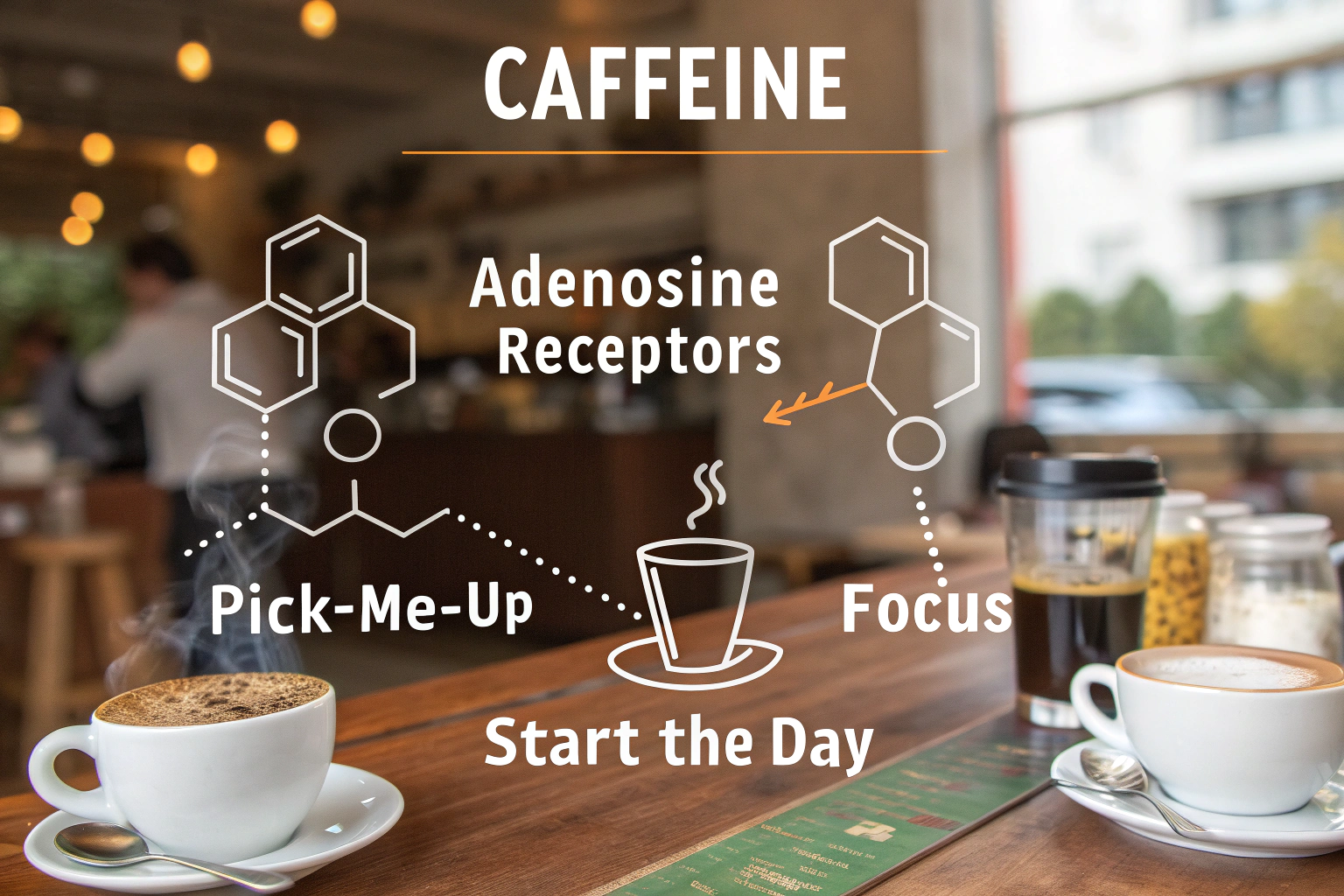
You sell more than just a beverage; you sell an experience, a ritual, a tool. And the active ingredient in that tool is caffeine. Your customers come to you for a pick-me-up, a jolt of focus, or a way to start their day. But what are you actually selling them, chemically speaking? You hear terms like "stimulant" and "adenosine," but the actual mechanism can feel like a black box. This is a pain point because truly understanding your product's core function allows you to market it more effectively and speak to your customers with greater authority.
Honestly, the primary role of caffeine in the human body is to act as a central nervous system stimulant by cleverly impersonating and blocking a natural sleep-inducing chemical called adenosine. By hijacking adenosine's receptors in the brain, caffeine prevents you from feeling tired and simultaneously triggers the release of other natural stimulants, like dopamine and adrenaline, leading to increased alertness, improved focus, and a temporary mood boost. It's less about giving you energy and more about tricking your brain into not feeling tired while turning up the volume on its own natural alert systems.
From my perspective as a grower, I find this fascinating. We spend a year cultivating a plant that produces this incredibly effective molecule. The caffeine in our Robusta beans is nearly double that of our Arabica, offering a different tool for a different job. Understanding this mechanism is key to appreciating the power of the product we all work with. Let's dive into how this clever molecule works its magic.
How Does Caffeine Actually "Wake You Up"?
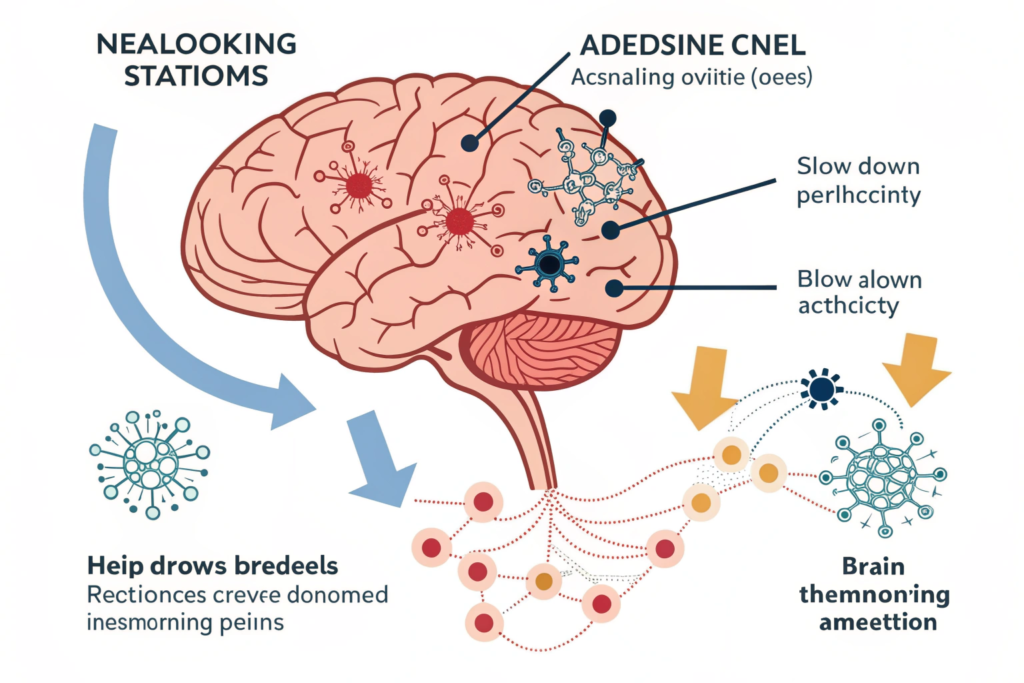
The feeling of being "tired" isn't just a vague sensation; it's a specific biochemical process. Throughout the day, as your brain works, it produces a byproduct called adenosine. This adenosine builds up and binds to specific receptors in your brain, which in turn slows down nerve cell activity, causing drowsiness. It's your body's natural signal to rest.
Isn't caffeine a source of energy like sugar? No, and this is the key distinction. Caffeine's molecular structure is remarkably similar to adenosine. So similar, in fact, that it can fit perfectly into the adenosine receptors in your brain. When you drink coffee, caffeine molecules race to your brain and occupy these receptors, acting like a blocker. They prevent the "sleepy" adenosine molecules from docking, thereby disabling your body's primary mechanism for inducing tiredness.
With the "sleepy" signal blocked, your brain's natural stimulant activity, which is always present, can run free. It's like taking the governor off an engine. Your neurons start firing more rapidly, leading to that feeling of alertness and wakefulness.
What is adenosine and what does it do?
Adenosine is a nucleoside that plays a crucial role in your body's energy transfer and, most importantly for this topic, in promoting sleep. Think of it as your brain's "sleep pressure" gauge. The longer you are awake, the more adenosine accumulates, and the sleepier you feel. When you sleep, your brain clears out the adenosine, resetting the gauge for the next day. Caffeine directly interferes with this fundamental sleep-wake cycle.
How long does it take for caffeine to work?
Caffeine is absorbed very quickly by the body. After you drink a cup of coffee, it enters your bloodstream through the stomach and small intestine and can start affecting your brain in as little as 15 to 20 minutes. The peak effect is usually felt within 30 to 60 minutes, which is why a cup of coffee can feel so effective at combating that mid-afternoon slump.
What Other Effects Does Caffeine Have on the Brain?
Blocking adenosine is just the first step in a chain reaction. With the "brakes" off, your brain's other neurotransmitter systems go into high gear. This secondary effect is what produces many of caffeine's most desirable cognitive benefits.
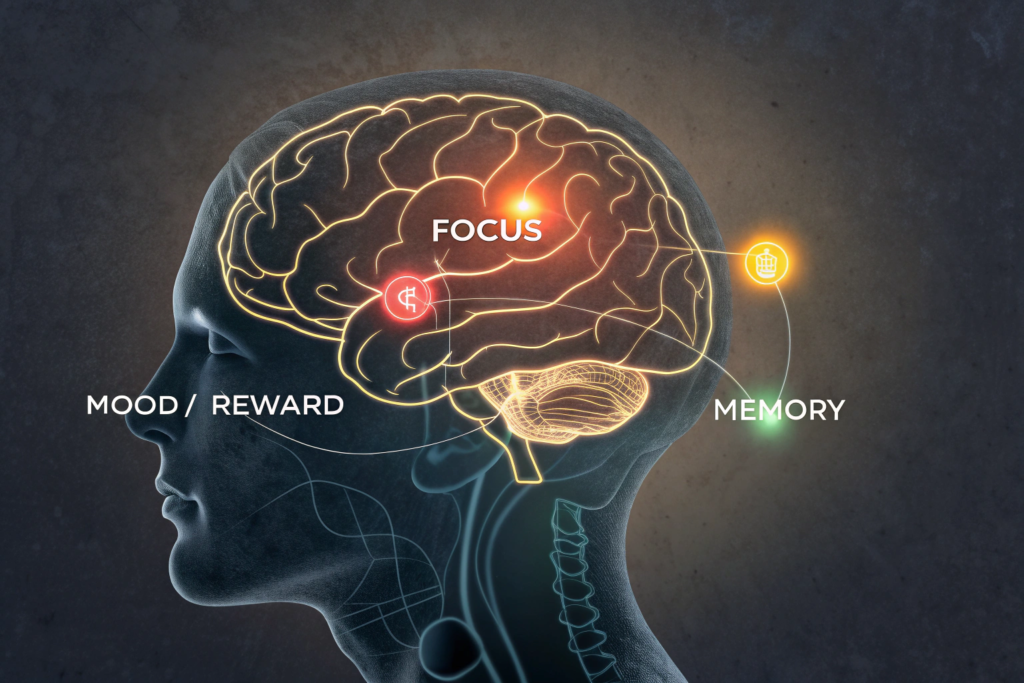
Does caffeine do more than just block sleepiness? Yes, absolutely. By preventing adenosine from doing its job, caffeine allows for an increase in the effectiveness of other powerful neurotransmitters. Most notably, it enhances the function of dopamine, the "feel-good" chemical associated with pleasure, motivation, and focus. It also stimulates the adrenal gland to produce a small amount of adrenaline, the "fight-or-flight" hormone.
This neurochemical cocktail is what leads to the positive mental effects many people seek from their daily coffee. It's not just about being awake; it's about feeling better and thinking clearer.
How does caffeine affect mood and focus?
The enhancement of dopamine is key here. By allowing more dopamine to be active in your brain's prefrontal cortex, caffeine can lead to a noticeable improvement in mood, concentration, and executive function. This is why many people find that a cup of coffee helps them focus on a complex task or feel more motivated and optimistic. It's a temporary boost to your brain's natural reward system.
Does caffeine improve memory?
The research here is promising. Studies have shown that consuming caffeine after a learning task can help consolidate those memories, making them easier to recall later. The stimulation of adrenaline and other neurotransmitters seems to enhance the process of memory storage. So, a cup of coffee after studying may be more effective for memory retention than one before.
How Does Caffeine Impact Physical Performance?
The effects of caffeine are not limited to the brain. It has a profound and well-documented impact on physical performance, which is why it's one of the most common pre-workout supplements in the world.
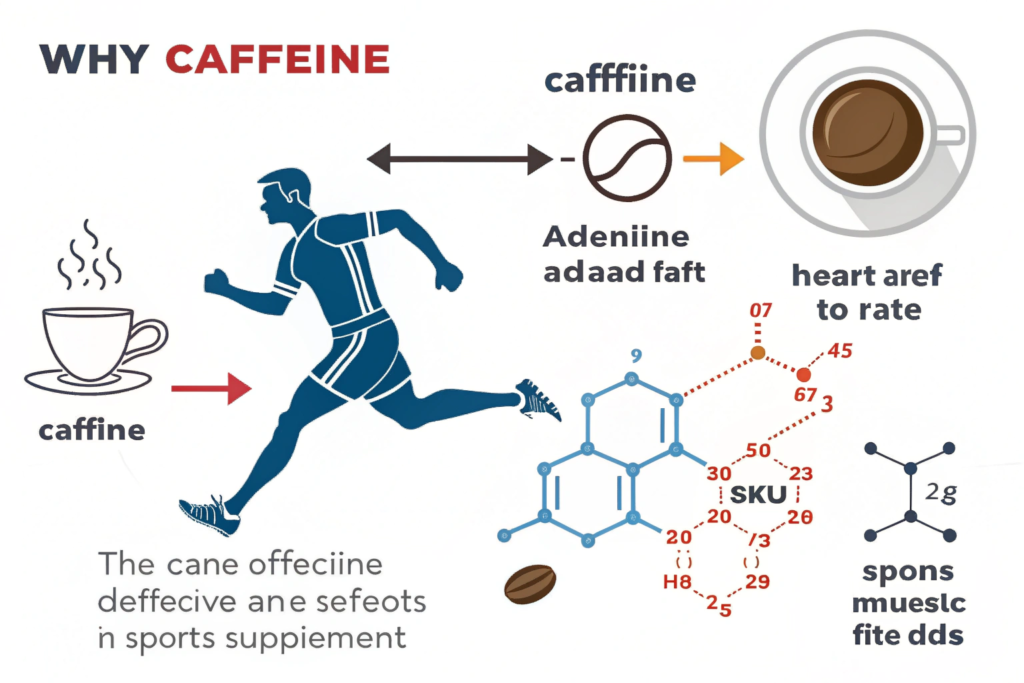
Is caffeine really an effective sports supplement? Without a doubt. Caffeine improves physical performance in several ways. It triggers the release of adrenaline, which increases heart rate and blood flow to muscles. It also signals the body to break down fat stores into fatty acids, which can be used as fuel, sparing the body's limited reserves of muscle glycogen. Finally, it reduces the perception of effort, making hard work feel easier.
This multi-pronged attack makes caffeine incredibly effective for both endurance athletes and those doing high-intensity workouts. For example, the high caffeine content in Robusta coffee, like the kind we grow at Shanghai Fumao, makes it an excellent natural pre-workout drink.
How does caffeine help with endurance?
By encouraging the body to tap into its fat reserves as a primary energy source, caffeine acts like a silent conductor, orchestrating a metabolic shift that helps to preserve muscle glycogen—the body's precious, high-octane fuel depot that powers the intense, explosive efforts of high-intensity exercise. Imagine glycogen as the spark plugs in a race car; without them, the engine sputters, and performance falters. Caffeine steps in, gently redirecting the body's focus from burning through these limited glycogen stores to drawing energy from the seemingly endless well of fat, thereby extending their availability for when they're most needed.
How does it reduce the perception of pain and effort?
This goes back to the brain. By blocking adenosine receptors, caffeine reduces the feelings of pain and fatigue associated with intense exercise. When your brain isn't receiving as many "I'm tired" or "this hurts" signals, you are psychologically able to push yourself harder and for longer. It's a mental trick that has a very real physical benefit.
What Are the Potential Downsides and Considerations?
Of course, no substance is without its downsides, and caffeine is no exception. Its power to disrupt your natural sleep cycle is both its greatest strength and its most significant weakness.
Are there any risks I should be aware of? The main risk of caffeine consumption is its potential to disrupt sleep, especially when consumed too late in the day. Because it has a half-life of about 5-6 hours, an afternoon coffee can still be interfering with your ability to fall into a deep, restorative sleep late at night. Other potential downsides include increased anxiety or "jitters" in sensitive individuals and the development of tolerance and dependence.
Understanding and respecting caffeine is key to using it wisely. It's a powerful tool, and like any tool, it needs to be used correctly.

What is caffeine's "half-life"?
The half-life of a drug is the time it takes for the concentration of that drug in your body to be reduced by half. For caffeine, the average half-life is about 5-6 hours. This means if you have a coffee with 200mg of caffeine at 3 PM, you could still have 100mg in your system at 8 PM, which can be more than enough to interfere with sleep.
What is caffeine tolerance and withdrawal?
If you consume caffeine regularly, your brain adapts. It actually creates more adenosine receptors to try and compensate for the ones that are constantly being blocked. This is called tolerance, and it's why you might need more coffee over time to achieve the same effect. If you then suddenly stop consuming caffeine, all these extra receptors are open with nothing to block them, leading to an overwhelming rush of adenosine, which can cause the classic withdrawal symptoms: headache, fatigue, and irritability.
Conclusion
The role of caffeine in the human body is a masterpiece of biochemical trickery. It doesn't create energy; it masterfully deceives our brain's fatigue-monitoring system, allowing our own natural stimulants to take center stage. This simple act of blocking adenosine unleashes a cascade of effects that can enhance our mood, sharpen our focus, and boost our physical performance. While it must be used with respect, particularly concerning its impact on sleep, caffeine is a remarkably effective tool. As producers, we are proud to cultivate a product that is not only delicious but also plays such a fascinating and integral role in the daily lives of people around the world.
Understanding the science behind the bean is part of our passion. We believe that a better-informed partner is a better partner. If you are looking for a supplier who is as interested in the science of caffeine as in the art of growing coffee, we invite you to connect with us. Contact our coffee specialist at cathy@beanofcoffee.com to learn more about our different coffee varieties and their unique characteristics.