
As a specialty coffee roaster, you're passionate about quality and origin. You hear the term "direct trade" and the idea is incredibly appealing: cutting out the "middlemen" to build a personal relationship with a farmer and ensure more money goes back to them. But then you look at the practicalities: How would you find that farmer? How would you handle the export/import paperwork in a foreign language? How would you finance a full container of coffee upfront? The logistical nightmare is a major pain point. You're left feeling that while "cutting out the middleman" sounds noble, it seems practically impossible, leaving you to wonder what role these intermediaries actually play.
Honestly, intermediaries are the essential, often invisible, infrastructure of the global coffee trade. They are not just "traders"; they are specialists who perform critical functions that bridge the enormous logistical, financial, and cultural gaps between millions of small coffee farmers and thousands of roasters worldwide. Their roles include consolidation, quality control, financing, risk management, and logistics. While the ideal is a shorter, more transparent chain, a world without intermediaries would mean that 99% of roasters would have no access to coffee at all.
From my perspective as a producer and exporter in China, we are an intermediary. We work with hundreds of smallholder farmers in the mountains of Yunnan, consolidating their coffee, providing quality control, financing their harvests, and handling the complex process of exporting to roasters like you. We are the bridge. To demonize all intermediaries is to misunderstand the fundamental structure of how coffee gets from a remote farm to your cup. Let's break down the crucial roles they play.
What Is the Critical Role of Consolidation and Quality Control?
A single small farmer might produce 5 bags of coffee a year. A roaster needs to buy a pallet (10 bags) or a full container (300+ bags) of a consistent coffee. This gap is bridged by intermediaries.
Why can't the farmer just process their own coffee? Some do, but it's very difficult to achieve high quality without proper equipment. More importantly, a roaster needs a "lot" of coffee that all tastes the same. If you just mixed the coffee from 50 different farms together, the quality would be chaotic and unpredictable. The intermediary's job is to create consistency out of this chaos.
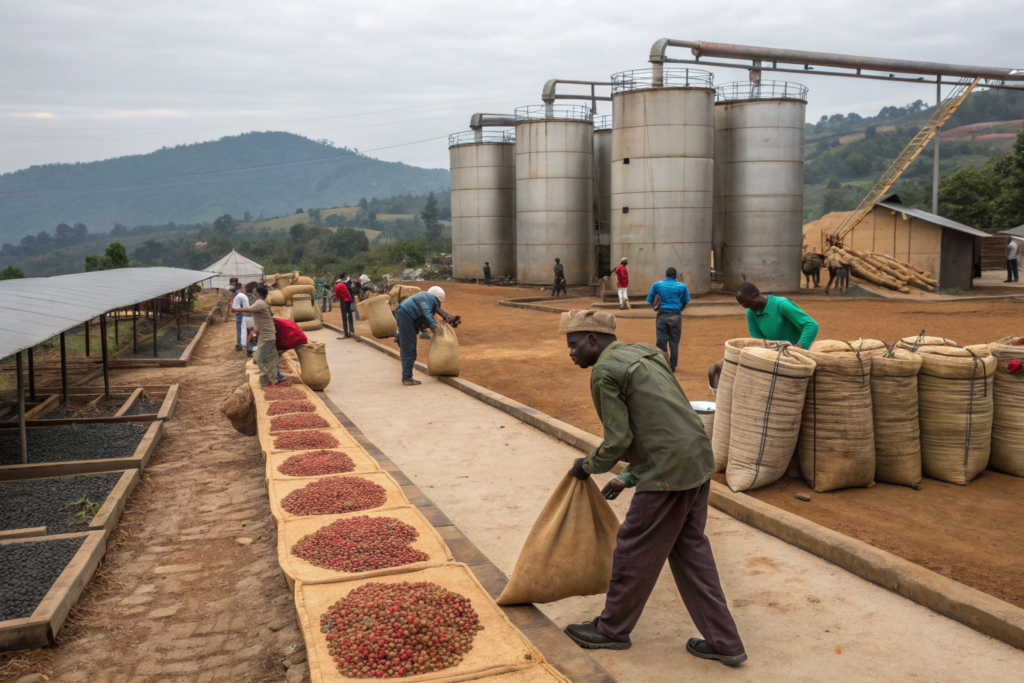
How do they create consistent lots?
An exporter or a large cooperative will cup (taste) hundreds of small deliveries. They will then blend the lots that have similar flavor profiles to create a larger, uniform lot with a consistent taste. For example, they might create a "Baoshan Washed Grade 1" lot by combining the best coffees from dozens of farms in that specific region.
What about quality control?
Intermediaries are the primary quality gatekeepers.
- They use density sorters and screen size graders to ensure the beans are uniform.
- They use optical color sorters to remove defective, discolored beans.
- They perform rigorous cupping protocols to ensure the coffee meets the flavor profile standards for that lot.
A farmer with just a few bags simply does not have access to this expensive, specialized equipment.
How Do Intermediaries Absorb Risk and Provide Financing?
The coffee business is incredibly capital-intensive and risky. A single container of specialty coffee can be worth over $100,000. Most small farmers and small roasters cannot operate at this financial scale.
I pay for my coffee when I get it, what's the big deal? The big deal is that the farmer needs to be paid months before you ever see the coffee. Intermediaries, particularly exporters and importers, use their capital to finance the entire supply chain. They are the bank.
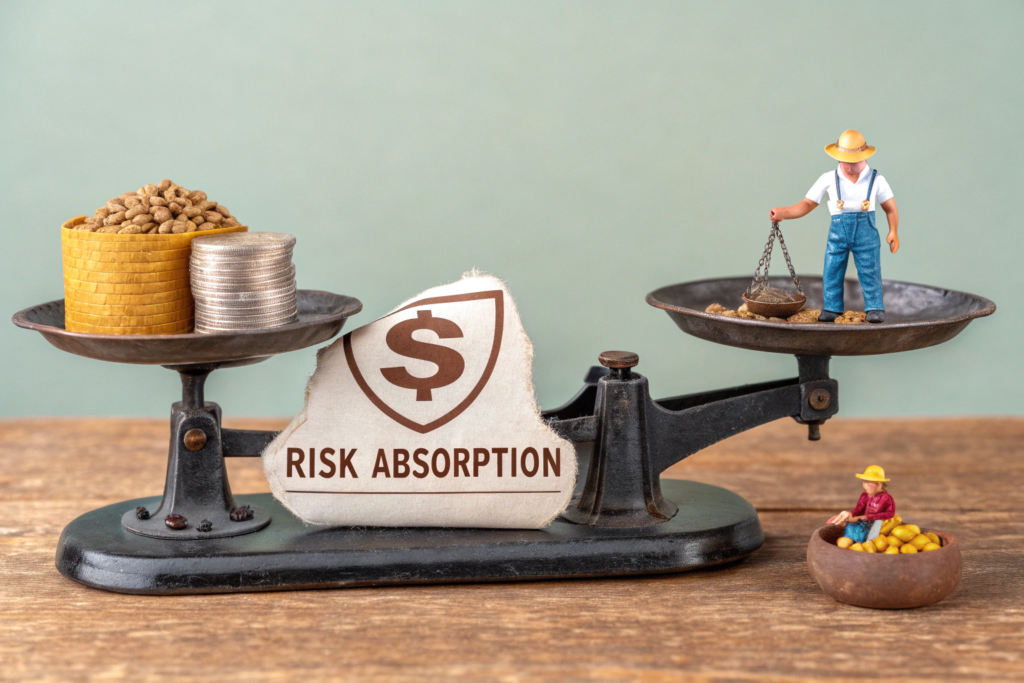
How does the financing work?
An exporter like us often pays the cooperative or farmer for their coffee as soon as it's delivered to our warehouse. We then hold onto that coffee, paying for storage and insurance, for weeks or months until it is sold and shipped to an importer. The importer then does the same, paying us, and then holding the coffee in a warehouse in the US until a roaster like you buys it, perhaps 10 bags at a time. Without the intermediary's cash flow, the system would collapse.
What risks do they manage?
- Price Risk: They buy coffee at a certain price, but the market could crash before they sell it. They absorb that risk.
- Quality Risk: A coffee could be damaged by moisture in transit. The importer, having paid for it, bears that loss.
- Logistical Risk: A container could be delayed, a ship could be rerouted, a port could go on strike. The intermediary's job is to manage these logistical nightmares. A small roaster trying to manage a shipment from a foreign country during a crisis would be completely lost.
What Is the "Direct Trade" Ideal vs. the Reality?
"Direct trade" is a wonderful ideal, and in its best form, it represents a truly transparent and equitable partnership. But it's important to understand what it really means.
So "direct trade" means there are no intermediaries at all? Rarely. For a US-based roaster to truly buy "directly" from a small farmer in Yunnan, the roaster would need to be a licensed exporter in China and a licensed importer in the US. This is practically impossible. In most "direct trade" relationships, the roaster is buying directly from a high-quality, transparent exporter or a single, large estate that acts as its own exporter. Or, they are using a transparent importer as a "logistics and finance partner" to facilitate the transaction.
The goal is not necessarily to eliminate all intermediaries, but to shorten the chain and work with intermediaries who are transparent and add real value.
What does a "good" intermediary look like?
A good, modern intermediary (whether an exporter like BeanofCoffee.com or an importer) operates with transparency.
- They can provide full traceability back to the washing station or farm.
- They are open about the FOB price they paid for the coffee.
- They see themselves as a service provider and a partner, not just a trader. They help connect roasters and producers.
When does the system fail?
The system fails when there are too many intermediaries in the chain, each adding a margin without adding value, or when an intermediary is exploitative, paying the farmer an unfairly low price while hiding that information from the final buyer. The solution is not to eliminate intermediaries, but to demand transparency and choose to work with the good ones.
Conclusion
The coffee supply chain is a complex ecosystem, and intermediaries are a vital, structural part of it. They are the specialists who perform the essential, often thankless, tasks of consolidation, quality control, financing, and risk management. While the dream of a world with no middlemen is a romantic one, the reality is that they enable the global coffee trade to function. The modern challenge for a conscientious roaster is not to naively try to eliminate them, but to intelligently navigate the supply chain, shorten it where possible, and consciously choose to partner with transparent, value-adding intermediaries who are committed to a fair and equitable system. By doing so, you support a healthier, more sustainable supply chain for everyone.
We are proud to be a transparent, value-adding partner at the origin. We connect our roasting partners with the stories, the data, and the exceptional coffees from our network of farms in Yunnan. If you are looking for a more direct, more transparent way to source coffee from China, we invite you to see how a great intermediary relationship works. Contact our coffee specialist at cathy@beanofcoffee.com.