You're a savvy buyer, Ron. You track market prices, you understand quality specs, and you know the logistics. But have you ever wondered about the bigger picture? Who sets the rules of the game? Who collects the global data that news outlets and market analysts quote? It can feel like the global coffee market operates in a vacuum, with prices swinging based on mysterious forces. You worry about market volatility and how global policies might suddenly impact your business, your costs, and the stability of your supply chain.
The International Coffee Organization (ICO) is the main intergovernmental body for coffee, bringing together exporting and importing countries to address the challenges facing the global coffee sector through international cooperation. Think of it not as a regulator that sets prices, but as a vital global forum and data hub. Its primary role is to foster a sustainable, stable, and transparent world coffee economy for the benefit of everyone involved—from the farmer who grows the beans to the roaster who buys them. For a business owner like you, the ICO is a crucial, if often invisible, force for stability and information.
As a direct exporter with plantations in Yunnan, we at Shanghai Fumao pay close attention to the ICO. Their data helps us understand global trends, and their projects can directly impact the livelihoods of our farmers. It's not just an abstract entity in London; its work has real-world consequences. I want to pull back the curtain and explain the practical role the ICO plays and why, as a major buyer of coffee, its work matters to your business.
Does the ICO Control Coffee Prices?
This is the number one question and the biggest misconception. When buyers hear about a global "coffee organization," they often assume it functions like OPEC does for oil—a cartel that controls supply to manage prices. You might worry that a group of governments is artificially inflating the prices you pay. It's a logical fear, but it's not how the ICO works.
No, the ICO does not control, set, or regulate coffee prices. Coffee prices are determined by the open market, primarily through the futures exchanges in New York (for Arabica) and London (for Robusta), driven by global supply and demand. The ICO has no power to impose production quotas or fix prices. Instead, its role is to promote market transparency, which helps all players make better decisions.
So, what does this mean? It means the ICO is more like a lighthouse than a traffic cop. It doesn't direct the ships, but it provides the light of information so all the ships can navigate more safely. For example, the ICO publishes a famous "Composite Indicator Price," which is a weighted average of different coffee types. This indicator isn't a price you can trade at; it's a benchmark—a vital statistic that gives a snapshot of the overall market health. When we negotiate prices with a buyer like Ron, we're both looking at the same futures market, but the ICO's reports provide the broader context for that negotiation.
What is the ICO Composite Indicator Price?
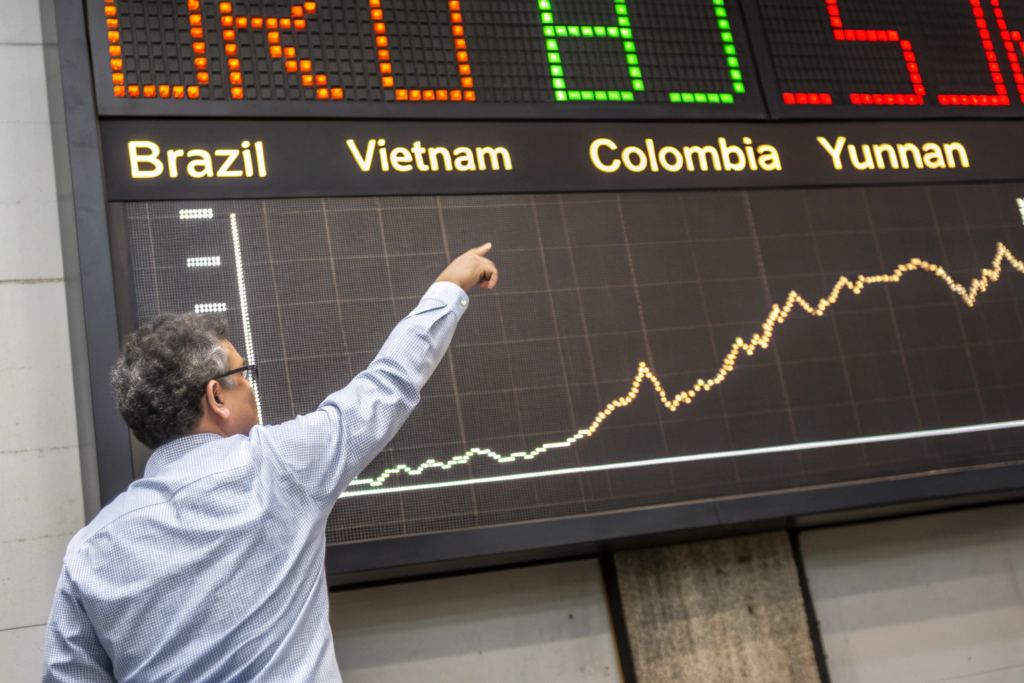
The ICO Composite Indicator Price is a valuable tool for understanding the overall market trend. It's calculated daily based on the prices of four main groups of coffee: Colombian Milds, Other Milds, Brazilian Naturals, and Robustas. By tracking this single number, you can get a quick sense of whether the global market is generally trending up or down, separate from the daily volatility of a single futures contract. You can find this data directly on the ICO's website.
How does supply and demand affect prices?
The real drivers of price are fundamental supply and demand. A frost in Brazil (the world's largest producer) can dramatically reduce the global supply of Arabica, causing prices to spike. Conversely, a bumper crop in Vietnam (the largest Robusta producer) can push prices down. Other factors include currency exchange rates, shipping costs, and changing consumer tastes. The ICO's role is to collect and publish accurate data on these factors, helping to prevent rumors and speculation from creating unnecessary market volatility.
What Is the ICO's Role in Market Data and Transparency?
If you're making multi-million dollar purchasing decisions, you can't rely on rumors or outdated information. You need reliable, objective data. Where does the information for all those market reports and news articles come from? Who is the trusted source for global coffee statistics? Without a central, unbiased authority, the market would be a chaotic mess of conflicting information, making it impossible to plan your inventory or budget effectively.
The ICO's most critical role is to be the definitive global authority on coffee statistics. It collects, compiles, and disseminates a vast amount of data on coffee production, exports, imports, and consumption from its member countries. This information is the bedrock of market transparency. It allows buyers, sellers, analysts, and governments to operate from a common set of facts.
This is incredibly valuable for us. Our planning for the next harvest in Baoshan is influenced by the ICO's projections for global demand. When we see their reports showing rising consumption in emerging markets, it gives us the confidence to invest in expanding our processing capacity. For a buyer like Ron, this data is just as crucial. It helps him anticipate price trends, understand inventory levels in other consuming countries, and negotiate with more confidence. He's not just relying on what I tell him; he can verify it against the global standard.

What kind of reports does the ICO publish?
The ICO publishes a flagship Monthly Coffee Market Report, which is essential reading for anyone in the industry. These reports provide a comprehensive overview of price movements, shipments from all exporting countries, and market trends. They also publish detailed quarterly and annual statistics on production and consumption. This is the primary source data used by almost every major commodity news outlet in the world.
Why is this data so important for a buyer?
This data helps you manage risk. For example, if the ICO reports that global inventories in consuming countries are at a multi-year low, you can anticipate that the market may be more sensitive to any supply disruptions, and prices could rise. This might prompt you to lock in prices for a longer period. Conversely, if reports show a massive surplus building up, you might decide to buy closer to your immediate needs, expecting prices to soften. It allows you to make strategic, data-driven decisions rather than just guessing.
How Does the ICO Promote Sustainability?
Sustainability isn't just a buzzword; it's a critical issue for the long-term health of the coffee industry. As a buyer, you're concerned about the future supply of high-quality coffee. You worry about the impact of climate change on farms and the economic well-being of the farmers who grow your beans. An unstable and impoverished farming community cannot be a reliable source for your business.
The ICO plays a key role in promoting a sustainable coffee sector by facilitating projects, promoting best practices, and encouraging dialogue on economic and environmental issues. Through the International Coffee Agreement, member countries commit to fostering a sustainable industry. The ICO acts as a catalyst, securing funding from international bodies like the World Bank and implementing development projects on the ground in coffee-producing countries.
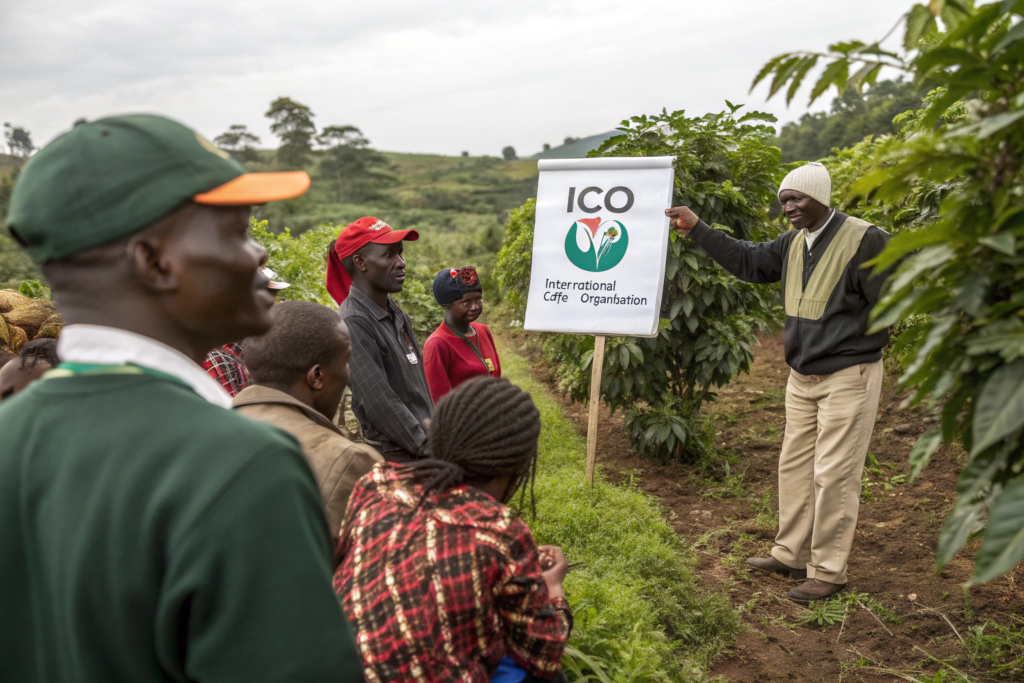
This is where the ICO's work becomes very tangible for us at Shanghai Fumao. We have seen ICO-backed projects in Yunnan that help farmers implement more water-efficient irrigation or provide training on integrated pest management. These projects directly improve the resilience of our farms and the livelihoods of the people in our community. When you buy from a region that benefits from these initiatives, you are buying from a more stable and sustainable supply chain. It's a long-term investment in the very future of the coffee you depend on.
What is the International Coffee Agreement?
The International Coffee Agreement (ICA) is the treaty that governs the ICO. It is periodically renegotiated by the member countries. The most recent agreement places a strong emphasis on promoting a sustainable coffee economy, both for the economic health of farmers and the protection of the environment. It's the formal mandate for the ICO's work in this area.
What kind of development projects does the ICO support?
The projects are diverse. They can range from helping farmers adapt to climate change to promoting gender equality in coffee communities. Other projects might focus on improving quality through better processing techniques or helping farming cooperatives gain access to financing. The common goal is to tackle the root causes of poverty and instability in the coffee-producing world, which ultimately creates a more reliable supply chain for everyone.
How Does ICO Membership Benefit a Buyer?
You might be thinking, "This is all interesting, but the ICO is an organization for governments. I'm a business owner. How does their structure actually help me?" It's a fair question. It can seem like a high-level political club, far removed from your day-to-day business of buying and roasting coffee. You want to know what tangible benefits you get from your country being a member.
The ICO provides a stable and predictable framework for international trade that directly benefits you by reducing political and commercial risks. Because the ICO brings together both importing and exporting countries, it creates a neutral space to resolve disputes and standardize procedures. This framework, governed by the International Coffee Agreement, means you are operating in a more predictable environment. It reduces the likelihood of sudden, arbitrary trade barriers or export taxes from a member country because they have all agreed to a common set of principles.
Think of it this way: the ICO's existence fosters a level of diplomatic and commercial stability. It encourages member governments to see coffee not just as a local commodity but as part of a global ecosystem. This reduces the risk for everyone. For a buyer like Ron, it means the contracts he signs with a supplier in a member country like China are underpinned by a shared international understanding of trade practices. It's a layer of security that operates in the background.

What is the role of the Private Sector Consultative Board?
The ICO isn't just for governments. It formally recognizes the importance of the private sector through its Private Sector Consultative Board (PSCB). This board is composed of representatives from private industry—roasters, traders, and exporters—from both producing and consuming countries. The PSCB provides direct input and advice to the ICO council, ensuring that the real-world concerns of businesses like yours are heard at the highest level. This gives the private sector a crucial voice in policy-making.
How does it promote networking and knowledge sharing?
The ICO hosts the World Coffee Conference and other seminars that bring together the entire global coffee community—producers, traders, roasters, researchers, and policymakers. These events are invaluable opportunities for networking and knowledge sharing. They allow you to hear firsthand about the latest innovations in farming, processing, and market trends. For a business owner, this access to a global network is a powerful tool for finding new partners, understanding new markets, and staying ahead of the competition.
Conclusion
So, what is the role of the ICO? It is not a price-setting cartel, but a vital stabilizing force in the global coffee industry. Its most critical function is providing the reliable, unbiased data that creates market transparency, allowing all players from farm to roastery to make informed, strategic decisions. Furthermore, it plays a crucial role in steering the entire sector towards a more sustainable future, addressing long-term challenges like farmer poverty and climate change through international cooperation and development projects.
For a business owner like you, the ICO acts as an invisible but essential partner. Its work in promoting transparency helps you manage price risk, and its focus on sustainability helps ensure that the high-quality coffee you depend on will still be available for decades to come. Understanding its role is part of understanding the wider ecosystem in which your business operates.
If you're looking for a direct exporting partner who not only understands the day-to-day realities of quality and logistics but also has a firm grasp of the global market forces that shape our industry, we're here to talk. We believe an informed partner is a better partner. Please contact our lead for North American accounts, Cathy Cai, at cathy@beanofcoffee.com to discuss how we can build a more resilient and transparent supply chain for you.