You've probably tasted a coffee and thought, "This is good, but is it truly specialty?" You're right to ask. The distinction is critical because it separates commodity-grade coffee from the top tier of the market—the coffees that command higher prices and build devoted followings. This ambiguity is a pain point for serious buyers who need a reliable benchmark for quality.
The Specialty Coffee Association (SCA) standard defines specialty coffee as any coffee that scores 80 points or higher on their 100-point quality scale, as graded by a certified Q Grader. This comprehensive evaluation assesses ten key sensory attributes, including aroma, flavor, acidity, and balance, and also requires the coffee to have zero "Category 1" defects in a 350g green bean sample. It is the global, unified standard for grading and defining coffee excellence.
At Shanghai Fumao, this standard is not just a target; it's our philosophy. Every step we take, from cultivating our trees in the rich Yunnan soil to our processing methods, is done with the goal of meeting and exceeding this 80-point threshold. Understanding the SCA standard isn't just academic; it's the key to understanding the real value of the coffee you buy. Let's break down what goes into that all-important score.
What Is the 100-Point Cupping Score?
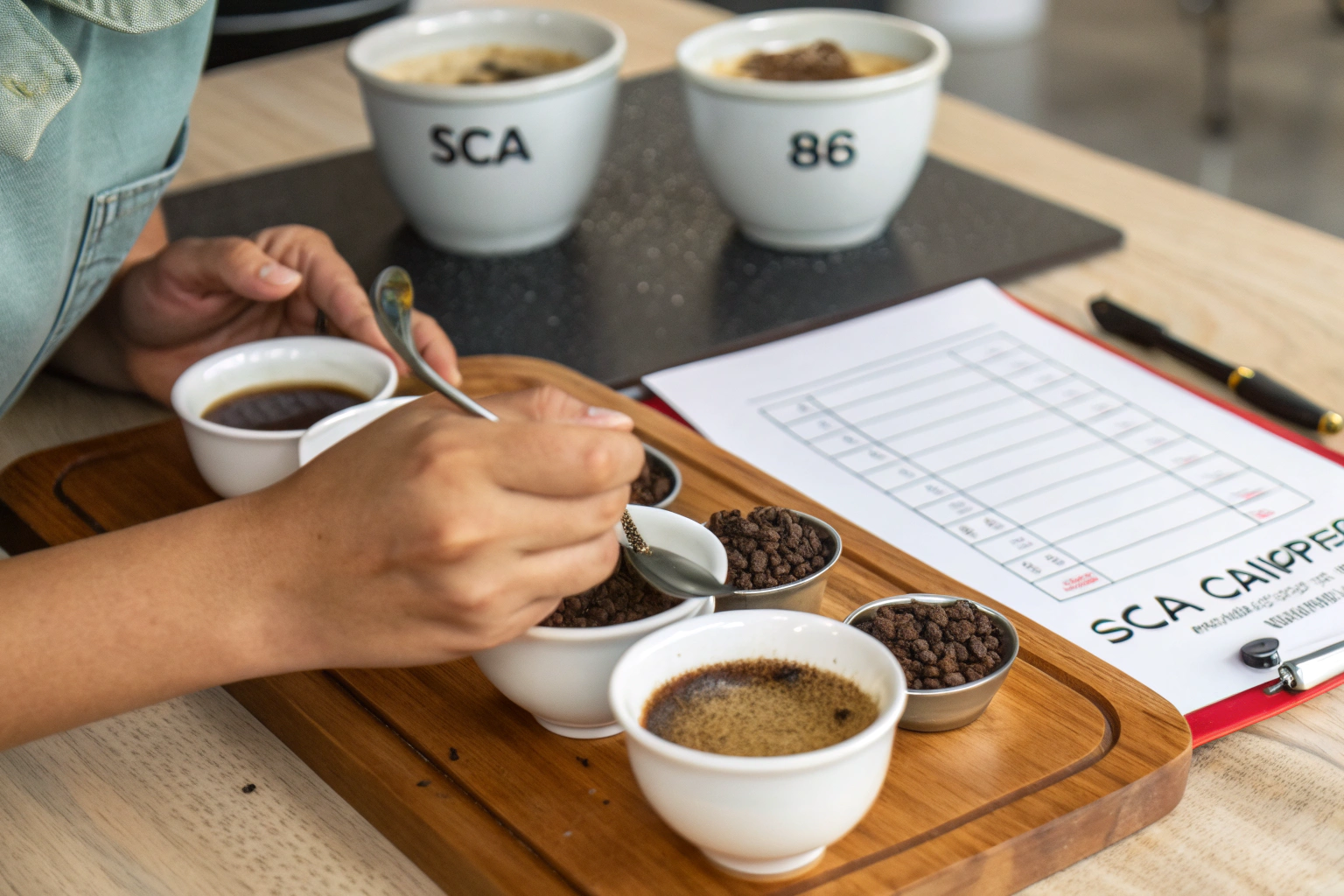
The heart of the SCA standard is the formal tasting process known as "cupping." It's a standardized protocol designed to eliminate variables and allow a trained taster to evaluate a coffee on its own merits. The results are recorded on the official SCA cupping form, which culminates in a final score out of 100. This score is the ultimate measure of a coffee's quality.
The 100-point score is a cumulative grade based on the evaluation of ten sensory attributes, each contributing to the final score. A certified Q Grader systematically tastes the coffee and assigns a score to each attribute, such as flavor, acidity, and body. These scores are then tallied to produce the final quality score. Any coffee that fails to reach 80 points is considered "below specialty" or commodity-grade.
Think of it like a grading rubric for a fine wine or a diamond. It's not based on personal preference ("I like this") but on an objective assessment of quality markers. This standardized score allows for a common language between a grower in China, a roaster in Italy, and a buyer like you in the United States.
What are the ten sensory attributes?
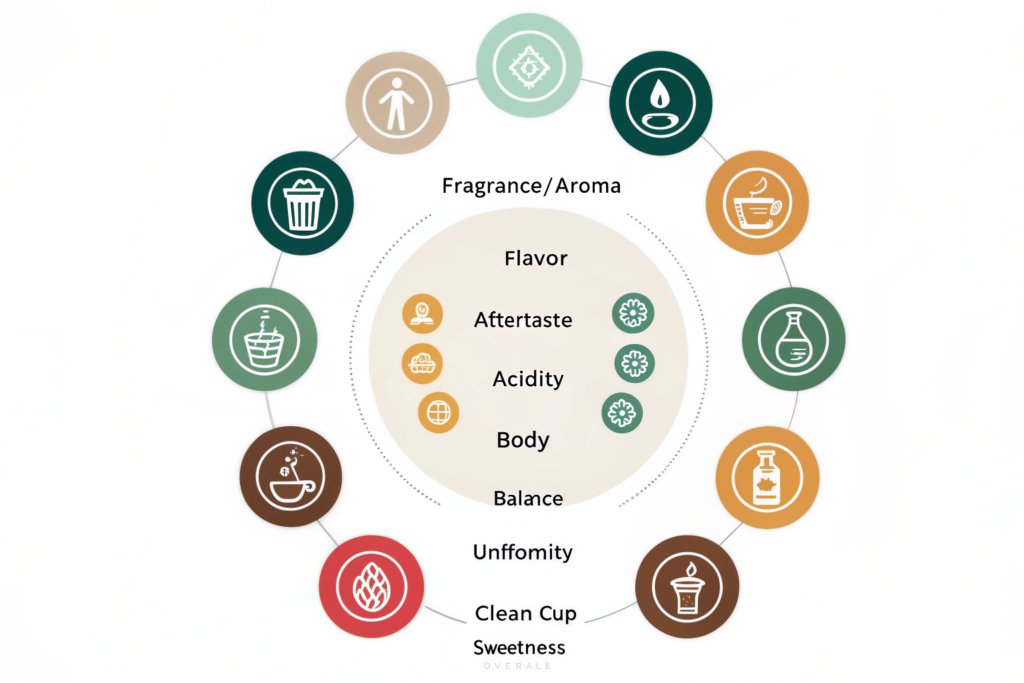
The SCA form breaks down the coffee experience into ten distinct categories:
- Fragrance/Aroma: The smell of the dry grounds (fragrance) and the wet grounds (aroma).
- Flavor: The coffee's principal character notes, from the first impression to the last.
- Aftertaste: The length and quality of the flavor that remains after the coffee is swallowed.
- Acidity: The "brightness" or "liveliness" of the coffee. Is it sharp and pleasant or sour and unpleasant?
- Body: The weight or mouthfeel of the coffee. Is it heavy and rich or thin and watery?
- Balance: How well all the aspects of the coffee (flavor, acidity, body) work together.
- Uniformity: Do all the cups on the table taste the same? This tests consistency.
- Clean Cup: Is the coffee free from any distracting, negative, or "off" flavors?
- Sweetness: Is there a pleasant fullness of flavor and a sense of natural sweetness?
- Overall: The grader's holistic assessment of the coffee as a personal rating.
What do the scores mean?
The final score places the coffee into a clear quality tier:
- 90-100 (Outstanding): Often called "Presidential" or "Cup of Excellence" level. These are the rarest and most exceptional coffees in the world.
- 85-89.99 (Excellent): High-end specialty coffees with distinct character and top-tier attributes. This is the target for many micro-lots.
- 80-84.99 (Very Good): This is the entry-level for specialty coffee. These are solid, quality coffees that are clean, sweet, and free of defects. This is the backbone of the specialty industry.
- Below 80.0 (Below Specialty): This is classified as commodity-grade coffee.
What Are Green Bean Grading Defects?
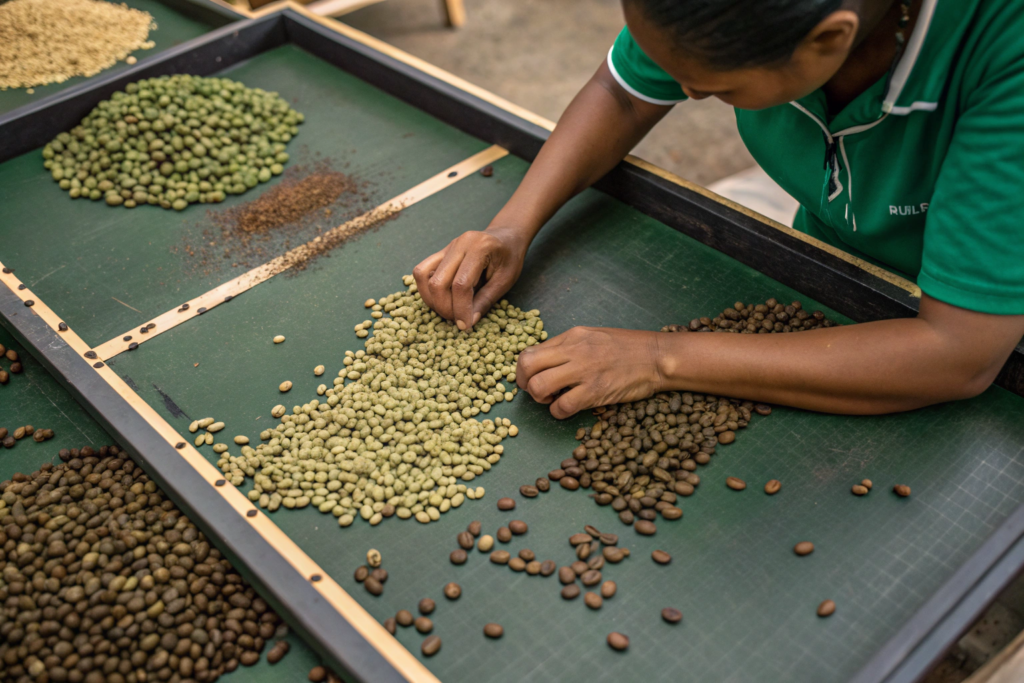
Before a coffee is even tasted, it must pass a physical examination. The SCA has strict standards for the quality of the raw, unroasted green coffee beans. A coffee can have a wonderful potential flavor, but if the green beans are full of defects, it cannot be classified as specialty. This step ensures the quality and safety of the raw material.
The SCA green grading standard requires that a 350-gram sample of green coffee beans has zero "Category 1" defects and no more than five "Category 2" defects to be considered specialty grade. This physical inspection is a critical pass/fail gateway that happens before any cupping takes place.
Defects are not just cosmetic; they have a direct and often disastrous impact on the final cup. A single "sour" bean can ruin an entire pot of coffee. As your supplier, this is a part of the process we take incredibly seriously at Shanghai Fumao. Our sorting and quality control protocols are designed to eliminate these defects long before the beans are bagged for export.
What are Category 1 defects?
These are the most severe defects, and they automatically disqualify a coffee from being specialty. Just one of these is enough for failure. They include:
- Full Black Bean: A bean that is more than half black, often caused by over-fermentation. It imparts a foul, phenolic flavor.
- Full Sour Bean: A bean that is discolored (often reddish-brown) due to microbial contamination. It gives the coffee a sharp, sour, vinegar-like taste.
- Dried Cherry/Pod: A whole, dried coffee cherry mixed in with the green beans.
- Foreign Matter: Any non-coffee material, like stones or twigs.
What are Category 2 defects?
These are less severe "secondary" defects, but too many of them will also disqualify a coffee. It takes a certain number of these to equal one "full defect." Examples include:
- Insect Damage: Beans with small holes from the coffee berry borer insect.
- Broken or Chipped Beans: Beans damaged during processing.
- Shells: Beans where the two halves failed to develop correctly, resulting in a hollow, shell-like shape.
- Unripe Beans (Quakers): Beans from unripe cherries that fail to brown properly during roasting and impart a papery, peanut-like flavor.
Who Is a Q Grader and Why Do They Matter?
The entire SCA system hinges on the skill and integrity of the person scoring the coffee. A score is only as reliable as the person who gives it. This is why the SCA, in partnership with the Coffee Quality Institute (CQI), created the Q Grader program—a rigorous certification process to calibrate coffee tasters to a single global standard.
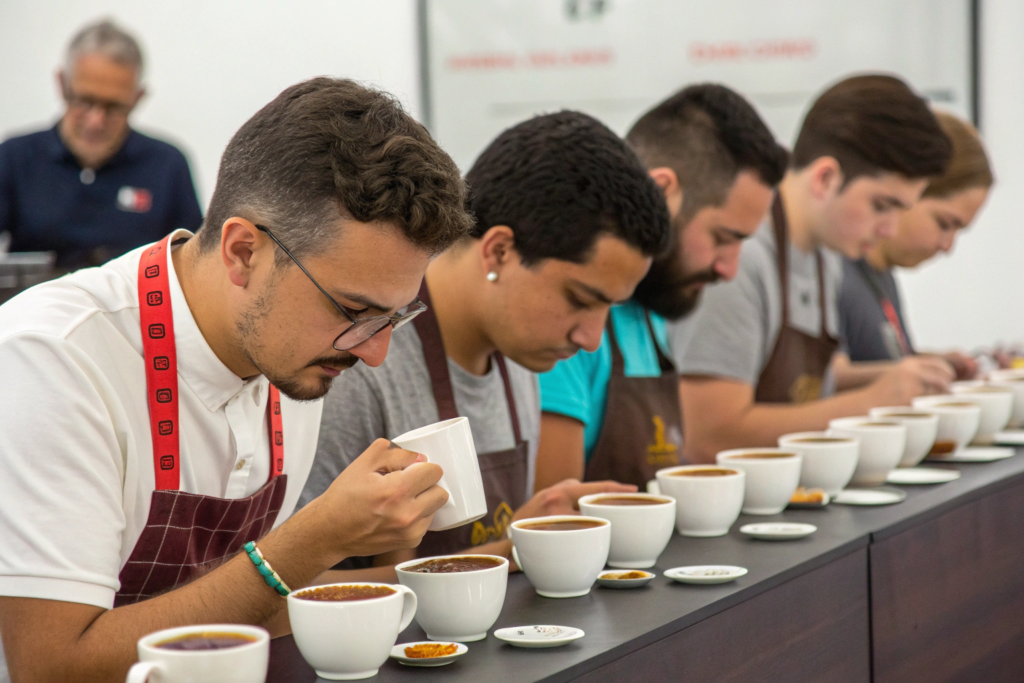
A Q Grader is a highly trained and certified coffee professional who has passed a series of demanding exams to prove their ability to accurately and consistently grade coffee according to SCA standards. They are the accredited arbiters of coffee quality, calibrated to a global standard to ensure a score in Brazil means the same thing as a score in Boston.
Becoming a Q Grader is incredibly difficult. The program involves a week of intense training followed by over 20 individual exams. These tests cover everything from identifying coffee aromas and organic acids to blind-tasting and grading coffees from around the world. Their certification is a testament to their sensory acuity and their commitment to the global standard. When a Q Grader assigns a score, it carries the weight of the entire specialty coffee industry.
Why can't anyone just score a coffee?
An untrained taster's evaluation is based on personal preference. They might give a high score to a dark, smoky coffee simply because that's what they like to drink. A Q Grader, however, is trained to separate personal preference from objective quality assessment. They can identify and score the quality of a bright, acidic Kenyan coffee just as accurately as a heavy-bodied Sumatran, regardless of which one they'd rather drink personally. This objectivity is what makes the system work.
How does this benefit you, the buyer?
The Q Grader system provides you with a reliable, third-party verification of quality. When a supplier provides you with a cupping score sheet from a certified Q Grader, it gives you a trustworthy data point on the coffee's quality before you even taste it. It's a tool for risk management and a common language for negotiating price based on demonstrable quality. It helps ensure you get exactly what you pay for.
How Does This Standard Impact the Entire Supply Chain?
The SCA standard is more than just a score; it's a philosophy that has transformed the entire coffee industry. It creates a virtuous cycle that connects quality-focused farmers with discerning consumers, with benefits for everyone along the chain.
The SCA standard creates a transparent framework that allows for quality to be identified, valued, and rewarded. This incentivizes farmers to invest in better growing and processing techniques, enables roasters and buyers to source with confidence, and ultimately provides consumers with a higher quality and more diverse coffee experience. It's the economic engine of the specialty coffee movement.
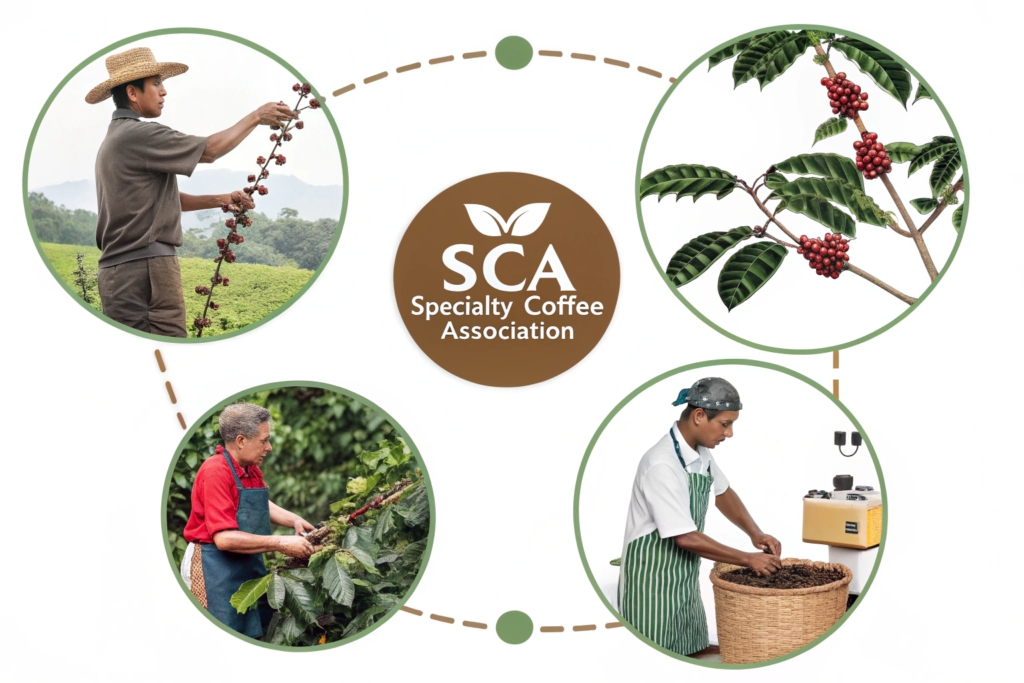
By creating a clear price premium for coffees that score above 80 points, the SCA standard makes quality a viable economic path for farmers. They can earn significantly more for producing a small lot of 86-point coffee than they can for a massive container of commodity-grade beans. This has lifted communities out of poverty and has been the driving force behind the incredible improvements in coffee quality we've seen over the past two decades.
How does it empower farmers?
It gives them a direct language to communicate the quality of their product to the international market. A farmer in a remote part of Yunnan can have their coffee cupped and scored. That 85-point score sheet becomes a passport, allowing them to connect with buyers like you and demand a price that reflects the hard work and care they put into their crop.
How does it create a better consumer experience?
Ultimately, this entire system serves the end consumer. By rewarding quality at every step, the SCA standard is directly responsible for the incredible diversity and flavor complexity available in modern cafes. It's the reason you can walk into a shop and choose between a naturally processed Ethiopian with notes of blueberry or a washed Colombian that tastes like orange and caramel. It has made coffee a true culinary experience.
Conclusion
The SCA standard is the bedrock of the specialty coffee world. It's a comprehensive system that elevates coffee from a simple commodity to a true artisanal product. Through its 100-point scoring system, its strict defect grading, and its global network of certified Q Graders, it provides a common language and a reliable benchmark for quality. It empowers farmers, protects buyers, and delights consumers. For us, it's the promise we make to you: that every bean we cultivate is on a path toward specialty excellence.
When you source coffee from us, you're not just buying a product; you're investing in a system of quality that is transparent, verifiable, and dedicated to excellence. If you're ready to explore coffees that consistently meet and exceed the specialty threshold, let's talk. Contact our specialist, Cathy Cai, at cathy@beanofcoffee.com to discuss our latest cupping scores and request a sample.