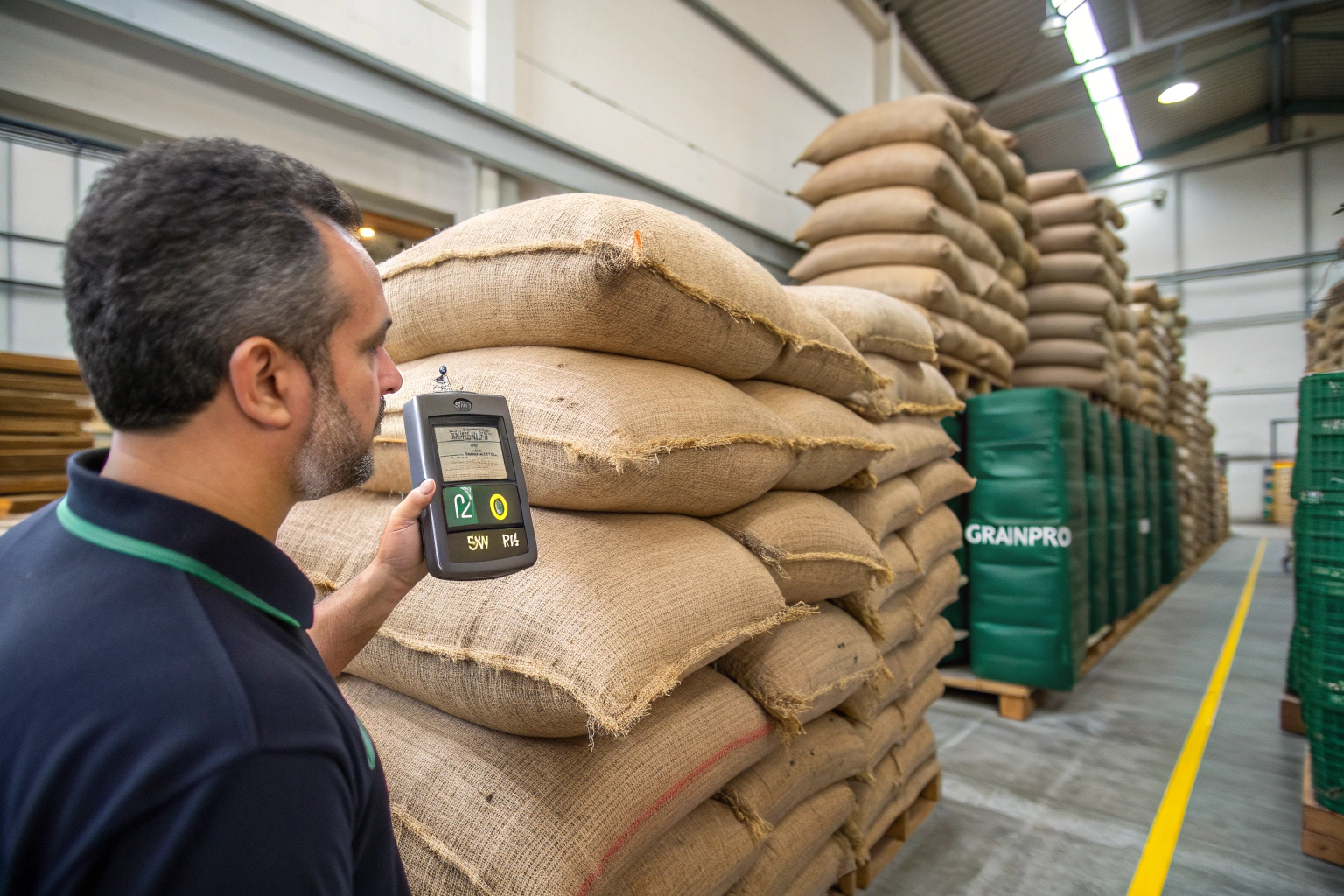
You've just taken delivery of a pallet of green coffee beans. The quality is perfect. But your roasting schedule shifts, and now you're wondering: how long can these beans sit in the warehouse before they go stale? This isn't just an academic question—it's a crucial inventory management decision that directly impacts your product quality and profitability.
The shelf life of unroasted green coffee beans is typically 9 to 12 months from the harvest date when stored under ideal conditions. However, this isn't a fixed expiration date but a gradual decline. High-quality, high-density beans from recent harvests can often maintain excellent characteristics for up to 18 months, while lower-quality or poorly stored beans may degrade in just 3-6 months.
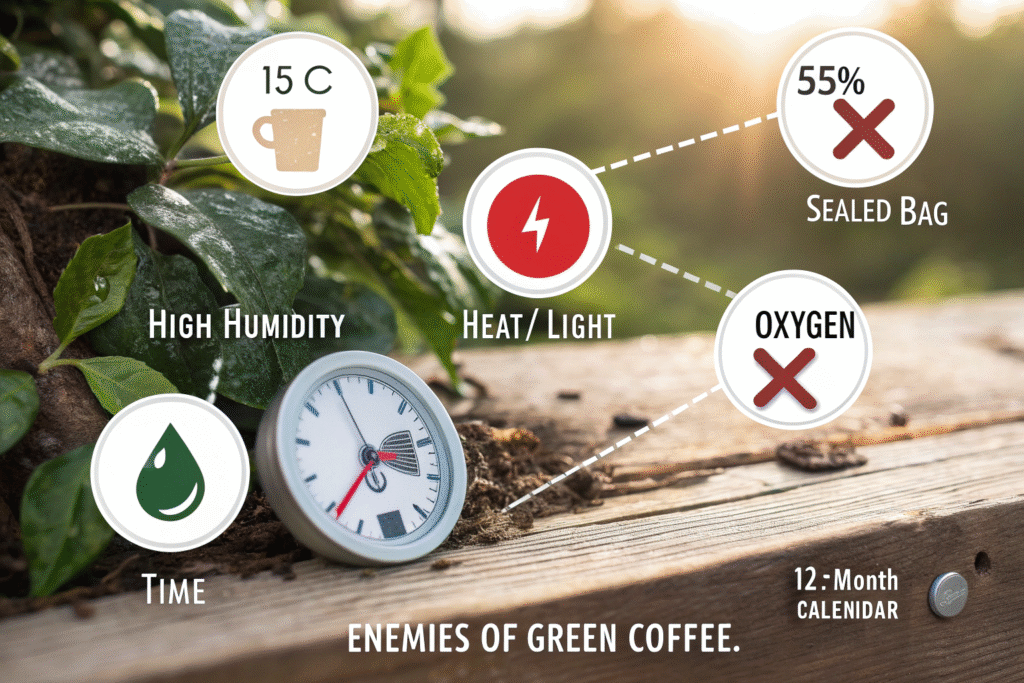
So, what separates beans that stay vibrant for a year from those that fade in months? The answer lies in a battle against four enemies: oxygen, moisture, heat, and time. Let's explore how to win this battle and protect your investment.
What Are the Ideal Storage Conditions for Maximum Longevity?
Green coffee is a stable but living agricultural product. It's not inert. Chemical changes are constantly occurring, however slowly. Your storage environment either accelerates or dramatically slows this process.
The golden rule for green coffee storage is cool, dark, dry, and well-ventilated. The specific targets are a temperature of 15-20°C (59-68°F), relative humidity of 50-60%, and protection from direct light and strong odors.
Why is Controlling Humidity the Single Most Important Factor?
Moisture is public enemy number one. If the relative humidity (RH) climbs above 65-70%, you risk mold growth and "baggy" off-flavors. If it drops below 45%, the beans can become brittle and lose their vital oils, leading to a flat, stale cup. The beans' own moisture content (typically 10-12% at export) must be preserved, not added to. This is why moisture barrier packaging like GrainPro bags are a wise investment for long-term storage.
How Do Temperature and Light Accelerate Aging?
Heat acts as a catalyst for all chemical reactions, including staling. A stable, cool temperature is more important than an ultra-low one. Fluctuations are the real killer, as they can cause the beans to "breathe" and draw in moist air. Light, especially UV, provides energy for these degrading reactions. Storing beans in complete darkness is a simple, zero-cost way to extend their prime condition.
How Can You Tell if Green Coffee Beans Are Past Their Prime?
Stale green coffee doesn't announce itself with a loud bang; it fades away quietly. Knowing the visual, olfactory, and tactile signs of degradation allows you to catch problems before they ruin a roast.
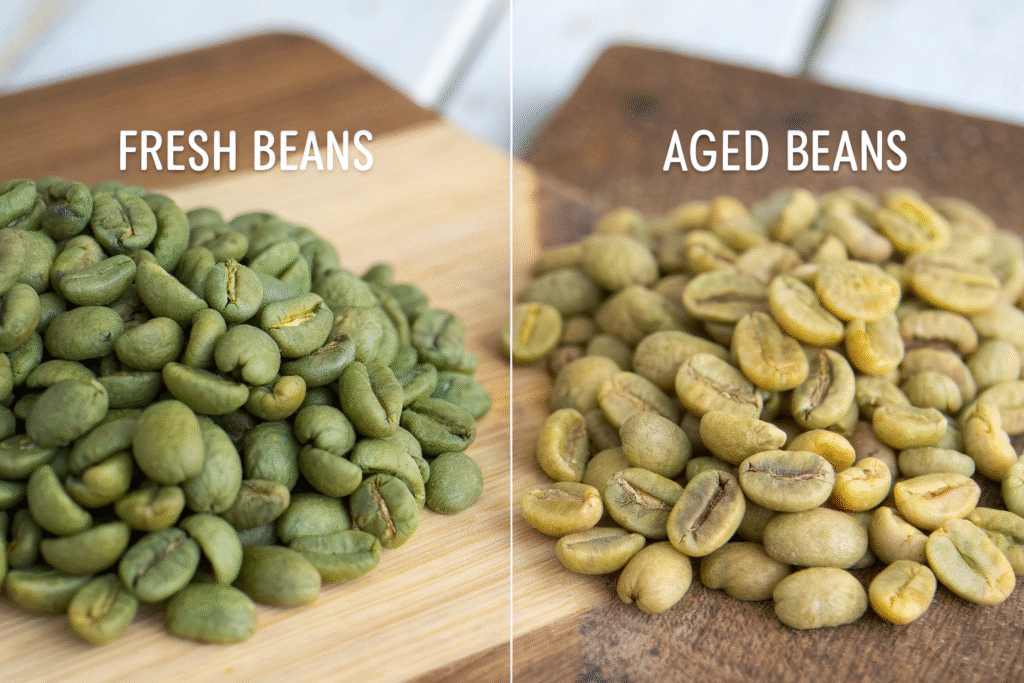
The signs of aging green coffee include a loss of the fresh, grassy aroma, a faded or yellowish color, a brittle or chalky texture, and the emergence of a musty, woody, or papery smell.
What Does the "Smell Test" Reveal?
Fresh green coffee has a pleasant, grassy, sometimes slightly fruity or earthy scent. As it ages, this aroma fades and is replaced by a hollow, papery, or dusty smell. In advanced stages, a musty or mildewy odor indicates potential mold—a clear sign the beans are compromised. Your nose is one of the most sensitive tools for quality assessment.
What Visual and Physical Changes Should You Look For?
Color is a key indicator. High-quality new crop beans are typically bluish-green or deep green. As they age, they lose this vibrancy and turn a pale, yellowish-tan. When you bite a bean (the "snap test"), a fresh, dense bean should be hard to break and make a clean snap. An old bean will be brittle and crumble. This loss of bean density directly correlates to a loss of flavor potential in the cup.
How Does Origin and Processing Affect Shelf Life?
Not all green coffee ages at the same rate. The bean's inherent structure, determined by its origin and how it was processed, plays a significant role in its longevity.
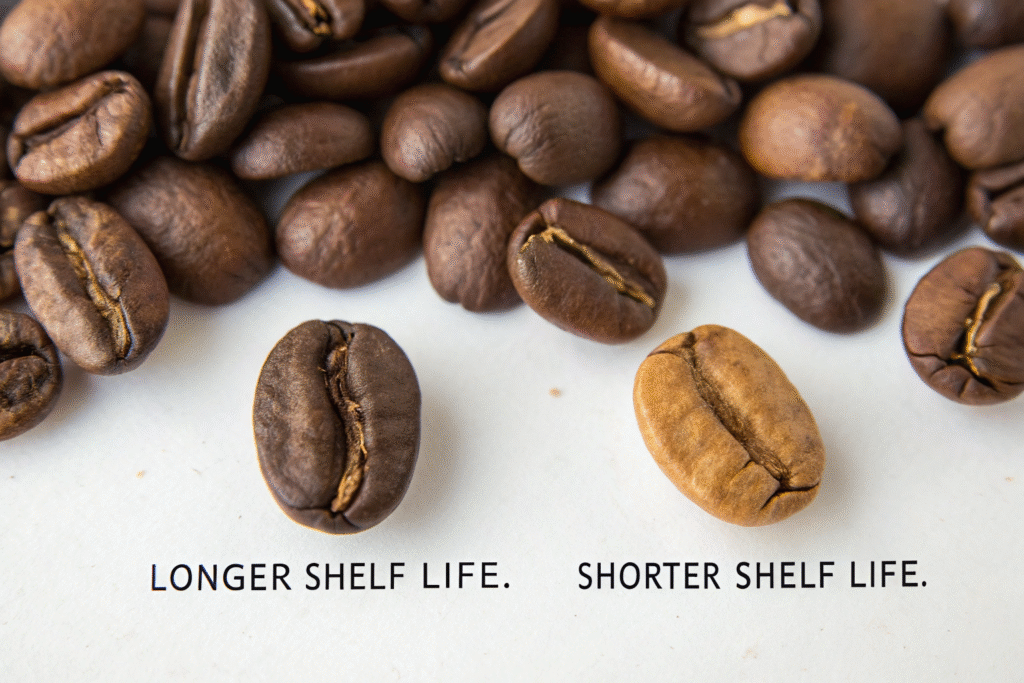
High-altitude, dense beans (like Strictly Hard Bean from Yunnan or Colombia) have a tighter cellular structure and more stable oils, giving them a longer shelf life than softer, lower-altitude beans. The processing method also has a major impact.
Why Do Washed Beans Often Last Longer?
Washed (or wet-processed) coffee has had the entire fruit removed before drying. This results in a cleaner, more stable bean that is less prone to attracting moisture and developing funky, fermented flavors during storage. Natural (dry-processed) coffees, which are dried inside the fruit, retain more sugars and organic compounds. These can continue to slowly ferment in the bag, which can either lead to interesting maturation or, if uncontrolled, spoilage. This makes processing method a key factor in storage planning.
Does Bean Variety Matter?
Yes. Dense varieties like Bourbon and Typica generally have better aging potential than some newer, higher-yielding but less dense varieties. At BeanofCoffee, the Catimor and Arabica we grow in Yunnan's high-altitude regions are notably dense, which contributes to their impressive shelf stability and is a key advantage for our export partners. This intrinsic genetic quality is a hidden asset.
What Practical Steps Can You Take to Maximize Shelf Life?
Knowing the theory is one thing; implementing a practical storage protocol is another. Proactive management is the difference between beans that are still good after a year and beans that need to be written off.
Your strategy should revolve around inventory rotation, proper packaging, and environmental monitoring. A little diligence goes a very long way.
Why is FIFO (First-In, First-Out) Non-Negotiable?
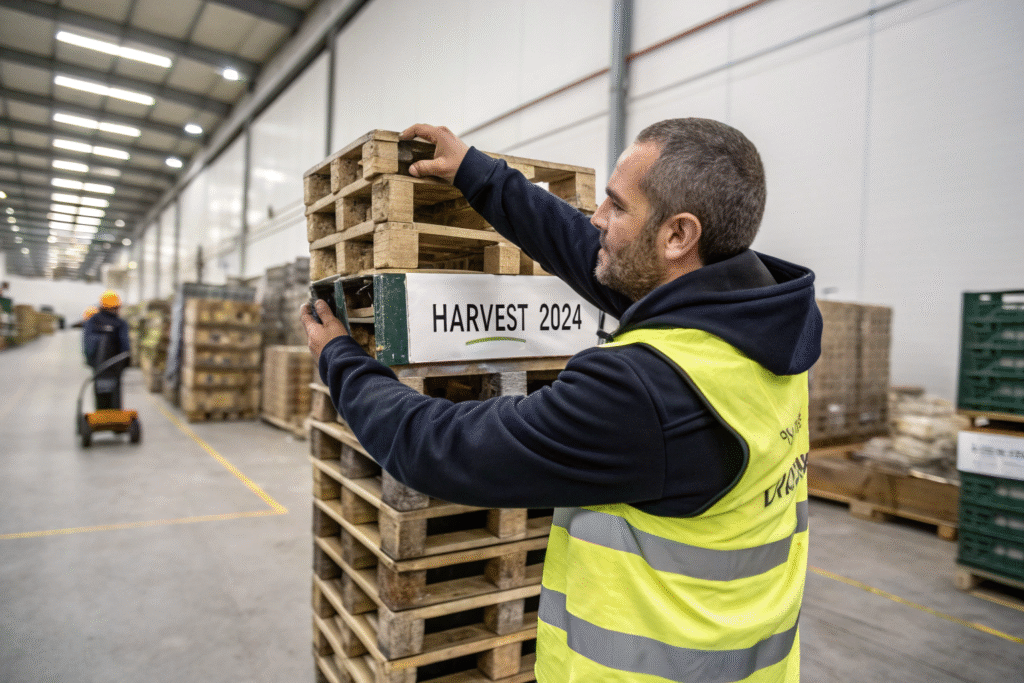
Always use your oldest stock first. This seems basic, but without a strict FIFO system, bags can get buried and forgotten. Implement a clear labeling system that includes the harvest year and arrival date on every pallet or bag. This is the most fundamental principle of inventory management for perishable goods.
Should You Repackage Beans Upon Arrival?
If you are storing beans for the long term (6+ months) and they arrived in standard jute bags, transferring them to a sealed container or a GrainPro bag inside the jute is a wise precaution. This provides an extra barrier against humidity swings and pest infestation. For shorter-term storage, the original jute bags in a good environment are usually sufficient. This decision should be based on your local storage climate and duration.
Conclusion
The 9-12 month shelf life for green coffee is a guideline for peak quality under proper storage, not a hard expiration date. By controlling temperature, humidity, and light, and by using a strict FIFO system, you can confidently manage your green coffee inventory for a year or more, ensuring that every roast is made from beans that are as fresh as possible.
The longevity of your beans is a direct reflection of the care taken in storing them. A proactive approach protects your bottom line and your product's reputation. For roasters and importers, partnering with a supplier who understands and facilitates this chain of custody is critical. We at BeanofCoffee are committed to exporting our Yunnan Arabica and Robusta in optimal condition for long-term storage. To discuss how our stable, high-density beans can benefit your inventory planning, contact our export manager, Cathy Cai, at cathy@beanofcoffee.com.