You've just roasted a perfect batch. The aromas are intoxicating. Now, where do you store the 50-pound bags before packaging or sending them to your cafes? A hot warehouse, a cool back room, or even a refrigerated space? This single decision impacts everything: your beans' shelf life, flavor integrity, and ultimately, your customer's experience and your bottom line. Get it wrong, and even the best roast can taste stale, flat, or baked in weeks. For a commercial roastery or a multi-cafe operation, this isn't just a detail—it's a core pillar of quality control.
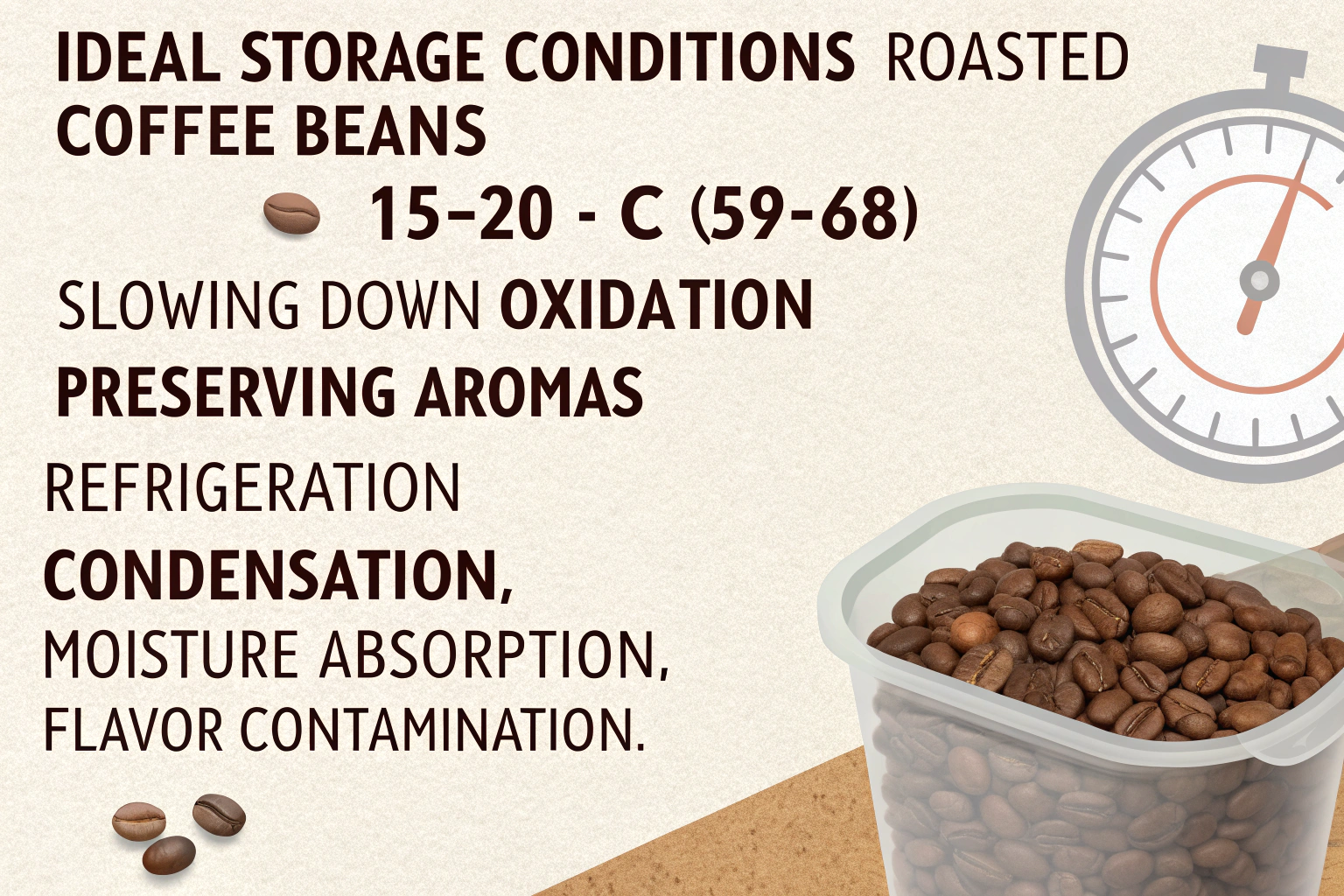
The best storage temperature for roasted coffee beans in a commercial setting is a consistently cool range of 15-20°C (59-68°F). This range dramatically slows oxidation and volatile aroma loss without introducing the risks of condensation, moisture absorption, or flavor contamination associated with refrigeration.
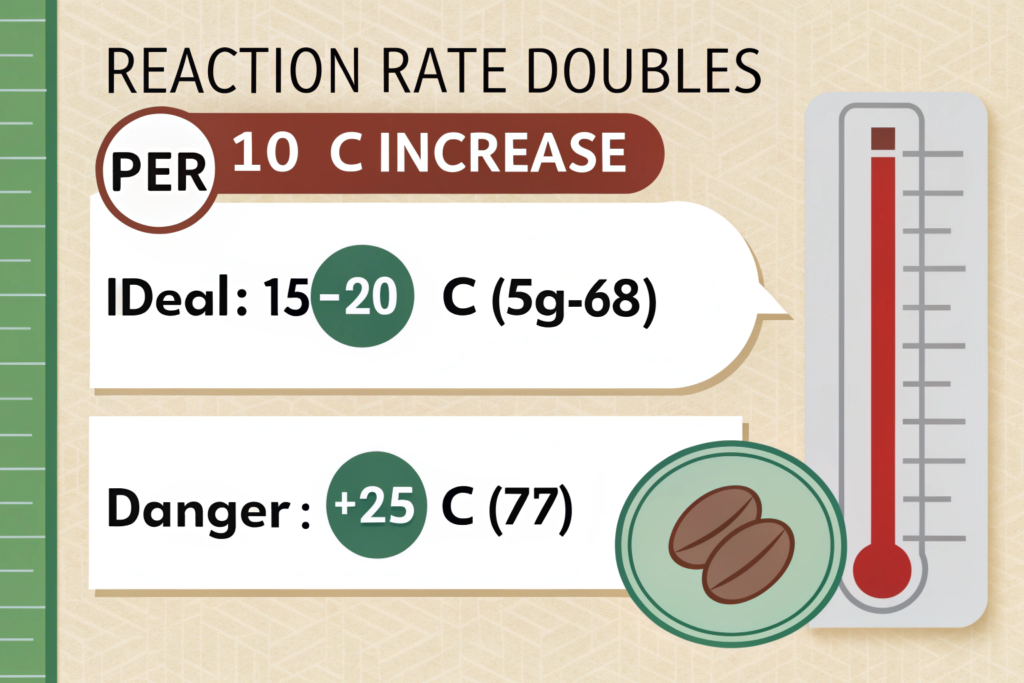
Heat is the primary accelerator of staling. The rule of thumb in food science—the Q10 Rule—states that for every 10°C (18°F) increase in temperature, the rate of chemical reactions (like oxidation) roughly doubles. So, storing beans at 30°C (86°F) versus 20°C (68°F) can halve their shelf life. Let's build your optimal storage environment.
Why is consistent cool temperature more critical than freezing?
The instinct to use extreme cold to "preserve" food is strong. But roasted coffee is a dry, porous, and oily product. Extremes and fluctuations cause more harm than a stable, moderate chill.
Consistent cool temperature slows molecular activity evenly. Freezing introduces risks of moisture migration and condensation upon removal, while refrigeration exposes beans to humidity and ambient odors. For daily-use commercial inventory, a stable, cool dark room is far more practical and safer.
How does the Q10 temperature coefficient apply to coffee staling?
The Q10 Rule is your scientific rationale. If a coffee's flavor quality lasts 30 days at 20°C (68°F), storing it at 30°C (86°F) could reduce that peak period to just 15 days. The reactions that cause staling—lipid oxidation, volatile aromatic compound loss, and Maillard reaction product degradation—all speed up exponentially with heat.
A common pitfall is the "hot spot." In a warehouse, bags stored near a heating duct, an outside wall in the sun, or on a top shelf where heat rises can degrade much faster than the rest of your inventory. Your goal isn't just an average cool temperature, but uniformity. Use data loggers in different zones to identify and eliminate hot spots.
What are the real risks of using a walk-in refrigerator?
Walk-in refrigerators are designed for moist, perishable goods. For roasted coffee, they present three major problems:
- High Humidity: Refrigerators have high relative humidity to prevent other foods from drying out. Coffee is hygroscopic (absorbs moisture). This leads to moisture uptake, which accelerates staling and can promote mold.
- Odor Absorption: Coffee readily absorbs surrounding odors. Storing it next to onions, cheese, or spices is a recipe for flavor contamination.
- Condensation ("Sweating"): When you remove a cold bag of coffee into a warm, humid roasting/packaging area, condensation forms on the bag and even penetrates the seams, introducing liquid water directly to the beans. This is devastating.
For these reasons, a dedicated, dehumidified cool room is superior to a shared refrigerator.
How do you design an optimal commercial coffee storage room?
This is about engineering an environment. It's not just finding a cool corner; it's actively creating and maintaining the right conditions. For a roastery moving hundreds of pounds a week, this room is as important as your roaster.
Design an optimal storage room by ensuring insulation, installing a dedicated cooling/dehumidifying system (like a ductless mini-split), using opaque containers or light-blocking on windows, enforcing strict FIFO (First-In, First-Out) inventory, and maintaining impeccable cleanliness to prevent pest attraction.
What type of cooling system is best for a coffee warehouse?
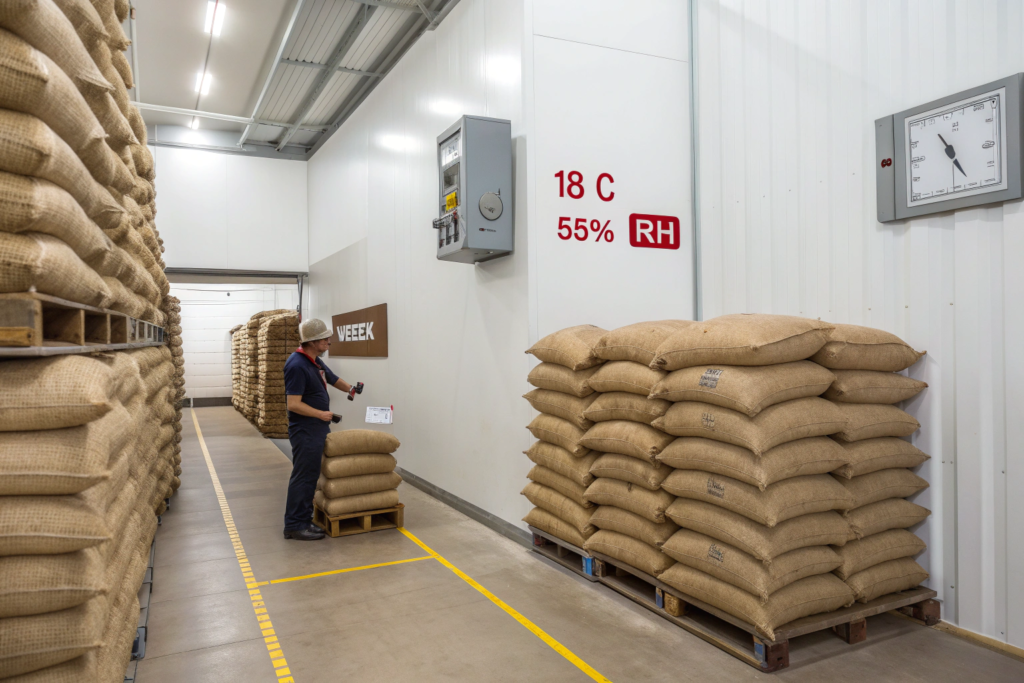
A standard air conditioner lowers temperature but often doesn't adequately control humidity. A ductless mini-split system with a dehumidification mode (or a dedicated dehumidifier) is ideal. Key features:
- Precise Temperature Control: Set it to maintain 18°C (64°F) year-round.
- Humidity Control: Maintain relative humidity (RH) below 60%, ideally 50-55%.
- No Forced Air Directly on Bags: Position vents so cold air doesn't blow directly onto coffee bags, which could cause localized condensation.
- Energy Efficiency: These systems are efficient for sealed rooms.
For larger spaces, a climate-controlled warehouse section with industrial HVAC is the professional standard. The investment pays for itself in reduced product loss and consistent quality.
How should bags be stacked and arranged for air flow and FIFO?
Proper physical layout is crucial:
- Use Pallets: Never store bags directly on concrete floors, which can be cold and damp. Use pallets to allow air circulation underneath.
- Leave Space: Keep bags at least 15-30cm away from walls and away from exterior walls to avoid temperature gradients.
- Stack Smartly: Don't stack bags too high, which can compress the beans at the bottom and create heat pockets. Follow the bag manufacturer's stacking guidelines.
- FIFO Implementation: Organize the room so the oldest roast date is always at the front. Use a color-coded tag system (e.g., weekly color tags) on each pallet or stack. This removes guesswork and ensures no bag gets "lost" in the back past its prime. Digital inventory tracking is even better.
What is the role of packaging in temperature-controlled storage?
Your storage room is the first line of defense, but your packaging is the final, mobile fortress. Even in perfect storage, beans in poor packaging will stale quickly. The two must work together.
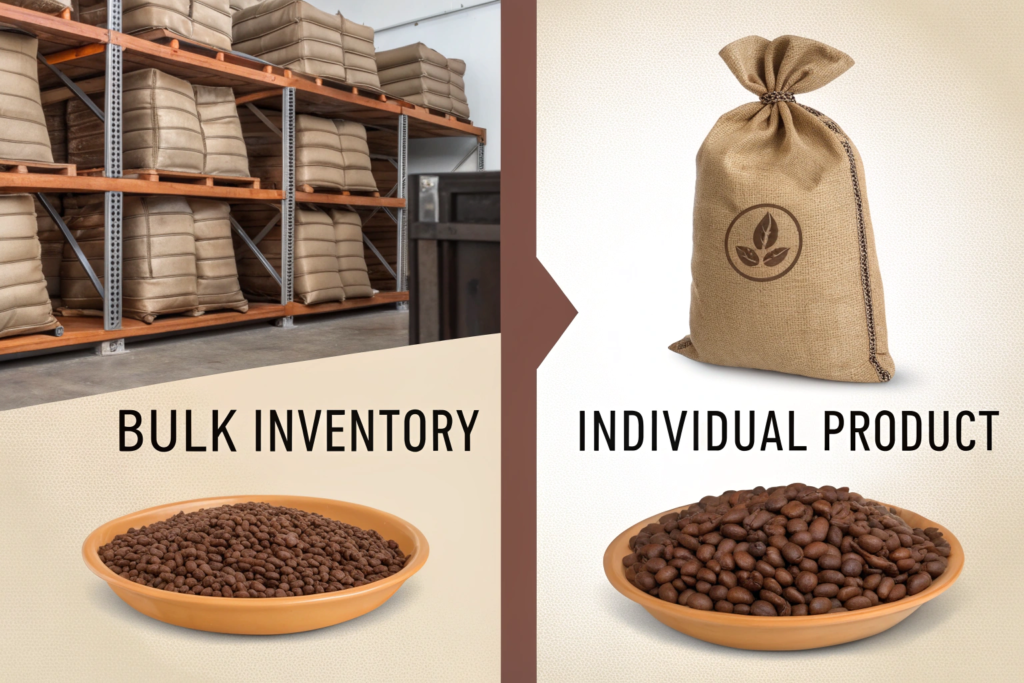
Even in ideal storage, roasted beans must be in high-barrier, sealed packaging (with a degassing valve) to protect against oxygen. The storage environment protects the bulk inventory from thermal degradation, while the packaging protects the individual product from oxygen and moisture once it leaves that environment.
Should you store beans in their final retail bags or in bulk containers?
This depends on your workflow.
- For Short-Term Holding (1-7 days before packaging): It's acceptable to store cooled beans in food-grade, airtight, opaque bulk containers (like Gamma Lids on drums or sealed totes) within your climate-controlled room. This is efficient for blending and daily packaging runs.
- For Longer-Term Storage or Finished Goods: Beans should be in their final, sealed retail or wholesale packaging. The clock on shelf life starts at packaging, not when it leaves the cool room. Packaging in your climate-controlled room is ideal, as you seal the beans in their best possible state.
A critical rule: Allow beans to degas sufficiently before final sealing. Sealing bags that are still off-gassing heavily inside a cool room can still lead to valve stress or bag inflation.
How does light exposure in storage interact with temperature?
Light, especially UV, provides energy that drives photodegradation—breaking down oils and aromatic compounds. It acts as an independent staling accelerator, but its effects are compounded by heat. A warm, sunlit storage area is the worst-case scenario.
Your storage room must be dark. Use no windows, or black them out. Use LED lighting only when the room is occupied, and ensure it's not shining directly on bags for extended periods. Opaque bags or containers are mandatory. This is a simple, zero-cost improvement with massive impact.
How to monitor and validate your storage conditions?
You can't manage what you don't measure. Assuming your room is "cool enough" is a gamble. Continuous monitoring provides data to prove your system works and alerts you to failures before they ruin product.
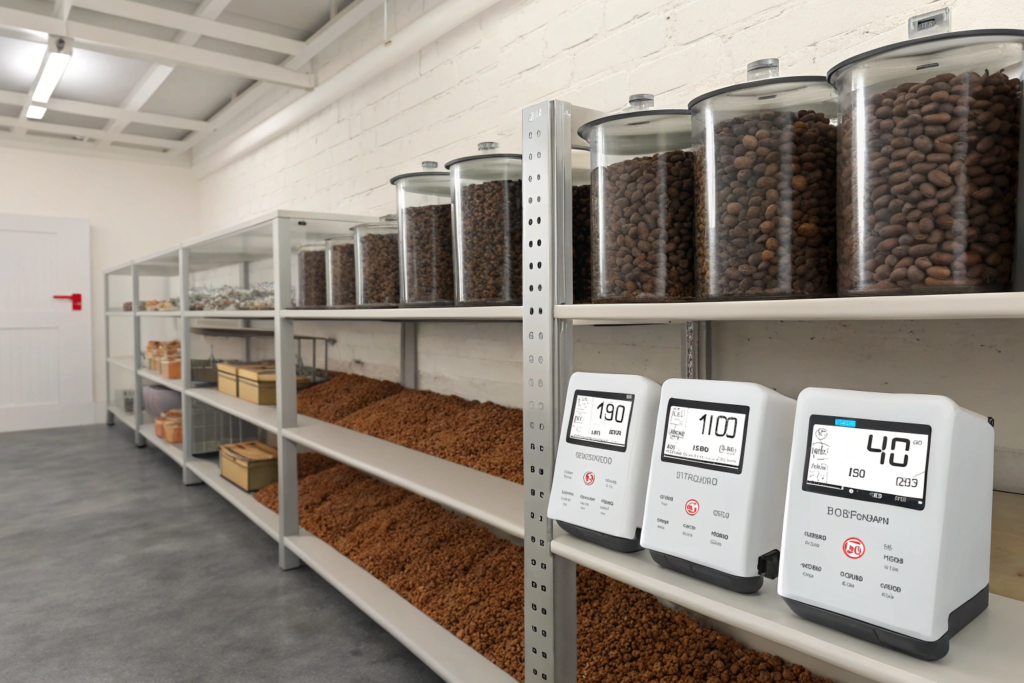
Monitor conditions using digital data loggers that record temperature and humidity 24/7. Validate the effectiveness by conducting periodic shelf-life tests: cupping beans that have been stored in your system versus a control sample stored in suboptimal conditions.
What equipment is needed for continuous temperature/humidity logging?
Invest in wireless digital data loggers (like those from Elitech, Onset, or T&D). Place them strategically:
- One at the air intake/return of your cooling unit.
- One in the geometric center of the room.
- One in a suspected "problem corner" (e.g., near a door or exterior wall).
They should log data points every 15-30 minutes and have alerts set for when temperature or humidity drifts outside your set parameters (e.g., >22°C or >65% RH). Review the logs weekly. This data is also powerful proof of your quality standards for potential B2B clients or audits.
How to run a controlled shelf-life test for your storage setup?
Every 6-12 months, run this test:
- Create a Control: Take two identical, freshly roasted batches from the same roast.
- Package Identically: Package them in your standard retail bags at the same time.
- Store Differently: Store Batch A in your optimized climate-controlled room. Store Batch B in a "challenge" environment—a typical (warmer) back room or office.
- Cupping Schedule: Cup both batches at 0 days (baseline), 14 days, 30 days, and 60 days. Use the SCA protocol.
Evaluate: How much faster does Batch B degrade? Is Batch A meeting your shelf-life goals? This test quantifies the value of your storage investment and can guide improvements. At Shanghai Fumao, we perform similar tests on our green bean storage to guarantee the quality we ship.
Conclusion
The optimal storage of roasted coffee beans in a commercial setting is a science of stability. The target of 15-20°C (59-68°F) is the sweet spot that dramatically slows the chemical reactions of staling without introducing the physical risks of colder, humid environments. Achieving this requires more than just a cool room—it demands a holistic system of climate control, intelligent layout, protective packaging, and rigorous monitoring.
For a commercial roaster, this system is a direct competitive advantage. It ensures that the flavor profile you worked so hard to create survives intact until the moment the consumer brews it, protecting your brand reputation and reducing costly waste.
Your storage system is only as good as the raw material you put into it. Starting with consistently fresh, high-quality green beans from a reliable supplier like BeanofCoffee sets the stage for success at every subsequent step. For information on our stable, well-stored Yunnan green coffee lots, contact our Export Manager, Cathy Cai: cathy@beanofcoffee.com. Let's ensure quality from our warehouse to yours.