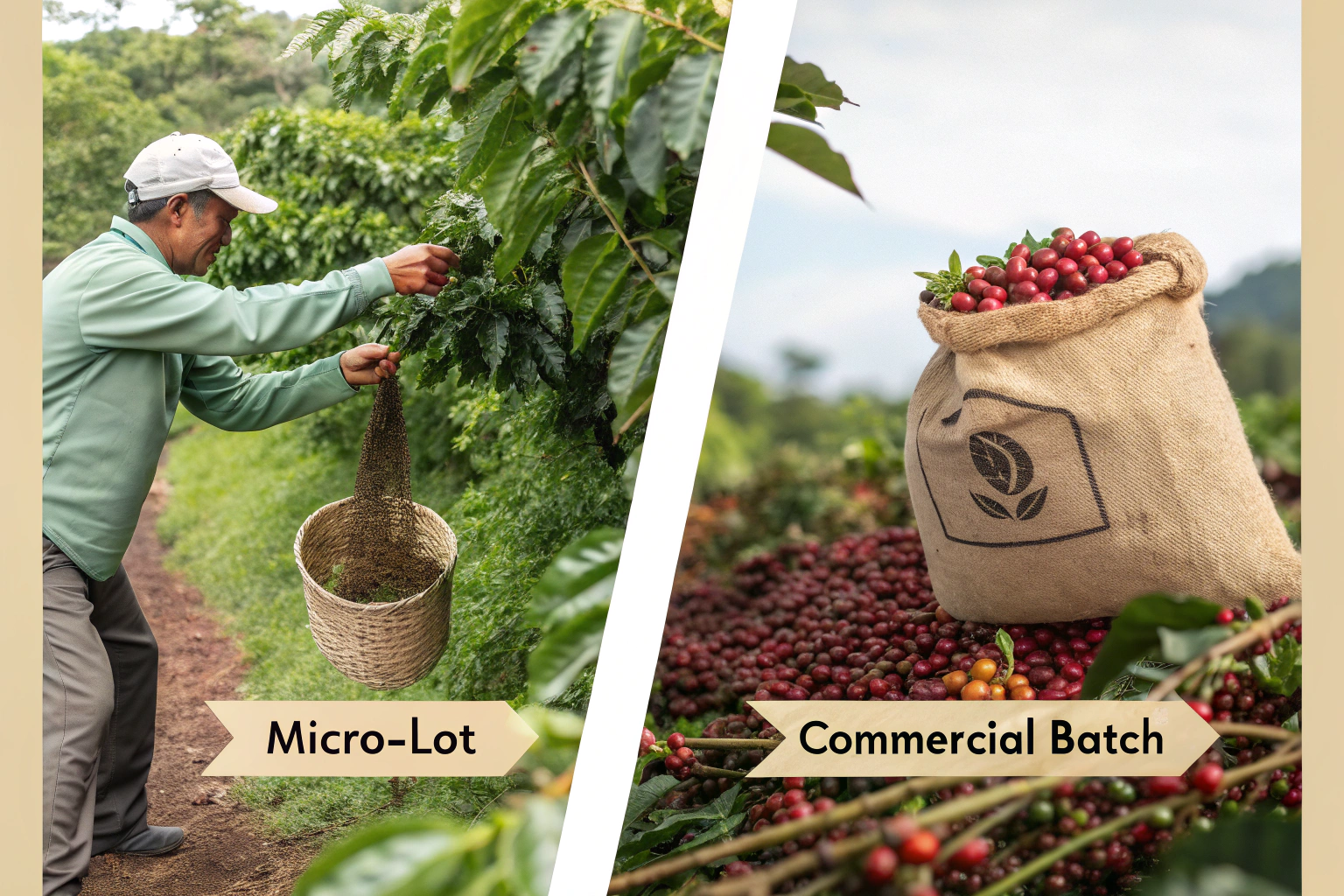
You're reviewing a price list. One column lists "Yunnan Catimor Commercial Grade" at $3.20/lb. Another lists "Yunnan Baoshan Micro-Lot #7" at $8.50/lb. Both are Arabica from the same region. Why the drastic price difference? The answer lies in a fundamental divergence in philosophy, scale, and purpose. Understanding the distinction between micro-lot and commercial batches isn't just about cost—it's about choosing the right raw material for your business model, target market, and brand story.
In essence, micro-lots are small, traceable, and unique productions focused on maximum quality and distinctiveness, while commercial batches are large, blended, and consistent productions focused on supply reliability and competitive pricing. The core difference is one of scarcity versus scalability. Micro-lots are about highlighting a specific terroir, farmer, or process in a limited edition. Commercial batches are about creating a reliable, year-round product for mass appeal.
Let's dissect this from the farm gate to the roastery to see how each type is grown, processed, traded, and ultimately used.
How Are Farming and Processing Methods Fundamentally Different?
The divergence starts in the field. The goals for each batch type dictate entirely different approaches to agriculture and post-harvest handling. One prioritizes meticulous detail; the other prioritizes efficient volume.
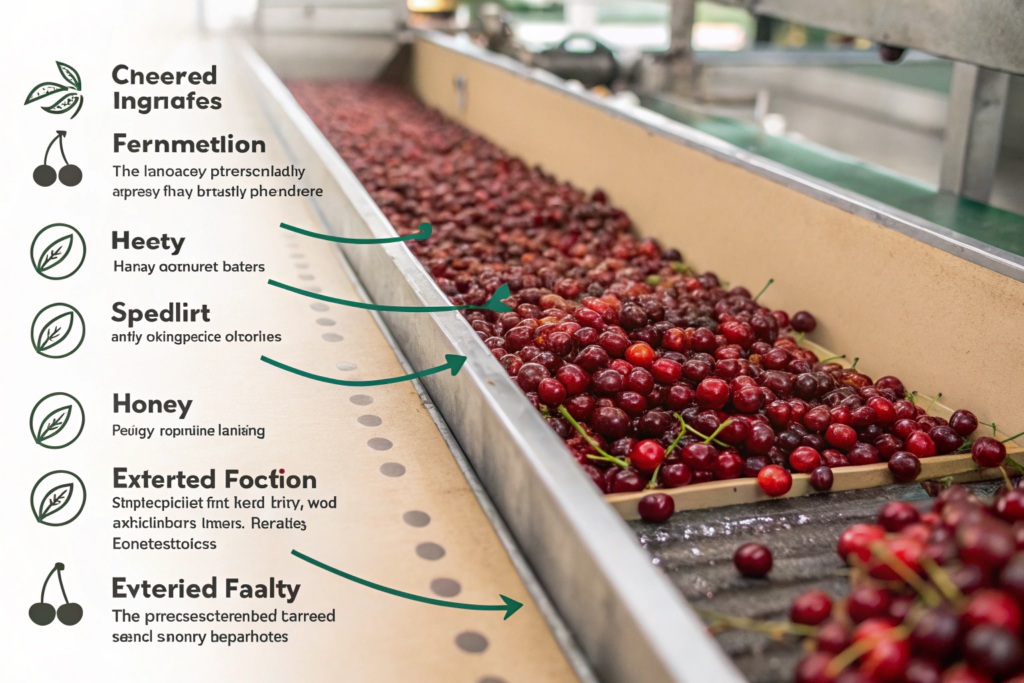
Micro-lots originate from a single, defined plot of land (often as small as a few acres), a specific farm (sometimes a single farmer), or even a single day's harvest. Farming is intensive: selective hand-picking of only ripe cherries, often shade-grown, with meticulous attention to soil health. Processing is equally precise: the cherries are kept separate and processed using tailored methods (e.g., extended fermentation, specific yeast inoculation, honey or natural process) to accentuate unique flavors. The entire chain is about preserving identity.
Commercial batches are about aggregation. They combine coffee from multiple farms, regions, or even countries to achieve a target flavor profile and volume. Harvesting may involve mechanical strippers or less selective hand-picking to reduce cost. Processing is standardized in large facilities for efficiency (e.g., large fermentation tanks, mechanical dryers). The goal is to blend out variability and create a homogeneous product that tastes the same, bag after bag, year after year.
Does "micro-lot" automatically mean higher quality?
It means higher potential for exceptional and distinctive quality, but not a guarantee. The micro-lot model allows for the expression of unique characteristics that are often smoothed out in blends. However, a poorly managed micro-lot can still have defects. The guarantee is one of traceability and story. You are paying for the chance to access something unique, not just a high score. A commercial batch, while not aiming for a 90+ cupping score, guarantees a consistent, drinkable, and defect-free profile suitable for its intended use (e.g., a dark roast espresso base).
How does processing affect the risk profile of each batch type?
Micro-lot processing is high-risk, high-reward. Experimenting with a 72-hour anaerobic fermentation on a small batch can create a stunning, wine-like coffee—or it can ruin it. The small volume limits financial risk for the producer but creates supply risk for the buyer. Commercial batch processing is low-risk. Standard washed or natural processes are used because they are reliable and scalable. The risk is not in losing the batch to an experiment, but in the commodity price volatility that affects large volumes. At Shanghai Fumao, we manage both: our commercial Yunnan lots provide reliable volume, while we work with partner farmers on micro-lots for clients seeking something special.
What Are the Trade, Pricing, and Supply Chain Implications?
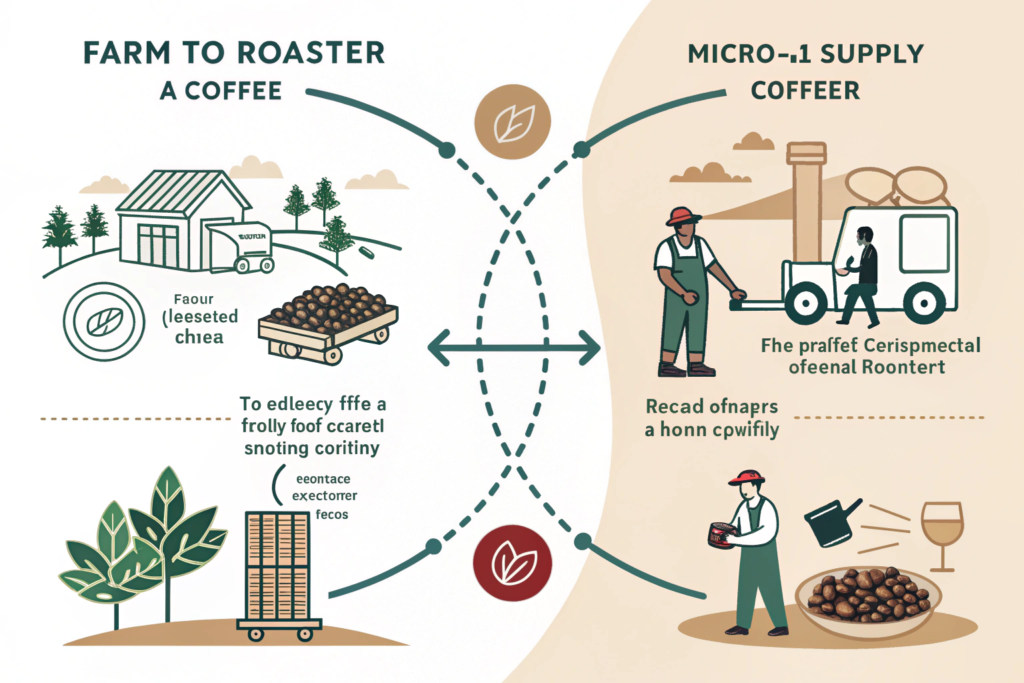
The journey from farm to roaster looks completely different for these two products. The supply chain for a micro-lot is short, transparent, and relationship-driven. The supply chain for a commercial batch is longer, more complex, and driven by logistics and hedging.
Micro-lots are typically traded directly or through specialty importers. Pricing is negotiated based on quality (cupping score), rarity, and production cost, often well above the commodity "C-price." Contracts are for the specific lot, and once it's sold, it's gone. Commercial batches are often traded on commodity exchanges or through large exporters based on the C-market price plus a differential for origin and quality. Pricing is more volatile with market trends. Supply is contracted for volume over time, with substitutions allowed from a defined quality bracket.
Why is the price disparity so large for micro-lots?
The price reflects cost-plus and value-based pricing. Costs are higher due to intensive labor, small-scale processing, and lack of economies of scale. The value is based on scarcity and perceived uniqueness. You are not just buying coffee; you are buying a non-replicable story—"This is from the west-facing slope of Mr. Zhang's farm, harvested the week of October 10th." This commands a premium from roasters who use it to attract customers willing to pay $6 for a pour-over. Commercial coffee uses cost-driven pricing, competing fiercely on pennies per pound.
How do lead times and payment terms differ?
Micro-lot purchases often require early commitment and pre-payment (or a significant deposit). Buyers may secure a lot before it's even harvested based on the previous year's sample. This provides capital to the farmer for the meticulous work. Commercial batch purchases operate on more standard trade finance terms (e.g., Letter of Credit, 30-90 day payment). Orders are placed against existing inventory or predictable harvest flows. The lead time is about shipping, not cultivation. This is a key logistical difference that affects your working capital.
How Should Roasters and Buyers Utilize Each Type?
You don't choose one over the other; you strategically deploy both. They serve different roles in a product portfolio. Using them correctly maximizes your operational efficiency and market reach.
Micro-lots are your flagship and feature products. They are for limited-release single-origins, premium subscription programs, or competition blends. They drive brand prestige, attract connoisseurs, and allow for creative marketing. Commercial batches are your workhorse products. They form the base of your consistent house blend, your espresso program, and your bagged grocery store coffee. They ensure you have a product to sell every day at a accessible price point.
Can I blend a micro-lot into a commercial batch?
Technically, yes, but economically, it's usually a waste. The unique, expensive flavors of a micro-lot will be diluted and lost in a large blend. The logic works in reverse: you might use a commercial batch as a base (for body and chocolate notes) and add a small percentage of a micro-lot (for a highlight of acidity or fruit) to create a more affordable yet interesting "signature blend." This is a common strategy for roasters wanting to offer something special without the full cost of a 100% micro-lot offering.
What is the role of each in building a brand?
Your commercial offerings build trust through consistency. Customers know what to expect. Your micro-lot offerings build excitement and expertise. They show you are connected, curious, and at the forefront of quality. A brand that only offers commercial coffee may be seen as generic. A brand that only offers micro-lots may struggle with scale and customer base. The most resilient brands, like many of our partners at Shanghai Fumao, do both: a core line of reliable, well-priced coffees, and a rotating seasonal menu of micro-lots that keeps their offering dynamic.
Conclusion
The difference between micro-lot and commercial coffee batches is the difference between a limited-edition artisan craft and a reliably produced staple. One is not inherently "better" than the other; they are tools for different jobs. The micro-lot is a precision tool for showcasing peak quality, terroir, and story. The commercial batch is a robust tool for ensuring supply, consistency, and accessibility.
For anyone in the coffee business, a deep understanding of this dichotomy is essential for smart sourcing, effective product development, and clear marketing. By strategically integrating both into your supply chain—using commercial batches for stability and micro-lots for innovation—you build a resilient, appealing, and profitable coffee brand.
Whether you are looking for a stable, high-volume partner for your core blends or a source for unique, traceable micro-lots to elevate your offering, the key is finding a supplier who excels in both arenas. At Shanghai Fumao, we cultivate this duality, offering both premium commercial volumes from our Yunnan estates and carefully curated micro-lots. To discuss how we can support both sides of your business, contact our export manager, Cathy Cai. Let's build a balanced portfolio. Reach Cathy at: cathy@beanofcoffee.com.