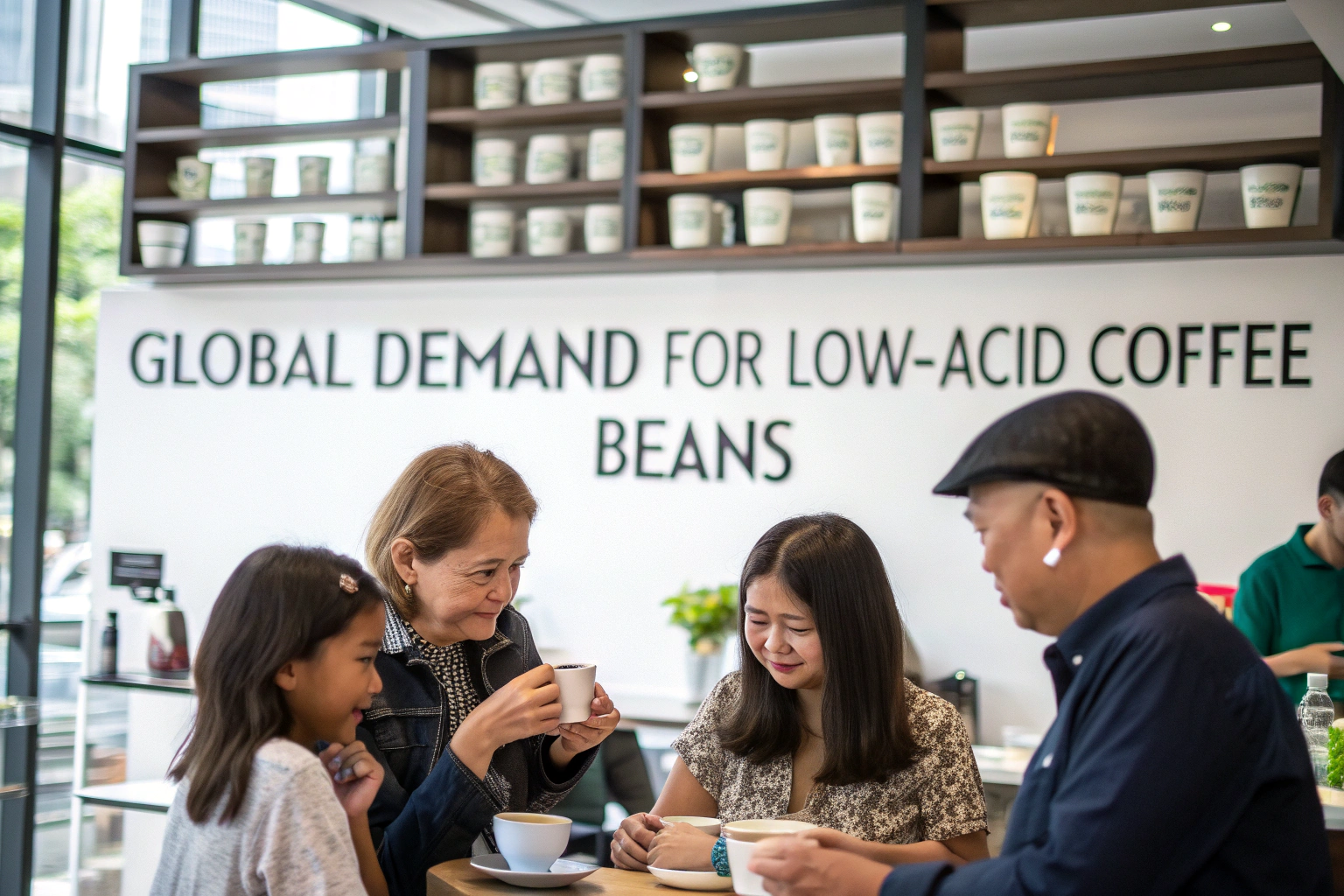
You watch the orders come in. Your bright, acidic Ethiopian single-origin sits on the shelf. But your "Smooth Morning Blend" and your "Gentle Espresso"—the ones with the chocolatey, low-acid profile—they're flying out the door. Your wholesale cafe accounts are specifically asking: "Do you have anything easier on the stomach?" You're seeing the shift in real-time. The consumer palate is changing. And you're asking: Is this a real, sustainable demand trend I should build my sourcing around? Or just a passing wellness fad?
The global demand for low-acid coffee beans is a structural, accelerating trend in 2026, driven by three converging forces: an aging coffee-drinking demographic in major markets seeking gentler options, the mainstreaming of digestive health awareness linked to coffee consumption, and the growing popularity of cold brew and ready-to-drink formats where low-acid profiles perform exceptionally well. This is not a niche. It is a fundamental shift in what a large segment of consumers defines as a "good" cup of coffee.
I see this trend reflected in my inbox every week. At Shanghai Fumao, more and more roasters are reaching out, specifically asking for cupping notes that emphasize "low acidity," "smooth body," and "chocolate finish." They're not just asking for a cheap blender. They're asking for a specific sensory profile that meets a clear consumer demand. Let's break down what's driving this shift and why certain origins are perfectly positioned to meet it.
Why Are Consumers Actively Seeking Out Low-Acid Coffee Options in 2026?
The consumer seeking low-acid coffee in 2026 is not a single stereotype. It's not just "older people with sensitive stomachs." The demographic is broader and more diverse, united by a common desire for a smoother, more comfortable daily coffee experience.
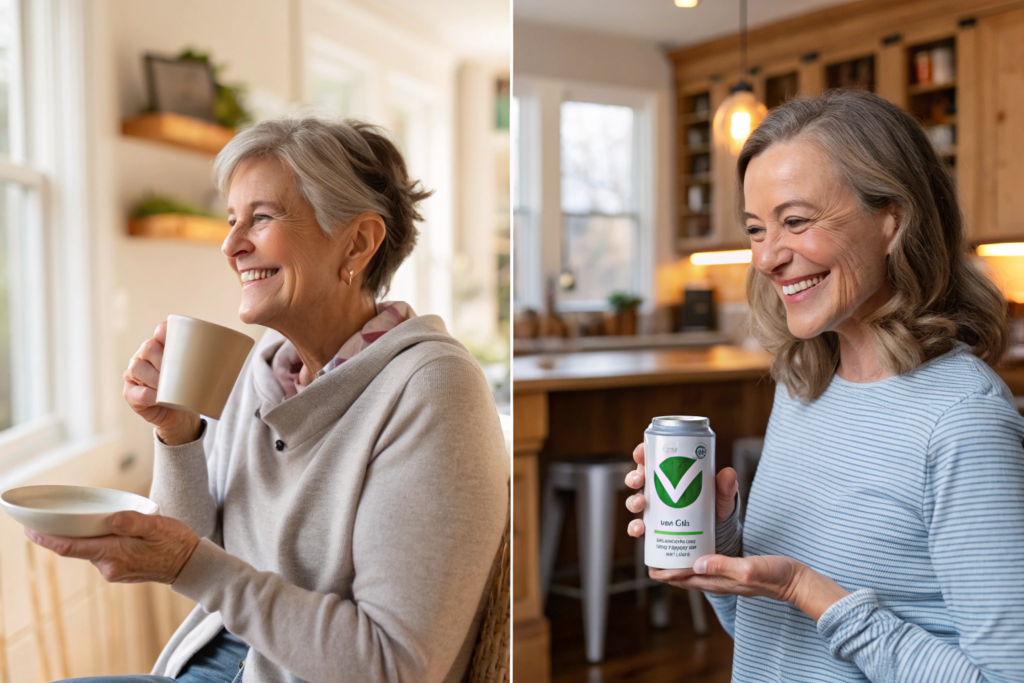
The demand for low-acid coffee is fueled by three distinct consumer groups: (1) Aging baby boomers and Gen Xers who experience increased acid sensitivity but refuse to give up their coffee ritual. (2) Health-conscious millennials and Gen Z who are highly attuned to gut health and digestive wellness and seek out foods and beverages that align with these values. (3) Cold coffee enthusiasts who have learned, through trial and error, that low-acid beans produce a smoother, less bitter cold brew and are actively seeking out beans that optimize this format.
Is Digestive Health a Fad or a Permanent Consumer Priority?
The focus on gut health is not a fad. It's a macro-trend backed by significant scientific research and consumer product innovation. Probiotics, prebiotics, and "gut-friendly" labels are everywhere.
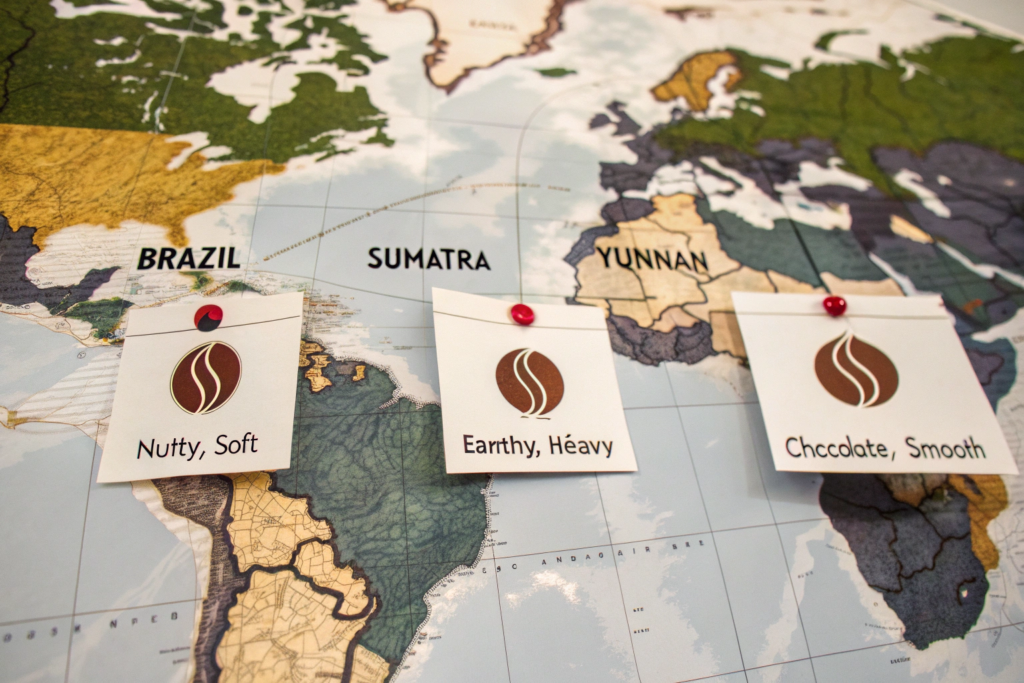
Coffee, particularly dark roasts and certain origins, has been scientifically shown to stimulate gastric acid production in some individuals. This can lead to discomfort. Consumers are now connecting the dots. They're not necessarily switching to "low-acid" chemically treated coffee. They're seeking out naturally lower-acid coffee varietals and origins. They're learning that a coffee from Brazil, Sumatra, or Yunnan often sits more comfortably than a high-altitude Kenyan. This awareness is spreading through wellness blogs, social media, and word-of-mouth. It's a knowledge-based shift, which makes it sticky and permanent. You can read more about the science of coffee and digestion from reputable health sources like the American Gastroenterological Association.
How Is the Explosion of Cold Brew Driving Demand for Low-Acid Beans?
Cold brew is no longer a summer novelty. It's a year-round staple, in cafes and in the RTD (Ready-to-Drink) aisle. And cold brew has a unique relationship with acidity.
The cold brewing process itself mutes perceived acidity. But it also amplifies the bean's inherent characteristics. A high-acid bean, when cold-brewed, can taste flat, hollow, or even sour. A naturally low-acid, chocolate-forward bean, when cold-brewed, becomes incredibly smooth, rich, and sweet. The growing army of cold brew drinkers has discovered this. They've learned that a Sumatran or a Yunnan makes a vastly superior cold brew than a washed Ethiopian. This experiential learning is driving demand at the roaster level. Cafes and RTD manufacturers are actively seeking out low-acid green coffee specifically for their cold brew programs.
Which Coffee Origins Are Naturally Positioned to Meet This Low-Acid Demand?
Not all coffee is created equal when it comes to acidity. Some origins are naturally predisposed to a brighter, more acidic cup. Others are naturally softer and more chocolate-forward. The low-acid trend favors the latter group.
The origins naturally positioned to meet the low-acid demand are those with specific combinations of varietal, altitude, and processing. These include: Brazilian Naturals (soft, nutty, low acidity), Sumatran Wet-Hulled (earthy, heavy body, very low acidity), and increasingly, washed Yunnan Arabica (chocolate, toasted nut, smooth malic acidity). These origins provide a naturally gentle cup profile without the need for post-harvest chemical treatments or extremely dark roasting.
Why Are Brazilian and Sumatran Coffees the Traditional "Go-To" for Low Acid?
Brazilian coffee, particularly pulped natural and natural processed lots from Cerrado and Mogiana, is famous for its soft, nutty, low-acid profile. It's the classic base for a smooth espresso blend. The lower growing altitudes and specific varietals contribute to this.
Sumatran coffee, with its unique wet-hulled (Giling Basah) processing, is even more extreme. It has virtually no perceptible acidity, a massive, syrupy body, and distinct earthy, cedar notes. It's the anchor of many "stomach-friendly" blends. Both origins have well-established reputations. However, both have faced challenges: Brazil with climate volatility and price spikes, Sumatra with consistency and traceability issues. This has created an opening for a reliable alternative that offers a similar low-acid profile with additional benefits.
Where Does Yunnan Coffee Fit into the Low-Acid Landscape?
This is the opportunity. Yunnan Arabica, particularly the washed Catimor from higher altitudes, occupies a unique and valuable middle ground. It is naturally low in the sharp, citric acidity found in East African coffees. Its acidity is best described as malic—smooth, round, apple-like.
But unlike some Brazilian and Sumatran coffees, a well-processed Yunnan is exceptionally clean. It lacks the earthy, sometimes musty notes that can polarize consumers. It offers the chocolate, nut, and caramel sweetness that low-acid seekers crave, but with a cleaner finish and a more transparent cup. This profile is incredibly versatile. It works beautifully as a 100% low-acid single-origin offering. It functions as a superior base for a smooth espresso blend. And it absolutely sings in cold brew. At Shanghai Fumao, we've seen a direct correlation between the rise of the low-acid trend and the increased demand for our washed Catimor. The market is discovering that Yunnan delivers exactly what this consumer segment wants: comfort, without compromise.
How Can Roasters Market "Low-Acid" Coffee Without Sounding Clinical?
"Low-Acid" is a functional term. It's descriptive. But it's not particularly appetizing. It sounds like something you'd buy at a pharmacy. The key to successful marketing is translating the functional benefit into an emotional, sensory promise.
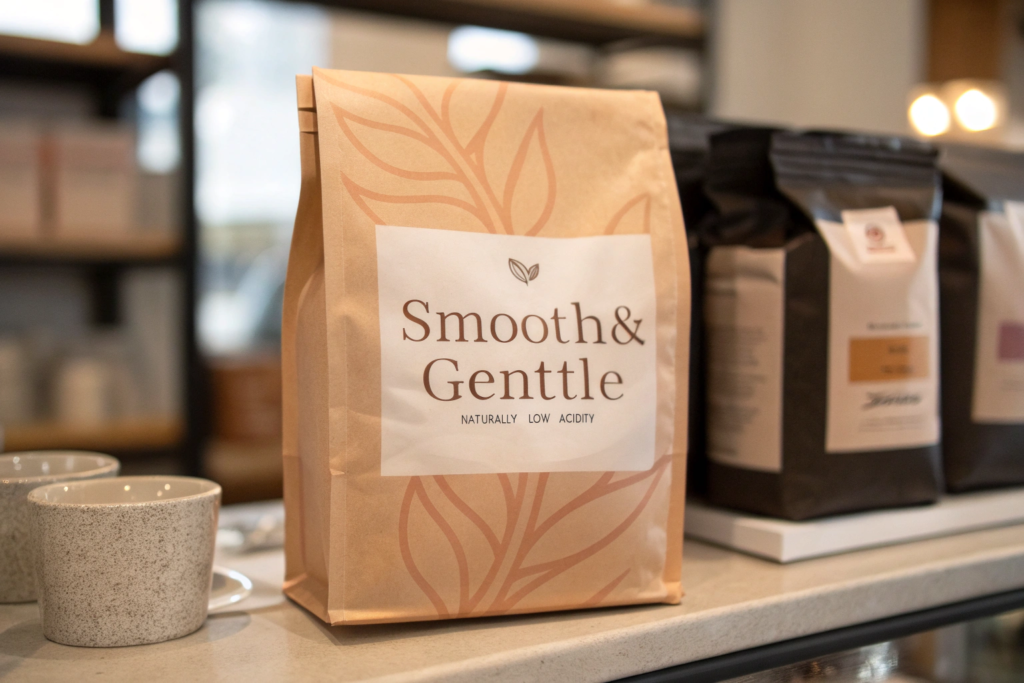
Roasters should market low-acid coffee using consumer-friendly language that emphasizes the experience rather than the chemistry. Effective descriptors include: "Smooth," "Gentle," "Easy Drinking," "Stomach-Friendly," and "Mellow." These words evoke a feeling of comfort and pleasure. The messaging should focus on the rich, chocolatey, and nutty flavor notes that naturally accompany a low-acid profile, positioning the coffee as a delicious choice in its own right, not just a concession for a sensitive stomach.
What Are the Best Consumer-Friendly Descriptors for a Low-Acid Yunnan?
Instead of "Low Acidity," try leading with: "Smooth & Chocolatey." It's immediately appealing. It tells the consumer what they will taste, not what they won't taste.
Other powerful descriptors for a Yunnan low-acid profile include: "Velvety Body," "Naturally Sweet," "Toasted Almond Finish," and "Gentle Roast." These words paint a picture of a delicious, comforting cup of coffee. They position the coffee as a premium, enjoyable experience. The "stomach-friendly" aspect can be a secondary, supporting message, perhaps on the back of the bag: "Our Yunnan Arabica is prized for its naturally smooth character and gentle finish." This approach appeals to both the consumer seeking low acid for health reasons and the consumer simply seeking a delicious, non-bitter cup.
Should I Create a Dedicated "Gentle Coffee" Category on My Website?
For many roasters, the answer is increasingly yes. Creating a curated collection or a dedicated category like "Smooth & Gentle Coffees" or "Easy Drinking Blends" serves two purposes.
First, it makes it easy for the intentional low-acid seeker to find what they're looking for. They don't have to guess which of your single-origins will be gentle. You've done the work for them. Second, it signals to the broader customer base that you understand this need and cater to it. It positions your brand as inclusive and attentive to customer well-being. It's a powerful merchandising tool. Within this category, a well-sourced Yunnan coffee can be a star performer, often outperforming traditional options in blind tastings due to its cleaner cup profile.
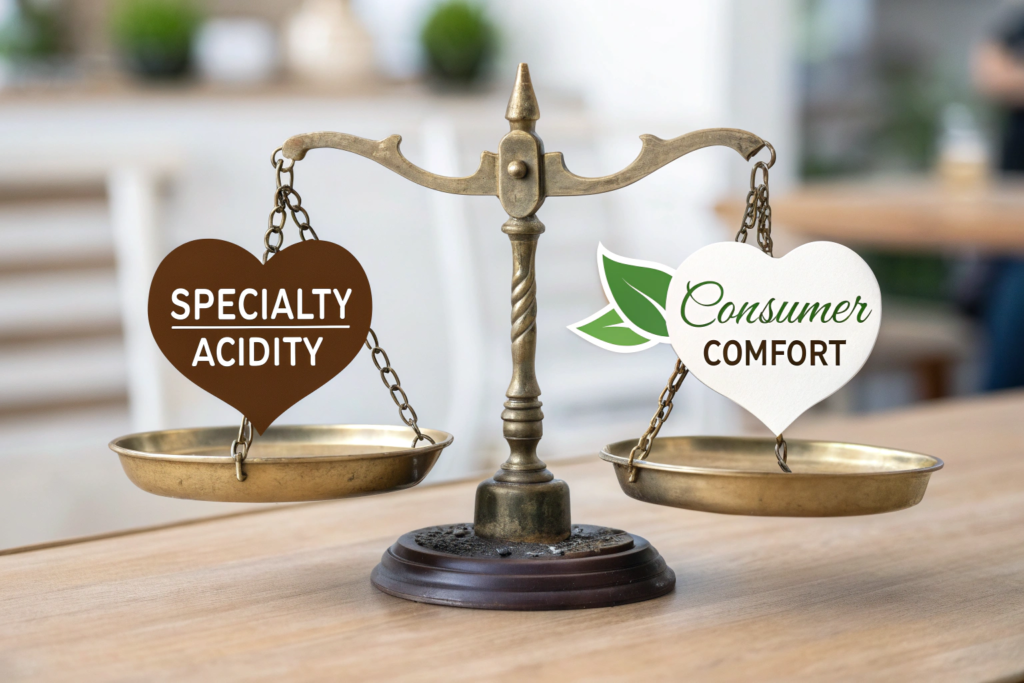
Is the Low-Acid Trend a Threat or an Opportunity for Specialty Coffee?
Some specialty coffee purists view the low-acid trend with suspicion. They worry it's a "dumbing down" of coffee, a retreat from the complex, vibrant acidity that defines the specialty movement. I see it differently.
The low-acid trend is an opportunity for specialty coffee, not a threat. It expands the specialty market by welcoming consumers who were previously alienated by highly acidic, "challenging" coffees. It creates a larger tent. The key is to differentiate between low-quality coffee that is simply bland and high-quality coffee that is naturally smooth and sweet. Specialty roasters can meet this demand with excellence by sourcing exceptional low-acid origins and applying skilled roasting to highlight their inherent sweetness and body. This is specialty coffee for everyone.
Can a Coffee Be Both "Specialty Grade" and "Low Acid"?
Absolutely. The Specialty Coffee Association (SCA) cupping form does not deduct points for low acidity. It evaluates the quality of the acidity—is it pleasant, balanced, and appropriate for the flavor profile?
A coffee with low, malic acidity can score 85, 86, or even 87 points if it is exceptionally sweet, clean, and balanced. The idea that high acidity equals high quality is a misconception. Quality is about balance, complexity, and freedom from defects. A beautifully processed Yunnan Catimor with a heavy chocolate body and a clean, sweet finish is a world-class specialty coffee. It just speaks a different flavor language than a high-acid Kenyan. Recognizing and celebrating this diversity of flavor profiles is the mark of a mature, inclusive specialty coffee industry. At Shanghai Fumao, we're proud to produce specialty-grade coffee that fits this "gentle" profile perfectly.
How Does Skilled Roasting Enhance the Low-Acid Profile?
Roasting is the final translation of the green bean's potential. A skilled roaster can take a naturally low-acid green coffee and elevate it.
A roast profile that emphasizes development—allowing the bean sufficient time to caramelize its sugars fully—will maximize the chocolate and nutty notes while further softening any residual acidity. Conversely, a rushed, underdeveloped roast of even the smoothest green coffee can taste sour and thin. The roaster is a critical partner in delivering the desired "smooth and gentle" experience. It's a collaboration between the farmer who grew the low-acid varietal, the processor who ensured a clean cup, and the roaster who unlocked the sweetness.
Conclusion
The demand for low-acid coffee in 2026 is not a blip. It's a reflection of a maturing consumer base that knows what it wants: a delicious, comfortable, daily coffee experience. It's driven by demographics, by health awareness, and by the changing ways people consume coffee (hello, cold brew).
For roasters, this trend represents a significant growth opportunity. It's a chance to expand your customer base, to build loyalty among a previously underserved segment, and to showcase the beautiful diversity of coffee origins that excel in this gentle, chocolatey, smooth profile. Origins like Yunnan are uniquely positioned to lead this charge, offering a clean, specialty-grade canvas for this comforting flavor experience.
If you're looking to add a high-quality, low-acid component to your offerings—whether for a blend, a single-origin, or a cold brew program—I'd be happy to share cupping notes and samples from our current harvest. My email is cathy@beanofcoffee.com.