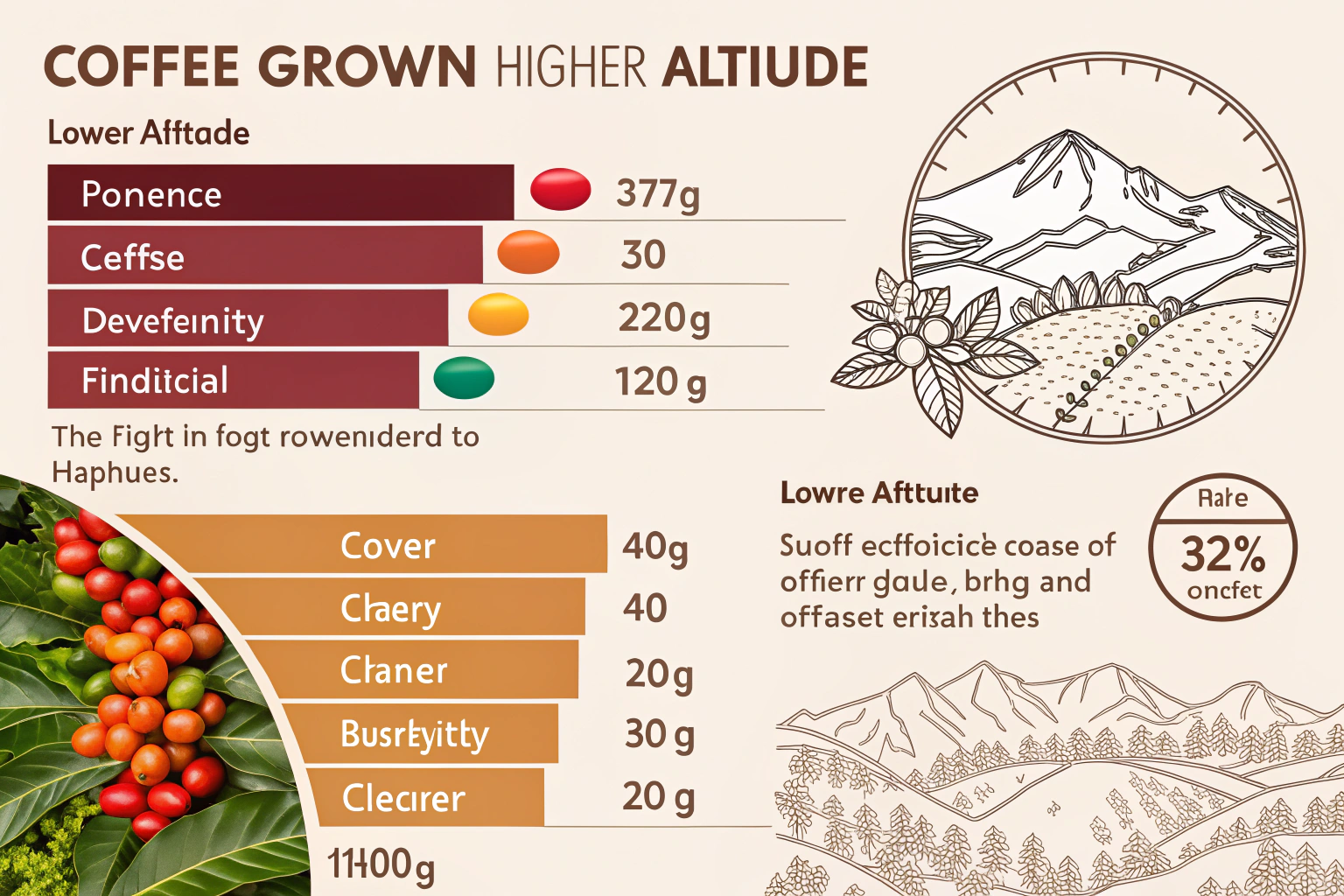
Think about the last truly exceptional cup of coffee you had. Bright, complex, maybe with a fruity or floral note. Chances are, those beans grew high up on a mountainside. It's not magic—it's science. Altitude is arguably the single most important environmental factor shaping the flavor profile of your coffee. For a buyer, understanding this isn't just academic; it's a direct tool for selecting the right bean for your market and predicting its taste.
In short, higher altitude directly leads to slower bean development, creating a denser seed with more concentrated sugars and complex acids. This translates into a cup with higher perceived acidity (brightness), more nuanced flavors (floral, fruity, winey notes), and a cleaner finish. Lower altitude coffees mature faster, resulting in a softer, fuller body with lower acidity and simpler, often nutty or chocolaty flavors. It's the difference between a vibrant, crisp white wine and a smooth, mellow ale.
So, why does this happen? And how can you, as a buyer, use this knowledge when sourcing from a region like Yunnan? Let's dive into the mechanics behind altitude's signature and how it plays out in our own highland plantations.
How Does High Altitude Physically Change the Coffee Bean?
You look at two green coffee beans. They might seem similar. But under pressure, one will be harder. In the roaster, they will behave differently. In the cup, they will tell completely different stories. The pressure point is altitude. The changes start inside the cherry, at a cellular level, long before the bean is ever harvested.
The core principle is development time. At higher elevations, the air is cooler. The coffee cherry takes much longer to ripen—sometimes months longer than its lowland counterpart. This extended maturation period is crucial. The bean has more time to develop its internal structures. Sugars have more time to form and concentrate. Acids develop more complexity. The bean becomes denser because it grows slower and firmer. This density is a key quality indicator. It's why high-altitude beans often withstand darker roasts better and why they yield that bright, complex acidity. It's not just about being high up; it's about what the cool, slow growth does to the seed's very building blocks.
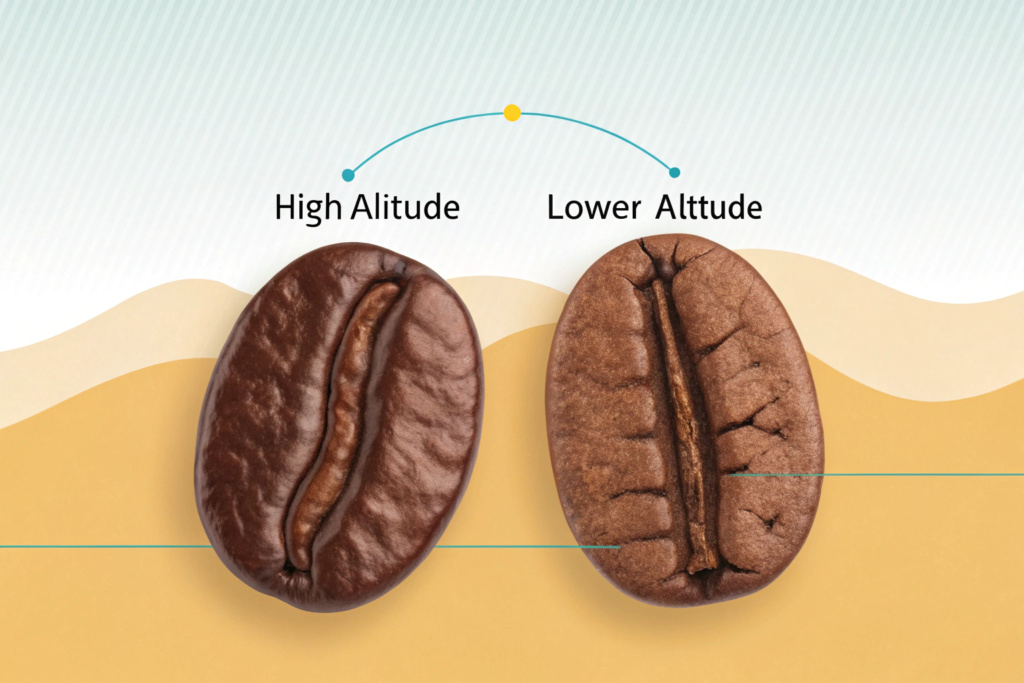
Why does bean density matter for roasting and flavor?
Density is a roaster's compass. A dense, high-altitude bean is like a hard, dense piece of wood. It takes heat differently. It requires more energy upfront to penetrate the tight cellular structure. Because of this, the roast develops more evenly. The sugars have time to caramelize thoroughly without the outside burning. This process unlocks those complex flavor compounds. A less dense, lower-altitude bean is more porous. It heats up quickly and can easily scorch or bake, leading to flat, baked, or bitter flavors. In terms of final taste, density correlates directly with the potential for clarity and vibrancy. A dense bean provides a structured, clean palate where acidity and subtle notes can shine. Think of it as the difference between a high-definition screen (dense bean) and a standard-definition one (less dense)—the detail and clarity are simply on another level.
What specific acids develop at higher elevations?
When we talk "acidity" in coffee, we don't mean sour or bitter. We mean a bright, pleasant tartness—like in a green apple or a citrus fruit. This is primarily due to organic acids. Chlorogenic acids are higher in fast-grown, lower-altitude beans and can contribute to harshness. But the good acids—citric, malic, phosphoric—thrive with slow development. Citric acid gives those lemon, orange, or grapefruit notes. Malic acid is reminiscent of apple or pear. At very high altitudes, you might even detect tartaric acid, which is wine-like. The cooler temperatures slow down the bean's metabolism, allowing these desirable acids to accumulate and remain stable. It's a fascinating bit of coffee chemistry that directly translates to the sophisticated flavor profiles sought by specialty buyers. This is why our high-altitude Catimor from Baoshan can surprise people with its crisp, citric brightness—a trait once thought rare in Chinese coffee.
What Flavor Profiles are Linked to Different Altitude Ranges?
Buyers often use altitude as a flavor shorthand. It's a useful rule of thumb. You can almost think of a mountain as a flavor map. As you climb, the common flavor descriptors change in a somewhat predictable pattern. This isn't absolute—soil, variety, and processing matter hugely—but altitude sets the stage.
Here's a typical breakdown. Coffees grown below 2,000 feet (610 meters) tend to be soft, simple, and grain-like. From 2,000 to 4,000 feet (610-1220m), flavors become smoother, with more body and classic chocolate or nutty notes—think many good Brazilian or robusta coffees. The "sweet spot" for specialty Arabica often starts around 4,000 feet. From 4,000 to 5,500 feet (1220-1676m), complexity blooms: expect balanced acidity, body, and notes of caramel, fruit, or even berry. Above 5,500 feet, you enter the high-altitude realm. Acidity becomes pronounced and vibrant. Flavors get nuanced: floral (jasmine), stone fruit (peach), citrus (mandarin), and wine-like tones are common. Our best lots in Yunnan are grown between 1,200 and 1,600 meters (approx. 3,900-5,250 feet), placing them firmly in that complex, balanced-to-bright category.
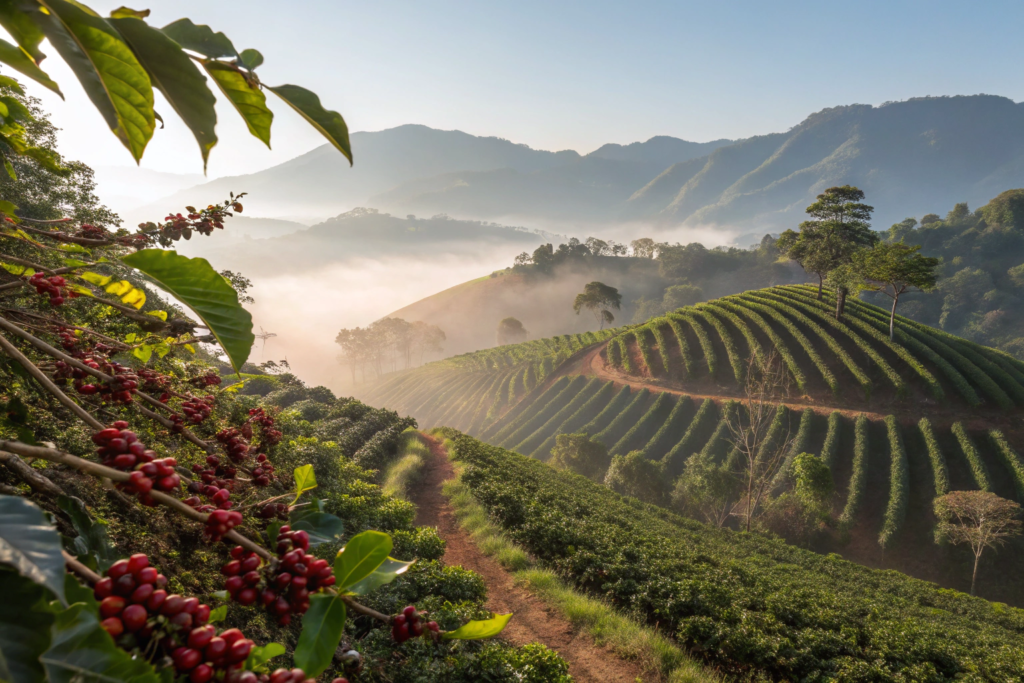
Can you provide an example of altitude-based flavor differences in Yunnan?
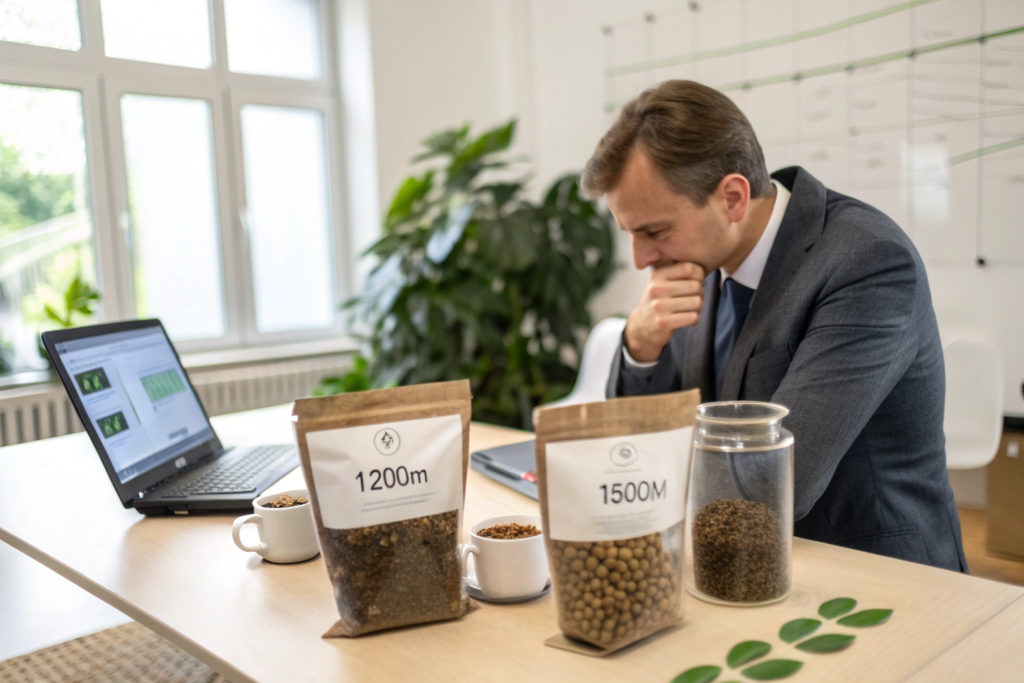
Let me use our own farms as a concrete example. We have plots at varying elevations within the Baoshan region. A Catimor lot from a lower slope, around 1,100 meters, typically yields a cup with a heavier body, lower acidity, and clear notes of dark chocolate and roasted nuts. It's dependable, sweet, and easy to drink. Now, take the same Catimor variety, processed the same way, but from a plot at 1,500 meters. The difference is striking. The body becomes livelier. The acidity is noticeably brighter, almost citric. The chocolate note might shift to a cocoa nib quality, and we often detect a subtle red berry or plum-like fruitiness. It's the same farmer, the same processing mill. The altitude, and the associated temperature drop, is the primary variable creating this dramatic flavor shift. This allows us to offer buyers a range of profiles from a single, trusted origin.
How does altitude interact with coffee processing methods?
This is a critical point for buyers to understand. Altitude sets the potential, but processing writes the final script. A high-altitude bean's inherent complexity makes it a perfect canvas for experimental processing. For instance, the intense sugars in a dense highland bean can fuel a beautiful, controlled fermentation in a natural process coffee, leading to explosive berry and wine flavors without becoming funky. A washed process on the same bean will highlight its pristine, intrinsic acidity and clarity. However, processing is also a risk mitigator. A lower-altitude bean with simpler sugars might not withstand a heavy natural process well; it could taste muddy. It often shines with a clean washed or honey process that emphasizes its inherent sweetness and body. So when we discuss a lot with a buyer, we talk about "altitude + variety + process" as one interlinked flavor equation. You can't separate them.
Why is Yunnan's Altitude Ideal for Premium Arabica?
When people hear "coffee from China," they rarely picture high-altitude, complex Arabica. The reality is a best-kept secret. Yunnan's geography is its superpower. The Himalayan foothills create a landscape of rolling highlands and deep valleys. This isn't flat farmland; it's a mountainous region where most coffee is grown on slopes between 900 and 1,700 meters above sea level.
This altitude range is the goldilocks zone for Arabica. It provides the necessary coolness (but no frost) to slow down growth. The significant temperature difference between day and night (another altitude-effect) further stresses the plant in a good way, forcing it to put more energy into seed development. Combine this with ample rainfall and rich, well-drained soils, and you have the textbook recipe for quality. It's similar to the conditions found in famous Central American regions. For us at Shanghai Fumao, this means our plantations are naturally positioned to produce beans with the structural density and acid profile that global specialty markets desire. We're not fighting geography to create quality; we're leveraging it.
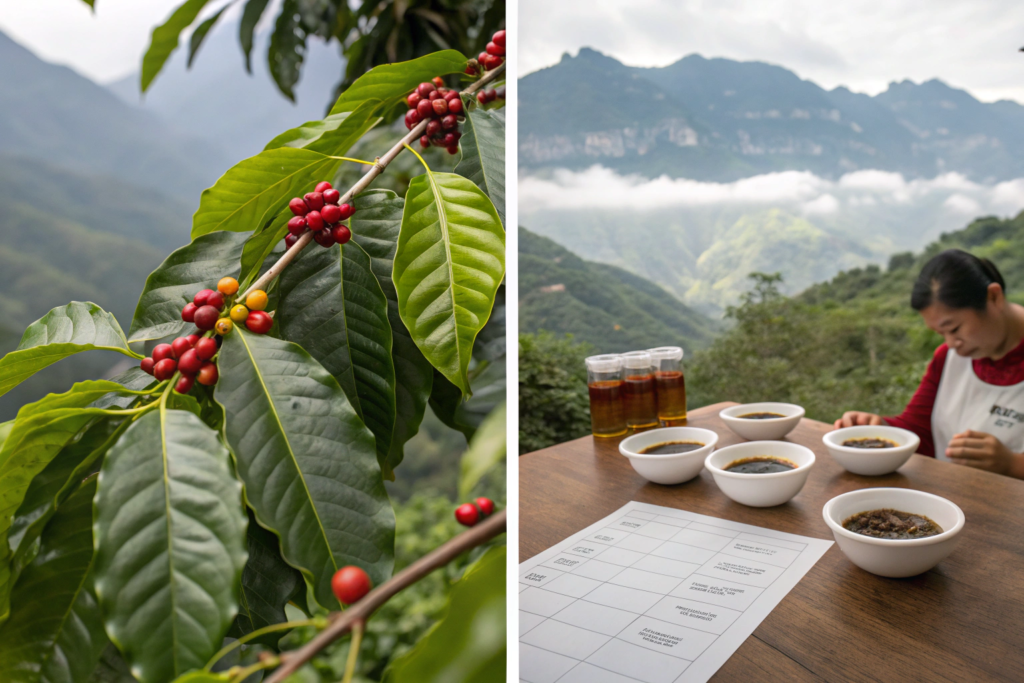
How does Yunnan's climate complement its altitude?
Altitude doesn't work alone. Yunnan has a distinct dry and wet season. The dry season coincides with the harvest and processing period. This is a massive advantage. Coffee cherries can be dried slowly under the sun (sun-dried coffee) without fear of mold or rain disruption, leading to a super-sweet, clean cup. The sunny days and cool nights during this period are perfect for both patio and raised-bed drying, allowing for meticulous control. This climatic synergy means we can consistently execute clean processing, which is just as important as growing a good bean. The altitude gives us the dense, flavorful seed, and the climate lets us preserve and enhance those flavors after harvest.
What challenges does high-altitude farming present, and how are they managed?
It's not all easy. Higher altitude means steeper slopes. This makes mechanization nearly impossible. Most work is done by hand—pruning, picking, carrying bags. It's labor-intensive and costly. Also, the cooler temperatures mean a longer wait for the harvest, tying up capital. Pests are fewer, but diseases like coffee leaf rust can still be an issue. How do we manage? First, we invest in our farming teams, training them in selective picking to ensure only ripe cherries are harvested. Second, we use terrace farming to make slopes more manageable and prevent erosion. Third, we implement rigorous shade-grown coffee practices where appropriate. The shade trees help regulate micro-climates, protect the soil, and often introduce beneficial biodiversity. These challenges, honestly, contribute to the quality. The careful hand-harvest and the extra effort are part of the reason the final product stands out. It's a feature, not a bug.
How Should Buyers Use Altitude Information When Sourcing?
Altitude on a spec sheet is a number. A useful number, but just one data point. The savvy buyer uses it as a starting point for conversation and a clue to the bean's potential behavior. It helps you ask the right questions and align the green coffee with your roasting style and target flavor profile.
Don't just chase the highest number. Extremely high altitude coffee (like some Guatemalan or Ethiopian lots) can be brilliantly acidic but also challenging to roast and blend. They might be too intense for a standalone espresso. Instead, think about balance. For a foundational blend component that needs body and chocolate notes, a mid-altitude bean might be perfect. For a fruity single-origin pour-over, target the higher end of a region's range. Always, always cup samples. The altitude number gives you an expectation, but your palate and your customers' palates make the final decision. When we send samples from Shanghai Fumao, we clearly label the altitude and processing method so you can start building your own reference library of how our Yunnan terroir expresses itself at different elevations.
What other factors must be considered alongside altitude?
Altitude is a headline, but the full story includes the supporting cast. Coffee bean variety is huge. A Bourbon or Gesha at moderate altitude can be more complex than a Catimor at very high altitude. Soil type (volcanic, clay, loam) influences mineral uptake and flavor. Shade coverage impacts development time. Most importantly, post-harvest processing methods (washed, natural, honey) have a dramatic and direct effect on flavor, sometimes more immediately obvious than altitude. A skilled exporter will manage all these factors in harmony. Your job as a buyer is to look at the whole package: "This is a washed Catimor from 1,400 meters in Yunnan, grown in red clay soil." That tells a complete story. Asking for the full story separates professional sourcing from guesswork.
How can importers verify the stated altitude of a coffee lot?
Trust but verify. A reliable exporter should be transparent. We provide GPS coordinates or at least the specific farm/village name for our lots, which can be cross-referenced with topographic maps. The detail in the documentation matters. Furthermore, the bean's physical characteristics often give it away. You can perform a simple density test by comparing bean weight and size, or even just by feeling the hardness. High-altitude beans will generally sink in a specific saltwater solution test (a density test), while lower-density beans float. The most reliable verification, however, comes from the cup and from building a relationship with a trustworthy supplier. Consistency over multiple shipments is the ultimate proof. If a supplier's "1,500m" lot tastes consistently bright and complex year after year, you can be confident in their data.
Conclusion
Altitude is the invisible architect of coffee flavor, meticulously crafting bean density, acid development, and ultimately, the symphony of tastes in your cup. From the bright, floral notes of high-grown beans to the chocolatey comfort of lower-altitude coffees, this single factor provides a powerful framework for understanding and sourcing coffee. In Yunnan, the highland terrain offers a natural advantage, allowing growers like us to produce Arabica with the complexity and vibrancy that meets global specialty standards.
Understanding altitude empowers you to make informed buying decisions, predict roasting behavior, and curate a coffee menu that delights your customers. It’s a fundamental piece of the coffee sourcing puzzle. To experience how altitude shapes the profile of premium Yunnan coffee firsthand, we invite you to taste the difference. Contact our team at BeanofCoffee to request samples from our specific altitude plots. Let Cathy Cai guide you through our range—from our rich, lower-altitude lots to our bright, complex highland offerings. Start the conversation at cathy@beanofcoffee.com.