You walk into a supplier or open a wholesale catalog. The coffee is labeled with a roast date. It says "Roasted 3 days ago." Is that too fresh? Another bag says "Roasted 21 days ago." Is that too old? For a cafe owner like Ron, whose business depends on consistent quality and efficient operations, this isn't a philosophical question—it's a critical operational parameter. Buying beans too early means wasted degassing time; buying them too late means serving stale coffee. So, where's the sweet spot that balances peak flavor with practical workflow?
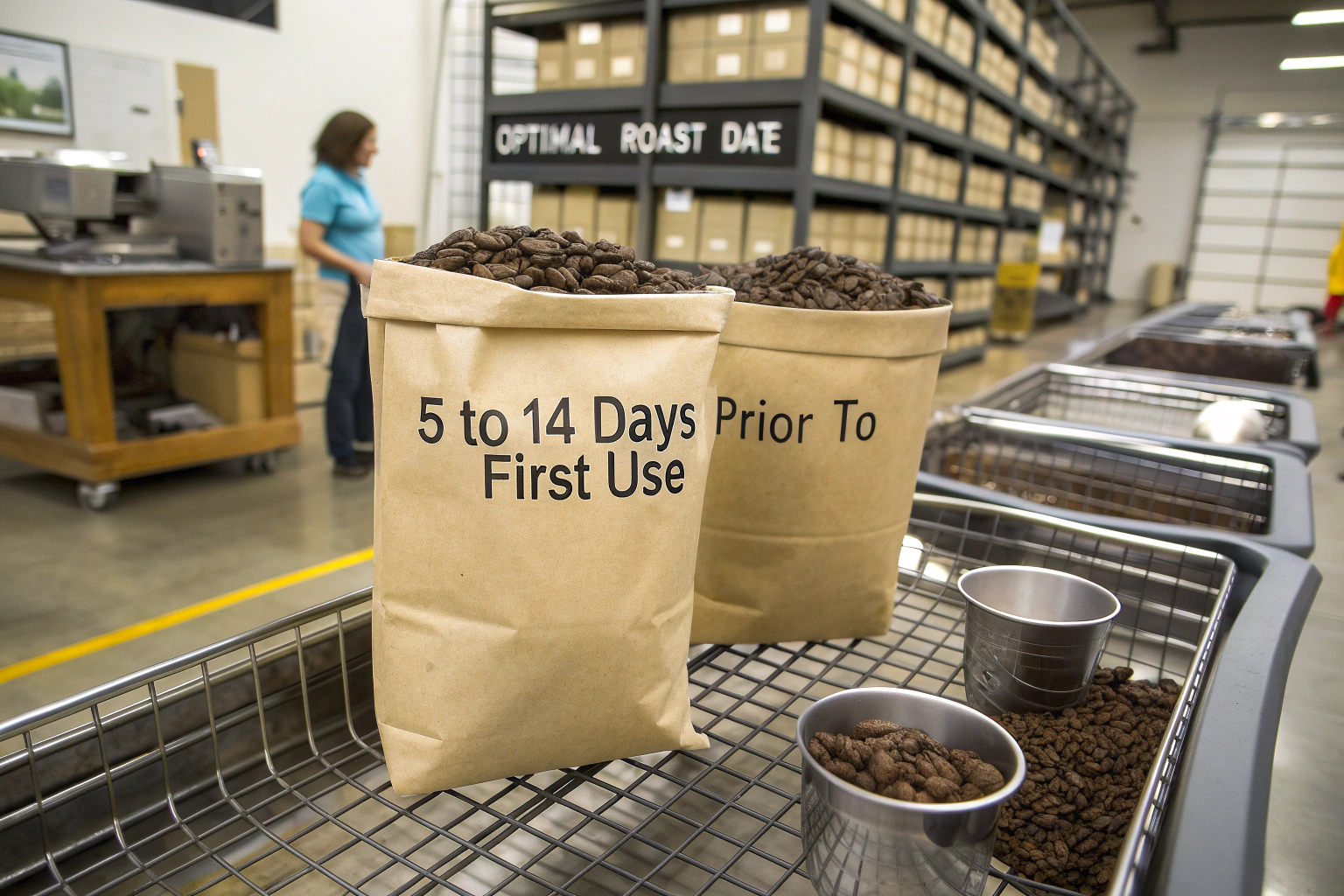
The optimal roast date window for purchasing cafe beans is different from the ideal brewing window. It's a buffer zone that accounts for degassing, delivery, and your own inventory rhythm. The golden rule is: Purchase coffee that was roasted 5 to 14 days prior to your planned first use. This window is the intersection of science (degassing kinetics) and business (supply chain reliability). At BeanofCoffee, when we work with roaster partners for cafe clients, we structure deliveries around this principle to ensure our beans—whether Yunnan Arabica or Catimor—hit the cafe at their operational peak.
So, if you're tired of guessing or dealing with erratic flavor from week to week, you need to standardize your purchase window. Let's define it.
Why is the 5-14 Day Window Optimal for Purchase?
This range isn't arbitrary. It's built around the two most important post-roast processes: degassing and the onset of staling. Your goal is to receive beans that are ready to perform, but not already declining.
The Science Behind the Window:
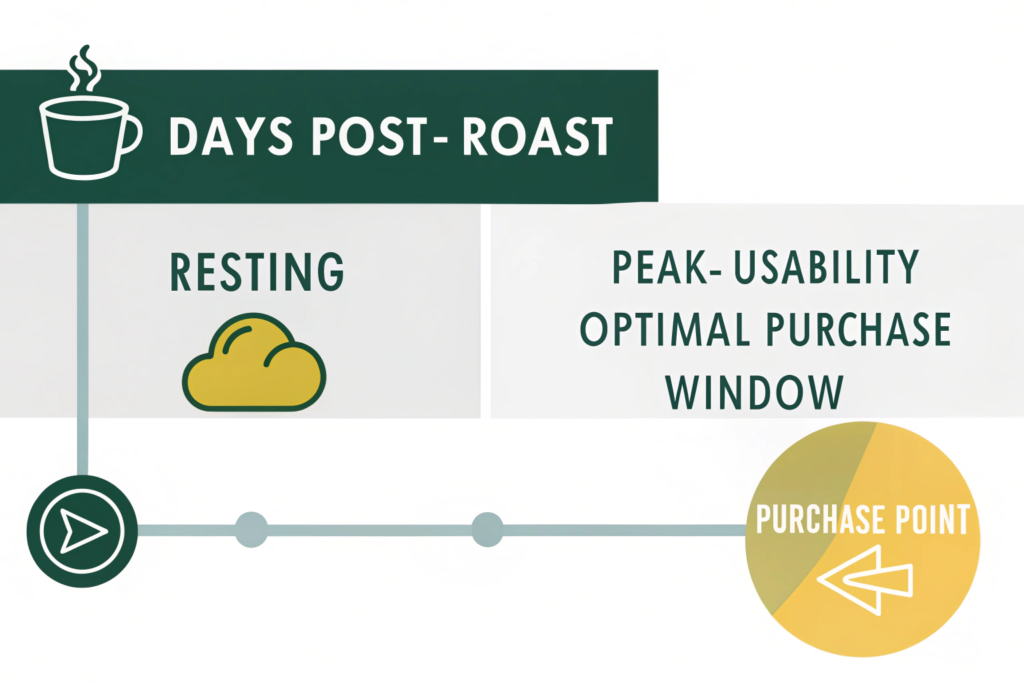
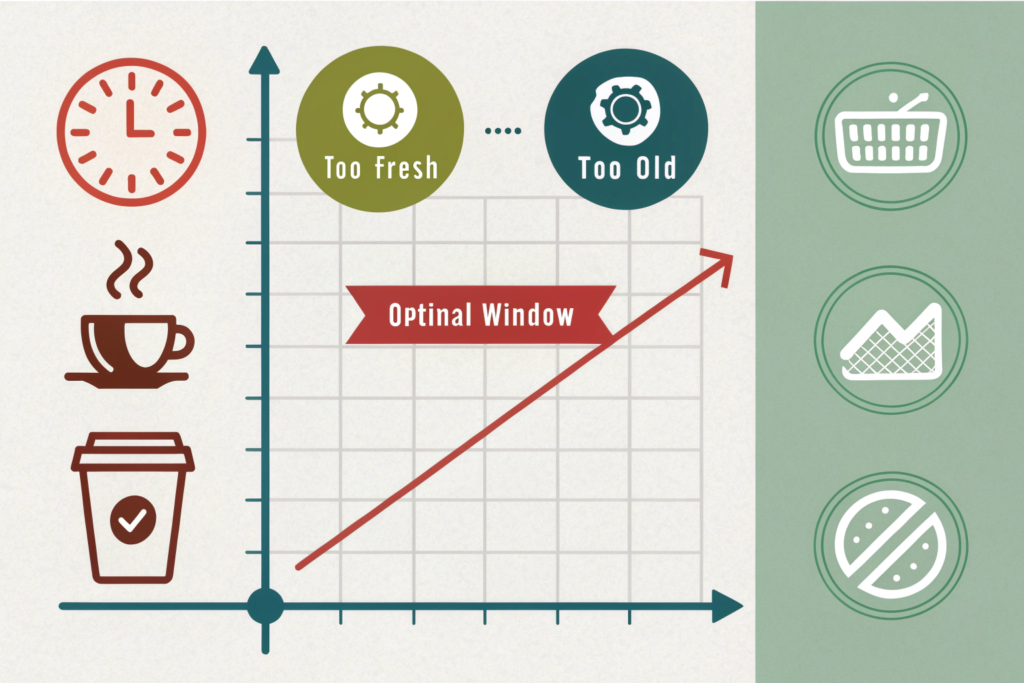
- Days 0-4 (Too Fresh / Resting Period): Immediately after roasting, coffee beans are packed with CO2. This gas interferes with extraction—it repels water, causing channeling in espresso and uneven brewing in filter methods. The result can be sour, sharp, under-extracted cups with weak body and excessive crema that dissipates quickly. Beans need this period to "rest" and release the most volatile CO2.
- Days 5-14 (Peak Usability Window): This is the sweet spot for purchase and use. By day 5-7, the most aggressive off-gassing has slowed, allowing for stable extraction. The coffee's flavor profile—the balance of acidity, sweetness, and body—has settled into its intended state. This window offers maximum consistency for dialing in grinders and pulling shots. You are buying into the stable, reliable phase.
- Days 15+ (The Decline): Around the 2-3 week mark, oxidation and the loss of volatile aromatics begin to outpace the benefits of degassing. Flavors start to flatten, acidity softens excessively, and stale notes may appear. For a cafe serving espresso, crema becomes thinner and less stable.
Therefore, purchasing at 5-14 days post-roast means the beans arrive ready to use (or after 1-2 days of acclimation) and you have a full 7-10 day buffer to use them at their best. This directly addresses your pain points of timeliness and quality consistency.
How does roast level shift this window?
Roast level is a critical modifier:
- Light Roasts: Denser, with more tightly held CO2. They often benefit from a longer rest—peak may be 7-21 days. Your purchase window could be 7-14 days.
- Medium & Medium-Dark Roasts: The standard 5-14 day window applies perfectly. This covers most espresso blends and all-purpose cafe coffees.
- Dark Roasts: Degas very quickly due to a more fractured cell structure but also stale the fastest. Their peak is very short, often 3-10 days. Purchase at 3-7 days and use immediately.
When ordering, you should specify your preferred roast date range relative to the roast profile. A good supplier will adjust their schedule for you.
What about "baked" coffee from resting too long in sealed bags?
This is a myth if bags are properly sealed with one-way degassing valves. In a valve bag, CO2 can escape but oxygen cannot enter in significant amounts. The coffee is not "baking" or stewing; it's simply degassing. The concern of "too much rest" is only valid for beans stored in an impermeable, pressurized environment (like a sealed tin without a valve), which is rare in professional wholesale.
How to Align Supplier Delivery with Your Cafe's Consumption Cycle?
The purchase window is useless if your delivery schedule doesn't sync with it. This is where logistics and communication with your supplier become key. You need to move from random ordering to a predictable, rhythmic system.
Building a Synchronized System:
- Calculate Your Weekly Usage: Track exactly how many kg/lbs of each coffee (espresso, filter, decaf) you use per week. Be precise.
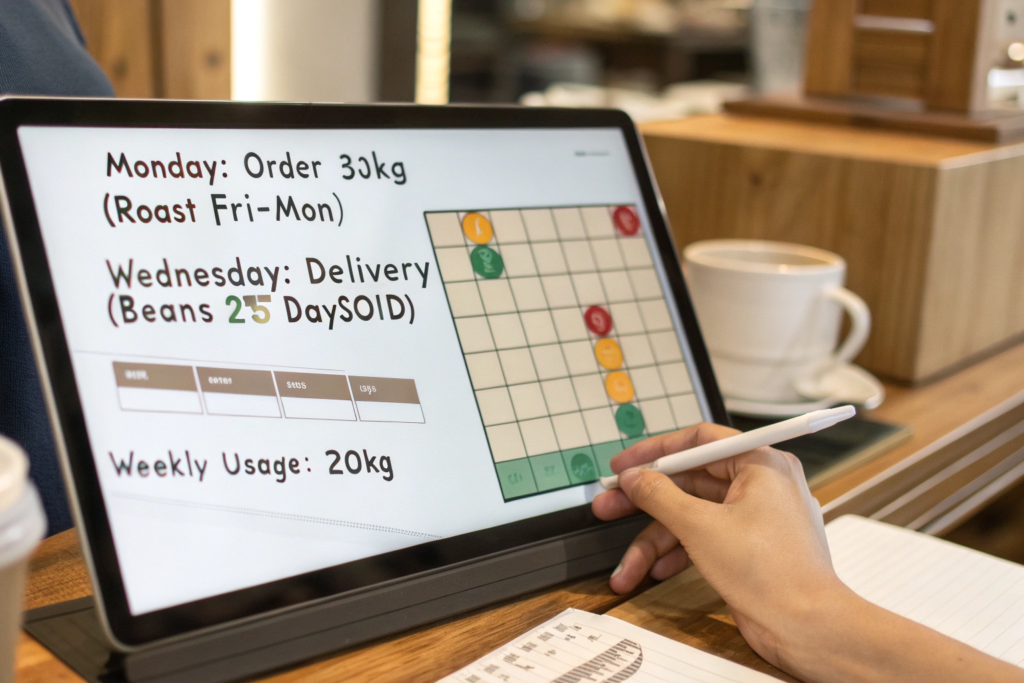
- Set Your Par Level & Order Frequency: Determine how much buffer stock you want. A common model is to order a 1.5-week supply every week. Example: You use 20kg/week of espresso blend. You order 30kg every Monday for delivery on Wednesday. This means you always have 10kg of "older" stock and 20kg of "newer" stock blending in your hoppers, ensuring consistency.
- Communicate the Roast Date Requirement to Your Supplier: Your order instruction should be: "For my Wednesday delivery, please roast my 30kg of [House Blend] no earlier than the previous Friday and no later than Monday." This gives you a roast date range of 2-5 days old upon delivery, perfectly within the window.
- Implement a Strict FIFO (First-In, First-Out) System: Clearly mark the roast date on every bag you receive. Always use the oldest bag first. This is non-negotiable.
A professional roaster or wholesaler should be able to accommodate this. At BeanofCoffee, our roasting partners work on such scheduled cycles for their cafe clients. It's a mark of a trustworthy partnership. It ensures you're never serving coffee past its prime and never waiting for beans to degas.
What if your supplier can't meet tight roast date windows?
This is a red flag for a wholesale relationship. If a supplier is roasting all their coffee on one day of the week and delivering it throughout the week, you might receive 8-day-old coffee on Monday and 1-day-old coffee on Friday. This creates chaos in your consistency. You have two options: 1) Find a supplier with more flexible roasting schedules or dedicated batch roasting for clients, or 2) Order larger quantities less frequently and invest in airtight storage containers (like Coffee Vac or sealed bins) to extend the on-site shelf life of the older portion of the batch. Option 1 is far superior for quality.
How does delivery distance impact the ideal purchase window?
If your roaster is local (same city), you can request very fresh roast dates (2-3 days) because transit time is negligible. For regional or national shipping, you must account for transit days. If shipping takes 2 days, you need to request a roast date that is 2 days before your ideal "receipt" window. So, if you want beans that are 5-7 days old when you brew them, and shipping takes 2 days, you need them roasted 3-5 days before they ship. Clear communication with your supplier about transit time is essential.
How to Verify Freshness Upon Delivery and Store On-Site?
Your due diligence doesn't end with placing the order. When the beans arrive, you must verify they meet the agreed window and then store them properly to preserve that freshness until use.
The Delivery Day Checklist:
- Immediately Check the Roast Date: Every single bag. Reject any shipment where the roast date falls outside your contracted window (unless you specifically approved an exception). This is your right as a professional buyer.
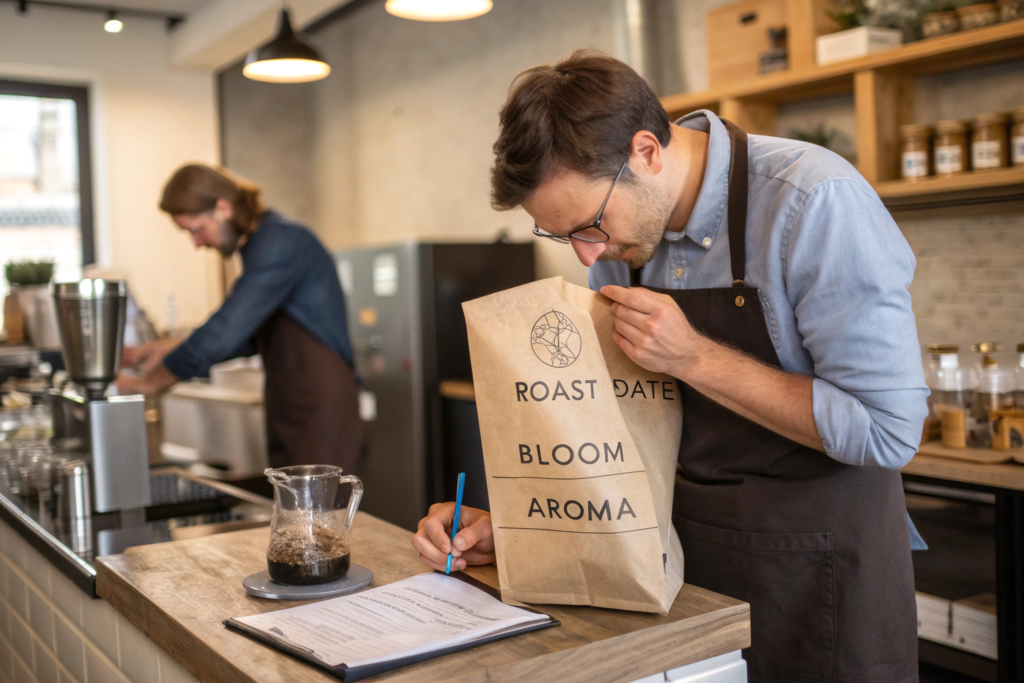
- Perform a Bloom Test (for whole bean): Open one bag from the batch. Grind a small sample (15g) and pour 30g of hot water over it in a small cup. A vigorous, rising bloom indicates high CO2 content and freshness (beans are likely on the younger side of your window). A weak bloom suggests they are older or stale. This is a quick, functional verification.
- Inspect the Beans: They should have a pleasant, aromatic smell—not flat, sour, or musty. For darker roasts, some oil is normal, but excessive oil can indicate aging or very dark roasting.
Optimal Cafe Storage Protocol:
- Keep Beans Sealed in Original Bags: The best storage until opening is the roaster's bag with a one-way valve. Keep bags closed, in a cool, dark, dry place (not next to the oven or in sunlight).
- After Opening, Use Quickly: Once opened, the clock accelerates. Plan to use a 5lb (2.2kg) bag within 3-5 days. For larger bags, consider transferring beans to an airtight, opaque container but only fill it with a few days' supply.
- Never Refrigerate or Freeze Opened Bags: This introduces moisture and condensation, which is disastrous for flavor. (Professional freezing of unopened, freshly roasted bags is a separate, advanced technique for long-term storage, not for daily cafe use).
This disciplined approach ensures the quality you purchased is the quality you serve.
Should you let delivered beans "acclimate" before use?
If the beans are on the very fresh side (3-4 days) and you plan to use them for espresso, letting them sit in the sealed bag for another 24-48 hours in your cafe can be beneficial to allow a bit more degassing. This is part of why the 5-day purchase minimum is helpful—it often builds in this acclimation time during transit. For filter coffee, this is less critical.
How do you manage multiple roast dates across different products (espresso, filter, decaf)?
You need a separate, clear system for each product line. Use colored tape or markers on bags: e.g., Blue for Espresso Blend (use within 14 days of roast), Green for Single Origin Filter (use within 21 days), Red for Decaf (note: decaf often has a shorter optimal window—7-10 days—as the decaffeination process makes it stale faster). Train all baristas on the system.
What are the Financial and Quality Implications of Missing the Window?
Getting the purchase window wrong has direct, measurable consequences for your business, impacting both costs and customer satisfaction.
Purchasing Too Fresh (0-4 days old):
- Operational Waste: You must wait to use the coffee, tying up capital and shelf space. If you use it immediately, you waste coffee and time dialing in unpredictable shots, leading to dumped shots and frustrated baristas.
- Inconsistent Quality: Customers receive under-extracted, sour espresso one day and balanced shots the next as the beans age, damaging your reputation for consistency.
Purchasing Too Old (15+ days old):
- Flavor Degradation: The coffee you serve is flat, lacking vibrancy. This leads to customer dissatisfaction, negative reviews, and loss of repeat business. You cannot charge a premium for stale coffee.
- Increased Waste: You may find yourself having to discard the last portion of bags that have gone fully stale.
- Devalued Product: You paid for fresh, peak-quality coffee but received a depreciated asset.
Adhering to the optimal window is a core component of quality control and cost management. It ensures every dollar you spend on green coffee (and the roasting markup) translates directly into a high-value product in the cup.
How to negotiate with suppliers who don't date their bags?
This is simple: Do not buy from them. A professional roaster marking roast dates is the absolute bare minimum standard for a B2B relationship. It is non-negotiable. "Blend Date" or "Best Before" dates are useless. If they refuse, they are not a serious partner for a quality-focused cafe. Your business is too important to risk on an opaque product.
Can you use older coffee for cold brew or baked goods?
Yes, this is a good waste-reduction strategy, but it's a salvage operation, not a plan. Cold brew is more forgiving of stale notes, and baked goods mask them entirely. However, you should not plan to purchase fresh coffee only to relegate a portion to cold brew. The optimal purchase window is for your primary, high-value use (espresso, filter). Older leftovers can be diverted, but this should be the exception, not the rule.
Conclusion
The optimal roast date window for purchasing cafe beans—5 to 14 days post-roast—is the linchpin of a quality-driven, efficient operation. It synchronizes the biochemistry of coffee with the practical rhythm of cafe supply chains. By demanding this from your supplier, implementing a disciplined inventory system, and verifying upon receipt, you transform freshness from a variable into a guaranteed standard.
This control is what allows you to deliver a consistently excellent cup, build customer trust, and protect your margins. In the coffee business, time is literally flavor.
Demand precision in your supply chain. Partner with roasters who respect the roast date window, or work directly with BeanofCoffee to source green beans and control your own roast schedule for ultimate freshness. Contact Cathy Cai to discuss reliable, schedule-aligned sourcing: cathy@beanofcoffee.com. Serve certainty.