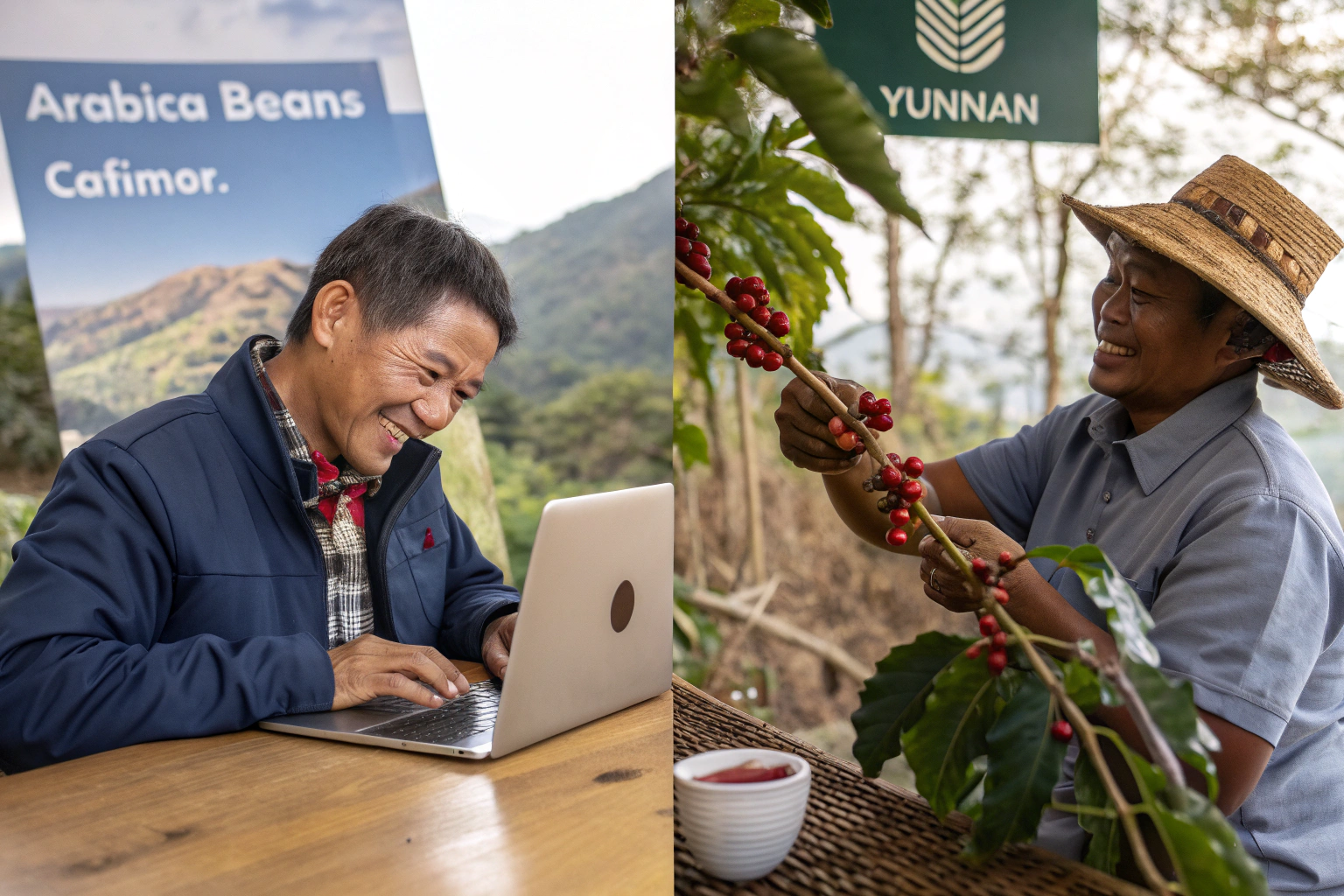
Are you a coffee buyer like Ron, looking to add a versatile and cost-effective bean to your lineup? You've heard about Catimor—its resilience, its great flavor potential for blends and espresso—and you're ready to buy in bulk. But you're hitting a wall. It's a huge problem. You search online B2B sites and you're flooded with generic "Arabica" or "Robusta" listings. Finding a reliable, consistent supplier for a specific varietal like Catimor feels like searching for a needle in a haystack. You're worried about ending up with a low-quality, mixed lot from a trader who doesn't even know what they're selling.
The best place to buy Catimor coffee beans in bulk is directly from the producers or vertically integrated exporters in the regions where it is most successfully grown, primarily in Asia and parts of Latin America, with Yunnan, China emerging as a key global supplier. To do this effectively, you need to bypass the generic traders and connect with suppliers who specialize in and understand this specific varietal. This means going straight to the source.
As the owner of over 10,000 acres of coffee plantations in Baoshan, Yunnan, Catimor is a cornerstone of our harvest. We've built our reputation on the quality and consistency of our Catimor lots. I understand the challenge of sourcing specific varietals, and I know the immense value a reliable supply chain brings. In this article, I'll guide you on where to look for high-quality Catimor, what to ask for, and how to establish a direct purchasing relationship that gives you a competitive edge.
Why Is Catimor a Smart Choice for Bulk Purchasing?
Before we talk about where to buy, let's quickly cover why you're making a smart move by looking for Catimor. You're a savvy buyer, and you need beans that are not only flavorful but also make good business sense. The problem is that many exotic, high-scoring varietals are expensive and produced in such small quantities that they aren't viable for bulk purchasing. You're worried about finding a bean that is both scalable and high-quality.
Catimor is the answer to this problem. It's a unique hybrid, a cross between a Timor hybrid (which itself is a cross between Arabica and Robusta) and a Caturra varietal. This genetic background gives it a powerful combination of advantages for bulk buyers.
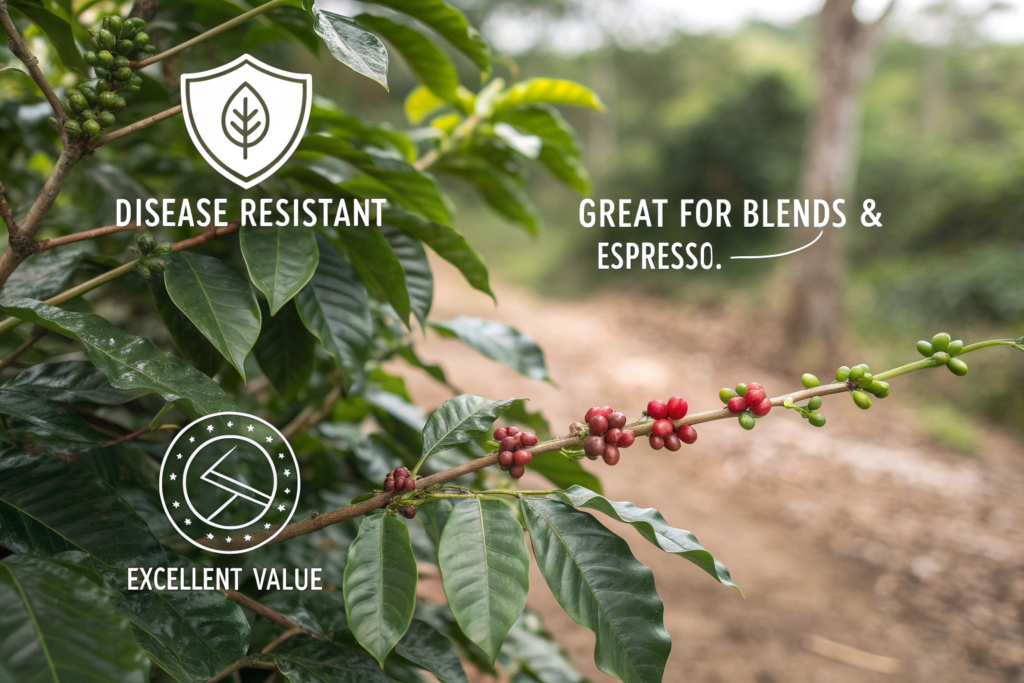
- High Yield and Disease Resistance: Catimor plants are famously hardy. They are resistant to coffee leaf rust, a devastating disease that can wipe out entire farms. This resilience means a more stable and reliable supply for farmers, which translates to a more consistent and cost-effective product for you.
- Excellent Flavor Profile for Blends: While it may not always have the delicate floral notes of a Gesha, a well-processed Catimor has a fantastic foundational flavor. It typically boasts a full body, mild acidity, and pleasant notes of chocolate, nuts, and a gentle sweetness. This makes it the perfect "workhorse" bean—an ideal base for espresso blends or a solid, crowd-pleasing single-origin offering.
- Outstanding Value: Because it's a high-yield crop, Catimor can be produced more economically than many other sensitive Arabica varietals. This allows you to purchase a high-quality, specialty-grade Arabica bean at a very competitive price point, improving your profit margins.
At my company, Shanghai Fumao, our Catimor is one of our most popular exports precisely for these reasons. It delivers the quality and consistency our large-scale buyers need.
Is Catimor considered an Arabica bean?
Yes. Despite its distant Robusta ancestry (which is where it gets its disease resistance), Catimor is classified as a Caturra-lineage Arabica varietal. It qualifies as 100% Arabica coffee. This is an important distinction for marketing and labeling, as it meets the "100% Arabica" standard that many consumers look for as a mark of coffee quality.
Where in the world is Catimor grown?
Catimor is grown in many coffee-producing countries, particularly those that have had to contend with coffee leaf rust. You'll find it in parts of Vietnam, Indonesia, India, Mexico, Peru, and, increasingly, in Yunnan, China. The specific flavor profile can vary significantly based on the terroir of each region. The high-altitude, temperate climate of Yunnan has proven to be an ideal environment for producing high-quality, sweet, and clean-tasting Catimor.
Where Are the Best Places to Source Bulk Catimor?
You're convinced Catimor is the right bean, but your initial searches have been fruitless. You're tired of sifting through generic B2B listings from traders who might not even know the specific varietal they are selling. The problem is that you need to get closer to the source. You're worried about the risk of buying a mixed-quality lot from an anonymous middleman.
To buy Catimor in bulk reliably, you need to focus your search on the producers and exporters who specialize in it.
- Directly from Vertically Integrated Exporters in Yunnan, China: This is your best bet. The coffee industry in Yunnan has matured rapidly, and producers like us have become experts in cultivating and processing high-quality Catimor. As a vertically integrated exporter, we are the farm. We control the quality from the tree to the bag. When you contact us, you are talking directly to the source. This eliminates all the middlemen and gives you unparalleled transparency and the best possible price.
- Specialized Importers: Some green coffee importers in North America and Europe have started to build strong relationships with Catimor producers. Find an importer who specifically lists "Yunnan" or "Chinese" coffee in their portfolio. They will have done the work of vetting the farms and can offer you smaller "bulk" quantities (e.g., a few pallets instead of a full container) with less logistical hassle.
- Producer Cooperatives in Latin America: In countries like Peru or Mexico, many smallholder farmers have formed cooperatives to process and export their coffee collectively. If you can connect with a cooperative in a region known for Catimor, you can often establish a direct trade relationship. This can be more complex logistically but is another path to sourcing directly.
For consistency, scale, and quality control, sourcing from a major, professionalized origin like Yunnan is often the most efficient path for a serious buyer.

Why is Yunnan, China becoming a major source?
The Yunnan government and private enterprises like ours have invested heavily in the specialty coffee infrastructure over the last two decades. We have modern processing mills, a deep understanding of agricultural science, and a focus on quality control that meets international standards. This, combined with our region being a perfect environment for Catimor, has turned Yunnan into a reliable and high-quality source for bulk coffee that can compete with any origin in the world.
How do I vet a potential supplier?
When you find a potential supplier, ask them specific questions. Don't just ask for "Catimor." Ask for the processing method (e.g., washed, honey, natural), the harvest date, and a quality score or defect count. Ask for a pre-shipment sample from the specific lot you intend to buy. A professional, direct supplier will have this information readily available and will be happy to provide samples. Their transparency is a sign of their reliability.
How to Ensure Quality When Buying Catimor in Bulk?
You've found a promising supplier. They say they have high-quality Catimor. But how can you be sure? This is the biggest risk in bulk purchasing. You're about to invest a significant amount of money, and you're worried that the final shipment won't match the sample you approved or the quality you were promised.
Ensuring quality requires a clear, systematic process. Trust, but verify.
- Always Start with a Sample: This is non-negotiable. Never commit to a bulk purchase without first receiving and evaluating a sample of the green beans. When you receive the sample, evaluate it for visual defects, roast it, and "cup" it to assess the flavor profile.
- Request a Pre-Shipment Sample (PSS): Once you agree to a purchase, and before the container is loaded, request a PSS. This is a sample drawn directly from the bags that are allocated for your order. This confirms that the bulk lot matches the initial sample you approved.
- Get a Clear Contract: Your purchase contract should be detailed. It should specify the coffee varietal (Catimor), the processing method, the crop year, the agreed-upon quality standard (e.g., based on SCA defect count), and the price. A clear contract protects both you and the supplier.
- Build a Long-Term Relationship: The best way to ensure consistent quality over time is to move beyond a transactional relationship. When you build a long-term partnership with a supplier like Shanghai Fumao, we get to know your specific needs and quality expectations. We become invested in your success, which motivates us to consistently provide you with our best lots.
What is "cupping"?
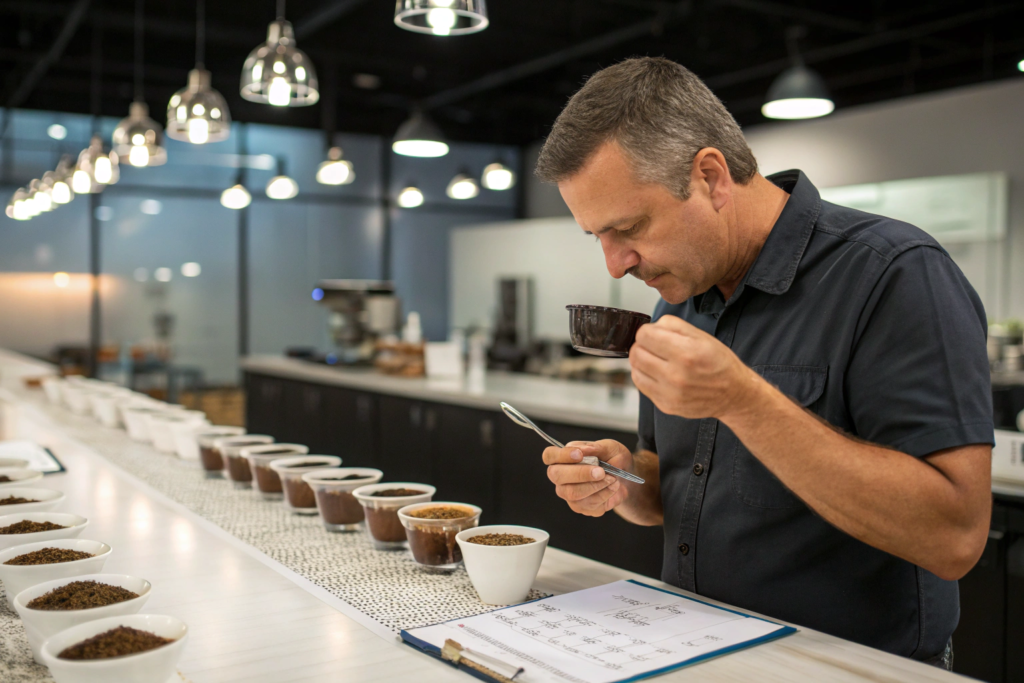
Cupping is the standardized method used by coffee professionals to taste and evaluate coffee. It involves smelling the dry and wet grounds and then tasting the coffee at various temperatures by slurping it from a special spoon. This process allows the taster to assess the coffee's aroma, flavor, aftertaste, acidity, body, and balance. Learning the basics of cupping protocol is an essential skill for any serious coffee buyer.
What are SCA defect counts?
The Specialty Coffee Association (SCA) has a standardized system for grading green coffee based on the number of physical defects found in a 350-gram sample. For a coffee to be considered "specialty grade," it must have zero "Category 1" defects (like sour beans or fungus damage) and no more than five "Category 2" defects (like broken or insect-damaged beans). Requesting a coffee that meets this SCA standard is a good way to ensure a high level of physical quality.
Conclusion
Finding a reliable source for bulk Catimor coffee beans doesn't have to be a frustrating search. By understanding why this versatile varietal is such a smart commercial choice and by focusing your search on the producers and vertically integrated exporters who specialize in it, you can build a strong and transparent supply chain. The key is to look directly to the source, with regions like Yunnan, China emerging as world-class leaders in producing high-quality, consistent Catimor.
By following a rigorous quality assurance process—always starting with samples, demanding clear contracts, and building long-term relationships—you can eliminate the risks associated with bulk purchasing. You can confidently add this fantastic, crowd-pleasing workhorse bean to your lineup, knowing you have a supply chain you can depend on.
If you are ready to source high-quality Catimor directly from the heart of one of the world's most exciting new coffee origins, I invite you to connect with us. At BeanofCoffee, we are the farmers, and we are proud of the exceptional Catimor we produce. Please reach out to my colleague, Cathy Cai, at cathy@beanofcoffee.com to request a sample and discover how we can become your trusted, direct-from-farm supplier.