You're building a flagship espresso blend or a core single-origin offering for your cafe. Your customers love it. Then, the new crop arrives, and the flavor profile shifts. You're forced to tweak your roast, retrain your baristas, and risk disappointing regulars. For a business that thrives on consistency, this is a recurring nightmare. Is there a way to source coffee that delivers reliable, steady quality every month of the year?
The most consistent year-round quality typically comes from large, multi-region producing countries with diverse micro-climates and infrastructure that enable a constant flow of fresh crop. The top contenders are Brazil (due to its vast scale and processing technology), Colombia (with its two main annual harvests), and Honduras (as a rising volume producer with modernized systems). However, true consistency is less about a single origin and more about sourcing from large, professional farms or cooperatives within these origins that have mastered standardized processing and blending.
Let's be clear: "consistent" does not mean "the best." It means predictable, reliable, and with minimal variance from one shipment to the next. For a buyer like Ron, concerned with timeliness and stable pricing, this consistency is often more valuable than fleeting peaks of spectacular quality. It's the backbone of a business. This guide will explore the origins that provide this stability and the strategies to lock it in, even from more variable regions.
Why Does Brazil Set the Global Benchmark for Consistency?
When you think of consistency in coffee, you think of Brazil. It's the world's largest coffee producer, and its model is built for volume and stability, not just peak quality. This consistency stems from three pillars: geography, agricultural practice, and processing scale.
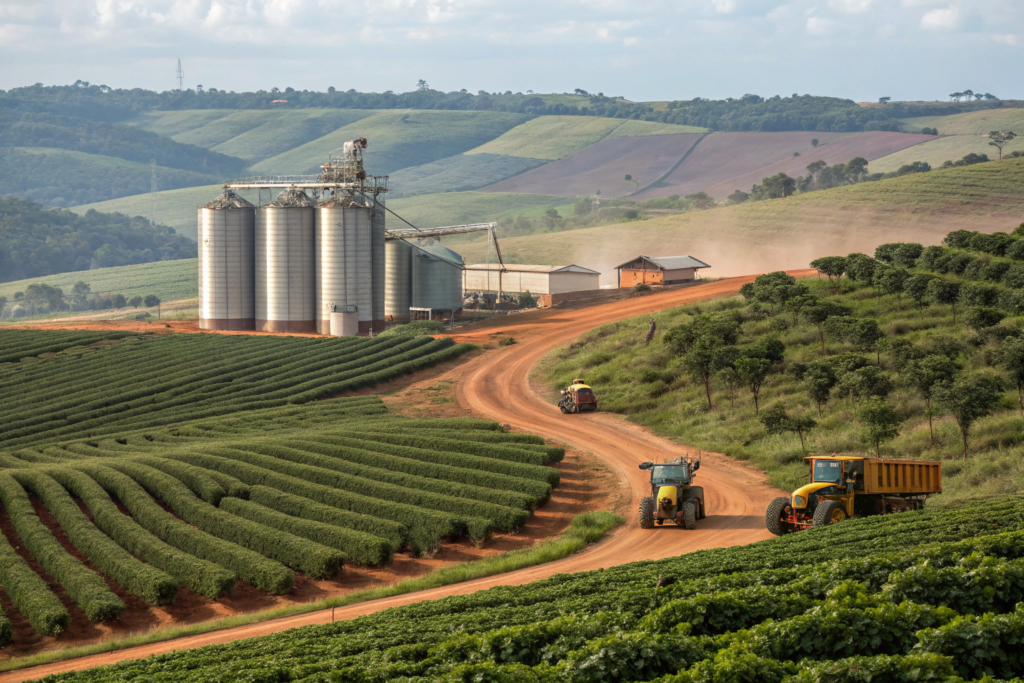
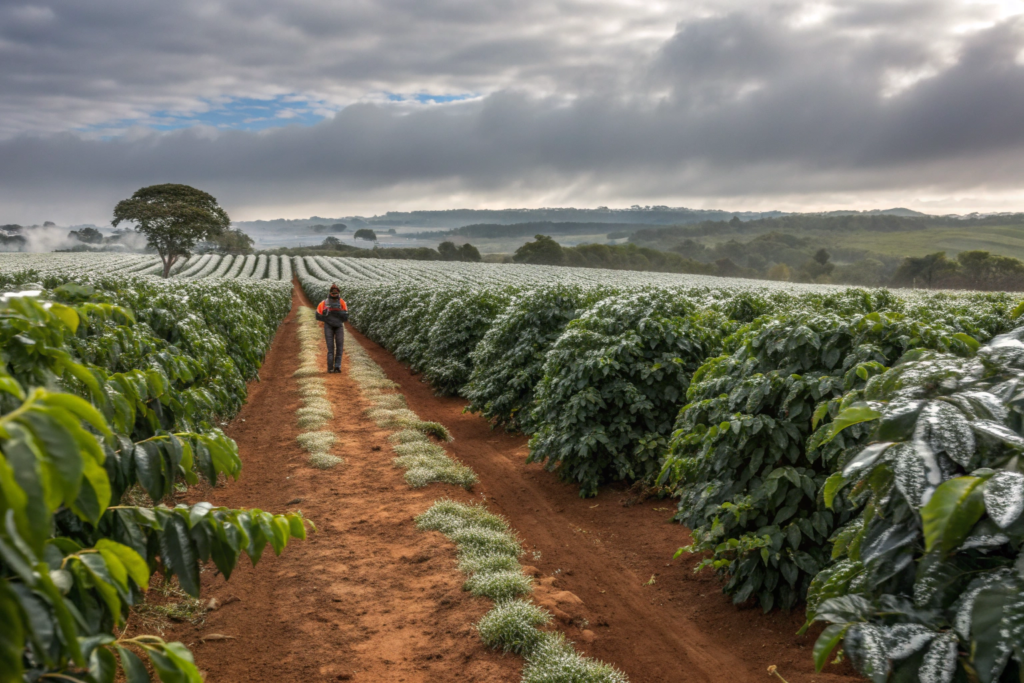
First, geography and climate. Brazil's coffee-growing regions are vast, relatively flat, and at lower altitudes compared to Central American or East African mountains. This allows for mechanized harvesting on a huge scale. While this can mix ripe and unripe cherries, it creates massive, uniform lots. More importantly, Brazil's sheer size means that while one region is between harvests, another is delivering fresh crop, allowing exporters to offer "new crop" coffee almost continuously.
Second, processing technology. Brazil leads the world in industrial-scale, controlled processing. Methods like pulped natural (semi-washed) were perfected here to ensure uniform drying and reduce defects. Vast patios and mechanical dryers negate the risk of weather-related spoilage that plagues smaller farms. The focus is on clean, sweet, low-acidity profiles that are reproducible year after year. For a cafe needing a reliable base for blends—a coffee that brings chocolate, nutty notes and a heavy body without surprises—Brazilian Santos or Cerrado is a foundational choice.
How Do Brazilian Farms Manage Quality Control at Scale?
Large Brazilian fazendas (farms) operate like food manufacturing plants. They implement strict QC protocols at every stage, from soil analysis to final bagging. They use mechanized sorting and grading technology (optical sorters, density separators) that remove defects with machinelike precision. This results in green coffee with extremely low defect counts and uniform bean size (screen), which translates directly to even roasting and predictable extraction. When you buy a container of Brazilian coffee from a reputable large-scale supplier, you are buying a known, standardized product.
What is the Flavor Trade-off for This Consistency?
The trade-off is often in the ceiling of complexity. The very practices that ensure consistency—mechanization, large-scale blending, focus on process control—can mute the distinctive "terroir" or extreme flavor notes found in small, micro-lot coffees from Ethiopia or Panama. Brazilian coffees are prized for their reliable sweetness, nutty/chocolaty flavor, and full body, not for explosive floral or fruity acidity. For a consistent espresso base or a crowd-pleasing drip coffee, this is not a bug; it's a feature.
How Does Colombia’s Dual-Harvest System Provide Reliability?
Colombia is the world's leading producer of washed Arabica coffee and has built its reputation on both quality and remarkable consistency. Its secret weapon is geography: the Andes Mountains run through the country, creating diverse micro-climates.
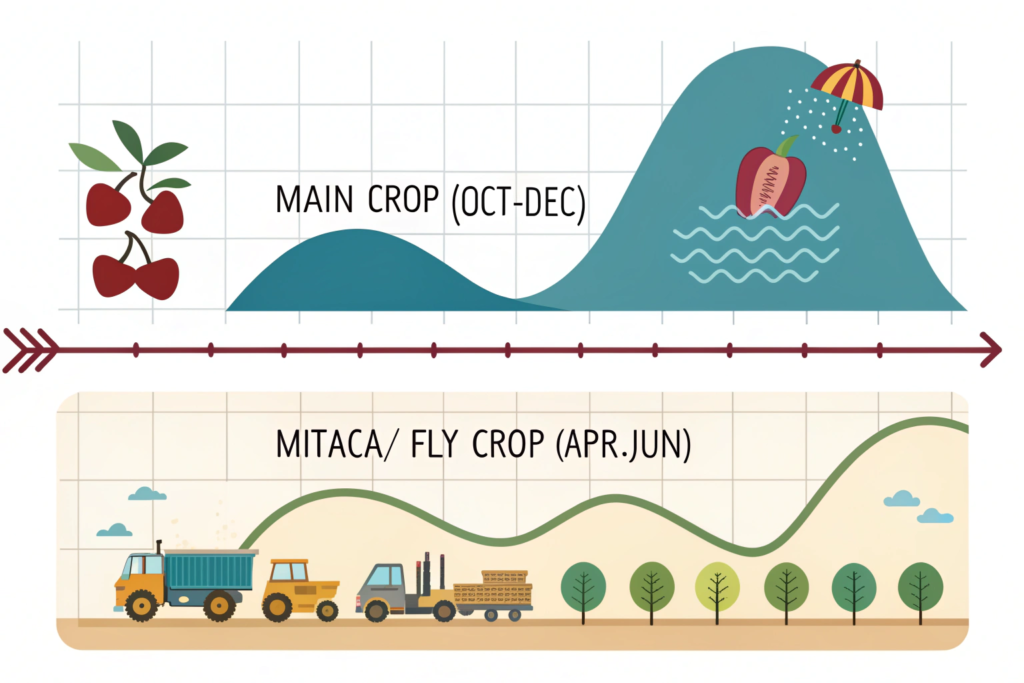
Colombia's unique advantage is its two main annual harvests. The principal "main crop" is harvested from October to December. A smaller but significant "mitaca" or "fly crop" is harvested from April to June. This biannual cycle means there is almost always fresh Colombian coffee being harvested, processed, and exported. While the main crop is larger and often of slightly higher quality, the fly crop ensures a steady supply. Major exporters expertly blend coffee from different regions and harvests to create a year-round, stable flavor profile for their export grades, like the famous "Supremo" and "Excelso."
What Role Do the FNC and Cooperatives Play?
The Colombian Coffee Growers Federation (Federación Nacional de Cafeteros or FNC) is a powerful stabilizing force. It provides technical support, quality standards, and a centralized marketing system. While it represents thousands of smallholders, it helps standardize processing and quality across a fragmented base. For a buyer, purchasing through a major exporter aligned with the FNC system offers a high degree of reliability in terms of quality specifications and logistical execution.
Is All Colombian Coffee Consistent?
No. At the high end, single-origin microlots from specific departamentos like Huila, Nariño, or Cauca can vary significantly in profile from year to year, showcasing terroir. The consistency is found in the commercial-grade and high-volume specialty blends that mix beans from multiple regions. These blends are crafted to hit a specific, market-tested profile—balanced acidity, medium body, caramel sweetness—that large roasters and cafes can depend on. For a business, this is the workhorse coffee that never lets you down.
Which Other Origins are Emerging as Consistent Suppliers?
Beyond the giants, other countries have invested heavily in infrastructure and organization to become reliable, year-round sources. Honduras is now Central America's largest coffee producer and has focused on improving quality consistency. Large mills and cooperatives there process coffee from thousands of smallholders to a uniform standard, offering great value with a balanced, sweet profile.
Peru is another key player, with a growing focus on certified (Organic, Fair Trade) coffee produced by well-organized cooperatives. Their harvest is also spread out due to diverse geography, allowing for longer export windows. Vietnam, dominant in Robusta, is the epitome of consistency for the Robusta market—its massive scale and focus on yield produce a uniform product that is essential for espresso blends and instant coffee, providing that bitter punch and thick crema predictably.
How Does a "Multi-Origin Sourcing" Strategy Guarantee Consistency?
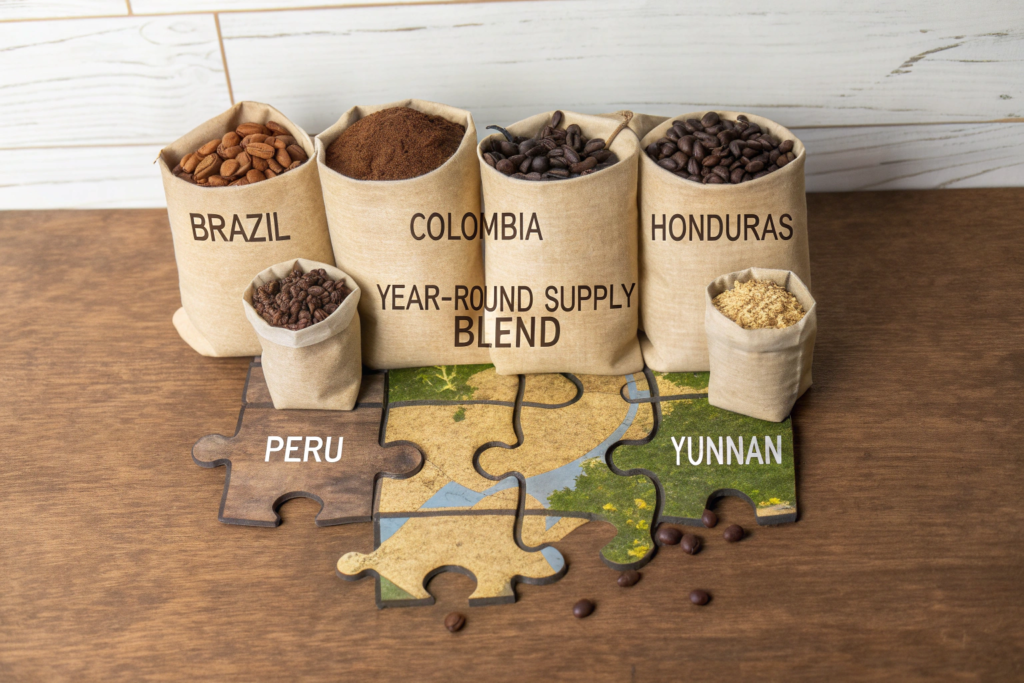
The smartest strategy for absolute year-round consistency isn't relying on one origin, but building a blend from multiple, geographically diverse origins. When Brazil is between harvests, your blend can lean more on Colombian. When Central America's harvest ends, Peru's might be starting. A skilled roaster or a forward-thinking exporter (like us at Shanghai Fumao) can create a "house blend" at the green bean stage by pre-mixing lots from different origins with complementary profiles. This master blend is then rolled out consistently over the entire year, buffering against any single origin's seasonal or quality fluctuations. This is the ultimate tool for large cafes and chains.
Can You Get Consistency from a Single Farm?
Yes, but it requires a very specific partner: a large, vertically integrated farm or estate that has full control over its process and can produce significant volume. Estates in places like Guatemala (Antigua), Costa Rica (Tarrazú), or even our own farms in Yunnan, China can achieve high consistency if they apply Brazilian-level rigor to their QC. For example, by controlling every step on our 10,000+ acres—using standardized fertilization, selective harvesting protocols, and automated sorting—we can produce lots of Yunnan Arabica that maintain a stable flavor profile of citrus, black tea, and chocolate across harvests. This is how a boutique origin can serve consistent, large-scale B2B buyers.
What Buyer Strategies Ensure Consistent Supply?
Finding a consistent origin is only half the battle. Locking in that consistency requires strategic actions from the buyer.
- Contract Forward: Secure your supply for the next 6-12 months with a reliable exporter. This guarantees volume and price stability, but you must trust their ability to deliver the same quality.
- Prioritize Process Over Peak: Choose suppliers who emphasize processing control and defect removal over marketing terroir romance. Ask about their QC infrastructure (optical sorters, moisture meters).
- Request Blind Tasting of Consecutive Lots: Before signing a yearly contract, ask the supplier to provide samples from the last three harvests of the same coffee. Taste them blind. Do they taste strikingly similar? That's the test.
- Develop a Relationship with a Large Exporter or Cooperative: Work with partners who have the scale to blend and hold inventory, smoothing out supply bumps. A direct relationship with a major producer-exporter like us provides visibility into the pipeline and the ability to plan jointly.
Why is the "Relationship" the Ultimate Consistency Tool?
In the end, coffee is an agricultural product. Even in Brazil, a frost can happen. The final layer of consistency comes from your supplier's integrity and capability. A good partner will communicate proactively about potential issues, work to find a substitute lot that matches your profile, or blend to compensate for a minor shortfall. This relationship turns a transactional purchase into a managed supply chain. For our clients, we provide harvest forecasts, pre-shipment samples, and blended lots designed specifically for their year-round needs, leveraging our scale and control in Yunnan.
What are the key factors that determine the consistent quality of coffee origins?
The journey from bean to cup is a delicate dance, and at its heart lies the origin—a terroir as unique as a fingerprint, where nature and nurture converge to shape the soul of each coffee. Consistent quality in coffee origins hinges on a symphony of interconnected elements, each contributing to the depth, complexity, and reliability that connoisseurs seek. First and foremost, altitude reigns supreme. Coffee plants thrive in the cool embrace of high elevations, typically between 1,000 to 2,000 meters above sea level, where the air is thin, temperatures fluctuate dramatically between day and night, and rainfall is abundant yet well-distributed.
These conditions slow the maturation of the cherry, allowing sugars to develop more fully and acids to remain bright and vibrant, resulting in beans with a balanced, nuanced flavor profile—think of the crisp acidity of Ethiopian Yirgacheffe or the sweet, floral notes of Colombian Supremo, both born from such elevated landscapes. Next, soil composition acts as the foundation, providing essential nutrients that seep into the bean’s very core.
Conclusion
Year-round consistency is not found in a single magical origin, but in a combination of scale, technology, and sourcing strategy. Brazil, Colombia, and Honduras lead due to their production models, but consistency can be engineered through smart blending and partnerships with professional, vertically integrated producers anywhere in the world.
For your business, the quest for consistency should focus less on a country's name and more on the answers to these questions: Does the supplier have control? Do they have scale? Do they have data? And are they a true partner? If you are looking for a consistent, high-volume supply of Arabica to anchor your offerings, we invite you to evaluate our Yunnan estates. We build consistency into our process so you can build it into your brand.
To discuss a consistent supply partnership and receive samples from our current and previous harvests for comparison, contact our export manager, Cathy Cai, at cathy@beanofcoffee.com. Let's build something stable, together.