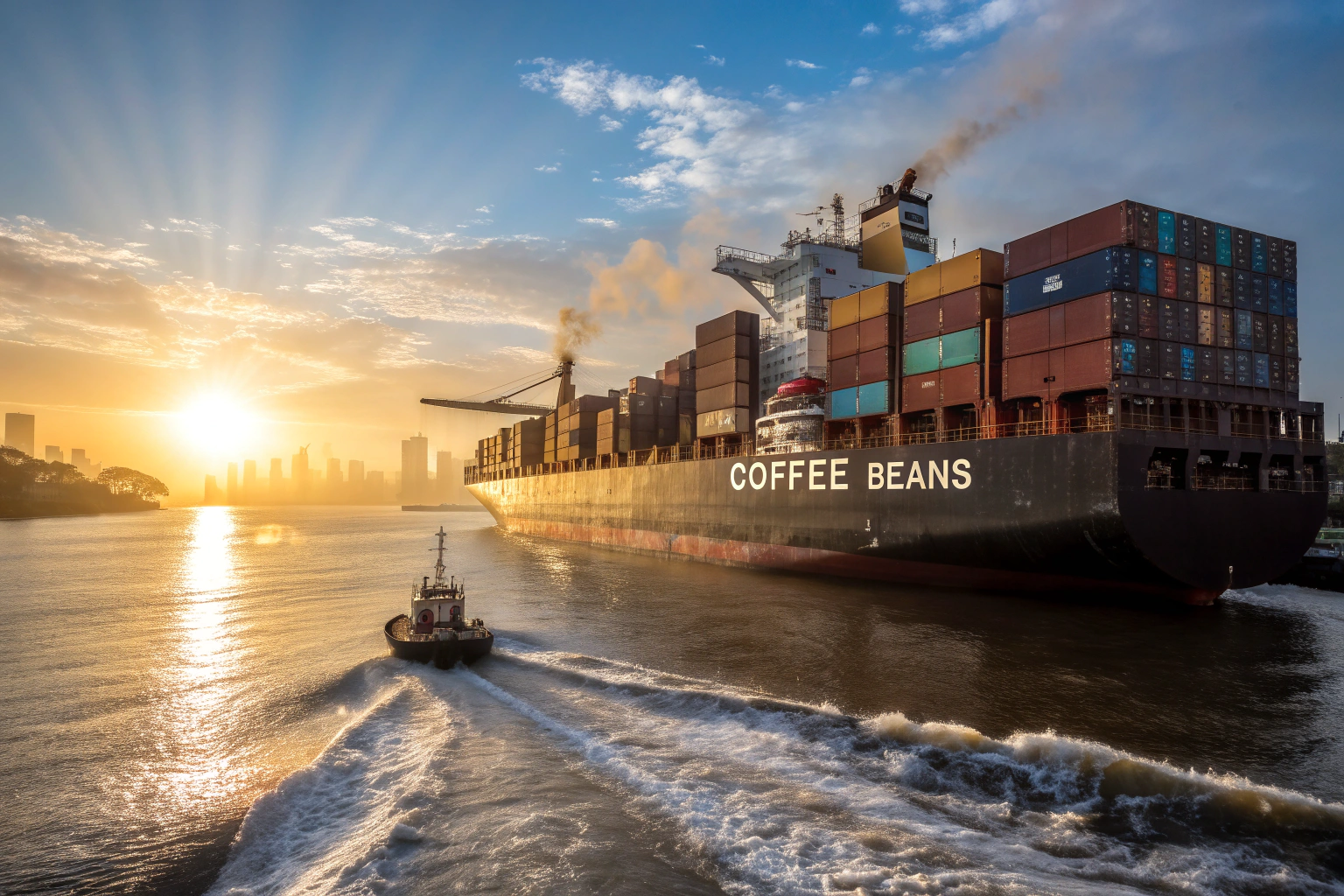
Ron, when you look at the volatility of the commodity market, it all comes back to a single number: volume. Your ability to forecast prices, secure consistent supply, and plan your hedging strategy begins with knowing who the biggest players are. They are the ones who effectively set the floor price for the entire global coffee market. Understanding who exports the most is not just a trivia question; it is supply chain awareness 101.
Brazil is, by a substantial margin, the world's largest exporter of coffee beans by volume, consistently responsible for roughly one-third of the global total. However, the market is segmented: Brazil leads in total Arabica/Robusta volume, Vietnam dominates the Robusta/soluble coffee sector, and Colombia remains the highest-volume exporter of premium washed Arabica.
Brazil’s dominance is historic and structural, driven by agricultural scale that no other country can match. But remember this crucial lesson: high volume often means high price volatility and standardized quality. For specialty buyers like you, understanding the second and third tiers of exporters is often more valuable than focusing on the giant.
Why does Brazil dominate global coffee exports?
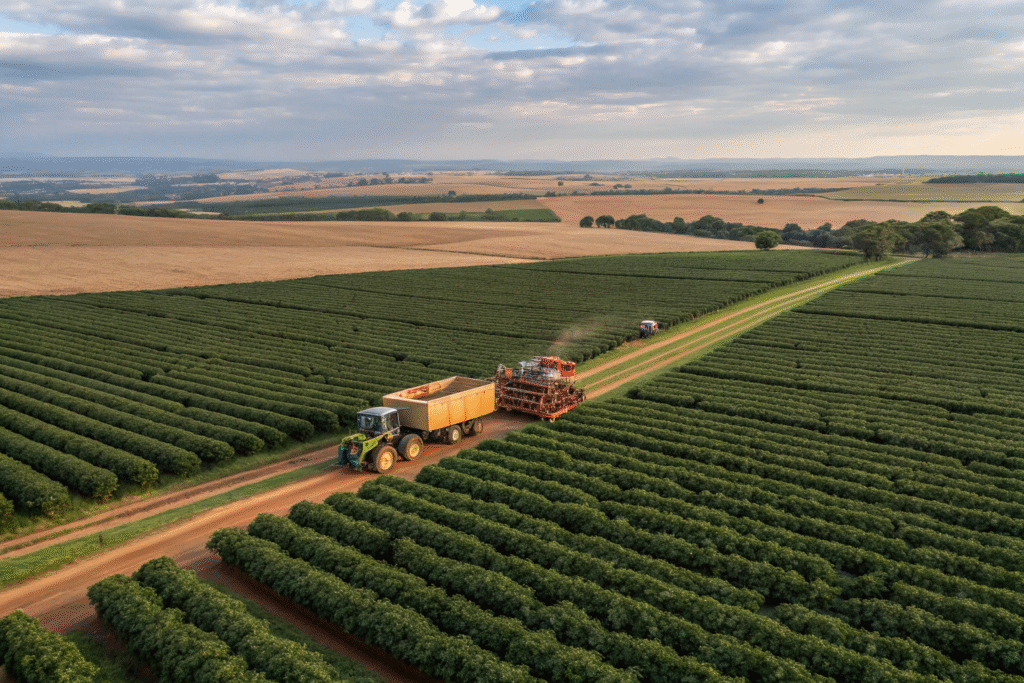
Brazil has held the title of the world's largest coffee producer and exporter for well over a century, and their position is virtually unchallengeable simply due to geography and agricultural scale. They do not rely on small, high-altitude plots; they utilize vast, flat plains that allow for full mechanization.
Brazil’s dominance is secured through industrialized agriculture, leveraging mechanized harvesting on vast, low-to-medium altitude farms in regions like Minas Gerais, which drastically reduces labor costs and allows for the cheap, high-volume production of natural and dry-processed beans.
The scale of mechanized harvesting
Unlike the steep slopes of Colombia or Ethiopia, which demand hand-picking (a slow, costly process), much of the Brazilian coffee belt is flat. This allows for massive, tractor-mounted mechanical harvesters to strip the cherries off the trees quickly and efficiently.
This speed reduces labor costs dramatically, making Brazilian coffee highly cost-competitive. While this method can sacrifice quality (picking ripe and unripe cherries together), it ensures the massive, consistent volume needed for the commodity "C-Market" and the global blending industry. You can track their production and export forecasts via the USDA Foreign Agricultural Service (FAS) reports, which are highly reliable for volume projections.
The prevalence of dry processing
Brazil largely employs the Natural or "Dry" processing method, especially in volume production. This means the cherries are dried whole, without removing the fruit. This is energy-efficient and low-cost compared to the intensive "Washed" method used in Central America or Africa.
The combination of mechanization and cheap processing allows Brazil to set the price floor. Their exports dictate the baseline cost of Arabica worldwide. The Brazilian Coffee Exporters Council (Cecafé) provides monthly statistics showing this overwhelming flow of coffee into the world market.
Who are the key contenders for export volume?
While Brazil takes the overall crown, two other countries are critical to the market—Vietnam for volume and Robusta, and Colombia for quality Arabica volume. You cannot understand global supply without recognizing their specific export niches.
Vietnam is the second-largest exporter globally, dominating the Robusta market used primarily for instant coffee and espresso blending, while Colombia is the largest exporter of washed Arabica, prioritizing quality consistency and setting the benchmark for premium volume.
Vietnam’s dominance in the Robusta sector
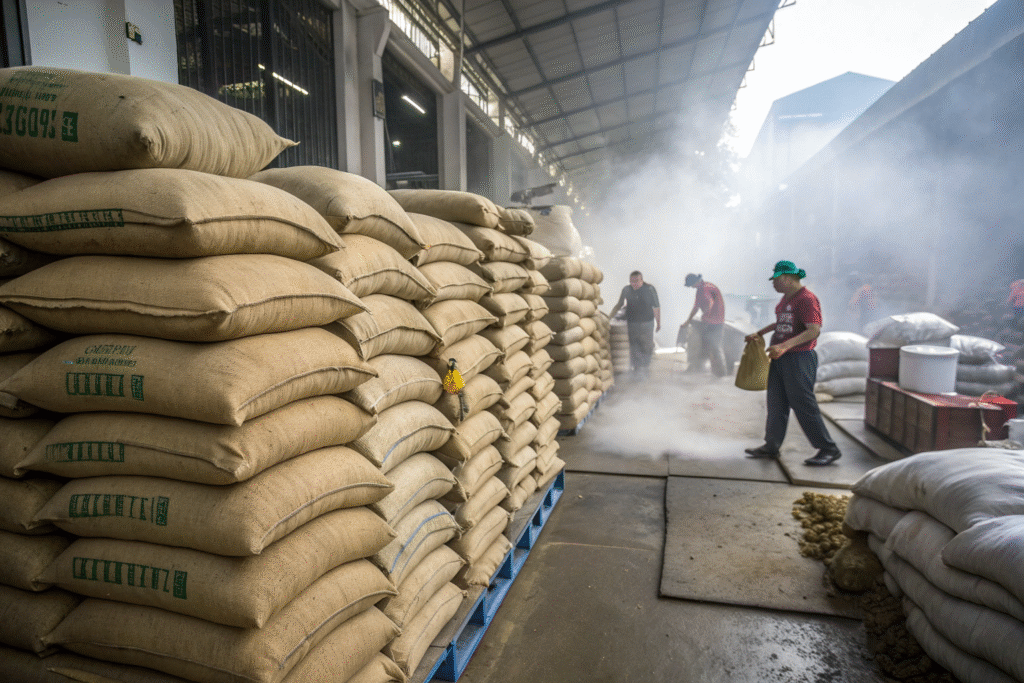
Vietnam’s rise over the last few decades has been phenomenal. They focus almost entirely on Robusta. If you are buying instant coffee or looking for a cheap, high-caffeine filler for a blend, it probably comes from Vietnam. This country almost single-handedly supplies the soluble coffee industry.
While their volume is massive (often second to Brazil), it rarely impacts the specialty Arabica market you and I operate in. However, their volume does influence overall commodity hedging strategies. You can find detailed breakdowns of global production by species in the International Coffee Organization (ICO) statistics.
Colombia’s position as the Arabica benchmark
Colombia is a unique case: it is a high-volume producer that maintains a strong commitment to quality. Their product is overwhelmingly Washed Arabica. This process is more expensive but creates the clean, bright flavors specialty buyers demand.
Colombia’s export volume is reliable, consistent, and well-managed by the FNC (National Federation of Coffee Growers). They set the price benchmark for high-volume quality. If your customers demand a reliable, classic cup, Colombian Huila or Nariño is the global standard.
How does export volume affect pricing strategy?
For a buyer like you, the export volume leaders—Brazil and Vietnam—dictate the ceiling and floor of the market. Brazil’s supply reliability stabilizes the global price, but any disruption to their massive output (drought, frost, port strikes) causes catastrophic market volatility.
The export volumes of Brazil and Vietnam directly anchor the C-Market price, meaning sudden volume shifts cause immediate global instability, forcing specialty buyers to secure contracts directly with stable, quality-focused exporters to avoid commodity price swings.
The C-Market correlation
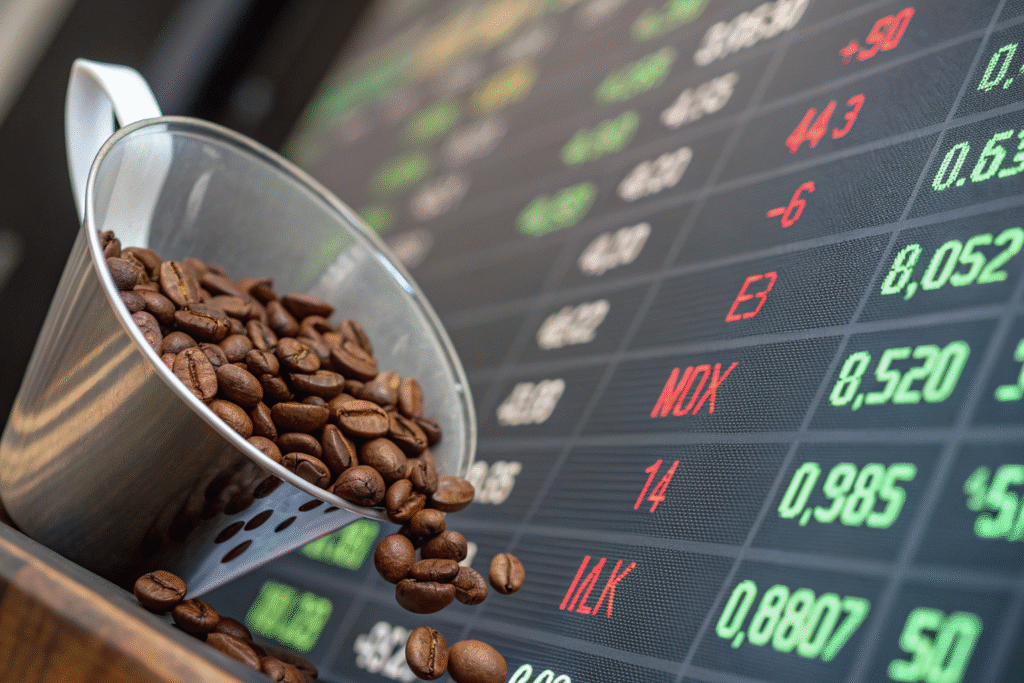
The majority of coffee traded worldwide is priced off the ICE Futures US exchange (the C-Market). The C-Market price is heavily influenced by the supply outlook of Brazil. When Brazil's harvest forecasts drop, the C-Market price surges, affecting every single coffee transaction globally, including your specialty micro-lots.
This is why diversification is key. You need partners who can offer contracts based on FOB (Free On Board) or fixed prices, rather than being purely tied to the daily C-Market volatility. Understanding this mechanism is essential for mitigating risk. You can monitor the live price fluctuations on the ICE Futures US Commodity Exchange.
Mitigating high-volume risk with direct trade
Small buyers are often crushed by high-volume volatility. When the price spikes, your competitors who rely on massive brokers suffer. By working directly with stable, niche exporters, you can negotiate forward contracts that lock in a price divorced from the C-Market madness.
We, at BeanofCoffee, focus on stable, high-altitude production in Yunnan. Our volumes are small compared to Brazil, but our pricing strategy is designed to protect you from the wild swings set by the volume kings. For a general perspective on how global events impact commodity markets, the World Bank Commodity Outlook reports are invaluable.
Where does China fit in the export ranking?
In terms of raw volume, China does not register compared to Brazil or Vietnam. Our coffee production in Yunnan is still modest globally. However, for buyers in Asia, or specialty buyers looking for high-value logistics, we are one of the most critical emerging exporters.
China’s export volume is small but rapidly growing, specializing in high-quality, cost-effective Arabica that leverages regional logistics, positioning us as the preferred direct exporter for buyers seeking stable supply chains into Asia and a competitive, differentiated product.
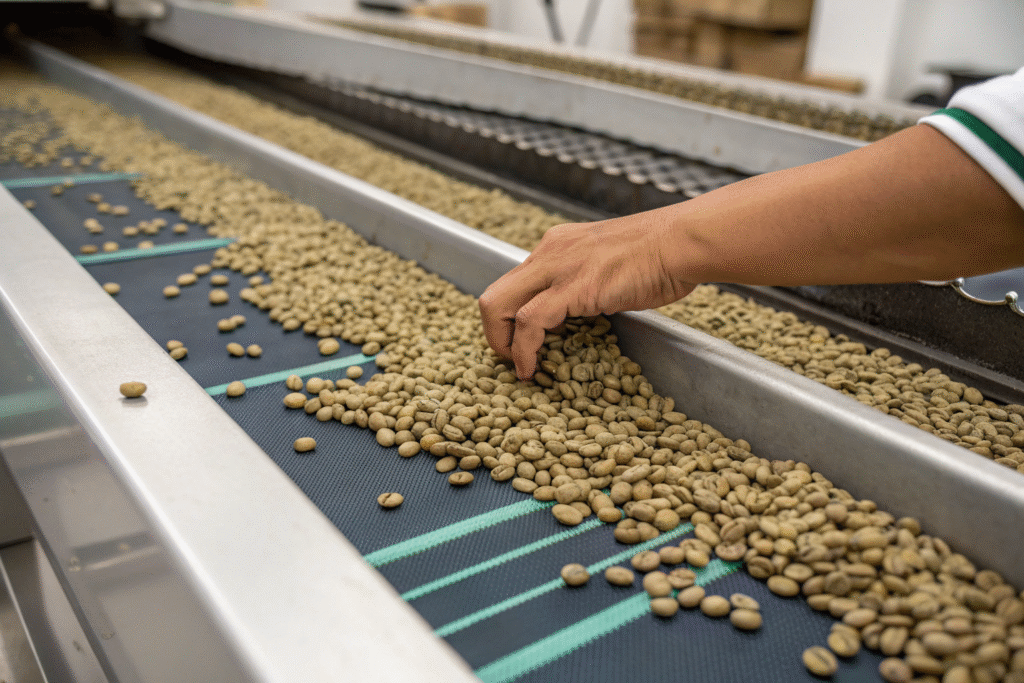
The shift from internal consumption to export
Historically, nearly all coffee grown in Yunnan was consumed internally. The export market was marginal. But as quality has soared and global demand for new origins has risen, we are increasingly pivoting toward export. We focus on specialty-grade Arabica (Catimor and Typica) that rivals Central American profiles.
While we will never match Brazil's scale, we offer a level of quality control and direct sourcing transparency that big brokers cannot touch. Our focus is on the 82–86 score range—the sweet spot for profitability and quality consistency. The Chinese government's focus on agricultural export growth is detailed by the Chinese Ministry of Commerce reports.
The advantage of regional logistics
For US buyers, working with us means accessing a unique flavor profile. For Asian buyers, it is a game-changer. Our logistical paths—both maritime and overland—are often far more efficient for regional partners than routing containers across the Pacific from Central America.
This efficiency means lower shipping costs and shorter lead times, which gives you better control over cash flow and freshness. If you are serious about expanding your Asian distribution, our logistical advantage over traditional export giants is undeniable. This is a core part of the value proposition we offer at BeanofCoffee.
Conclusion
Brazil is the answer to the trivia question, setting the standard for global volume. But your business cannot survive on trivia. It survives on smart contracts. The biggest exporters create the volatility; the reliable specialty partners create the stability.
I urge you to look past the top three and strategically source from niche experts who offer a specific quality/logistics advantage. If you want to build a stable, quality-focused portfolio that is insulated from the price spikes caused by the volume kings, let us build a sourcing strategy together. Contact Cathy Cai at cathy@beanofcoffee.com to discuss our current FOB pricing strategy and forward contract options that bypass C-Market instability.*