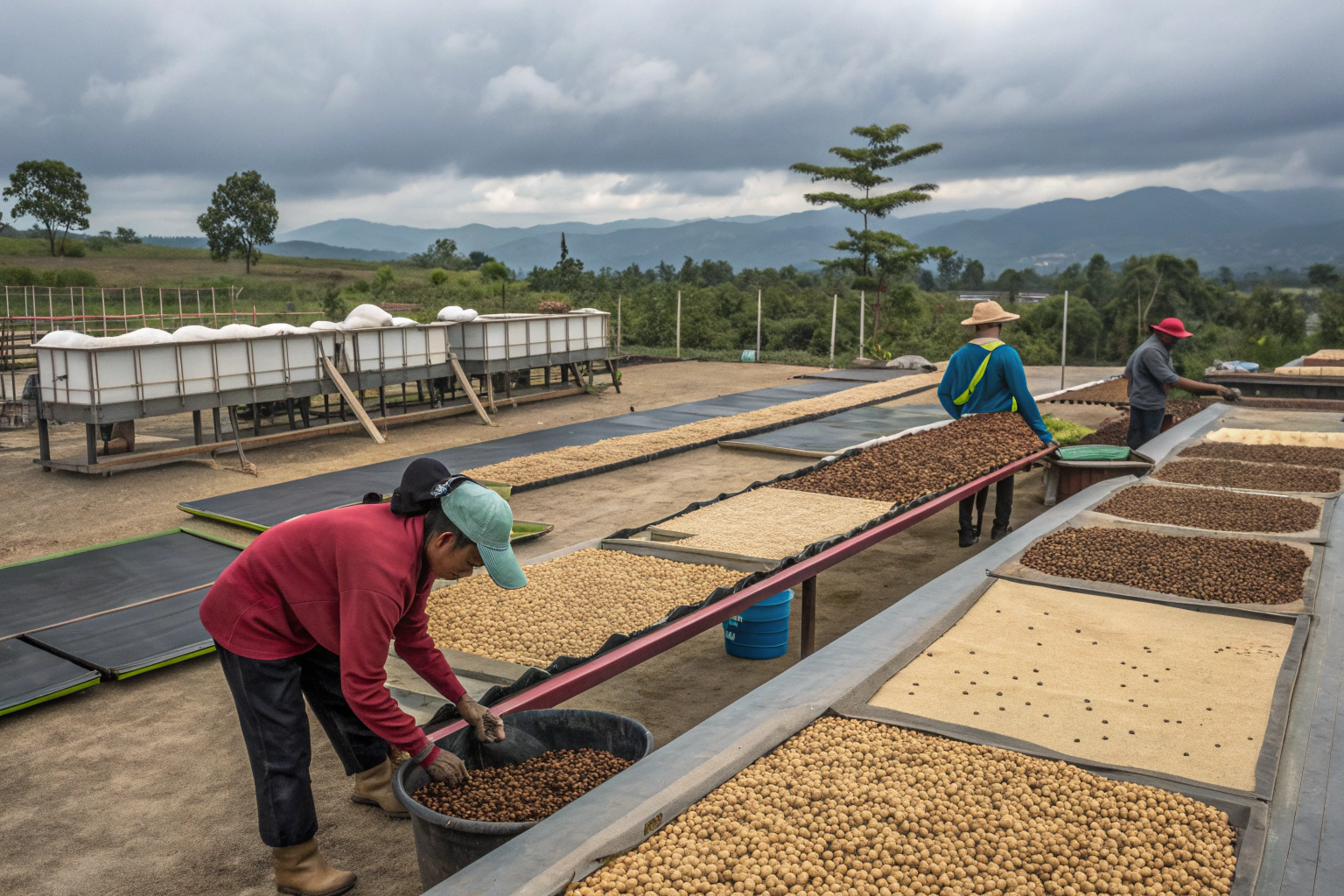
You're selecting the backbone of your cafe's menu. You've chosen a great origin and a high grade, but there's one more crucial decision: the processing method. Washed, Natural, Honey—each imprints a distinct personality on the bean. As a grower and exporter who processes coffee all three ways on our Yunnan farms, I can tell you: there is no single "best" method. There is only the best method for your specific cafe's concept, customer base, and drink menu. The right choice balances flavor appeal with consistency and operational practicality.
The "best" processing method for cafe beans is ultimately a business decision guided by your target flavor profile. Washed (Wet) Processing generally produces the most consistent, clean, and approachable beans, making it the safest and most reliable foundation for a broad-appeal cafe blend, especially for espresso and milk-based drinks. However, Natural (Dry) Processing can create uniquely fruity, sweet, and bold flavors that attract adventurous customers and work wonderfully in single-origin filter offerings or signature espresso blends. Honey/Pulp Natural offers a middle ground, often providing enhanced body and sweetness with more control than Naturals.
That's the executive summary. But declaring one method "the best" is like saying a hammer is better than a screwdriver—it depends on the job. A method that creates a stunning, complex single-origin pour-over might be a nightmare for your barista to dial in on espresso during the morning rush. Let's analyze how each method impacts the three pillars of a cafe's success: cup profile, operational consistency, and customer appeal.
How Does Washed Processing Create a "Cafe-Ready" Foundation?
Washed coffee is the industry standard for a reason. It's the reliable workhorse, the blank canvas that lets the inherent qualities of the bean and roast shine through.
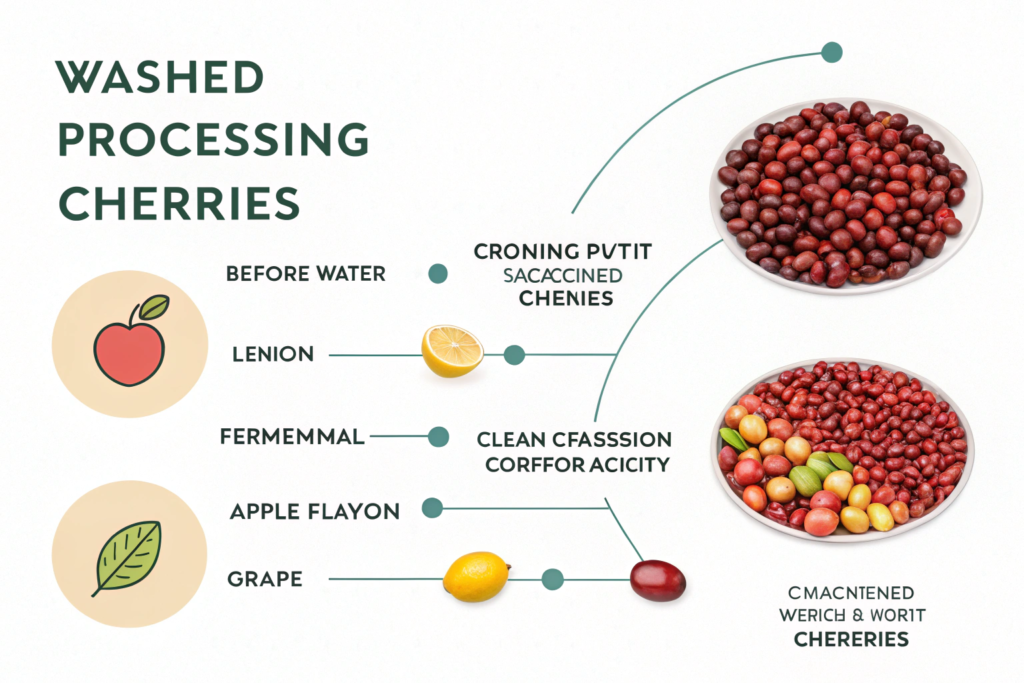
Washed processing removes the coffee cherry's fruity mucilage before drying, using water and fermentation. This results in a bean with a clean, bright, and defined acidity (think lemon, apple, red grape) and a transparent flavor profile that clearly expresses its origin and variety. For a cafe, this translates to key advantages:
- High Consistency: The controlled fermentation and washing lead to uniform moisture content and fewer hidden defects. Batch after batch tastes remarkably similar, which is vital for your flagship blend.
- Forgiving and Versatile: Washed beans are generally easier for baristas to dial in on espresso. They have a wider "sweet spot," making them less temperamental under the pressure of high-volume service.
- Excellent with Milk: The clean, structured acidity and clarity of washed coffees cut through milk beautifully, creating balanced lattes and cappuccinos where the coffee flavor remains present and pleasant, not muddled or lost.
At Shanghai Fumao, our washed Yunnan Arabica and Catimor lots form the core of our commercial cafe blends because they deliver this reliable, crowd-pleasing profile that builds customer loyalty through consistency.
Why Is Washed Coffee Considered a Lower-Risk Choice?
Washed processing minimizes "wild card" variables. The risk of off-flavors from uncontrolled fruit fermentation is largely eliminated. The resulting green beans are more stable during storage and shipping. For a cafe owner or a large company buyer, this means reduced risk of receiving a lot with unexpected fermented, funky, or vinegar notes that could alienate customers. It's the safe, stable, and trustworthy choice for a core product line.
Can Washed Coffee Be Too "Boring" for Today's Market?
While sometimes labeled as "classic" or "traditional," a high-quality washed coffee from a unique origin is far from boring. The clarity it offers can showcase delicate floral, tea-like, or nuanced stone fruit notes that sophisticated customers appreciate. Its strength is drinkability and versatility, not shock value. For a cafe aiming for broad appeal and repeat business, this is a strength, not a weakness.
When Does Natural Processing Steal the Show?
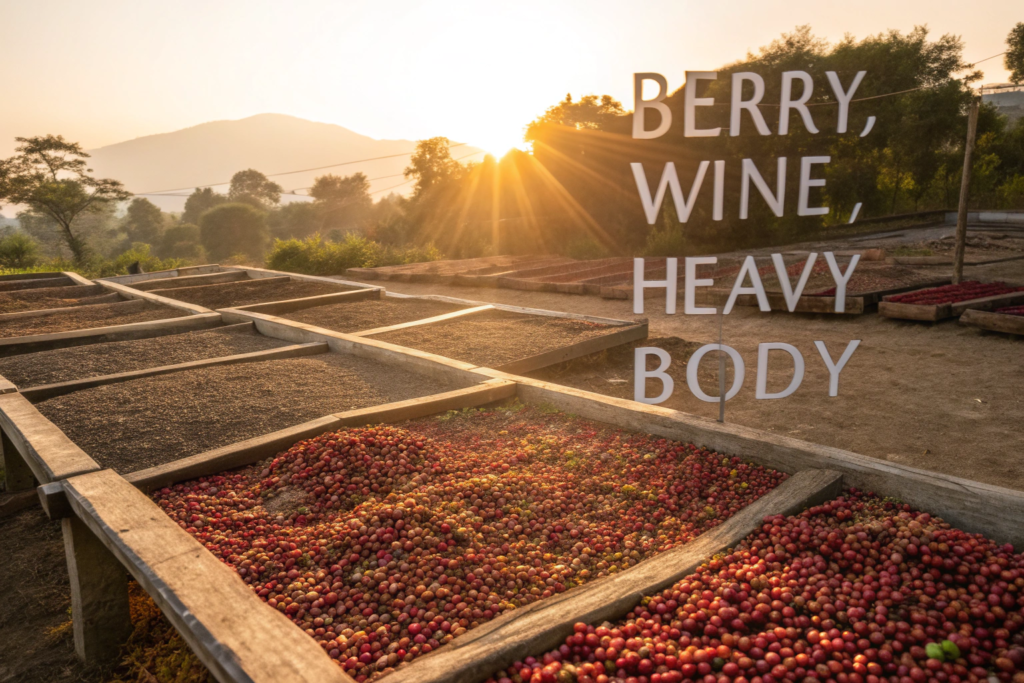
Natural processing is the ancient, sun-driven method where whole coffee cherries are dried with the fruit intact. This allows the bean to absorb sugars and fruity compounds, creating a radically different cup.
Natural processed coffees are celebrated for their intense fruitiness, heavy body, and pronounced sweetness. Flavors can range from blueberry and strawberry to tropical fruit and wine. For a cafe, they offer powerful tools:
- Signature Flair & Memorability: A natural processed single-origin can become a talking point and a destination drink. Its bold profile can cut through milk in innovative signature lattes (e.g., a "Berry Bomb Latte").
- Perceived Sweetness: The inherent fruit sugars can reduce the need for added syrups, appealing to health-conscious customers.
- Filter Coffee Excellence: As a brewed filter coffee, naturals can be incredibly juicy and appealing, often converting customers who find washed coffees too "acidic."
We process select lots of our Yunnan Arabica as naturals to offer this profile to cafes looking to differentiate.
What Are the Operational Challenges of Natural Coffee in a Cafe?
Naturals come with caveats that every cafe manager must understand:
- Inconsistency: Drying whole cherries is weather-dependent and harder to control. This can lead to more batch-to-batch variation in flavor and moisture.
- Espresso Difficulty: The intense, sometimes fermenty flavors can be polarizing as straight espresso and harder to balance in milk. They often have a narrower extraction window.
- Defect Risk: Higher chance of including over-fermented or "stinky" beans that can ruin a shot if not meticulously sorted. This demands a supplier with excellent quality control, like our optical sorting lines.
Using a natural as a component (10-30%) in a blend can add exciting top notes without overwhelming the base. Using it as a single-origin on batch brew or pour-over mitigates the espresso dial-in risk.
Is the "Funk" Desirable or a Defect?
This is a key distinction. A clean, well-executed natural should taste of ripe, dried fruit (like a blueberry muffin or apricot), not over-ripe, boozy, or vinegar-like flavors. The latter are processing defects. A cafe must source naturals from reputable suppliers who can guarantee this quality. Educating your staff and customers on this difference is part of the service.
What Role Does Honey/Pulp Natural Processing Play?
Honey processing is a hybrid, offering a middle path. The skin of the cherry is removed (like washed), but some or all of the sticky, sugary mucilage (the "honey") is left on the bean during drying.
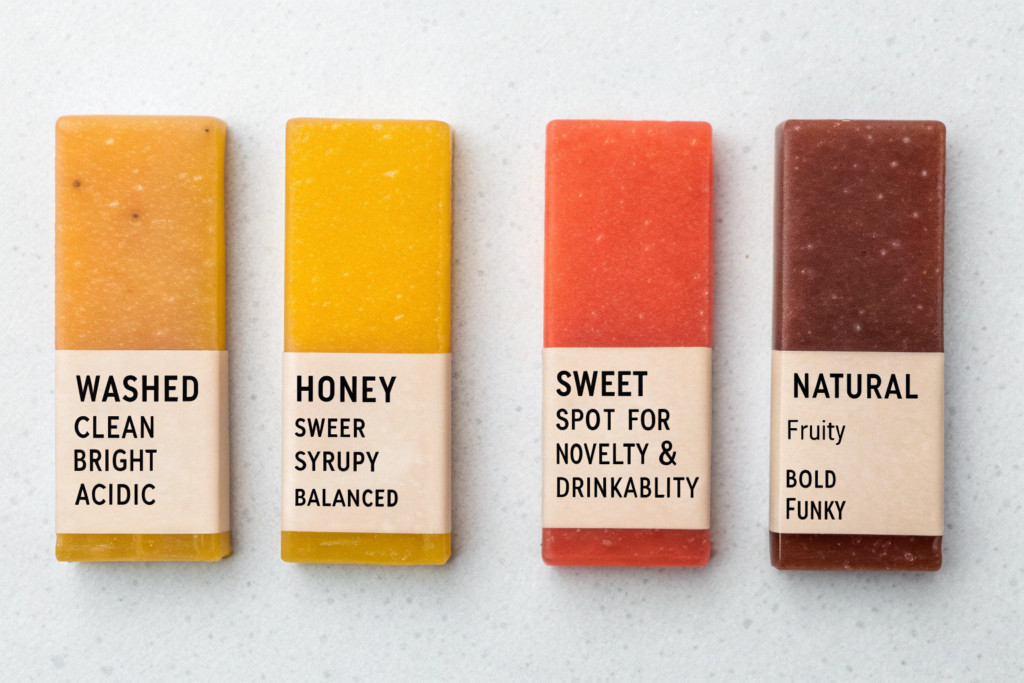
The honey process allows producers to experiment with the amount of mucilage left on (White, Yellow, Red, Black Honey), influencing the final cup. Generally, it produces a coffee with more body and sweetness than a washed coffee, but more clarity and balance than a natural. It often features notes of caramel, brown sugar, stone fruit, and a syrupy mouthfeel. For cafes, it's a fantastic option to offer something "different" that is still approachable and works well across various brew methods, including espresso.
Why Is Honey Processing Gaining Popularity with Cafes?
Honey process strikes a compelling balance:
- Novelty with Control: It offers a unique taste story ("honey process") that intrigues customers, while being more manageable and consistent than naturals due to the removal of the cherry skin.
- Espresso Performance: Honey processed beans often produce espresso with great crema, a velvety body, and a sweet, complex shot that stands up well in milk drinks. They can be more forgiving than naturals.
- Visual Appeal: The name and story are marketing-friendly and easy for customers to understand.
It's a lower-risk way for a cafe to venture beyond washed coffees. We are increasingly asked for honey-processed lots from Yunnan for this reason.
How Does It Compare in Cost and Availability?
Honey processing is more labor-intensive than natural (as it requires depulping) and carries similar drying risks (needing careful raking to avoid mold). It is typically more expensive than washed but can be more accessible than top-tier naturals. Its growing popularity means more exporters are offering it, but quality can vary. Again, supplier vetting is key.
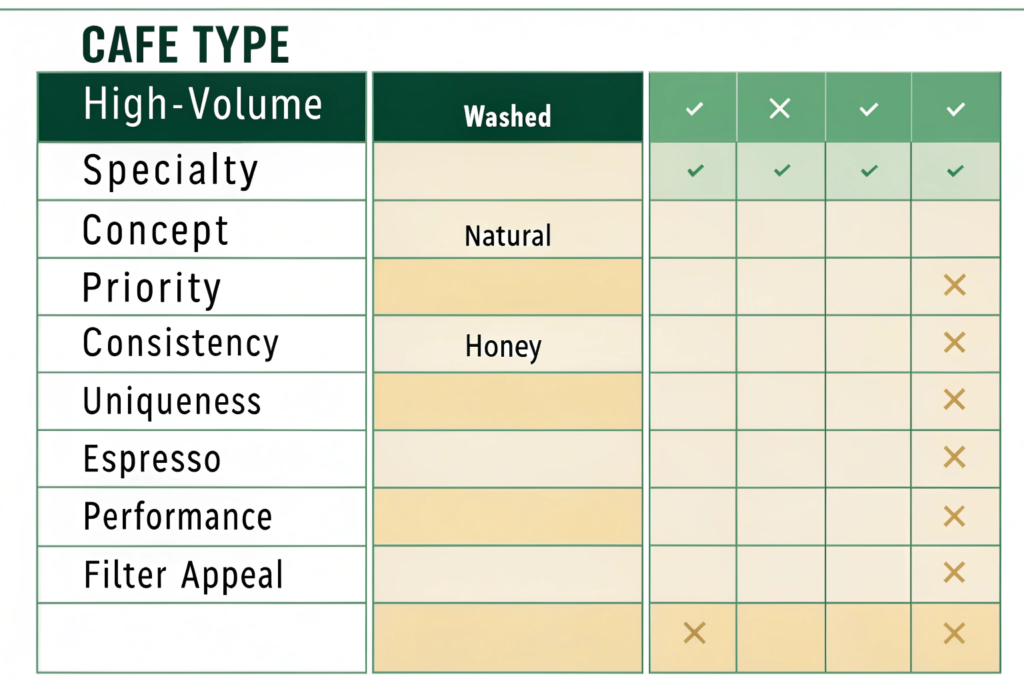
How to Choose Based on Your Cafe's Drink Mix and Concept?
Your menu is your guide. Map the processing method to your primary revenue streams.
The High-Volume Espresso & Milk Drink Cafe (e.g., suburban shop, university cafe):
- Primary Bean: A washed or washed-dominant blend. This ensures consistency, easy dial-in, and crowd-pleasing milk drinks.
- Secondary Offering: A honey or natural processed single-origin on batch brew or as a limited pour-over to attract enthusiasts.
The Third-Wave/Specialty Focus Cafe: - Mix: You'll likely feature all three methods. A washed coffee for espresso clarity, a natural for a bold filter option, and a honey for something in-between. Your baristas are skilled enough to handle the dial-in challenges.
The Concept-Driven Cafe (e.g., focusing on fruit-forward flavors, dessert drinks): - Primary Bean: A blend with a natural process component or a standalone natural/honey could be your signature, creating distinctive, memorable beverages.
The key is to taste blindly with your team. Brew each method as espresso and with milk. Which one makes you want to take another sip? Which one would your regulars come back for? Let the cup guide your business decision.
What Questions Should You Ask Your Supplier?
- "For this washed lot, what is the typical acidity profile, and how does it perform in milk?"
- "For this natural, can you guarantee it's clean (no over-fermentation) and what is the primary fruit note?"
- "What is your sorting process to minimize defects in your naturals and honeys?"
- "Can you provide roast profiles optimized for cafe use for these different processes?"
A good supplier will have this knowledge and share it, proving they are a partner, not just a vendor.
Does Processing Affect Shelf Life or Storage?
Yes. Natural and honey processed beans, with their higher sugar content from the fruit residue, can be slightly more prone to staling and moisture absorption. They should be used while very fresh. Washed beans, being more "stable," may have a marginally longer peak window. This is a minor but real inventory consideration for a cafe.
Conclusion
The quest for the "best" processing method ends with understanding that each is a tool for a different job. Washed processing is your indispensable, reliable multi-tool—excellent for building a consistent, high-quality foundation. Natural processing is your specialty power tool—capable of creating stunning, unique results but requiring more skill and care. Honey processing is your versatile precision tool—offering a superb balance of sweetness and complexity with manageable risk.
For most cafes aiming for sustainable success, a core washed or honey-based blend for espresso, complemented by rotating single-origins of various processes on filter, is the winning strategy. This provides the daily reliability your business needs alongside the excitement that keeps customers engaged.
At Shanghai Fumao, we cultivate and process coffee all three ways on our Yunnan estate because we believe in providing choices. We help our cafe partners select and roast the right process for their specific concept, ensuring the bean not only tastes great in the cup but also works seamlessly in their operation.
If you are crafting your cafe's coffee program and want a partner who understands the practical art of processing, let's talk. We'll help you choose the method that brews success for your unique business.
To discuss samples of our Washed, Natural, and Honey processed Yunnan coffees for cafe testing, contact Cathy Cai at cathy@beanofcoffee.com. Find your perfect process.