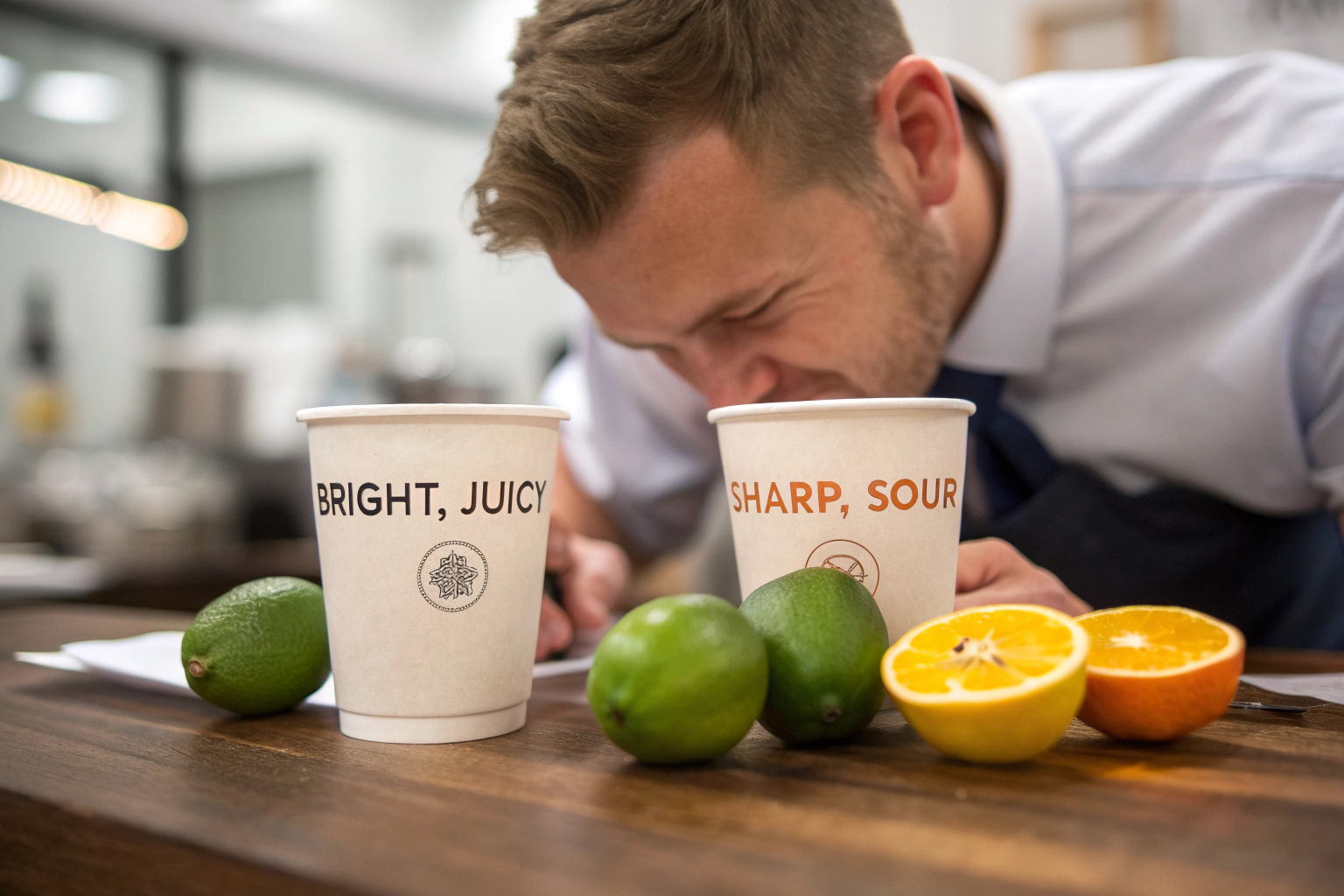
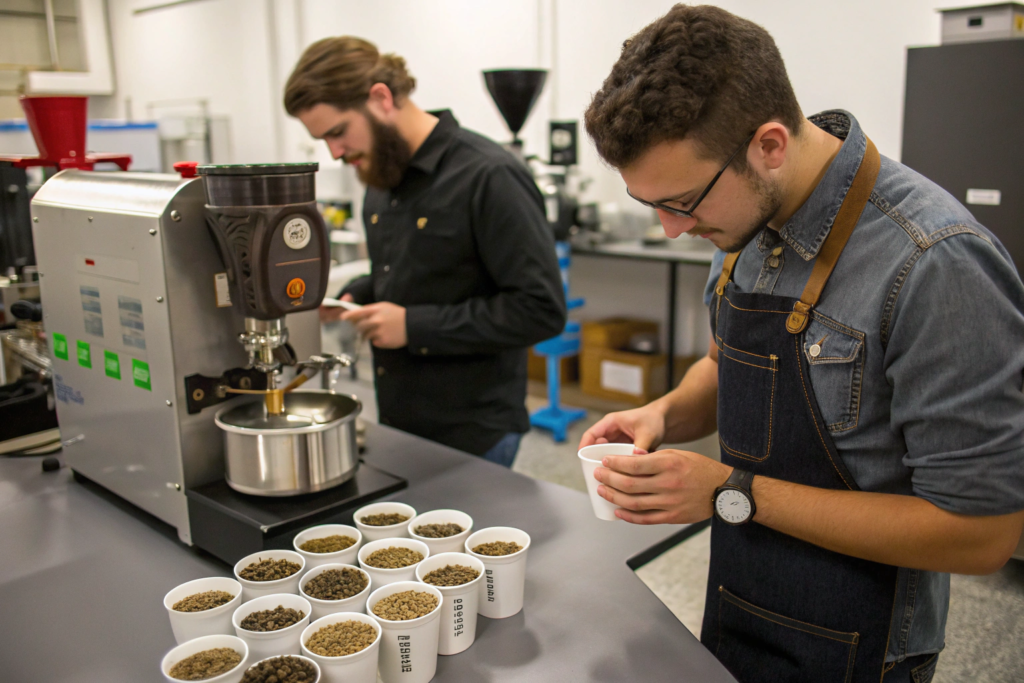
You're cupping a new lot of Yunnan Arabica from Bean of Coffee. The flavor profile promises notes of red apple and citrus. But when you taste it, you get a sharp, unpleasant tang that makes you wince. Is this the "bright acidity" they mentioned, or is it a defect? For a buyer like Ron, who needs reliable quality, confusing "good acidity" with "bad sourness" can lead to costly mistakes and unhappy customers. Understanding this distinction isn't just about taste—it's a fundamental quality control skill.
So, why do some coffee beans taste acidic or sour? The answer lies on a spectrum. On one end is desirable acidity, a vibrant, wine-like quality inherent to high-quality coffee. On the other end is undesirable sourness, a sharp, often unpleasant taste caused by underdevelopment, either at the farm or in the roaster. At Bean of Coffee, we monitor this line closely because delivering a balanced cup—one with pleasing brightness, not harsh sourness—is core to our promise of good quality.
Let's break down the science and the process mistakes that separate a lively, complex coffee from a disappointing, sour one.
What is the difference between acidity and sourness?
This is the most important concept to grasp. In the language of coffee professionals, acidity and sourness are not the same thing. Think of them as cousins—related, but with completely different personalities.
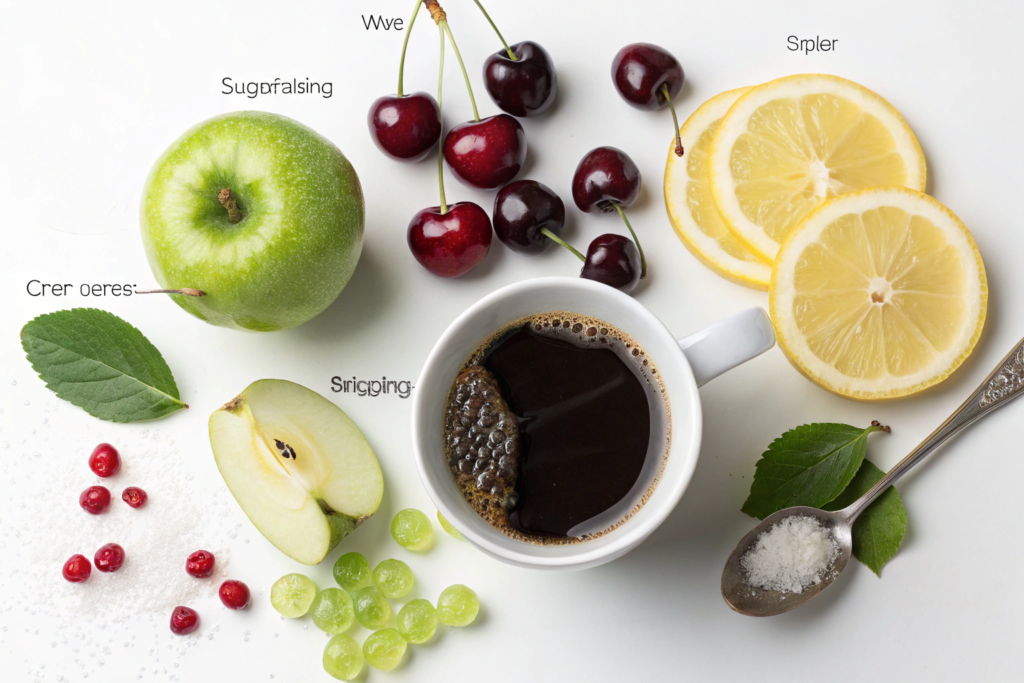
Acidity (the good kind) is a complex, pleasing sensation. It's the crisp, sparkling quality you get in a green apple, a ripe berry, or a glass of white wine. It gives coffee structure, liveliness, and complexity. Without it, coffee tastes flat and dull. When we describe our Yunnan Arabica as having "stone fruit acidity," we're talking about this positive attribute.
Sourness (the bad kind) is a simple, sharp, and aggressive taste. It's the one-note pang you get from lemon juice, vinegar, or unripe fruit. It dominates the palate and feels unbalanced. It's often a sign that something went wrong.
How can you identify pleasant acidity in coffee?
Pleasant acidity has specific characteristics. It's descriptive and integrated.
- It's Descriptive: You can often link it to a specific food. "This tastes like red grape," "malic like an apple," or "citric like an orange."
- It's Balanced: It doesn't overpower the cup. It works in harmony with sweetness and body. You taste it alongside other flavors, not instead of them.
- It's Refreshing: It leaves a clean, lively feeling on your palate. It makes you want another sip.
A coffee with good acidity will score highly in the "Acidity" category on a formal cupping sheet, with tasters using words like bright, crisp, lively, juicy, or winey. This is a hallmark of high-grown, well-processed Arabica beans like those from our Yunnan farms.
What are the sensory markers of unpleasant sourness?
Unpleasant sourness is an alarm bell. It's dominant and isolated.
- It's Astringent or Sharp: It can make your mouth feel dry or pucker.
- It Lacks Sweetness: It stands alone without the balancing sensation of sugar development.
- It's Often Associated with Other Defects: It can come with flavors like fermented, vinegary, or green/vegetal.
On a cupping sheet, this would be marked as a defect in the Flavor section, and the Acidity score would be low with descriptors like sour, sharp, acetic, or harsh. This is what buyers want to avoid.
How does under-roasting cause sour coffee?
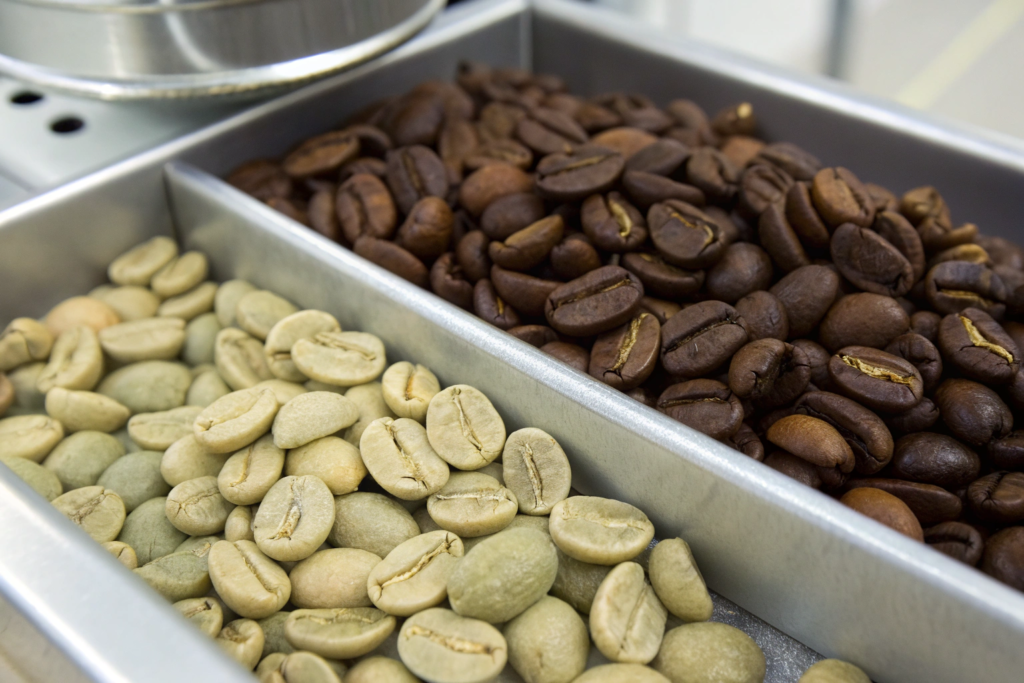
This is the most common reason a roaster encounters sour coffee. It's a problem of under-development. The beans simply didn't spend enough time in the crucial Maillard reaction and development phase of the roast.
Roasting is, in part, a process of transforming acids. Chlorogenic acids break down. Sugars caramelize. If you cut this process short, you lock in the raw, sharp acids and fail to develop the sugars that provide balance. The result is a sour, grassy, or bread-dough-like flavor.
What does "baking" the beans mean, and how does it cause sourness?
"Baking" is a specific, destructive roast defect. It happens when the roast stalls—the temperature of the beans plateaus or rises too slowly for an extended period during the Maillard phase.
Think of it like trying to boil water on low heat. It just sits there, steaming. Baked coffee tastes simultaneously sour and flat. It lacks vibrancy but has a dull, sour tang. It's often caused by applying too little heat after the drying phase, or by an overloaded roaster. This is why monitoring the Rate of Rise (RoR) is non-negotiable for avoiding sourness.
How can roast profile adjustments fix sourness?
If your coffee is consistently sour, you need to adjust your roast to increase development.
- Increase Total Roast Time: Extend the time from charge to drop, particularly the phase after first crack.
- Increase Heat in the Maillard Phase: Apply more energy after the beans turn yellow to ensure they progress steadily through browning.
- Check Your Charge Temperature: If you start too low, the beans may never get the momentum needed for proper development.
- Reduce Batch Size: Overloading the roaster can lead to uneven, under-developed roasts.
The goal is a sufficient development time ratio (e.g., 20-25% of the total roast time occurring after first crack). The Specialty Coffee Association provides guidelines on roast development that are essential for roasters.
What green bean factors lead to sour flavors?
Sometimes, the problem is baked in before the beans ever reach the roaster. The green coffee itself can carry the potential for sourness. This is why partnering with a quality-focused exporter is critical.
Several factors at origin can predispose coffee to taste sour, and they often relate to how the coffee cherry was processed after picking.
How does under-ripe picking affect flavor?
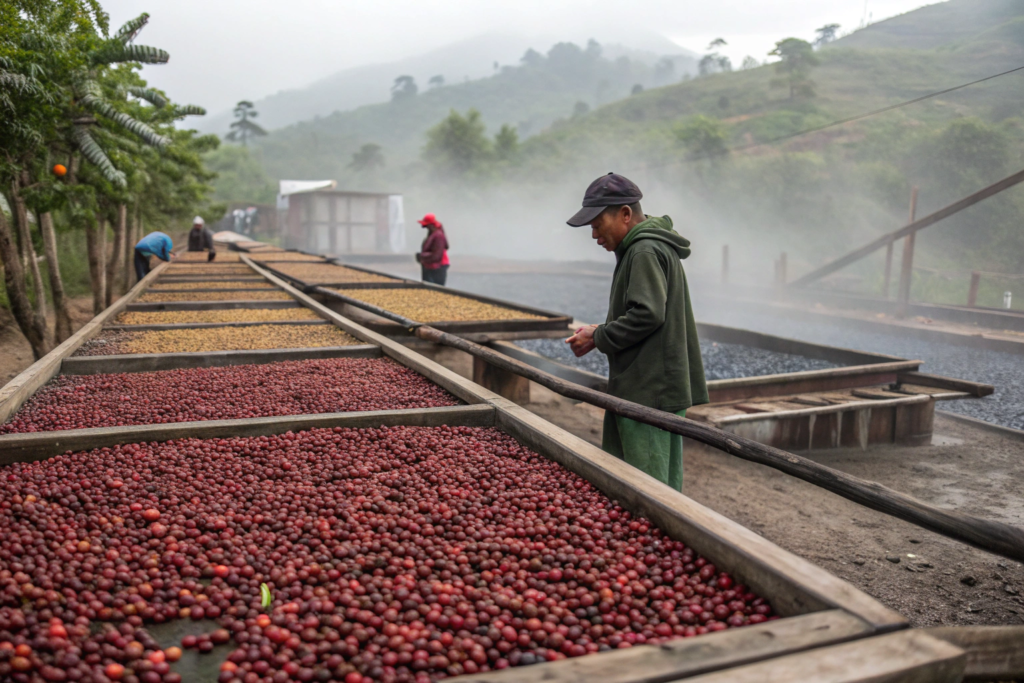
This is a fundamental issue. Coffee cherries must be harvested at peak ripeness. Under-ripe (green) cherries are full of chlorogenic acid and lack developed sugars.
If a harvest includes too many under-ripe cherries—due to rushed or unselective picking—the resulting lot will have a pervasive green, sour, and astringent character. No amount of skilled roasting can fully fix it. At Bean of Coffee, we enforce selective picking for our premium lots to ensure uniformity and ripeness.
Can processing methods create sourness?
Absolutely. Processing is where flavor is literally fermented.
- Under-Fermentation (Washed Process): In washed processing, beans are fermented in water to remove the mucilage. If fermentation is cut too short, the mucilage isn't fully broken down, leaving sugars that can later express as sourness.
- Over-Fermentation or Uncontrolled Fermentation (Any Method): This is a bigger culprit. If beans ferment for too long, or at too high a temperature, acetic acid (vinegar) and other sharp organic acids develop. This leads to sour, boozy, or rotten fruit flavors. Proper monitoring of time, temperature, and pH is essential.
- Uneven Drying: If beans are dried too quickly on the outside while remaining wet inside, or if they are piled too thickly and ferment, they can develop sour notes.
A reliable supplier will have controlled, hygienic processing protocols to prevent these defects.
How can you correct or avoid sour coffee?
Whether you're a roaster diagnosing your profile or a buyer evaluating a sample, a systematic approach is key. Sourness is a solvable problem.
Start with the green bean. If the sourness is a defect from origin (green/vegetal, vinegary), it's likely an issue with the lot itself. If the coffee has pleasant potential but tastes sour in your roast, the problem is likely in your process.
What is the "salt test" for sour coffee?
This is a classic, simple trick for roasters. If a brewed coffee tastes unpleasantly sour, try adding a tiny pinch of salt to your cup. Not enough to taste saltiness, but just a few grains.
Salt inhibits bitter perception more than sour perception. If the salt makes the coffee taste better (more balanced), the issue is likely bitterness from over-roasting. If the coffee still tastes predominantly sour, then you've confirmed under-development is the core problem. It's a quick diagnostic tool.
Should you blend out sour coffee?
As a last resort, a slightly under-developed or mildly sour coffee can sometimes be blended with a very low-acidity, deeply developed coffee (like a slow-roasted Brazilian or a Sumatran) to balance it out. However, this is a band-aid, not a cure.
For a roaster, it's better to correct your profile. For a buyer, it's better to source coffee that is correctly processed and provides the intrinsic balance you need. We at Bean of Coffee focus on delivering beans that have a natural, ripe sweetness to balance their inherent acidity, giving roasters a great starting point.
Conclusion
The line between vibrant acidity and harsh sourness in coffee is defined by science and skill. Desirable acidity is a complex, balanced taste indicative of high-quality beans and proper roasting. Undesirable sourness is a simple, sharp defect, most often stemming from under-ripe cherries, faulty processing, or—most commonly—under-development in the roaster.
For a business, understanding this difference is crucial. It protects you from buying flawed lots and empowers you to roast with confidence, ensuring your customers experience the exciting brightness of specialty coffee without the disappointment of a sour cup.
The journey to a perfectly balanced cup starts with a green bean that has the right potential. If you're tired of battling unpredictable sourness, source from a partner who controls quality from the tree onwards. At Bean of Coffee, our rigorous processing and sorting aim to deliver beans that roast true. To sample our well-balanced Yunnan Arabica, Catimor, or Robusta, contact our export manager, Cathy Cai, at cathy@beanofcoffee.com. Let's ensure your next cup is bright, not bitter—or sour.