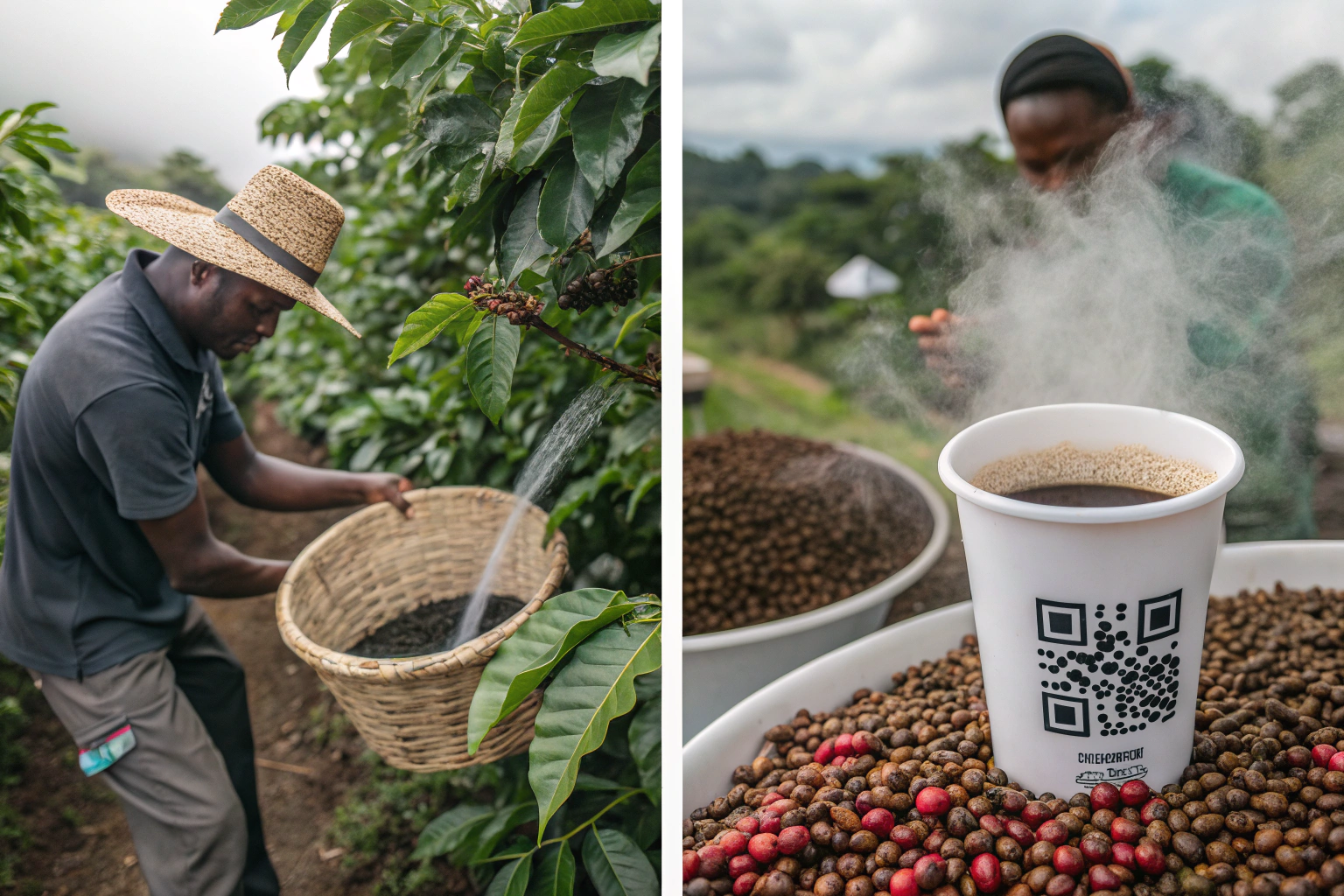
You're a coffee buyer comparing two offers. One bag says "Colombian Coffee." The other specifies "Finca El Paraíso, Cauca, Colombia, grown by Maria Rodriguez at 1,800m, harvested March 2023, washed process." Which inspires more confidence? Which story resonates with today's consumers? This isn't just marketing—it's the new standard. Traceability has shifted from a niche concern to a business imperative that affects everything from quality control to consumer trust.
Traceability is becoming crucial in coffee sourcing because it addresses growing consumer demand for transparency, enables quality improvement through feedback loops, verifies sustainability and ethical claims, manages supply chain risks, and creates competitive differentiation. In an era of greenwashing concerns and commoditization, traceability provides verifiable proof of value that commands premium pricing.
So, what specific forces are driving this shift from anonymous commodity trading to fully transparent supply chains? The movement reflects deeper changes in consumer psychology, business strategy, and technological capability that are fundamentally reshaping how coffee moves from farm to cup. Let's explore the concrete benefits making traceability non-negotiable.
How Does Traceability Build Consumer Trust and Brand Value?
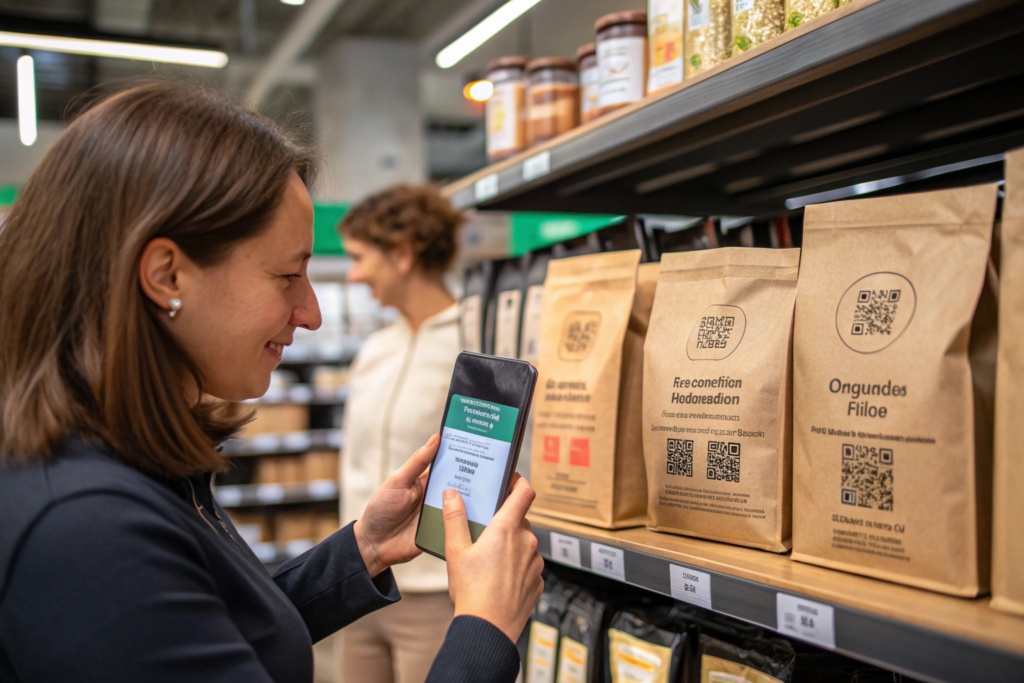
Today's consumers, especially younger demographics, increasingly make purchasing decisions based on values and transparency rather than just price or brand recognition. Traceability provides the evidence behind ethical claims.
When consumers can verify a coffee's origin, processing, and journey, they're more likely to trust the brand, pay premium prices, and become loyal advocates.
What Drives the Demand for Transparency?
Several converging trends:
- Ethical consumption growth: 66% of global consumers will pay more for sustainable brands (Nielsen)
- Greenwashing skepticism: Consumers demand proof behind sustainability claims
- Story connection: People want to know the humans behind their products
- Quality association: Traceability is increasingly linked to quality perception
This conscious consumerism means traceability isn't just nice-to-have—it's becoming a purchase prerequisite for growing market segments.
How Does Traceability Translate to Business Value?
Brands with strong traceability can:
- Command 20-30% price premiums for verified transparency
- Build deeper customer loyalty through shared values
- Differentiate in crowded markets where quality differences are subtle
- Create marketing content from authentic supply chain stories
- Attract better retail placements as retailers seek credible sustainability
At BeanofCoffee, we provide farm-level traceability because we've seen how this authentic storytelling transforms customer relationships from transactional to relational.
How Does Traceability Enable Quality Improvement?
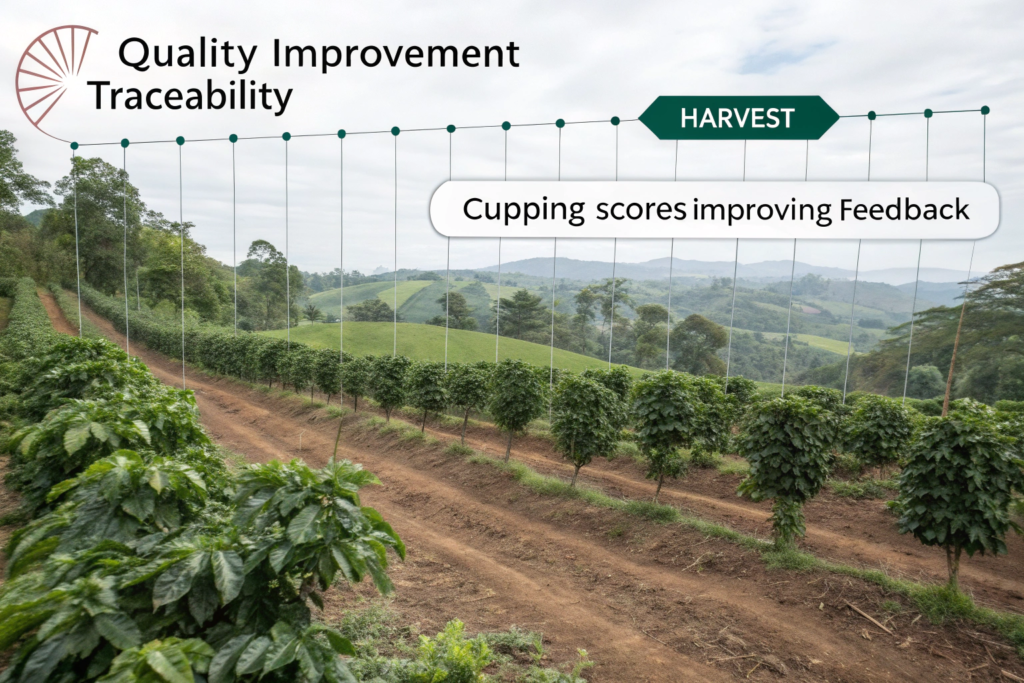
Beyond marketing, traceability provides practical quality management benefits that directly impact cup consistency and improvement over time.
When you know exactly which farm produced which coffee, you can provide specific feedback, track quality trends, and collaborate on improvement in ways impossible with blended, anonymous sourcing.
What Quality Control Benefits Does Traceability Offer?
- Precise feedback loops: Tell specific farmers what worked and what didn't
- Consistency tracking: Monitor quality changes at the farm level over seasons
- Processing optimization: Correlate processing methods with cup outcomes
- Problem isolation: Quickly identify and address quality issues at source
- Customized improvement: Work with farmers on specific quality goals
This targeted quality management transforms random quality variation into systematic improvement.
How Does It Affect Roasting and Blending?
With full traceability, roasters can:
- Develop specific roast profiles for each farm's coffee
- Create more consistent blends using known components
- Adjust for seasonal variations with understanding of causes
- Document quality outcomes for future purchasing decisions
- Build farmer relationships that yield better quality over time
The difference between "this Colombian is different this year" and "Finca El Paraíso's March harvest needs a slightly lower charge temperature" represents the practical power of traceability.
How Does Traceability Verify Sustainability and Ethical Claims?
As sustainability certifications proliferate and sometimes face credibility questions, traceability provides independent verification that claims match reality.
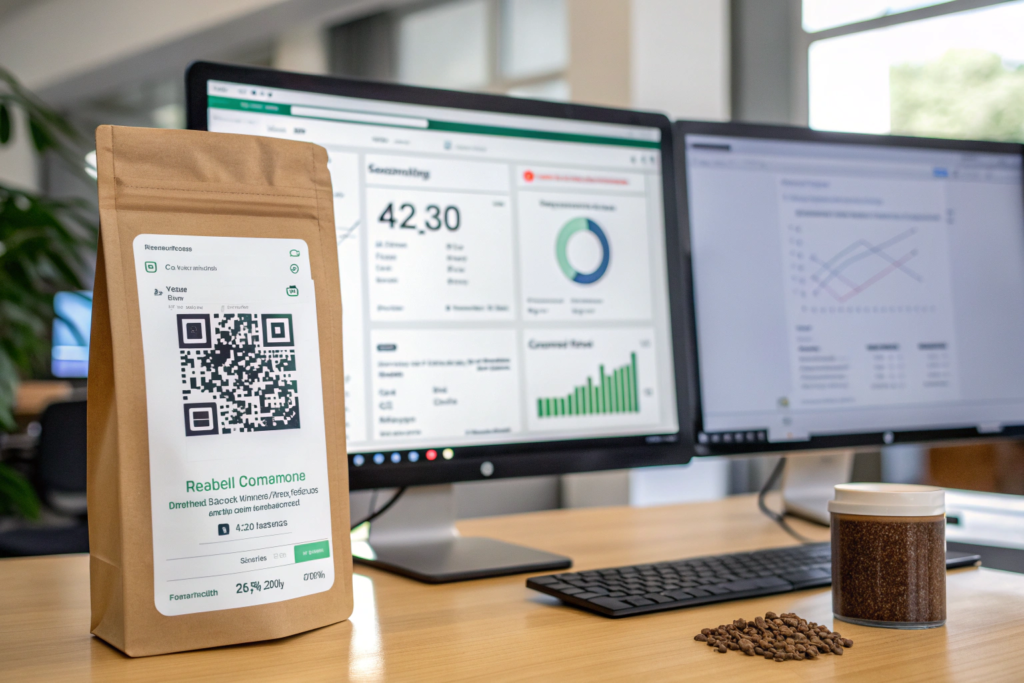
Blockchain, QR codes, and satellite mapping now allow consumers and businesses to verify sustainability claims directly rather than relying solely on certification logos.
What Sustainability Verification Does Traceability Enable?
- Carbon footprint tracking from farm to cup
- Water usage verification at specific processing stations
- Deforestation monitoring via satellite imagery of named farms
- Chemical use tracking through input records
- Biodiversity documentation on specific properties
This evidence-based sustainability addresses growing skepticism about greenwashing and certification integrity.
How Does It Support Ethical Sourcing Verification?
Traceability allows verification of:
- Price transparency: How much actually reached the farmer
- Working conditions: Documentation from specific farms
- Community investment: Proof of premiums reaching communities
- Gender equity: Tracking women's participation and benefits
- Living income: Verifying prices against calculated living costs
When we provide traceability at BeanofCoffee, we're not just sharing a farm name—we're inviting verification of our ethical commitments through transparent data.
How Does Traceability Mitigate Supply Chain Risks?
In an era of climate disruption, political instability, and global pandemics, traceability provides crucial risk management by offering visibility into potential problems before they become crises.
Knowing exactly where your coffee comes from and how it moves through the supply chain allows proactive management rather than reactive firefighting.
What Risk Management Benefits Does Traceability Provide?
- Early warning systems: Monitor weather or political issues at specific origins
- Contamination tracking: Quickly isolate and recall affected lots if needed
- Quality risk reduction: Identify and address processing issues at source
- Logistics optimization: Track and improve specific shipping routes
- Relationship resilience: Build direct connections that survive market shocks
This proactive risk management became particularly valuable during COVID-19 disruptions when anonymous supply chains broke down while traceable relationships adapted.
How Does It Address Climate Change Challenges?
Traceability enables:
- Climate impact monitoring at the farm level
- Adaptation strategy development for specific regions
- Yield prediction improvement through historical data
- Diversification planning based on vulnerability assessments
- Carbon credit verification for climate-friendly farms
As climate change makes coffee production more volatile, traceability-based resilience becomes increasingly valuable.
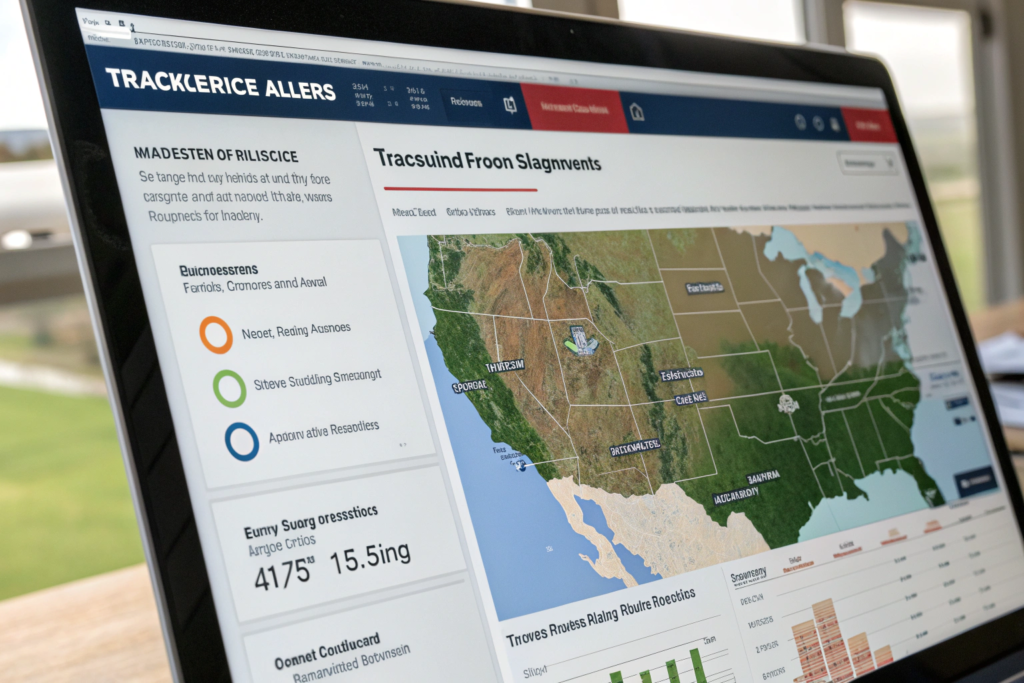
What Technologies Are Making Traceability Practical?
While traceability has always been theoretically desirable, recent technological advances have made it economically and practically feasible at scale.
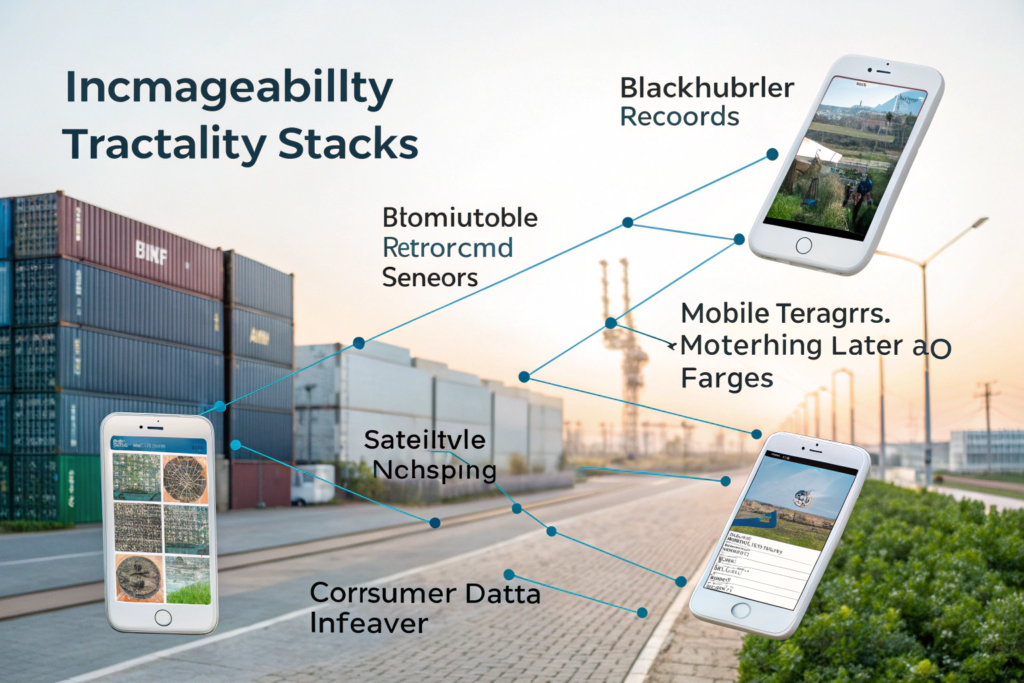
Blockchain, IoT sensors, satellite imagery, and mobile applications have reduced the cost and complexity of implementing robust traceability systems.
How Does Blockchain Enhance Coffee Traceability?
Blockchain provides:
- Immutable records that can't be altered or falsified
- Shared visibility across supply chain participants
- Automated verification of claims and certifications
- Smart contracts that execute when conditions are met
- Consumer access to verified supply chain data
This tamper-proof transparency addresses credibility concerns that plagued earlier traceability efforts.
What Role Do IoT and Satellite Technologies Play?
- IoT sensors track temperature, humidity, and location in real-time
- Satellite monitoring verifies farm boundaries and deforestation claims
- Mobile applications enable data collection at farm level
- QR/NFC technology connects physical products to digital records
- Data analytics transform traceability data into actionable insights
These converging technologies have made farm-to-cup traceability achievable rather than aspirational.
How Can Businesses Implement Effective Traceability?
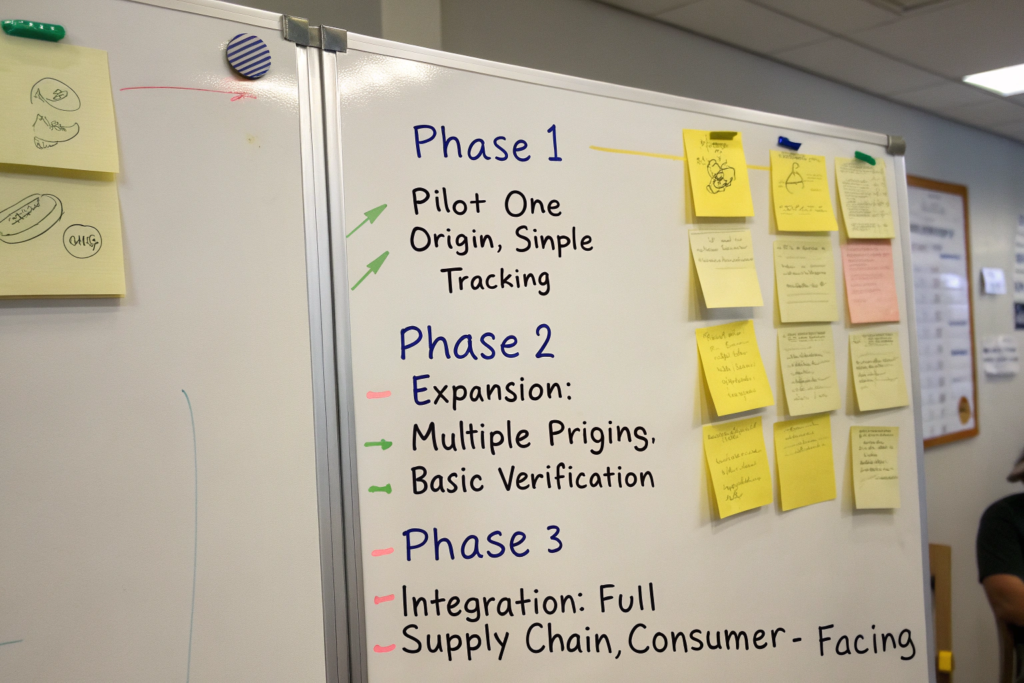
For companies new to traceability, implementation can seem daunting. However, a phased approach focusing on high-impact starting points makes the process manageable.
Effective traceability implementation balances ambition with practicality, starting with key products or origins and expanding based on learning and value demonstrated.
What Are Practical First Steps?
- Start with flagship products where traceability adds most value
- Focus on direct relationships rather than complex multi-tier chains
- Implement simple technology that farmers can actually use
- Collect meaningful data rather than overwhelming detail
- Communicate transparently about both progress and limitations
This iterative approach builds capability and confidence while delivering early wins.
How Should Traceability Be Communicated to Consumers?
Effective communication:
- Focuses on human stories behind the data
- Uses accessible technology like QR codes
- Balances detail with clarity in presentation
- Acknowledges limitations honestly
- Invites engagement rather than just presenting information
The most successful traceability programs create authentic connections rather than just displaying data dashboards.
Conclusion
Traceability in coffee sourcing has evolved from a niche ethical concern to a core business strategy that addresses consumer demand for transparency, enables quality improvement, verifies sustainability claims, mitigates supply chain risks, and creates competitive differentiation. The convergence of consumer trends, business needs, and technological capabilities has made traceability both necessary and feasible.
The companies that will thrive in the future coffee market are those that embrace traceability not as a compliance burden but as an opportunity to build deeper relationships, deliver better quality, and create authentic stories that resonate with modern consumers. If you're looking to enhance your traceability or source from transparent supply chains, contact our export manager, Cathy Cai, at cathy@beanofcoffee.com. We've built traceability into our operations from the ground up and can help you navigate both the challenges and opportunities of transparent sourcing.