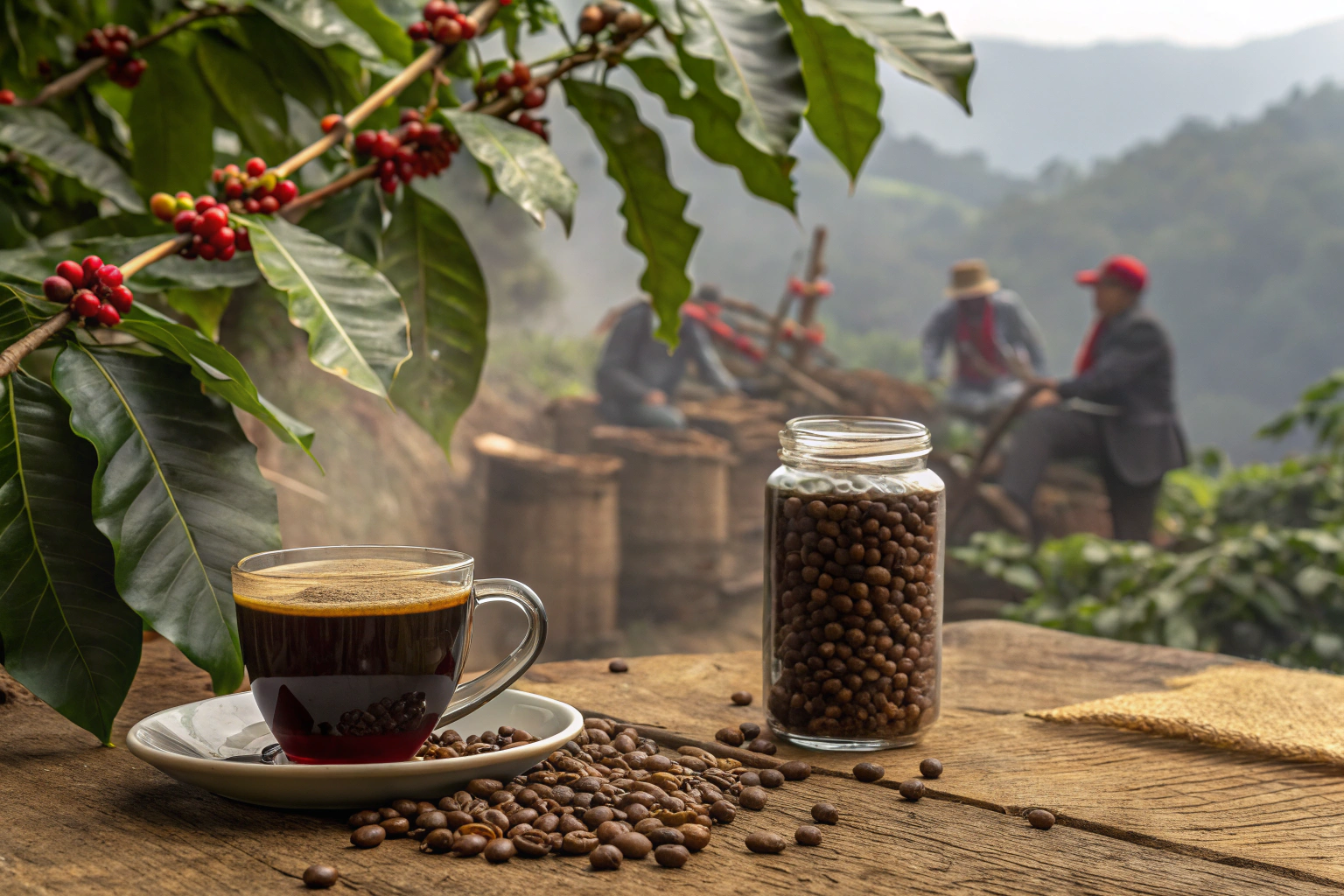
You walk the floor at the SCA Expo. Five years ago, the Yunnan booths were quiet. A few curious cuppers. A lot of skepticism. Now? There's a line. Roasters are cupping, asking about FOB prices, checking sailing schedules on their phones. You see a major regional roaster you respect post on Instagram: "Just landed our first container of Yunnan. The chocolate note is insane." You're not imagining it. Something has shifted. The coffee from China is no longer a novelty. It's becoming a staple. And you're asking: What changed? Why are North American roasters suddenly betting on Yunnan?
Yunnan coffee is gaining popularity in North America due to a powerful convergence of three factors: a demonstrable leap in cup quality driven by modern processing technology, a structural cost and logistics advantage that provides stability in a volatile global market, and a growing consumer openness to—and even curiosity about—Chinese origin products when backed by transparent, verifiable supply chain stories. It is no longer a "cheap alternative." It is a legitimate, high-performing origin in the 82-86 point range that solves real business problems for roasters.
I've watched this shift happen from my office in Baoshan and from the cupping tables in Portland and Chicago. At Shanghai Fumao, we're not just riding the wave. We've been building the boat for a decade. Let me break down the real reasons Yunnan is moving from the margins to the mainstream of North American specialty coffee.
How Has the Cup Quality of Yunnan Arabica Improved So Dramatically?
Let's be honest about the past. Old-school Yunnan coffee had a reputation. It was earthy. Sometimes baggy. Often harsh. It was a filler bean for instant coffee and low-end blends. That reputation was earned. But it is now outdated.
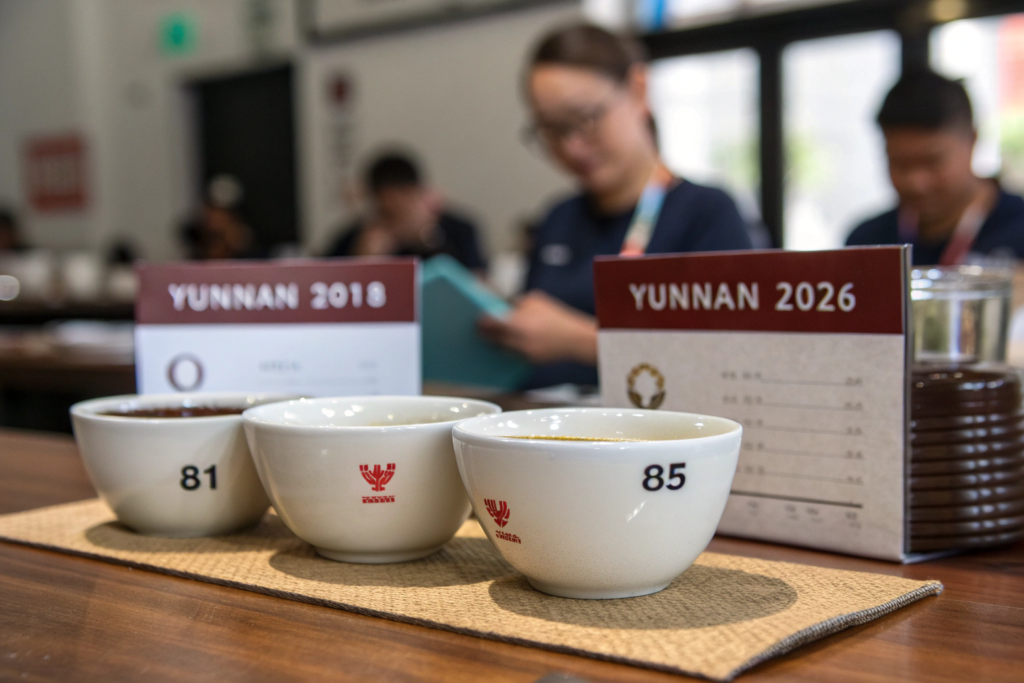
The dramatic improvement in Yunnan Arabica cup quality is the result of a systematic, decade-long investment in replacing legacy Catimor plantings with higher-quality selections, implementing Colombian-style wet milling and controlled fermentation, and adopting rigorous dry milling with optical sorting. This is not a natural accident. It is the direct result of capital investment, agronomic education, and a deliberate pivot by large producers and the provincial government toward the specialty market. The average cupping score of export-grade Yunnan Arabica has risen by 3-5 points in the last ten years.
What Role Did the Shift to Fully Washed Processing Play?
The single biggest change was the move away from natural and pulped natural processing toward fully washed coffee. Naturals can be great. But in a humid climate like Yunnan, they are high-risk. They often developed moldy, fermenty notes.
Fully washed processing, done correctly in stainless steel tanks with clean water, produces a clean, transparent cup. It allows the true character of the Yunnan terroir—the chocolate, the nuts, the malt—to shine through without the interference of processing defects. The adoption of this method, using equipment and protocols learned from Colombian and Central American experts, transformed the baseline quality of Yunnan coffee. At Shanghai Fumao, we have invested heavily in our washed processing line. The result is a coffee that is remarkably clean and consistent, batch after batch. This cleanliness is what appeals to North American roasters who are tired of "wild" and "funky" and just want a solid, dependable coffee that doesn't embarrass them. You can read about the global shift toward washed processing in quality-focused origins on industry sites like Daily Coffee News.
How Important Was the Introduction of Better Varietals Like Typica and Bourbon?
Catimor is the workhorse of Yunnan. It's disease-resistant and high-yielding. But it carries some Robusta genetics that, if not managed perfectly, can express as harsh, woody notes.
The introduction and expansion of pure Arabica varietals—specifically Typica and Bourbon—has been a game-changer for the top tier of Yunnan coffee. These varietals are lower-yielding and more disease-prone, but they offer a sweeter, more complex, and more delicate cup profile. They provide the floral and fruity notes that Catimor often lacks. The availability of these varietals allows Yunnan to compete not just with Colombian Excelso, but with high-end Central American lots. It gives North American roasters a new tool for their single-origin programs. The expansion of these varietals is slow—trees take years to mature—but the direction is clear. Yunnan's quality ceiling is rising with every new hectare of Typica planted.
What Supply Chain Advantages Does Yunnan Offer Over Traditional Origins?
Quality gets you in the door. But reliability keeps you on the menu. North American roasters are running businesses. They need coffee to show up on time, at the price they budgeted. And this is where Yunnan's structural advantages become impossible to ignore.
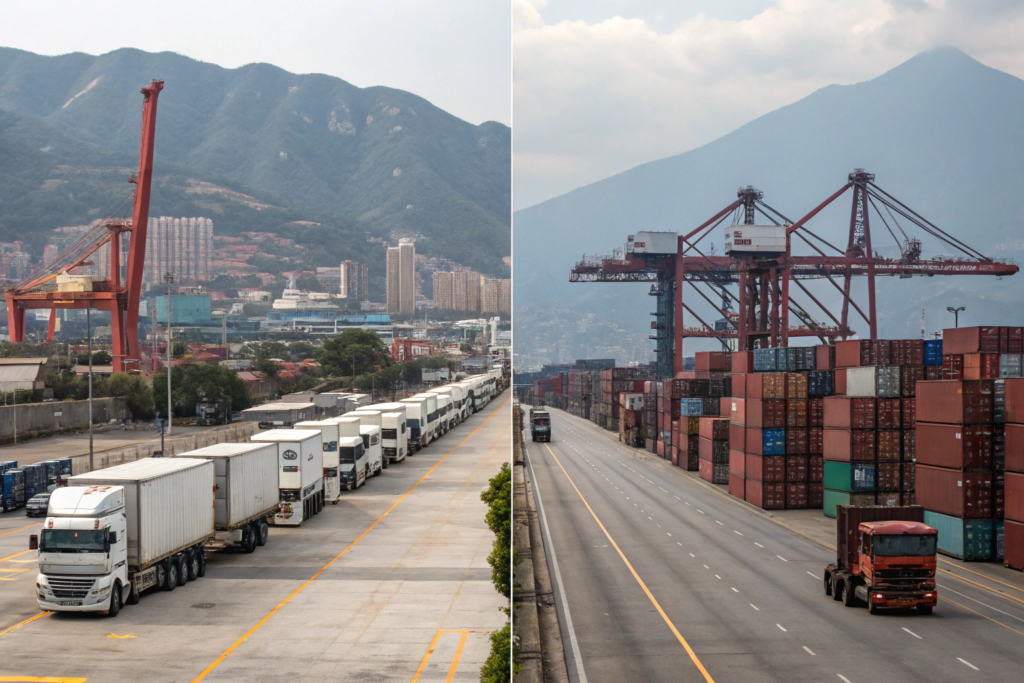
Yunnan offers a superior supply chain experience compared to many traditional origins due to China's world-class internal logistics and port infrastructure. The journey from a farm in Baoshan to the Port of Shanghai is on modern highways, not rutted mountain tracks. The Port of Shanghai is the most efficient container port globally. The Pacific crossing to the U.S. West Coast is a direct, high-frequency trade lane. This translates to predictable transit times, lower risk of pre-shipment damage or delay, and a more reliable contract execution. For a busy roaster, this reliability is a form of quality in itself.
Why Does Port Efficiency in Shanghai Translate to Fewer Headaches for Me?
A container of coffee sitting in port is a container at risk. Risk of moisture damage. Risk of theft. Risk of simply missing its vessel connection and throwing off your entire production schedule.
Shanghai's Yangshan Deepwater Port is a marvel of automation and efficiency. Vessel turnaround times are among the fastest in the world. The electronic documentation systems are streamlined. This minimizes the "dwell time" of your coffee container in a hot, humid port environment. It gets on the ship and gets moving. Compare this to the congestion and delays that have plagued ports in Colombia, Brazil, and East Africa in recent years. The difference is stark. For a North American roaster, this efficiency means they can plan their inventory with confidence. They're not building in a three-week buffer for "port uncertainty." You can track global port efficiency metrics through resources like the World Bank's Logistics Performance Index. The data consistently places Chinese ports at the top of the rankings.
How Does a Direct Pacific Route Simplify Inventory Management?
Coffee from Brazil or Colombia to the U.S. West Coast often involves transshipment—moving containers from one ship to another in a hub port—or a journey through the Panama Canal, which is subject to weather delays and draft restrictions.
Yunnan coffee loaded in Shanghai sails direct to Los Angeles or Oakland. It's a straight shot across the Pacific. There is no canal. There is no transshipment. The transit time is predictable: roughly 14-18 days port-to-port. This direct route simplifies everything. It reduces the variables in your logistics equation. You can place an order, get a firm arrival estimate, and schedule your warehouse labor and your roasting schedule accordingly. This predictability is a massive operational advantage. At Shanghai Fumao, we leverage this route for all our West Coast shipments. It's a key part of our value proposition: quality coffee, delivered on time.
How Are North American Roasters Marketing Yunnan Coffee to Curious Consumers?
The final piece of the puzzle is the consumer. North American coffee drinkers have been trained to expect certain names: Colombia, Ethiopia, Sumatra. "China" on a coffee bag is new. It can be a barrier. Or, it can be a point of differentiation.
Savvy North American roasters are marketing Yunnan coffee by leaning into the story of transformation and terroir. They position it not as a "cheap Chinese coffee," but as a "New Wave" origin with a unique, compelling narrative: an ancient tea-growing region now producing world-class Arabica using cutting-edge technology. They emphasize the chocolate-forward, nutty profile that appeals to a broad audience and highlight the traceability and transparency enabled by the modern, vertically integrated farms. The messaging focuses on discovery and quality, not price.
Is "Single Origin China" a Selling Point or a Stigma?
For a long time, it was a stigma. The association with "Made in China" was mass-produced, low-cost, and low-quality. That perception is changing, especially among younger, more globally curious consumers.
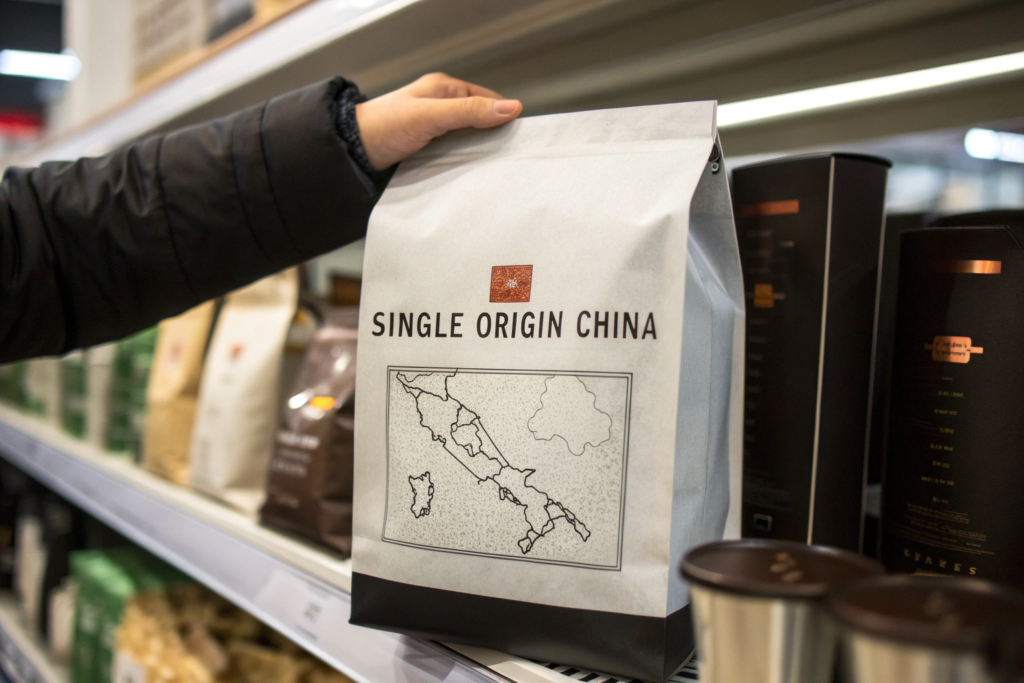
For these consumers, a coffee from China is interesting. It's a story they haven't heard. It's a place they haven't "tasted." A well-designed bag of "Yunnan Single Origin" signals a roaster who is adventurous, who is on the cutting edge, who is finding quality in unexpected places. It's a conversation starter. The key is the framing. Don't hide the origin. Celebrate it. Tell the story of the high mountains of Baoshan. Mention the ancient tea traditions that share the terroir. This narrative reframes the origin as exotic and premium, not industrial. Roasters who embrace this approach are finding success. They're not just selling coffee. They're selling discovery. You can see examples of this successful branding in features from the Specialty Coffee Association on emerging origins.
How Do You Describe the Flavor Profile to an American Palate?
Don't lead with "Catimor varietal notes." Lead with what the consumer knows and loves: Chocolate and Nuts.
The classic Yunnan washed profile is a crowd-pleaser. It's a profile that built the specialty coffee industry: approachable, sweet, and comforting. Roasters are describing it as "Milk Chocolate," "Toasted Almond," "Brown Sugar," with a "Syrupy Body." These are words that sell coffee. They don't intimidate. They invite. The Yunnan profile is a safe, delicious entry point for a consumer trying a new origin. It's not an acidic, challenging Kenyan. It's a warm, familiar hug. This broad appeal makes it an excellent core offering or espresso base. At Shanghai Fumao, we provide our roaster partners with detailed cupping notes and marketing assets that emphasize these accessible, positive descriptors. We want them to succeed on the shelf.
Is the Landed Cost Advantage of Yunnan Coffee Sustainable Long-Term?
The current popularity is fueled by a compelling value proposition: Specialty Grade quality at a landed cost that beats most other origins. But is this a temporary market anomaly, or is it a sustainable structural advantage?
The landed cost advantage of Yunnan coffee is rooted in structural efficiencies that are likely to persist, even as the origin's reputation and demand grow. These efficiencies include: the high productivity and scale of vertically integrated farms, the world-class efficiency of Chinese logistics, and the relatively lower labor and input costs compared to many Latin American origins. While the FOB differential will likely firm as demand increases, the underlying cost structure of producing and shipping a pound of Yunnan coffee provides a durable competitive advantage that will not disappear overnight.

Will Rising Labor Costs in China Erode the Price Advantage?
Labor costs in China are rising. That's a fact. But they are rising from a base that is still competitive with, or lower than, the effective labor costs in many parts of Latin America, when you factor in productivity and infrastructure.
Furthermore, the scale of operations like Shanghai Fumao allows for efficiencies that smallholder farms cannot achieve. We can mechanize certain tasks. Our logistics are streamlined. Our yields per hectare are high due to intensive management. These factors offset rising labor costs. The key difference is productivity. The combination of modern agronomy and efficient logistics creates a lower effective cost per pound of exportable coffee, even as wages increase. This is a different economic model than a fragmented, smallholder-based supply chain. You can analyze comparative labor productivity data through reports from the International Coffee Organization.
How Does Vertical Integration Keep the Differential in Check?
A coffee supply chain with five middlemen has five profit margins. Each one adds to the final FOB price. A vertically integrated supply chain has one profit margin.
When you buy from a trader who buys from a collector who buys from a farmer, you pay for all that friction. When you buy from Shanghai Fumao, you are buying directly from the farmer and the processor and the exporter. The margin is captured once. This structural efficiency allows us to offer a competitive FOB price while still investing in quality and farm improvements. This is not a short-term discount. It's a fundamental difference in business model. As long as vertical integration remains a feature of the Yunnan coffee landscape, the pricing will remain attractive relative to more fragmented origins.
Conclusion
Yunnan coffee is not just a passing trend in North America. It's a structural shift. It's the result of a decade of investment in quality, a geography that offers unique logistical advantages, and a flavor profile that resonates with the American palate. It solves real problems for roasters: price volatility, supply chain uncertainty, and the need for a reliable, crowd-pleasing core coffee.
The roasters who are embracing Yunnan now are not just getting a good deal. They are building a relationship with an origin that will be a major player in the global coffee market for decades to come. They are getting in on the ground floor of something significant.
If you're curious to taste what the excitement is about—to cup a modern Yunnan Arabica against your current offerings—I invite you to reach out. Let's put a sample in your hands. My email is cathy@beanofcoffee.com.