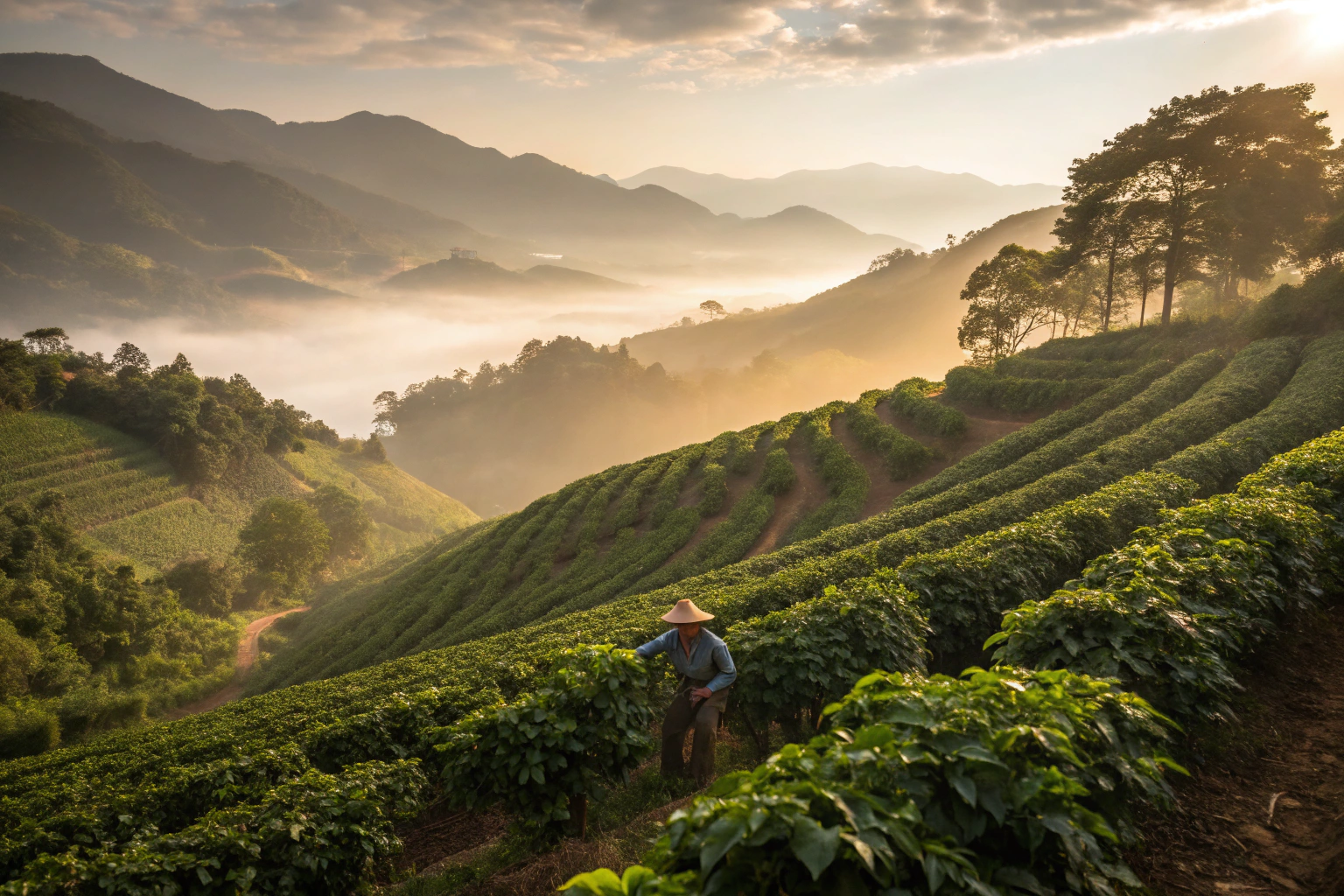
There's a quiet revolution happening in the global coffee trade, and it's centered in the highlands of Southwest China. If you're sourcing coffee, you've likely heard murmurs. Maybe a colleague mentioned a surprisingly good cup from China. Perhaps you've seen Yunnan beans listed on a specialty roaster's menu. This isn't a fluke. Yunnan coffee is moving decisively from a curiosity to a contender, and for savvy buyers, understanding why is the key to unlocking a new tier of value, quality, and supply chain stability.
The attention is real. It's driven by a powerful convergence: a region hitting its quality stride just as the global market desperately needs reliability. For too long, sourcing has been a gamble with weather, politics, and volatile logistics. Yunnan offers a different proposition—consistent, controlled, and strategically connected. At BeanofCoffee, with our foundation of over 10,000 acres in Baoshan, we've witnessed this evolution firsthand. The international spotlight is finally catching up to what we've known for years: Yunnan is not the future; it's a viable, high-performance present for wholesale buyers.
So, what's driving this shift? Let's move past the hype and look at the tangible, market-ready reasons. The attention stems from three core pillars: a dramatic and measurable rise in cup quality, a uniquely stable and secure supply chain, and a compelling economic proposition that makes sense in today's complex trading environment.
What Specific Quality Breakthroughs Have Put Yunnan on the Map?
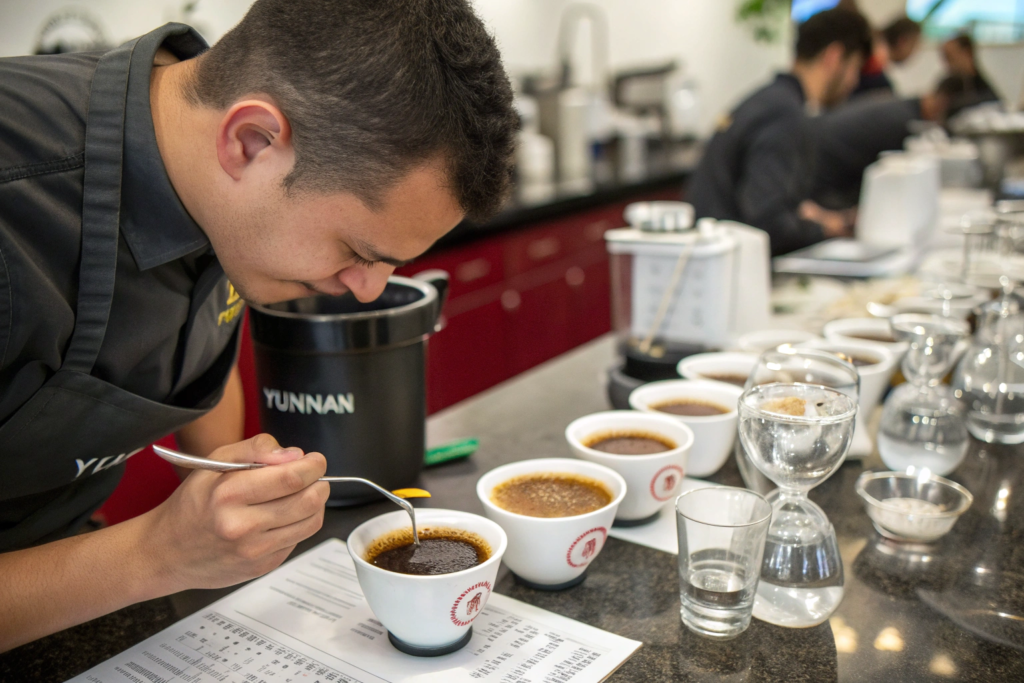
It starts with the cup. A decade ago, "Chinese coffee" might have conjured images of commercial-grade beans. Today, that's an outdated stereotype. The transformation has been deliberate and technical. Yunnan farmers and exporters have aggressively pursued knowledge, investing in better varietals (like improved Catimor and Typica), precision processing (honey, washed, natural), and strict post-harvest handling. The result? Clean, complex profiles that hold their own in blind cuppings.
We're seeing consistent notes of dark chocolate, toasted nuts, brown sugar, and often a bright, citrusy or stone-fruit acidity that breaks expectations. This isn't accidental. The terroir—high altitude, rich volcanic soil, distinct wet/dry seasons—provides the perfect canvas. Now, the skill of the painters has caught up. Furthermore, the institutional drive for quality is undeniable. The local government and large plantations are heavily investing in R&D and inviting international Q Graders to train and certify local cuppers. This commitment to specialty coffee standards is creating a pipeline of coffee that meets and often exceeds the 80+ point threshold, turning heads at international competitions and on the tables of discerning roasters.
Let's break down the two most impactful areas where this quality push is most visible.
How Has Processing Technology Evolved in Yunnan?
Processing is where the magic—or ruin—happens. Yunnan has leapfrogged from basic sun-drying to mastering a full spectrum of methods. Washed processing is now exceptionally clean, highlighting the bean's inherent acidity and clarity. But the real excitement is around honey and natural processes. By controlling fermentation times and drying bed techniques, producers are developing fruit-forward, sweet, and complex profiles that appeal directly to the modern specialty market. At our BeanofCoffee washing stations, we've moved from bulk fermentation to smaller, monitored batches. We track temperature and pH levels, a level of control that was rare just a few years ago. This technical evolution means buyers can now source not just "Yunnan coffee," but specifically a Yunnan honey process or a Yunnan anaerobic natural, with predictable and delicious results.
Are Yunnan Beans Winning Awards and Critical Acclaim?
Absolutely, and this is a critical credibility factor. Awards provide third-party validation that cuts through marketing. Yunnan coffees are now regular features and winners in competitions like the China Coffee Cup Challenge and are gaining recognition in international platforms. More importantly, they are being featured by renowned global roasters. When a top-tier roaster in Berlin or Portland proudly lists a "Single-Origin Yunnan" on their menu, it sends a powerful signal to the entire industry. This acclaim proves the quality is not just a local claim; it passes the toughest test: pleasing sophisticated palates worldwide. For a buyer, this de-risks the exploration. You're not experimenting with an unknown; you're sourcing from an origin that has already been vetted by the most critical taste-makers in our business.
How Does Yunnan's Supply Chain Offer Unmatched Stability?
Quality gets you in the door, but reliability keeps you coming back. In an era where climate change and logistical snarls disrupt shipments from Brazil to Ethiopia, Yunnan's stability is its superpower. The region is politically stable, with strong government support for agriculture as a key industry. Climatically, while no region is immune to weather, Yunnan's patterns are generally predictable, and its infrastructure is modernizing rapidly.
Think about the journey from farm to port. Our plantations in Baoshan are connected by highway directly to the mega-ports of Shanghai and Ningbo. This land leg is reliable and short compared to the internal logistics of many other origins. Once at port, you're tapping into the world's most efficient shipping networks, with frequent sailings to North America and Europe. This control over the front end of the logistics chain—what we call "field-to-port reliability"—is something we at BeanofCoffee prioritize. It allows us to give buyers accurate sailing schedules and delivery estimates, turning coffee sourcing from a guessing game into a predictable part of your business plan.
This stability isn't passive; it's built on specific, manageable foundations.

What Makes Yunnan's Political and Climate Profile Low-Risk?
From a sourcing perspective, risk management is everything. Yunnan operates within a stable national framework with consistent trade policies. There's no concern about sudden export bans or political unrest disrupting harvests—a real worry in some other origins. Climatically, the region is less prone to the devastating frosts of Brazil or the drought cycles of Central America. The monsoon season is regular, and the mountainous terrain provides natural drainage and temperature regulation. This doesn't mean zero risk, but it means a significantly lower and more predictable risk profile. For a CFO or a procurement manager, this translates to fewer sleepless nights and a more resilient supply chain. You're building your brand on a foundation that isn't likely to vanish with the next weather report or news headline.
How Is Infrastructure and Logistics Efficiency a Key Advantage?
Efficiency is the silent driver of profit. Yunnan's government has heavily invested in roads, electricity, and communication networks in its agricultural zones. For us, this means we can get freshly picked cherries to our wet mill within hours, preserving quality. It also means our dried parchment can be trucked to port in a reliable 2-3 day window. This seamless domestic logistics chain is a stark contrast to the delays and infrastructure challenges that can add weeks and costs in other regions. Furthermore, working with a large-scale exporter like us means consolidated container loads and strong relationships with shipping lines. We secure space on vessels proactively. This end-to-end control over the coffee logistics pipeline is a tangible, competitive advantage that delivers what buyers like Ron care about most: timeliness.
What is the True Cost Advantage of Sourcing from Yunnan?
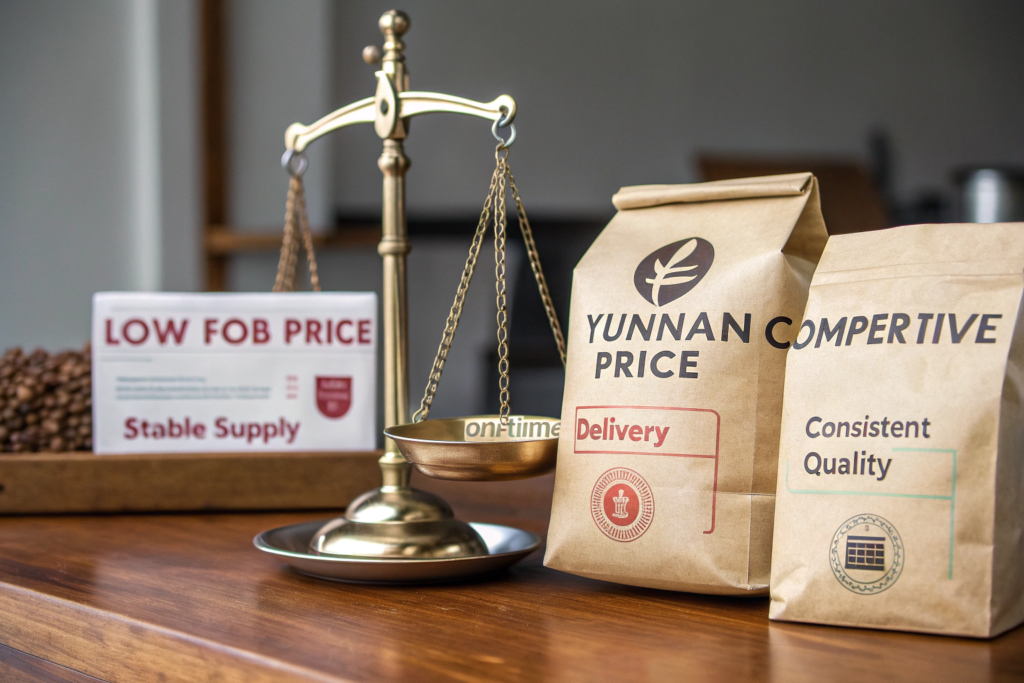
Let's be direct: attention doesn't last without a compelling price-to-value ratio. Yunnan delivers. The advantage isn't always the absolute cheapest FOB price (though it is highly competitive). The real win is in the total landed cost and long-term value. Consider the full equation: bean cost + shipping + tariffs + cost of delays + cost of quality inconsistency. Yunnan often wins on the total score.
Economies of scale are real here. Large, vertically integrated operations (like ours) drive down production costs. A streamlined supply chain controls shipping costs. And while U.S. tariffs are a factor, a strategic partner helps navigate them efficiently, minimizing surprises. But the biggest cost saving? Stability. Avoiding a single delayed or rejected shipment can save more than any marginal price difference on the bean. When you source from Yunnan, you're paying for predictability. You're buying the assurance that the coffee will arrive on schedule, at the agreed quality, allowing you to plan your production and sales with confidence. That assurance has immense monetary value.
To understand this, we need to look at the two components of cost that matter most to bottom-line-focused buyers.
How Does the Total Landed Cost Compare to Traditional Origins?
It's a revealing exercise. Take a container from Colombia. The FOB price might look good. But add the longer, less frequent shipping route, potential port delays, and higher inland freight costs within Colombia. Now, model a container from Yunnan: a potentially comparable FOB, a shorter and more reliable ocean transit from East Asia to the U.S. West Coast, and efficient domestic logistics. When you run the numbers, the totals frequently converge. In some cases, Yunnan comes out ahead, especially when you factor in the time value of getting your product to market faster. We help our clients do this math transparently. It's not about being the cheapest; it's about being the most consistently cost-effective and reliable partner, which saves money and stress in the long run.
Can Sourcing from Yunnan Provide Long-Term Price Stability?
This is crucial for business planning. The volatility of the C-market can wreak havoc on your margins. Sourcing from Yunnan allows for more stable, relationship-based pricing. Because we control large, fixed acreage, we can offer forward contracts that lock in a price for a season. This protects you from sudden market spikes. This model fosters true partnership. You get budget certainty, and we get a committed buyer, allowing us to invest further in quality and sustainable practices. It's a move away from the anonymous, speculative commodity trade and towards a modern, secure, and sustainable sourcing model. In a world of uncertainty, that kind of stability is worth its weight in gold—or coffee.
Conclusion
Yunnan coffee is gaining international attention because it is solving modern problems for the global coffee trade. It's no longer just about offering an "alternative." It's about providing a superior solution where it counts: in the consistent, high-scoring quality of the cup; in the resilience and predictability of its supply chain; and in the smart, total-value economics it offers to importers.
The buzz is justified. It's built on tangible progress and strategic advantage. For importers, distributors, and roasters looking to de-risk their supply chain without compromising on quality, Yunnan has matured into a primary, must-consider origin.
We at BeanofCoffee are at the heart of this story. Our 10,000+ acres in Baoshan are dedicated to delivering on this promise of premium, stable, and trustworthy Yunnan Arabica. The attention is here. The opportunity is now.
Ready to explore what a stable, high-quality Yunnan supply chain can do for your business? Contact our sales lead, Cathy Cai, for cupping samples and a detailed conversation about your needs. Reach her directly at cathy@beanofcoffee.com.