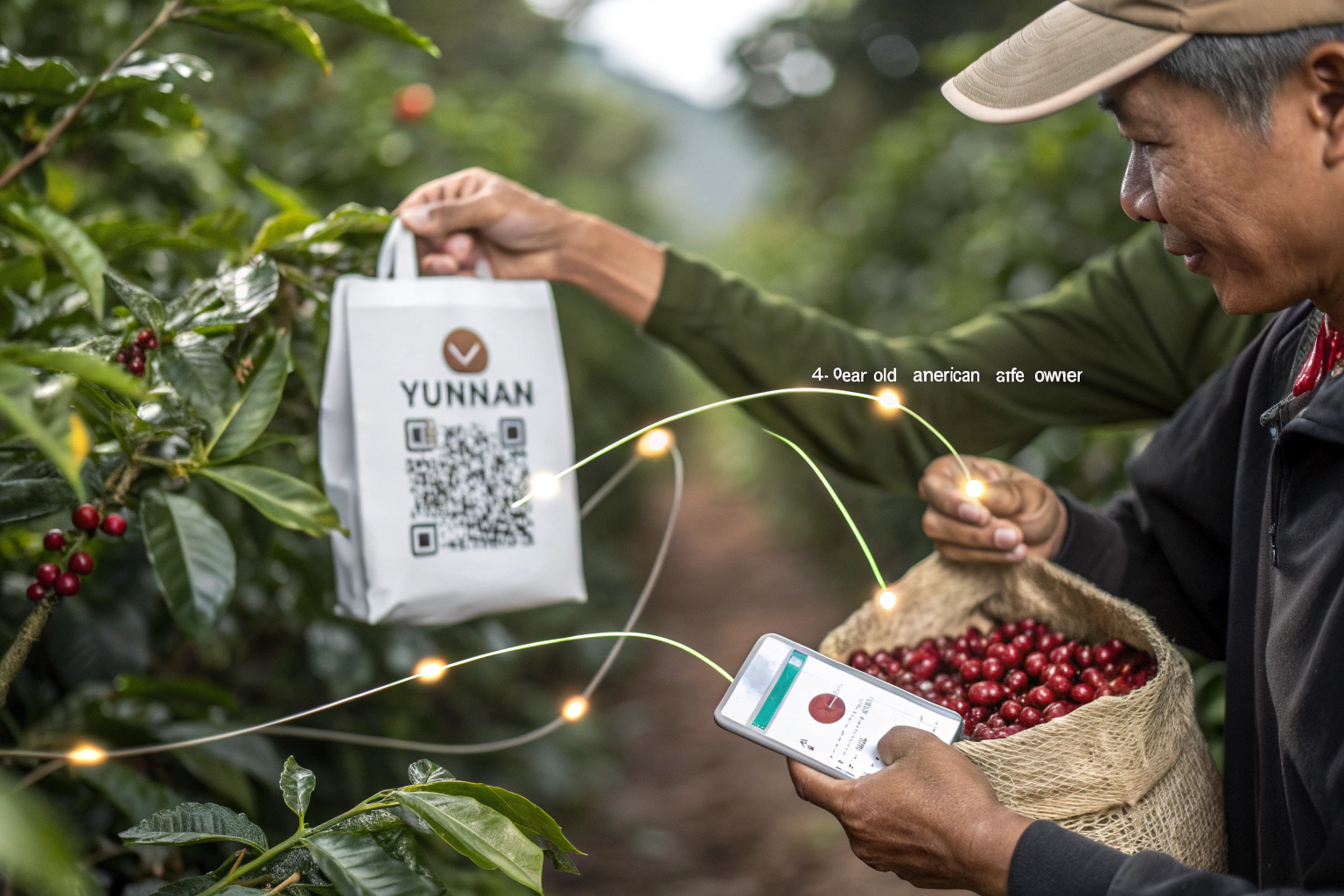
You talk a lot about "quality" and "sourcing." But your customers are getting smarter. They're starting to ask tougher questions: "Where exactly does this come from? Who grew it? Was it grown ethically? What am I really paying for?" You might find yourself giving vague answers like "it's from South America" because, honestly, you might not know the full story yourself. This is a major pain point. You're trying to build a brand based on trust, but you have gaps in your own knowledge, creating a barrier between you, the story of your coffee, and your customers.
Honestly, improving transparency is not about creating a perfect, flawless story; it's about having the courage to tell the real story, with all its complexities. It means moving beyond vague origin labels and actively tracing your coffee back to the farm or washing station. This is achieved by demanding detailed information from your suppliers, leveraging technology like QR codes to share that information, and openly communicating both the triumphs and the challenges of your supply chain with your customers.
From my perspective as a grower, transparency is a two-way street. We want you to know about our farm in Baoshan, Yunnan. We are proud of our processing methods, our workers, and the quality we produce. When our partners hide that story, they are hiding our identity and our hard work. A truly transparent business doesn't just sell coffee; it builds a bridge between the consumer and the producer. Let's explore how to build that bridge, step by step.
How Do You Go Beyond "Country of Origin"?
The first and most fundamental step in transparency is knowing what you're buying. "A coffee from Colombia" is no longer enough.
Isn't it impossible to know the exact farm for every coffee? For massive, anonymous commodity blends, yes, it can be. But for a specialty coffee business, it is not only possible, it is essential. True transparency starts with demanding deeper traceability from your importers or, even better, by working directly with producers or exporters who can provide this information. You need to shift your sourcing mindset from buying a commodity to sourcing a specific agricultural product with a known provenance. This means asking your suppliers the tough questions. If they can't or won't answer, they are not a transparent partner.
What specific information should you ask for?
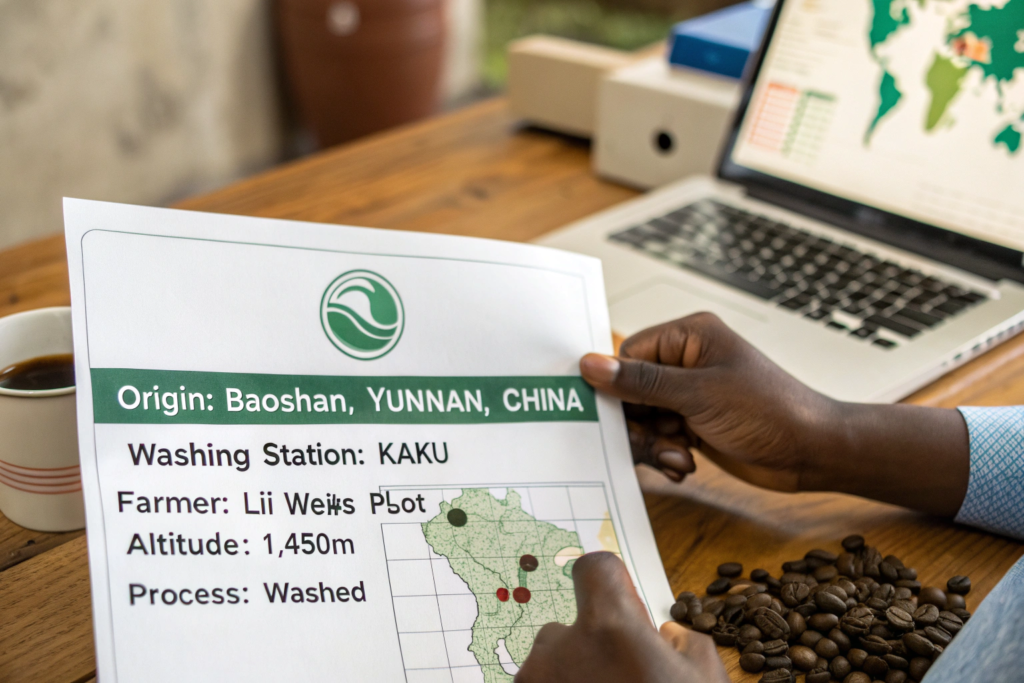
- The Country is the start, not the end: Ask for the Region (e.g., Antioquia, Colombia; or Baoshan, China).
- Go deeper: Ask for the specific Washing Station, Cooperative, or Estate Name. This is often the most practical level of traceability for high-quality lots.
- The Holy Grail: For microlots, ask for the Farmer's Name and the specific Altitude of the farm.
- The Process: Always know the processing method (Washed, Natural, Honey, etc.) as it's critical to the flavor story.
Why is this information so valuable?
This data does two things. First, it gives you confidence that you are buying a high-quality, non-commodity coffee. Second, it provides you with the raw ingredients for your story. "A coffee from the Kaku washing station in Baoshan, grown at 1,450 meters" is a far more compelling and trustworthy story than "a coffee from China." At Shanghai Fumao, providing this level of detail is standard practice for our specialty lots.
How Do You Share the Story? Tools for Tangible Transparency.
Once you have the information, you need to share it in a way that is accessible and engaging for your customers. Don't hide it in a binder behind the counter. Make it a central part of your brand experience.
Will my customers actually take the time to look this up? Not all of them, but the ones who do are your most engaged and loyal customers. And for the rest, the mere presence of these tools sends a powerful message: "We have nothing to hide. We are proud of our sourcing." It builds subconscious trust even if the tool is never used. Technology has made this easier than ever.
What are the most effective tools?
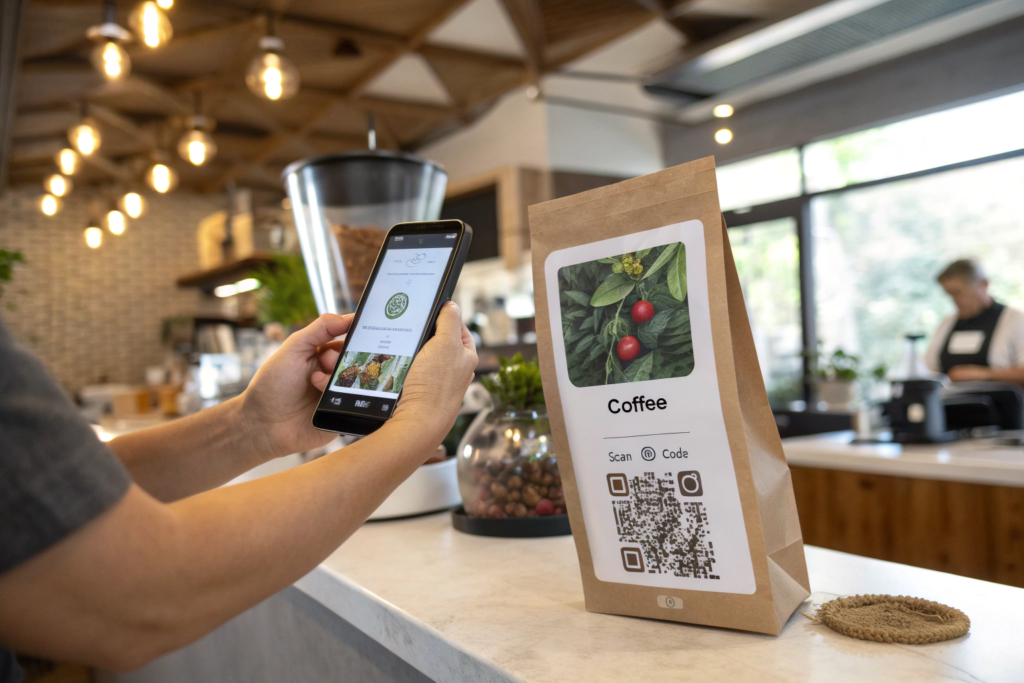
- QR Codes on Packaging: This is the most powerful tool. A simple QR code on your retail bags or on a small card next to the batch brewer can link customers directly to a webpage with the coffee's story.
- A "Sourcing" or "Transparency" Section on Your Website: Create a dedicated part of your website to feature your current coffees. Include photos of the farms (your supplier should provide these!), details about the origin, and tasting notes.
- In-Store Displays: Use chalkboards, posters, or small printed cards to display the key traceability info for the "coffee of the day." Keep it simple: Coffee Name, Farm/Washing Station, Country/Region, and three key tasting notes.
- Social Media "Origin Reports": When you launch a new single-origin coffee, don't just post a picture of the bag. Post a carousel with a map, a photo of the farmer, and a short story about what makes that coffee special.
What should the story include?
At the heart of every cup of coffee lies a human story, woven by hands that nurture, harvest, and process with care. Take, for example, Maria, the third-generation manager of a small washing station nestled in the mist-shrouded hills of Colombia's Nariño region. Each morning, before the first light spills over the Andes peaks, Maria is already there, her boots caked with red clay from the terraced farms that cascade down the mountainside. She greets her team—farmers like her father before her—with a warm 'Buenos días' and a smile that crinkles the corners of her eyes, a testament to decades of dedication. The air around the washing station hums with the chatter of workers, the rhythmic drip of water from the pulping machines, and the earthy scent of freshly picked coffee cherries, sweet and slightly tart, mingling with the dampness of the morning fog that clings to the wooden tables where samples are sorted.
Local children often wander by, their laughter echoing as they watch the process, their small hands reaching out to touch the vibrant red fruits that will soon become the beans we cherish. This specific coffee, a single-origin Colombian Supremo, was chosen not just for its exceptional flavor profile—bright acidity, notes of caramelized sugar, and a silky finish—but because of Maria.
What Does "Pricing Transparency" Look Like?
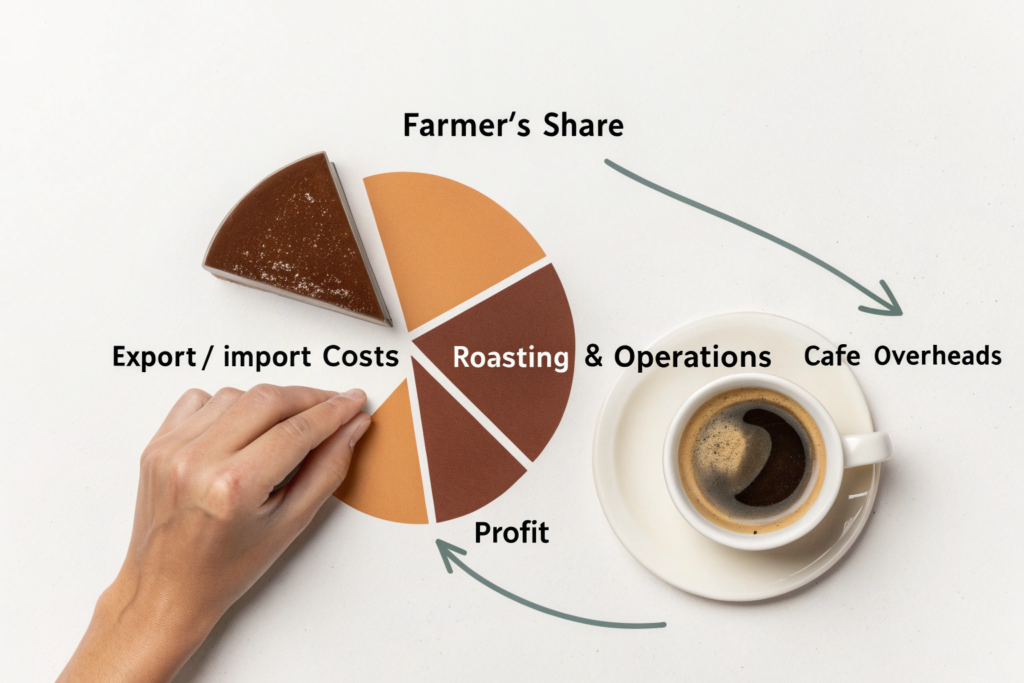
This is the next frontier of transparency, and it requires the most courage. It's about being open about where the money goes.
Do I really have to show my customers my profit margins? Not necessarily down to the penny. Pricing transparency is about showing your commitment to paying a fair price at the source. It's less about your profits and more about demonstrating that you are not exploiting the farmer. The most common way to do this is by sharing the "FOB Price."
FOB (Free On Board) is the price paid for the coffee at the port of origin, before shipping, insurance, and import duties. It's a standard industry metric and the closest thing to the price the farmer or exporter received.
How can you communicate this?
- Publishing FOB Prices: Some progressive roasters publish the FOB price they paid for each coffee on their website. This is a powerful statement that says, "We pay well above the commodity market price, and we're proud of it."
- Using a "Transparency Report": Some companies publish an annual "Transparency Report" that aggregates their sourcing data, showing the average price they paid versus the commodity market price.
- Partnering with Transparent Importers: Work with importers or producers who are open about their pricing structures and can provide you with FOB information. This is a key part of our philosophy at BeanofCoffee.
Why is this so powerful?
It fundamentally changes the conversation about price. When a customer asks why your coffee is $22 a bag, you can confidently explain that it's because you paid a price that allows the farmer to invest back into their farm and their family, ensuring a sustainable future for the coffee they love. It turns a price objection into a conversation about value and ethics.
How Do You Embrace "Imperfect" Transparency?
Transparency can be intimidating because you might feel like your supply chain isn't "perfect" enough to share. This is a mistake.
What if I can't trace a coffee all the way to the farmer? What if I don't know the FOB price for every bean? That's okay. The goal is not perfection; the goal is honesty and progress. Being transparent means being open about what you do know, what you don't know, and what you are doing to know more in the future. This vulnerability is incredibly powerful and builds more trust than pretending to be perfect. Your customers don't expect you to have a personal relationship with every farmer on earth. They appreciate honesty about the realities of a global supply chain.
How can you be "imperfectly" transparent?
- Acknowledge the Gaps: On your website, you could say, "For this blend component, we were able to trace it to the 'Los Naranjos' cooperative, which represents 50 small farms in the region. Our goal for next year is to work with our import partner to isolate a single-farm lot from this co-op."
- Share the Challenges: Write a blog post or social media update about the difficulties of sourcing. Talk about a time a container was delayed, or a crop failed. This humanizes your business and shows you are grappling with real-world issues.
- State Your Goals Publicly: Publish a "Sourcing Goals" page on your website. For example: "By 2028, our goal is for 80% of our coffee volume to be traceable to the washing station level." This shows you are on a journey and invites your customers to join you.
Why does this build more trust?
Pretending to be perfect makes people suspicious. There's a tightness in the chest, a forced smile that doesn't reach the eyes, a voice that sounds too polished, too rehearsed—as if every word is carefully measured to avoid any crack in the facade. It's like standing in a room with walls made of glass; you can see the reflection of a flawless self, but everyone else sees through the pretense, sensing the emptiness behind the mask. Suspicion creeps in like a shadow, whispering doubts: 'Is this really who they are?' 'What are they hiding?' Admitting that you are on a journey of improvement, however, is like stepping into a sunlit meadow where the grass is a little uneven, the flowers not perfectly aligned, but alive with the warmth of authenticity.
Conclusion
Improving transparency is a journey, not a destination. It begins with the simple, determined act of asking "Where does this come from?" and doesn't stop. By digging deeper for traceability information, using technology to share that story, being courageous about pricing, and being honest about your challenges, you do more than just sell coffee. You build a brand that has integrity. You create a community of customers who are invested in the story behind their cup. And you honor the hard work of the producers at the very beginning of the chain, letting their identity and their craft shine through.
We believe in this principle of transparency because we are proud of our practices and have nothing to hide. We invite you to ask us the tough questions. If you are looking for a partner who can provide the proof and traceability you need to build a truly transparent business, we are ready to open our doors to you. Contact our coffee specialist at cathy@beanofcoffee.com to start the conversation.