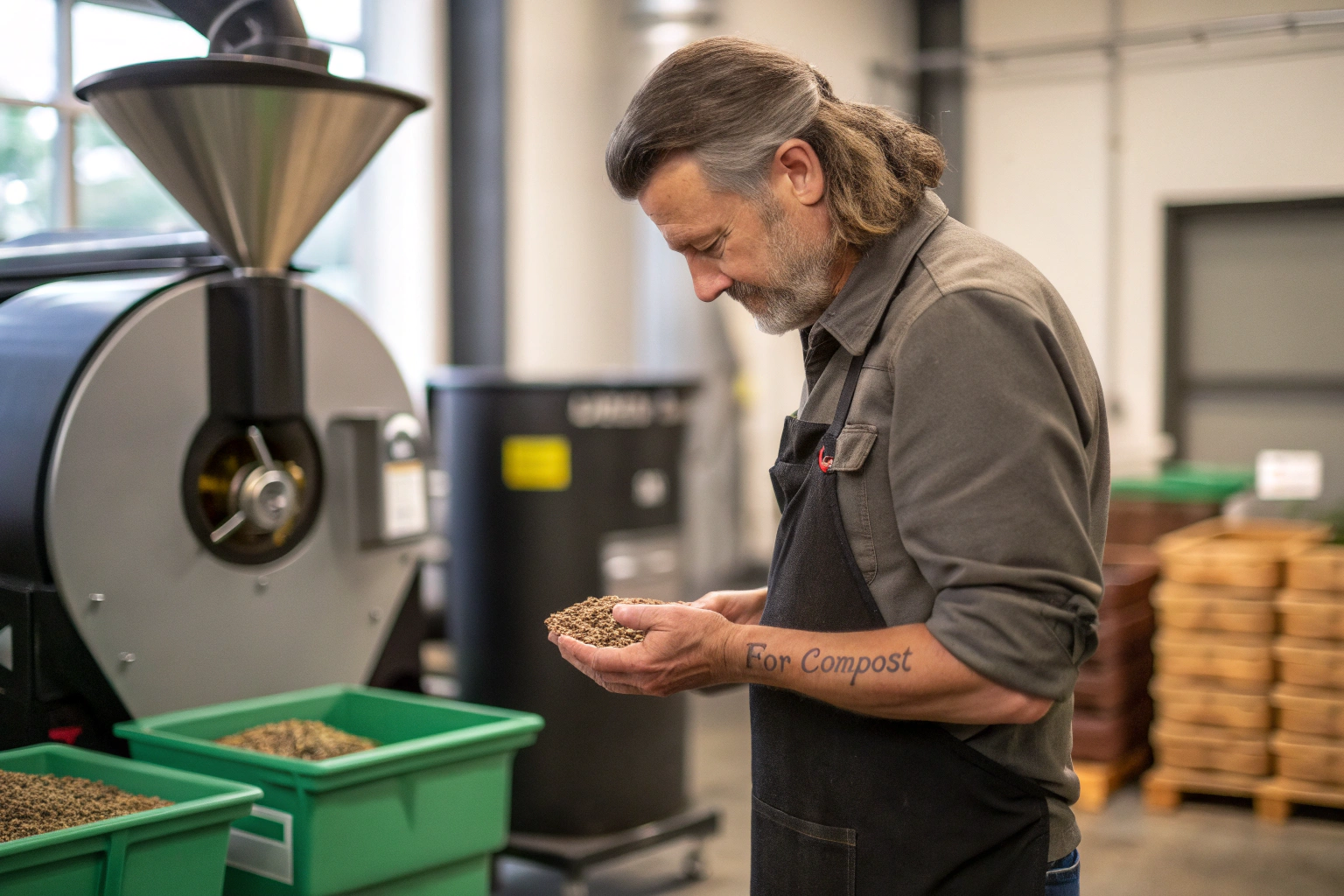
You're focused on creating a beautiful final product. But at the end of a long roasting day, you're left with piles of waste: empty green coffee sacks, buckets of papery chaff, and a handful of scorched, unusable beans from your sample roasts. You look at this mountain of trash and feel a pang of guilt. It feels inefficient and unsustainable. This is a significant pain point: you want to run a more eco-friendly and efficient business, but you're not sure where to start. The waste seems like an unavoidable cost of doing business, but you suspect there has to be a better way.
Honestly, reducing waste in the coffee roasting process is a systematic effort that goes far beyond just the trash can. It involves a three-pronged approach: 1) Minimizing input waste by optimizing your green coffee buying and sample roasting. 2) Maximizing energy efficiency to reduce your carbon footprint and utility bills. And 3) Repurposing output waste by finding creative, second-life uses for byproducts like chaff, jute bags, and spent grounds. It's about adopting a "circular economy" mindset within your roastery.
From my perspective as a grower, we see the immense resources that go into producing every single bean. We see the water, the nutrients, the human labor. So, when those beans are wasted down the line, it's a loss for the entire supply chain. Adopting a low-waste philosophy is a sign of respect for the coffee and the people who grew it. Let's break down the practical steps you can take to make your roastery a model of efficiency.
How Can You Minimize Green Bean and Sample Roasting Waste?
The most valuable thing in your roastery is your green coffee. Every bean that doesn't make it into a customer's bag is a direct loss of profit. The biggest sources of this loss are often inefficient buying and wasteful sample roasting protocols.
Do I really waste that much in sampling? It adds up faster than you think. If you're roasting a 250g or 500g batch on your production machine every time you want to test a new coffee or tweak a profile, the cumulative waste over a year can be enormous. The key is to use the smallest possible batch size that still gives you a reliable sensory evaluation. This is where modern technology and smart processes come in.
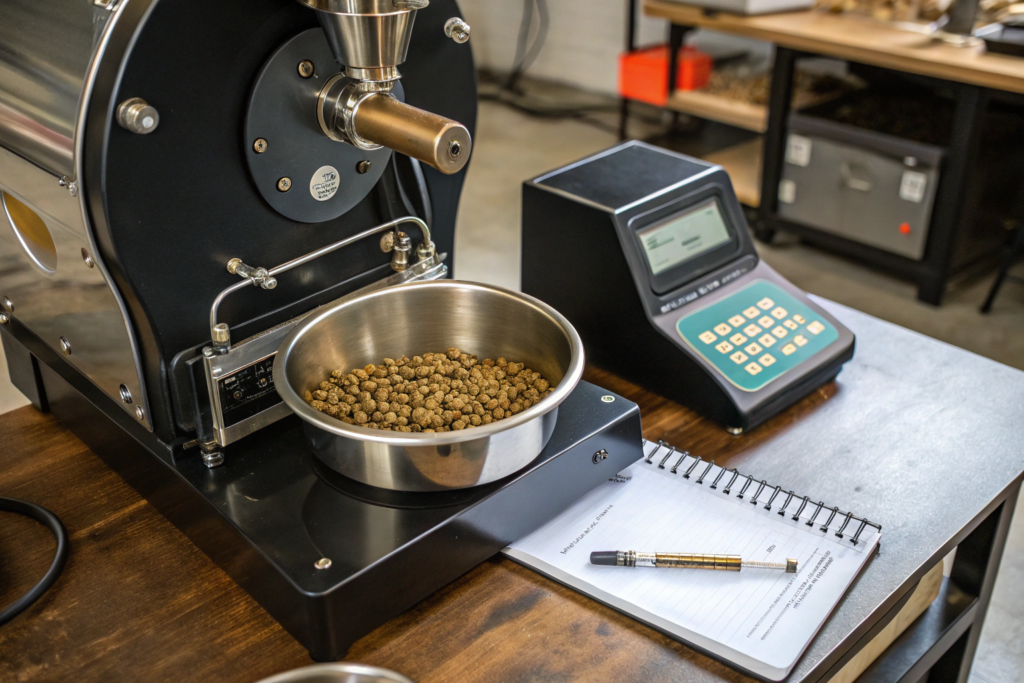
How can you optimize your sample roasting?
- Invest in a Micro-Roaster: Modern electric sample roasters like the IKAWA Pro or small gas roasters like the Aillio Bullet allow you to roast batches as small as 50-100g. This is more than enough for a proper cupping and evaluation, and it represents a massive reduction in waste compared to using your production machine.
- Profile Before You Produce: Use these small-batch roasts to develop your roast profile. Once you have dialed in the key markers on a small scale, you can then more confidently apply that profile to a larger batch, drastically reducing the number of "test batches" you need to run on your big machine.
How does smart green coffee buying reduce waste?
- Order Just-in-Time (JIT): While it requires good planning, a JIT inventory strategy means you're not holding onto massive amounts of green coffee that could go bad, lose quality, or be damaged in storage. This requires a strong relationship with a reliable supplier (like us at Shanghai Fumao) who can provide consistent, timely shipments.
- Quality Over Price: Buying cheap, low-grade coffee might seem like a saving, but it often leads to more waste. These coffees typically have a higher defect rate (beans you have to sort out) and a wider range of bean sizes and densities, leading to uneven roasts and more "quakers" (underdeveloped, unusable beans). Investing in high-quality, well-sorted green coffee from the start is a waste-reduction strategy.
How Can You Find a Second Life for Roasting Byproducts?
At the end of the day, you will inevitably have byproducts. The key is to stop thinking of them as "waste" and start seeing them as "resources."
What can I possibly do with all this chaff? Coffee chaff, the papery skin that comes off the bean during roasting, is a fantastic organic material. It's light, dry, and rich in nitrogen. Instead of sending it to the landfill, where it produces methane, you can give it a second life. This is where community partnerships can be incredibly valuable.
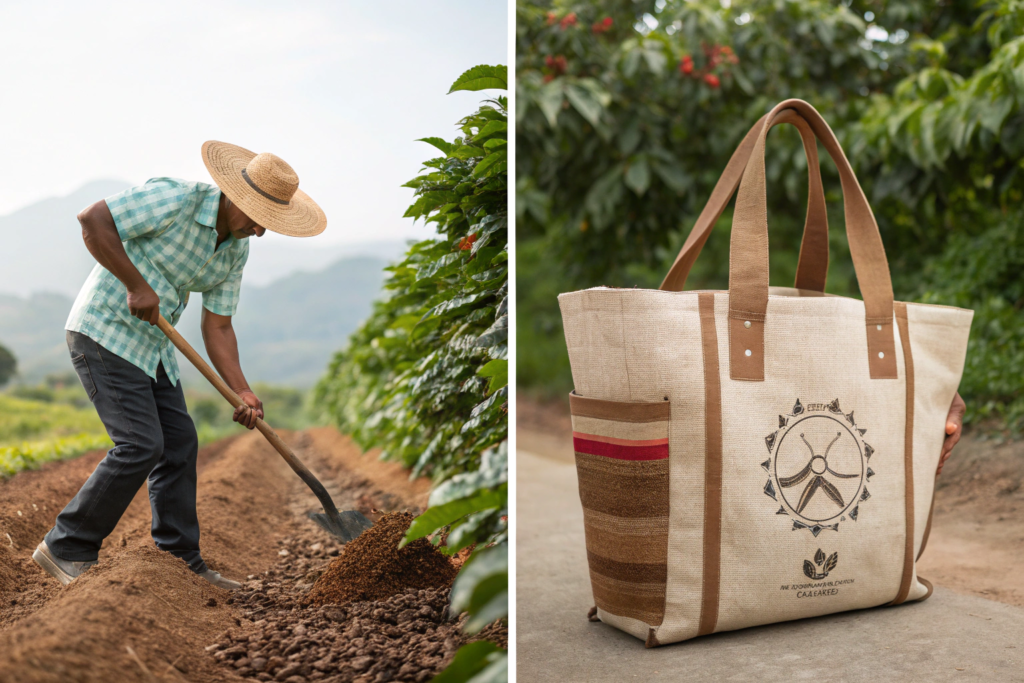
What are the best uses for coffee chaff?
- Local Farms & Gardens: Chaff is an amazing addition to compost piles. It's also used as bedding for animals like chickens. Reach out to local urban farms, community gardens, or even backyard chicken keepers. They will often be thrilled to take it off your hands for free.
- Bio-fuel: Some innovative companies are now compressing coffee chaff into pellets or "briquettes" to be used as a clean-burning biomass fuel.
What about the jute or burlap sacks?
Those big bags your green coffee arrives in are a valuable raw material.
- Donate to Local Artisans: Crafters and DIY enthusiasts love these bags for making tote bags, pillows, upholstery, and other rustic-chic decor. A quick post on a local community Facebook group will often have people lining up for them.
- Garden Use: Gardeners use them as weed barriers, for protecting plants during winter, or as planters themselves. They are biodegradable and perfect for the garden.
How Can You Tackle Energy and Water Waste?
The invisible waste in your roastery is often the biggest culprit: energy and water. Your roaster is a huge consumer of gas and electricity, and if you have a water-quenching system, your water bill can be significant.
My roaster is what it is, how can I change its energy use? While you may not be able to change your machine overnight, you can change how you use it. Furthermore, modern roasters are being designed with incredible new energy-saving technologies. When it's time to upgrade, making efficiency a top priority will pay dividends for years. This is about both operational discipline and smart capital investment.
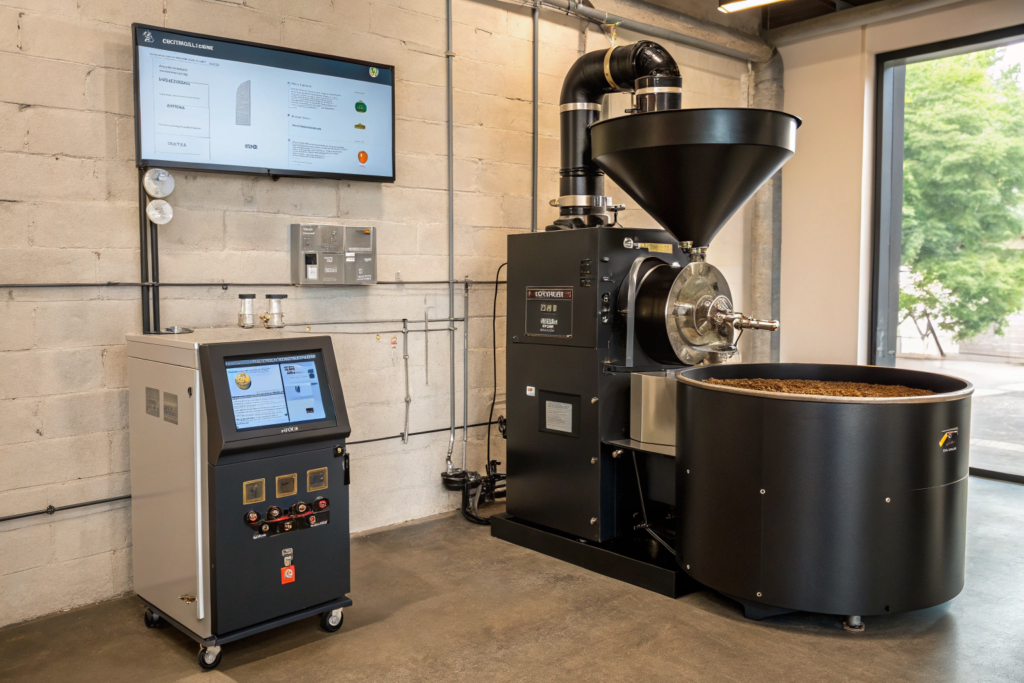
How can you operate more efficiently?
- Roast Back-to-Back: Your roaster uses a massive amount of energy to get up to temperature. Once it's hot, keep it hot. Roasting your daily batches back-to-back, rather than heating and cooling the machine multiple times a day, is a huge energy saver.
- Data-Driven Roasting: Use roasting software like Cropster or Artisan. These tools help you perfect your roast profiles, so you can hit your targets perfectly every time. Every failed batch that you have to discard is a massive waste of both beans and the energy used to roast them.
What are the latest energy-saving technologies?
- Recirculation Roasters: Traditional roasters vent all the hot air outside. Modern roasters with heat recirculation technology capture a portion of that hot exhaust air, clean it, and feed it back into the system, dramatically reducing the amount of new energy needed to maintain temperature.
- Insulation: Newer machines have far superior insulation, meaning less heat escapes into the room and more of it stays in the drum, where it belongs.
- Water Cooling Systems: If your roaster uses water to cool the beans, consider a closed-loop system with a radiator. This allows you to cool and reuse the same water over and over, rather than dumping hundreds of gallons of fresh water down the drain every day.
Why Does Reducing Waste Make Good Business Sense?
Adopting a low-waste philosophy is not just an act of environmental charity. It is one of the smartest financial decisions you can make for your business.
Will customers really pay more for "eco-friendly" coffee? They might not pay more, but they will choose you over a competitor. In a crowded market, a demonstrable commitment to sustainability is a powerful differentiator. But even before the marketing benefits, the cost savings are real and immediate. Every bit of waste you reduce is money that goes directly back into your pocket.
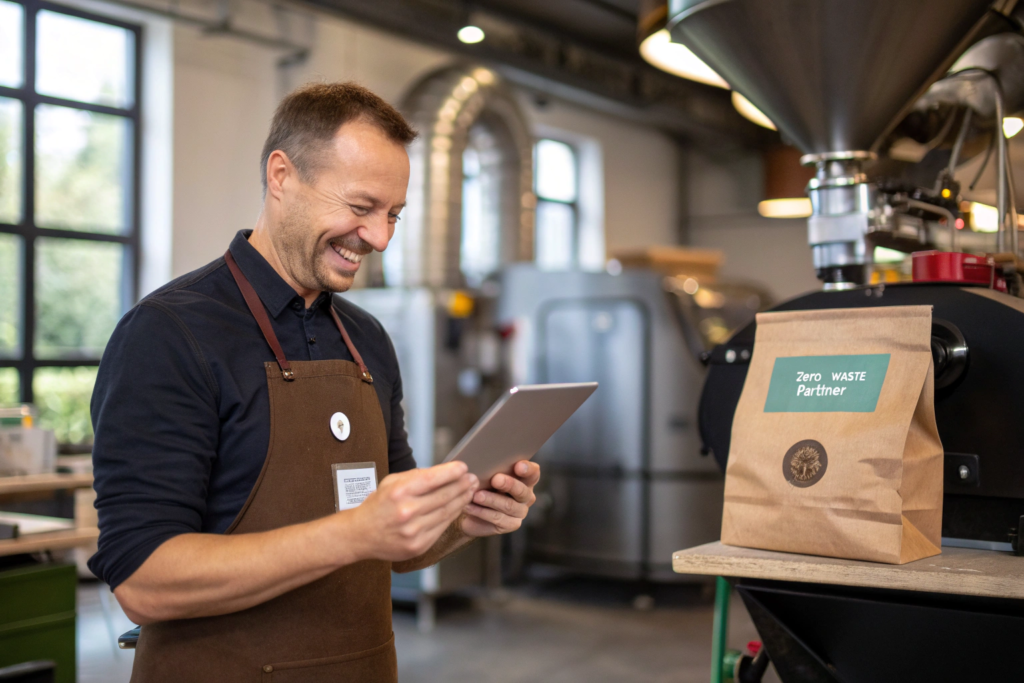
What is the direct financial impact?
- Lower Utility Bills: More efficient energy and water use means lower monthly bills.
- Lower Raw Material Costs: Wasting fewer green beans means your cost of goods sold (COGS) for each bag of roasted coffee goes down.
- Reduced Disposal Fees: If you're paying for trash removal by weight or volume, diverting heavy items like chaff and grounds can lead to significant savings.
What is the marketing and brand benefit?
- Brand Differentiation: Being able to tell a true story about your sustainability efforts sets you apart. You can talk about it on your packaging, on your website, and on social media.
- Attracting Talent: The best and most passionate coffee professionals want to work for companies that share their values. A commitment to sustainability can help you attract and retain top talent.
- Building Community: Partnering with local farms or artisans to repurpose your "waste" builds goodwill and deepens your connection to your local community. It shows you are a business that cares about more than just profit.
Conclusion
Reducing waste in your roastery is a powerful win-win-win scenario. It's a win for the planet, reducing your environmental footprint. It's a win for your bottom line, lowering your costs and increasing your profitability. And it's a win for your brand, creating a compelling story of efficiency and responsibility that resonates with modern consumers. By thinking critically about your inputs, outputs, and energy use, you can transform your roastery from a linear "take-make-dispose" model into a smart, circular system where every resource is valued and every bean's potential is maximized.
Our commitment to sustainability starts on our farms in Yunnan, where we practice responsible agriculture to ensure a healthy future for our land and our coffee. We are proud to partner with roasters who carry that same ethos forward in their own operations. If you're looking for a supplier who shares your commitment to quality and efficiency, we invite you to connect with us. Contact our coffee specialist at cathy@beanofcoffee.com.