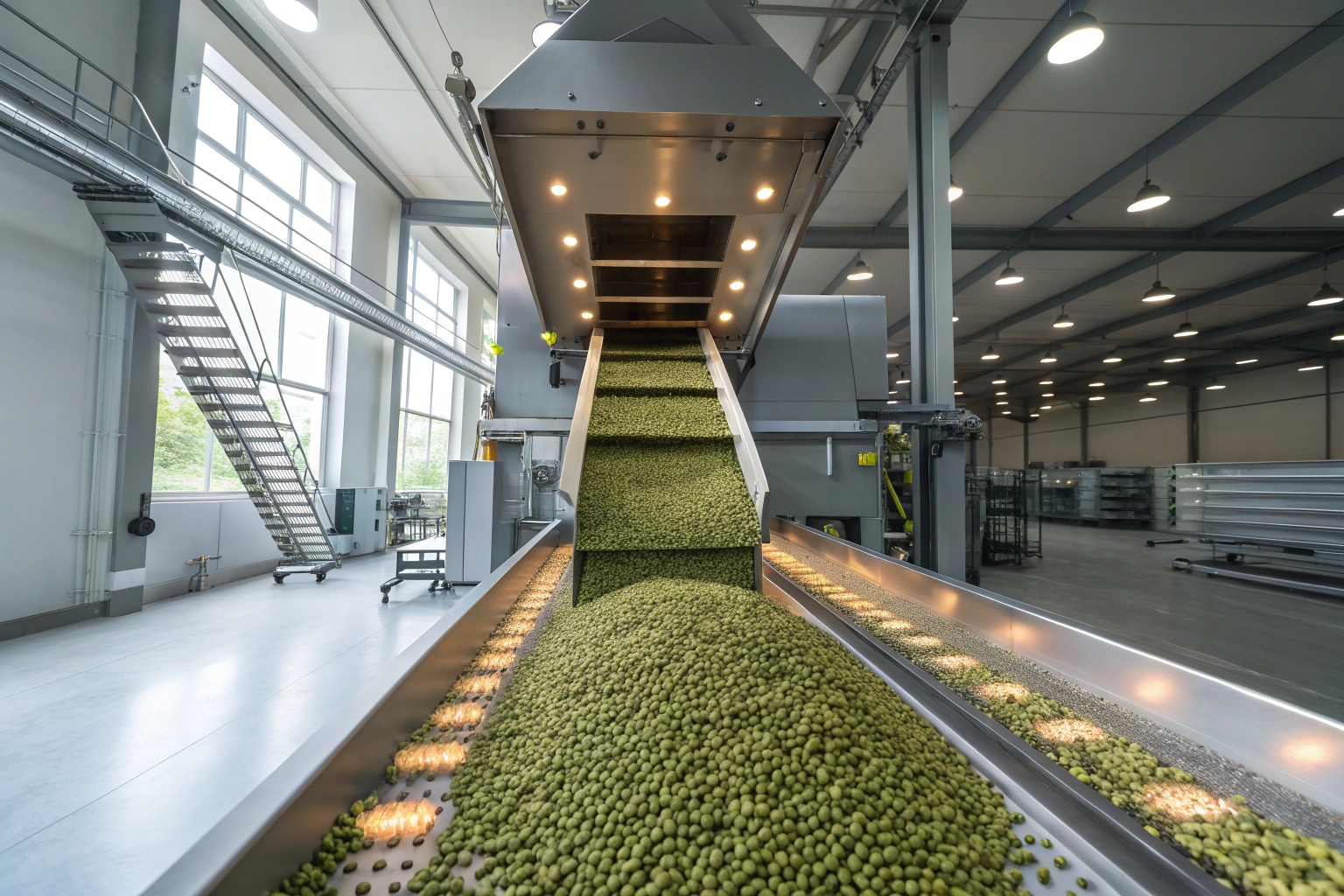
You're walking through a traditional coffee processing station. Rows of workers are bent over conveyor belts, their eyes glued to the moving beans, fingers moving swiftly to pick out defects. It's a scene of intense human labor. Then, you visit a modern facility. A sleek machine hums quietly, its optical sensors flashing as a cascade of beans flows through, and defective beans are ejected with a precise puff of air. The difference isn't just about technology; it's about the future of quality, scale, and fairness in coffee. Are machines replacing people, or are they enabling a new standard?
The core advantages of automated coffee sorting machines are unmatched consistency in quality control, exponentially higher throughput and efficiency, significant long-term labor cost reduction, and data-driven traceability and optimization. They address fundamental pain points for exporters and buyers like Ron, who are deeply concerned with quality control, stable supply, and predictable pricing. While not eliminating the need for human skill, they augment it with superhuman precision and stamina.
Let's be realistic. Human sorters are incredible. Their ability to judge complex defects is still superior in some edge cases. But they get tired, they have bad days, and their standards can drift over an 8-hour shift. A machine does not. For a producer like us at BeanofCoffee, managing over 10,000 acres in Yunnan, the question wasn't "if" but "when" to integrate this technology to secure our position as a premium, reliable supplier. This article breaks down the tangible benefits that make automated sorting a strategic investment, not just a cost.
How Do Sorting Machines Achieve Unbeatable Consistency and Quality?
This is the most compelling advantage. Consistency is the bedrock of trust in B2B coffee trading. When a buyer in Germany orders ten containers of Grade A Arabica, they expect every bag in every container to meet the exact same specification. Human-led sorting, no matter how well managed, introduces variance.
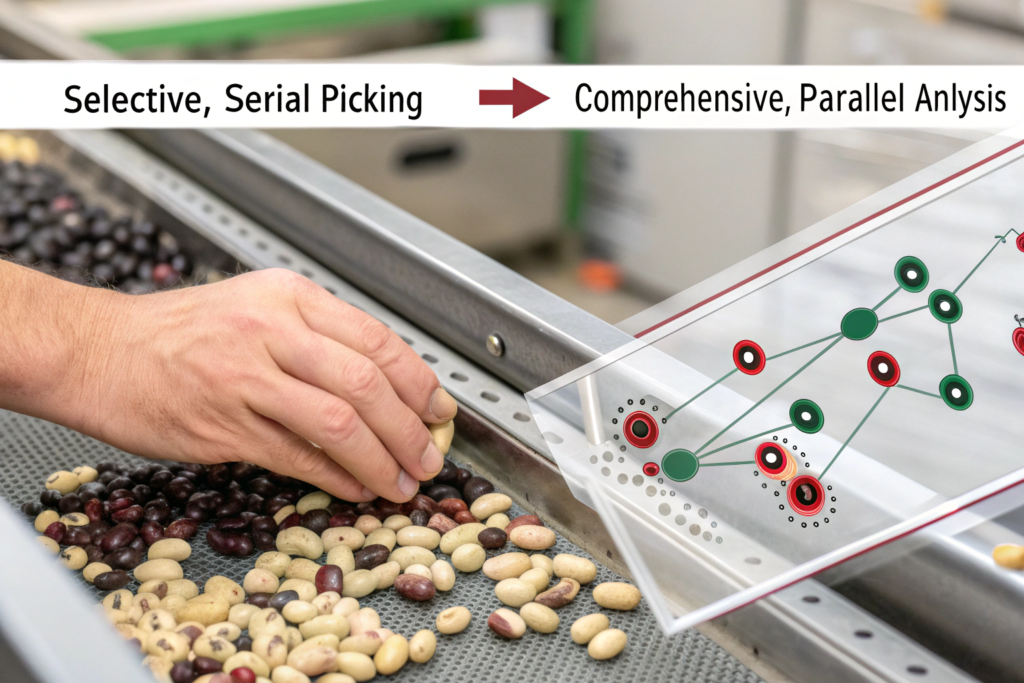
Automated optical sorters use high-resolution cameras (RGB, near-infrared, laser) and sophisticated software to analyze each bean in milliseconds. They don't just look at color; they assess size, shape, density, and even chemical composition. They can be programmed to reject beans with specific defect profiles: black beans, sour beans, broken beans, foreign material (stones, sticks), and even beans affected by insect damage or fungus that might be invisible to the human eye. The machine applies the same ruthless, unwavering standard to the first bean and the millionth bean of the day. This results in a final green coffee lot with a near-zero defect count and exceptional uniformity, which directly translates to a cleaner, more predictable, and higher-scoring cup of coffee.
What Specific Defects Can Machines Catch That Humans Miss?
Human eyes are great at spotting major color defects. But machines excel in areas where we are weak:
- Density Sorting: Machines can use gravity or air pressure to separate less dense, hollow "floaters" (often under-developed) from dense, high-quality beans. This improves roast uniformity.
- Internal Defects: Advanced NIR (Near-Infrared) sorters can detect internal flaws, like "stinkers" caused by over-fermentation, which look normal on the outside but ruin the taste.
- Micro-Fractures: Laser scanners can identify hairline cracks in beans that would break during roasting, creating fine particles ("fines") that lead to channeling in espresso and bitter flavors.
This level of scrutiny elevates the entire lot's quality, often pushing it into a higher commercial or specialty grade, commanding a better price.
How Does This Consistency Benefit the Roaster/Buyer?
For the end buyer—a roastery—consistent green bean quality is a massive operational advantage. It means their roasting profiles don't need constant adjustment. Batch after batch roasts the same way, yielding the same flavor. This reduces waste, saves time, and ensures their own final product is consistent for their customers. It de-risks their production. When we export a lot sorted by our machines at Shanghai Fumao, we can provide a defect count report with statistical confidence, not just a random sample. This data-backed guarantee is incredibly valuable for building long-term contracts.
What is the Impact on Throughput, Efficiency, and Cost?
Scale matters. To be a reliable wholesale exporter serving markets in North America and Europe, you must process large volumes within tight harvest windows. Manual sorting is a monumental bottleneck. Automated sorters shatter this bottleneck.
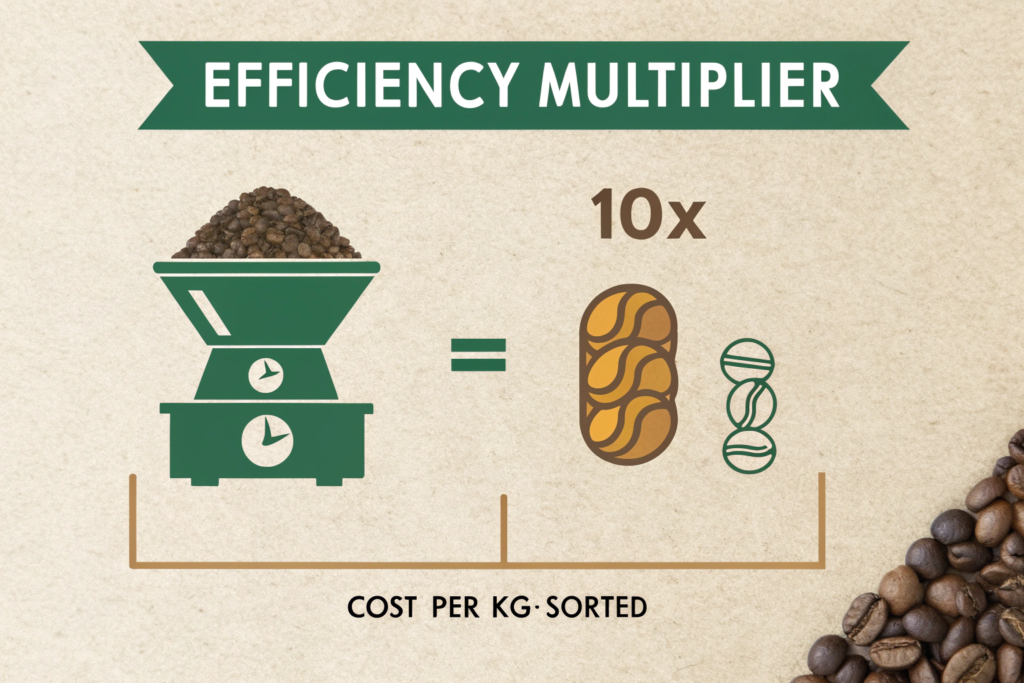
A single modern optical sorter can process 2,000 to 10,000+ kilograms of green coffee per hour, depending on the model and required sorting complexity. A team of human sorters might manage 50-100 kg per person per hour. The difference is orders of magnitude. This massive throughput means:
- Faster Turnaround: Coffee can be processed, sorted, and bagged quickly after harvest, reducing the risk of degradation during storage.
- Meeting Large Orders: We can confidently commit to supplying full container loads on schedule, a critical factor for buyers like Ron who prioritize timeliness.
- Capturing Market Price: Getting coffee to market faster allows us to capture favorable prices and meet shipping deadlines.
How Does This Translate to Long-Term Cost Savings?
The initial investment in an automated sorter is significant (tens to hundreds of thousands of dollars). However, the Total Cost of Ownership (TCO) analysis tells a different story. Manual sorting requires a large, trained, and managed workforce. It incurs costs for recruitment, training, salaries, benefits, and supervision. Labor costs also rise over time. A machine, after the capital expenditure, has predictable operating costs (electricity, maintenance, spare parts). Over 5-7 years, the machine often pays for itself through labor savings and the ability to command higher prices for superior, consistent quality. It also provides a stable cost structure for our pricing, which benefits our buyers.
Can Machines Operate in Challenging Labor Environments?
Absolutely. This is a practical, often unspoken advantage. Coffee-growing regions can face labor shortages during peak harvest. Finding and retaining skilled, diligent sorters is a constant challenge. Machines don't get sick, don't migrate for city jobs, and can operate 24/7 if needed to clear a backlog. This provides operational resilience and ensures our supply chain isn't vulnerable to labor market fluctuations, directly addressing a key pain point for importers who need reliability.
How Does Automated Sorting Enable Data and Traceability?
In the modern coffee market, transparency is a premium feature. Buyers want to know more than just the country of origin; they want data. Automated sorters are not just quality control devices; they are data generation nodes.
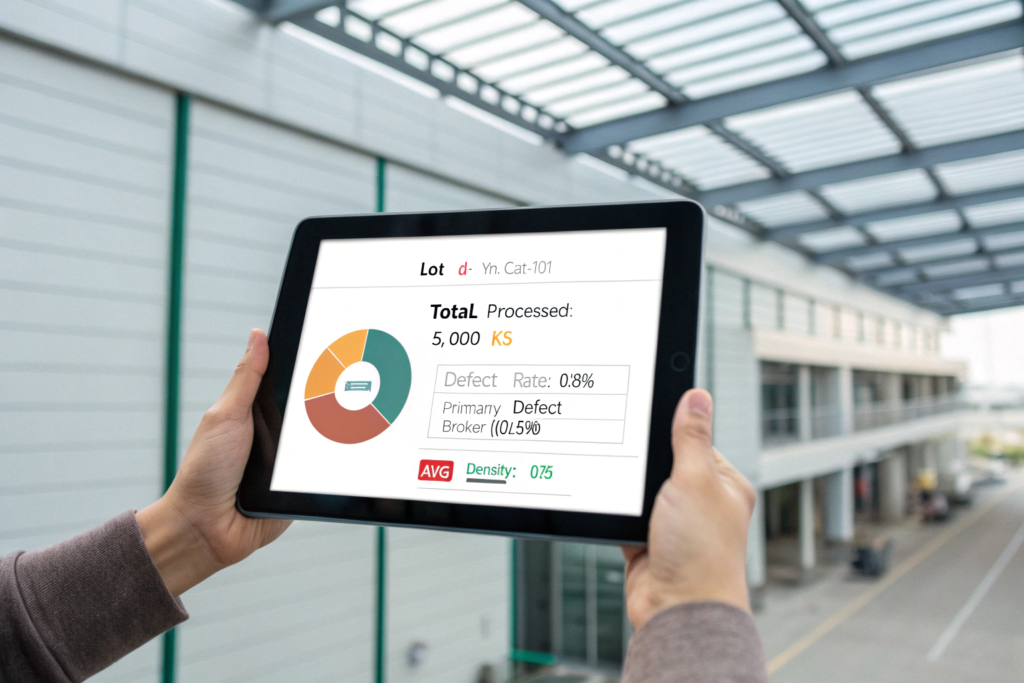
Every bean that passes through the sorter is analyzed. The machine's software logs vast amounts of data: the percentage of defects by type, the average bean size and density of the accepted lot, and the throughput rate. This data can be tagged to a specific lot (e.g., "Lot #YX23-101, Catimor, Block B, harvested Oct 15"). We can then generate a Digital Lot Passport for our buyers. This isn't just marketing; it's actionable intelligence. A roaster can see that Lot #101 has 0.2% black beans and an average density of 0.72 g/cm³, and compare it to the previous year's lot to adjust their roast profile before the beans even arrive.
How Does This Feed into Process Optimization?
The data isn't just for the buyer; it's a feedback loop for us as producers. If the sorter consistently detects a high percentage of a specific defect (e.g., sour beans), it flags an issue earlier in the chain—perhaps during fermentation or drying. We can then investigate and correct the process for the next batch. This closed-loop quality system, from farm to sorter, allows for continuous improvement in our agricultural and post-harvest practices. It moves quality control from being a final checkpoint to an integrated part of production.
What is the "Grade Lock" and Pricing Advantage?
With manual sorting, the final grade of a lot can be subjective and open to negotiation. With machine sorting, the grade is objectively defined by the parameters programmed into the machine. If we set the machine to select beans that meet the SCA "Specialty Grade" defect threshold, the output is, by data, Specialty Grade. This "Grade Lock" removes ambiguity and dispute from the buying process. A buyer can audit the data, not just a sample. This transparency justifies premium pricing and builds unshakeable trust, allowing us to compete not just on price, but on verifiable quality and reliability. Information from bodies like the Coffee Quality Institute supports these objective grading standards.
Conclusion
Automated coffee sorting machines are a transformative force in the coffee supply chain. They deliver a powerful combination of superhuman consistency, game-changing efficiency, and data-rich transparency. For exporters, they are a strategic investment that secures a reputation for reliability and quality. For importers and roasters, they provide the assurance of defect-free, uniform beans that roast predictably and brew beautifully.
The goal is not to remove the human touch—which remains vital in farming, processing, and relationship-building—but to augment it with precision where it matters most: in the final, critical step of quality assurance. At Shanghai Fumao, our investment in this technology is a commitment to our partners worldwide. It ensures that every bag of Yunnan coffee we export meets the highest standard, giving you one less variable to worry about in your business.
If you are a buyer for whom consistent quality, scalable supply, and data-backed sourcing are critical, we should talk. To learn more about our sorting protocols and request samples from our machine-verified lots, contact our export manager, Cathy Cai, at cathy@beanofcoffee.com. Let's build a partnership grounded in clarity and quality.