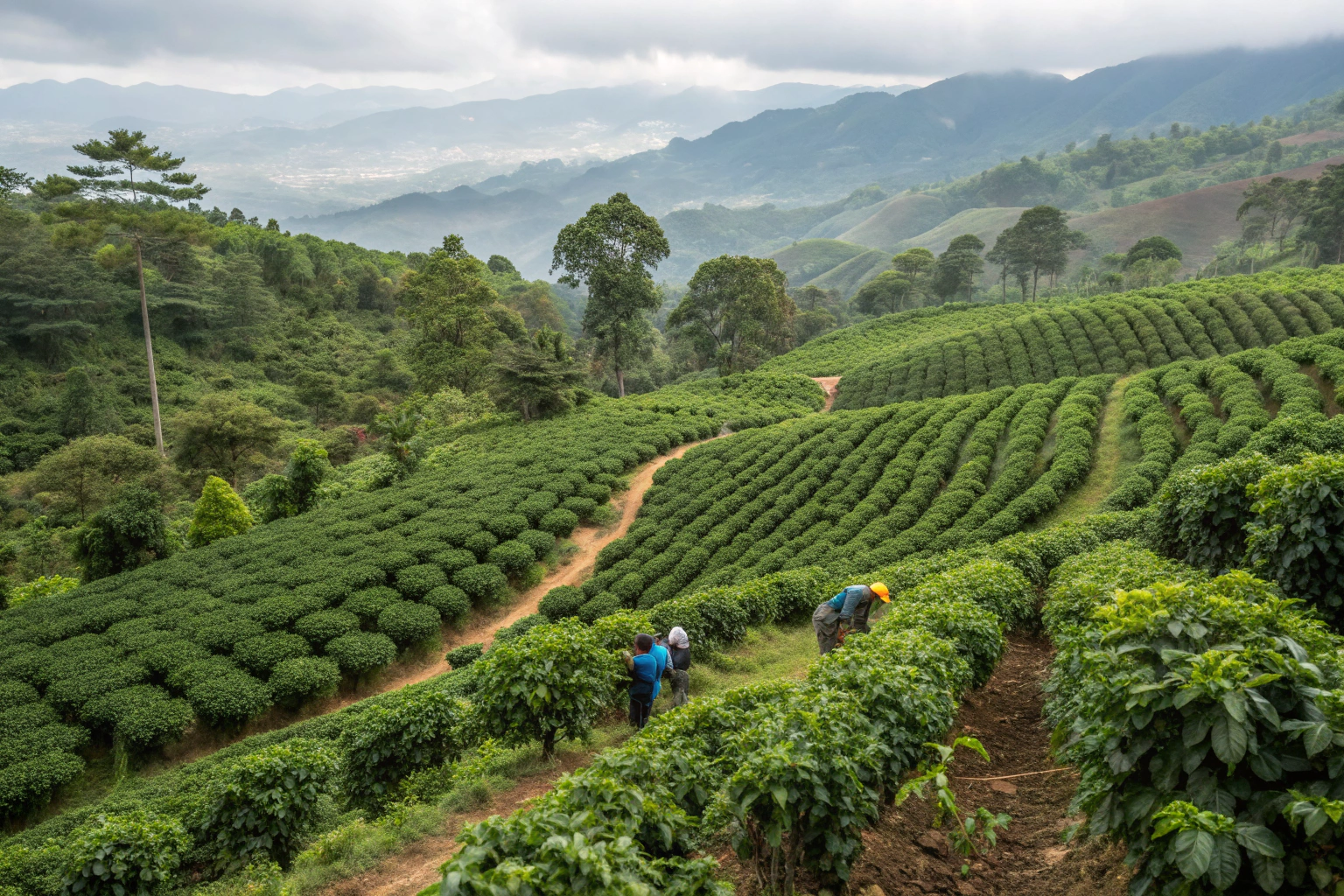
You might think managing a coffee farm is about waiting for rain and picking red cherries. From the outside, it looks like a simple cycle of nature. But from the perspective of a buyer like Ron, or an exporter like us at BeanofCoffee, inconsistent supply, fluctuating quality, and rising costs are often rooted in poor farm management at the source. For you, the end of the chain, this translates to price volatility, quality concerns, and supply insecurity. So, what separates a farm that just grows coffee from one that reliably produces premium, export-grade beans year after year? It's a science and a discipline.
Best practices in coffee farm management are a holistic system. They integrate precise agronomy, ecological balance, and data-driven decision-making to maximize both yield and quality, while ensuring long-term sustainability. It's not about forcing the land to produce more; it's about creating an ecosystem where the coffee plant thrives optimally. On our 10,000 acres in Yunnan, these practices aren't theoretical—they are our daily operating manual to guarantee the "stable, reliable, and trustworthy" supply we promise. Let's walk through the field.
So, if you've ever wondered why one harvest tastes better than another, or why some suppliers can't meet volume, look to the farm. The story begins long before the export container is loaded.
How Does Precision Soil and Nutrient Management Impact Yield and Quality?
Soil isn't just dirt; it's the foundation of flavor. Managing it with precision is the first and most critical best practice. Guesswork in fertilization leads to unbalanced trees, susceptibility to disease, and beans with underdeveloped sugars. The goal is to feed the plant exactly what it needs, when it needs it.
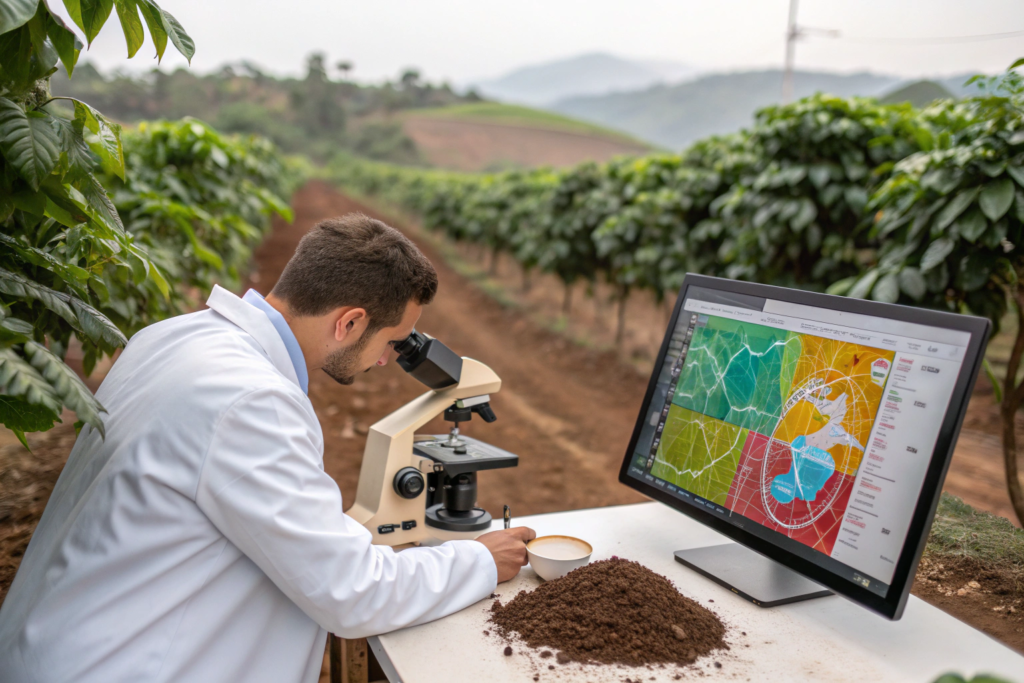
We start with annual soil testing across different plots of our plantation. This tells us the pH level (ideal for coffee is 5.5-6.5) and the specific deficiencies of key nutrients: Nitrogen (N for leaf growth), Phosphorus (P for root and flower development), and Potassium (K for bean filling and disease resistance). Based on these results, we create a customized fertilization program for each plot. We often use organic compost made from recycled coffee pulp and cherry skins, which improves soil structure and water retention. Fertilizer is applied at key phenological stages: after harvest to rejuvenate the plant, before flowering to support bloom, and during bean development to ensure proper filling.
This precision prevents the twin evils of over-fertilization (which wastes money, pollutes waterways, and can "force" weak growth) and under-fertilization (which stunts the tree and leads to low yield and poor bean density). For you, the buyer, this translates to beans with consistent size, density, and sugar content—the raw materials for a stable roast and a predictable cup profile.
What is the role of pH management and soil amendments?
If soil is too acidic (common in coffee regions), aluminum becomes soluble and toxic to roots. If it's too alkaline, nutrients become locked and unavailable. Based on soil tests, we apply amendments like agricultural lime to raise pH or sulfur to lower it. This "priming" of the soil ensures that any fertilizer we apply is actually absorbed by the roots. It's a foundational step that many smallholders skip, leading to wasted inputs and poor plant health. Correct pH is a non-negotiable for efficient nutrient uptake.
How does intercropping and cover cropping benefit soil health?
A bare soil floor is a vulnerable one. Best practice includes planting leguminous cover crops (like certain beans or peas) between coffee rows. These plants fix nitrogen from the air into the soil, act as a living mulch to suppress weeds and retain moisture, and their roots prevent erosion. In some areas, we intercrop with food crops like bananas or avocados, which provide additional shade and farm income, creating a more resilient and diversified agro-ecosystem. This practice builds soil organic matter over time, reducing long-term dependence on synthetic inputs.
Why is Canopy and Shade Management a Non-Negotiable Practice?
The relationship between the coffee tree and sunlight is a delicate dance. Full, brutal sun can maximize short-term yield but at a high cost: soil depletion, water stress, and beans that mature too quickly, lacking density and complexity. The modern best practice is strategic shade management.
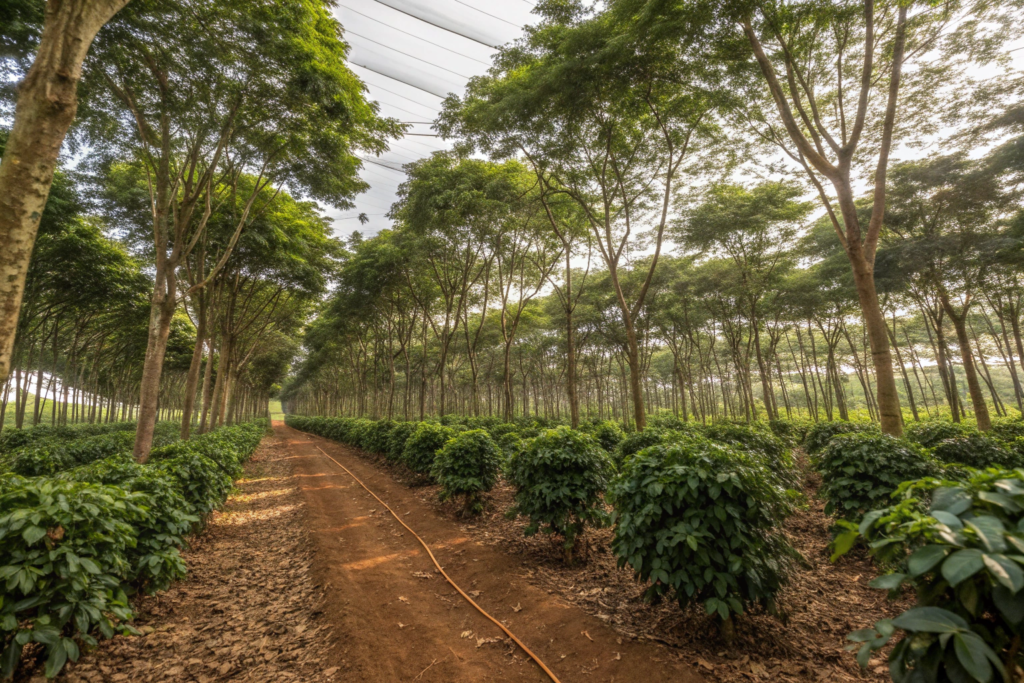
We maintain a canopy of native shade trees (like Inga or fruit trees) over our coffee. This isn't a wild forest; it's a designed system. The shade:
- Moderates Temperature: Reduces heat stress on coffee plants, leading to slower, more even cherry maturation.
- Conserves Moisture: Reduces soil water evaporation, a critical defense against drought.
- Enhances Biodiversity: Shade trees host birds and insects that are natural predators of coffee pests (e.g., the Coffee Berry Borer).
- Improves Soil: Leaf litter from shade trees adds organic matter and nutrients.
- Increases Bean Density: As discussed in the shading article, slower growth under shade leads to harder, denser beans with better cup potential.
However, too much shade can reduce yield and encourage fungal diseases. Therefore, we prune the shade trees periodically to allow dappled sunlight—about 30-40% shade cover is often ideal. This active canopy management creates a microclimate that optimizes both plant health and bean quality, directly contributing to the "good quality" and stability of our export lots.
How does pruning the coffee trees themselves impact production?
Regular, disciplined pruning is essential. We practice both structural pruning (to shape the tree's skeleton for light penetration and easy picking) and production pruning (cutting back old, unproductive branches to stimulate new growth). The best time is right after harvest. Proper pruning:
- Rejuvenates the Tree: Directs energy to new, fruitful branches.
- Improves Airflow: Reduces humidity around the plant, lowering risk of fungal diseases like Coffee Leaf Rust.
- Controls Height: Keeps trees at a manageable height for efficient harvesting.
An unpruned tree becomes tangled, less productive, and a haven for pests and disease. Pruning is an investment in the next season's yield.
What are the signs of poor canopy management a buyer should know?
If you visit a farm (or see images), be wary of:
- Sun-Scorched Leaves: Brown, crispy leaf edges indicate too much direct sun.
- Sparse, Yellowing Foliage on Coffee Plants: Can indicate too much competition from dense, unpruned shade.
- Erosion and Bare Soil: A sign of no ground cover or ineffective shade.
- Uneven Cherry Ripening on a Single Branch: Often a result of poor light penetration due to a tangled canopy.
A well-managed farm looks orderly, the plants are vibrant green, and the soil is protected.
How Do Integrated Pest and Disease Management (IPM) Strategies Protect the Crop?
Relying on chemical sprays as a first resort is an outdated, risky, and costly practice. It harms the environment, creates chemical residue risks in your beans, and leads to pesticide-resistant "super-pests." The best practice is Integrated Pest Management (IPM), a multi-tactic approach that prioritizes prevention and uses chemicals only as a last resort.
Our IPM program on the BeanofCoffee plantation includes:
- Cultural Controls: This is the foundation. Healthy, well-nourished plants from good soil and shade management are naturally more resistant. Proper pruning for airflow prevents fungal hubs.
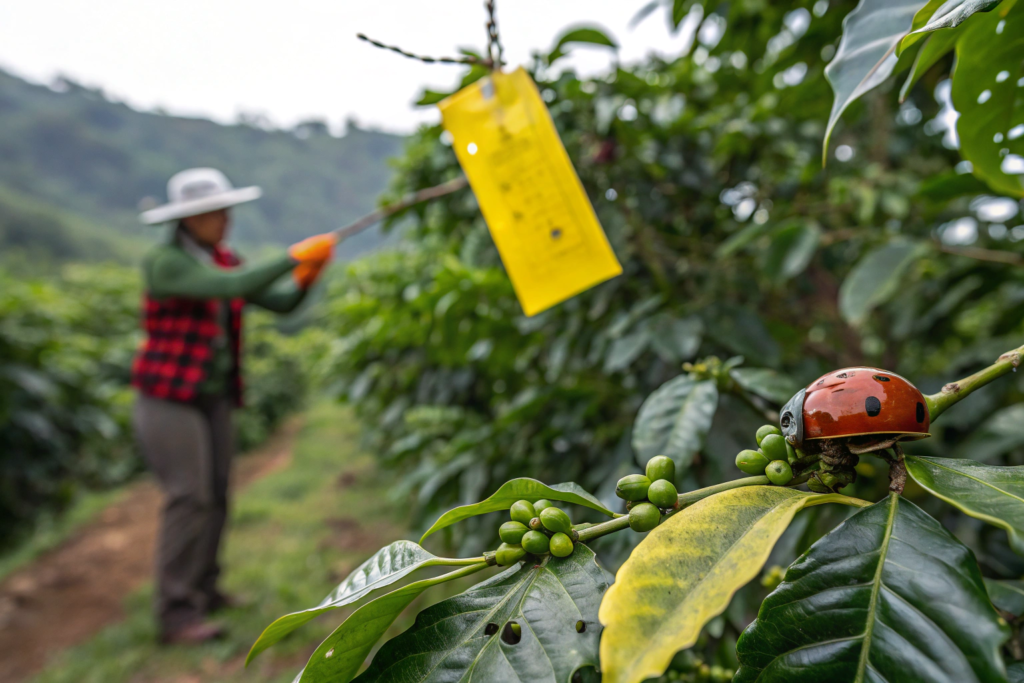
- Biological Controls: We encourage or introduce natural predators. For example, certain species of fungi (Beauveria bassiana) are used to infect and kill Coffee Berry Borer larvae.
- Mechanical Controls: This includes setting up traps for pests like the Borer beetle, and physically removing and destroying infected plant parts.
- Chemical Controls (Last Resort): If an outbreak surpasses an economic threshold, we use targeted, approved pesticides. We choose products with short residual periods and apply them in a localized, precise manner, never as a blanket spray. We strictly adhere to pre-harvest intervals (PHI) to ensure no residues remain at picking.
For you, the importer, this means cleaner beans that pass rigorous food safety and maximum residue level (MRL) tests for markets like the EU, Japan, and North America. It's a core part of being a "safe" supplier. It also ensures the long-term health of the farm ecosystem, protecting your future supply.
How is technology like drones used in modern IPM?
We deploy drones equipped with multispectral cameras for early detection. These cameras can identify plants under stress from pest infestation or disease before it's visible to the human eye. The drone maps the problem zones, and our field team is dispatched for spot treatment. This saves time, reduces chemical use by over 70%, and prevents small problems from becoming epidemics. It's a powerful example of precision agriculture in action.
What are the key certifications related to farm management practices?
Certifications validate that best practices are being followed. Key ones include:
- Organic: Prohibits synthetic fertilizers and pesticides, requiring organic alternatives and soil building.
- Rainforest Alliance/UTZ: Focuses on integrated farm management covering environment, social, and economic factors, including strict IPM and soil conservation.
- Fair Trade: Emphasizes social equity but also includes environmental standards that encourage sustainable practices.
- 4C: A baseline code of conduct covering economic, social, and environmental practices for mainstream sustainability.
We maintain these certifications not as badges, but as frameworks that enforce the discipline of best practices across our large operation.
What is the Role of Data, Harvest, and Post-Harvest Protocols?
Modern farm management extends beyond the field into data analysis and meticulous post-harvest handling. The finest cherry can be ruined by poor processing. Best practices here ensure the quality built in the field is preserved and delivered.
Data-Driven Decision Making:
We track everything: rainfall, temperature, soil moisture sensor data, fertilizer application rates, and harvest yields per plot. This data is analyzed to refine our practices year on year. For example, if a plot with a specific shade tree species consistently yields higher-quality beans, we replicate that model.
Selective Harvesting (Picking Only Ripe Cherries):
This is labor-intensive but irreplaceable for quality. We train and incentivize our pickers to make multiple passes through the same trees, selecting only the fully red cherries. Green or overripe cherries introduce off-flavors (grassiness or fermentation) that lower the quality of the entire batch. This practice is the single biggest differentiator between specialty and commodity coffee preparation.
Immediate and Controlled Post-Harvest Processing:
Within hours of picking, cherries must be processed. We use both washed (for clean, bright profiles) and natural (for fruity, bold profiles) methods, but the control is key.
- For washed coffee, fermentation time is precisely monitored by temperature and pH, then stopped by thorough washing.
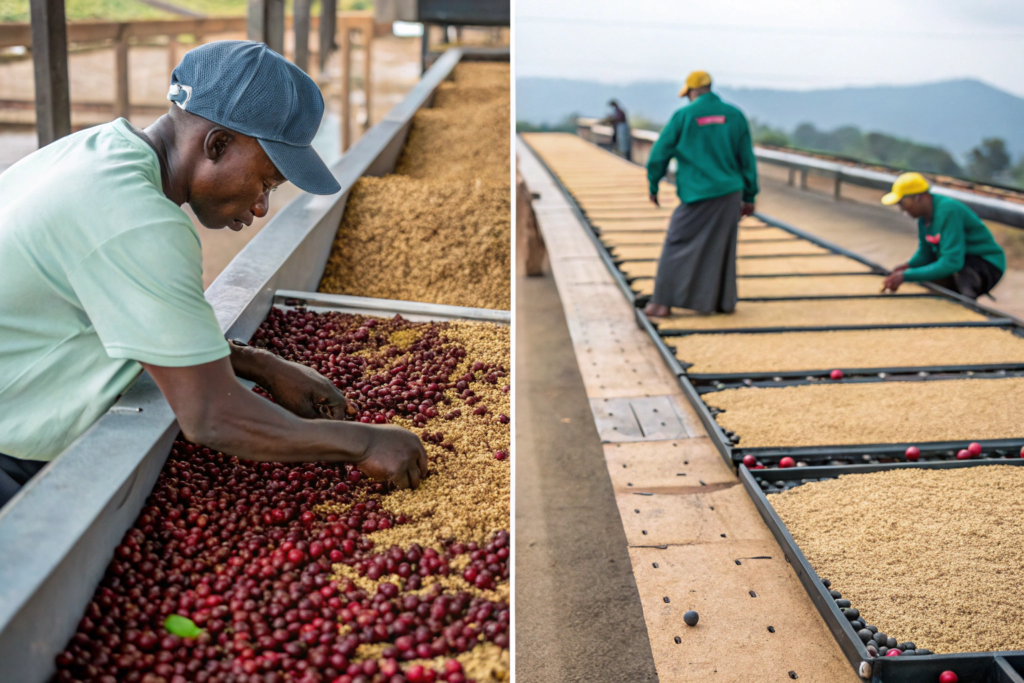
- For natural coffee, cherries are spread on raised beds in thin layers and turned constantly for even drying.
Drying is done to a precise moisture content of 10-12% for parchment coffee, using a combination of sun and mechanical dryers to ensure consistency regardless of weather.
This end-to-end control, from data to drying, is what allows us at Shanghai Fumao to offer specific, traceable lots with guaranteed quality specifications to our buyers.
How does farm mapping and traceability work?
Each plot on our farm has a GPS code. The harvest from that plot is kept separate throughout processing and milling. This gives us—and you—complete traceability. You can know that your coffee came from Block D-12, harvested in late October, washed, and dried on Beds 5-8. This level of detail is impossible without disciplined farm management and lot separation. It's the ultimate tool for quality control and storytelling.
Why is worker training and welfare a best practice?
A farm is only as good as its team. Best practice includes fair wages, safe working conditions, and continuous training. We train pickers on selective harvesting, teach machine operators maintenance, and educate managers on data interpretation. A skilled, motivated, and stable workforce is essential for executing all the other best practices consistently. It also aligns with social responsibility standards that many buyers now require. Happy workers produce better coffee.
Conclusion
The best practices for coffee farm management form an interconnected web. Precision soil care feeds the plant, strategic shade protects it, IPM defends it, and data-driven harvest protocols perfect its output. This isn't romantic subsistence farming; it's sophisticated agricultural science applied at scale.
For a buyer, partnering with a supplier that masters these practices is the surest path to securing a supply of coffee that is not only high in quality but also consistent, sustainable, and secure for the long term. The farm is where your supply chain's reliability is truly born.
Source from a farm that manages every detail. BeanofCoffee's vertically integrated plantation in Yunnan implements these best practices daily to deliver exceptional, traceable coffee. Contact Cathy Cai to request our farm management dossier and quality reports: cathy@beanofcoffee.com. Taste the difference discipline makes.**