You know Yunnan for tea—Pu'er, Dianhong. The terraced mountains seem born for tea bushes. So, the idea of high-quality coffee thriving here might surprise you. Yet, today, Yunnan produces over 95% of China's coffee, and its beans are winning international awards. How did a tea kingdom become a coffee powerhouse? The story isn't about ancient tradition, but about a bold, state-driven agricultural experiment that evolved into a modern specialty coffee origin.
The history of coffee in Yunnan is a rapid, planned development spanning just over a century, marked by three distinct phases: missionary introduction and failed cultivation (late 1800s-1940s), state-owned farm expansion for commodity production under the "Brightness Project" (1950s-1990s), and the modern transformation into a quality-focused, market-driven specialty coffee origin (1990s-present). This compressed timeline means Yunnan lacks the centuries of folklore of Ethiopia or Colombia, but it possesses a unique narrative of deliberate investment, technological adoption, and a relentless drive to prove itself on the global stage.
Let's put it in perspective. While Brazilian fazendas were already exporting millions of bags in the early 1900s, Yunnan's coffee story was just a footnote written by a French missionary. This late start is actually an advantage—Yunnan entered the global coffee scene with modern agronomy, processing knowledge, and a blank slate to build a reputation for quality, not just quantity. For a buyer, understanding this history is key to appreciating Yunnan's potential and the stability offered by its large, professionally managed farms.
How Did Coffee First Arrive and Struggle to Take Root?
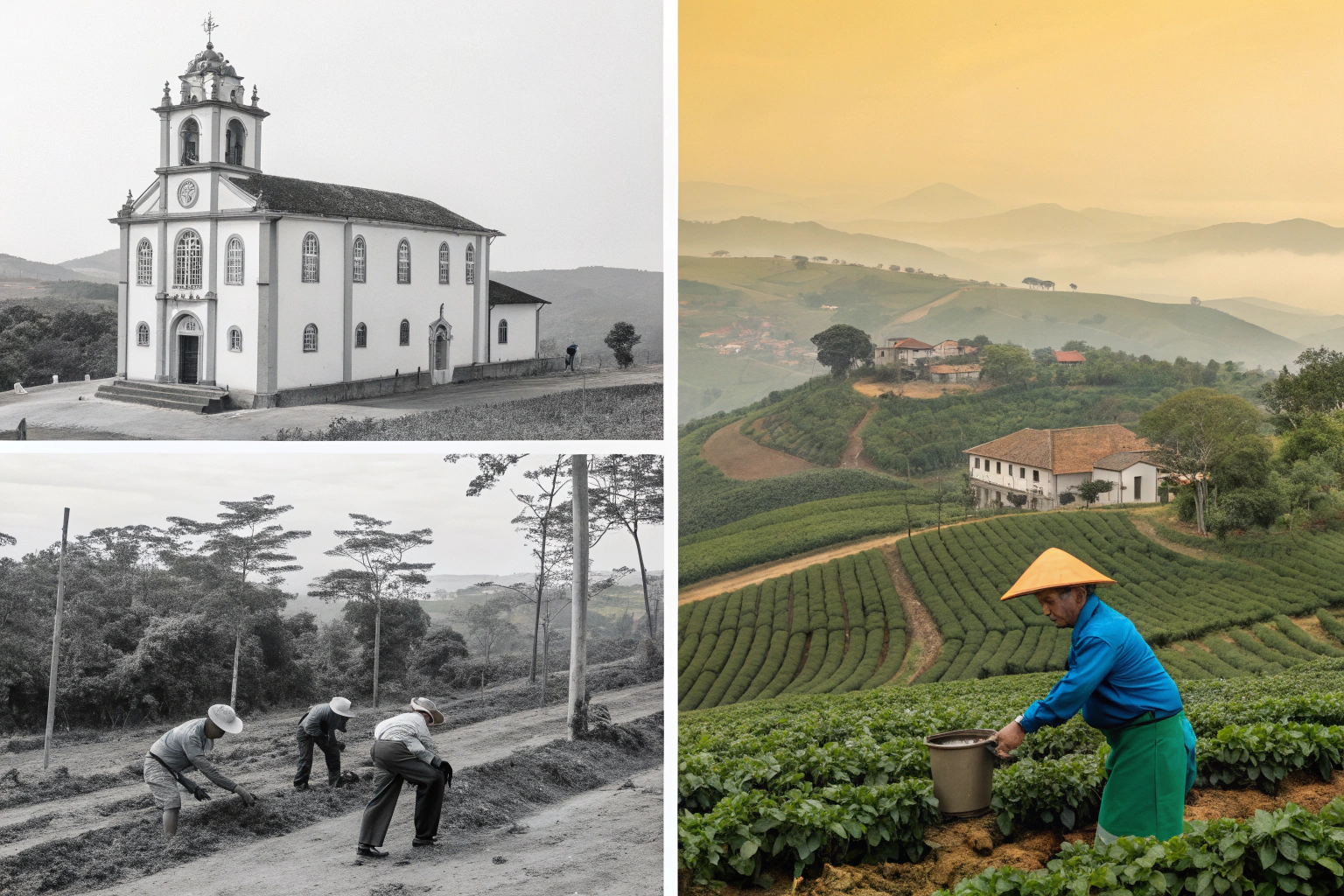
The first coffee seeds in Yunnan were not brought by traders seeking profit, but by a French Catholic missionary named Father Alfred Liétard in the late 19th century (circa 1892). He planted them near a church in the Binchuan county of Dali, likely hoping to cultivate a taste of home. These were likely Typica variety seeds, the classic "missionary coffee" spread across the globe.
For decades, these initial plantings remained little more than a botanical curiosity. They were tended to sporadically, with no commercial ambition. The climate was suitable, but the knowledge, infrastructure, and market were utterly absent. Coffee was an alien crop in a tea culture. Any beans produced were likely consumed locally by the small foreign community or used ornamentally. This era represents the century of false starts, where coffee existed in Yunnan but had not yet found its reason to thrive. It was a plant out of place, waiting for its moment.
Why Did Early Attempts Fail to Commercialize?
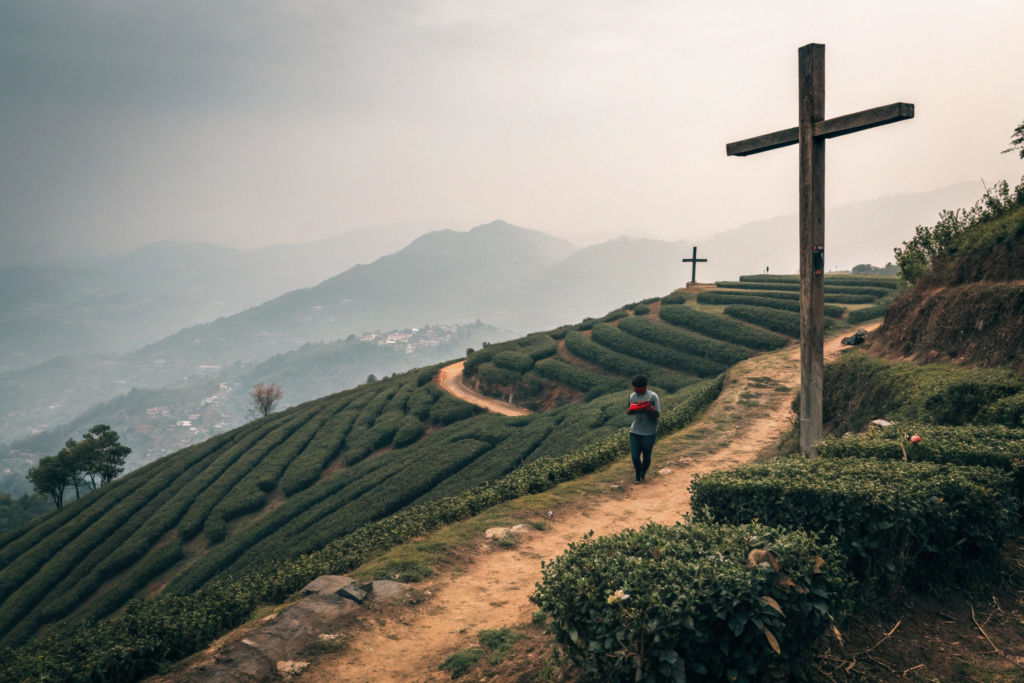
The failure was systemic. No domestic market existed for coffee in China at the time. No processing knowledge was available to turn cherries into stable, exportable green beans. No supply chain connected remote Yunnan villages to international ports. Crucially, there was no economic driver. Tea was the established, revered, and lucrative crop. Coffee was a hobby without a patron. It would take a fundamental shift in China's political and economic landscape to provide that patron.
What is the Significance of the "Missionary Typica" Legacy?
Though these early plantings didn't spark an industry, they left a genetic legacy. The Typica variety introduced then likely contributed to the base genetics of later plantings. It's a symbolic starting point, a quiet footnote that hints at Yunnan's long, if dormant, relationship with the coffee plant. Today, some small farms still cultivate heirloom Typica trees, connecting back to this forgotten chapter.
What Was the "Brightness Project" and How Did It Industrialize Yunnan Coffee?
The true birth of Yunnan as a coffee-producing region was not organic; it was a central government directive. In the 1950s, seeking to reduce reliance on imported goods and develop rural economies, the Chinese government initiated agricultural projects. Coffee, seen as a valuable foreign exchange earner, was targeted.
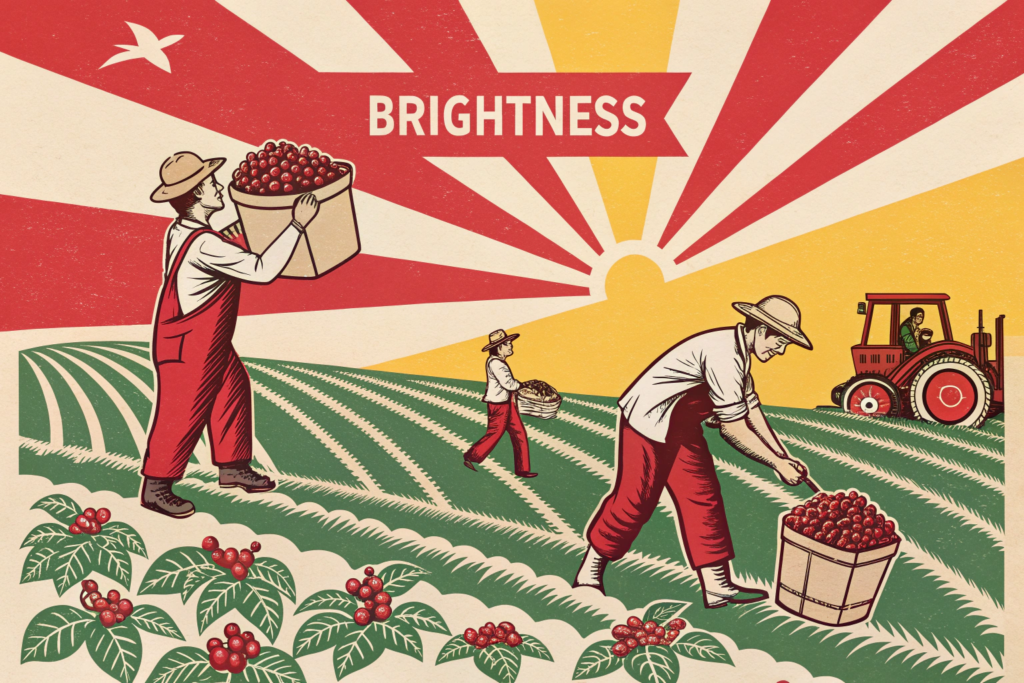
The pivotal moment came in the late 1950s when the state, with support from the Soviet Union, initiated what was later dubbed the "Brightness Project." The goal was to establish large-scale coffee plantations to supply the Soviet bloc and later the domestic instant coffee market. The focus was volume and political economy, not quality. Vast tracts of land in suitable prefectures—primarily Baoshan, Pu'er, Dehong, and Xishuangbanna—were converted into state-owned farms. They planted millions of coffee trees, predominantly the high-yielding, disease-resistant but often bland-tasting Catimor variety (a hybrid of Timor and Caturra), which became the workhorse of Yunnan.
How Did State Farms Shape the Industry's Structure?
This period created the physical and institutional backbone of Yunnan coffee. It established:
- The Growing Regions: The micro-climates of these prefectures were proven viable for Arabica.
- The Farming Model: Large, contiguous plantations under centralized management, a stark contrast to the smallholder plots of Latin America or Africa.
- The Initial Supply Chain: Processing stations, basic roads, and connections to state trading companies.
For decades, Yunnan coffee was a commodity crop. Its beans were mechanically harvested, processed with minimal grading, and sold in bulk for cheap instant coffee or low-grade blends. The "Yunnan" name on the world market meant one thing: inexpensive, reliable volume. This is the origin of its old reputation as a "low-quality" origin—a reputation forged in its industrial phase.
What Was the Role of International Corporations?
In the 1980s and 1990s, as China opened up, multinational coffee giants like Nestlé and Starbucks arrived. They saw Yunnan's potential for massive, controllable supply. They provided technical training, seedlings, and, most importantly, guaranteed purchase contracts to farmers and collectives. This further entrenched the volume-over-quality model but provided crucial stability and basic agronomy knowledge that would later become the foundation for quality improvements.
What Sparked the Modern Quality Revolution and Specialty Focus?
The turning point began in the late 1990s and accelerated in the 2000s. Several forces converged to transform Yunnan from a commodity source into a specialty contender.
First, the collapse of global coffee prices in the early 2000s (the "coffee crisis") made the low-margin commodity model unsustainable for Yunnan farmers. They needed to create more value. Second, the explosive growth of China's domestic coffee market, fueled by cafe culture, created a sophisticated local consumer base willing to pay for quality. Third, international attention and investment from specialty coffee pioneers who saw untapped potential in Yunnan's terroir.
This led to a paradigm shift. Progressive farms, often still large and corporate-owned but now with a quality mandate, began to:
- Experiment with Varietals: Introducing and cultivating Typica, Bourbon, Geisha, and SL34 alongside Catimor.
- Overhaul Processing: Moving from rushed, bulk natural processing to meticulous washed, honey, and anaerobic fermentation methods. Building modern wet mills and raised drying beds.
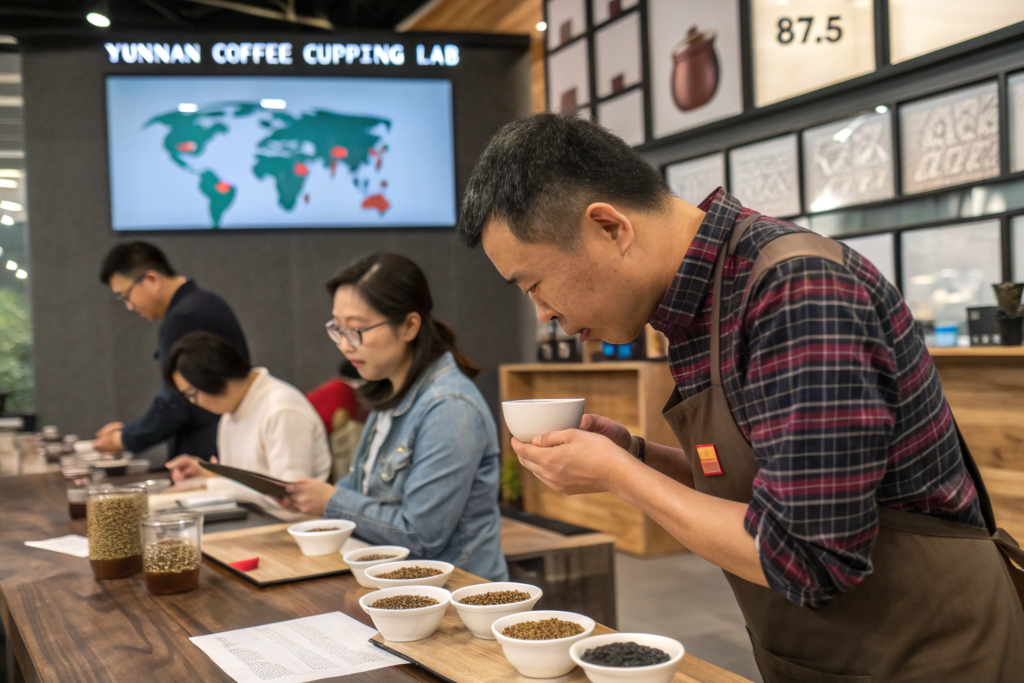
- Implement Rigorous QC: Adopting optical sorters, moisture analyzers, and professional cupping labs.
- Focus on Traceability: Moving from massive blended lots to single-estate, single-variety, and even micro-lot offerings.
How Did Competitions and Certifications Change Perceptions?
The entry of Yunnan coffees into global competitions like the Cup of Excellence and Best of Yunnan was a watershed moment. When a Yunnan coffee scored over 90 points or won an international auction for tens of dollars per pound, it shattered the old commodity image. These events provided objective, third-party validation that Yunnan's terroir—its high altitude (1100-1600m), volcanic soil, and distinct dry/wet seasons—could produce complex, high-scoring beans with notes of citrus, black tea, brown sugar, and florals. Certifications (Organic, Fair Trade, Rainforest Alliance) further aligned the region with global quality and sustainability standards.
What is the Role of "Direct Trade" and Modern Exporters Like BeanofCoffee?
This is the current phase: market-driven quality and direct connection. Companies like ours, Shanghai Fumao, emerged not just as traders but as integrated farm-to-export operators. We own over 10,000 acres in Baoshan, giving us direct control from seed selection to shipping. We work with international roasters to develop custom profiles, provide full traceability and cupping reports, and compete not on being the cheapest, but on being a reliable, high-quality, and innovative partner. We represent the new Yunnan: leveraging its scale and control for consistency, while applying specialty-grade craftsmanship to unlock its unique flavor potential.
Conclusion
The history of Yunnan coffee is a compressed saga of transformation. From a missionary's experiment to a state-planned commodity project, and finally to a self-confident specialty origin, its journey is unique. It skipped centuries of slow evolution and leaped, in a few decades, into the modern era of coffee with all its tools, technology, and quality focus.
For the global coffee buyer, this history is a sign of strength, not weakness. It means Yunnan coffee is produced with intention, backed by significant investment, and managed with a business-like approach to quality and consistency. There are no myths to rely on—only results, data, and a proven ability to scale quality. If you are looking for an origin that combines the control and volume of a Brazil with the emerging terroir complexity of a new frontier, Yunnan is that place.
To taste the result of this remarkable history and explore what modern Yunnan coffee from a direct source can offer your business, contact our export manager, Cathy Cai, at cathy@beanofcoffee.com. Let's write the next chapter together.