You're sourcing coffee for your commercial operation—maybe a roastery supplying dozens of cafes, or a brand producing packaged goods. Price, consistency, and shelf appeal matter. You get two samples: one labeled "Washed (Wet Process) Brazil" and another "Natural (Dry Process) Ethiopia." They're the same price per pound. But they're not the same product at all. Choosing the wrong one for your blend or target market can cost you customers. For a commercial buyer, this isn't just an academic question; it's a core business decision that affects your flavor profile, production costs, and even marketing story.
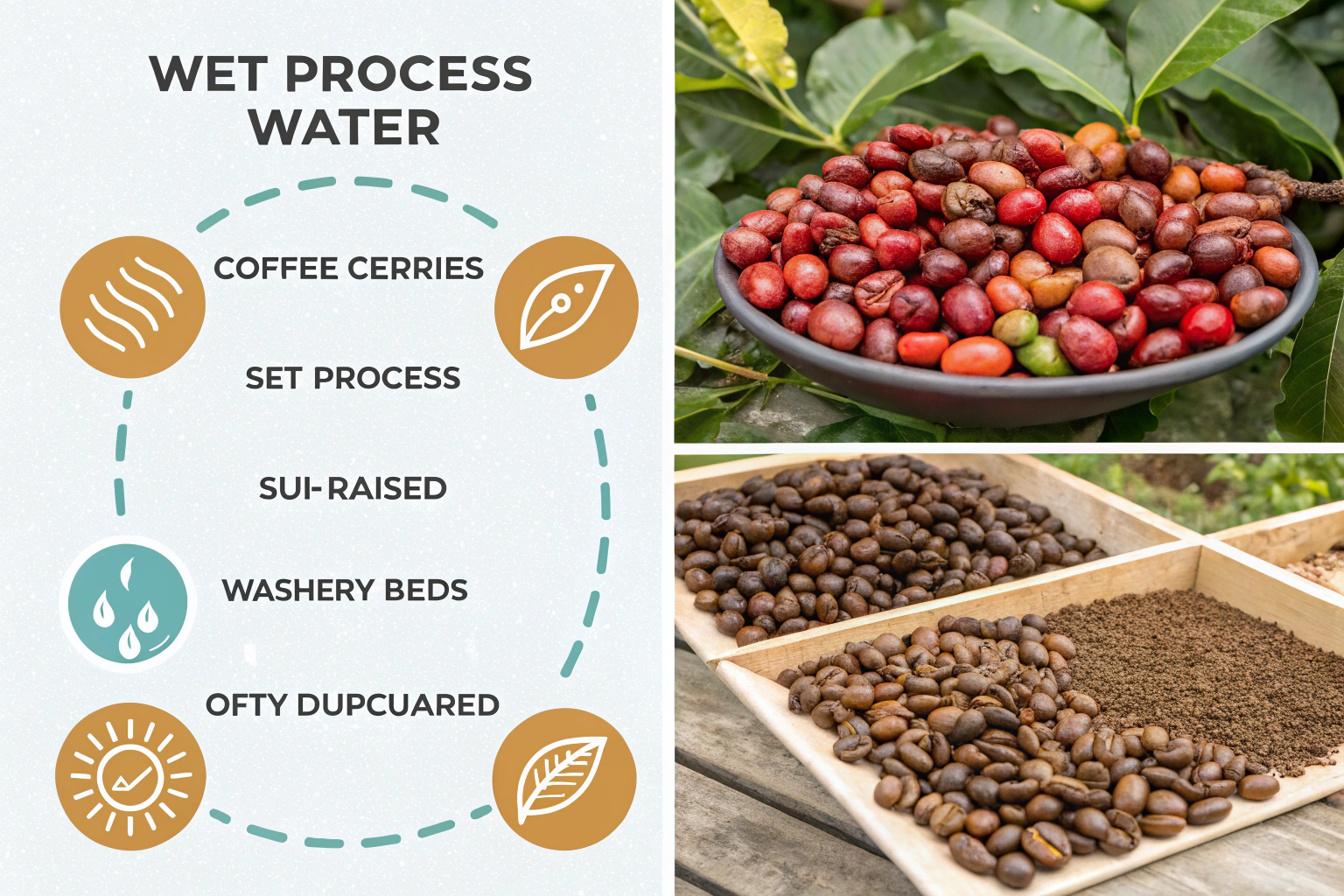
The fundamental difference between wet and dry processed coffee beans lies in how the fruit is removed from the seed. Dry processing (natural) involves drying the whole coffee cherry in the sun, allowing the bean to absorb sugars and fruit flavors. Wet processing (washed) mechanically removes the fruit pulp immediately after harvest, then ferments and washes the bean, resulting in a cleaner, more acidic profile. For commercial use, this translates to a clear choice: wet-processed beans offer consistency, clarity, and blending versatility, while dry-processed beans provide bold, fruity uniqueness but with higher variability and risk.
That's the simple answer. But the commercial reality is more nuanced. Your choice impacts everything from your roasting curve to your packaging claims. Let's break down what each process really means for your business, your costs, and your final cup.
How Do Processing Methods Define the Basic Flavor Profile?
Think of the coffee cherry as an orange. The bean is the seed inside. How you remove the orange pulp changes the seed's taste. In dry processing, the bean steeps in its own sweet, fermenting fruit for weeks. It's like making a rumtopf—the fruit flavors infuse into the bean. In wet processing, you peel the orange off immediately and rinse the seed clean. You taste the seed itself, not the fruit.
This fundamental difference creates two distinct flavor families that commercial buyers must understand. One is predictable and widely accepted. The other is bold and polarizing. Your target market will likely prefer one over the other.
What are the Characteristic Notes of Washed (Wet Process) Coffee?
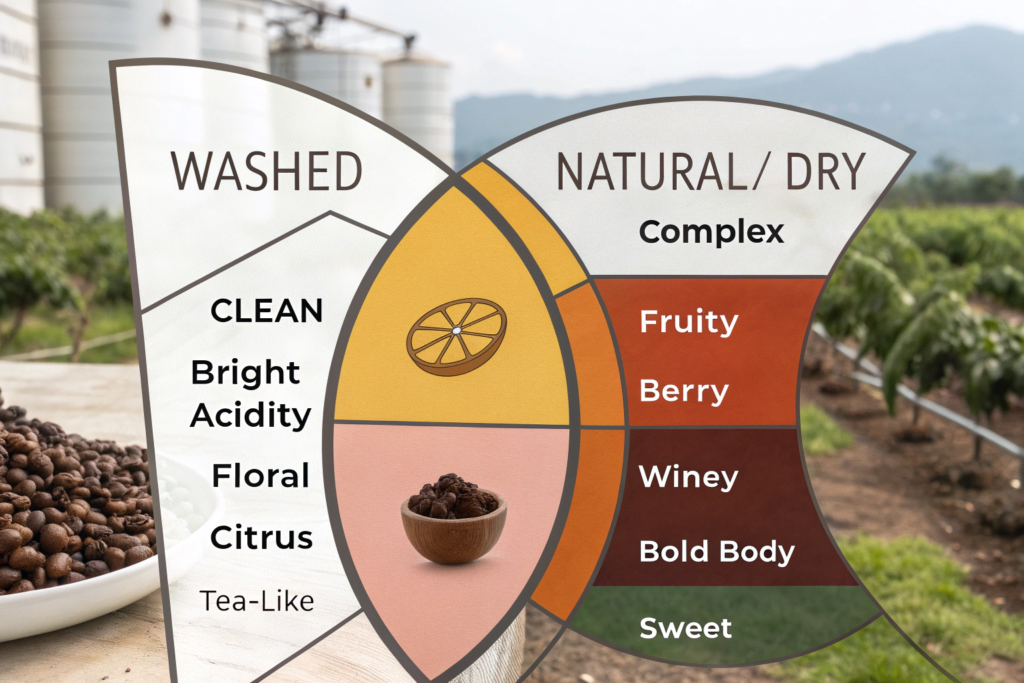
Washed coffees are known for their clarity and purity of origin character. They highlight the intrinsic qualities of the bean and its terroir. You taste the bean itself, not the processing. Expect:
- Brighter, clearer acidity: Think lemon, green apple, or malic acid.
- Lighter body: Often described as tea-like or silky.
- Clean, defined flavors: Floral (jasmine), citrus (bergamot), or herbal notes.
- Consistency: Batch-to-batch variation is lower.
For a commercial buyer, this is your reliable workhorse. It's easier to blend because it has a neutral, clean base. It's what most consumers in North America and Europe associate with "high-quality" coffee—it tastes like coffee, not fruit juice. It's the safe, scalable choice. The Specialty Coffee Association (SCA) flavor wheel is largely built around the descriptors common to well-executed washed coffees.
What are the Characteristic Notes of Natural (Dry Process) Coffee?
Natural coffees are defined by their fruit-forward intensity and heavy body. The bean absorbs sugars and compounds from the drying fruit flesh. Expect:
- Pronounced fruit flavors: Blueberry, strawberry, tropical fruit, or even fermented notes.
- Lower perceived acidity: The fruit sugars mask bright acids, leading to a rounder, sometimes winey acidity.
- Heavy, syrupy body: Often described as creamy or juicy.
- Higher complexity (and risk): Flavors can be stunningly unique or, if poorly processed, unpleasantly funky (over-fermented, barnyard).
Commercially, this is your "wow" factor or your headache. It can command a premium as a single-origin offering but is trickier to blend without dominating. It has a passionate, if smaller, fan base. For a brand buyer, it's a powerful storytelling tool but requires careful consumer education.
Which Process Offers Greater Consistency for Large Batches?
Consistency is the bedrock of commercial coffee. Your customers expect the same taste every time. A 10% flavor shift between shipments can mean lost accounts. Here, the processing method isn't just a flavor choice; it's a risk management tool.
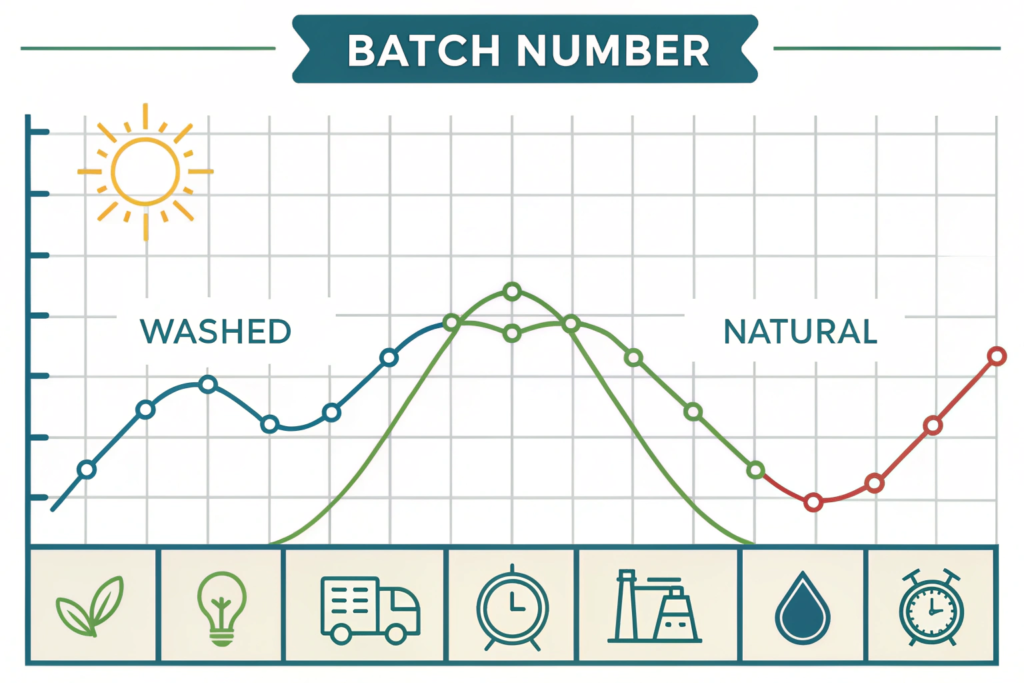
Wet processing is inherently more controlled and less susceptible to the variables of weather and time. Dry processing is an ancient art that depends heavily on perfect conditions and vigilant labor. For a large-scale operation sourcing container loads, this difference is critical.
Why is Wet Processing Inherently More Controllable?
Washed processing happens quickly and in defined stages: pulping, fermenting (12-72 hours in a tank), washing, and drying. Each stage can be monitored and adjusted. Fermentation can be stopped by washing. Drying is often done on raised beds or patios with more control. The machinery (pulpers, washers) standardizes the initial fruit removal. This controlled environment minimizes the "wild card" of uncontrolled fermentation and reduces the window for defects to develop. For a supplier like us at Shanghai Fumao, this means we can guarantee that our washed Yunnan Arabica will have the same clean, nutty, and tea-like profile shipment after shipment—a must for your commercial blends.
What Variables Make Natural Processing a Consistency Challenge?
Natural processing is a weeks-long dance with nature. The cherries dry whole on patios or raised beds. Consistency depends on:
- Weather: Too much rain = mold. Not enough sun = slow, risky fermentation.
- Thickness of the drying layer: Cherries must be turned constantly to dry evenly. A poorly managed layer ferments unevenly.
- Initial cherry quality: Any damaged or overripe cherries in the mix will spoil the entire batch.
- Drying time: Under-drying leads to microbial activity in the bag; over-drying makes the bean brittle.
It's artisanally beautiful but commercially risky. One cloudy week can ruin a lot. This is why even excellent natural coffees can vary more from year to year or even batch to batch compared to their washed counterparts. For a commercial buyer, this means higher sampling and quality control costs.
How Does Processing Impact Roasting and Product Development?
You're not just buying a green bean; you're buying a raw material that behaves a certain way in your roastery. The processing method changes the bean's density, moisture content, and sugar composition. This means you cannot roast a natural Brazil the same way you roast a washed Colombia and expect good results. Your roast profile must adapt.
Furthermore, the end product you're developing—be it a single-origin bag, an espresso blend, or a instant coffee base—will be fundamentally shaped by this choice. The process dictates the ingredient's role in your recipe.
Do Washed and Natural Beans Require Different Roasting Profiles?
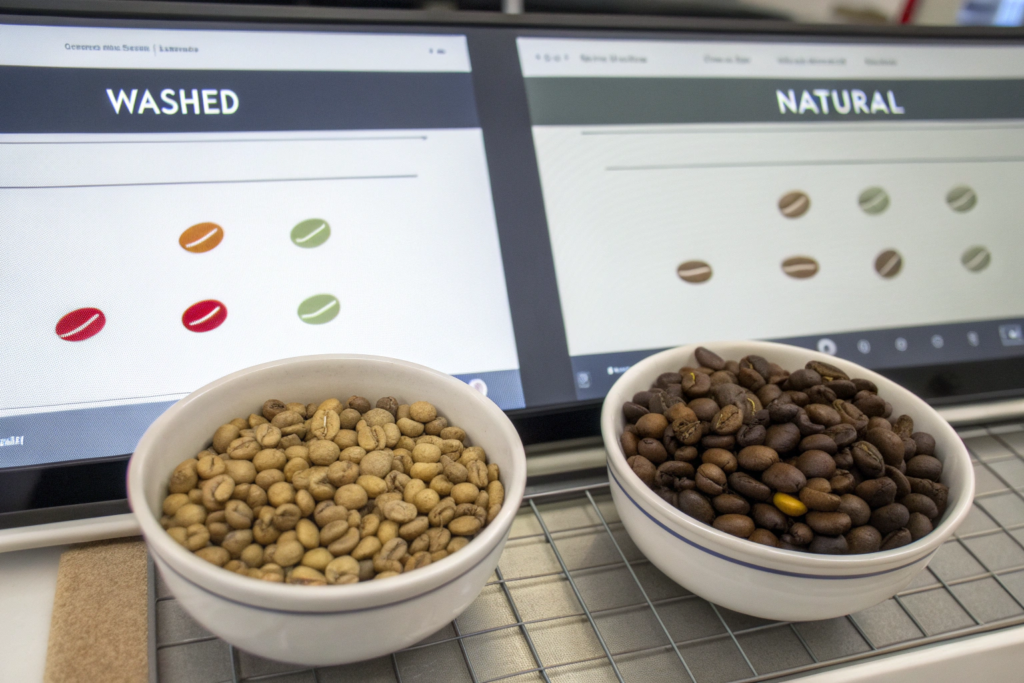
Absolutely. Here’s a rule of thumb:
- Washed Beans: Often denser and more structurally intact. They can handle—and often need—more heat early in the roast to develop sweetness and overcome bright acidity. They are generally more forgiving and predictable.
- Natural Beans: The prolonged drying can make the bean's structure slightly less dense and its sugars are already caramelized from the fruit. They are more susceptible to scorching. Roasters often use a gentler, slower approach with less aggressive heat at the start. You're trying to develop the inherent fruit sugars without burning them. They often "declare" first crack earlier and may require a shorter development time to avoid baking out those delicate fruit notes.
Getting this wrong means wasting expensive green coffee. A natural processed bean roasted like a washed one can taste ashy and flat. Our team provides specific roast guidance with our shipments because we understand this commercial pain point.
Which Process is Better for Espresso Blends vs. Single-Origin?
This is a key strategic decision.
- For Espresso Blends: Washed beans are the foundation. Their clean, acidic profile provides the "cut" and clarity needed in milk-based drinks. They blend well without clashing. A small percentage (10-25%) of a high-quality natural can add wonderful fruit complexity and sweetness to a blend, but it must be used sparingly as a seasoning. Too much, and the blend becomes murky and indistinct.
- For Packaged Single-Origin Products: The choice defines your market. Washed process appeals to the traditionalist seeking terroir transparency. Natural process is a bold, marketable differentiator. It allows for striking flavor notes on the bag ("Strawberry Jam! Blueberry Muffin!") that can attract new consumers. However, it also carries the risk of alienating those who prefer a classic cup. Many successful roasters offer both from the same origin to cater to different segments.
What are the Commercial Cost and Logistics Implications?
Beyond the cup, your bottom line is affected. The processing method influences the price you pay for green beans, the shelf life of your roasted product, and even your shipping costs. A commercial decision must account for these factors.
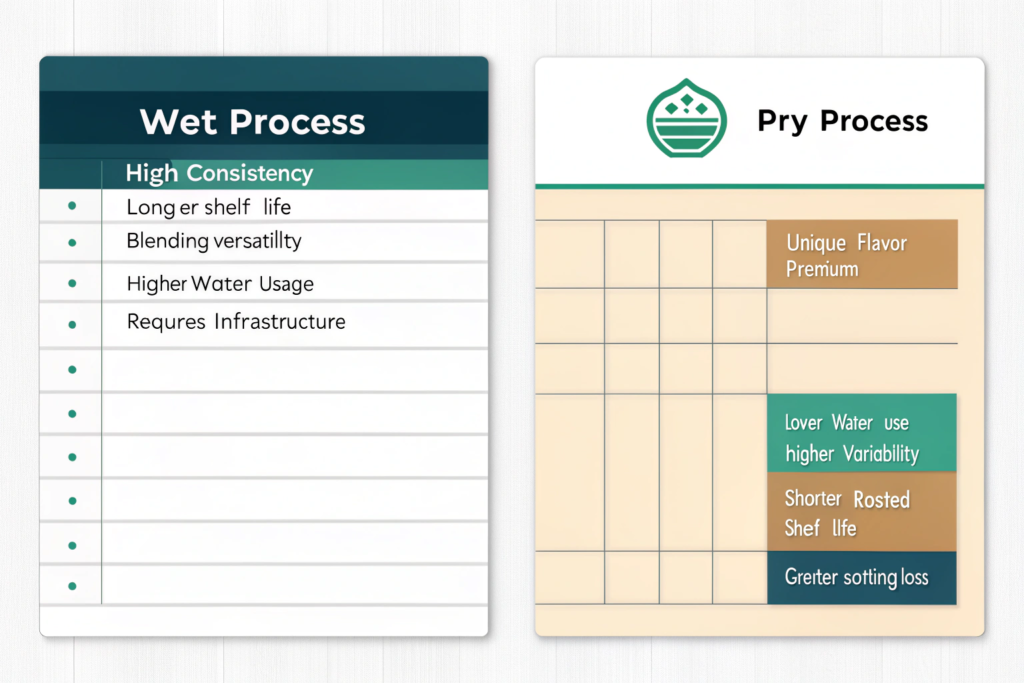
There's a myth that natural processing is always cheaper because it uses less water and machinery. At the farm level, this can be true. But at the commercial buyer level, the cost structure is more complex, factoring in yield, sorting loss, and risk premium.
Is One Process Generally More Expensive Than the Other?
It's not straightforward. The green bean price is driven by demand, quality, and reputation, not just process cost. However:
- Natural Process: Can have a higher sorting loss. Discarding defective cherries after drying is less efficient than floating them off at the wet mill stage. Top-tier, perfectly processed naturals (like from renowned Ethiopian regions) command a high premium due to their unique flavor and higher risk/production effort.
- Washed Process: Requires significant investment in water treatment infrastructure (to avoid pollution), which adds to the producer's fixed costs. This can be reflected in the price.
For a commercial buyer seeking large volumes of consistent, good-quality coffee, washed beans often provide the best value-for-money and predictability. They are the efficient, scalable engine of the industry.
How Does Processing Affect Shelf Life and Stability?
This is a crucial, often overlooked, commercial factor.
- Washed Beans (Green): Tend to be more stable in storage. Their lower residual sugar content makes them less attractive to pests and less prone to aging flavors.
- Natural Beans (Green & Roasted): The higher oil content (from absorbed fruit lipids) and sugars can make them age faster. Roasted naturals can go stale more quickly as those volatile fruit compounds dissipate. Their oils can also migrate to the surface faster, leading to a quicker appearance of "oily" beans, which some consumers mistakenly associate with freshness. This means you might need tighter inventory control and faster turnover for your natural offerings.
Conclusion
For commercial use, the difference between wet and dry processed coffee beans is a strategic choice between two different business models. Washed (wet) processing is the champion of consistency, clarity, and blending flexibility—the reliable core of a commercial operation. Natural (dry) processing is the tool for differentiation, offering bold, fruity flavors that can command a premium but introduce higher variability and require more careful handling in roasting and inventory.
The smartest commercial operators don't choose one over the other; they leverage both. They build their core blends and reliable volume products on a foundation of high-quality washed coffees, like our consistent Yunnan Arabica. Then, they use exceptional natural processed lots as a flavorful accent in blends or as a standout, story-driven single-origin product to capture new market segments.
Understanding this difference allows you to source intelligently, roast effectively, and market accurately. At BeanofCoffee, we provide both—offering the stable, high-volume washed beans you need for your core business, and the unique, carefully sorted natural lots that can make your brand shine. To discuss which processing method aligns best with your commercial goals, contact our sales director, Cathy Cai at cathy@beanofcoffee.com. Let us help you build a product lineup that is both profitable and remarkable.