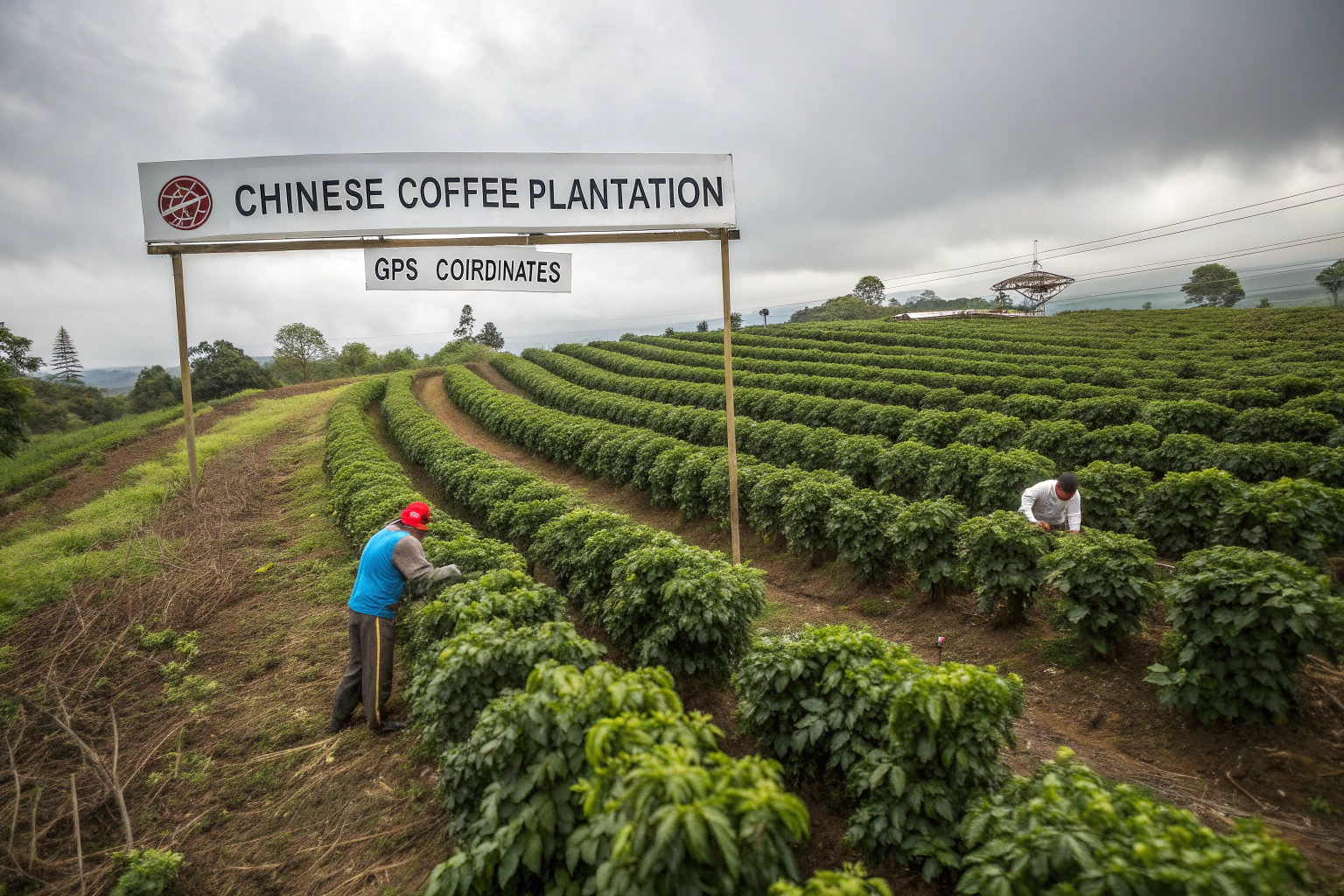
You pull up a bag of single-origin coffee from a new roaster. The label says "Yunnan, China." You flip it over, looking for the story. The farm name. The altitude. Anything. There's nothing. Just a vague sentence about "smallholder farmers." You've been burned by opaque supply chains before. You've had a supplier change the coffee on you and hope you wouldn't notice. And now you're looking at a new origin—China—and you're asking the question that matters most for your brand's integrity: Can I actually trace this bean back to the dirt it grew in? Or is "Yunnan" just a black box?
Chinese coffee plantations are increasingly traceable, often to a degree that surpasses many traditional origins. This traceability is driven by two forces: the commercial demand from vertically integrated, large-scale estates that use lot tracking as a quality control and marketing tool, and the regulatory requirements of the EU Deforestation Regulation (EUDR), which mandates geolocation data for coffee entering the European market. For a buyer willing to ask the right questions, Yunnan coffee can be traced to a specific farm, a specific harvest date, and even a specific GPS-mapped plot of land.
I'm not going to pretend that every bag of Yunnan coffee is traceable. It's not. Just like every bag of Colombian or Brazilian coffee isn't traceable. But the capability and the infrastructure for deep traceability exist here, and they exist at a high level. At Shanghai Fumao, traceability is not a marketing slogan. It's how we run our farm and our export business. Let me show you what real traceability looks like on the ground in Baoshan.
What Does "Traceable" Actually Mean in the Context of Chinese Coffee?
"Traceable" is a word that gets thrown around loosely. Does it mean knowing the province? The county? The cooperative? For a serious coffee buyer, traceability needs to be specific, verifiable, and actionable.
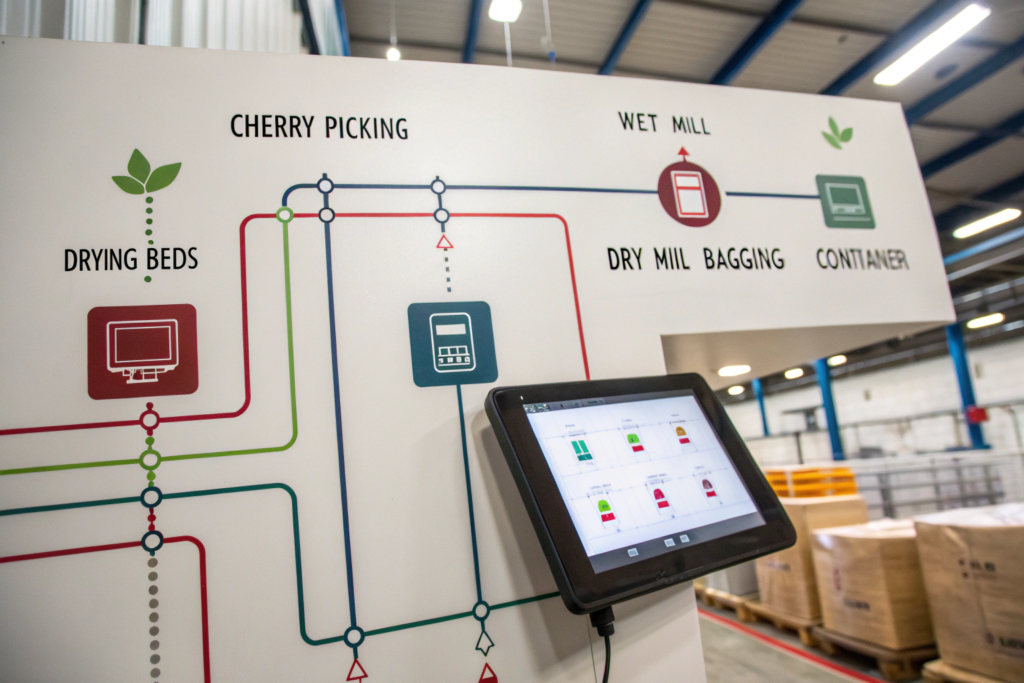
In the context of Chinese coffee, true traceability means the ability to identify the coffee's origin down to a specific farm or estate, a specific harvest lot, and increasingly, a specific geolocated plot of land. It involves documentation that tracks the coffee from the cherry receiving station, through the wet mill and dry mill, and into the export container. This "chain of custody" documentation prevents commingling and provides the buyer with confidence that the coffee they approved is the coffee they received.
What Is the Difference Between "Regional" Traceability and "Farm-Specific" Traceability?
"Regional" traceability means the coffee is identified as coming from, say, "Baoshan, Yunnan." That's a large area with many different farms, altitudes, and quality levels. It's a starting point, but it's not specific.
"Farm-Specific" traceability means the coffee is identified as coming from a single, named entity—like "Shanghai Fumao Estate." This is a much stronger claim. It means the lot was not blended with coffee from other farms. It reflects the specific terroir and processing practices of that one farm. For a roaster, farm-specific traceability allows you to build a relationship with the producer, to understand the seasonal variations, and to tell a much more compelling story to your customers. It's the difference between buying wine labeled "California" and wine labeled "Napa Valley, Stag's Leap District, Finca Victoria." The specificity is the value.
How Does "Plot-Level" Traceability via GPS Change the Game?
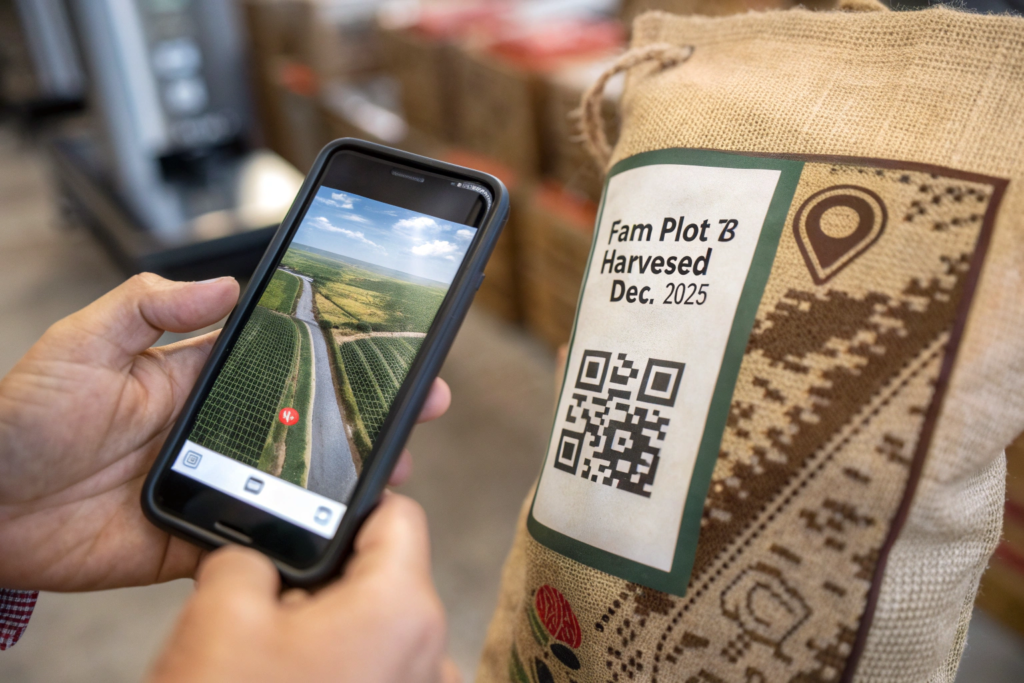
This is the cutting edge. Plot-level traceability means the coffee can be traced not just to a farm, but to a specific, GPS-mapped section of that farm.
Why does this matter? Because a 10,000-acre farm has variation. The block at the top of the hill might produce a slightly different cup than the block by the river. Plot-level traceability allows a roaster to select a specific micro-lot with specific characteristics. It also provides the ultimate proof for EUDR compliance: a satellite-verifiable polygon proving the land was not deforested. This level of granularity is becoming the new standard for specialty coffee. At Shanghai Fumao, we have mapped our entire estate. We can provide a polygon map for any lot we export. This is the future of transparency.
How Do Large Yunnan Estates Like Shanghai Fumao Track Lots from Cherry to Container?
Traceability isn't a magic trick. It's a system. It's a disciplined process of labeling, documentation, and segregation at every step of the coffee's journey through the farm and mill.
Large Yunnan estates track lots using a combination of physical tags, digital databases, and strict operational protocols. Each day's harvest from a specific plot is assigned a unique lot number. This number follows the coffee through the wet mill, where it is processed in dedicated batches. It follows the coffee to the drying beds, where the beds are clearly labeled. It follows the coffee into the dry mill, where the parchment is stored in segregated bays. The final green coffee is bagged and labeled with the same lot number, creating an unbroken chain of custody.
How Is Segregation Maintained During the Wet Mill Process?
The wet mill is a busy place during harvest. Coffee is arriving constantly. The risk of mixing lots from different farms or different days is high.
Segregation is maintained through discipline and design. At our wet mill, we process one discrete batch of cherry at a time. The receiving tank is emptied and cleaned before the next batch arrives. The fermentation tanks are dedicated to a single lot. The washing channels are flushed. This "batch processing" is more time-consuming and requires more labor than continuous processing, but it is the only way to guarantee lot integrity. A buyer who requests a specific lot can be confident that the coffee was not cross-contaminated with cherries from a different part of the farm. You can see examples of this batch processing workflow in features on modern mills in Perfect Daily Grind.
What Happens to Traceability During Dry Milling and Bagging?
The dry mill is the final step before export. The parchment is hulled, the beans are sorted, and they are bagged. This is the last chance to lose traceability.
We maintain traceability by running the dry mill in campaigns. We process all the parchment from a specific lot together. The green bean is then conveyed directly to a dedicated bagging line. The bags are stenciled with the lot number before they are filled. The filled bags are then moved to a dedicated section of the warehouse, clearly marked with the lot information. We use GrainPro bags inside the jute for quality preservation, and the inner bag is also labeled. This meticulous attention to detail ensures that the lot number on the contract matches the lot number on the bag, which matches the coffee inside. At Shanghai Fumao, we take photos of the bagging and labeling process for our clients. It's part of the transparency package.
How Does EUDR Compliance Force a New Level of Transparency in Yunnan?
We've touched on EUDR before, but its impact on traceability deserves its own focus. This regulation is the single biggest driver of supply chain transparency the coffee industry has ever seen. And Yunnan is not exempt.
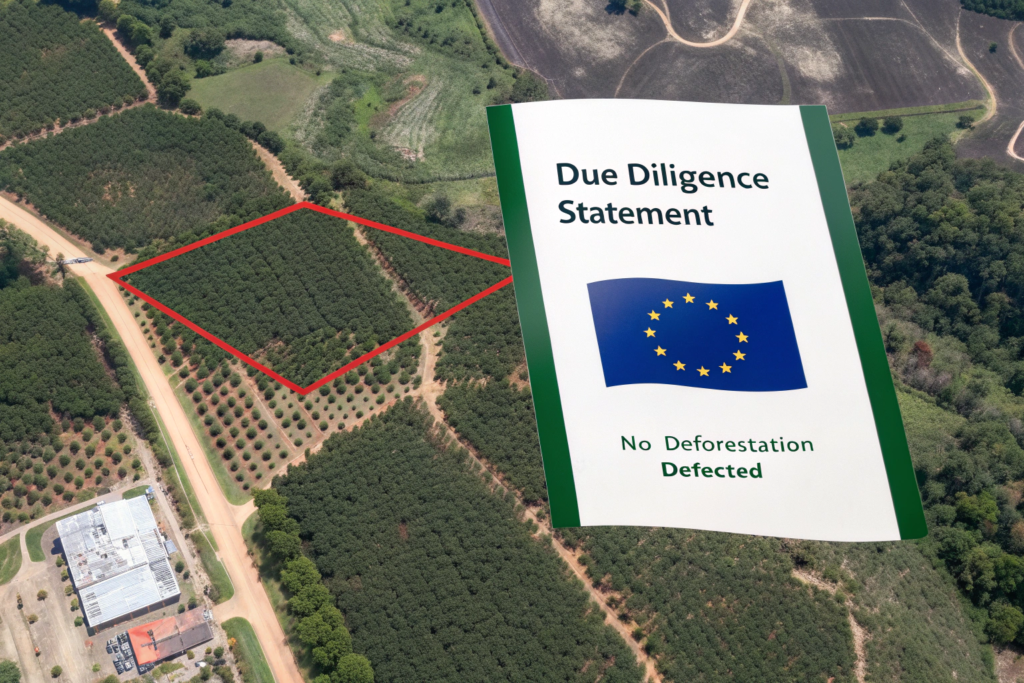
EUDR compliance requires any coffee entering the European market to be accompanied by a due diligence statement that includes the geolocation coordinates of the land where it was grown. For Yunnan producers who export to Europe, this means they must have the capability to map their farms and their supplying smallholders. This regulatory mandate has accelerated the adoption of GPS mapping, digital farm management systems, and robust chain-of-custody documentation across the Yunnan coffee sector. The transparency required for Europe is increasingly becoming the standard for all export markets.
What Geospatial Data Is Now Available for Yunnan Coffee Farms?
For EUDR-compliant lots, the buyer (or the importer) has access to the precise latitude and longitude coordinates of the farm's perimeter.
This is not a vague description. It's a polygon on a map. This data allows the buyer to independently verify the farm's location using free satellite imagery tools. They can confirm the farm exists. They can confirm it's at the stated altitude. They can confirm it is surrounded by forest or agricultural land, consistent with the producer's claims. This geospatial data transforms traceability from a "trust me" narrative into a verifiable fact. It is a powerful tool for due diligence. At Shanghai Fumao, we provide this geolocation data as part of our standard export documentation for all clients, not just those in the EU. We believe this is the new baseline for transparency.
Does EUDR Traceability Benefit Roasters Outside of Europe?
Absolutely. The data generated for EUDR compliance doesn't disappear if the container goes to the U.S. instead. It's an asset.
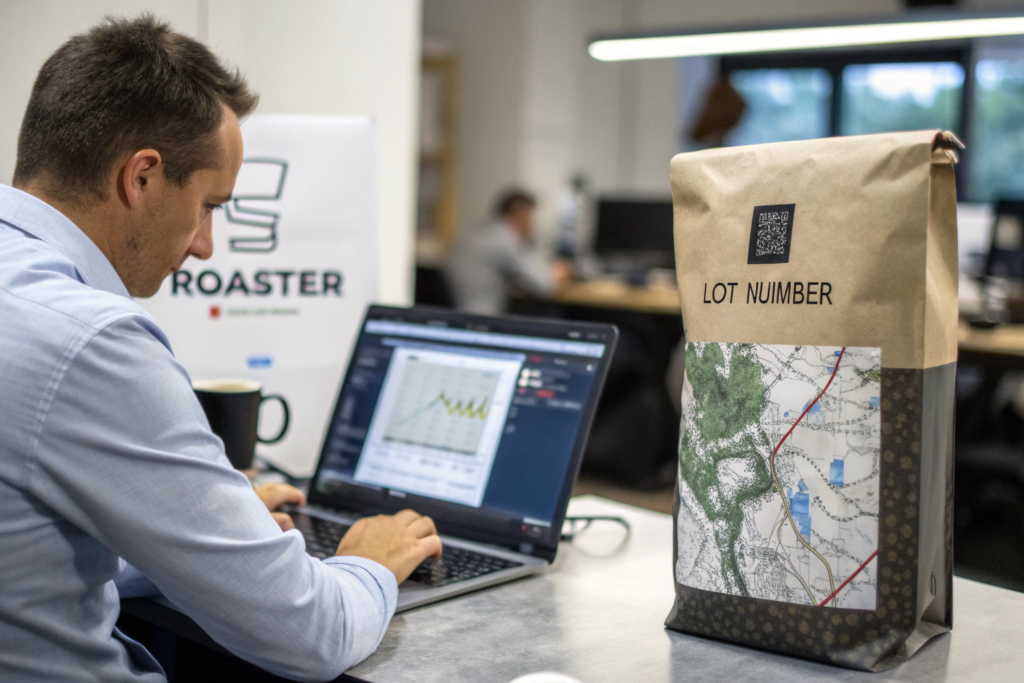
A U.S. roaster buying from a farm that has already mapped its land and digitized its traceability system benefits from that infrastructure. They can request the same geolocation data and the same chain-of-custody documentation. They can offer their customers the same level of transparency—the QR code on the bag linking to the farm map—that a European roaster can. EUDR has effectively raised the bar for the entire industry. The Chinese producers who have invested in compliance are now the most transparent suppliers in the market, regardless of the final destination of their coffee.
How Can a Roaster Verify Traceability Claims Without Traveling to China?
You've read the claims. You've seen the documentation. But you're 7,000 miles away. How do you know the traceability is real? You can't physically follow the bean from the tree to the container. But you can demand specific, verifiable evidence that serves the same purpose.
A roaster can verify traceability claims remotely by requesting three specific pieces of evidence: a copy of the EUDR geolocation polygon or farm map, a series of time-stamped photos or short videos showing the lot number at different stages of processing (e.g., on the drying bed label, on the warehouse bay, on the bag), and a sample of the coffee with the lot number clearly marked, sent directly to a third-party lab for analysis. A supplier with nothing to hide will provide this evidence willingly and promptly.
Can I Use Public Satellite Imagery to Verify a Farm's Location Myself?
Yes. And I encourage every buyer to do it. It's a powerful way to build trust and verify claims.
Ask your supplier for the central GPS coordinates of their farm or the lot you are buying. Then, open a free tool like Google Earth Pro or Global Forest Watch. Enter the coordinates. Look at the historical imagery. Can you see coffee trees? Can you see the processing facility? Does the landscape match the photos the supplier sent you? Can you see that the land was cleared for agriculture long before the 2020 EUDR cutoff date? This independent verification takes 10 minutes and provides a level of confidence that no marketing brochure can match. I've done this exercise with clients many times. I show them our Baoshan estate on the satellite view. They can see the terraced fields, the shade trees, the mill buildings. It's an undeniable proof point.
What Should a "Traceability Video" From the Supplier Show?
Don't accept a single, polished video. Ask for a series of short, unedited clips filmed on a smartphone.
Ask for a video showing the lot number written on the drying bed label. Ask for a video showing the lot number on the warehouse bay where the parchment is stored. Ask for a video showing the bags being stenciled with the lot number before filling. The videos should be timestamped (just have the person hold up a smartphone showing the date). A supplier who can provide this granular, unscripted visual evidence is operating a transparent, traceable operation. They have nothing to hide. At Shanghai Fumao, we provide this level of documentation as a standard service for clients who value deep transparency. It's part of what we call our "Virtual Farm Visit."
Conclusion
Are Chinese coffee plantations traceable? The answer is a resounding yes—for those who have invested in the systems and are willing to be transparent. The days of Yunnan coffee being an anonymous commodity are over. The combination of commercial scale, vertical integration, and regulatory pressure (EUDR) has created an environment where deep, verifiable traceability is not just possible, but increasingly standard among the top-tier producers.
The key is to work with a partner who views traceability as a core value, not a compliance burden. A partner who will provide the GPS maps, the chain-of-custody videos, and the lot-specific documentation.
If you're looking for a level of transparency that allows you to tell a true, verifiable story about your coffee, I invite you to put our traceability system to the test. Ask for the coordinates. Ask for the videos. We're ready. My email is cathy@beanofcoffee.com.