You look at your offer sheet. The Colombian Excelso you've bought for years is $0.40 higher than last season. Your Brazilian contract had its volume cut by 15% due to "weather-related yield loss." The Ethiopian Yirgacheffe you wanted is simply not available at your usual quality tier. Every conversation with a supplier seems to start with an apology and a story about rain, drought, or frost. You're not imagining it. The global supply of high quality Arabica is under siege. And you're asking: Is this the new normal? How deep does this go, and how do I protect my business from a climate that seems determined to make my job impossible?
Climate change is impacting high quality coffee bean supply in 2026 through three primary, interconnected mechanisms: (1) Increased frequency and severity of extreme weather events—droughts in Brazil, excessive rains in Colombia, frosts in regions previously considered safe—which directly reduce yield and damage cherry quality. (2) Rising average temperatures pushing the viable "coffee belt" to higher altitudes, squeezing the available land for premium Arabica and increasing competition for the remaining optimal terroir. (3) An explosion in the prevalence and severity of coffee leaf rust (la roya) and coffee berry borer, as warmer, wetter conditions create ideal breeding grounds for these devastating pests and diseases.
I see this from both sides. I manage 10,000 acres at Shanghai Fumao in Yunnan, a region that, so far, has been relatively fortunate. But I also buy and cup coffees from around the world. I see the quality and volume fluctuations in real-time. Let me walk you through the specific climate pressures reshaping our industry and, more importantly, where the pockets of resilience are emerging.
Why Are Extreme Weather Events Making Arabica Supply So Unpredictable?
The old model of coffee sourcing assumed a certain level of predictability. A bad year in one region was often balanced by a good year in another. The global supply smoothed out the local bumps. That model is breaking down.
Extreme weather events are no longer isolated, cyclical occurrences. They are becoming simultaneous and chronic. In 2026, roasters are facing a situation where multiple major origins are experiencing climate stress at the same time. A severe drought in Brazil's Arabica belt coincides with excessive, harvest-disrupting rains in Colombia. A heatwave in Vietnam stresses Robusta trees, pushing up demand (and prices) for lower-grade Arabica as a substitute. This synchronized volatility creates a global supply crunch and price spikes that are more frequent and more severe than historical norms.*
How Did the Brazilian Drought of 2024-2025 Reshape the 2026 Market?
Brazil is the world's largest producer of Arabica. It acts as the global swing supplier. When Brazil has a huge crop, prices fall. When Brazil's crop is short, the entire world feels the pinch.
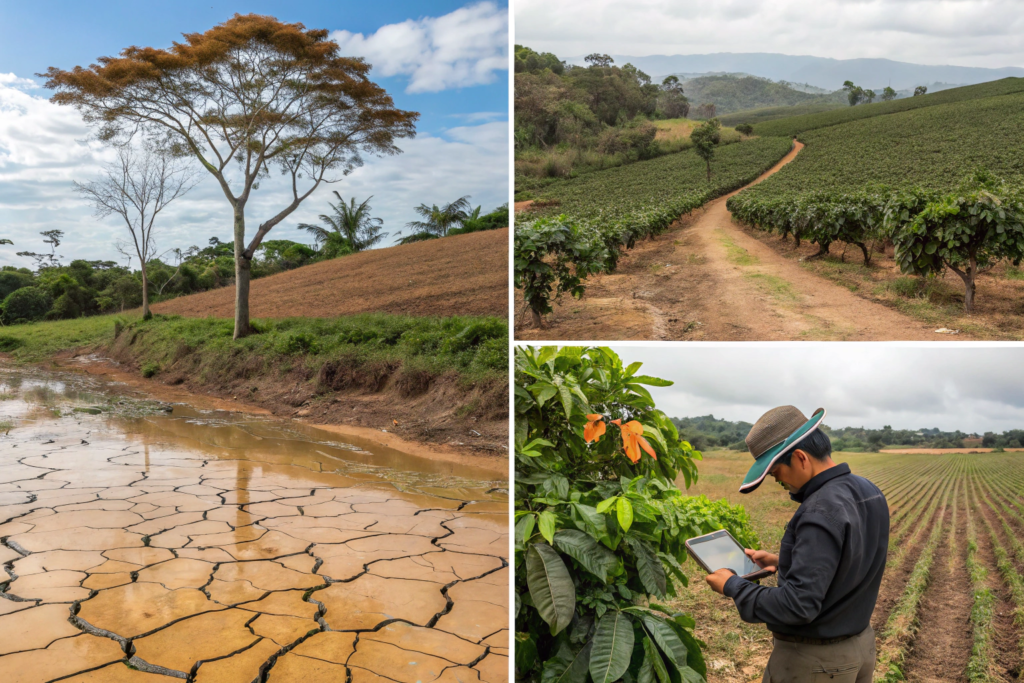
The severe drought and irregular flowering during the 2024-2025 growing season significantly reduced the 2025/2026 Brazilian Arabica harvest. Trees were stressed. Cherries were smaller and less dense. The overall volume of exportable, high-quality Arabica dropped. This supply shock rippled through the global market. Roasters who normally rely on Brazilian beans for their base blends were forced to seek alternatives, bidding up the price of coffees from Colombia, Central America, and even Asia. The C Market price surged in response to this real (and perceived) supply deficit. The impact on you is a higher baseline cost for all Arabica, regardless of origin. You can track the official Brazilian crop estimates and their market impact through reports from CONAB (Brazil's National Supply Company).
What Happens When Colombia's "Mitaca" Harvest Is Washed Out?
Colombia's unique geography allows for two harvests: the main crop and the smaller "mitaca" (fly crop). This has traditionally provided Colombian coffee with a more consistent, year-round supply.
Climate change is disrupting this rhythm. The increased frequency of La Niña weather patterns brings excessive, persistent rainfall to the Colombian Andes. This rain can occur during the critical flowering and cherry development stages, causing flowers to drop and cherries to rot on the branch. It also disrupts the harvest itself, making picking difficult and sun-drying nearly impossible. The result is a smaller, lower-quality mitaca harvest. This tightens the supply of the fresh, high-acidity Colombian coffees that many roasters rely on for their single-origin programs and blends. The inconsistency makes forward contracting riskier and pushes the Colombian differential higher.
How Is Rising Temperatures Shrinking the "Coffee Belt" for Premium Arabica?
Arabica coffee is a temperamental plant. It thrives in a narrow temperature band, typically 18-21°C (64-70°F). It requires a delicate balance of warmth, cool nights, and distinct wet and dry seasons. Climate change is fundamentally altering this equation.
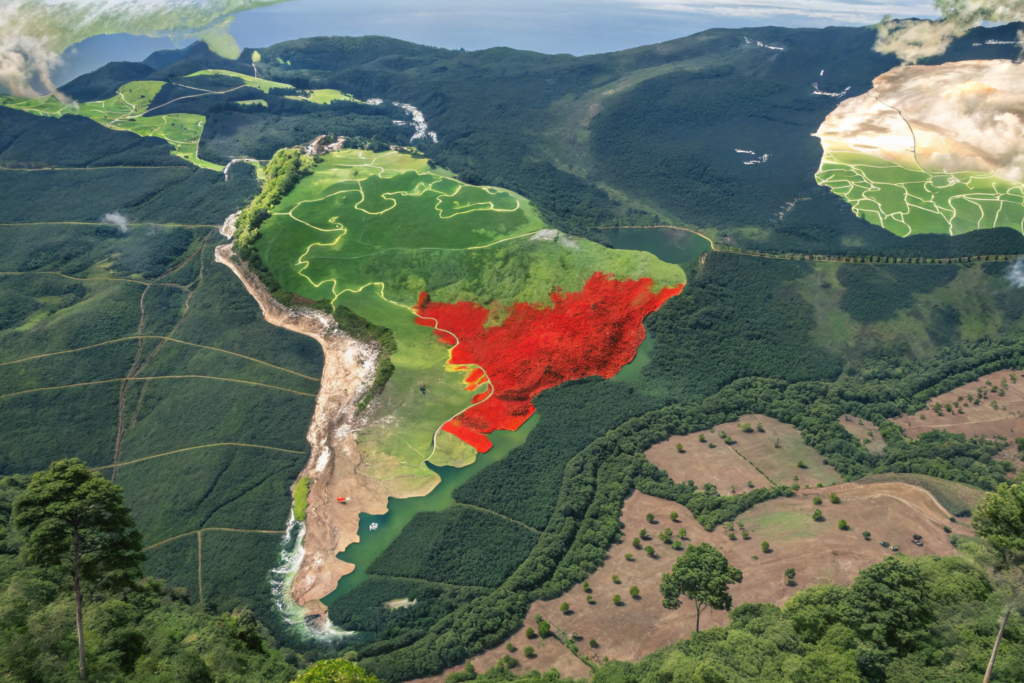
Rising average global temperatures are pushing the viable altitude for premium Arabica higher up the mountainside. Land that was perfectly suited to Arabica 50 years ago is now too hot, producing lower-quality, faster-ripening, and less dense beans. Farmers are forced to either plant at higher elevations (if available), switch to more heat-tolerant but lower-quality Robusta, or abandon coffee farming altogether. This "altitudinal squeeze" is reducing the total global land area suitable for high-quality Arabica, concentrating production into a smaller, more competitive, and more expensive zone.
What Does "Altitudinal Squeeze" Mean for My Future Blend Costs?
It means the supply of high-quality, high-altitude, dense Arabica—the kind that forms the backbone of specialty blends—is becoming constrained relative to global demand.
As lower-altitude farms struggle with heat and quality degradation, the premium for coffee from proven high-altitude regions (above 1,400 meters) increases. These regions are finite. There are only so many mountainsides in Colombia, Ethiopia, and Central America. This scarcity drives a structural increase in the cost of high-quality Arabica. It's not a temporary market fluctuation. It's a long-term, climate-driven supply constraint. For a roaster, this means the cost of your core blend components will likely continue to face upward pressure over the next decade. Finding origins with stable, suitable high-altitude land is becoming a strategic imperative.
Are Any Coffee Origins Actually Benefiting from Warmer Temperatures?
Some regions at the extreme northern or southern edges of the coffee belt may see a short-term expansion of viable land. However, this is often marginal and comes with its own risks (frost, irregular rainfall).
The more significant shift is the emergence of new, high-quality origins within existing coffee-growing nations. Regions that were historically considered "too cool" or "too high" for reliable coffee production are now becoming ideal. This is precisely the story of Yunnan. The high-altitude areas of Baoshan and Pu'er (1,200-1,800 meters) offer a climate that is remarkably stable and well-suited to Arabica. The latitude (around 25° North) provides a natural buffer against the extreme heat affecting equatorial regions. While other origins face a shrinking suitable zone, Yunnan's highlands represent a stable, expanding area for quality Arabica. At Shanghai Fumao, our 10,000 acres are situated in this optimal, resilient zone. It's a key reason why Yunnan is emerging as a strategic origin for climate-conscious roasters.
What Is the Escalating Threat of Coffee Leaf Rust (La Roya) and Pests?
Warmer temperatures and increased humidity don't just stress the coffee tree directly. They create a paradise for its enemies. The most notorious of these is coffee leaf rust, a fungal disease that has devastated coffee regions across Latin America.
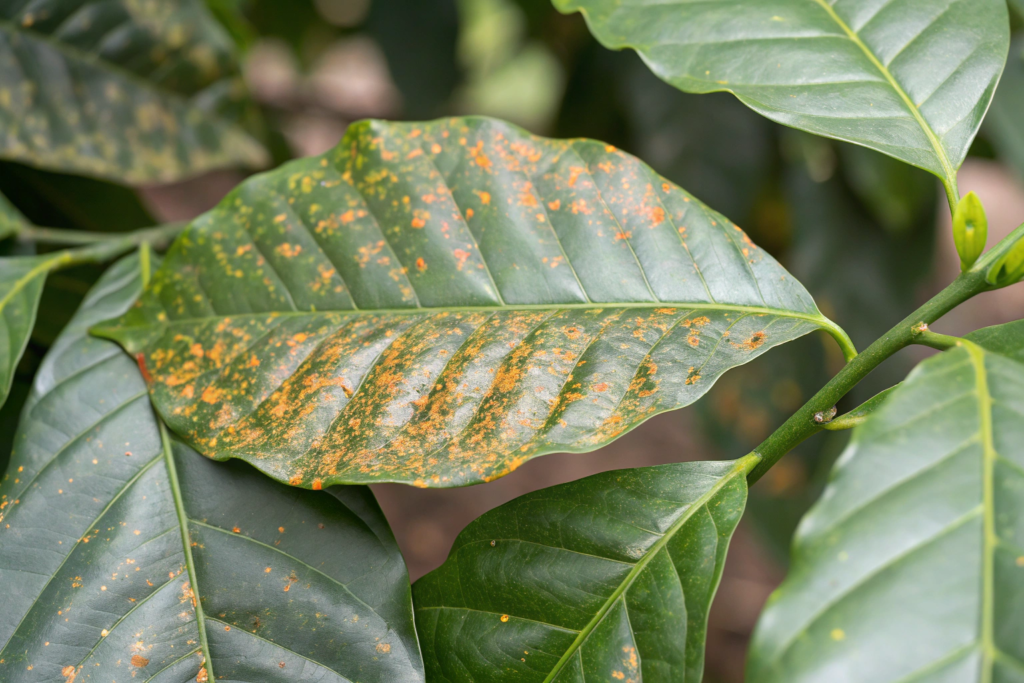
Coffee leaf rust (Hemileia vastatrix) thrives in warmer, wetter conditions. The fungus attacks the leaves of the coffee tree, causing them to drop prematurely. A tree without leaves cannot photosynthesize, cannot develop cherries, and will eventually die. Rising temperatures are allowing the rust fungus to survive and spread at higher altitudes, infecting farms that were previously protected by cooler climates. The cost of controlling rust with fungicides is a significant financial burden on farmers, and severe outbreaks can wipe out entire harvests.
How Did Leaf Rust Devastate Central America and What's the Risk for 2026?
The 2012-2013 leaf rust epidemic in Central America was a climate-driven catastrophe. It caused over $1 billion in damage and forced hundreds of thousands of farmers to abandon their land. The industry is still recovering.
The conditions that fueled that epidemic—anomalous warmth and humidity—are becoming more common. While resistant varietals (like certain Catimor hybrids) have been planted, the rust fungus can evolve. The risk of another major, multi-country outbreak remains elevated. For a roaster, this means the supply of high-quality Central American coffees—the bright, clean, acidic coffees prized by the specialty market—is under constant, climate-amplified threat. Diversifying your sourcing beyond rust-susceptible origins is a key risk mitigation strategy.
Does Yunnan's Climate Offer Any Protection Against Leaf Rust?
Yunnan has a distinct advantage: its dry winter harvest season. Leaf rust requires moisture to germinate and spread. The cool, dry conditions during the Yunnan harvest (November-February) naturally suppress the fungus.
While rust exists in Yunnan and must be managed, the climate provides a level of natural protection that many other origins lack. Additionally, the dominant varietal in Yunnan, Catimor, was specifically bred for its resistance to leaf rust. This combination of a resistant varietal and a naturally suppressive climate makes Yunnan's coffee sector significantly less vulnerable to catastrophic rust outbreaks. It's another layer of supply security. At Shanghai Fumao, our agronomy team monitors for rust constantly, but the environmental pressure is far lower than in the humid highlands of Central America. This translates to more predictable yields and a more stable supply for our roaster partners.
How Can Roasters Build a Climate-Resilient Sourcing Strategy?
You can't control the weather. You can't stop leaf rust. But you can build a sourcing strategy that is resilient to climate shocks. The old model of relying on one or two favorite origins is no longer viable.
Building a climate-resilient sourcing strategy involves three key pillars: (1) Geographic Diversification: Sourcing from multiple coffee-growing continents to spread weather risk. A drought in Brazil should not cripple your entire program. (2) Prioritizing Climate-Stable Origins: Actively seeking out and building relationships in origins that are projected to be more climate-resilient, such as Yunnan's highlands. (3) Deepening Supplier Relationships: Moving from transactional spot buying to long-term partnerships with vertically integrated farms. A committed partner will prioritize your supply even in tight markets and provide early warning of crop challenges.
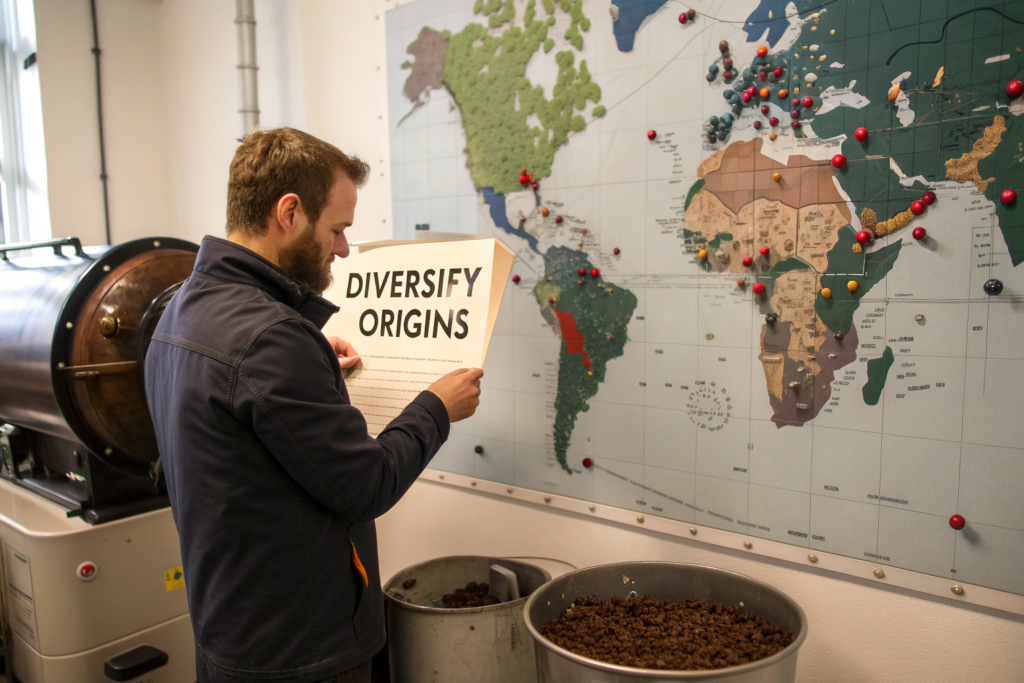
Why Is Geographic Diversification the Single Best Defense?
It's the classic "don't put all your eggs in one basket" principle, applied to climate risk. The weather patterns affecting Brazil are different from those affecting Yunnan.
If you build a blend that relies on 70% Brazilian beans, your business is directly exposed to Brazilian climate volatility. A more resilient blend might use 30% Brazil, 30% Yunnan, and 40% Colombia (or other origins). This diversified basket reduces the impact of any single origin's crop failure. It also gives you flexibility. If one origin's price spikes due to a localized shortage, you can adjust your blend percentages to maintain your target cost and flavor profile. This requires a more sophisticated approach to green buying and roast profiling, but the payoff in supply stability is immense.
How Does Partnering with a Vertically Integrated Farm in a Stable Origin Help?
A long-term partnership with a farm like Shanghai Fumao provides a different kind of resilience. It's based on relationship and commitment, not just price.
When global supply is tight and prices are spiking, a transactional supplier might be tempted to sell your contracted coffee to a higher bidder. A long-term partner values the relationship over a short-term gain. They will honor the contract. They will communicate proactively about the crop outlook. They will work with you to find solutions if a specific lot is short. This reliability is a form of climate resilience. It removes the uncertainty and the scrambling that characterize the spot market. It allows you to plan your production and your budgets with confidence, even when the broader market is in turmoil.
Conclusion
Climate change is not a future threat to the coffee industry. It is the defining challenge of our time, and its impacts are being felt acutely in 2026. The increased frequency of extreme weather, the altitudinal squeeze on premium Arabica, and the escalating pressure from pests and diseases are reshaping the global supply map. The era of predictable, stable, and cheap high-quality coffee is over.
The roasters who will thrive in this new era are those who adapt. They diversify their origin portfolio. They seek out and invest in relationships with climate-resilient regions and farms. They move beyond transactional buying to strategic partnership.
Yunnan, with its high-altitude, rust-resistant terroir and its modern, vertically integrated farms, is one of the bright spots on this new map. It offers a measure of stability and predictability in an increasingly unpredictable world.
If you're thinking about how to climate-proof your coffee supply for the years ahead, I'd welcome a conversation about how Yunnan Arabica can play a strategic role in your program. My email is cathy@beanofcoffee.com.