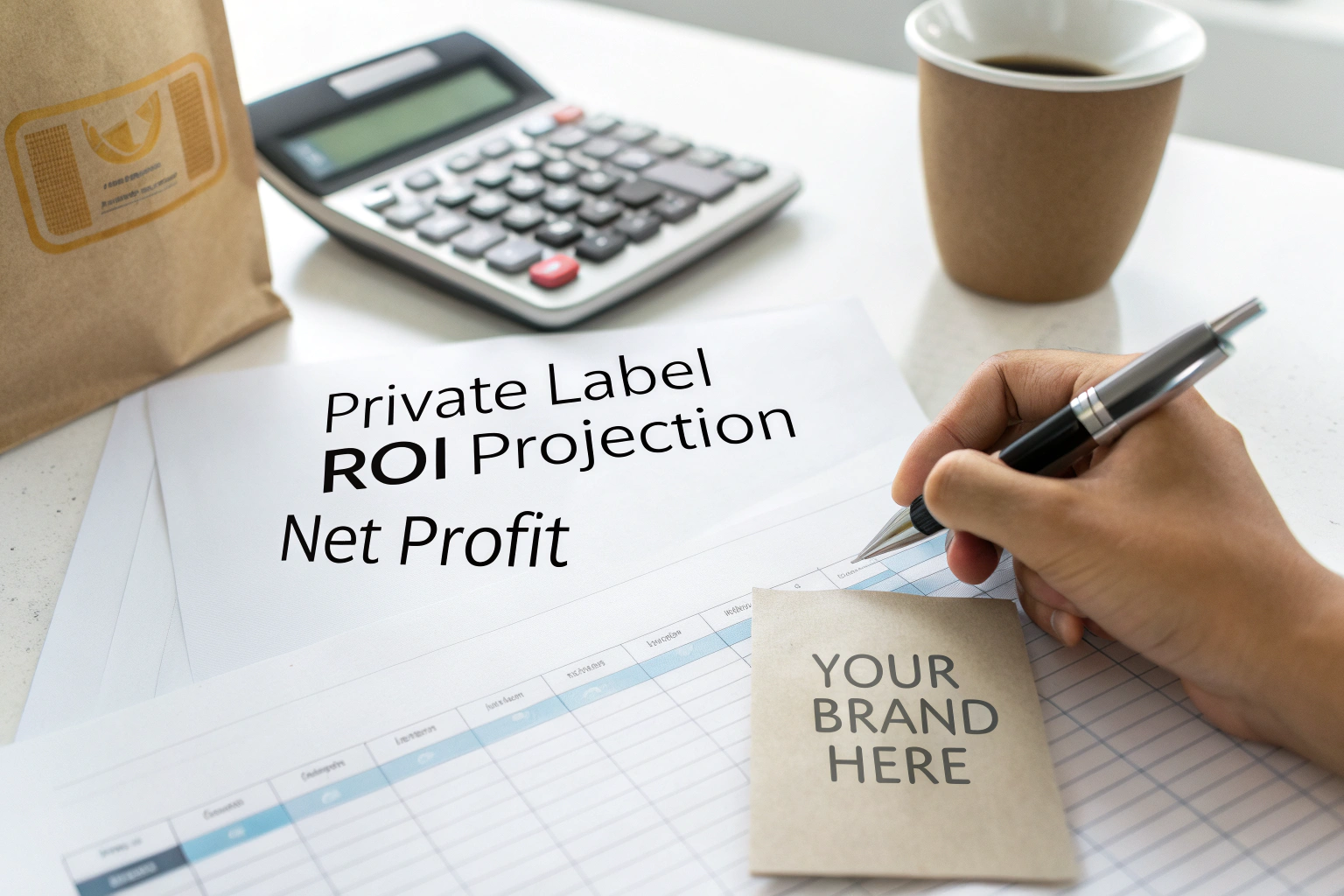
I had a client—a small cafe chain owner—who was tired of selling someone else's brand. She wanted her own coffee. She assumed it would be too expensive. She thought she needed to buy a roaster, lease a bigger space, and hire a production team. I showed her the numbers for our Private Label Roasted Program. We started with her current sales volume. We calculated the cost of the finished, bagged coffee delivered to her door. We compared it to her current wholesale cost. The margin difference was stark. She realized she could launch her own brand with almost no upfront capital investment and immediately increase her per-pound profit. The look on her face was pure revelation.
To calculate the ROI on a private label coffee line from a Chinese factory, you must first determine your all-in landed cost per pound for the finished, roasted, and packaged product, then subtract that cost from your target retail or wholesale selling price to find your gross profit margin per unit, and finally multiply that margin by your projected sales volume to see the total annual profit contribution and payback period.
This is not a cost. It is an investment in building a unique, high-margin asset for your business. Let me walk you through the specific numbers and calculations you need to build a realistic ROI model for a private label program using our Yunnan coffee.
What Are the All-In Costs of a Private Label Yunnan Coffee Program?
The first step in calculating ROI is to build an accurate Cost of Goods Sold (COGS) model. You need to know, down to the penny, what it costs to get one bag of your branded coffee into your hands, ready to sell. The private label model simplifies some costs but introduces others.
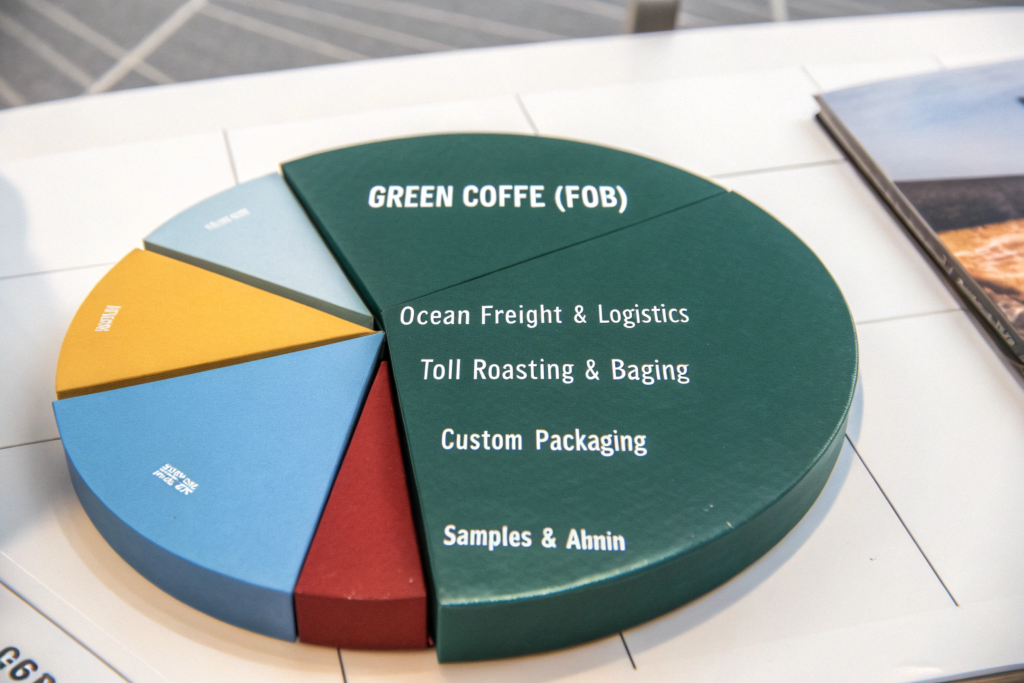
The all-in costs of a private label Yunnan coffee program include the base FOB price of the green coffee, the ocean freight and logistics to the roasting facility, the toll roasting and bagging fee per pound, the cost of your custom-printed bags and labels, and any warehousing or fulfillment fees if you are not taking physical delivery yourself. You must account for every touchpoint from our farm in Baoshan to your customer's hands.
How Do You Calculate the Landed Cost of Green Coffee from Yunnan?
This is the foundation of your COGS. It is the same calculation you would make if you were buying green coffee to roast yourself.
Landed Cost per Pound (Green):
- FOB Price: The price per pound we agree upon for the green coffee, loaded onto the vessel in Shanghai. (e.g., $2.80 / lb for a full container of Grade 1 Organic Arabica).
- Ocean Freight & Insurance: The cost to ship the container from Shanghai to the U.S. port and insure it. Divide the total container cost by the net weight of coffee (approx. 42,000 lbs). (e.g., $4,000 total freight / 42,000 lbs = ~$0.10 / lb).
- U.S. Customs & Fees: Brokerage fees, customs duties (0% for green coffee), and any port handling fees. Divide by total weight. (e.g., $1,200 total fees / 42,000 lbs = ~$0.03 / lb).
- Inland Trucking to Roaster: Cost to move the container from the port to the toll roasting facility. (e.g., $1,500 / 42,000 lbs = ~$0.04 / lb).
Total Landed Green Cost = FOB + Freight + Fees + Trucking
= $2.80 + $0.10 + $0.03 + $0.04 = $2.97 per pound (Green, Delivered to Roaster)
This is your raw material cost. At Shanghai Fumao, we can provide you with a detailed landed cost estimate for your specific volume and destination. Our Logistics & Planning page outlines the process.
How Much Should You Budget for Custom Packaging and Design?
Your packaging is your brand's face to the world. Do not skimp here. Custom packaging costs can vary wildly based on quantity, material, and features.
Packaging Cost Components:
- Bag Design: A one-time cost for professional graphic design. ($300 - $1,000+).
- Printing Plates / Die Lines: One-time setup fees for the bag manufacturer. ($100 - $300).
- Per-Bag Cost: The cost of the bag itself.
- Standard Kraft Bag with Valve: $0.40 - $0.70 per bag (at 1,000+ quantity).
- Premium Matte Finish Bag with Valve: $0.80 - $1.50+ per bag.
- Fully Compostable / Eco-Friendly Bag: $1.20 - $2.00+ per bag.
Example Budget (for 5,000 bags):
- Design & Setup (Amortized over 5,000 bags): $500 / 5,000 = $0.10 per bag.
- Premium Kraft Bag with Valve: $0.60 per bag.
- Total Packaging Cost per Bag = $0.70
At Shanghai Fumao, we can connect you with trusted packaging suppliers and manage the procurement process as part of our Private Label Program. We ensure the bags arrive at the roaster ready for your production run.
How to Project Revenue and Gross Margin for Your Private Label Brand?
You know your costs. Now comes the fun part: determining your revenue and profit. The beauty of a private label, single-origin coffee with a compelling story is that it commands a premium price. You are not selling a commodity.
To project revenue and gross margin, you must set a retail or wholesale price based on your market positioning, subtract the all-in landed cost per unit to find your gross profit per unit, and then multiply that unit profit by your realistic monthly or annual sales volume to see the total profit contribution of the private label line.
What Retail Price Can a Premium Yunnan Private Label Command?
Your pricing power is driven by your brand story and the uniqueness of the product. A generic "Breakfast Blend" might sell for $12. A single-origin "Baoshan Mountain Reserve" with a traceable story and beautiful packaging can sell for significantly more.
Benchmark Retail Prices (12oz Bag, Specialty Coffee):
- Standard Single-Origin (Colombia, Ethiopia): $14.00 - $17.00
- Unique / Emerging Origin (Yunnan): $16.00 - $20.00
- Certified Organic & Traceable Yunnan: $18.00 - $22.00
- Micro-lot (e.g., Geisha, Natural Process): $22.00 - $30.00+
Setting Your Price:
Let's assume you position your Yunnan Grade 1 Organic coffee as a premium offering at $18.00 per 12oz bag on your website and in your cafes.
Calculating Gross Profit per Bag:
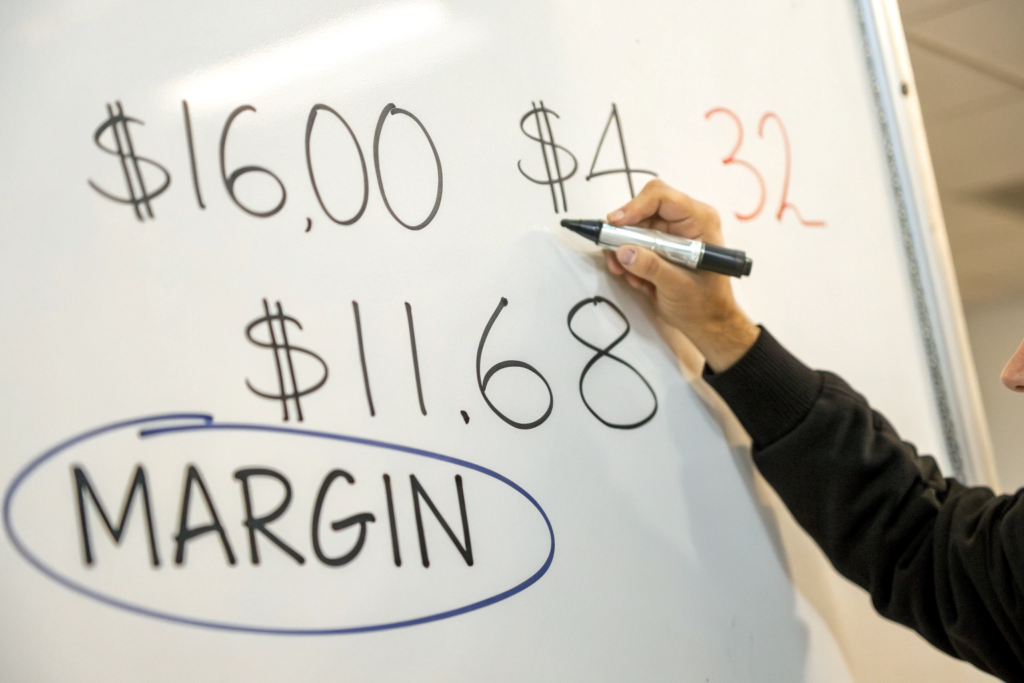
- Retail Price: $18.00
- All-In Landed Cost: $4.32 (from our example above)
- Gross Profit per Bag: $18.00 - $4.32 = $13.68
That is a 76% gross margin. This is the power of the private label model. You are capturing the margin of the roaster, the distributor, and the retailer. For pricing benchmarks, you can review retail prices on platforms like Trade Coffee or Mistobox.
What Does the ROI Look Like for a Small Cafe Chain vs. an Online Seller?
Let's model two different scenarios to show how volume impacts total ROI. Both scenarios use the same cost and price assumptions from above.
Scenario 1: Small Cafe Chain (3 Locations)
- Monthly Volume: 200 bags (approx. 150 lbs roasted). This is a modest, achievable volume for a small chain selling retail bags and using the coffee for pourovers.
- Total Monthly Revenue: 200 bags * $18.00 = $3,600
- Total Monthly COGS: 200 bags * $4.32 = $864
- Monthly Gross Profit: $3,600 - $864 = $2,736
- Annual Gross Profit: $2,736 * 12 = $32,832
Scenario 2: Established Online Roaster / Retailer
- Monthly Volume: 1,000 bags (approx. 750 lbs roasted).
- Total Monthly Revenue: 1,000 bags * $18.00 = $18,000
- Total Monthly COGS: 1,000 bags * $4.32 = $4,320
- Monthly Gross Profit: $18,000 - $4,320 = $13,680
- Annual Gross Profit: $13,680 * 12 = $164,160
This is a high-margin, incremental revenue stream. For the cafe chain, it is an extra $32,000 in profit—enough to cover rent for a month or hire a new team member. For the online retailer, it is a $164,000 profit center. And this does not include the added benefit of brand building and customer loyalty.
What Are the Hidden Financial Benefits of a Private Label Program?
The per-bag profit is the obvious benefit. But the private label model creates other forms of value that are harder to quantify but are just as real. These "hidden" benefits often justify the program even if the direct profit is modest.
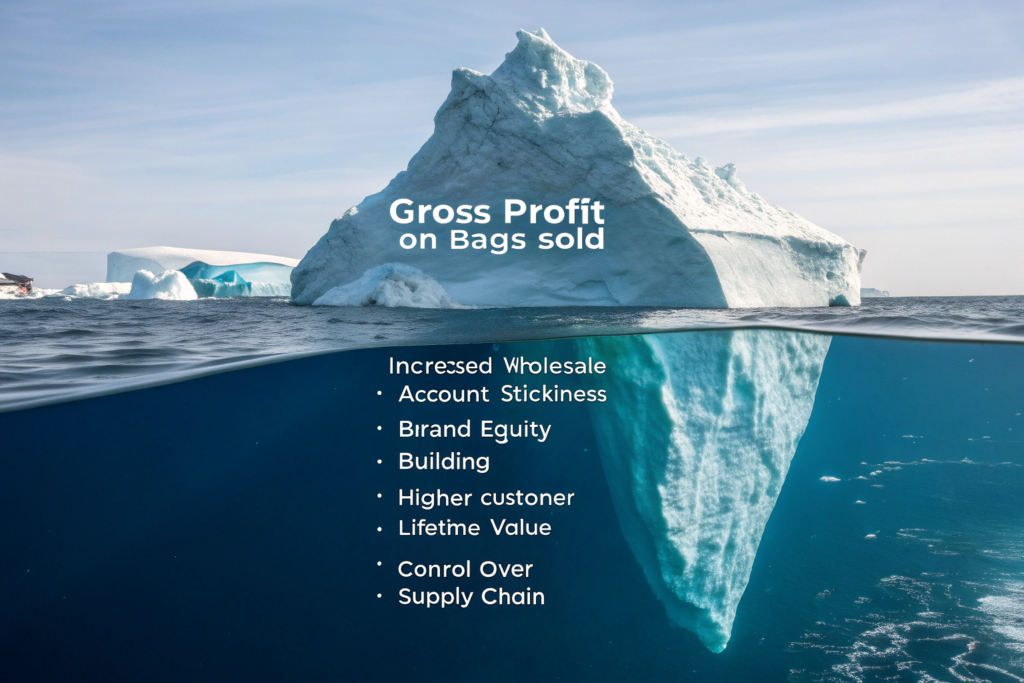
The hidden financial benefits of a private label program include increased customer retention and lifetime value (as customers bond with your unique brand), the ability to protect your wholesale accounts from competitive poaching, the building of a valuable brand asset that increases your company's overall valuation, and the supply chain control and cost stability that comes from a direct partnership. These are strategic advantages, not just tactical ones.
How Does a Unique Brand Increase Customer Loyalty and Lifetime Value?
A customer who buys a generic "House Blend" from you can buy a "House Blend" from anyone. They have no loyalty to the coffee. They are loyal to convenience or price.
A customer who buys your "Gaoligong Mountain Reserve" single-origin Yunnan coffee is buying an experience they can only get from you. They are bonding with the story, the unique flavor, and your brand's curation.
The Impact on Customer Lifetime Value (CLV):
- Higher Retention Rate: They are more likely to reorder because they cannot easily find a substitute.
- Higher Average Order Value: They are willing to pay a premium price for the unique product.
- Increased Referrals: They are more likely to tell their friends about the "amazing coffee from China" they discovered through you.
This is the intangible value of a strong brand. It turns a transactional customer into a loyal community member. This is difficult to model in a spreadsheet, but it is the engine of long-term, sustainable growth.
How Does a Private Label Protect Your Wholesale Accounts?
If you are a roaster who also sells wholesale coffee to cafes and restaurants, you live in constant fear of being undercut. Another roaster can walk into your account and offer a "similar" coffee for $0.50 less per pound.
The Private Label Shield:
When a cafe serves your private label Yunnan coffee, they are serving your brand. The bag has your logo. The story is your story. It is much harder for a competitor to dislodge you.
Why?
- The Cafe's Customers Know Your Brand: The cafe's customers ask for "that Yunnan coffee" by name. The cafe owner cannot easily swap it out without disappointing their customers.
- It is a Partnership, Not Just a Transaction: You have worked with the cafe to develop the blend and the branding. You are their coffee partner. The switching costs are high.
This creates "sticky" wholesale relationships. It reduces customer churn and protects your recurring revenue stream. It is a defensive moat for your business. At Shanghai Fumao, our Wholesale Partnership page outlines how we support our clients in building these protected accounts.
Conclusion
Calculating the ROI on a private label coffee line from a Chinese factory is an exercise in building a detailed cost model and then projecting the powerful revenue potential of a unique, branded product. The math is compelling. A landed cost of $4.00 - $5.00 per bag can support a retail price of $16.00 - $20.00, generating gross margins that dwarf those of selling other people's brands.
But the true ROI extends beyond the immediate per-bag profit. It lies in the brand equity you build, the customer loyalty you earn, and the defensible market position you create. A private label program with a partner like BeanofCoffee is not just a sourcing decision. It is a strategic investment in the future value of your entire business.
If you are ready to start building your own ROI model for a private label Yunnan coffee, we can provide you with detailed cost estimates and volume pricing. Email Cathy Cai. Tell her your target volume and the type of coffee you are interested in, and she can help you build a preliminary COGS and profit projection. Contact Cathy at: cathy@beanofcoffee.com