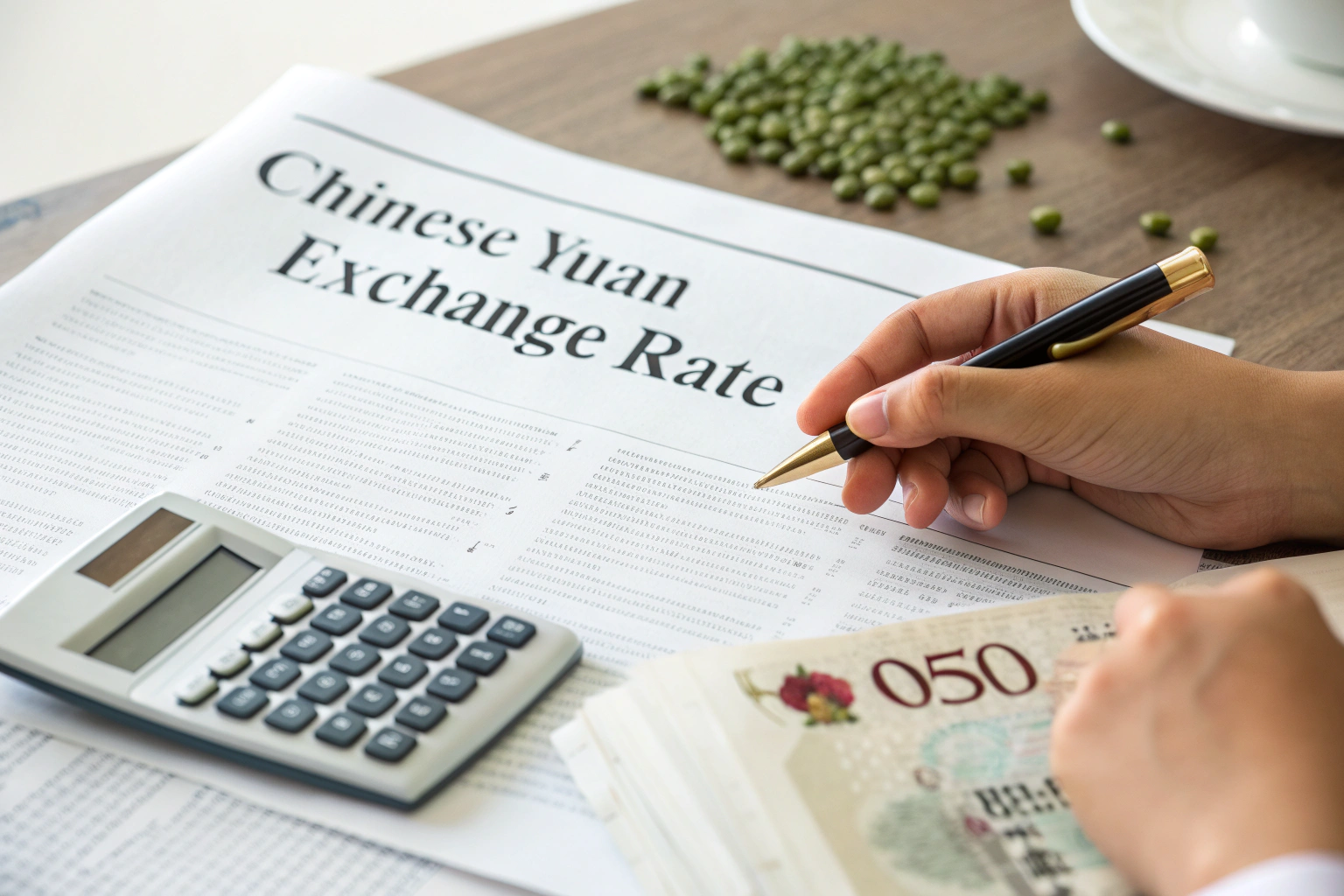
I was negotiating a multi-container contract with a European buyer a few years ago. We had agreed on the price in U.S. dollars. Everything was set. Then, over the course of a month, the Chinese Yuan strengthened significantly against the dollar. My costs—paying my workers, buying fertilizer, running the mill—are all in Yuan. My revenue was in dollars. Suddenly, the profitable contract was looking very thin. I had to go back to the buyer and explain the situation. He was frustrated. I was frustrated. We were both victims of the currency market. That was the day I fully understood the invisible hand of foreign exchange in the coffee trade.
The impact of the Chinese Yuan exchange rate on coffee imports is that a stronger Yuan makes Chinese coffee more expensive for U.S. dollar buyers (reducing their purchasing power), while a weaker Yuan makes Chinese coffee cheaper and more competitive, with this currency effect often outweighing short-term fluctuations in the C-market price of coffee.
You do not need to be a currency trader. But you do need to understand the basic dynamics of the USD/CNY exchange rate and how it affects the final FOB price you pay. Let me explain the mechanics from the perspective of a Chinese exporter and what it means for your bottom line.
How Does a Stronger Yuan Affect the FOB Price of Yunnan Coffee?
The key to understanding this is remembering where the costs are. My business—Shanghai Fumao—operates in China. We pay for labor, fertilizer, fuel, electricity, and local services in Chinese Yuan (CNY) . The price I quote you is in U.S. Dollars (USD) , because that is the global currency of the coffee trade.
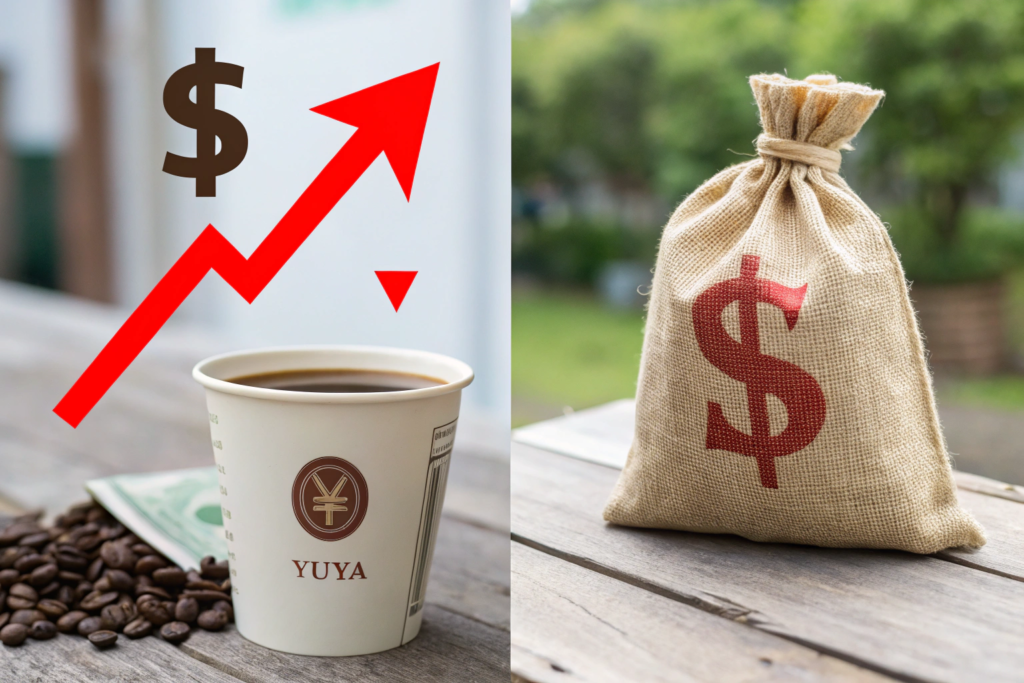
A stronger Yuan means that one U.S. dollar buys fewer Yuan. Therefore, to receive the same amount of Yuan to cover my local production costs, I must charge a higher price in U.S. dollars. This increases the FOB price for the importer and erodes their purchasing power.
The coffee itself has not changed. The cost to grow it has not changed (in Yuan terms). But the translation layer between my costs and your payment has shifted, and that shift is passed on to the final USD price.
What Is the Direct Relationship Between USD/CNY and Your Invoice?
Let's use a simple, hypothetical example with round numbers to illustrate the point.
Scenario:
- My cost to produce and export a pound of Grade 1 Yunnan Arabica is 20.00 Chinese Yuan (CNY) . This covers all my farm and mill expenses and my profit margin.
- I need to convert this 20.00 CNY cost into a U.S. Dollar price for you.
Case 1: Weaker Yuan (Good for U.S. Buyer)
- Exchange Rate: 1 USD = 7.20 CNY
- My required USD Price: 20.00 CNY / 7.20 = $2.78 per pound FOB
Case 2: Stronger Yuan (Bad for U.S. Buyer)
- Exchange Rate: 1 USD = 6.80 CNY
- My required USD Price: 20.00 CNY / 6.80 = $2.94 per pound FOB
The Impact:
A shift in the exchange rate from 7.20 to 6.80—a strengthening of the Yuan by about 5.5%—results in a $0.16 per pound increase in your FOB price. For a full container (42,000 lbs), that is a $6,720 difference.
This is why I watch the USD/CNY exchange rate as closely as I watch the weather forecast. It has a direct, mathematical impact on the prices I can offer. At Shanghai Fumao, when we provide a quote, we state the exchange rate assumption it is based on. Our Pricing & Contracts page explains this transparency.
Why Does a Strong Yuan Make Yunnan Coffee Less Competitive Globally?
Coffee is a global commodity. You, as a buyer, are constantly comparing prices from different origins. You look at a Colombian Excelso, a Brazilian Cerrado, and a Yunnan Grade 1. The currency exchange rate of each origin country relative to the U.S. dollar is a hidden hand in that comparison.
- Brazilian Real (BRL) weakens: Brazilian coffee becomes cheaper in USD terms. It becomes more competitive.
- Colombian Peso (COP) weakens: Colombian coffee becomes cheaper in USD terms.
- Chinese Yuan (CNY) strengthens: Chinese coffee becomes more expensive in USD terms, even if nothing changed on the farm. It becomes less competitive.
This currency effect can be larger than the impact of a small change in the C-market price. You might see the C-market drop by 5 cents, but if the Yuan strengthens by 2% over the same period, the price of Yunnan coffee might actually go up, not down.
This is a critical insight for a buyer. You cannot just look at the C-market. You must also be aware of the currency trends of the origins you buy from. A smart buyer uses periods of Yuan weakness to lock in favorable long-term contracts. For tracking the USD/CNY exchange rate, you can use financial platforms like Bloomberg or XE.com.
How Can U.S. Importers Mitigate Currency Risk When Sourcing from China?
You cannot control the currency market. Neither can I. But we can both take steps to protect ourselves from its volatility. The goal is not to speculate on the direction of the Yuan. The goal is to create certainty for both of our businesses.
U.S. importers can mitigate currency risk when sourcing from China by using fixed-price contracts denominated in U.S. dollars, which transfers the exchange rate risk from the buyer to the seller for the duration of the contract, and by considering shorter-term or split contracts if the currency outlook is highly uncertain.
The key is to choose a contracting strategy that aligns with your risk tolerance and your need for budget predictability.

What Is a "Fixed Price in USD" Contract and How Does It Protect You?
This is the most common and effective tool for mitigating currency risk. In a fixed-price USD contract, the seller (me) agrees to sell you a specific volume of coffee at a specific price per pound in U.S. dollars for a defined period (e.g., one quarter, six months, or one crop year).
How It Protects You, the Buyer:
- Price Certainty: You know exactly what your green coffee cost will be for the contract period. You can set your retail prices and your budgets with confidence. If the Yuan strengthens against the dollar, your price does not change. The risk is on me, the seller.
- Simplified Planning: You do not need to watch the USD/CNY ticker every day. You can focus on roasting and selling coffee.
The Seller's Perspective (Why I Accept This Risk):
I accept the currency risk because I want the certainty of a committed buyer. I hedge this risk in several ways. I might hold some of my revenue in USD to pay for imported inputs (like fertilizer or machinery). I might use simple financial instruments offered by my bank to lock in an exchange rate for a portion of my expected revenue. This is part of running a professional export business.
At Shanghai Fumao, our standard contract for our Custom Blends Program and our annual volume agreements is a fixed-price-in-USD contract. We believe this provides the best foundation for a long-term partnership. It removes a major variable from our relationship.
Should You Consider Shorter-Term Contracts in a Volatile Currency Environment?
A fixed-price contract is great for stability. But what if you, or your financial advisor, believe the Yuan is poised to weaken significantly? You might not want to lock in a price today that could be cheaper in three months.
In a volatile or weakening Yuan environment, a different strategy might be appropriate.
Alternative Contracting Strategies:
- Quarterly Pricing: Instead of an annual fixed price, we agree to review and reset the price every three months based on the prevailing exchange rate and our current production costs. This allows you to benefit from a weakening Yuan but exposes you to the risk of a strengthening Yuan.
- Spot Buying: You buy coffee one container at a time on the spot market. This gives you maximum flexibility but minimum price and supply security. This is generally not recommended for your core blends.
- Split Contracts: You lock in a fixed price for 50% of your anticipated annual volume and leave the other 50% to quarterly pricing or spot buying. This is a balanced, risk-mitigated approach.
The best strategy depends on your specific business needs and market outlook. At Shanghai Fumao, we are flexible. We can discuss different contract structures to find the one that best balances risk and stability for both of us. Our goal is to be a partner, not just a vendor. For more on currency risk management, resources from the International Trade Administration provide guidance for U.S. importers.
Does the Exchange Rate Affect the Cost of Imported Inputs for the Farm?
The exchange rate's impact is not just one-way, making coffee more expensive for you. It also affects my cost of production. A stronger Yuan can actually lower some of my input costs, partially offsetting the negative impact on your price.
The exchange rate affects the farm's bottom line in both directions: a stronger Yuan makes imported fertilizers, machinery, and fuel cheaper in local currency terms, which can help reduce the overall cost of production and partially offset the need to raise USD FOB prices.
It is a complex balancing act. The farm is a business with a global supply chain, just like your roastery.
How Does a Stronger Yuan Lower the Cost of Fertilizer and Machinery?
China imports a significant amount of the specialized inputs used in high-quality coffee farming.
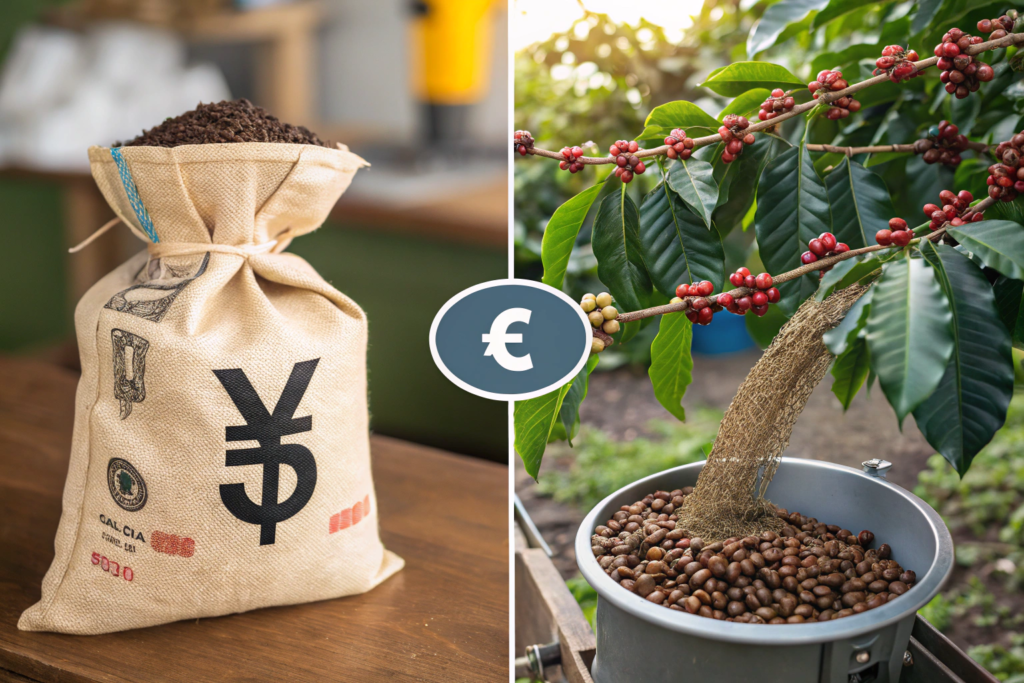
- Fertilizer: Many of the complex, slow-release organic fertilizers we use on our premium blocks are imported from Europe or North America. They are priced in Euros or U.S. Dollars. When the Yuan is strong, my local currency buys more of these dollars or euros. My fertilizer bill (in Yuan terms) goes down.
- Machinery and Parts: Our state-of-the-art dry mill equipment—the gravity separators, the sizing graders—is largely imported from Colombia, Brazil, or Europe. Spare parts are priced in foreign currency. A strong Yuan makes maintaining and upgrading our mill cheaper.
- Fuel: China is a net importer of oil. A stronger Yuan helps moderate the domestic price of diesel, which lowers our trucking costs from Baoshan to the port.
This is the silver lining of a strong Yuan for me as a producer. It helps control my operating expenses. This gives me a little more room to absorb the currency impact on my export price before I have to pass it on to you. It is a natural, partial hedge.
At Shanghai Fumao, our vertically integrated model means we see both sides of this equation. We manage the farm budget and the export budget. This holistic view allows us to offer more stable pricing than a pure trading company that only sees the export side. For data on agricultural input prices, the World Bank Commodity Markets provides excellent resources.
Why Does This Matter for the Long-Term Stability of Your Supply Chain?
This is the most important long-term implication for you, Ron. You care about security and reliability. A supplier who is being crushed by a strong Yuan and cannot afford to maintain their farm or their equipment is not a reliable long-term partner.
A supplier like Shanghai Fumao, who understands the two-way impact of currency and manages their finances prudently, is a stable supplier. We are not going to cut corners on fertilizer because the Yuan is strong. In fact, the strong Yuan helps us afford the best inputs. We are not going to defer maintenance on the gravity separator. We are going to import the part we need.
This means the quality and consistency of the coffee we produce is insulated from currency volatility. The exchange rate might cause the price to fluctuate within a band, but it will not cause the quality to crash. That is the kind of supply chain stability that a serious roaster should value.
Conclusion
The impact of the Chinese Yuan exchange rate on coffee imports is a constant, underlying force in the economics of sourcing from Yunnan. A stronger Yuan translates to higher FOB prices for U.S. dollar buyers. A weaker Yuan makes Chinese coffee more competitive. This currency effect operates independently of the C-market coffee price and can be a significant factor in your total landed cost.
However, by understanding this dynamic, you can make smarter sourcing decisions. You can use fixed-price USD contracts to lock in stability and transfer the risk to the seller. You can consider different contract lengths based on the currency outlook. And you can choose to partner with vertically integrated suppliers like BeanofCoffee, who manage both sides of the currency equation and are committed to long-term quality and stability, regardless of the exchange rate.
Currency is a fact of life in international trade. It does not have to be a source of anxiety. It is just another variable to be managed with knowledge and good partnership.
If you want to discuss our current pricing and how we structure our contracts to manage currency risk, we are happy to have that conversation. Email Cathy Cai. She can explain our standard contract terms and provide a current quote based on today's exchange rate. Contact Cathy at: cathy@beanofcoffee.com