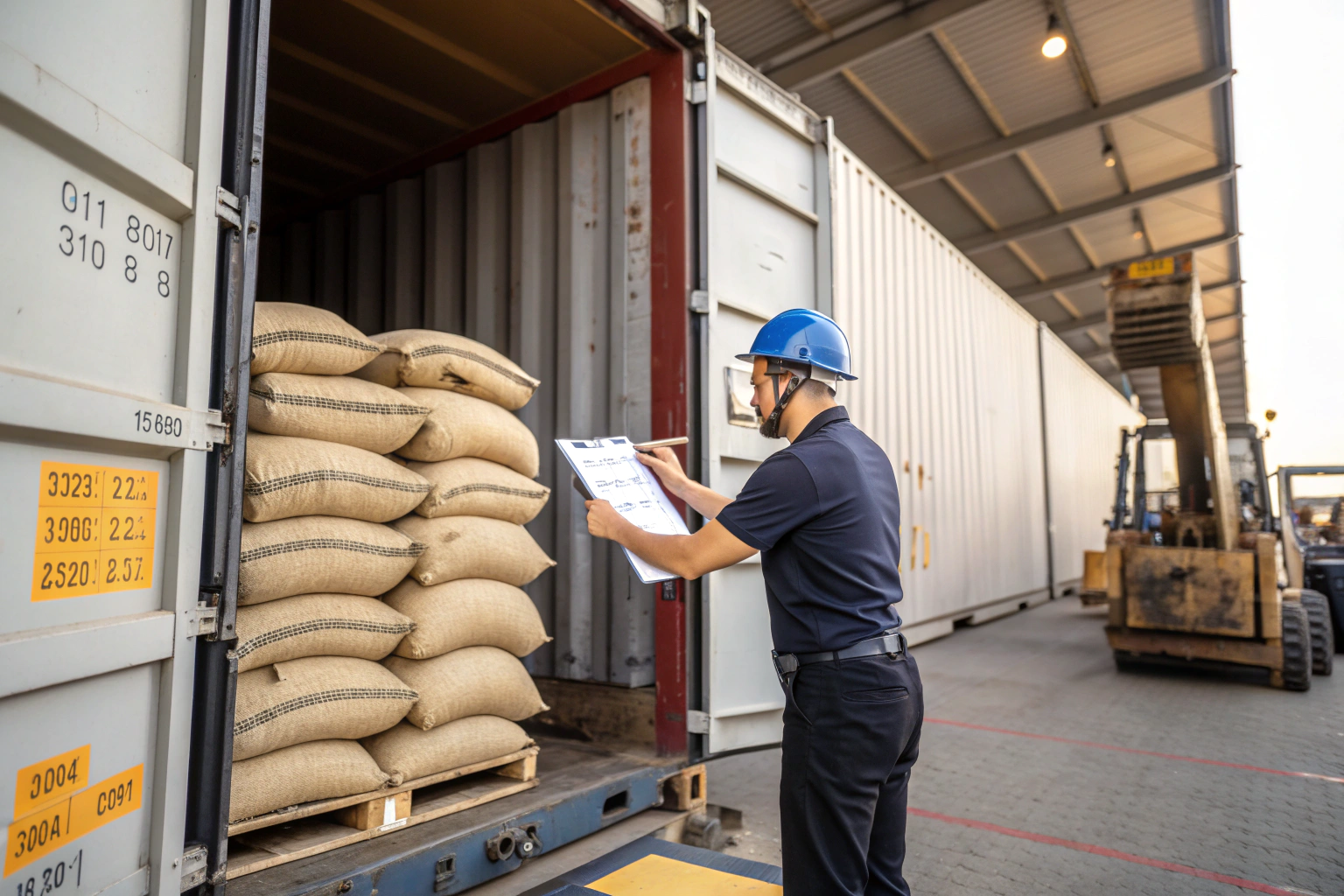
The ship is on the water. Your container of Yunnan Arabica is inside. It is worth tens of thousands of dollars. You are sleeping soundly, assuming everything is fine. Then the phone rings. There was a storm. The container was washed overboard. Or there was a fire in the hold. Or the reefer malfunctioned, if you made the mistake of using one for green coffee. Your coffee is gone. The question is not whether you are upset. The question is whether you are financially protected. If you did not buy cargo insurance, the answer is no. You are about to learn a very expensive lesson. I have seen this happen. I do not want it to happen to my clients.
Insuring your coffee shipment against all risks means purchasing a comprehensive marine cargo insurance policy that covers physical loss or damage from loading at our Baoshan warehouse to unloading at your roastery. At BeanofCoffee, I advise all my clients on the correct insurance coverage for their specific Incoterm. If you buy CIF, I arrange the insurance for you. If you buy FOB, I guide you on how to secure it yourself.
Insurance is not a grudge purchase. It is a small cost that protects a large investment. Let me walk you through the details so you can make an informed decision.
What Are the Different Types of Marine Cargo Insurance?
Marine cargo insurance is not a single product. It comes in different levels of coverage. The names sound old-fashioned, drawn from the centuries-old maritime insurance market. But the principles are simple and still apply today. You need to know which level you are buying.
The three main types of marine cargo insurance are Institute Cargo Clauses A, B, and C. Clause A is "all risks" coverage. Clause B covers a list of named perils. Clause C covers a shorter list of named perils. At BeanofCoffee, I recommend Clause A for all specialty coffee shipments. The premium is only slightly higher, but the protection is dramatically broader.
You want the broadest cover. Coffee is a high-value, perishable product. Do not skimp on the safety net.
What Is the Difference Between Clause A and Clause C Coverage?
Clause A is often called "all risks." It covers all risks of physical loss or damage to the cargo, except for a specific list of exclusions. These exclusions include things like willful misconduct by the insured, inherent vice of the goods, and war or strikes (which can be added as separate cover). Clause C is the narrowest cover. It only covers loss or damage caused by specific major perils, like the ship sinking, burning, or colliding. It does not cover theft, pilferage, water damage from rain, or rough handling. For a container of coffee, Clause C is inadequate. A container could be dropped during loading. A fork tine could pierce a bag. Water could seep in through a damaged door seal. These are the common, everyday risks of shipping. Clause A covers them. Clause C does not. The premium difference is often a few dollars per thousand dollars of cargo value. It is a bargain for the peace of mind.
What Does "All Risks" Really Mean in a Marine Policy?
"All risks" does not mean literally every imaginable risk. It is a legal term with a defined scope. It means the policy covers all fortuitous losses, meaning losses that are accidental and unexpected. It does not cover losses that are certain to happen, like the normal fading of coffee flavor over a long storage period. It does not cover losses caused by the inherent nature of the product, like mold growth if the coffee was shipped with too high a moisture content. This is the "inherent vice" exclusion. A good supplier ships coffee at the correct moisture level, so this is rarely an issue. The policy also excludes losses from delay alone. If the ship is late and the coffee loses some acidity, but is still usable, the policy will not pay for the loss of quality. However, if the delay is caused by a covered peril, like a storm, and the delay causes physical damage, the loss may be covered. The key is that the damage must be physical and caused by an accident.
How Is the Insured Value of Your Coffee Calculated?
You are not just insuring the cost of the green beans. You are insuring your entire investment in the shipment. The insured value should reflect the full commercial value of the cargo at the destination, not just the FOB price.
The standard practice is to insure for the CIF value of the goods plus 10%. This margin covers your administrative costs and a portion of your anticipated profit. At BeanofCoffee, I help my clients calculate the correct insured value for their shipment, ensuring they are not under-insured. An under-insured claim only pays a fraction of the loss.
The formula is simple. CIF value is the Cost of the goods, plus the Insurance, plus the Freight. You then add 10% of that total. This is the insured value. For example, if your coffee costs $30,000, the freight is $2,500, and the insurance is $300, your CIF value is $32,800. You insure for $36,080. This is the amount the insurer will pay if the cargo is a total loss. If you insure only the FOB cost of $30,000, you will not recover your freight cost or your lost profit. You are leaving money on the table in the event of a claim.

Why Should You Insure for CIF Plus Ten Percent?
The extra 10% is a standard practice in international trade. It represents the buyer's lost profit margin. If your coffee is lost, you not only lose the cost of the beans and the freight, but you also lose the profit you would have made from selling the roasted coffee. The 10% buffer partially compensates for this lost opportunity. It is a recognition that the cargo has a higher value at the destination than it does at the origin. This is a legitimate, standard insurance principle. Do not be afraid to ask for it. A good insurer understands this and will include it in the policy.
How Does Under-Insurance Affect a Partial Loss Claim?
A partial loss is more common than a total loss. Maybe a few bags are torn and spilled. Maybe water damage affects the top layer of pallets. The insurer will assess the value of the damaged portion. If you are under-insured, the claim payment will be reduced proportionally. This is the principle of "average." For example, if your cargo is worth $36,000, but you only insured it for $30,000, you are insured for 83% of its value. If you then have a $10,000 partial loss, the insurer will only pay $8,300. You are the insurer for the remaining 17%. This is a harsh penalty for a small saving on the premium. The lesson is clear. Insure for the full value. The premium difference is minimal. The protection is vital.
How Do You File a Claim If Your Coffee Arrives Damaged?
The coffee arrives. The container doors open. You see the damage. Wet bags. Mold. A strong odor. The first few hours are critical. The actions you take now will determine whether your insurance claim is successful or denied.
The claim process begins the moment you discover the damage. You must document everything with photos and video, notify the insurer immediately, and file a formal notice of loss with the carrier. At BeanofCoffee, I support my clients through this process. I provide the original shipping documents and the pre-shipment condition reports that are essential evidence for a claim.
The clock is ticking. A delayed claim is a denied claim. Act fast.

What Immediate Steps Should You Take Upon Discovering Damage?
Do not touch anything until you have documented it. Take clear, wide-angle photos of the container, showing the seal number. Take close-up photos of the damaged bags, the water stains, the mold. Take a video walkthrough of the entire container. Note the exact condition of the coffee. Then, notify your insurance broker or the insurance company's claims hotline. They will give you instructions. They may send a surveyor to inspect the cargo. Do not dispose of any damaged goods until the surveyor has seen them, unless they pose a health hazard. The damaged goods are evidence. Keep them. Your documentation is the foundation of your claim. A sloppy, undocumented claim is easy for the insurer to reject.
What Is the Role of the Cargo Surveyor in the Claims Process?
A cargo surveyor is an independent expert appointed by the insurer to investigate the claim. The surveyor will inspect the damaged cargo, review the shipping documents, and interview the relevant parties. They will determine the cause of the damage, the extent of the loss, and whether the loss is covered by the policy. The surveyor's report is the key document in the claims process. The insurer will rely on it heavily. Be cooperative with the surveyor. Provide them with all the information they request. Show them the damage. Explain what happened. The surveyor is not your enemy. They are a professional trying to establish the facts. A good relationship with the surveyor can smooth the claims process.
How to Choose a Reliable Insurance Partner for Coffee Shipments?
You do not want to buy insurance from a fly-by-night company. You want a partner with a strong financial rating and experience in handling coffee claims. Coffee is a specific type of cargo with specific risks.
A reliable insurance partner for coffee shipments should have a strong financial rating from an agency like A.M. Best or Standard & Poor's, and a track record of handling food cargo claims. At BeanofCoffee, I work with established marine insurers who understand the coffee trade. If you buy CIF, you benefit from my vetted insurance panel.
The insurer is your safety net. Make sure the net is strong enough to catch you.
What Questions Should You Ask a Prospective Marine Insurer?
Ask about their experience with coffee. "How many coffee claims have you handled in the last year?" Ask about their claims process. "What is your average turnaround time for a claim?" Ask about their network. "Do you have surveyors in the ports I receive at?" Ask about their financial strength. "What is your A.M. Best rating?" A professional insurer will answer these questions readily. If they are evasive, walk away. You want an insurer who is knowledgeable, responsive, and financially secure. The premium is not the only factor. The service in the event of a claim is just as important.
Why Does a Vetted Insurer on a CIF Contract Benefit You?
When you buy CIF, I arrange the insurance. This means I choose the insurer. I choose insurers I have worked with for years. Insurers who have paid claims fairly and promptly. This removes the burden of choosing an insurer from you. It also gives you the benefit of my experience. If you are a new importer, you may not know the insurance market. I do. I have been shipping coffee for years. I know which insurers are reliable and which are not. By buying CIF, you leverage this experience. The insurance cost is included in the CIF price. It is a simple, efficient, and safe way to protect your shipment. You sleep better, and so do I.
Conclusion
Insuring your coffee shipment is not an optional extra. It is an essential part of the business. The ocean is a risky place. Storms, accidents, theft, and handling damage are all real possibilities. A comprehensive "all risks" policy, Clause A, protects you against these perils. You must insure for the full CIF value plus 10% to avoid the trap of under-insurance. If a loss occurs, act fast, document everything, and cooperate with the surveyor. And finally, choose your insurance partner carefully, or simply buy CIF and let me handle it for you. The small cost of the premium is nothing compared to the financial catastrophe of an uninsured loss. It is an investment in security, in peace of mind, and in the long-term health of your coffee business.
Let's make sure your next shipment is fully protected. Contact me, Cathy Cai, at cathy@beanofcoffee.com. I will send you a sample insurance policy, explain the coverage terms in plain English, and give you a quote for a CIF shipment to your port. We will make sure your coffee is covered from our farm gate to your roastery door. No gaps. No surprises. Just solid, professional protection.