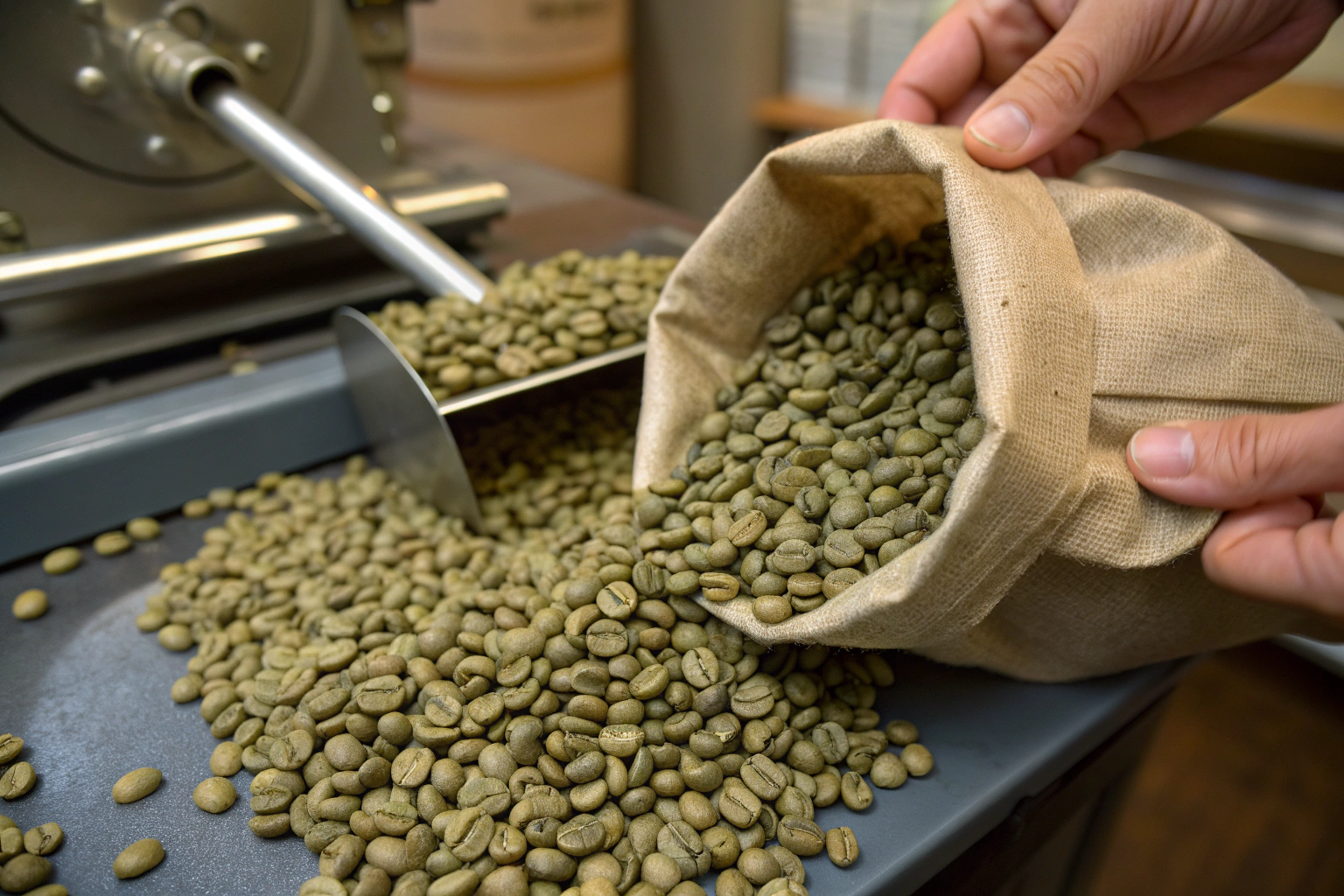
You open a bag of green coffee. You pour some beans into your hand. They are a jumble. Some big. Some small. Some long. Some round. You close the bag and move on. But wait. That jumble is not just an aesthetic issue. It is a quality signal. It is a predictor of how the coffee will roast, how it will taste, and how much of it will be wasted. A premium Arabica lot is not a random mix. It is a deliberate selection of uniform, same-sized beans. This is not about vanity. It is about physics, chemistry, and economics. I spend a significant part of my processing budget on achieving this uniformity. Let me explain why it matters so much to your cup.
Bean size uniformity is a mark of premium Arabica because it ensures even heat transfer during roasting, consistent flavor extraction, and a predictable final product. At BeanofCoffee, we use a series of precision screens and gravity tables to sort our export lots by size. A screen size 17/18 lot is not a label. It is a physical guarantee of uniformity.
Uniformity is not a bonus. It is the baseline for a professional coffee. Let me show you what happens when the beans are not uniform, and how we achieve the consistency you need.
How Does Uneven Bean Size Ruin a Roast Batch?
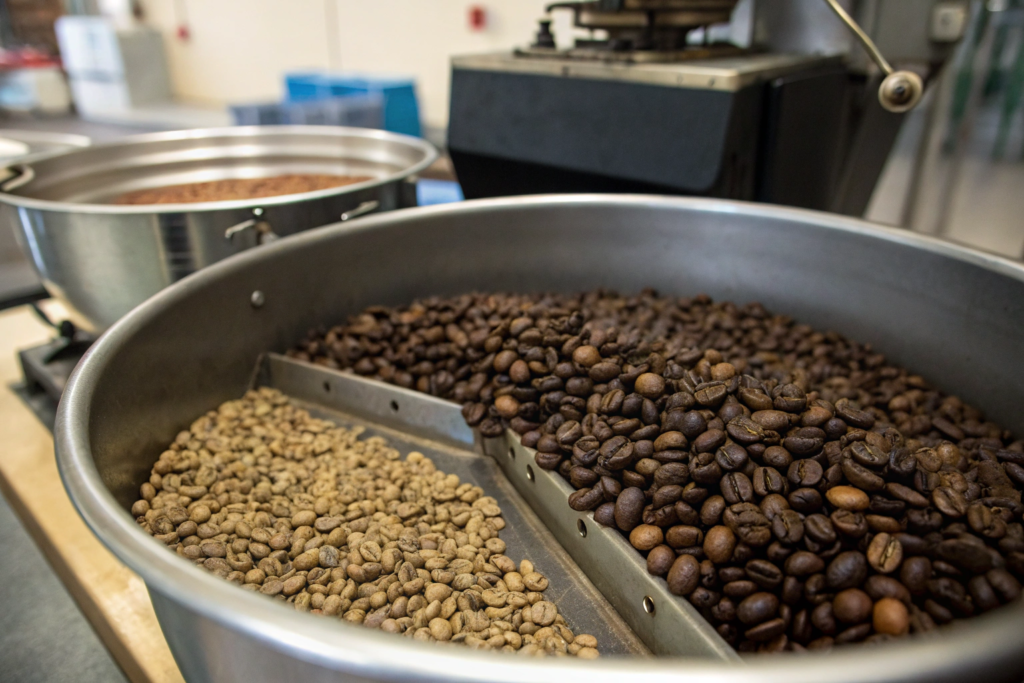
The roaster is a drum. Heat enters. Beans tumble. If all the beans are the same size and density, they all receive the same amount of heat in the same amount of time. They all reach first crack together. They all develop at the same rate. This is the ideal scenario. The result is a batch of coffee that is uniformly roasted, with a consistent flavor profile.
Uneven bean size ruins a roast batch because small beans roast faster than large beans. In the same drum, under the same heat, the small beans will be dark and oily while the large beans are still light and underdeveloped. At BeanofCoffee, our sorting process eliminates this problem before the beans ever reach your roaster.
The result of uneven size is a roast that is a compromise. Some beans are scorched. Some are under-roasted. The cup is a muddled mix of bitter and sour notes. The sweetness is lost. The acidity is harsh. It is a mess.
Why Do Small and Large Beans Roast at Different Rates?
This is a simple physics problem. Heat transfer is a function of surface area to volume ratio. A small bean has a larger surface area relative to its volume. It absorbs heat quickly. A large bean has a smaller surface area relative to its volume. It absorbs heat more slowly. Think of a pebble and a boulder in a campfire. The pebble gets hot fast. The boulder stays cool for a long time. The same principle applies in the roaster. A small bean will hit first crack two minutes before a large bean. By the time the large bean is properly developed, the small bean is already entering second crack, or worse, burning. This difference in roast development creates a wide spectrum of flavors in a single batch, none of them clean.
How Does Roast Inconsistency Translate to a Muddy Cup Profile?
When a batch is roasted unevenly, the cup profile is a blend of the under-developed and the over-developed. The under-developed beans contribute grassy, sour, and astringent notes. They taste like raw vegetables. The over-developed beans contribute bitter, smoky, and carbonized notes. They taste like ash. The hoped-for sweet spot, the caramelized sugars and the balanced acidity, is lost in the noise. The cup is not just "bad." It is confused. It lacks clarity. This is why a cheap, unsorted coffee can never taste like a premium, sorted coffee, no matter how skilled the roaster. The roaster cannot fix a fundamental flaw in the raw material. The sorting must happen at the mill.
How Is Bean Size Measured and Standardized in the Coffee Trade?
The coffee trade has a precise language for size. It is not subjective. It is measured with screens, flat metal plates with precisely sized holes. The beans are poured onto the screens and shaken. The beans that stay on top of a screen are that screen size. The beans that fall through are smaller.
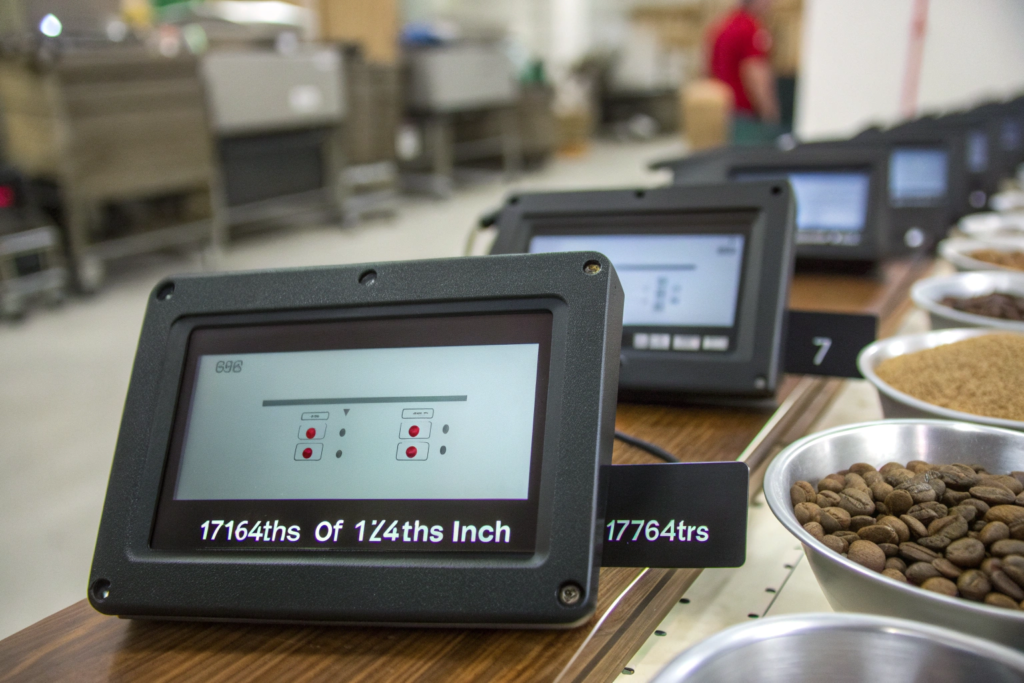
Bean size is measured using numbered screens, where the number represents the diameter of the holes in 1/64ths of an inch. A screen size 17 bean is 17/64ths of an inch across. At BeanofCoffee, we use a series of these screens to separate our Arabica into precise size grades, including the premium 17/18 grade.
The system is universal. A screen size 17 bean in Yunnan is the same size as a screen size 17 bean in Colombia. This allows buyers to compare lots across origins with confidence.
What Does the "Screen 17/18" Classification Mean?
Screen 17/18 is the premium grade for large Arabica beans. It means the beans are predominantly 17/64ths and 18/64ths of an inch in size. These are large, well-developed beans. They are the result of good genetics, good nutrition, and good growing conditions. They command a higher price because they are rarer and more desirable. A screen 17/18 lot is the flagship of a quality-focused farm. It is what you buy when you want the best physical grade available. Our Baoshan high-altitude lots consistently produce a high percentage of screen 17/18 beans. The cool, slow maturation of the high altitude allows the beans to grow large and dense. This is a physical manifestation of terroir.
Why Do Screen Numbers Vary by Origin and Variety?
The screen number is a physical measurement, but the typical screen size varies by origin and variety. A peaberry, which is a single, round bean from a cherry that had only one seed, is a different shape and is sorted separately. A Pacamara variety from Central America produces enormous beans. A Geisha from Panama produces elongated, smaller beans. Our Catimor variety in Yunnan naturally produces a bean in the 16 to 18 screen range. The point is not that one screen size is inherently better than another. The point is that the size must be uniform within the lot. A lot of uniform screen 15 beans is better than a lot that is a mix of screen 15 and screen 18 beans. The screen number is a tool for consistency, not a universal quality ranking.
Why Does Density Matter Alongside Size for Premium Roasting?
Size is one part of the equation. Density is the other. A bean can be large but puffy, full of air pockets. This is a low-density bean. It roasts unevenly and tastes hollow. A dense bean, even if it is slightly smaller, is packed with sugars and organic acids. It roasts evenly and tastes rich.
Density is the weight of the bean relative to its size. A high-density bean is a sign of a well-developed, healthy coffee. At BeanofCoffee, we use a gravity table to separate beans by density after they are sorted by size. This dual sorting ensures that the beans in your lot are not only the same size but also the same physical weight, guaranteeing a consistent roast.
Size and density work together. A uniform lot is uniform in both dimensions. This is the ultimate goal.
How Does a Gravity Table Separate Beans by Weight?
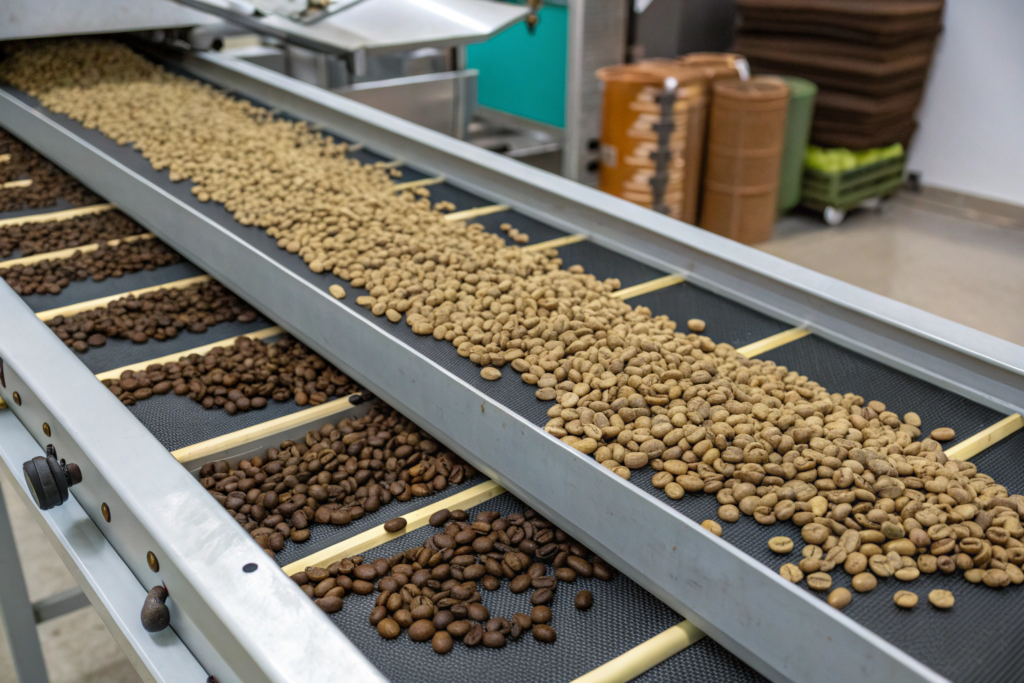
A gravity table is a clever piece of engineering. It is a flat, vibrating, tilted table with a stream of air blowing up through it. The beans are fed onto the high corner. The vibration moves them down the table. The air lifts the lighter beans. The heavier, denser beans stay low and move to one side. The lighter beans are blown to the other side. The result is a continuous separation of beans by density. This is a physical, non-destructive process. It does not damage the beans. It simply sorts them by their mass. We run our export lots through the gravity table after the screen sizing. The combination of the two processes gives us a lot that is extraordinarily uniform. This is the foundation of a premium product.
What Happens to the Lighter, "Floater" Beans in the Export Process?
The lighter beans, the "floaters," are a defect class. They are caused by poor development, drought stress, or improper drying. They have a lower density and a lower sugar content. They roast faster and taste papery. They dilute the quality of the cup. We do not export floaters. They are separated out in the wet mill, during the washing process, and again in the dry mill, on the gravity table. They are sold to the local commodity market, where they are used for instant coffee or low-grade blends. This ruthless separation is a cost. It reduces our exportable volume. But it is a necessary cost. It is what protects the integrity of our premium lots. A buyer who buys a BeanofCoffee lot knows that the floaters have been removed. They are not paying for defects.
How Does Uniformity Reduce Waste and Improve Your Profit Margin?
Uniformity is not just a quality issue. It is a financial issue. A lot of uniform beans roasts more efficiently. There is less waste from scorched or under-developed beans. The extraction is more consistent, so the customer gets a better cup. This translates directly to your bottom line.
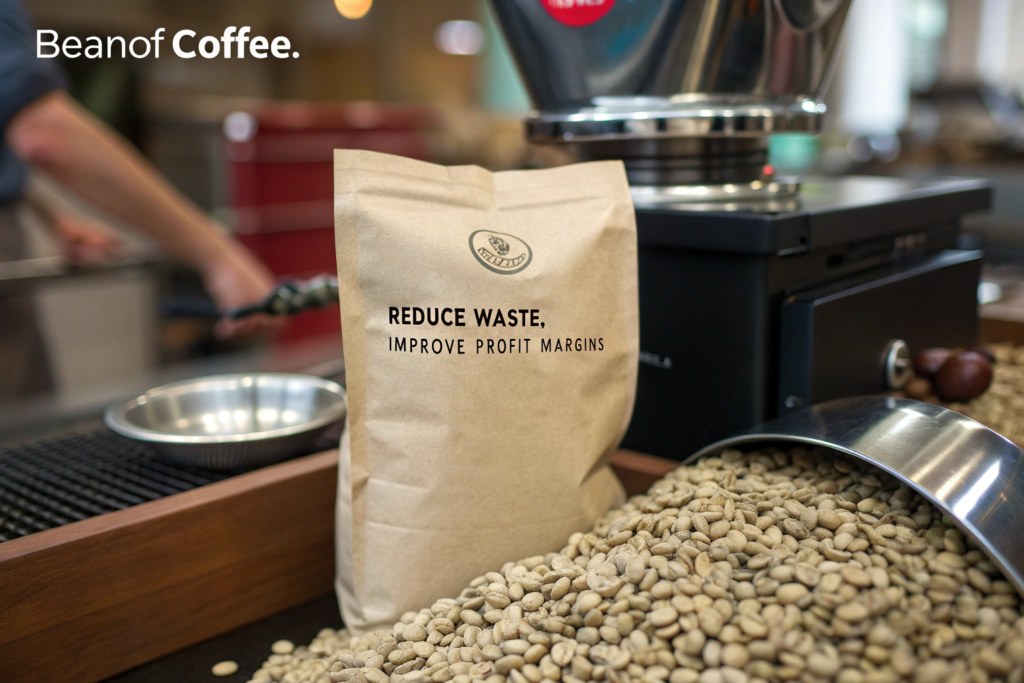
Uniform beans reduce waste and improve profit margins by maximizing the yield of a properly roasted batch. At BeanofCoffee, my clients consistently report higher roast yields and better cupping consistency with our sorted lots compared to unsorted commodity coffee. The premium paid for a uniform lot is an investment in efficiency, not an added cost.
The cheap, unsorted bag might have a lower price tag. But the hidden costs of waste, inconsistency, and customer dissatisfaction far outweigh the initial saving.
How Does Even Roasting Increase the Usable Yield Per Batch?
When a batch roasts evenly, the entire batch is at the correct roast level at the same time. The roaster can stop the roast at the precise moment of peak development. There is no need to over-roast to try to "catch up" the under-developed beans. There is no need to under-roast to avoid burning the small beans. The entire batch is usable. The yield, the percentage of green coffee weight that ends up as sellable roasted coffee, is maximized. An uneven batch might have a 15% yield loss due to burnt or under-developed beans that must be discarded. A uniform batch has a yield loss of only 2% or 3%. Over the course of a year, this difference adds up to thousands of dollars in saved green coffee. The uniform lot is actually cheaper in the long run, even if the FOB price is higher.
How Does Consistency in the Cup Protect Your Brand Reputation?
Your brand is built on trust. A customer buys a bag of your Yunnan single origin. They love it. They buy it again. It tastes the same. This consistency is the foundation of loyalty. If the next bag tastes different, the trust is broken. Uniform beans are a prerequisite for this consistency. They ensure that every roast batch behaves the same way. They ensure that every cup has the same flavor profile. The screen size and density sorting are the physical guarantees of this consistency. They are not just technical details. They are the foundation of your brand promise. I understand this. I sort my coffee to protect your brand. When you buy from me, you are buying the physical consistency that allows you to deliver a consistent product, bag after bag.
Conclusion
Bean size uniformity is not a superficial concern. It is a deep, structural factor that determines the quality of the roast, the clarity of the cup, and the profitability of the operation. A premium Arabica is premium because it has been physically sorted to a precise standard. The beans in the bag are the same size and the same density. They roast together. They extract together. They deliver a consistent, clean, and flavorful cup every time. This is achieved through careful processing, precise screening, and gravity table separation. It is an investment in quality that pays dividends in reduced waste and a protected brand reputation. When you see "Screen 17/18" on an offer sheet, you now know what it means. It means the coffee has been prepared to a professional standard. It means the roaster can do their best work. It means the customer will be satisfied.
Taste the difference that uniformity makes. Contact me, Cathy Cai, at cathy@beanofcoffee.com. I will send you a sample of our current screen 17/18 washed Yunnan Arabica. I will also send you the physical analysis report, showing the size distribution and the density data. Cup it against an unsorted coffee and see the difference for yourself. The premium is in the preparation. Let's put it to work for your brand.