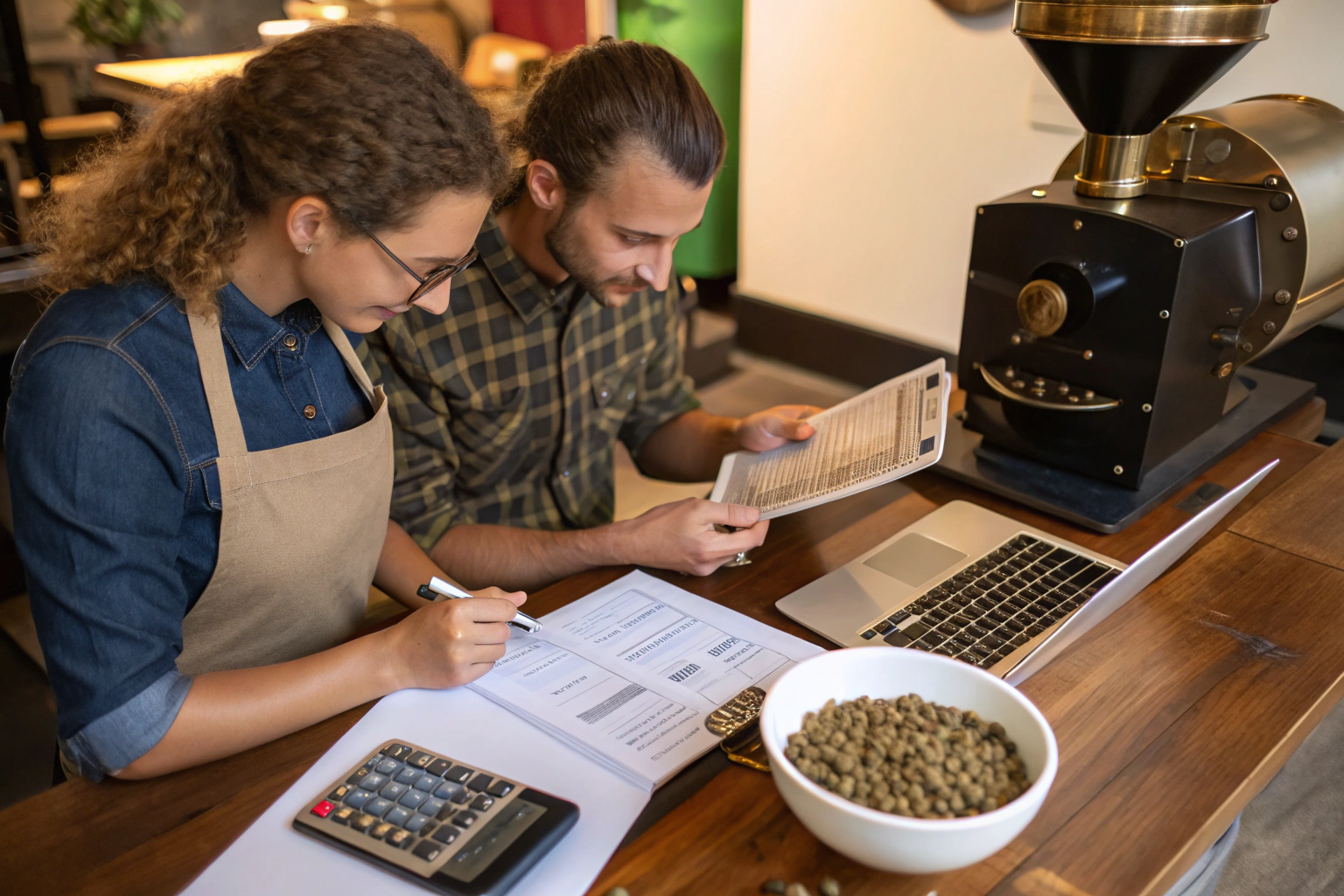
I run BeanofCoffee, a coffee exporter in Yunnan, China. We own more than 10,000 acres in Baoshan City. We sell Catimor, Arabica, and Robusta. We ship to North America, Europe, and Australia. Buyers like Ron ask me about green bean prices all the time. Ron is 44. He owns a company in America. He cares about price and timeliness. He roasts his own coffee. He sells to cafes and online. He asked me a simple question last month. He asked how to turn a green bean price into a roasted coffee price. It sounds easy. It is not. Many roasters get it wrong. They forget the roast loss. They forget the labor. They forget the packaging. Then they wonder why they make no money. So let me show you how to do the math. The right way.
To price your roasted coffee using green bean costs, you start with the green bean price per pound. Then you add the roast loss factor. Then you add labor, packaging, shipping, and overhead. Then you add your profit margin. The basic formula is: green bean cost divided by roasted yield equals cost per roasted pound. Then add all other costs. Then set your price. A 15% roast loss means you need 1.18 pounds of green beans for every 1 pound of roasted coffee. So a $3.00 per pound green bean becomes about $3.53 per roasted pound before other costs. That is the starting point. Then you build the full price.
So, what does this mean for you? It means you should not guess. You should measure. You should know your roast loss. You should know your labor cost. You should know your packaging cost. Then you should price with confidence. At BeanofCoffee, we share moisture data and yield estimates with buyers. We want them to succeed. A successful roaster buys more coffee. That is good for everyone. Let me break down the pricing process step by step.
How Do You Calculate Cost Per Roasted Pound?
The first step is the most important. You must know your cost per roasted pound. This is not the same as your green bean price. The green bean price is what you pay for raw coffee. The roasted cost is what you pay after the roast. The difference is the roast loss. If you ignore the roast loss, you will underprice your coffee. You will lose money on every bag. I have seen this happen. A roaster priced his coffee at $12 per pound. He thought he was making $4 per pound. But after roast loss and packaging, he was making $1.50. He was working for free. So do the math. Then price.
You calculate cost per roasted pound by dividing the green bean cost by the roasted yield. The roasted yield is 1 minus the roast loss percentage. For example, if green beans cost $3.00 per pound and the roast loss is 15%, the yield is 85%. So $3.00 divided by 0.85 equals $3.53 per roasted pound. That is your base cost. Then you add labor, packaging, shipping, and overhead. Then you add profit. That is your price. The formula is simple. But you must measure the roast loss for your own beans. Do not use a generic number.
Another way to look at this is to compare it to buying a whole chicken. You pay for the whole bird. But you only sell the meat. The bones and trim are the loss. Coffee works the same way. You pay for green beans. You sell roasted beans. The weight loss is your trim. You must account for it. So measure it. Then use it.
What Is the Roast Loss Factor for Green Beans?
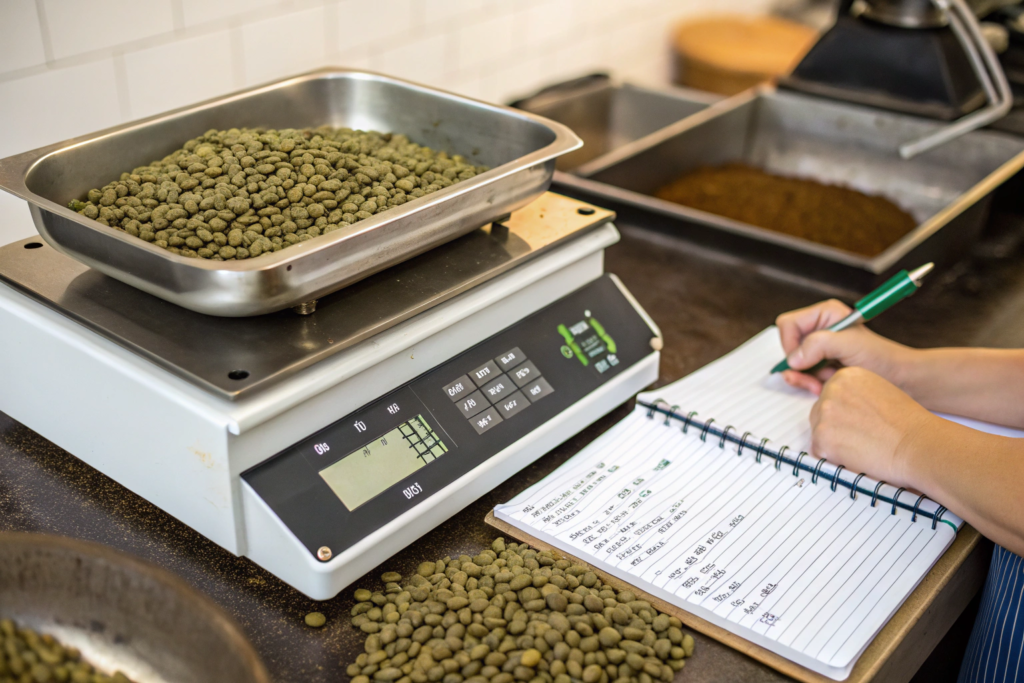
The roast loss factor is the percentage of weight lost during roasting. It usually ranges from 12% to 20%. Light roasts lose less. Dark roasts lose more. High-moisture beans lose more. Low-moisture beans lose less. The Specialty Coffee Association explains roasting and quality standards. The Roast Magazine shares practical roasting guides. I use these when I train our team. For our Yunnan Arabica, a medium roast usually loses 14% to 17%. For our Catimor, it is similar. For Robusta, it may be a little different. So test your own beans. Then use your own number. A generic number will mislead you. So measure. Then price.
I also tell buyers to test three roasts. Light, medium, and dark. Weigh the beans before and after. Record the loss. Then pick the roast you sell most. Use that loss number. That is your baseline. Update it when the crop changes. A new crop may have different moisture. That changes the loss. So check it every season. That is how you stay accurate.
How Do You Add Labor and Packaging Costs?
You add labor by tracking your time. How long does it take to roast, cool, pack, and label? Multiply that time by your hourly rate. Then divide by the number of pounds in the batch. That gives you labor cost per pound. You add packaging by adding the bag cost, the label cost, and the box cost. Then divide by the pounds per bag. The Coffee Institute shares business and quality resources. The Barista Hustle shares practical coffee business guides. I use these when I help buyers plan. A bag may cost $0.50. A label may cost $0.10. A box may cost $0.30. That is $0.90 per bag. If the bag holds one pound, that is $0.90 per pound. That adds up fast. So do not forget it. Then add it to your base cost.
| Cost Item | Example Cost Per Pound |
|---|---|
| Green beans | $3.00 |
| Roast loss adjustment | $0.53 |
| Labor | $0.75 |
| Packaging | $0.90 |
| Shipping | $0.50 |
| Overhead | $0.40 |
| Total cost | $6.08 |
| Profit margin (30%) | $1.82 |
| Selling price | $7.90 |
This table is a simple example. Your numbers will be different. But the structure is the same. Use it. Then build your own.
What Costs Get Left Out of Roasting Math?
Most roasters forget something. I have seen it many times. They remember the green beans. They remember the bags. They forget the small costs. The gas for the roaster. The electricity. The rent. The insurance. The marketing. The sample costs. The failed roasts. These small costs add up. They can turn a profitable coffee into a losing coffee. So you must list every cost. Then add them. Then price. Do not guess. Do not hope. Do the math.
Costs that get left out of roasting math include gas, electricity, rent, insurance, marketing, samples, failed roasts, equipment maintenance, software, and your own time. These costs are easy to forget because they are not tied to one bag. But they are real. You must allocate them across your production. A simple way is to add a percentage to your base cost. Many roasters add 15% to 25% for overhead. Then they add profit. If you skip this step, your price is too low. You are subsidizing your customers. So include everything. Then price with confidence.
So, what should you do? Build a full cost list. Write it down. Then review it every quarter. A cost that was small last year may be big this year. Gas prices change. Rent changes. Packaging changes. So review. Then update. That is how you stay profitable.
How Do You Allocate Overhead Costs Per Bag?
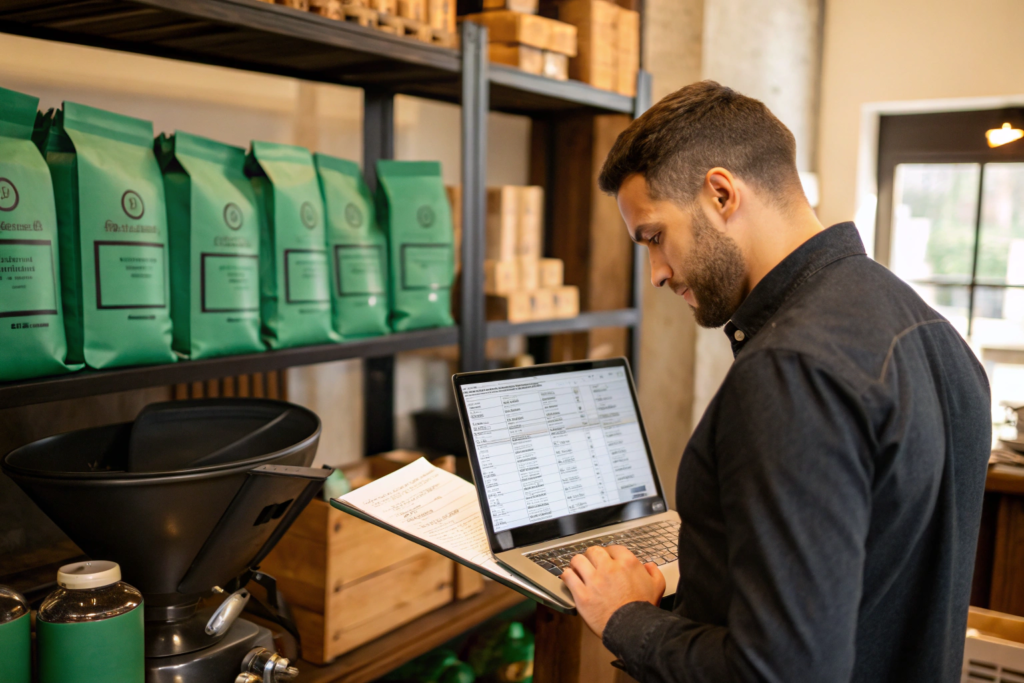
You allocate overhead by dividing your total overhead by your total production. For example, if your monthly overhead is $2,000 and you roast 1,000 pounds, your overhead is $2.00 per pound. That is a big number. But it is real. You must cover it. The Trade.gov site offers small business export and finance guidance. The SCORE site offers free small business mentoring. I use these when I advise buyers. A simple allocation works. Do not overcomplicate it. Total overhead divided by total pounds. Then add it to your cost. That is your real cost. Then price. That is how you stay in business.
I also tell roasters to track their overhead monthly. A spreadsheet is enough. List rent, utilities, insurance, software, and marketing. Add them up. Then divide by pounds roasted. Then check the number. If it is too high, find savings. If it is reasonable, keep going. That is how you control overhead. That is how you protect your margin.
Why Do Failed Roasts and Samples Matter?
Failed roasts and samples matter because they cost money. A failed roast is green coffee you cannot sell. A sample is coffee you give away. Both reduce your sellable pounds. The Daily Coffee News covers roasting and business topics. The Perfect Daily Grind shares roasting and quality guides. I use these when I talk to roasters. A 5% failure rate means 5% of your green coffee is wasted. That adds to your cost. So track it. Then reduce it. Training helps. Better green coffee helps. Better equipment helps. But first, measure it. Then act. That is how you improve.
For Ron, this means he should track his roast failures. If he wastes 10% of his beans, he needs to raise his price by 10%. Or he needs to fix the process. Either way, he must know the number. So track it. Then decide.
How Should You Price for Wholesale vs Retail?
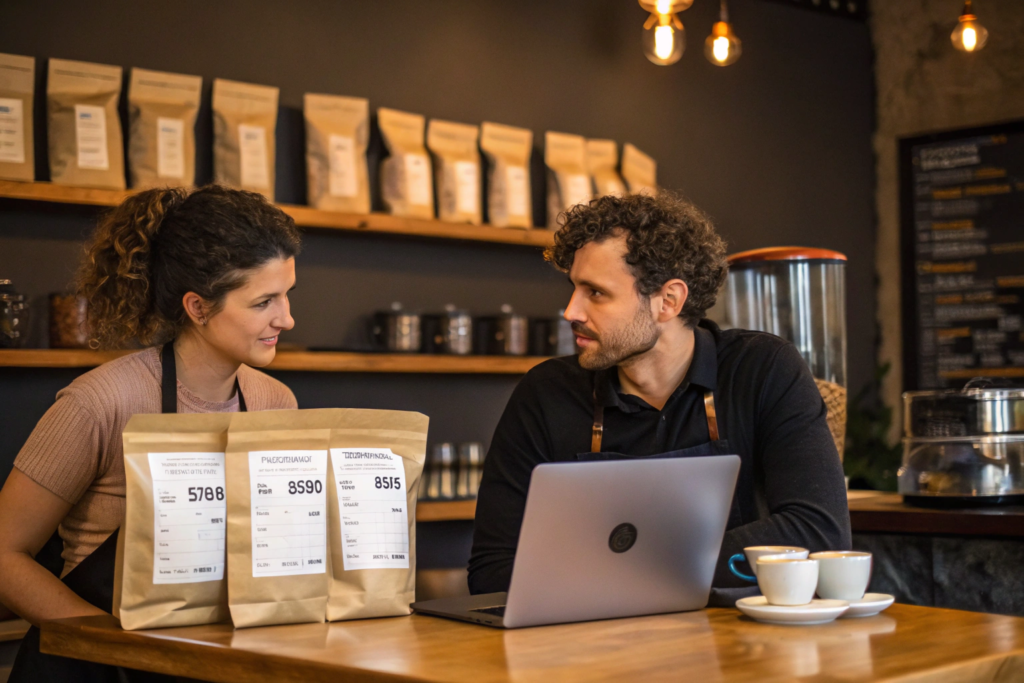
Wholesale and retail are different. Wholesale buyers want a lower price. They buy in volume. Retail buyers pay more. They buy small amounts. So you need two prices. Maybe three. A wholesale price. A retail price. A subscription price. Each price must cover your cost. Each price must leave a profit. If your wholesale price is too low, you lose money on every bag. If your retail price is too high, you lose customers. So you must find the balance. Then you must check it often. The market changes. Your costs change. So your prices must change too.
You price for wholesale and retail by setting different margins for different volumes. A common approach is to use a lower margin for wholesale and a higher margin for retail. For example, a 25% margin for wholesale and a 50% margin for retail. But the exact numbers depend on your market and your costs. You should also offer tiered pricing for larger wholesale orders. Then you should review your prices every quarter. If your green bean cost goes up, your price must go up. If your packaging cost goes down, you may lower your price or keep it and increase your margin. The key is to stay profitable at every tier.
So, what should you do? Build a pricing sheet. List your costs. List your margins. List your prices. Then share it with your team. Then check it every quarter. That is how you stay consistent. That is how you stay profitable.
What Margin Should You Use for Wholesale?
A common wholesale margin is 20% to 35%. But it depends on your market. A cafe may expect a lower price. A grocery store may expect a higher price. A subscription service may expect something in between. The National Coffee Association shares coffee market and consumption data. The Global Coffee Platform shares sustainable sourcing and business practices. I use these when I talk to buyers. A 25% margin is a safe starting point. Then adjust based on your costs and your competition. Do not go below 15%. That is too thin. A small cost increase can wipe out your profit. So protect your margin. Then grow your volume. That is the safe path.
I also tell roasters to know their break-even point. How many pounds must you sell to cover your costs? If you sell less, you lose money. If you sell more, you profit. So calculate it. Then plan your sales. That is how you stay in business.
How Do You Set Retail Prices Without Losing Customers?
You set retail prices by knowing your value. What makes your coffee special? Is it the origin? The roast? The story? The packaging? The service? If you have a strong value, you can charge more. If you do not, you must compete on price. The Specialty Coffee Association shares consumer and quality research. The Alibaba platform shows market prices for many products. I use these when I help buyers plan. A retail price that is too low tells customers your coffee is cheap. A retail price that is too high tells customers you are proud. The right price tells customers you are fair. So find the right price. Then tell your story. Then let the coffee speak.
For Ron, this means he should not compete on price alone. He should compete on quality and story. He should tell customers about the Yunnan farm. He should share the roast profile. He should show the moisture data. That story justifies a higher price. That story builds loyalty. So build the story. Then set the price. That is how you win.
How Do You Track and Adjust Pricing Over Time?
Pricing is not a one-time task. It is a habit. Costs change. Markets change. Customers change. If you set your price once and forget it, you will fall behind. I have seen roasters hold a price for two years. Then their green bean cost went up 30%. They had to raise prices overnight. Customers were upset. They lost business. So do not wait. Review your prices every quarter. Adjust when needed. Communicate clearly. That is how you stay ahead.
You track and adjust pricing by reviewing your costs and margins every quarter. Compare your current green bean cost with your last purchase. Compare your packaging cost. Compare your labor cost. Then check your selling price. If your margin has dropped, raise your price. If your margin has grown, you may keep the price and enjoy the profit. You should also track your sales volume. If a price increase reduces volume too much, you may need to adjust. The goal is to stay profitable and competitive. A quarterly review keeps you on track.
So, what should you do? Build a simple dashboard. Track five numbers. Green bean cost. Roast loss. Packaging cost. Average selling price. Monthly volume. Then review them every quarter. If one number changes, adjust. That is how you stay in control. That is how you stay profitable.

How Often Should You Update Your Prices?
You should update your prices at least every quarter. If your costs change fast, update more often. If your market is stable, update less often. The Freightos index shows freight and commodity cost trends. The World Bank commodity markets share price and market outlooks. I use these when I advise buyers. A quarterly review is a good habit. It is often enough to catch changes. It is not so often that you confuse customers. So set a date. Then review. Then adjust. That is the rhythm.
I also tell roasters to tell customers early. If a price increase is coming, give notice. A 30-day notice is fair. It gives customers time to adjust. It also shows respect. Respect builds loyalty. So communicate. Then adjust. That is how you keep customers. That is how you keep trust.
What Do You Do When Green Bean Prices Spike?
When green bean prices spike, you have options. You can raise your price. You can reduce your margin. You can change your blend. You can buy ahead. You can switch origins. The CBP page explains U.S. customs entry and tariffs. The USTR publishes trade policy information. I use these when I help buyers plan. A spike is not a disaster. It is a signal. It tells you to review your plan. Maybe you need a backup origin. Maybe you need a long-term contract. Maybe you need a different blend. So use the spike as a wake-up call. Then act. Do not panic. Plan. Then execute. That is how you survive a spike. That is how you grow.
For Ron, this means he should have a backup plan. If Brazilian coffee gets too expensive, he can use more Yunnan coffee. If Yunnan coffee gets too expensive, he can use more Brazilian. A flexible blend protects his margin. So build flexibility. Then use it. That is how you stay strong.
Conclusion
Pricing your roasted coffee using green bean costs is not hard. But it takes discipline. You must know your green bean cost. You must know your roast loss. You must add labor, packaging, shipping, and overhead. You must set a margin for wholesale and retail. You must review your prices every quarter. You must adjust when costs change. You must communicate with customers. If you do these things, you will stay profitable. You will stay competitive. You will stay in business. A roaster who knows the math is a roaster who can grow. So do the math. Then price with confidence. Then watch your business grow.
At BeanofCoffee, we help roasters build better pricing. We own more than 10,000 acres in Baoshan City, Yunnan. We export Catimor, Arabica, and Robusta. We work with large buyers, brand owners, distributors, and trading companies. We can share green bean prices, moisture data, and yield estimates. We can help you compare origins and plan your blends. If you want to price your roasted coffee better, please contact Cathy Cai at cathy@beanofcoffee.com. She will help you with samples, pricing, specifications, and shipping plans. You can also visit BeanofCoffee to learn more. Let us build a profitable coffee business together.