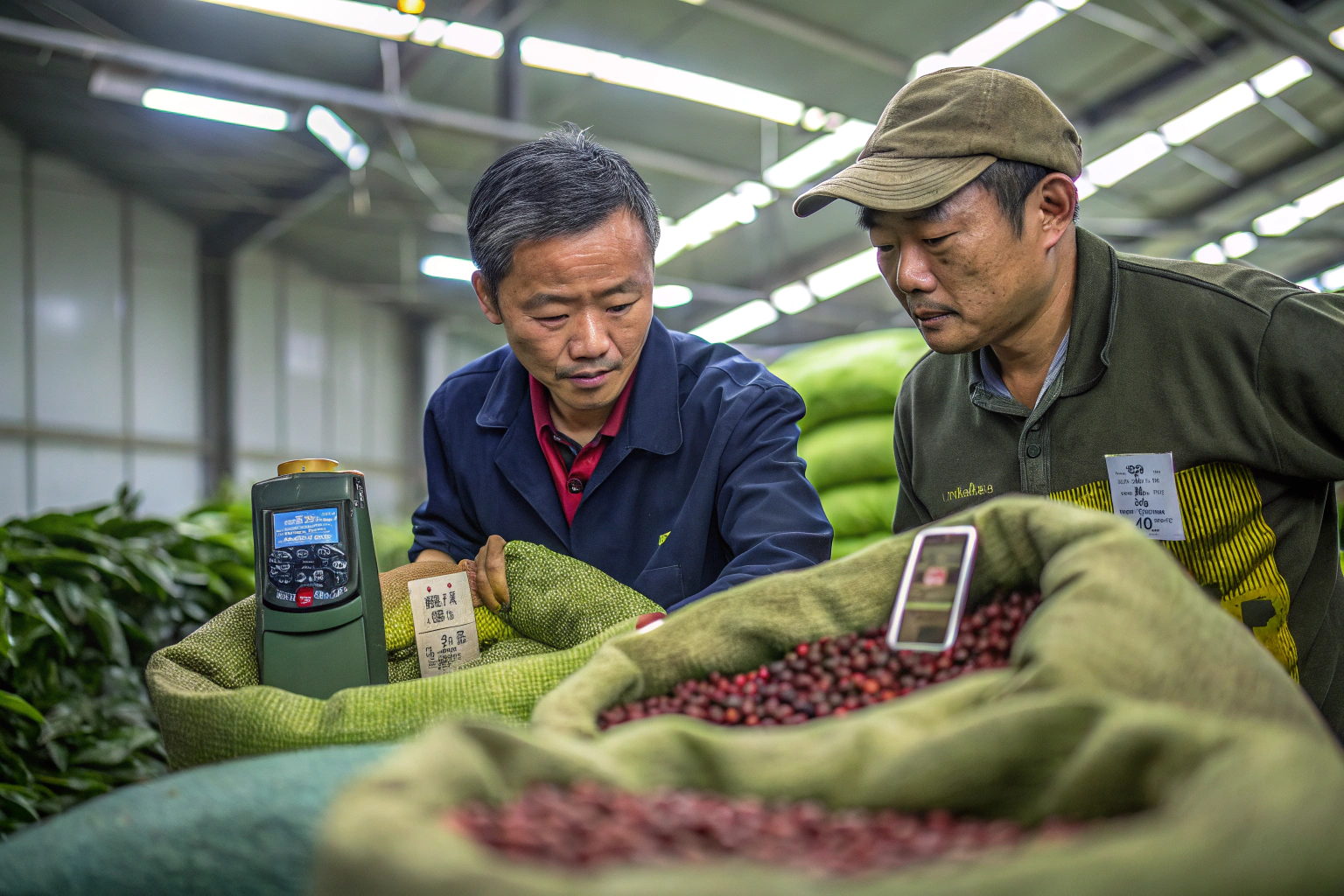
I run BeanofCoffee, a coffee exporter in Yunnan, China. We own more than 10,000 acres in Baoshan City. We sell Catimor, Arabica, and Robusta. We ship to North America, Europe, and Australia. I have been in this business for years. I have seen honest sellers. I have also seen cheaters. Some cheaters work in Asia. That is the truth. It is not a comfortable truth. But buyers need to hear it. Ron is 44. He owns a company in America. He cares about price, quality, and timeliness. He sources on Google, Alibaba, and at trade shows. He is confident. He likes to lead. But even a confident buyer can be fooled. Fraud does not care about confidence. It cares about gaps. So let me show you the common schemes. Then you can close the gaps.
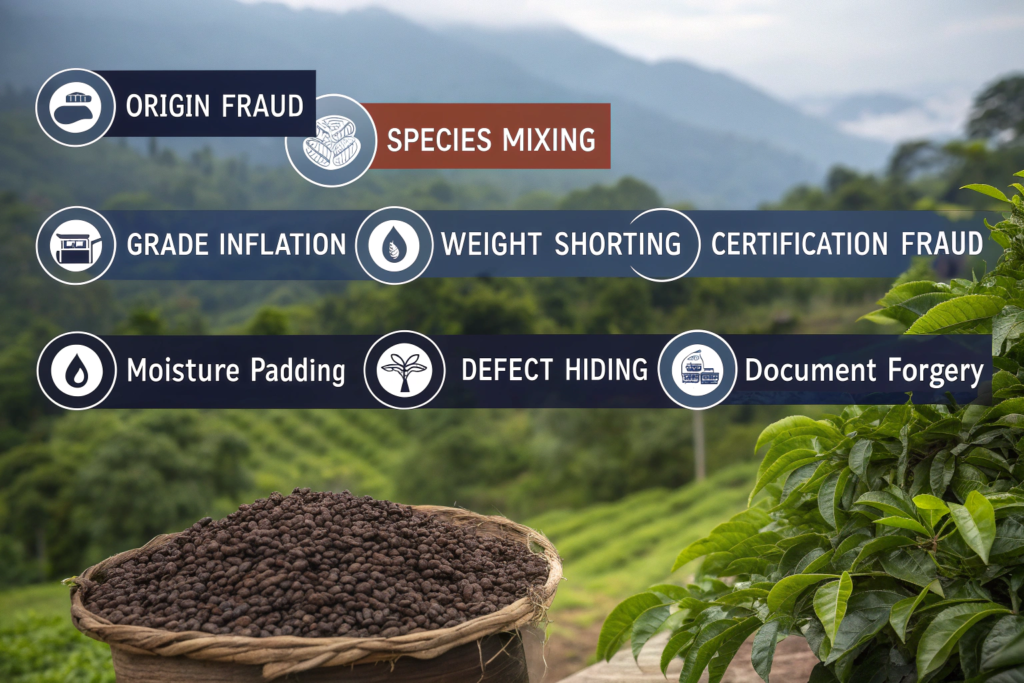
The most common coffee fraud schemes in Asia include origin fraud, species mixing, grade inflation, weight shorting, fake certifications, moisture padding, defect hiding, and document forgery. Origin fraud sells cheap coffee as a famous region. Species mixing hides Robusta inside Arabica. Grade inflation sells low-grade beans as high-grade. Weight shorting sends fewer bags than the invoice. Fake certifications copy real labels. Moisture padding adds water weight. Defect hiding mixes bad beans with good ones. Document forgery fakes bills of lading and certificates. These schemes cost buyers millions each year. They also hurt honest suppliers who compete on real quality.
So, what does this mean for you? It means you should not trust a label. You should trust a process. You should ask hard questions. You should test the coffee. You should check the documents. You should visit the mill if you can. At BeanofCoffee, we welcome these checks. We do not hide. We show. That is how we build trust. Let me walk you through the schemes one by one. Then I will show you how to protect yourself.
How Do Coffee Frauds Happen in Asia?
Fraud does not happen in a dark room. It happens in plain sight. It happens in a warehouse. It happens on a loading dock. It happens in a document file. The tools are simple. A different bag. A different label. A different number. The trick is to make the buyer see what they expect to see. If you expect Yunnan Arabica, you may not question a bag that says Yunnan Arabica. That is the gap. Fraud lives in that gap.
Coffee frauds happen in Asia because the supply chain has many hands, many documents, and many chances to switch, mix, or mislabel. Small farms sell to collectors. Collectors sell to mills. Mills sell to exporters. Exporters sell to traders. Each handoff is a chance for fraud. Weak rules, low inspection rates, and long distances make it easier. A buyer who only checks the final bag may miss what happened earlier. So fraud is not one act. It is a chain of small choices. The best defense is a chain of small checks.
Another way to look at this is to compare it to a relay race. Each runner passes a baton. If one runner switches the baton, the next runner may not notice. The coffee moves the same way. If one hand switches the beans, the next hand may not know. So you must check the baton at every handoff. That is how you stop fraud.
Why Is Asia a Target for Coffee Fraud?
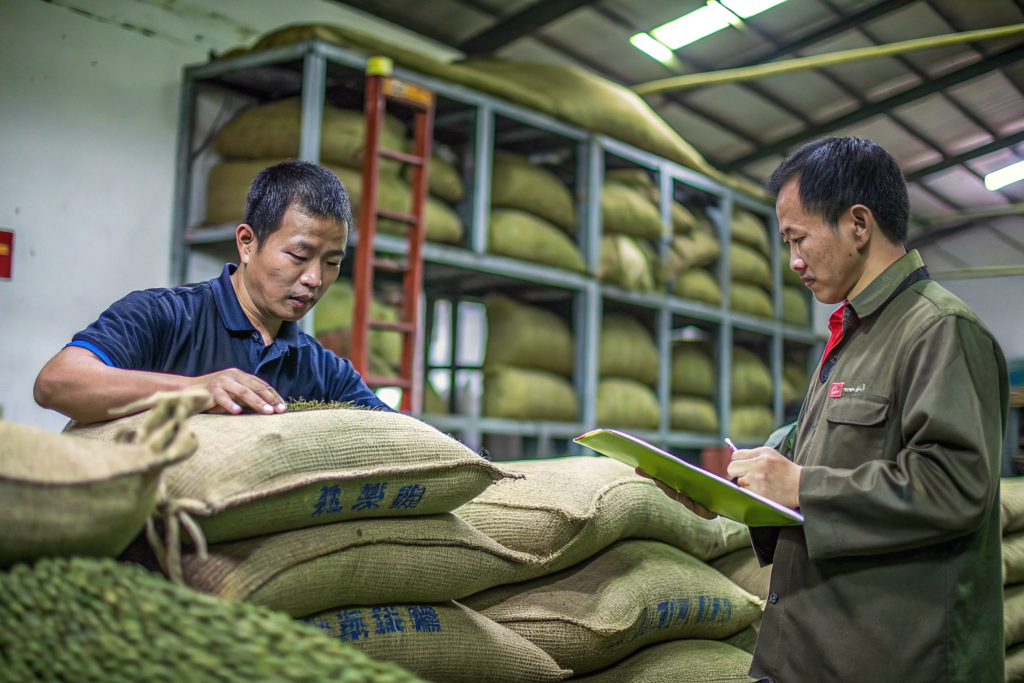
Asia is a target for several reasons. It produces a lot of coffee. It has many small farms. It has many traders. It has fast-growing demand. It also has varying enforcement. Some countries have strong rules. Some have weak rules. The International Coffee Organization tracks production and trade across Asia. The Daily Coffee News reports on fraud cases and market issues. I use these to stay informed. A region with weak enforcement is a region where cheaters feel safe. That does not mean all Asian suppliers cheat. It means buyers must be more careful. So be careful. Then you can find the honest ones. They are there. I work with them every day.
I also tell buyers that price pressure creates fraud. If you push for the lowest price, you may push a seller to cheat. A fair price reduces the temptation. A fair price also attracts honest suppliers. So think about your buying strategy. Cheap is not always safe. Safe is always better.
What Makes Coffee Easy to Fake?
Coffee is easy to fake because beans look similar. A green bean from one region can look like a green bean from another. A Robusta bean can be mixed with Arabica. A low-grade bean can be hidden in a high-grade lot. The Specialty Coffee Association explains how quality is graded and cupped. The Perfect Daily Grind shares practical quality control tips. I use these when I train our QC team. Visual checks help. But they are not enough. You need moisture tests. You need defect counts. You need cupping. You need documents. No single check catches every fraud. So use several checks. That is how you protect yourself.
A buyer should also know the difference between a mistake and a fraud. A mistake is an error. A fraud is a choice. A wrong label can be a mistake. A fake certificate is a fraud. So ask questions. Then judge the answer. An honest supplier will fix a mistake. A cheater will avoid the question. That is the difference.
What Are the Most Common Coffee Scams?
I have seen many scams. Some are simple. Some are clever. Some are bold. The bold ones surprise me. A seller once sent a container with the right label and the wrong coffee. The buyer did not check until arrival. By then, the seller was gone. That is the pattern. Fraud works when the buyer is busy. It works when the buyer trusts too much. It works when the buyer does not test. So let me list the common ones. Then you can watch for them.
The most common coffee scams in Asia are origin fraud, species mixing, grade inflation, weight shorting, certification fraud, moisture padding, defect hiding, and document forgery. Origin fraud sells cheap coffee as a famous origin. Species mixing hides Robusta in Arabica. Grade inflation sells low grades as high grades. Weight shorting sends fewer bags. Certification fraud fakes organic or Fairtrade labels. Moisture padding adds water weight. Defect hiding mixes bad beans with good ones. Document forgery fakes bills of lading and certificates. Each scam targets a different gap in the buyer's process.
So, what should you do? Learn the scams. Then check for them. Do not assume your supplier is honest. Verify. Do not assume your broker will catch it. Check yourself. Do not assume the label is true. Test the coffee. That is how you stay safe. That is how you protect your brand.
How Does Origin Fraud Work?
Origin fraud works by selling coffee from one place as coffee from another. A seller may buy cheap beans from Vietnam or Indonesia. Then they put them in bags labeled "Yunnan" or "Colombia" or "Ethiopia." The buyer pays a higher price for a famous name. The seller keeps the difference. The World Coffee Research shares variety and origin data. The USDA Foreign Agricultural Service shares global crop and trade data. I use these to check origin claims. A lab test can sometimes detect origin. But it is not perfect. So the best defense is traceability. Ask for farm records. Ask for lot numbers. Ask for photos. If the seller cannot provide them, be careful.
I have seen origin fraud in Yunnan too. Someone buys coffee from another province. Then they sell it as Baoshan coffee. That hurts our reputation. It hurts the farmers who work hard. So we fight it. We keep records. We share them. We invite buyers to visit. That is how we prove our origin. That is how we protect our name.
How Does Species Mixing Cheat Buyers?
Species mixing cheats buyers by hiding Robusta inside Arabica. Robusta is cheaper. It has more caffeine. It tastes different. It can add body and crema. But it is not Arabica. If a buyer pays Arabica prices, they should get Arabica. The Coffee Institute shares research on coffee species and quality. The National Coffee Association shares consumer and industry data. I use these when I explain species to buyers. A lab test can detect Robusta. A cupper can often taste it. But a small mix may pass. So test the coffee. Then check the cup. Both matter.
I also tell buyers to ask about the variety. If the seller says "Arabica," ask which variety. Catimor? Bourbon? Geisha? A clear answer is a good sign. A vague answer is a warning. So ask. Then listen.
| Fraud Type | What It Looks Like | How to Check |
|---|---|---|
| Origin fraud | Cheap beans labeled as famous region | Farm records, lot numbers, lab tests |
| Species mixing | Robusta hidden in Arabica | Lab test, cupping, variety questions |
| Grade inflation | Low grade sold as high grade | Defect count, screen size, cupping |
| Weight shorting | Fewer bags than invoice | Count bags, check weight, seal number |
| Certification fraud | Fake organic or Fairtrade label | Check certificate number with issuer |
| Moisture padding | Water added to increase weight | Moisture meter before and after |
| Defect hiding | Bad beans mixed with good ones | Defect count, sample from multiple bags |
| Document forgery | Fake bill of lading or certificate | Verify with issuing body |
This table is simple. But it works. Use it as a checklist. Then check each item. That is how you catch fraud early.
How Can Buyers Detect Coffee Fraud?
Detection is not one test. It is a system. I have seen buyers catch fraud with a simple moisture meter. I have seen buyers catch fraud with a cupping spoon. I have seen buyers catch fraud with a phone call. The tool matters less than the habit. The habit is to check. Check before you pay. Check before you ship. Check when it arrives. A buyer who checks is a hard target. A buyer who does not check is an easy target. So build the habit. Then build the system.
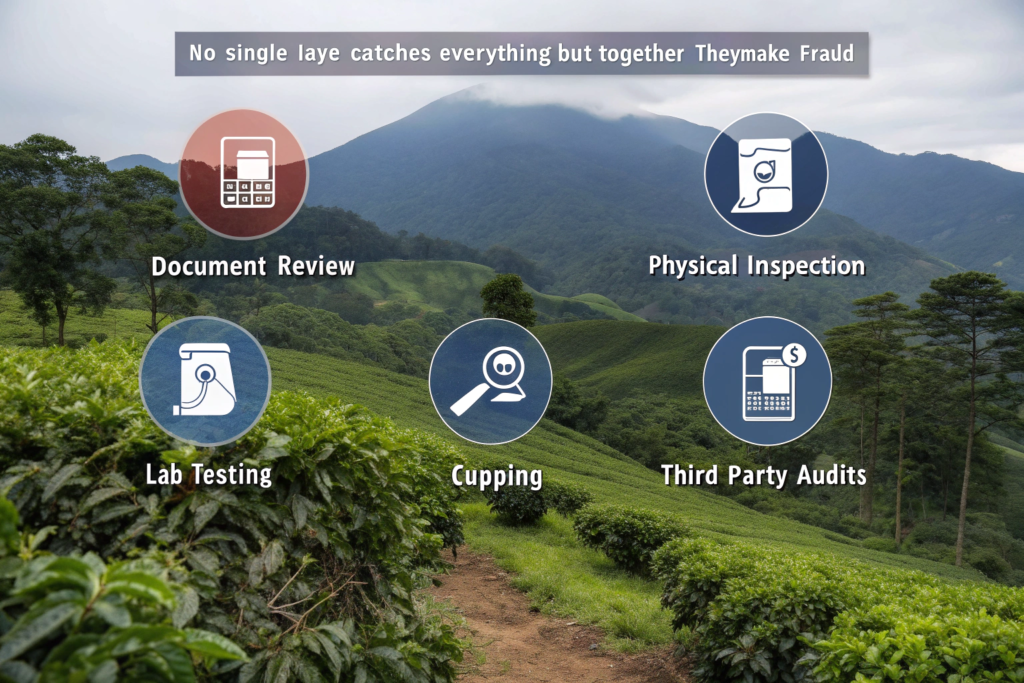
Buyers can detect coffee fraud by using a layered checking system: document review, physical inspection, lab testing, cupping, and third-party audits. Document review catches fake certificates and wrong lot numbers. Physical inspection catches weight shorting and bag tampering. Lab testing catches species mixing and some origin fraud. Cupping catches quality problems and defect hiding. Third-party audits catch process problems. No single layer catches everything. But together, they make fraud very hard. So use all five. Then check the results.
So, what should you do? Start with a simple checklist. Ask for documents. Check the seals. Weigh the bags. Cup the coffee. Send a sample to a lab if the volume is large. Then compare the results. If something does not match, ask why. A good supplier will explain. A cheater will avoid. That is how you detect fraud.
What Documents Should You Verify First?
You should verify the commercial invoice, packing list, bill of lading, certificate of origin, phytosanitary certificate, and any certification documents. The CBP page explains U.S. customs entry and documents. The FDA prior notice page explains food import rules. I use these when I prepare our export files. Check the names. Check the numbers. Check the dates. Do they match? If they do, you have a baseline. If they do not, ask why. A small mistake can be fixed. A pattern of mistakes is a warning. So check the documents first. Then check the coffee.
I also tell buyers to check the certificate number with the issuing body. A fake certificate may look real. But the number will not match. So call or email the issuer. It takes a few minutes. It can save thousands. So do it. Do not skip it.
How Do You Use Lab Tests and Cupping to Catch Fraud?
You use lab tests and cupping together. A lab test can detect Robusta in Arabica. It can sometimes detect origin. A cupping session can detect quality problems. It can detect defect hiding. It can detect moisture damage. The SGS coffee inspection and Intertek coffee pages show how third-party testing works. I use these when I prepare our lots. A lab test costs money. But it is cheap compared with a rejected container. So use it for large orders. Use cupping for every order. Then compare the results. If they match, you have confidence. If they do not, ask why. That is how you catch fraud.
I also tell buyers to keep a sample from every lot. Store it in a cool, dry place. Then if a question comes later, you can compare. A sample is proof. A memory is not. So keep samples. Label them. Store them. Then use them.
How Do You Protect Your Coffee Supply from Fraud?
Protection is not one act. It is a relationship. I have seen buyers protect themselves with strict contracts. I have seen buyers protect themselves with long-term suppliers. I have seen buyers protect themselves with visits. The best protection is a mix. A contract sets the rules. A relationship builds trust. A visit shows the truth. A test confirms the quality. When you use all four, fraud becomes very hard. So build your defense. Then build your supplier relationship. That is how you win.
You protect your coffee supply from fraud by using clear contracts, trusted suppliers, regular testing, third-party audits, and long-term relationships. A clear contract defines the product, the quality, the weight, and the penalties. A trusted supplier has a track record. Regular testing catches problems early. Third-party audits add independent proof. Long-term relationships reduce the temptation to cheat. A buyer who uses all five is a hard target. A buyer who uses none is an easy target. So build your defense step by step.
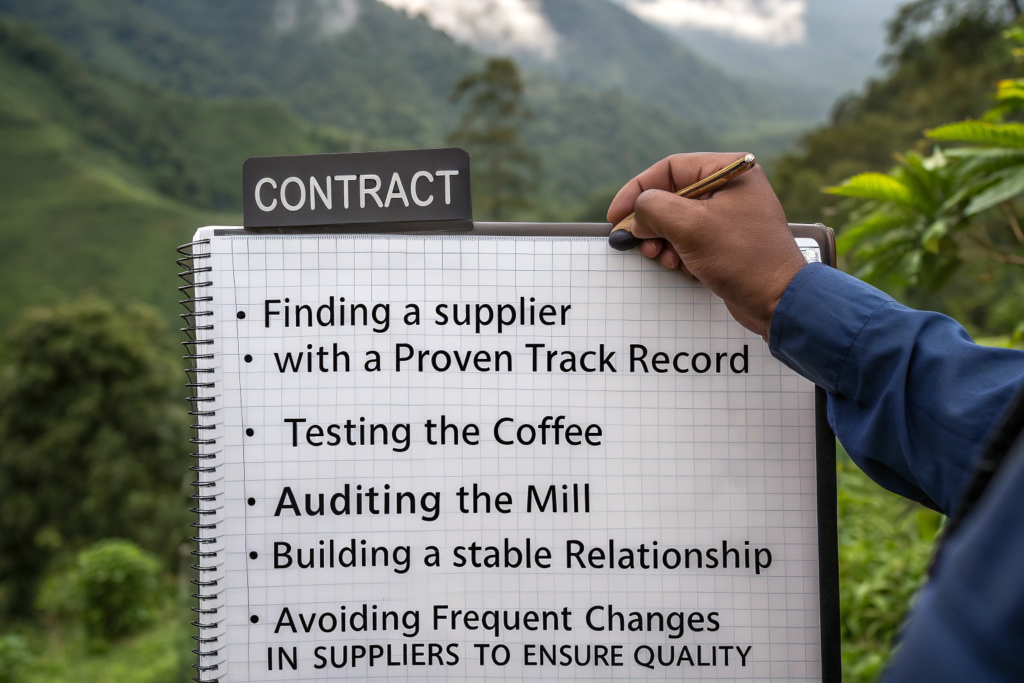
So, what should you do? Start with a contract. Make it clear. Then find a supplier with a track record. Test the coffee. Audit the mill. Build the relationship. Do not jump from supplier to supplier chasing the lowest price. That path leads to fraud. A stable relationship leads to quality. So choose stability. Then build on it.
Why Do Long-Term Supplier Relationships Reduce Fraud?
Long-term relationships reduce fraud because trust changes the math. A cheater may win once. But a cheater loses the next order. A long-term supplier wants the next order. So they protect the quality. The Global Coffee Platform shares sustainable sourcing practices. The Tea & Coffee Trade Journal covers trade relationships and market trends. I use these when I talk to buyers about sourcing. A supplier who knows you will not cheat you. A supplier who sees you once may try. So build relationships. Then protect your supply.
I also tell buyers to pay on time. A supplier who is paid on time is a supplier who values the relationship. A supplier who is paid late may cut corners. So pay on time. Communicate clearly. Then expect the same in return. That is how trust works.
What Should Be in a Fraud Protection Contract?
A fraud protection contract should include the product specification, the quality standard, the weight, the packing, the lot number, the seal number, the inspection method, the penalty for fraud, the payment terms, and the dispute resolution process. The Trade.gov site offers export and import guidance. The International Chamber of Commerce publishes trade rules and Incoterms. I use these when I draft contracts. A clear contract is not a sign of distrust. It is a sign of professionalism. It protects both sides. So write it. Then follow it. That is how you prevent fraud.
I also recommend a third-party inspection clause. The clause should allow the buyer to inspect the coffee before shipment. It should also allow a lab test. If the coffee fails, the buyer can reject it. That clause protects the buyer. It also protects the honest supplier. A cheater will resist the clause. An honest supplier will welcome it. So ask for it. Then watch the reaction.
Conclusion
Coffee fraud is real in Asia. It includes origin fraud, species mixing, grade inflation, weight shorting, certification fraud, moisture padding, defect hiding, and document forgery. These schemes cost buyers money. They also hurt honest suppliers. But fraud is not unbeatable. You can detect it with documents, physical checks, lab tests, cupping, and audits. You can prevent it with clear contracts, trusted suppliers, regular testing, and long-term relationships. A buyer who checks is a hard target. A buyer who trusts blindly is an easy target. So check. Then build trust with a supplier who welcomes the check. That is how you protect your supply. That is how you protect your brand.
At BeanofCoffee, we welcome every check. We own more than 10,000 acres in Baoshan City, Yunnan. We export Catimor, Arabica, and Robusta. We work with large buyers, brand owners, distributors, and trading companies. We can share farm records, lot numbers, seal numbers, lab reports, and samples. If you want a supplier who is transparent, please contact Cathy Cai at cathy@beanofcoffee.com. She will help you with samples, pricing, specifications, and traceability documents. You can also visit BeanofCoffee to learn more. Let us build a fraud-free coffee supply together.