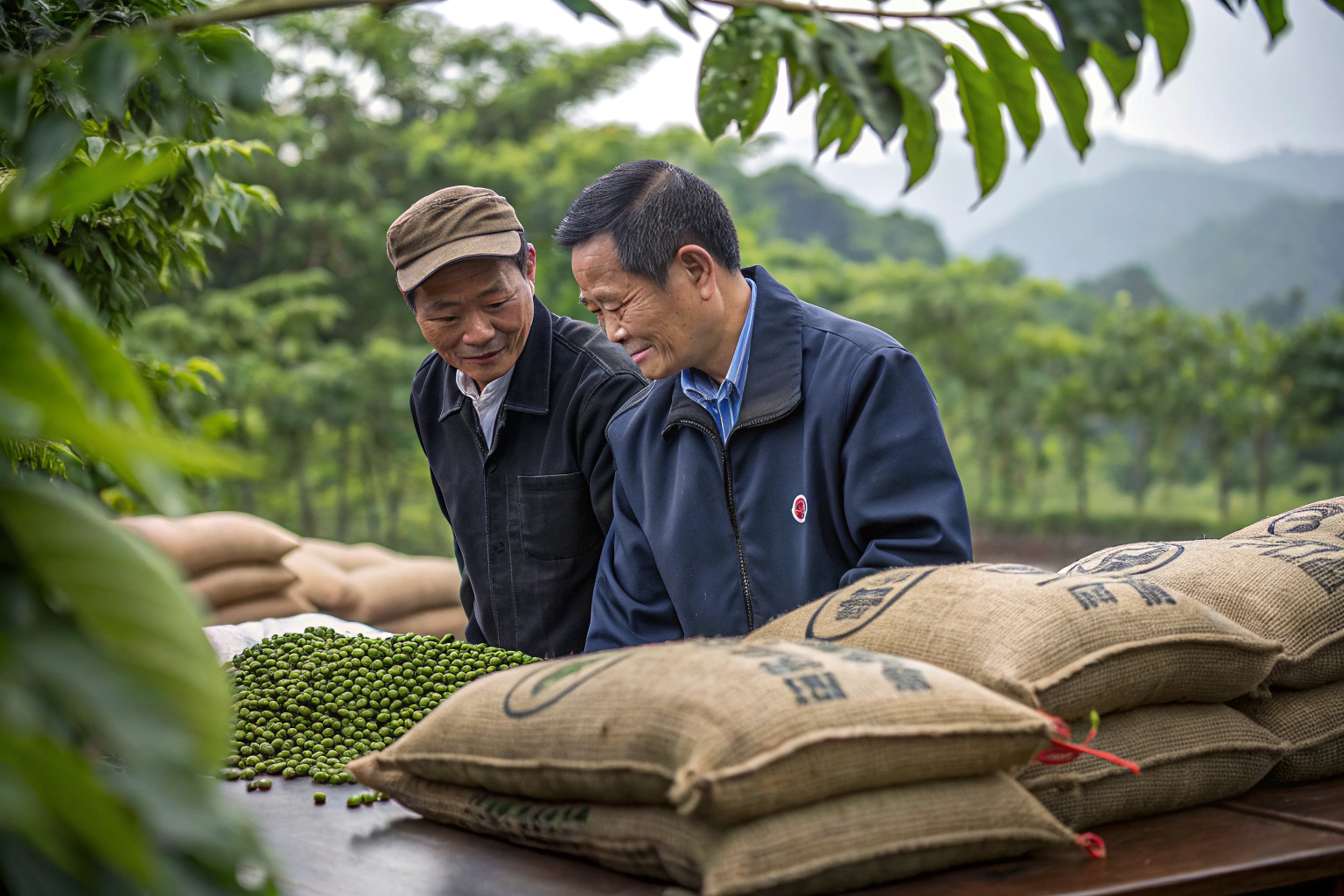
I run BeanofCoffee, a coffee exporter in Yunnan, China. We own more than 10,000 acres in Baoshan City. We sell Catimor, Arabica, and Robusta. We ship to North America, Europe, and Australia. Buyers like Ron ask me hard questions. They ask about price, shipping, and moisture. But the hardest question is this one: how do I know this coffee is really from one origin? It is a fair question. The coffee world has a trust problem. Some sellers mix cheap beans with expensive beans. Some slap a famous region name on a generic lot. Some fake a farm story. So a single-origin claim is easy to make and hard to prove. That is the problem.
To prove the authenticity of a single-origin claim, you need four things: clear records, physical traceability, third-party verification, and a willing supplier. Clear records show the farm, the harvest date, the lot number, and the mill. Physical traceability shows sealed bags, tag numbers, and container photos. Third-party verification includes lab tests, certifications, and audits. A willing supplier opens the door to all of it. Without these four, a single-origin claim is just a story. With them, it becomes evidence.
So, what does this mean for you? It means you should not accept a claim on faith. You should ask for proof. You should check the proof. You should visit if you can. At BeanofCoffee, we keep lot records, seal numbers, and photos for every shipment. We share them with buyers. We do this because we want long-term partners, not one-time sales. Let me show you how authenticity is proven step by step.
What Makes a Single-Origin Claim Real?
The word "single origin" sounds simple. It is not. It can mean one farm. It can mean one region. It can mean one country. It can even mean one cooperative. So the first problem is definition. Ron asked me once if a "Yunnan single origin" was one farm. I said no. It could be many farms in one province. That surprised him. So before you prove anything, you must define the claim. What exactly is the seller promising? One farm? One lot? One region? Write it down. Then prove that.
A single-origin claim is real when the seller can name the specific source and show a documented chain from that source to your container. A "single farm" claim needs farm records, harvest dates, and lot numbers. A "single region" claim needs regional traceability and separation records. A "single country" claim is the easiest but also the weakest. The stronger the claim, the more proof it needs. So match the proof to the claim. Do not accept a strong claim with weak evidence.
Another way to look at this is to compare it to a passport. A passport proves who you are. It has a number, a photo, and a stamp. A single-origin claim needs the same kind of proof. A name alone is not enough. You need the documents behind the name. So ask for them. Then check them.
Is "Single Origin" One Farm or One Region?
It can be either. That is the confusing part. In the specialty coffee world, "single origin" often means one country or one region. "Single estate" or "single farm" means one farm. "Single lot" means one harvest lot from one farm or one mill. The Specialty Coffee Association shares definitions and quality standards. The International Coffee Organization tracks production by country and region. I use these when I explain our own coffee to buyers. We sell both regional lots and single-farm lots. We label them clearly. A regional lot is not the same as a single-farm lot. So we do not mix the terms.
A buyer should ask which claim is being made. If the seller says "single origin," ask for the exact source. If the seller says "single farm," ask for the farm name and location. If the seller says "single lot," ask for the lot number. A clear answer is a good sign. A vague answer is a warning. So ask. Then listen carefully.
Why Do Weak Rules Let Blends Hide?
Weak rules let blends hide because many countries do not enforce origin labeling for coffee. A seller can put "Product of Colombia" on a bag even if only part of the coffee is Colombian. In some markets, that is legal. In others, it is not. The Perfect Daily Grind covers coffee labeling and origin issues. The Daily Coffee News reports on fraud and traceability. I use these to explain the risk to buyers. A weak rule does not stop a bad seller. It only stops an honest seller from competing fairly. That is the sad part. Honest sellers want strong rules. Weak rules help the cheaters.
So a buyer should not rely on the label alone. A label is a claim. It is not proof. Proof comes from documents, tests, and audits. So ask for proof. Then check it. That is the only safe way.
How Do You Trace Coffee from Farm to Port?
Traceability is the backbone of authenticity. If you can trace the coffee from the farm to the port, you can prove the origin. If you cannot, you are trusting a story. I have built traceability into our supply chain over many years. It is not glamorous. It is paperwork. But it works. Every bag we ship has a lot number. Every lot has a farm record. Every farm record has a harvest date. That chain is our proof. Ron likes this. He says it helps him sleep at night.
You trace coffee from farm to port by keeping records at every step. The farm records the harvest date and plot. The mill records the lot number and process. The warehouse records the bag count and seal number. The exporter records the container number and bill of lading. Each step must match the next. If one number is wrong, the chain breaks. A complete chain is proof. A broken chain is a question mark. So build the chain and check it before shipping.
So, what should you do? Ask your supplier for the traceability file. It should include farm records, lot numbers, mill records, warehouse receipts, and shipping documents. If the supplier cannot provide it, that is a warning. If the supplier provides it, check the numbers. Do they match? If they do, you have proof. If they do not, ask why. A good supplier will fix it. A weak supplier will avoid the question.
What Records Should a Supplier Keep?
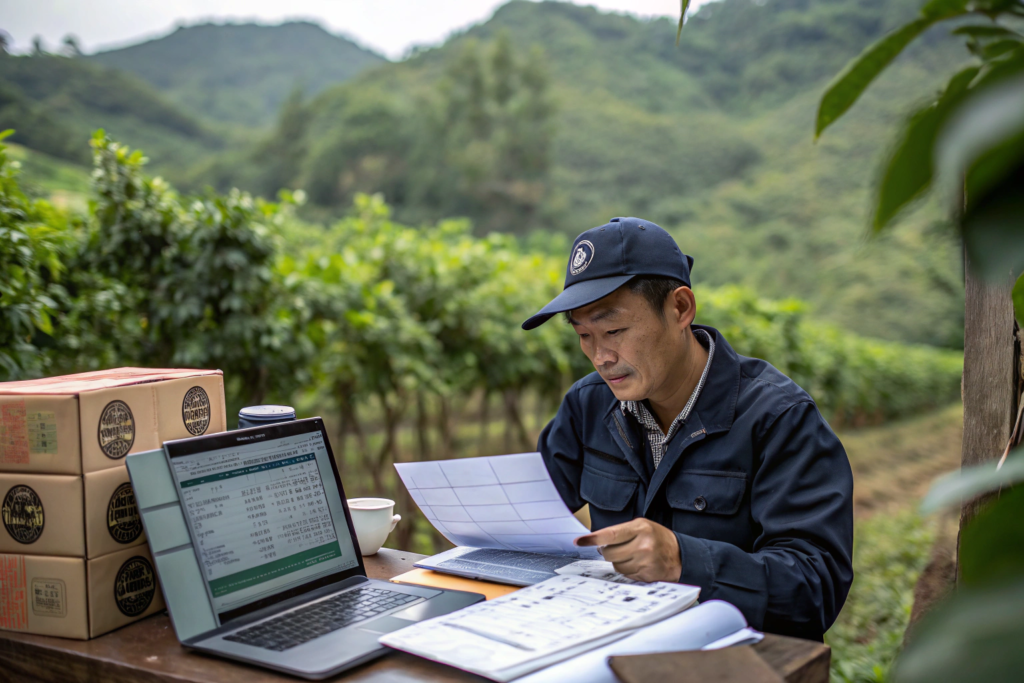
A supplier should keep farm records, harvest logs, lot numbers, mill records, moisture tests, defect reports, warehouse receipts, seal numbers, container photos, bills of lading, and certificates of origin. The CBP page explains U.S. customs entry and documentation. The Trade.gov site offers export and import guidance. I use these when I train our team. A complete file is not just for the buyer. It is for customs. It is for the broker. It is for us. If a question comes later, we can answer it. A supplier without records cannot answer. A supplier with records can. So keep records. Then share them.
I also keep photos. A photo of the loaded container. A photo of the seal. A photo of the lot tag. These photos are simple. But they are powerful. They show the buyer what happened. They also show the customs broker. A photo is hard to fake. A story is easy to fake. So use photos. Then use them again.
How Do Lot Numbers and Seals Work?
Lot numbers and seals work as a chain of identity. A lot number is given to a specific batch of coffee. It follows the coffee from the mill to the warehouse to the container. A seal number is placed on the container door. It proves the container was not opened in transit. The SGS coffee inspection page shows how third parties verify lots and seals. The Alibaba platform offers trade tools that support documentation. I use these when I prepare our shipments. A lot number without a seal is weak. A seal without a lot number is weak. Both together are strong. So use both. Then record both. Then share both.
A buyer should check the seal number on arrival. Does it match the document? If it does, the container was not opened. If it does not, ask why. A mismatched seal is a red flag. It does not always mean fraud. But it means someone opened the container. That needs an explanation. So ask. Then decide.
What Certifications and Tests Prove Origin?
Certifications and tests add a layer of proof. A certificate shows that a third party checked the coffee. A lab test shows the chemical fingerprint of the coffee. These tools are not perfect. But they are better than nothing. I have used both. I have also seen both fail. A certificate can be faked. A lab test can be misread. So you must use them together. You must also check the source. A certificate from a real body is worth more than a certificate from a unknown one. So check the issuer. Then check the result.
Certifications and lab tests prove origin by adding independent verification. Certifications like organic, Fairtrade, and Rainforest Alliance require audits and records. Lab tests like stable isotope analysis and trace element fingerprinting can detect some mixing and some origin patterns. Neither is perfect. A certification can be faked. A lab test can be limited. But together, they raise the cost of fraud. A seller who can pass both is more likely to be honest. So ask for both. Then check the source.
So, what should you do? Ask for the certificate number. Check it with the issuing body. Ask for the lab report. Check the lab name. Then compare the results with the coffee you received. If they match, you have more confidence. If they do not, ask why. A good supplier will explain. A weak supplier will avoid. So ask. Then verify.
Can Lab Tests Detect Mixed Coffee?
Lab tests can detect some mixing. Stable isotope analysis looks at the chemical signature of the coffee. Trace element fingerprinting looks at the minerals. These tests can sometimes tell if coffee comes from a different region. But they are not perfect. They work better for large regions than for small farms. The World Coffee Research shares research on coffee genetics and testing. The Intertek coffee page explains testing services. I use these when I talk to buyers about verification. A lab test is a tool. It is not a magic answer. So use it with other proof. Do not rely on it alone.
I also tell buyers to test the cup. A mixed coffee often tastes flat. It may lack the character of the claimed origin. So cup the coffee. Compare it with a known sample. If it does not match, ask why. A good supplier will explain. A weak supplier will blame the roast. So trust your tongue. Then trust the lab. Both matter.
Do Certifications Actually Prove Origin?
Certifications prove process more than origin. An organic certificate proves the coffee was grown under organic rules. A Fairtrade certificate proves fair trade rules were followed. A Rainforest Alliance certificate proves sustainability standards were met. None of them proves the coffee is from one farm. So do not confuse process with origin. The Fairtrade page explains fair trade certification. The Rainforest Alliance page explains sustainability certification. I use these when I explain our certifications to buyers. A certificate is a good sign. But it is not origin proof by itself. So use it with traceability records. Then you have a stronger case.
A buyer should ask which certificate covers which claim. If the claim is single farm, the certificate should name the farm. If the claim is single region, the certificate should name the region. If the certificate is generic, it does not prove the specific claim. So read the certificate. Then ask questions. A good supplier will answer. A weak supplier will not.
How Can Buyers Verify Origin Before Buying?
Verification should start before you buy. Do not wait until the coffee arrives. Ask questions early. Ask for documents. Ask for photos. Ask for references. A supplier who answers early is a supplier who can deliver later. A supplier who avoids early questions is a supplier who may avoid later problems. Ron likes this approach. He says it saves him time and money. I agree. So let me share the questions we welcome from buyers.
Buyers can verify origin before buying by asking for farm records, lot numbers, seal numbers, certificates, lab reports, and references. They can also request a video call, a live warehouse tour, or a pre-shipment sample. A farm visit is the strongest proof. A third-party inspection is the second strongest. A document review is the third. A phone call is the weakest. So use the strongest method your budget allows. Then check the results. Do not skip this step.
So, what should you do? Start with a simple checklist. Ask for the farm name. Ask for the lot number. Ask for the certificate. Ask for the lab report. Ask for a reference. Then compare the answers. If they match, you are on solid ground. If they do not, ask more questions. That is how you verify. That is how you protect your brand.
What Questions Should Buyers Ask First?
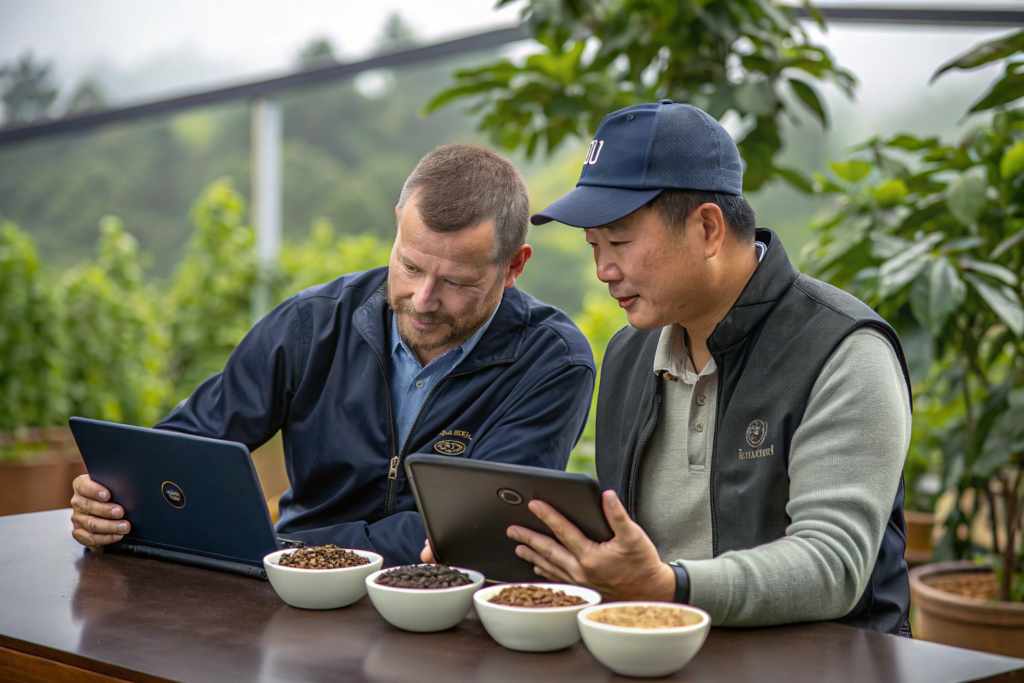
Buyers should ask clear questions. What is the exact origin? What is the lot number? What is the harvest date? What is the process? Who is the farmer? Can I see the farm records? Can I see the certificate? Can I see a photo of the lot? The Coffee Quality Institute shares quality and origin education. The National Coffee Association shares industry data and consumer trends. I use these when I train our sales team. A clear question gets a clear answer. A vague question gets a vague answer. So be specific. Then listen.
I also tell buyers to ask for a pre-shipment sample. The sample should come from the same lot. It should be sealed and labeled. Then you can cup it. Then you can compare it with the arrival coffee. If they match, the supplier is honest. If they do not, ask why. A pre-shipment sample is cheap. A rejected container is expensive. So ask for the sample. Then use it.
How Do Farm Visits and Audits Help?
Farm visits and audits help because they show the truth. You can see the farm. You can meet the farmer. You can check the mill. You can smell the fermentation. You can look at the drying beds. No document can replace that. The Global Coffee Platform shares sustainable sourcing practices. The Tea & Coffee Trade Journal covers trade and origin stories. I use these when I host buyers in Yunnan. A visit is not a vacation. It is a verification tool. It is also a relationship builder. Both matter. So visit if you can. If you cannot, send an inspector. A third-party audit is the next best thing.
I also recommend a surprise visit. Do not tell the supplier every detail. Just show up at the mill. A honest supplier will welcome you. A dishonest supplier will panic. That reaction tells you a lot. So visit. Then watch. Then decide.
Conclusion
Proving a single-origin claim takes work. You need clear records. You need physical traceability. You need third-party verification. You need a willing supplier. You need to define the claim. You need to check the chain. You need to ask hard questions. You need to cup the coffee. You need to visit if you can. None of this is easy. But it is possible. And it is worth it. A proven single-origin claim protects your brand. It protects your customers. It protects the farmers who grow the coffee. So do not accept a story. Ask for proof. Then check it. Then build a relationship with a supplier who can deliver both.
At BeanofCoffee, we keep traceability records for every lot. We own more than 10,000 acres in Baoshan City, Yunnan. We export Catimor, Arabica, and Robusta. We work with large buyers, brand owners, distributors, and trading companies. We can share farm records, lot numbers, seal numbers, certificates, lab reports, and photos. If you want to verify a single-origin claim, please contact Cathy Cai at cathy@beanofcoffee.com. She will help you with samples, pricing, specifications, and traceability documents. You can also visit BeanofCoffee to learn more. Let us prove your next origin claim together.