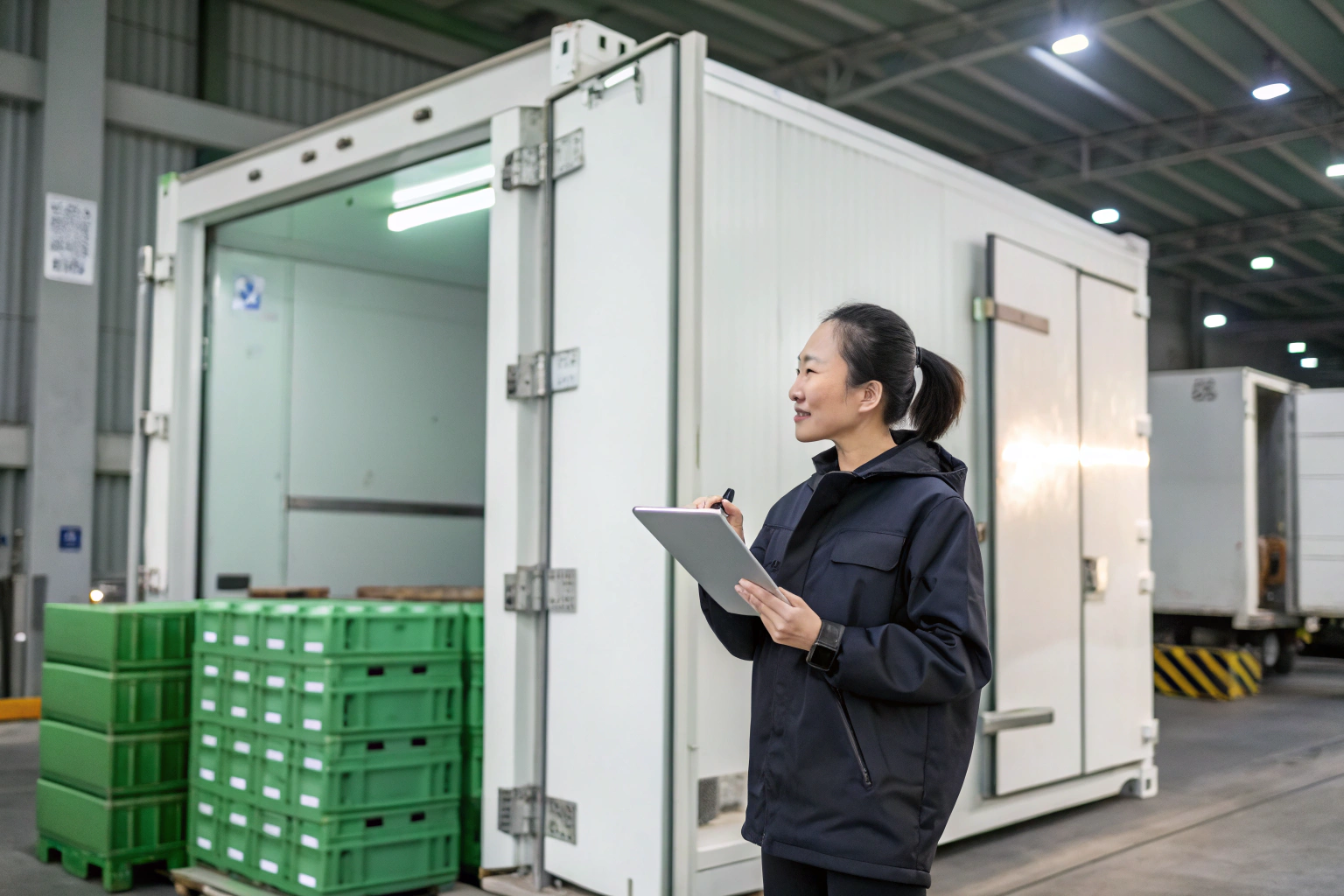
Ron, I know you care about two things above all else when you import coffee: the beans arrive in the same condition they left Yunnan, and the freight cost does not eat your margin. That is why this topic matters to you. The way your coffee is shipped is changing fast. And the companies doing the shipping are spending serious money on it.
So, why are shippers in China investing heavily in reefer technology? Because the global cold chain market is exploding, and China wants to own it. The numbers tell the story. China's cold chain logistics market is projected to grow from $94.46 billion in 2025 to $104.43 billion in 2026, and it is forecast to reach $172.6 billion by 2031. That is a 10.56% compound annual growth rate. At the same time, the global reefer container fleet is expected to grow from 4 million TEUs in 2023 to 7.1 million TEUs by 2030. That is not a small bump. That is a structural shift. And Chinese manufacturers, carriers, and logistics companies are all racing to capture it.
But you might be wondering what this has to do with your coffee shipments. It has everything to do with them. A reefer container is not just a fridge on a ship. It is a quality control tool. It keeps temperature stable. It monitors humidity. It sends real-time data to your phone. It reduces the risk of mold, condensation, and flavor loss. If you are importing green coffee from China, reefer technology is becoming the difference between coffee that cups well and coffee that does not. In this article, I will explain what is driving this investment, what the technology actually does, how it affects coffee quality, and what it means for your landed cost.
What Is Driving China's Reefer Investment Boom?
Three things are driving the reefer investment boom in China. First, demand. The world is buying more temperature-sensitive goods. Fresh fruit, frozen meat, pharmaceuticals, and specialty coffee. Second, policy. The Chinese government has made cold chain infrastructure a national priority. The 14th Five-Year Plan explicitly calls for building "cold chain highways" that connect production zones to city markets. It targets a 25% chilled distribution rate for fruit and 45% for meat by 2027. Third, opportunity. China already produces over 95% of the world's refrigerated containers. The country wants to move up the value chain, from making boxes to running the entire cold chain ecosystem.
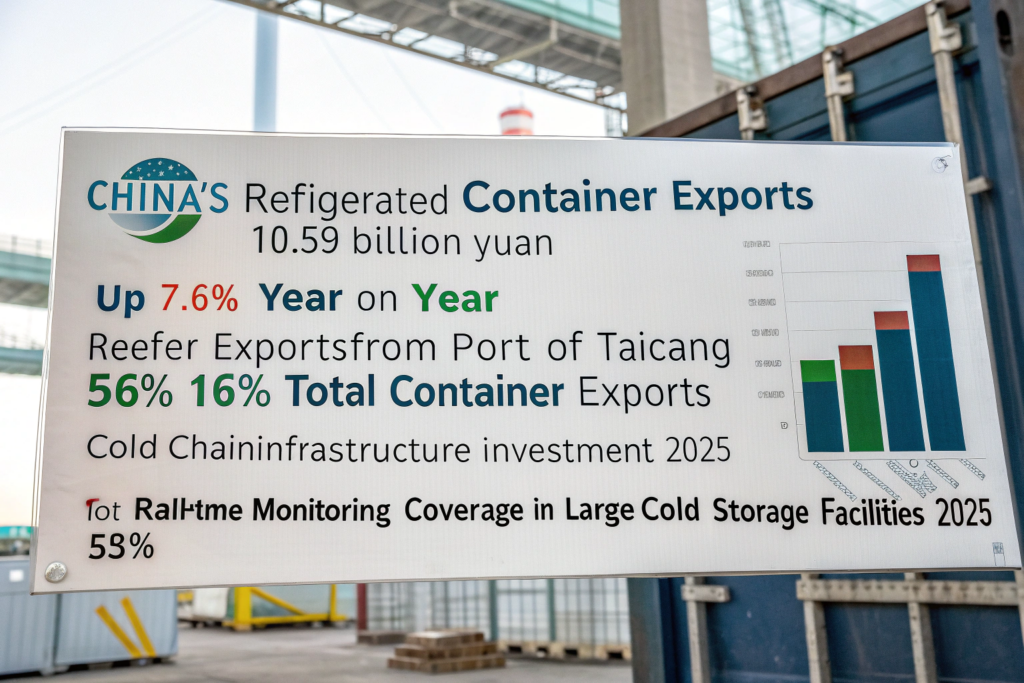
The money is flowing. In the first half of 2026, China's refrigerated container exports reached 10.59 billion yuan, up 7.6% year on year. At the Port of Taicang alone, reefer exports jumped 56% year on year, and reefers now account for 16% of total container exports from that port, up from 10% a year earlier. Domestic cold chain investment is also climbing. China's cold chain infrastructure investment grew 17.3% year on year in 2025. IoT real-time monitoring coverage in large cold storage facilities broke through 67% in 2025, up from 53% the previous year. These are not projections. These are operational numbers. The investment is already happening.
For a coffee importer like you, this scale matters because it brings down cost. When China builds more reefers, when more carriers offer reefer services, when ports install better reefer handling equipment, the per-container cost of temperature-controlled shipping goes down. And the availability goes up. That is good news for your budget.
Why Is China Investing So Much in Cold Chain Technology?
China is investing in cold chain technology for three practical reasons. First, domestic demand. The rise of fresh e-commerce platforms like JD Fresh and Freshippo has created a market where consumers expect same-day delivery of perishable food. That requires an enormous cold chain network. Second, export demand. China exports fruit, vegetables, seafood, and pharmaceuticals to markets around the world. Those products require reefer containers. Third, strategic positioning. The Chinese government sees cold chain logistics as critical infrastructure, the same way it sees highways and ports. The 14th Five-Year Plan earmarks significant capital for this. And companies are responding. The Asia-Pacific region now accounts for 42% of global cold chain market growth, with China as the dominant market.
How Big Is the Reefer Market in China?
The reefer market in China is large and growing fast. Domestic cold chain logistics alone is a $104 billion market in 2026, heading to $172 billion by 2031. The reefer container fleet is expanding at about 8.8% per year. In the first quarter of 2025 alone, 93,000 new reefer TEUs were added globally, a 145% increase year on year. China's three largest manufacturers — CIMC, Dongfang International, and Guangdong Fuhua — produce the vast majority of these units. Chinese companies have also expanded their global share of the mobile refrigeration equipment market from 25% in 2023 to 37% in 2025. That is a rapid shift. And it means more capacity, more competition, and better pricing for buyers like you.
How Does Reefer Tech Improve Coffee Quality?
This is the part that should matter most to you. Coffee quality does not stop at the farm. It changes during shipping. Green coffee is hygroscopic. That means it absorbs moisture from the air. If the container is too humid, the beans absorb water. That leads to mold, flavor loss, and sometimes total rejection. If the container is too hot, the beans age faster. Oils break down. Acidity drops. The coffee tastes flat.
Reefer technology solves these problems by controlling the environment. A modern reefer container can hold temperature within a fraction of a degree. It can manage humidity. It can even monitor oxygen and carbon dioxide levels. MSC's Thermal Liner solution, for example, uses insulated liners and moisture absorbers to protect coffee and cocoa beans from temperature and humidity fluctuations. The system maintains a stable internal environment even when external conditions range from -25°C to +60°C. That is the range a container can experience crossing the Pacific in different seasons.
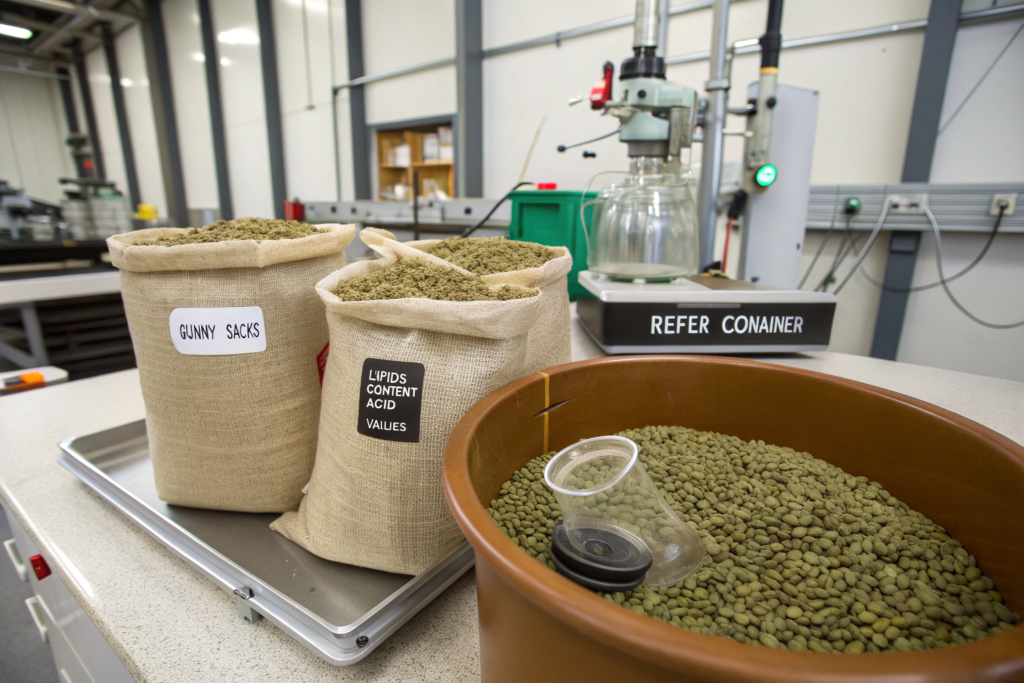
The impact on coffee is measurable. A study on green coffee beans shipped from Colombia to Japan compared dry containers versus reefer containers. The results were clear. Coffee shipped in reefer containers with vacuum packaging showed minimal decrease in lipid content and minimal increases in acid values compared to coffee shipped in dry containers in gunny sacks. The sensory evaluation confirmed the difference. In simple terms: the reefer-protected coffee tasted better, longer.
For you, this means fewer rejected containers. Fewer disputes with suppliers. More consistent cupping scores from shipment to shipment. And a product you can sell with confidence.
How Does Temperature Control Prevent Coffee Damage?
Temperature control prevents coffee damage by slowing down chemical reactions. Heat accelerates oxidation. Oxidation degrades the oils and acids that give coffee its flavor. If you store green coffee at 30°C, it ages roughly twice as fast as coffee stored at 15°C. A reefer container set to 15°C keeps the coffee in a near-dormant state during transit. The beans arrive fresher. The cup profile stays closer to the pre-shipment sample.
There is also the condensation problem. When coffee is loaded in a warm, humid port like Shenzhen and then shipped to a cold destination like Seattle, the temperature difference causes condensation. Moisture forms on the container ceiling. It drips onto the coffee bags. Mold grows. This is called container rain. The International Coffee Organization recommends keeping green coffee moisture content between 10% and 12.5%. Above that, the risk of mold rises sharply. Reefer containers with humidity control and thermal liners prevent container rain by maintaining a stable dew point. MSC specifically designed its Thermal Liner for high-moisture commodities like coffee beans. The liner creates a barrier between the cargo and the container walls. Moisture absorbers capture any remaining humidity. The coffee stays dry.
The Financial Times reported that container condensation damage to coffee shipments has led to numerous insurance claims over the years. Shipping lines sometimes reject these claims as "inherent vice" — meaning they argue the coffee was always going to get damaged. But that is not accurate. With proper reefer technology, the damage is preventable. And more shippers are using it.
What Role Does IoT Play in Coffee Shipping?
IoT plays a growing role. Real-time monitoring is becoming standard on reefer containers. Maersk has been rolling out next-generation IoT devices across its entire reefer fleet. By mid-2026, about 30% of its reefers had been upgraded. The devices support 4G and 5G connectivity and are powered by solar panels. They transmit temperature, humidity, and container location data continuously.
Maersk also offers a visibility product called Captain Peter. It lets customers monitor their cargo from the moment it is sealed in the container through to final delivery. The system tracks temperature, relative humidity, and O2/CO2 levels in near real-time. If something goes wrong — a temperature spike, a power failure — the system sends an alert. You can act before the coffee is damaged. That is not a luxury. That is risk management.
Other carriers and technology companies are building similar systems. Chinese rail cold chain operator CR Special Cargo uses IoT sensors and a remote monitoring center to track thousands of cold chain units in real time. The system captures temperature, humidity, and power data and issues automatic alerts when values deviate from set points. The same technology is moving into ocean shipping. For a coffee importer, this means you can check on your container from your phone. You do not have to wait for the arrival notice to find out something went wrong.
What Does Reefer Tech Cost for Coffee Shipments?
Let me give you the real numbers. A reefer container costs more than a standard dry container. That is true. But the gap is smaller than you might think. According to freight rate data, a 40-foot reefer container from China to the US West Coast costs between $2,800 and $4,200, depending on the carrier and the season. A standard 40-foot dry container on the same route costs $2,800 to $4,200. Wait — those numbers look the same. Let me clarify. The reefer premium varies by route and by season. In some periods, the reefer rate is 20% to 30% higher than dry. In others, the gap narrows. The base cost of a reefer container itself is $2,500 to $4,500, compared to $1,000 to $1,800 for a standard 20-foot container.
But here is what matters for your calculation. Reefer rates from Asia to the US have increased by 25% to 30% since mid-2024 due to equipment shortages and high demand. That sounds bad. But it reflects the value of the service. The reefer premium buys you temperature stability, humidity control, and real-time monitoring. It buys you insurance against quality loss. And quality loss is expensive. If one container of coffee is rejected because of mold or condensation damage, the loss is not just the freight cost. It is the coffee cost, the lost sale, the customer relationship, and the rescheduling of your entire inventory plan. The reefer premium is small compared to that risk.
For a 40,000-pound container of green coffee, a $1,000 reefer premium adds $0.025 per pound to your landed cost. That is less than three cents. For that, you get a container that maintains 15°C from Yunnan to your warehouse. You get IoT data. You get peace of mind. I tell every buyer who ships specialty-grade coffee: pay the reefer premium. It is the cheapest quality insurance you will ever buy.
Here is a cost comparison table.
| Container Type | Base Cost (USD) | Per-Pound Premium (40,000 lbs) | Best For |
|---|---|---|---|
| Standard dry | $1,000-$1,800 | Baseline | Non-food, non-sensitive cargo |
| Ventilated | $1,500-$2,500 | $0.01-$0.02 | Some green coffee, cocoa |
| Reefer | $2,500-$4,500 | $0.03-$0.07 | Specialty green coffee, packaged products |

How Do You Calculate the Reefer Premium for Your Coffee?
You calculate the reefer premium by subtracting the dry container rate from the reefer rate on your specific route. Then divide by the net weight in pounds. For example, if a dry container costs $2,200 and a reefer costs $3,000 on the same route, the premium is $800. On 40,000 pounds, that is $0.02 per pound. If your coffee sells for $4.00 per pound wholesale, the reefer premium is 0.5% of the value. That is a small price for a large risk reduction. I use this calculation every time I quote a buyer. It helps them see that the decision is not about the freight line item. It is about the total landed cost and the risk-adjusted value of the shipment. The US International Trade Commission publishes tariff data. The Federal Maritime Commission regulates carrier rates. Use these resources to check your numbers.
Are Reefer Containers Worth the Extra Cost?
Yes, for most specialty coffee. No, for lower-grade coffee that is going to be blended or roasted quickly. The decision depends on what you are buying and what you are selling. If you are importing specialty-grade Yunnan coffee with an 85+ cupping score, the reefer is a no-brainer. You are paying a premium for the coffee. You should protect it. If you are importing commodity-grade beans for a dark roast blend, the quality difference may not justify the cost. But here is the thing. More and more buyers are choosing reefer even for commodity coffee. Why? Because the equipment shortage is making dry containers less reliable. And because their customers are asking harder questions about quality control. The reefer is becoming the default, not the exception. I have seen this trend accelerate over the past two years. Buyers who used to ship dry are switching to reefer. And they are not going back.
How Can Coffee Buyers Use Reefer Data?
This is where the technology gets practical for you. Reefer containers generate data. Temperature logs. Humidity readings. Location updates. Container status alerts. That data is yours. You can use it to verify quality, resolve disputes, and improve your buying decisions. Most buyers do not use this data. They just wait for the coffee to arrive. That is a missed opportunity.
You can use reefer data in three ways. First, verify that the shipping conditions met your specifications. If the temperature stayed within range, you have evidence that the coffee was handled properly. If it deviated, you have evidence for a claim. Second, share the data with your roaster or your customers. Transparency builds trust. If you can show a customer that their coffee was shipped at a constant 15°C with humidity under control, that is a selling point. Third, use the data to improve your future orders. If a particular route or carrier consistently delivers stable conditions, use them again. If another route has problems, avoid it.
I have used reefer data in disputes. One buyer claimed that a shipment had mold because of poor handling at origin. I pulled the reefer log. The temperature was stable. The humidity was in range. The mold must have developed before loading. The data settled the question. It saved us both time and money. That is the power of having a record. The Specialty Coffee Association has resources on quality control. The Coffee Quality Institute also has guides on green coffee handling.

What Data Should You Ask Your Supplier For?
Ask your supplier for three things. First, the pre-shipment moisture content reading. This should be between 10% and 12.5%. Second, the container temperature set point and the actual temperature log. The set point should be around 15°C to 18°C for green coffee. Third, the humidity log. Relative humidity should be controlled to prevent condensation. If your supplier cannot provide these, ask why. A supplier who uses reefer technology well will have this data. A supplier who does not will make excuses. I provide this data to every buyer who asks. It is part of our service. You should expect it from yours. The International Coffee Organization publishes standards for coffee storage and transport. The Food and Agriculture Organization also has resources on post-harvest handling.
How Do You Use Reefer Data to Reduce Risk?
You use reefer data to reduce risk by setting clear specifications in your purchase contract and then verifying them with data. For example, you can specify that the coffee must be shipped at 15°C ±2°C. You can specify that relative humidity must not exceed 65%. You can specify that the container must be equipped with IoT monitoring. Then, when the shipment arrives, you check the data. If it meets spec, you accept. If it does not, you have grounds for a claim or a discount. This turns a subjective argument into an objective process. I have seen this reduce disputes dramatically. Buyers who use reefer data do not argue about whether the coffee was damaged. They look at the log. The log tells the truth. The National Coffee Association has resources on coffee contracts. The Green Coffee Association also publishes industry standards.
Conclusion
China's reefer investment boom is not just a story about shipping containers. It is a story about quality control. It is a story about risk reduction. And it is a story about the future of coffee importing. The technology is here. The data is available. The costs are coming down. The buyers who adopt it first will have a competitive advantage. Their coffee will arrive fresher. Their disputes will be fewer. Their customers will be happier.
If you want to source Yunnan coffee shipped in modern reefer containers with full temperature and humidity monitoring, contact our export manager Cathy Cai at cathy@beanofcoffee.com. We own over 10,000 acres of coffee plantations in Baoshan City, Yunnan Province. We export raw beans and packaged products to North America, Europe, and Australia. We can provide reefer container options, IoT data, and full documentation. You can learn more at BeanofCoffee. Let us ship your next order the smart way.