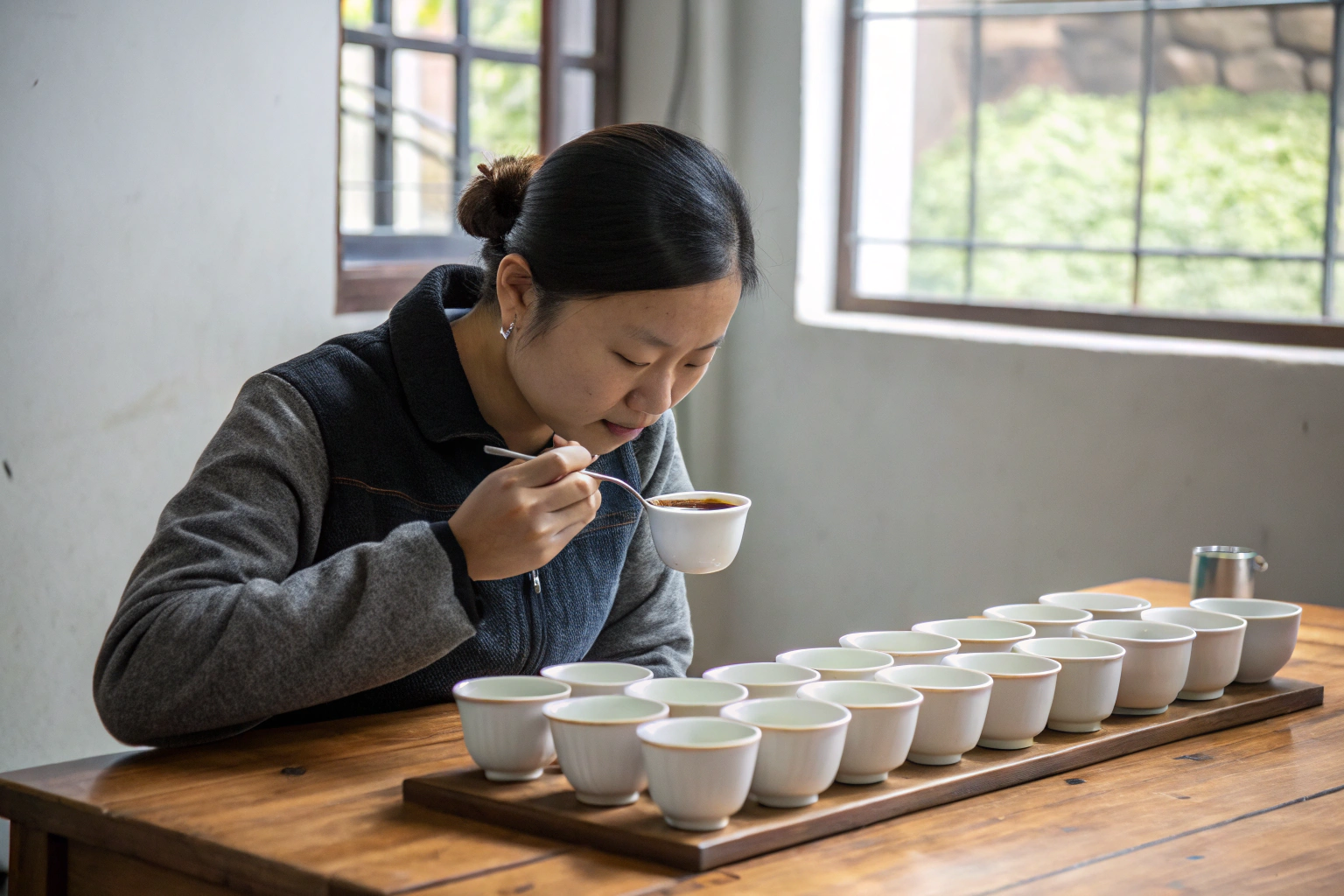
I still remember my first real cupping session. It was 2014 in Baoshan. An old Q Grader handed me a spoon and told me to taste five coffees. I could not tell them apart. They all tasted like coffee. I felt embarrassed. He laughed and said, "That is normal. Nobody starts with a trained tongue. You build it." That sentence changed how I think about coffee. Palate training is not a talent. It is a skill. And like any skill, you can learn it with practice.
So, how do you train your palate to detect Chinese terroir nuances? The short answer is repetition plus attention. You taste the same coffee many times. You taste it next to other coffees. You name what you taste, even when you are unsure. Over weeks and months, your brain builds a map. Chinese terroir — especially Yunnan — has a distinct signature. It tends to be softer, sweeter, and nuttier than many other origins. It often shows notes of brown sugar, cocoa, and stone fruit. Once you know that signature, you can spot it blind. That is the goal. Not to sound fancy. To know what you are buying.
You might be wondering where to start. Do you need expensive equipment? Do you need a certificate? Do you need to fly to China? No. You need a few tools, a routine, and some patience. In this article, I will share the method I use with our own buyers. It is the same method I used to train my own team. It works. It is not fast. But it is reliable.
What Makes Chinese Coffee Terroir Unique?
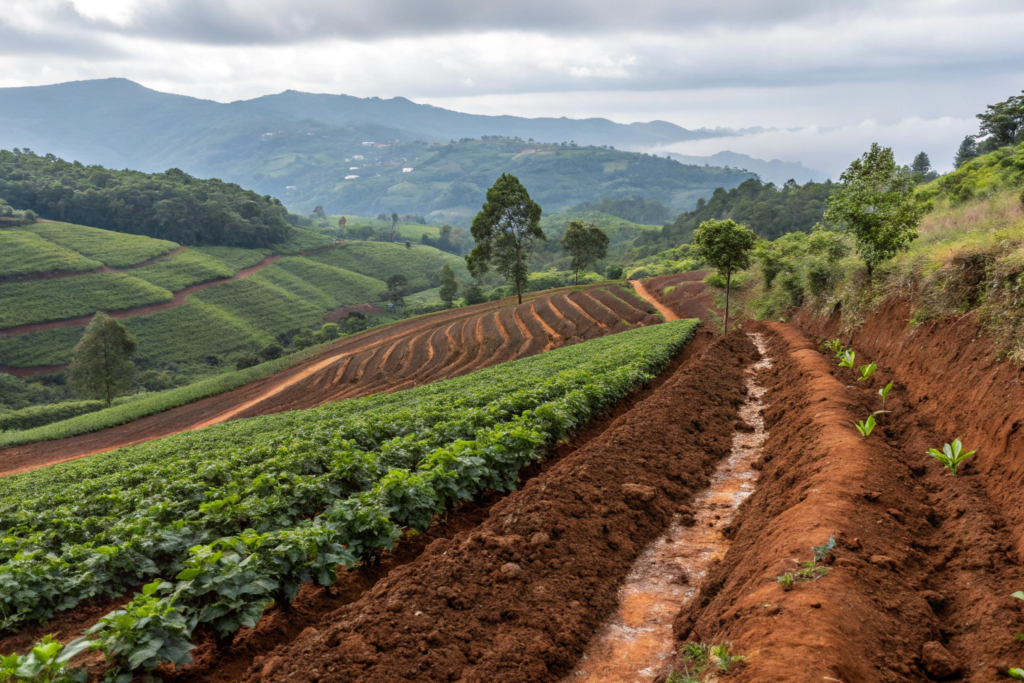
Terroir is a French word. It means the taste of a place. Soil, altitude, rainfall, shade, and microclimate all shape the bean. China has a small coffee belt. Most of it sits in Yunnan Province, between 1,000 and 1,700 meters above sea level. The climate is subtropical. The dry season is clear. The wet season is intense. That combination does something specific to the bean. It slows maturation. Slow maturation means more sugar development. More sugar means a sweeter cup.
Yunnan is not the only coffee region in China. There is also Hainan and parts of Fujian. But Yunnan dominates. Over 95% of China's coffee comes from Yunnan. The main varieties are Catimor and Arabica. Catimor is a hybrid. It is hardy. It resists rust. It is also the backbone of Yunnan's export volume. Arabica varieties like Typica and Bourbon are grown in smaller amounts. They tend to show more floral and citric notes. That difference matters when you cup.
The soil in Yunnan is another factor. It is volcanic in some areas. It is rich in minerals. It has good drainage. That affects how the plant takes up nutrients. It affects the final flavor. I have tasted Yunnan coffees from two farms only 20 kilometers apart. They tasted different. One was nuttier. One was fruitier. That is terroir at work. You can read more about coffee terroir on the World Coffee Research website. The Specialty Coffee Association also publishes useful material on origin characteristics.
Here is a quick comparison of Yunnan's terroir against other origins.
| Factor | Yunnan | Ethiopia | Colombia |
|---|---|---|---|
| Altitude range | 1,000-1,700m | 1,500-2,200m | 1,200-1,800m |
| Typical acidity | Medium | High | Medium-High |
| Typical body | Medium-High | Medium | Medium |
| Common notes | Brown sugar, cocoa, nuts | Berry, floral, citrus | Caramel, red fruit |
| Processing | Washed, honey, anaerobic | Natural, washed | Washed |
How Does Altitude Affect Yunnan Coffee Flavor?
Altitude affects flavor because it affects temperature. Higher altitude means cooler nights. Cooler nights slow the growth of the cherry. The bean has more time to develop complex sugars and acids. That is why high-altitude coffee often tastes brighter and sweeter. In Yunnan, the best lots come from farms above 1,300 meters. Below that, the cup tends to be flatter. It lacks the acidity and the sweetness that buyers want. I have cupped coffees from low-altitude farms in Yunnan. They were fine. They were not special. The difference was clear. You can learn more about how altitude influences coffee quality from the Coffee Quality Institute. The Food and Agriculture Organization also publishes data on coffee growing regions.
What Role Does Processing Play in Chinese Coffee Flavor?
Processing plays a huge role. The same bean can taste completely different depending on how it is processed. Washed Yunnan coffee is clean and balanced. It shows the terroir clearly. Honey-processed Yunnan coffee is sweeter and heavier. It hides some of the terroir but adds body. Anaerobic Yunnan coffee is complex and winey. It transforms the terroir into something new. If you want to detect terroir, start with washed coffee. That is the purest expression of place. Once you know the washed profile, you can taste how other processes change it. I always tell buyers to cup the washed version first. Then cup the honey and anaerobic versions. The comparison teaches you more than any book. You can find more on processing methods from the Specialty Coffee Association. The National Coffee Association also has good introductory material.
How Do You Build a Coffee Tasting Vocabulary?
You cannot describe what you cannot name. That is why vocabulary matters. Most people start with three words: good, bad, and bitter. That is not enough. You need more words. You need words for sweetness, acidity, body, and aftertaste. You need words for specific flavors like cocoa, almond, and plum. The more words you have, the more you can detect. This is not a theory. It is how the brain works. When you name something, you pay more attention to it. When you pay more attention, you remember it. When you remember it, you can spot it again.
Building a vocabulary takes time. Do not try to learn 50 words in one week. Start with 10. Practice them every day. Use them in sentences. Write them down. Compare them to other words. For example, "sweet" is not the same as "sugary." "Sweet" is a general term. "Sugary" is more specific. "Brown sugar" is even more specific. The more specific you get, the better your palate becomes. The SCA Flavor Wheel is a great tool. It organizes flavors into categories. It gives you a shared language. The Coffee Quality Institute also offers resources on sensory training. Use them. They are free or low cost.
Here is a starter vocabulary list for Chinese coffee.
| Category | Basic Word | Specific Word | Example in Yunnan Coffee |
|---|---|---|---|
| Sweetness | Sweet | Brown sugar | Common in washed Yunnan |
| Acidity | Bright | Citric | Found in high-altitude lots |
| Body | Heavy | Syrupy | Found in honey-processed lots |
| Flavor | Nutty | Almond | Common in Catimor |
| Flavor | Fruity | Dried plum | Found in anaerobic lots |
| Aftertaste | Long | Cocoa | Common in dark roasts |

Why Do You Need a Shared Flavor Language?
You need a shared language because coffee is a business. If you tell your supplier "this coffee tastes good," they do not know what you mean. If you tell them "this coffee has a brown sugar sweetness and a medium citric acidity," they know exactly what you want. That saves time. It saves money. It prevents disputes. The coffee industry uses the SCA Flavor Wheel as its common language. Q Graders are trained on it. Roasters use it. Importers use it. If you want to buy coffee seriously, you should learn it too. The Specialty Coffee Association publishes the wheel and supporting materials. The Coffee Review website also has a useful glossary of tasting terms.
How Do You Practice Naming What You Taste?
Practice naming by tasting the same coffee many times. Do not just taste it once. Taste it on Monday. Taste it on Wednesday. Taste it on Friday. Write down what you notice each time. You will notice different things. That is normal. Your palate is not a machine. It changes with mood, food, and time of day. The goal is not perfect consistency. The goal is increasing awareness. I do this with every new lot we buy. I cup it at least five times before I make a decision. I keep notes. I compare notes. Over time, I have built a personal database of flavors. You can do the same. The Barista Hustle website has useful exercises for sensory training. The Perfect Daily Grind website also publishes practical guides.
What Flavors Should You Look for in Yunnan Beans?
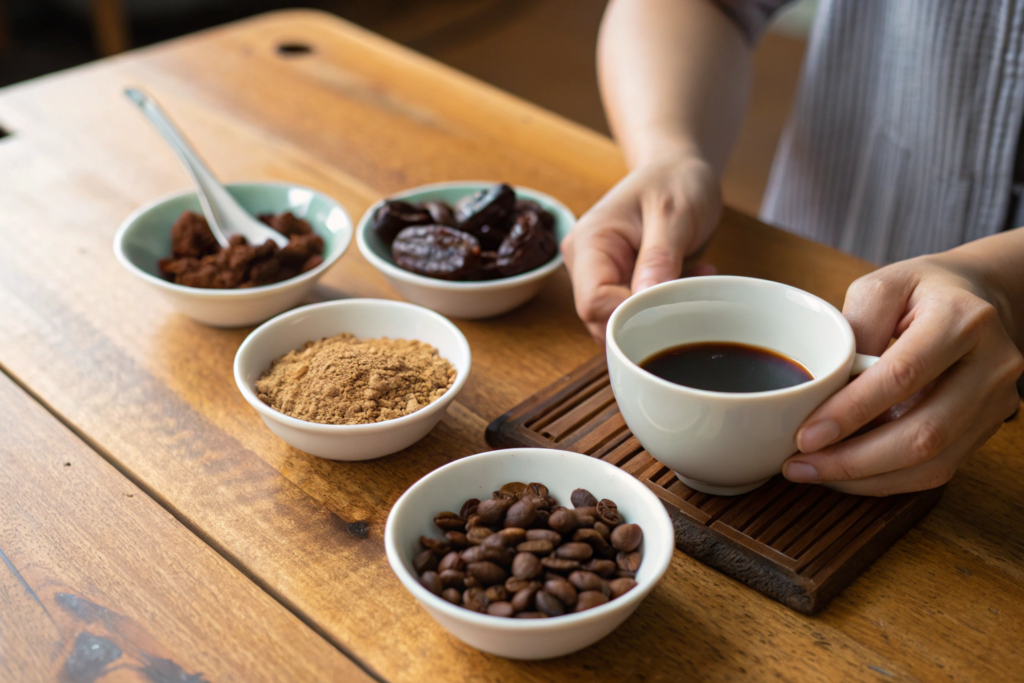
Yunnan coffee has a signature. It is not the same as Ethiopian coffee. It is not the same as Colombian coffee. It is softer. It is sweeter. It is often nuttier. The most common notes I find are brown sugar, cocoa, almond, and dried plum. In higher-altitude lots, I find citrus and floral notes. In anaerobic lots, I find red wine and dark fruit. The signature is not always obvious. You have to look for it. But once you find it, you will recognize it again.
The mistake many buyers make is expecting Yunnan to taste like something else. They want it to taste like Kenya. It does not. They want it to taste like Guatemala. It does not. Yunnan tastes like Yunnan. That is its value. If you want a coffee that stands out on your menu, Yunnan is a good choice. It is different. It is new. It is interesting. But you have to cup it with an open mind. Do not compare it to other origins on the first taste. Taste it on its own. Then compare. You can read more about Yunnan coffee characteristics from the Specialty Coffee Association. The International Coffee Organization also publishes origin reports.
Here is a flavor map for Yunnan coffee by processing method.
| Processing | Primary Notes | Secondary Notes | Acidity | Body |
|---|---|---|---|---|
| Washed | Brown sugar, almond | Cocoa, mild citrus | Medium | Medium |
| Honey | Dried plum, caramel | Brown sugar, stone fruit | Medium | Medium-High |
| Anaerobic | Red wine, dark fruit | Cocoa, spice | Medium-High | Medium-High |
| Natural | Strawberry, cocoa | Dried fruit, molasses | Medium | High |
What Does Yunnan Coffee Taste Like Compared to Other Chinese Regions?
Yunnan is the dominant region. But it is not the only one. Hainan grows a small amount of coffee. It tends to be milder and less complex. Fujian grows even less. It is mostly experimental. Yunnan is the only region with enough volume and quality to matter for export. Within Yunnan, there are sub-regions. Baoshan is known for balanced, sweet coffee. Pu'er is known for chocolatey, nutty coffee. Lincang is known for brighter, fruitier coffee. Dehong is known for heavier, earthier coffee. These differences come from soil, altitude, and microclimate. If you want to train your palate, cup coffees from different sub-regions side by side. The differences will teach you more than any article. The World Coffee Research website has a useful variety catalog. The USDA Foreign Agricultural Service also publishes regional reports.
How Do You Detect Terroir in a Blind Cupping?
Detecting terroir in a blind cupping is the ultimate test. It is also the most fun. You taste five coffees. You do not know what they are. You have to guess the origin. Most people fail at first. That is fine. The point is not to win. The point is to learn. Start with two coffees. One from Yunnan. One from another origin. Cup them side by side. Write down what makes them different. Then add a third. Then a fourth. Over time, you will build a mental map. You will start to recognize the Yunnan signature. It might be the sweetness. It might be the body. It might be the aftertaste. Everyone notices something different. The Coffee Quality Institute offers blind cupping exercises. The Boot Coffee website also has practical training resources.
How Do You Practice Palate Training at Home?
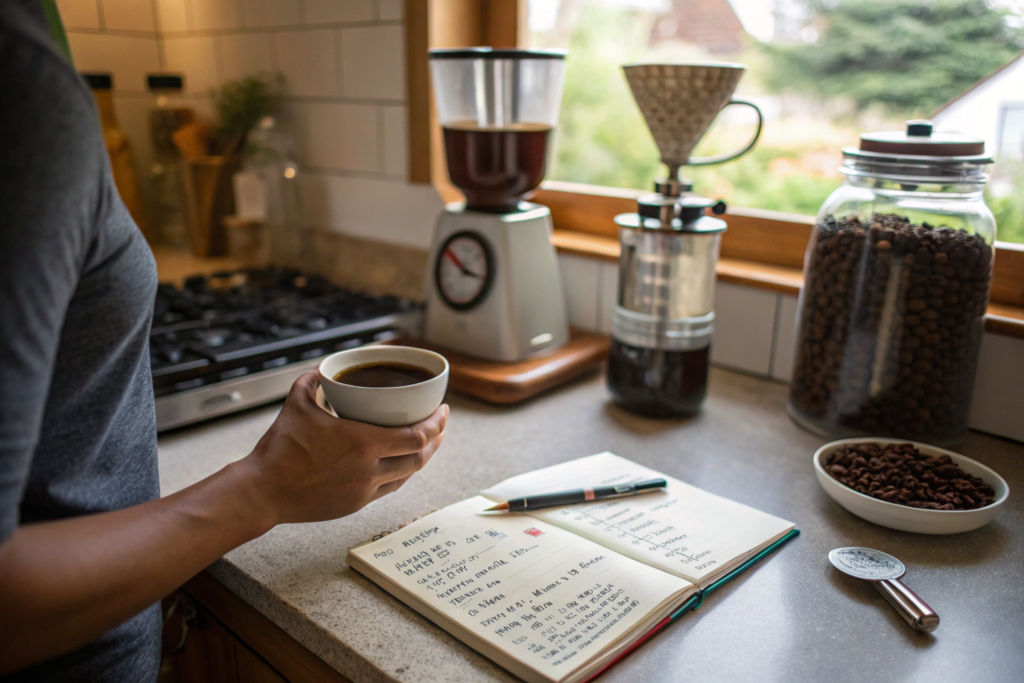
You do not need a lab. You do not need a certificate. You do not need a $5,000 machine. You need a kettle, a scale, a grinder, and a few cups. That is it. You can train your palate in your own kitchen. It takes 20 minutes a day. It costs almost nothing. The key is consistency. Do it every day. Do not skip days. Your palate is like a muscle. It needs regular exercise.
The method I recommend is simple. Pick one coffee. Cup it every morning for a week. Use the same recipe. Same water temperature. Same grind size. Same ratio. Write down what you taste each day. You will notice changes. Some days it will taste sweeter. Some days it will taste flatter. That is normal. That is your palate learning. After a week, switch to a different coffee. Cup that one for a week. Then compare your notes. You will start to see patterns. You will start to recognize specific flavors. The Specialty Coffee Association publishes a home cupping guide. The Sweet Maria's website also has a useful library of cupping instructions.
Here is a simple home cupping recipe.
| Step | Detail |
|---|---|
| Coffee dose | 8.25 grams |
| Water dose | 150 grams |
| Water temp | 200°F (93°C) |
| Grind | Medium-coarse, like sea salt |
| Brew time | 4 minutes |
| Break time | At 4 minutes, stir and smell |
| Taste time | At 8-10 minutes, when cool |
What Tools Do You Need for Home Cupping?
You need four things. First, a scale. It must measure to 0.1 grams. Second, a grinder. It must be consistent. Third, a kettle. It should have a thermometer. Fourth, cups. They should be white. White cups let you see the coffee color. They also do not distract your eye. That is the basic kit. You can add more tools later. A notebook is helpful. A flavor wheel is helpful. But they are not required. Start simple. Add complexity only when you need it. The Coffee Geek website has reviews of home cupping equipment. The Home Barista website also has useful forums.
How Often Should You Cup to Improve Your Palate?
You should cup at least three times a week. Daily is better. But do not cup more than twice a day. Your palate gets tired. It stops noticing details. Quality matters more than quantity. Twenty minutes of focused cupping is better than an hour of distracted sipping. I cup every morning at 7 AM. I cup alone. I do not talk. I do not check my phone. I just taste and write. That routine has improved my palate more than any course I have taken. You can find more on cupping routines from the Roast Magazine website. The Daily Coffee News website also has practical articles.
Conclusion
Training your palate is not about becoming a coffee snob. It is about becoming a better buyer. When you can detect terroir, you can tell the difference between a good lot and a great lot. You can ask better questions. You can negotiate better prices. You can build a menu that stands out. Chinese terroir — especially Yunnan — has a distinct signature. It is soft, sweet, and often nutty. It is worth learning. It is worth tasting. And it is worth sharing with your customers.
If you want to source Yunnan coffee with verified terroir characteristics, contact our export manager Cathy Cai at cathy@beanofcoffee.com. We own over 10,000 acres of coffee plantations in Baoshan City, Yunnan Province. We export raw beans and packaged products to North America, Europe, and Australia. We can send you samples from different sub-regions so you can train your own palate. You can learn more at BeanofCoffee. Let us help you taste the difference.