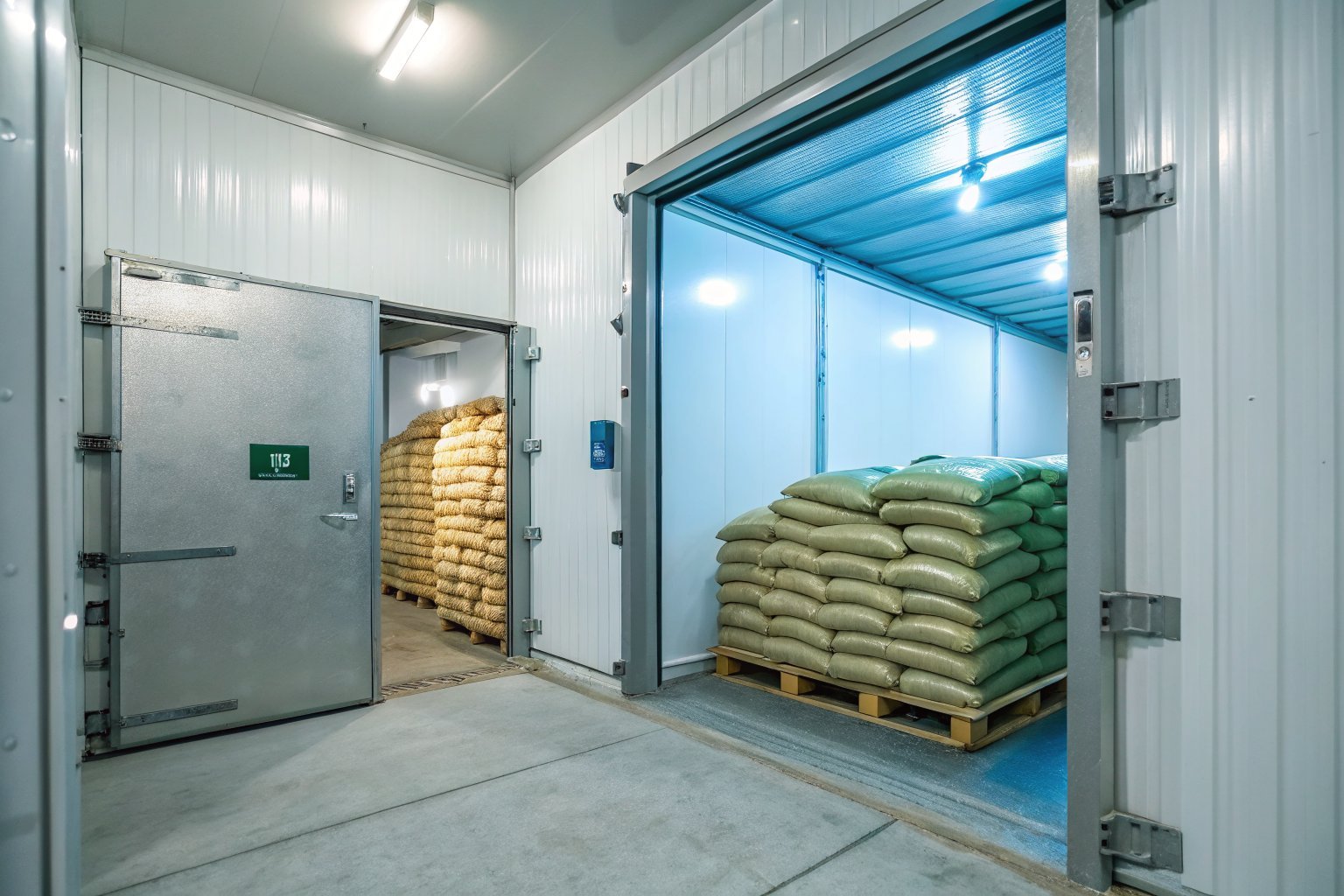
I first heard about freezing green coffee from a roaster in Norway who competes in the World Barista Championship. He told me he freezes every lot of competition coffee as soon as it arrives. I thought it was an extreme measure for a niche use case. Then I started hearing the same story from commercial roasters in New York, London, and Tokyo. Freezing green coffee before roasting is not just for competition anymore. It is becoming a standard practice for preserving quality, managing inventory, and stabilizing seasonal lots. Let me walk you through why it works and how to do it right.
Does Freezing Green Coffee Really Preserve Quality?
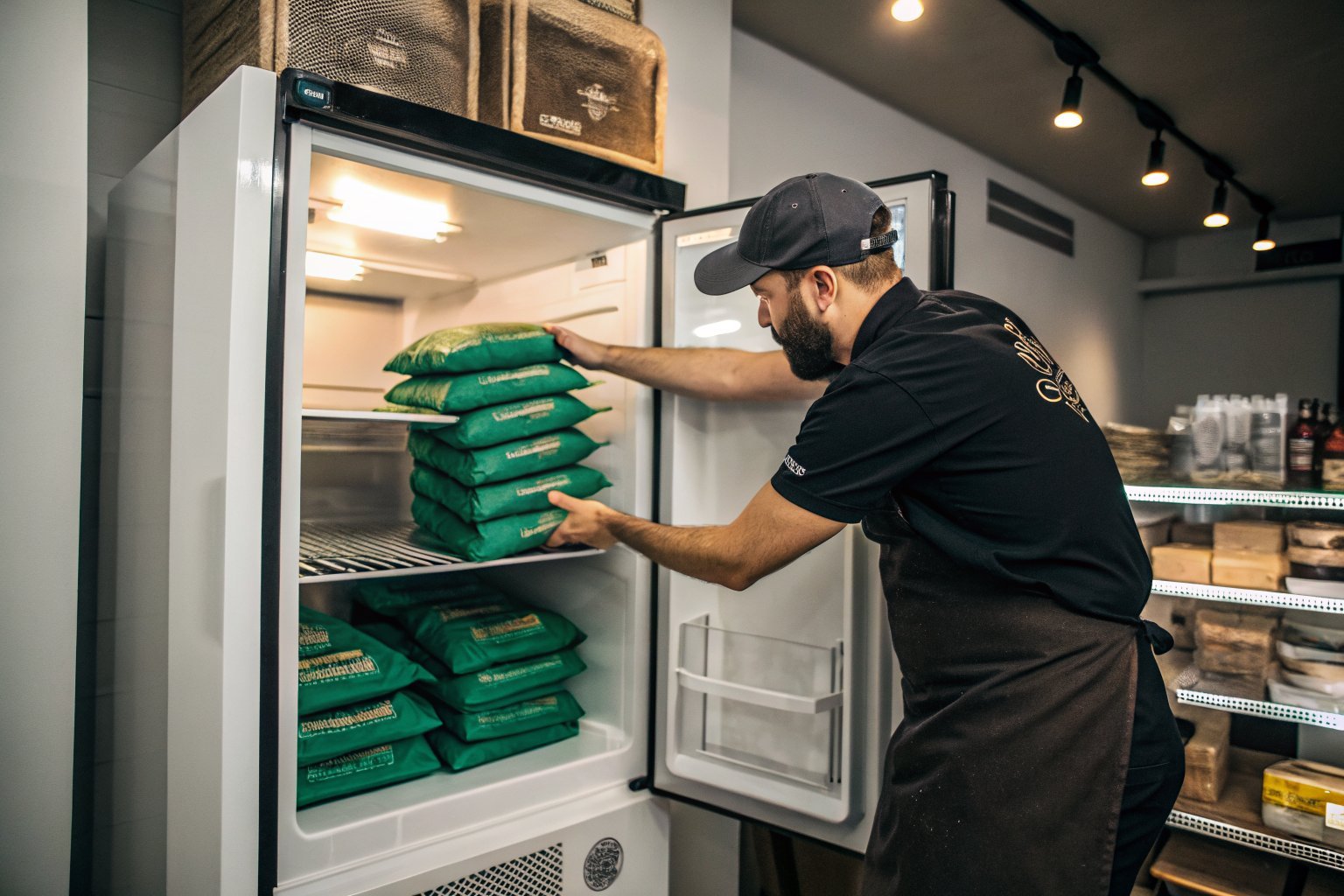
The short answer is yes, but only if you do it correctly. Freezing green coffee slows down the chemical reactions that degrade flavor. Lipids oxidize more slowly, volatile aromatics are preserved, and moisture migration within the bean stops. But the key is the details — how you pack the beans, how quickly you freeze them, and how you handle them after thawing.
What Chemical Changes Does Freezing Prevent in Green Coffee?
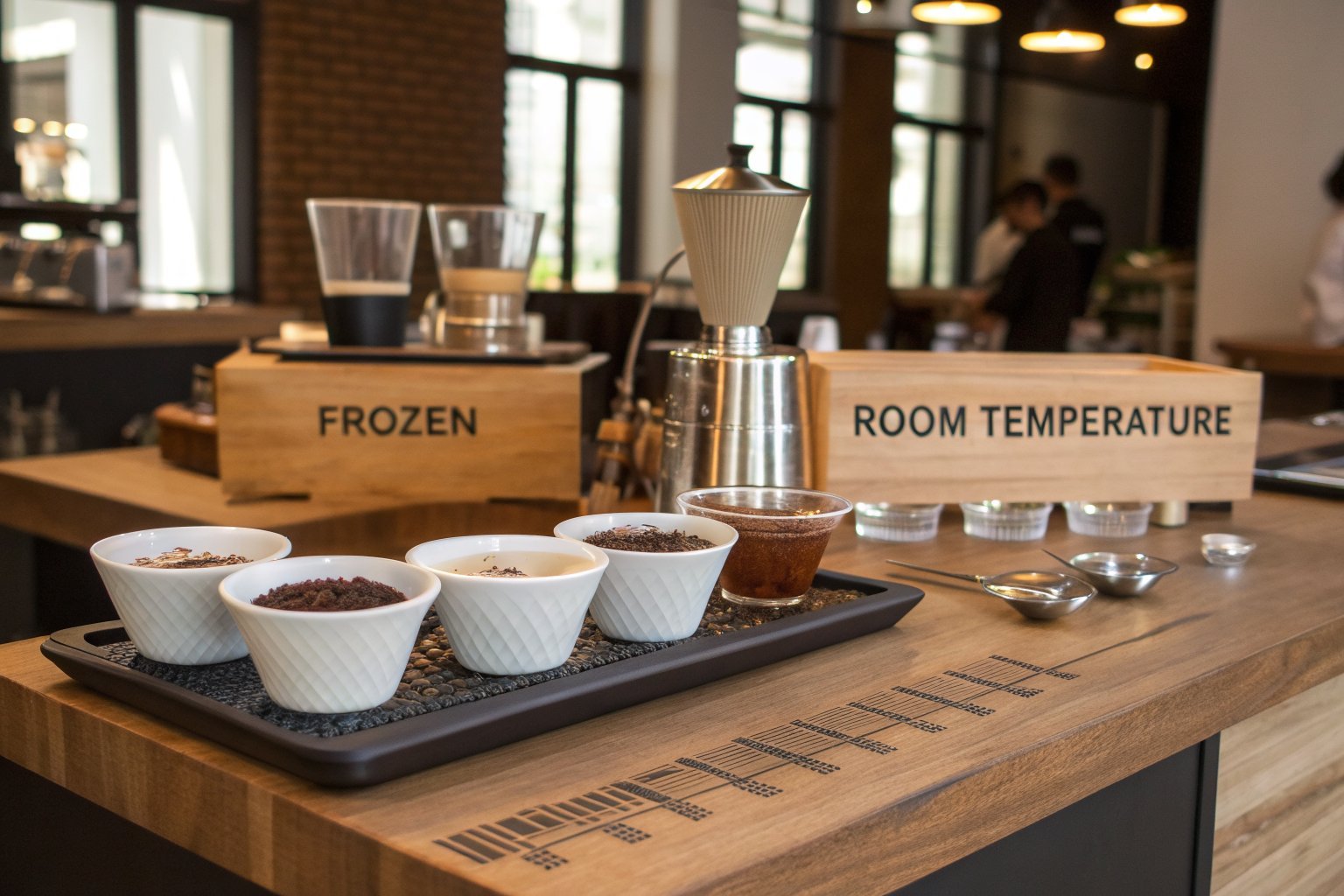
Green coffee is alive. After harvest and processing, the beans continue to respire and undergo chemical changes. The rate of these changes doubles for every 10 degree Celsius increase in temperature. At room temperature, a bean stored for 12 months can lose 30 to 40 percent of its volatile organic compounds. At minus 18 degrees Celsius, that loss drops to less than 5 percent over the same period. The World Coffee Research storage study found that properly frozen green coffee retained 95 percent of its original cupping score after 24 months of storage. Coffee stored at room temperature from the same lot scored 4 to 6 points lower over the same period. For a coffee that originally scored 86 points, freezing at a quarter of a point per month versus a decline of one point per month at room temperature. Over 12 months, that is the difference between an 83-point coffee and an 85-point coffee — and the difference between a 3.00 dollar per pound price and a 4.50 dollar per pound price.
Do All Roasters Agree That Freezing Improves Quality?
Not everyone is convinced. Some roasters argue that freezing changes the cellular structure of the bean, cracking cell walls and potentially affecting extraction. The concern is valid: if beans are frozen too quickly or thawed incorrectly, ice crystals can form inside the cells and cause structural damage. The Specialty Coffee Association's freezing consensus paper concluded that when beans are frozen in moisture-proof packaging and thawed gradually, no measurable damage to cup quality occurs. The key is preventing moisture migration. If beans are exposed to freezer air, they can lose moisture or absorb freezer odors. Properly sealed GrainPro bags placed inside a deep freezer maintain quality for 18 to 24 months with no detectable difference from fresh beans. At Shanghai Fumao, we use this method for our reserve lot samples, and buyers consistently confirm that the frozen samples taste identical to fresh arrivals.
How Should Green Coffee Be Frozen and Thawed Correctly?
The technique matters more than most roasters realize. Poor freezing practices can damage the beans more than simply leaving them at room temperature.
What Is the Best Packaging for Freezing Green Coffee?
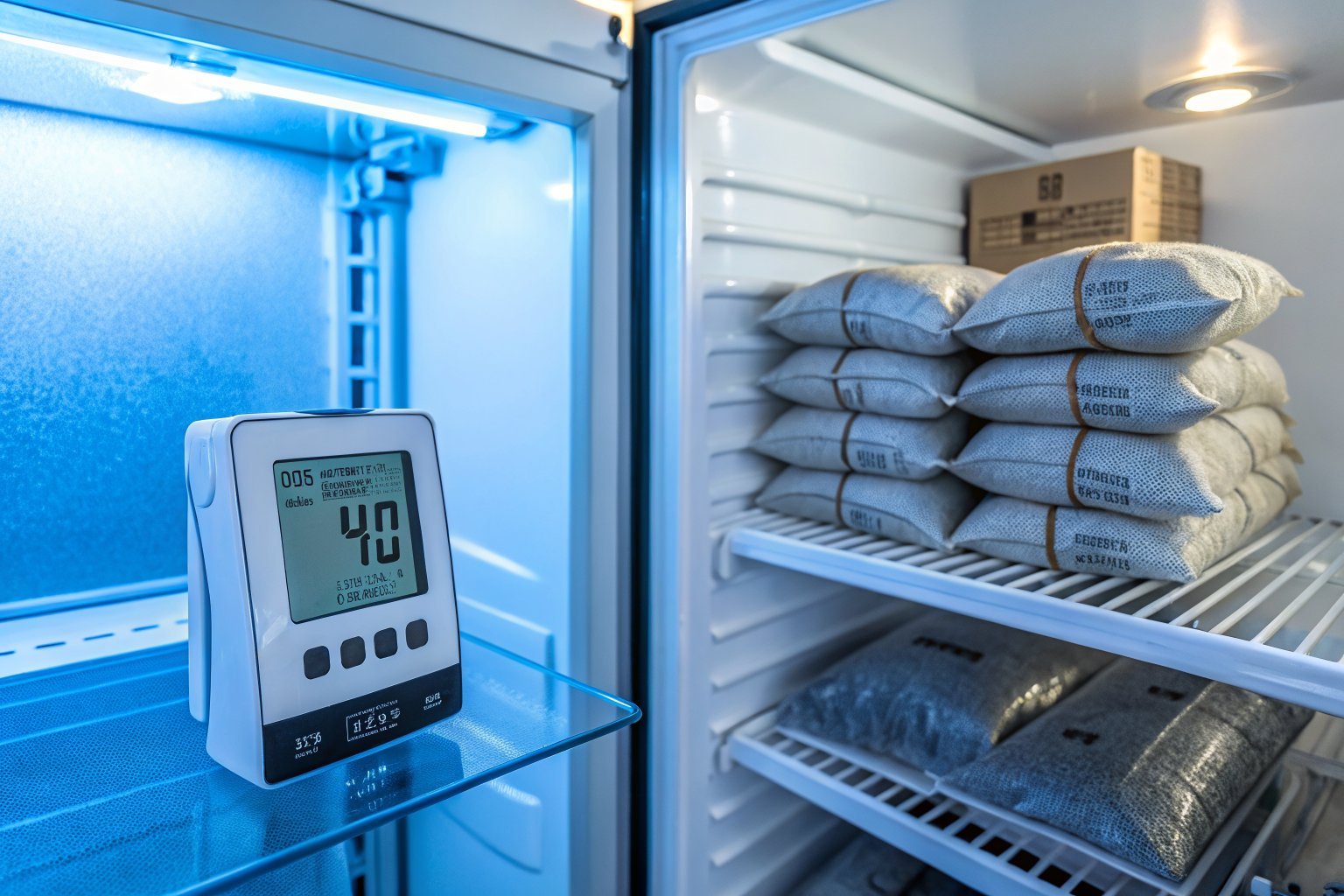
The critical requirement is an airtight, moisture-proof seal. Green coffee in a standard burlap sack will absorb moisture and odors from the freezer environment. Use GrainPro bags or heavy-duty mylar bags with the air pressed out before sealing. Vacuum sealing is ideal but not essential — simply squeezing the air out and sealing tightly works well for most applications. The Coffee Quality Institute's freezing protocol recommends double-bagging with a vapor-proof inner liner and a durable outer bag. Each bag should contain no more than 5 kilograms of green coffee to ensure even freezing and manageable thawing. If you plan to freeze in bulk, portion the coffee into the quantities you will use at one time. Never refreeze thawed green coffee — the moisture migration during a second freeze-thaw cycle will damage the beans.
How Fast Should You Freeze and Thaw the Beans?
Slow freezing is better than fast freezing for green coffee. Rapid freezing creates small ice crystals inside the bean's cellular structure, which can rupture cell walls. Slow freezing in a standard deep freezer at minus 18 degrees Celsius over 24 to 48 hours allows the moisture to solidify gradually without damaging the bean structure. Thawing should be even slower. Move the frozen bag from the freezer to the refrigerator at 4 degrees Celsius for 24 hours, then to room temperature for another 12 hours before opening. Opening a frozen bag directly to room temperature causes condensation on the surface of the beans, which raises the moisture content of the outer layer and can cause uneven roasting. The Roast Magazine's freezing and thawing guide emphasizes that gradual thawing is the single most important factor in preserving quality. At Shanghai Fumao, we have tested this extensively and confirm the same finding — more important than the freezing itself.
What Are the Economic Benefits of Freezing Green Coffee?
Freezing is not free. It costs money in equipment, packaging, and energy. But for many roasters, the savings in reduced waste and improved inventory flexibility outweigh the costs.
Does Freezing Let You Buy Coffee at Better Prices?
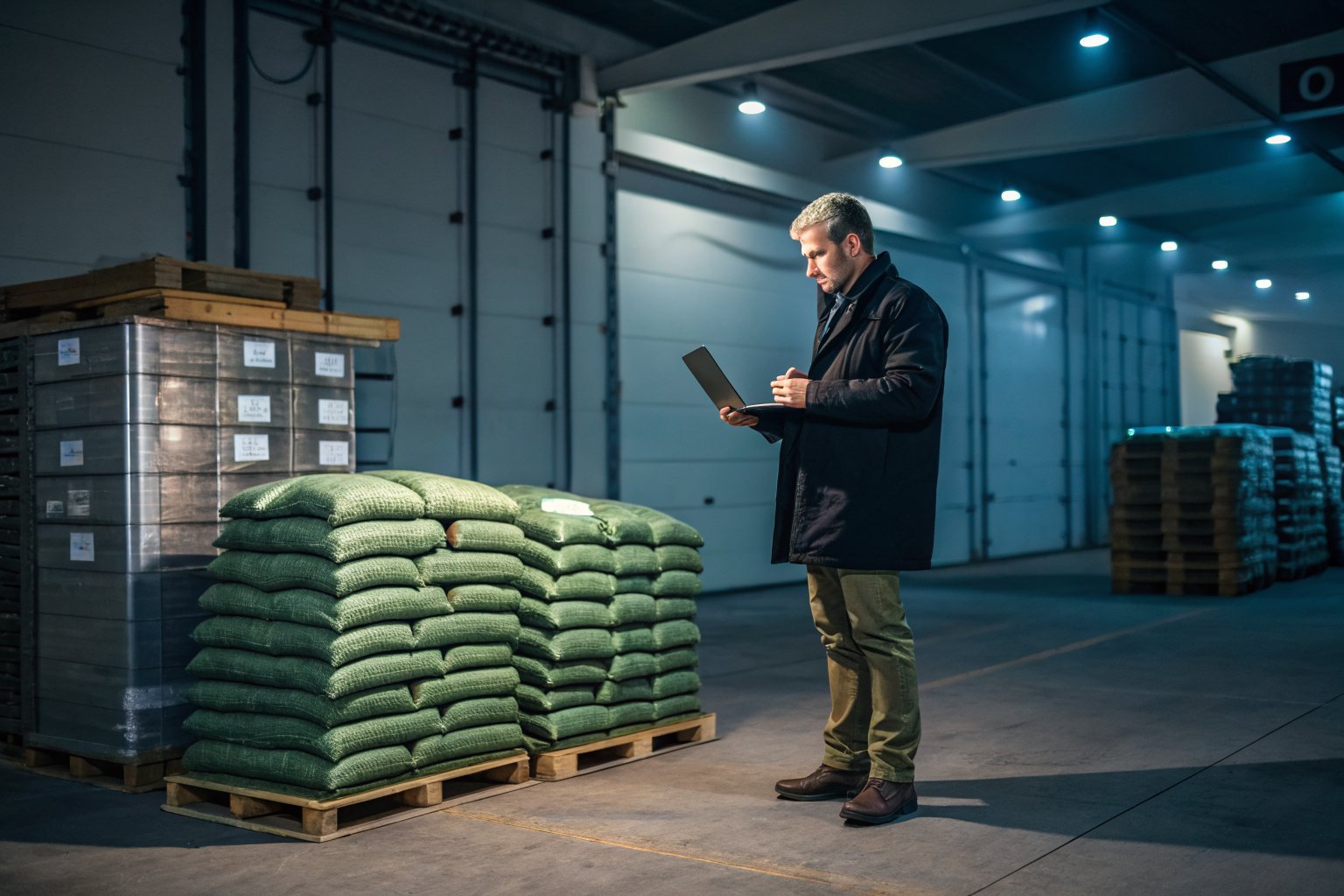
Yes. The ability to freeze green coffee means you can buy seasonal lots at harvest-time prices and use them throughout the year. Coffee from the main harvest in Brazil or Central America is cheapest in the three months following the harvest. Prices typically rise by 10 to 20 percent over the following 6 to 9 months as inventories decline. If you have freezer capacity, you can buy a full container at harvest pricing, freeze 60 to 80 percent of it, and draw from the frozen stock over the next 12 to 18 months. The International Coffee Organization's price analysis shows that the average seasonal price premium for off-season buying is 0.30 to 0.50 dollars per pound for Arabica coffees. On a 40,000-pound container, that is a saving of 12,000 to 20,000 dollars. The energy and packaging cost for freezing that volume runs roughly 0.03 to 0.05 dollars per pound over 12 months — a fraction of the saving.
Can Freezing Help You Manage Inventory Risk?
Inventory risk is one of the biggest hidden costs in the coffee business. If you buy a lot and it does not sell as fast as expected, the coffee degrades in storage. With frozen inventory, you have a 24-month window instead of a 6-month window. That flexibility lets you take advantage of bulk discounts, buy experimental lots without pressure to sell them quickly, and maintain a wider product catalog without writing off stale inventory. The National Coffee Association's inventory management report found that roasters with freezer capacity reported 40 percent lower inventory write-offs compared to roasters who relied solely on ambient storage. The initial investment in a commercial freezer — 3,000 to 8,000 dollars for a unit holding 5,000 to 10,000 pounds — typically pays for itself in reduced waste within 18 months.
What Are the Risks and Limitations of Green Coffee Freezing?
Freezing is powerful but not a silver bullet. There are situations where it does more harm than good, and there are costs that roasters often underestimate.
When Should You Never Freeze Green Coffee?
Do not freeze coffee that you plan to sell as single origin to customers within the next 90 days. The freezing and thawing process adds no value if the coffee will be roasted and consumed quickly. Also avoid freezing coffee with moisture content above 12 percent. The free water in high-moisture beans forms larger ice crystals that damage the bean structure. Do not freeze coffee that has already been frozen once. The second freeze-thaw cycle causes significant structural damage and flavor degradation. Label every bag with the date it was frozen and never exceed the 24-month recommended maximum storage time. The Green Coffee Association's freezing guidelines specifically warn against freezing decaffeinated coffee, because the decaffeination process alters the bean's cellular structure and makes it more susceptible to ice damage.
How Do You Calculate the True Cost of Freezing for Your Operation?
The real costs include: the freezer unit itself, which costs 0.10 to 0.20 dollars per watt per month to run; the packaging materials at 0.50 to 1.50 dollars per bag; the labor to bag, seal, label, and stack the coffee; the lost interest on the inventory you are holding; and the risk of freezer failure. A freezer that fails for 48 hours undetected can ruin 10,000 dollars worth of coffee. The Coffee Roasters Guild's cost-benefit analysis tool provides a calculator to model your specific situation. For most mid-size roasters handling 50,000 to 200,000 pounds annually, freezing makes financial sense for at least 20 to 30 percent of their inventory. The highest- value lots — microlots, competition coffees, and seasonal specialties — benefit the most. Commodity-grade coffee that you turn over quickly is rarely worth freezing.
Conclusion
Freezing green coffee before roasting is not a gimmick. It is a scientifically validated method for preserving quality, reducing waste, and improving inventory flexibility. The correct technique is simple: seal the beans in moisture-proof packaging, freeze slowly at minus 18 degrees Celsius, thaw gradually through refrigeration, and never refreeze. The economic benefits — buying at harvest pricing, reducing write-offs, and expanding your product window — typically outweigh the costs for any roaster handling specialty-grade coffee. At BeanofCoffee, we support our buyers' freezing programs by providing detailed moisture and water activity data that helps them decide which lots are suitable for long-term frozen storage. If you freeze your green coffee, you can buy with confidence knowing the quality will hold. Contact Person: Cathy Cai Email: cathy@beanofcoffee.com