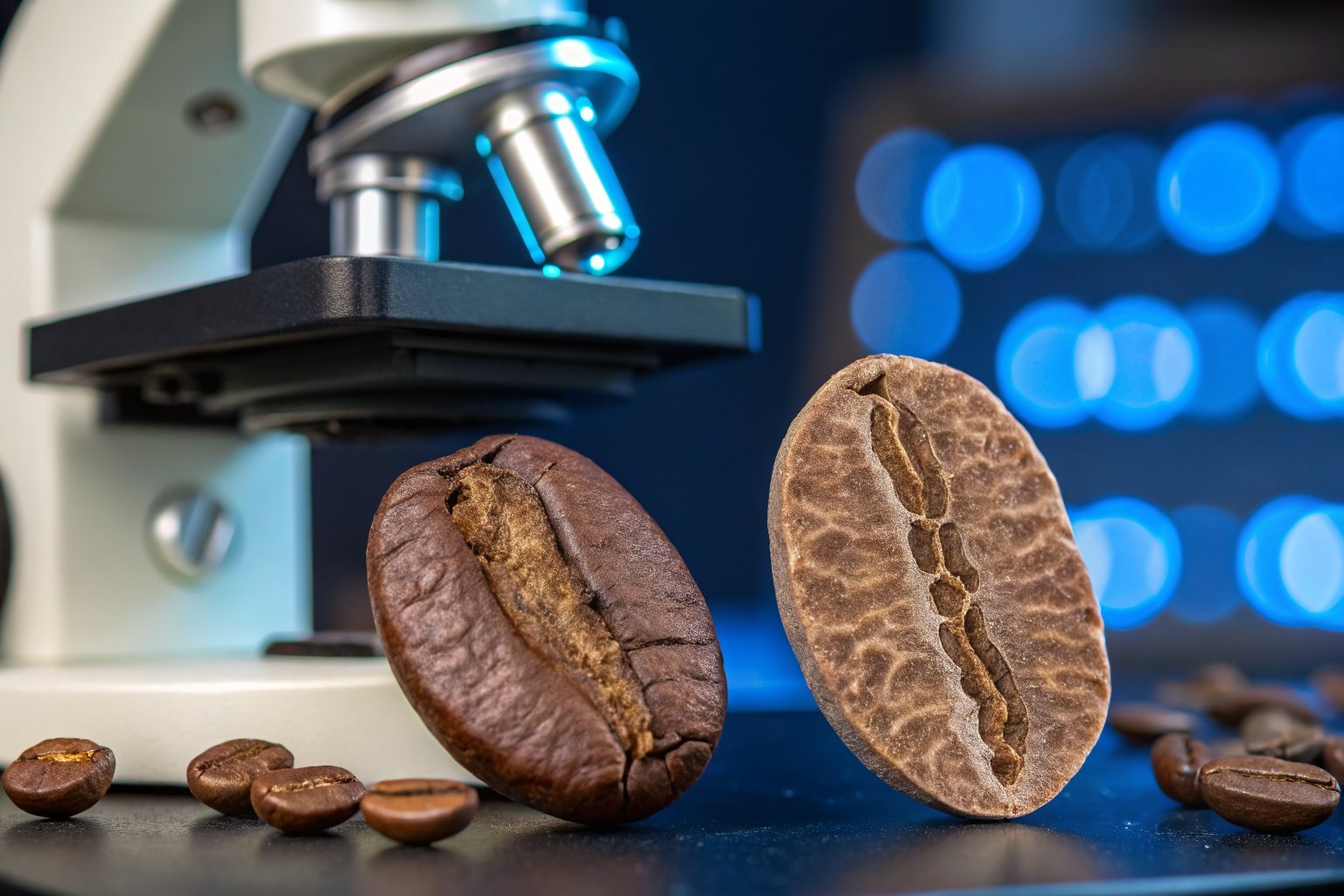
A roaster in Portland called me after struggling with a batch of natural process Yunnan. He could not get the flavor development he wanted. The beans looked fine on the surface, but the cup had a flat, one-dimensional taste no matter how he adjusted the profile. I asked him to check the bean density. It was 0.59 grams per cubic centimeter — low for specialty-grade Arabica. The Maillard reaction was proceeding differently in those beans because the cellular structure was less dense and the sugar concentration was lower. Not all coffee beans go through the Maillard reaction the same way. Density determines how the chemistry happens inside the bean. Let me walk you through the science and what it means for your roasting decisions.
What Is the Maillard Reaction and Why Does It Vary Between Beans?
The Maillard reaction is the chemical process between amino acids and reducing sugars that creates the brown color, roasted aroma, and complex flavor in coffee. It starts at around 150 degrees Celsius and continues throughout the roast. But the rate and completeness of the reaction depend on how much sugar is available and how efficiently heat transfers through the bean.
How Does Bean Density Affect Sugar Availability for Maillard Browning?
Low-density beans have less sugar per bean than high-density beans at the same moisture content. The lower density is often a result of incomplete ripening, which means the cherry did not accumulate enough sucrose. Less sugar means fewer reactants available for the Maillard reaction, which produces less browning and fewer flavor compounds. The Journal of Agricultural and Food Chemistry's Maillard study in coffee found that low-density beans produce 25 to 35 percent fewer Maillard reaction products than high-density beans roasted to the same color. The key aroma compounds — pyrazines, furans, and thiazoles — are all reduced. The result is a cup that tastes hollow, with less chocolate, less nuttiness, and less sweetness. This is not a flaw you can fix by roasting longer. If the sugars are not there, the reaction cannot happen.
Does the Maillard Reaction Occur at Different Temperatures in Low-Density Beans?
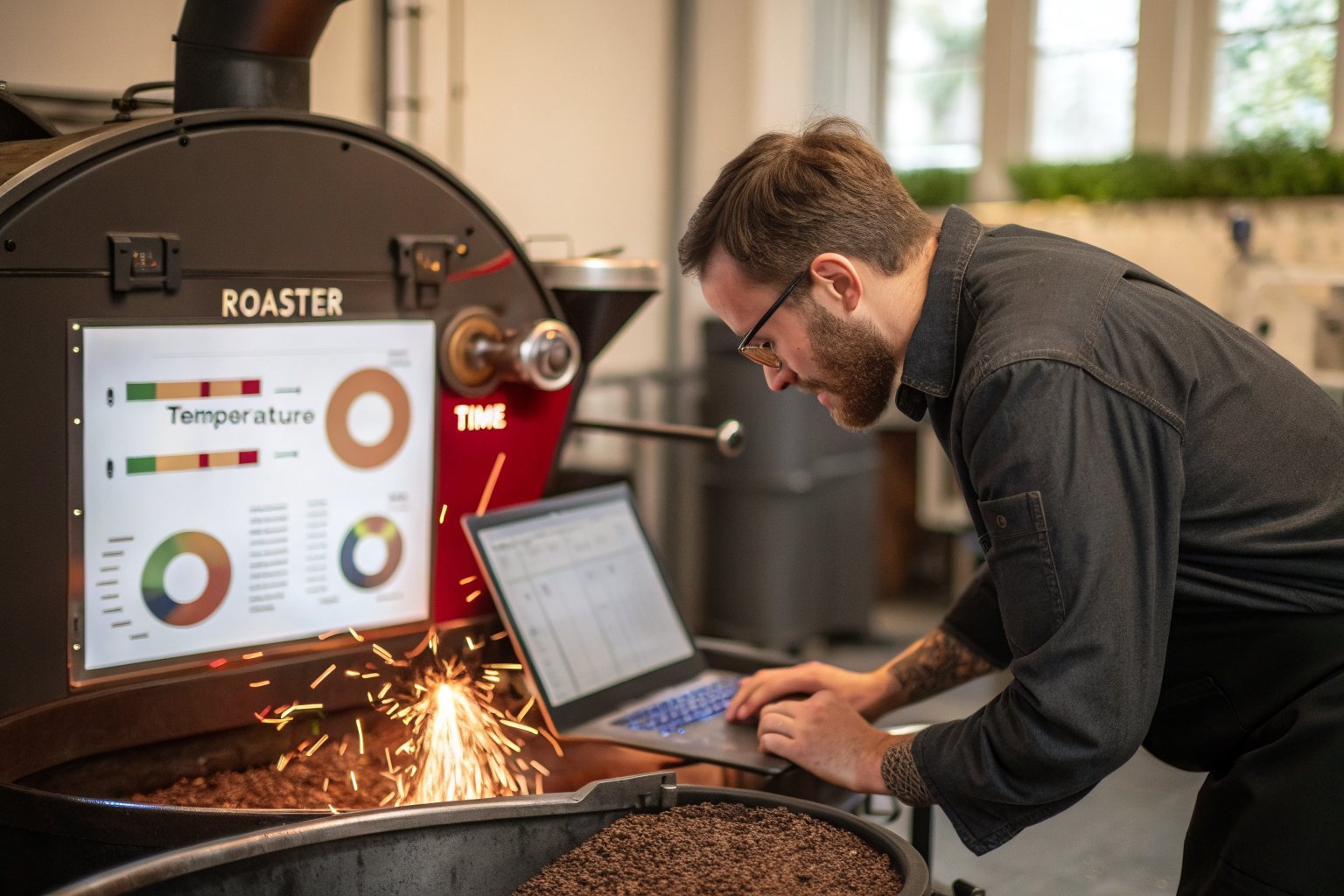
No, the reaction itself starts at the same temperature. But the internal temperature of the bean rises faster in low-density beans because they have less thermal mass. A low-density bean at 0.59 grams per cubic centimeter may reach 150 degrees Celsius 20 to 30 seconds sooner than a high-density bean at 0.72 grams per cubic centimeter under the same roasting conditions. The Roast Magazine's thermal analysis of density variation shows that the Maillard reaction window — the time between 150 and 180 degrees Celsius — is compressed in low-density beans. The reaction starts earlier but ends sooner, reducing the total time available for flavor development. This is why low-density beans often taste underdeveloped even when they look properly browned. The color comes from caramelization, but the real flavor complexity from Maillard chemistry never had time to mature.
How Should You Adjust Roast Profiles for Low-Density Beans?
If you know you are roasting low-density beans, you can adjust your profile to get the best possible result. The adjustments are not complicated, but they go against the standard approach for dense specialty coffee.
What Charge Temperature Works Best for Low-Density Beans?
Lower charge temperature is better for low-density beans. A standard charge for dense specialty Arabica might be 195 to 205 degrees Celsius. For low-density beans, drop the charge to 180 to 190 degrees Celsius. This slows down the initial heat transfer and gives the Maillard reaction more time to develop before the bean hits first crack. The Coffee Quality Institute's density-based roasting guide recommends a charge temperature that is 10 to 15 degrees cooler for every 0.05 grams per cubic centimeter below 0.70. A bean at 0.60 should be charged 20 to 30 degrees cooler than a bean at 0.75. The extra time in the roast also helps with evenness, because low-density beans are often less uniform in size and moisture distribution.
Should You Extend the Maillard Phase for Low-Density Beans?
Yes, but carefully. Extending the Maillard phase — the time between the end of drying and the start of first crack — gives the amino acids and sugars more time to react. A typical Maillard phase for dense specialty coffee is 3 to 4 minutes. For low-density beans, aim for 4.5 to 5.5 minutes. The World Coffee Research roasting optimization study found that extending the Maillard phase by 30 to 40 percent improved the cupping score of low-density beans by an average of 1.5 points. The improvement came primarily in the flavor and sweetness categories. But there is a limit — extending beyond 6 minutes causes the bean to develop baked flavors from excessive thermal degradation of the remaining sugars. The sweet spot is between 4.5 and 5.5 minutes for most low-density Arabica.
What Flavor Differences Should You Expect from Low-Density Beans?
The flavor profile of low-density coffee is predictably different from high-density coffee. Knowing what to expect helps you market the coffee appropriately and avoid disappointment.
How Does Low Density Affect Acidity and Body?
Low-density beans tend to have lower perceived acidity and thinner body. The cell walls are less developed, so there is less structure to retain oils and soluble solids. The result is a coffee that feels lighter on the palate and has less of the bright, crisp acidity that high-density beans deliver. The Specialty Coffee Association's density-flavor correlation study found that low-density beans below 0.65 grams per cubic centimeter score an average of 0.5 to 1.0 points lower in acidity and 0.4 to 0.8 points lower in body compared to high-density beans above 0.72 from the same origin. The difference is detectable in a blind cupping but not necessarily a disqualifier. Some roasters prefer the softer mouthfeel of lower-density coffee for certain applications, like cold brew or milk-based drinks.
Can Low-Density Beans Still Produce Good Cup Quality?
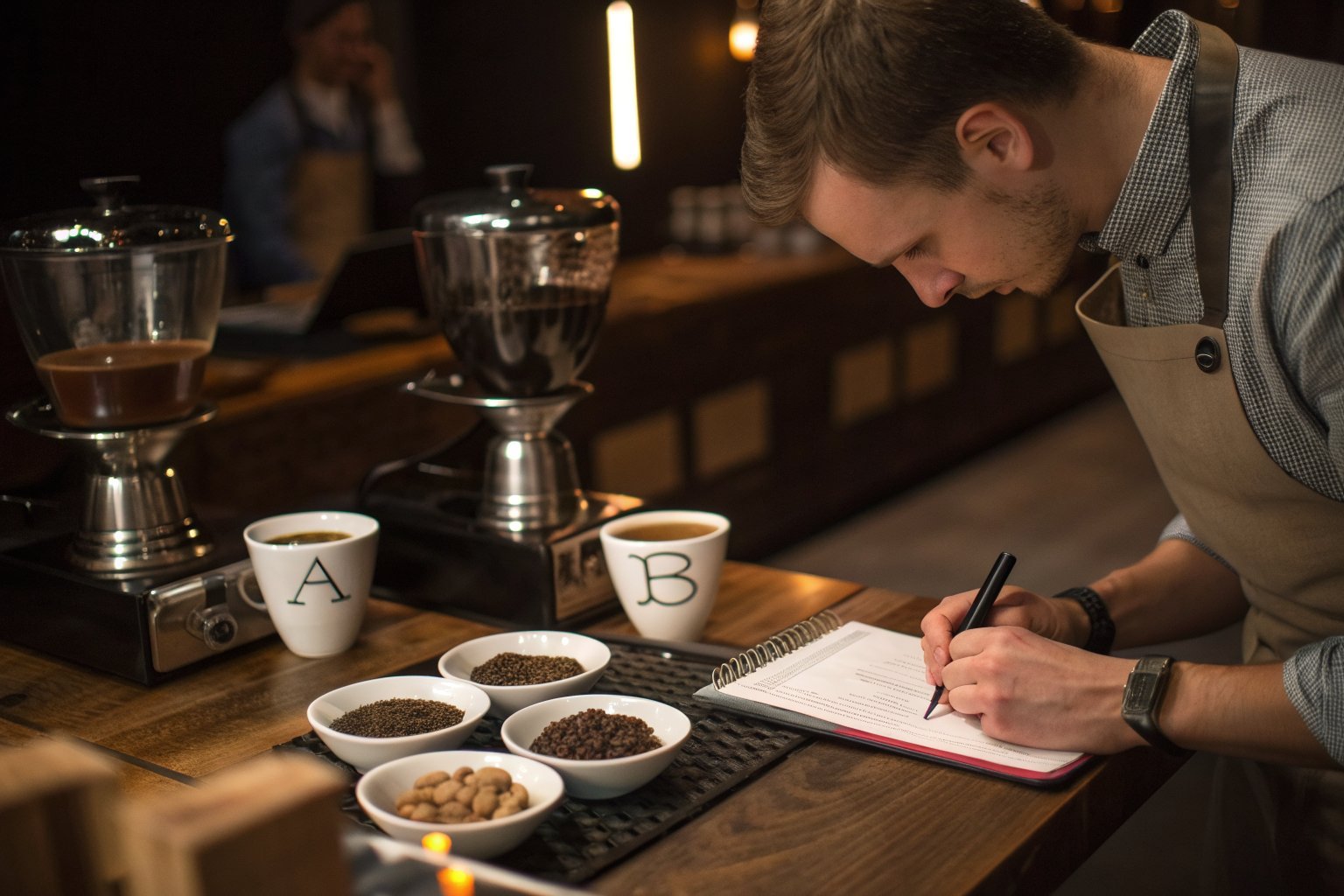
Absolutely. Low density does not mean bad coffee. It means different coffee. Some of the most interesting flavor profiles come from lower-density beans that have been roasted thoughtfully. The key is knowing what you are working with and not trying to force it into a profile it cannot achieve. The Roast Magazine's guide to roasting lower-density specialty coffee emphasizes that low-density beans from well-managed farms can produce excellent cups when the roast profile is tailored to their characteristics. The flavors tend toward softer fruit notes, milk chocolate rather than dark chocolate, and a gentle sweetness rather than bright acidity. At Shanghai Fumao, we provide density data with every lot so roasters can plan their profiles before they receive the beans. A buyer who knows the density in advance will always get better results than one who discovers it after the first failed batch.
How Do You Identify Low-Density Beans Before You Roast Them?
The sooner you know the density, the better you can plan your roasting strategy. There are several ways to identify low-density beans at the green stage.
What Physical Signs Indicate Low Density in Green Coffee?
Low-density green beans look different. They are visibly smaller and lighter in color — more pale green than the deep, vibrant green of dense beans. They feel lighter in the hand. A handful of high-density beans has a distinct weight that is easy to recognize with experience. Low-density beans also tend to have more visible splits and cracks in the parchment. The simplest field test is the float test. Drop a 100-bean sample into a glass of clean water. High-density beans sink immediately. Low-density beans float or sink slowly. The percentage that floats correlates roughly with the density — a lot with 20 percent floating beans is likely around 0.62 to 0.65 grams per cubic centimeter. This is not precise enough for commercial sorting, but it is fast and useful for initial screening.
Is There a Fast Lab Test for Density Before Roasting?
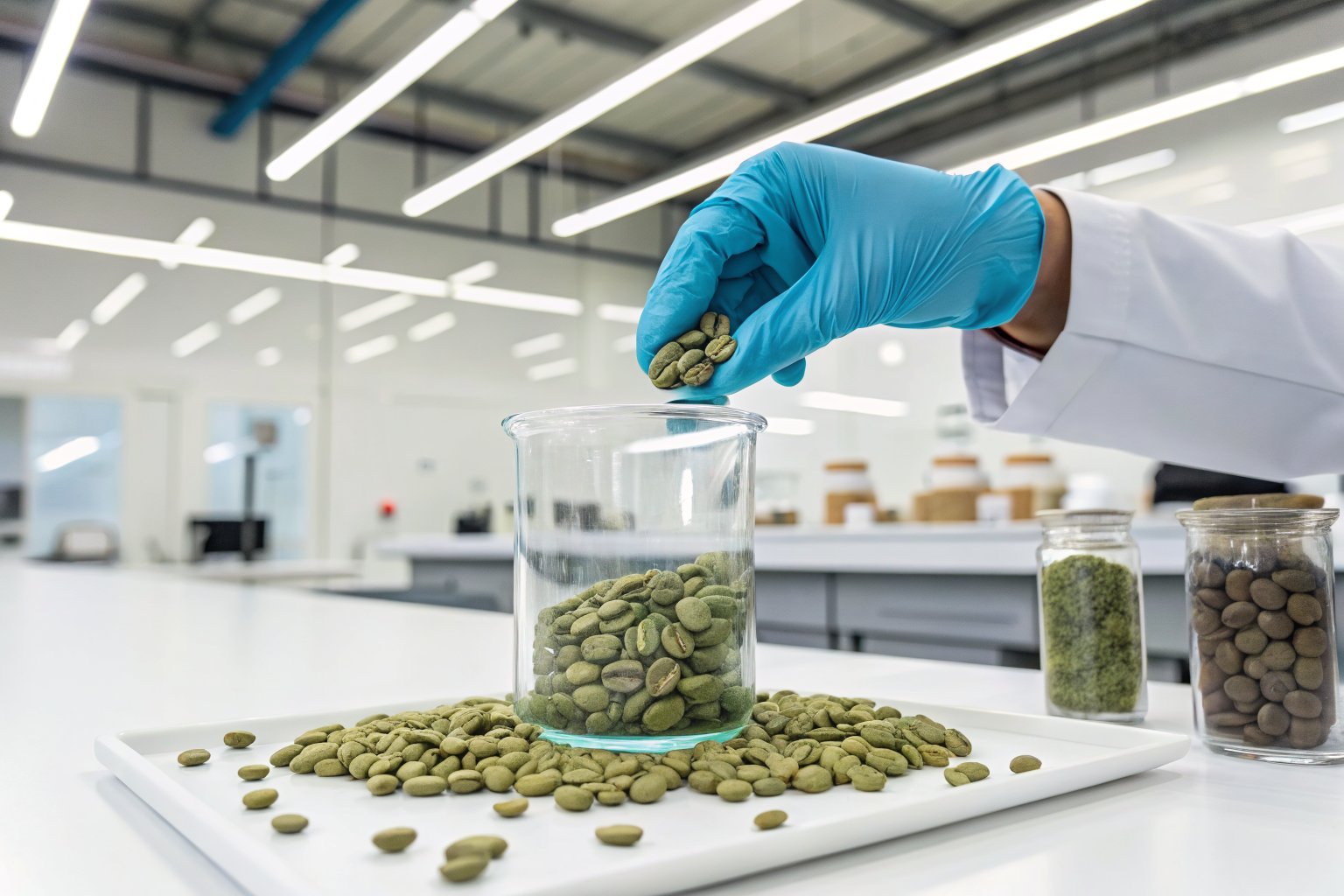
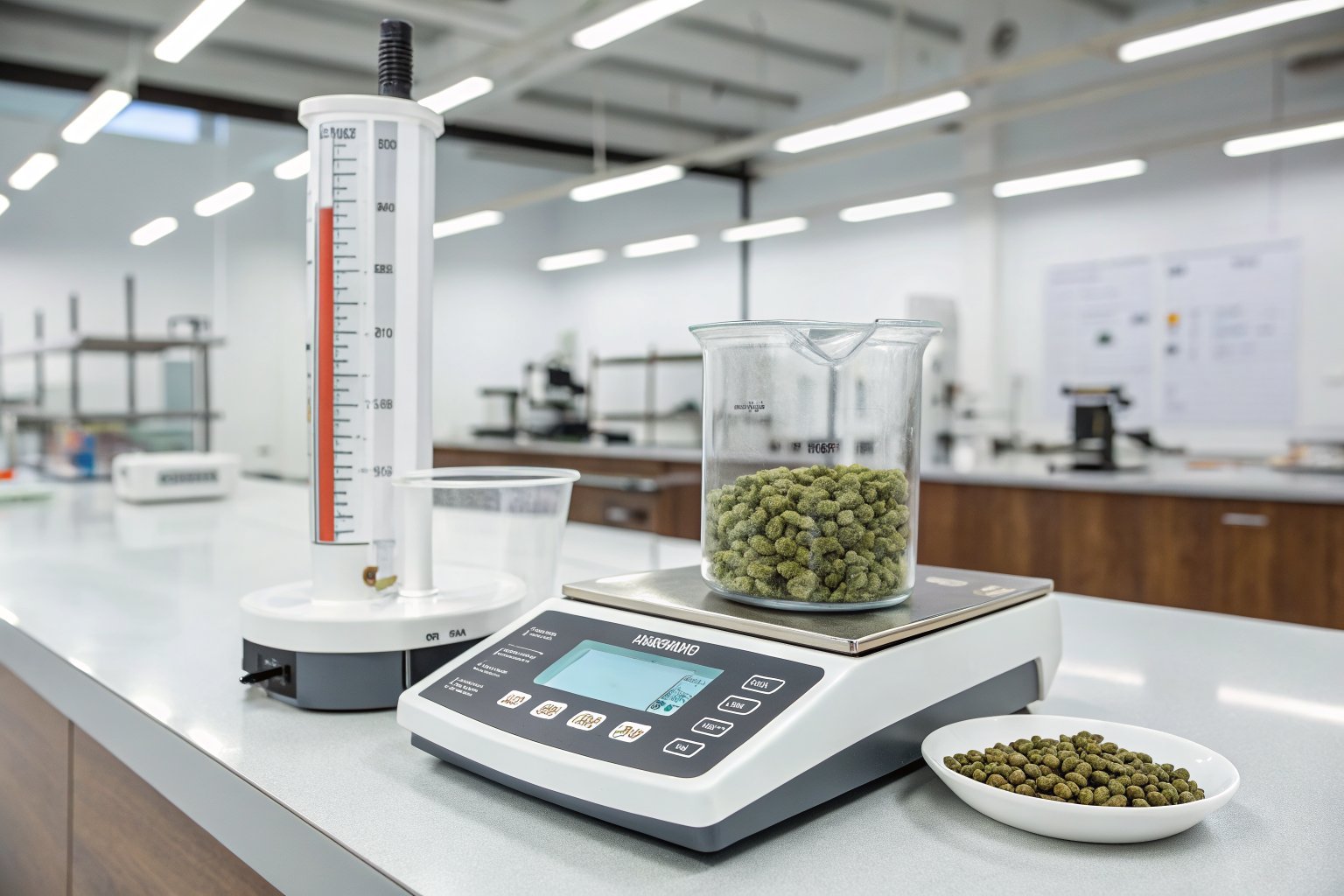
Yes. The simplest accurate method is the volumetric displacement test. Weigh 100 grams of green beans, pour them into a graduated cylinder containing 200 milliliters of water, and measure the volume increase. The mass divided by the volume gives the density. The whole test takes 5 minutes and requires only a scale, a graduated cylinder, and water. The Green Coffee Association's pre-roast density screening protocol recommends using a 100-gram sample for the volumetric test and running it in duplicate. If the two readings differ by more than 0.02 grams per cubic centimeter, run a third test. A consistent result within 0.01 grams per cubic centimeter is sufficient for roasting decisions. Any lot below 0.65 should be roasted with a low-density profile.
Conclusion
The Maillard reaction proceeds differently in low-density coffee beans because they have less sugar, less thermal mass, and a compressed reaction window. The result is fewer flavor compounds, thinner body, and lower acidity if roasted with a standard profile. But low-density beans can still produce excellent coffee when roasted correctly — lower charge temperature, extended Maillard phase, and realistic expectations about the flavor profile. Density is not a measure of quality. It is a measure of structure. Know your bean density before you roast, and you will consistently get better results than a roaster who treats every batch the same. At BeanofCoffee, every lot we ship includes density data because we want you to have the information you need to roast our beans to their full potential. At Shanghai Fumao, we have seen this many times. If you want to learn more about how our Yunnan Catimor performs at different roast profiles, just ask. Contact Person: Cathy Cai Email: cathy@beanofcoffee.com