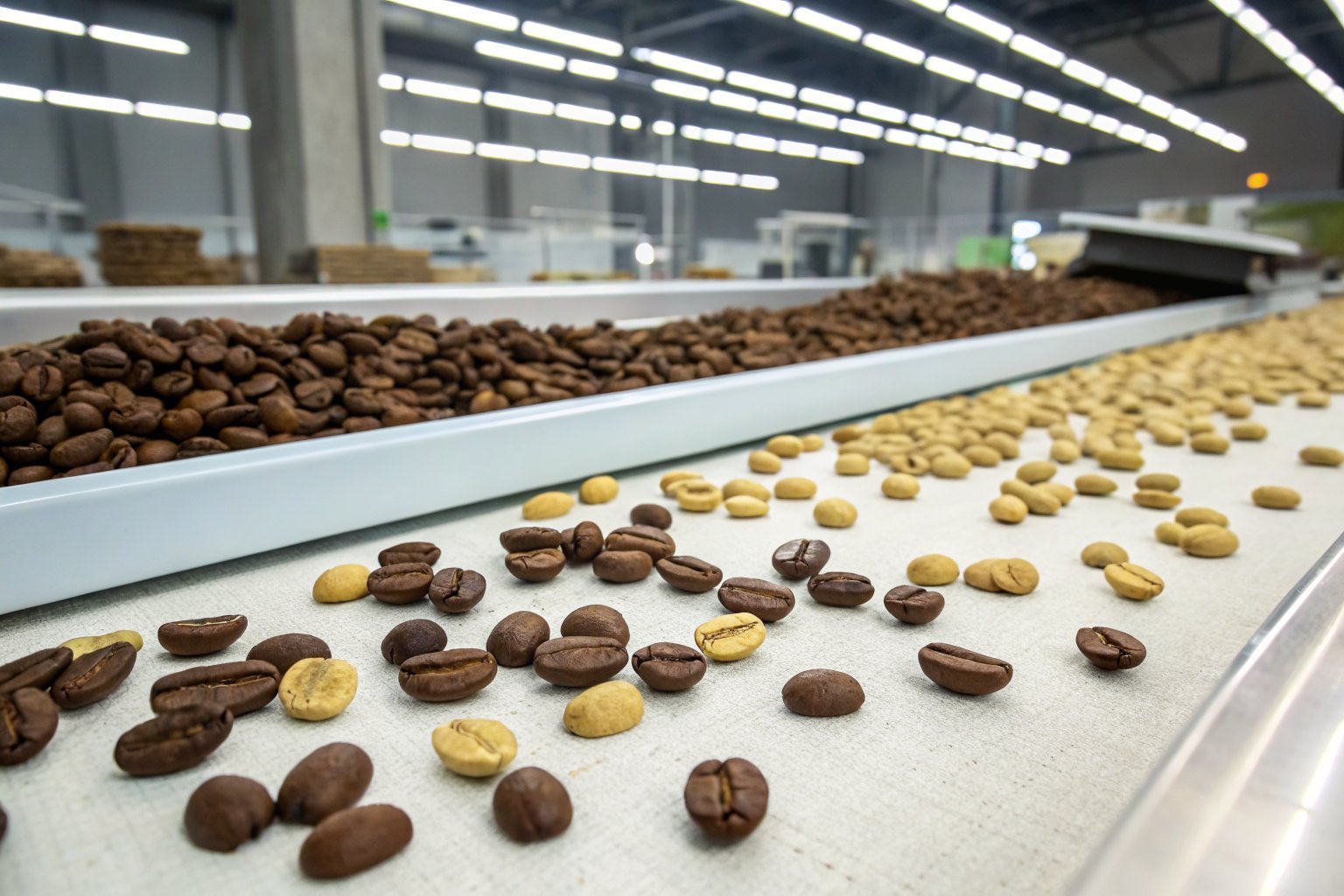
A roaster from Denver called me after cupping a new Yunnan lot we had sent him. He was puzzled. The batch had a few pale, underdeveloped beans mixed in, and they tasted like peanut shells and straw. He asked if we had a defect problem at the farm. I told him those were Quakers — underripe beans that do not develop color during roasting because they never had enough sugar to caramelize. They are not a defect in the traditional sense. They are a maturity problem, and they can come from any origin, any variety, any farm. The question is how many there are and whether your green coffee supplier is sorting them out before you ever see them. Let me walk you through how to find Quakers and what they tell you about your green coffee quality.
What Exactly Is a Quaker Bean and Why Does It Happen?
Quakers are roasted coffee beans that fail to develop normal brown color during roasting. They stay pale, light, and crunchy because they came from underripe cherries harvested before the sugar content was high enough. The term comes from the Quaker religious movement — plain, pale, and unassuming.
What Causes a Coffee Cherry to Produce a Quaker Bean?
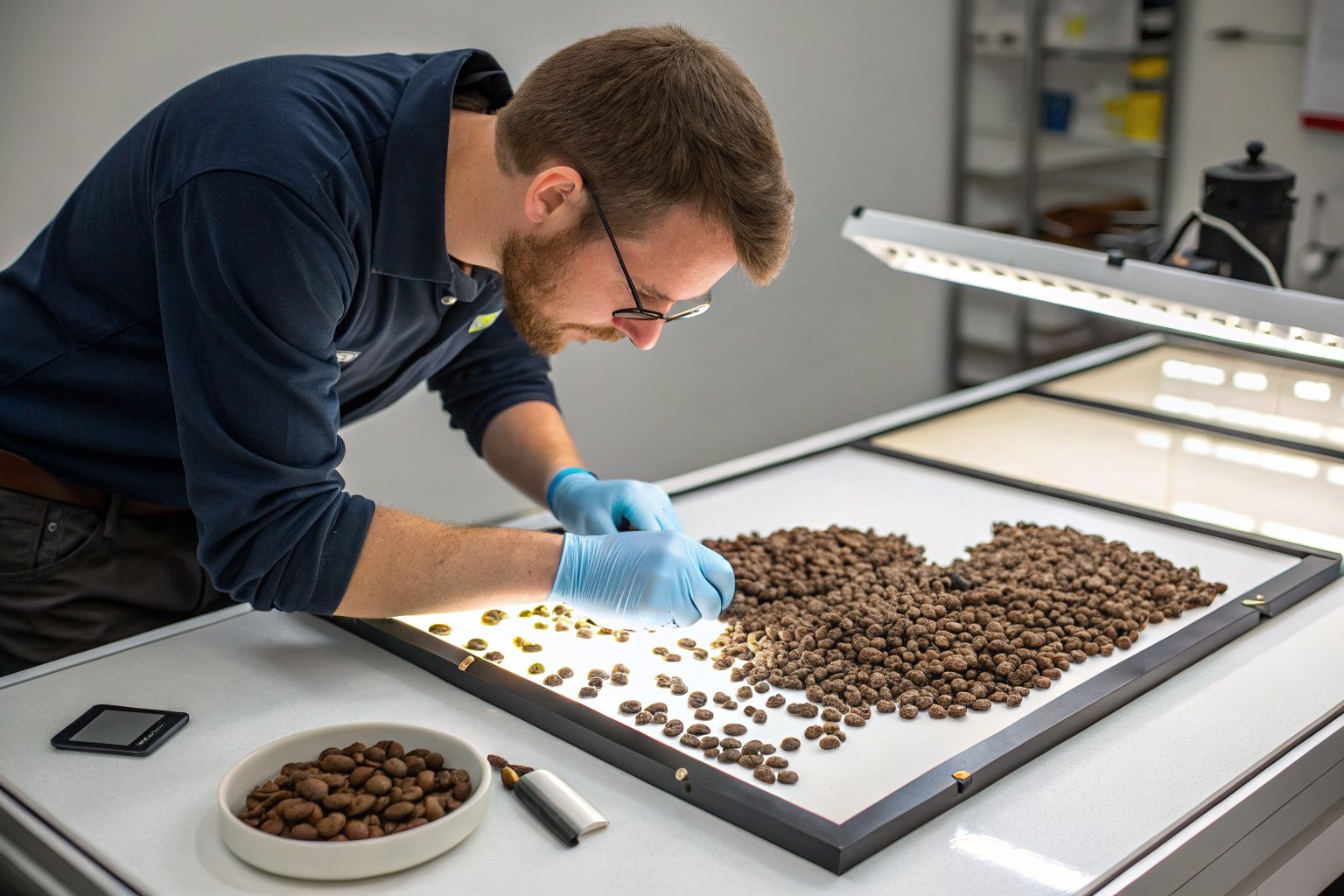
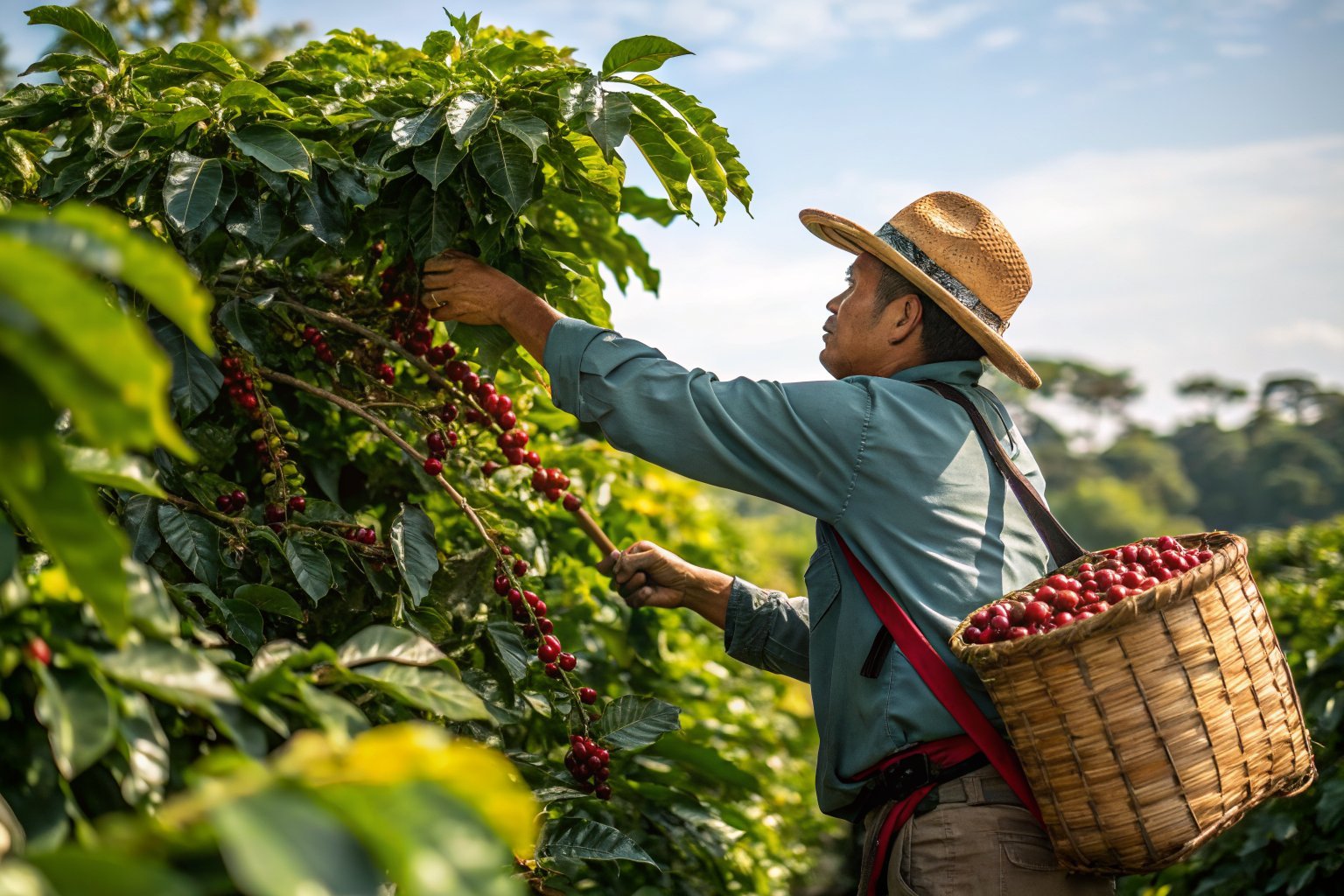
The root cause is incomplete ripening on the tree. A cherry that is harvested green or semi-green has not accumulated enough sucrose for normal Maillard browning during roasting. Some varieties, particularly Catimor and its hybrids, are more prone to producing Quakers because they ripen unevenly across the tree. A single branch can have ripe red cherries, semi-ripe yellow cherries, and green cherries all at the same time. The World Coffee Research ripening physiology study found that Quaker beans have 40 to 60 percent less sugar content than fully ripe beans from the same tree. That sugar deficit means there is less material available for the browning reactions that create coffee color and flavor. The result is a bean that stays pale and tastes flat, with flavors described as peanutty, woody, or cereal-like. At Shanghai Fumao, we train our harvest teams to strip only fully red cherries and use multiple passes through the same trees to catch late-ripening fruit.
Are Quakers Considered a Green Coffee Defect in Industry Standards?
In the Specialty Coffee Association's green coffee defect classification, Quakers are classified as a Category 1 defect — a full defect weighting. A single Quaker in a 300-gram sample reduces the grading score. For commercial grade coffee, up to 5 Quakers per 300 grams may be acceptable. For specialty grade, the standard is 3 or fewer per 500 grams. The SCA green coffee grading protocol specifies that Quaker count is measured after roasting to the standard Agtron color. The sample is roasted to a whole-beat color between 58 and 63 on the Agtron scale, then sorted by color. Any bean that is more than 2 units lighter than the majority is classified as a Quaker. This standardized measurement ensures that buyers and suppliers are comparing the same thing.
How Do You Identify Quakers in a Roasted Sample?
Identification is straightforward once you know what to look for. The key is roasting to a consistent color and then sorting visually.
What Is the Standard Protocol for Counting Quakers?
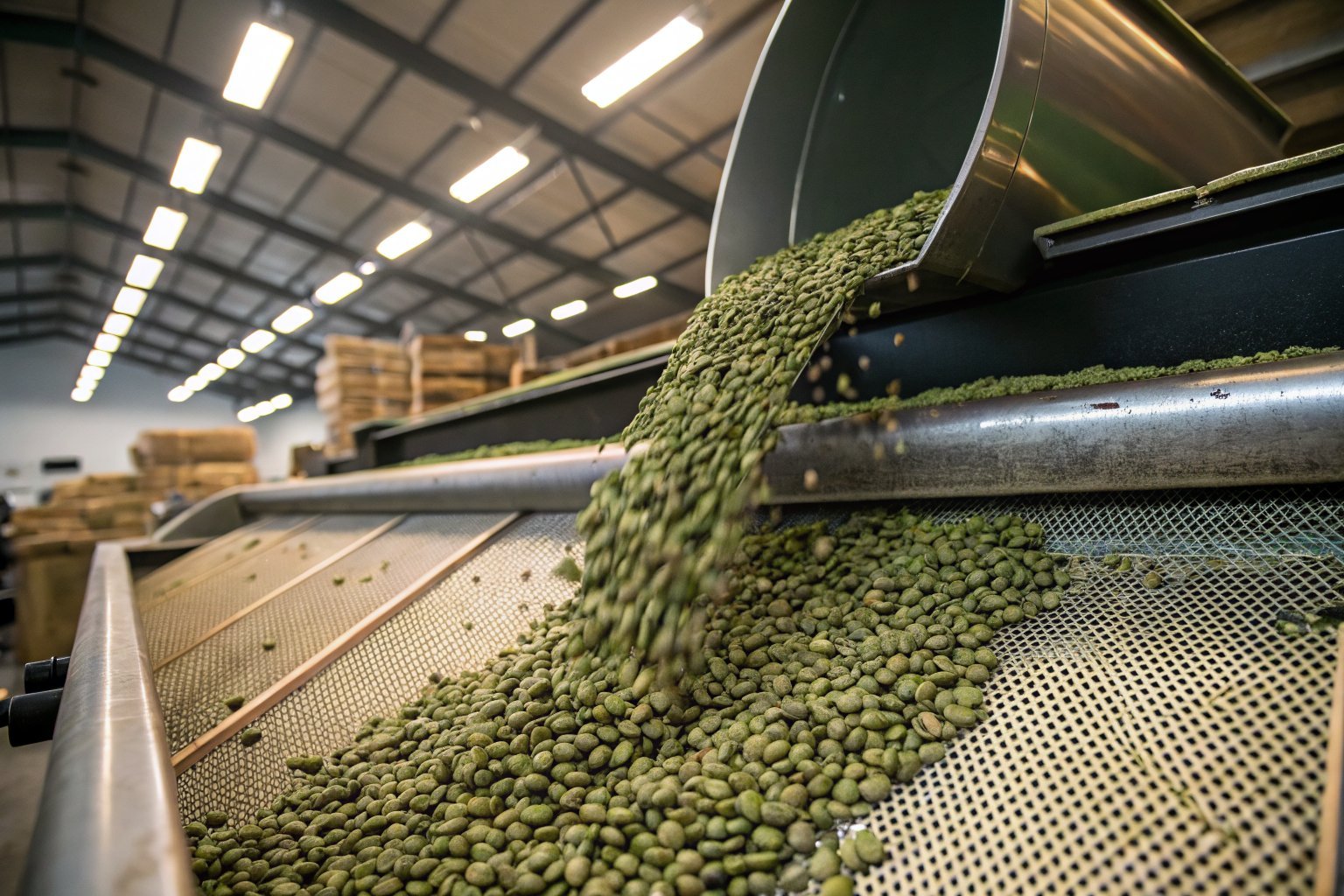
Start with a 300-gram sample of green coffee. Roast it to a consistent medium degree — 58 to 63 Agtron whole-bean color. Cool the beans immediately and evenly. Spread the entire sample on a white or neutral-gray sorting table under 1,000 to 2,000 lux of lighting. Separate any beans that are visibly lighter than the majority. Count them and express the result as Quakers per 300 grams. The Coffee Quality Institute's Quaker counting protocol emphasizes that the lighting color temperature should be 5,000 Kelvin — natural daylight equivalent. Fluorescent lighting at 3,000 Kelvin makes Quakers harder to spot because the warm light masks the color difference. A lightbox with 5,000K LED strips is a 100 dollar investment that dramatically improves detection accuracy.
Can You Identify Quakers by Taste Without Visual Sorting?
Yes, but with less precision. Quakers have a distinct flavor profile — roasted peanut, straw, cereal, or paper. In a cupping, they stand out as a sharp, flat note that interrupts the normal flavor profile. Experienced cuppers can detect a single Quaker in a 12-cup sample, but they will not be able to tell you how many there are. The Specialty Coffee Association's cupping defect classification lists Quaker notes as pungent, woody, or cereal in the flavor category, and as astringent in the mouthfeel category. If you cup a coffee and consistently write down peanut or grain notes, you are tasting Quakers. The correction is not in roasting — no amount of profile adjustment eliminates Quaker taste. The fix has to happen at the farm level through selective harvesting and density sorting.
How Can You Predict Quaker Frequency from Green Coffee Samples?
You do not have to roast a sample to estimate Quaker content. There are two reliable predictors that you can measure on green beans directly: density and color.
Is Green Bean Density a Reliable Predictor of Quakers?
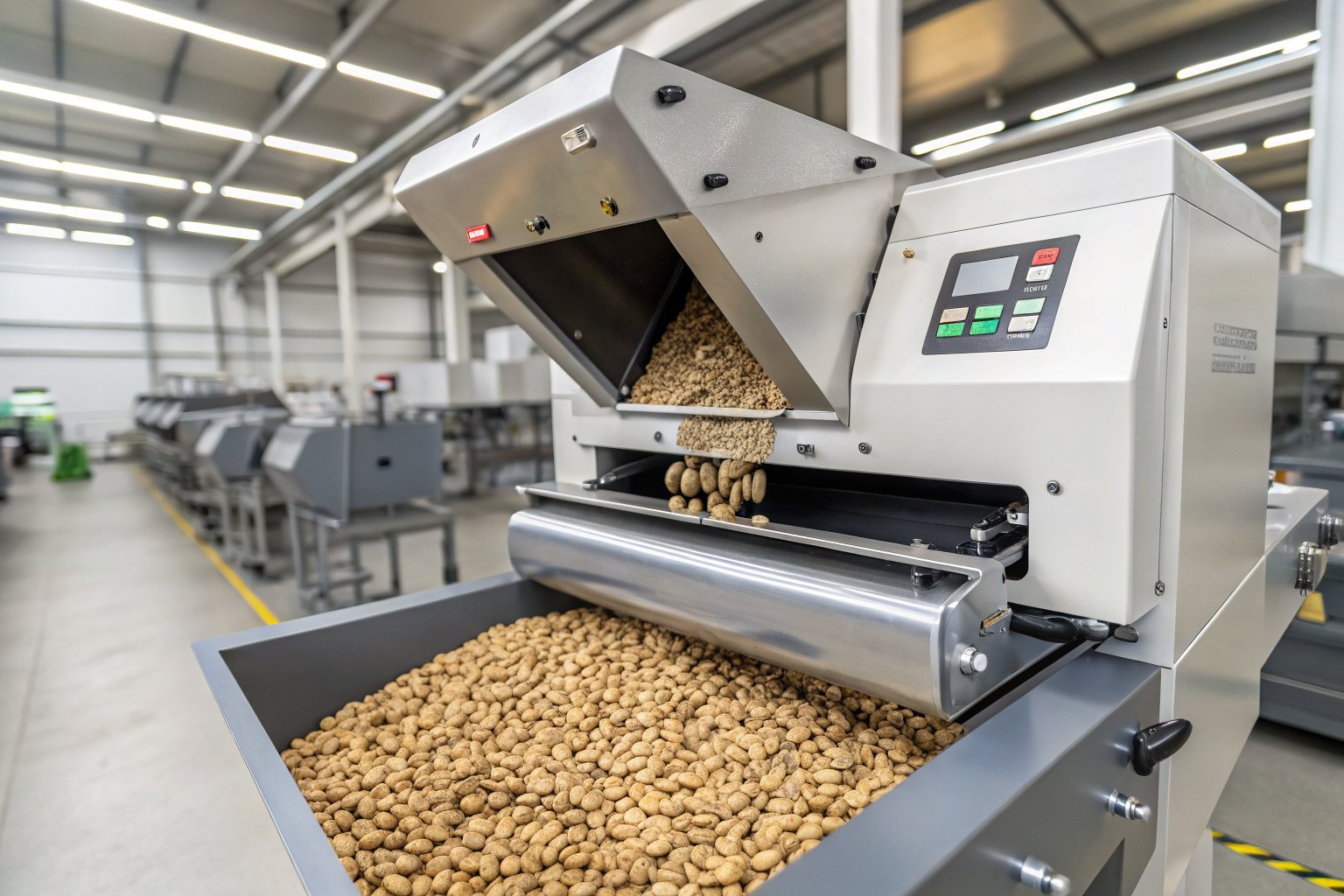
Yes. Quaker beans come from underripe cherries, and underripe cherries produce less dense beans. If you measure the bulk density of a green coffee sample, lower density correlates strongly with higher Quaker frequency. A lot with bulk density below 0.58 grams per cubic centimeter is likely to have elevated Quaker counts. The World Coffee Research density-Quaker correlation found that density alone predicts Quaker frequency with 74 percent accuracy. If you add a screen size analysis — Quakers tend to be smaller as well as lighter — the prediction accuracy rises to 83 percent. For buyers who cannot roast every candidate sample, density and screen size testing on green beans is a fast, cost-effective screening method. At Shanghai Fumao, we use density and screen size as internal quality gates: any lot below our threshold gets re-sorted before we even offer it to customers.
What Other Green Bean Characteristics Signal High Quaker Risk?
Underripe cherries are often smaller than fully ripe cherries. A lot with an unusually high proportion of screen 15 and below beans (less than 5.95 millimeters) is more likely to contain Quakers. The underripe beans are also greener in color and have a tighter, harder feel when pinched. The Green Coffee Association's quality screening guidelines recommend combining visual sorting, density testing, and screen size analysis when evaluating a new supplier's coffee for the first time. Any single indicator can be misleading, but when all three point in the same direction — low density, small screen size, and a greenish tint — the lot is almost certain to have a high Quaker count after roasting.
What Can You Do About Quakers in Coffee You Already Bought?
If you receive a shipment and discover a high Quaker count, you have options. None of them are ideal, but they can salvage the value of the coffee.
Can You Remove Quakers After Roasting?
Yes, and this is the most common solution for small to mid-size roasters. After roasting and cooling, run the batch over a color sorter or through a hand-sorting station. Optical sorters set to reject beans lighter than the target color can remove 90 to 95 percent of Quakers in a single pass. For roasters without an optical sorter, a vibrating table with a light source and manual pickers can remove the majority of visible Quakers at a rate of 20 to 30 pounds per hour per worker. The Roast Magazine's post-roast Quaker removal guide reports that removing Quakers after roasting increases usable yield by 5 to 12 percent for lots with high Quaker counts. The beans removed are not wasted — they can be sold as commercial-grade or used in cold brew where the Quaker flavor is less noticeable. The key is sorting before packaging, not after. Every bag of coffee that leaves your roastery with Quakers inside damages your reputation.
Should You Blend High-Quaker Coffee or Sell It at a Discount?
Blending is the most common solution for managing high-Quaker coffee. Keep the Quaker lot at 20 percent or less of the total blend. At that ratio, the Quaker flavor notes are masked by the other components. The blend will not taste as clean as a single origin, but it will not have the distinct peanutty defect either. For direct sale, be transparent. Sell it as a commercial blend at a discounted price with a clear description of the flavor profile. Some buyers specifically seek out lower-grade coffee for cold brew production, instant coffee, or flavor-infused products where Quaker flavor is not detectable. The National Coffee Association's secondary market guidelines recommend pricing high-Quaker lots at 15 to 25 percent below the spot market price for the same origin. Transparent pricing builds trust — hiding Quaker content destroys it.
Conclusion
Quakers are underripe beans that survive roasting as pale, peanutty-tasting defects. They are caused by incomplete ripening on the tree and are more common in certain varieties and origins. You can predict Quaker frequency from green bean density and screen size, measure it accurately through standard roasted sample sorting, and manage it through post-roast removal or blending. The best solution is prevention: source from suppliers who practice selective harvesting, density sorting, and rigorous quality control. At BeanofCoffee, we control for Quakers at every stage — field selection, density sorting, and final visual inspection. When we ship a lot, you can trust that the Quaker count is within specialty-grade standards. Contact Person: Cathy Cai Email: cathy@beanofcoffee.com