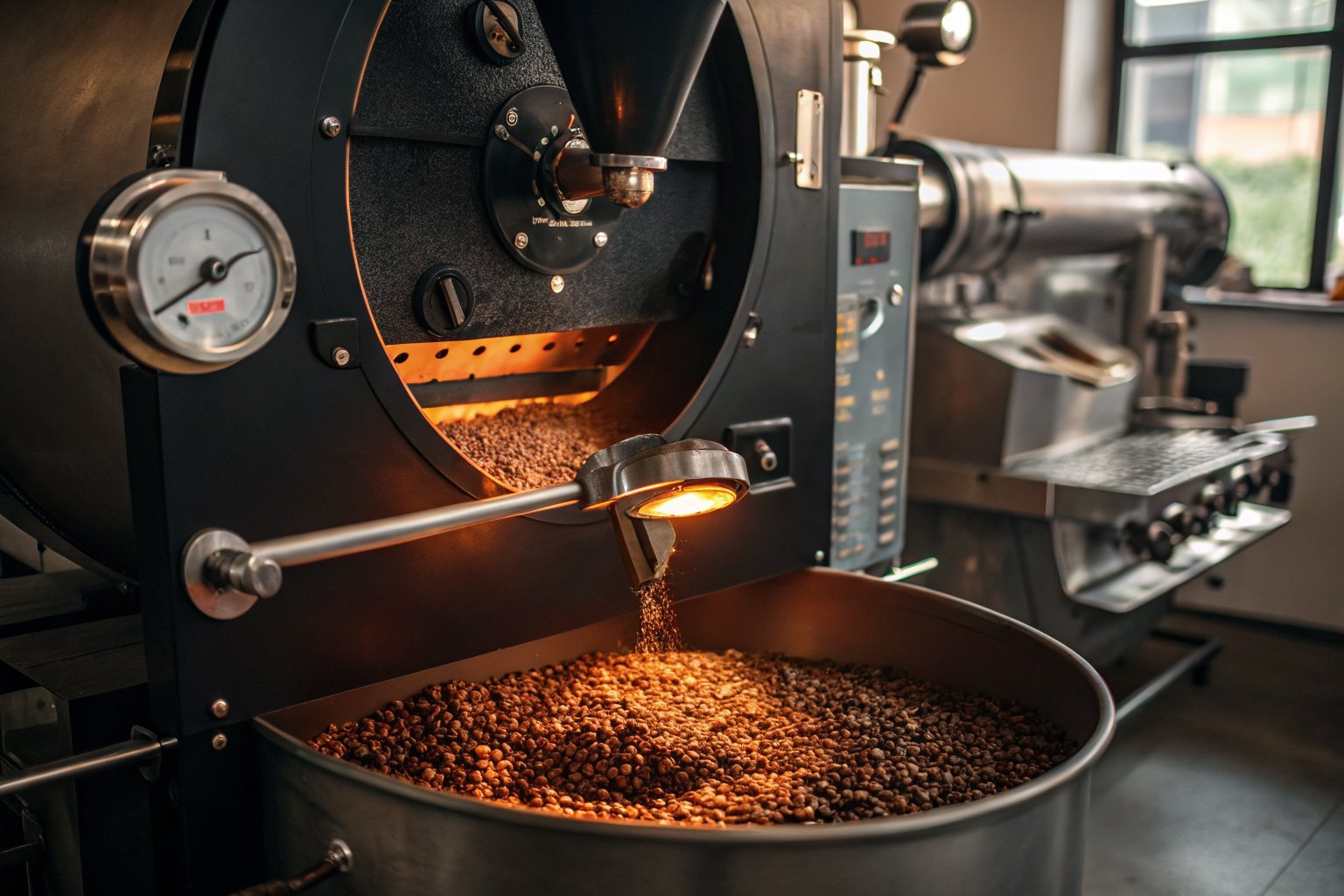
A roaster in Melbourne once asked me a question that stopped me in my tracks. He wanted to know the specific heat capacity of the Yunnan green beans he was buying from us, because he was building a thermal simulation model for his drum roaster. Most coffee roasters never think about specific heat capacity. But the ones who do — the ones who truly understand the physics of roasting — get consistently better results because they know exactly how much energy a given batch of beans requires. Let me walk you through what specific heat capacity means for green coffee and how you can use it to improve your roasting consistency.
What Is Specific Heat Capacity and Why Does It Matter for Coffee?
Specific heat capacity is the amount of energy required to raise the temperature of one gram of a substance by one degree Celsius. For green coffee, it determines how much heat energy your roaster needs to deliver to take the beans from ambient temperature to the target roast temperature. Different beans have different specific heat capacities, and that difference affects everything from roast time to flavor development.
How Is Specific Heat Capacity Measured in Green Coffee?
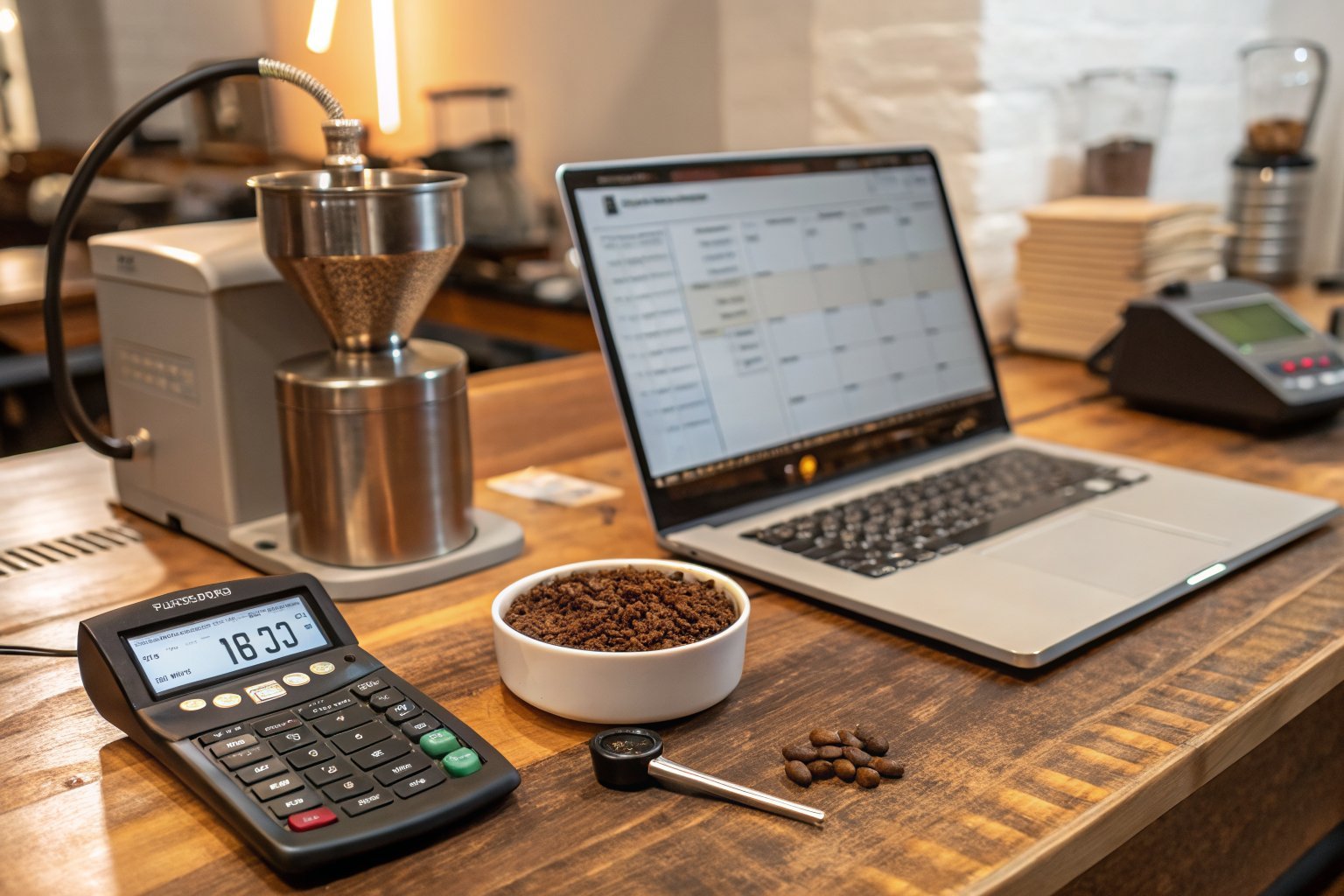
Specific heat capacity for green coffee is measured using a calorimeter or calculated from known thermal properties of the bean's main components — carbohydrates, water, lipids, and proteins. Water has a very high specific heat capacity of 4.18 joules per gram per degree Celsius. Dry coffee solids have a much lower capacity of approximately 1.2 to 1.4 joules per gram per degree Celsius. The Journal of Food Engineering's thermal properties study found that the specific heat capacity of green coffee at 12 percent moisture content is approximately 1.8 to 2.2 joules per gram per degree Celsius. At 10 percent moisture, it drops to 1.6 to 1.9. At 15 percent moisture, it rises to 2.2 to 2.6. The moisture content is the dominant variable — a 1 percent change in moisture alters the specific heat capacity by roughly 0.1 joules per gram per degree Celsius.
How Does Specific Heat Capacity Affect Roasting Energy Requirements?
A batch of green coffee with a specific heat capacity of 2.0 joules per gram per degree Celsius requires 20 percent more energy to reach the same temperature as a batch with a capacity of 1.7. If your roaster delivers a fixed amount of energy per minute, the higher-capacity batch will roast slower. This is why two batches of coffee with different moisture contents roast at different speeds even when everything else is identical. The Roast Magazine's energy modeling research shows that for a typical 12-kilogram drum roaster, a difference of 0.3 joules per gram per degree Celsius in specific heat capacity translates to approximately 60 to 90 seconds of additional roast time to reach the same development level. That is enough time to change the flavor profile significantly. Roasters who do not account for specific heat capacity are effectively guessing and hoping.
How Does Moisture Content Change Specific Heat Capacity?
Since water has the highest specific heat capacity of any coffee component, moisture content is the single most important variable. Understanding this relationship helps you predict how a batch will behave in the roaster.
What Is the Exact Relationship Between Moisture and Heat Capacity?
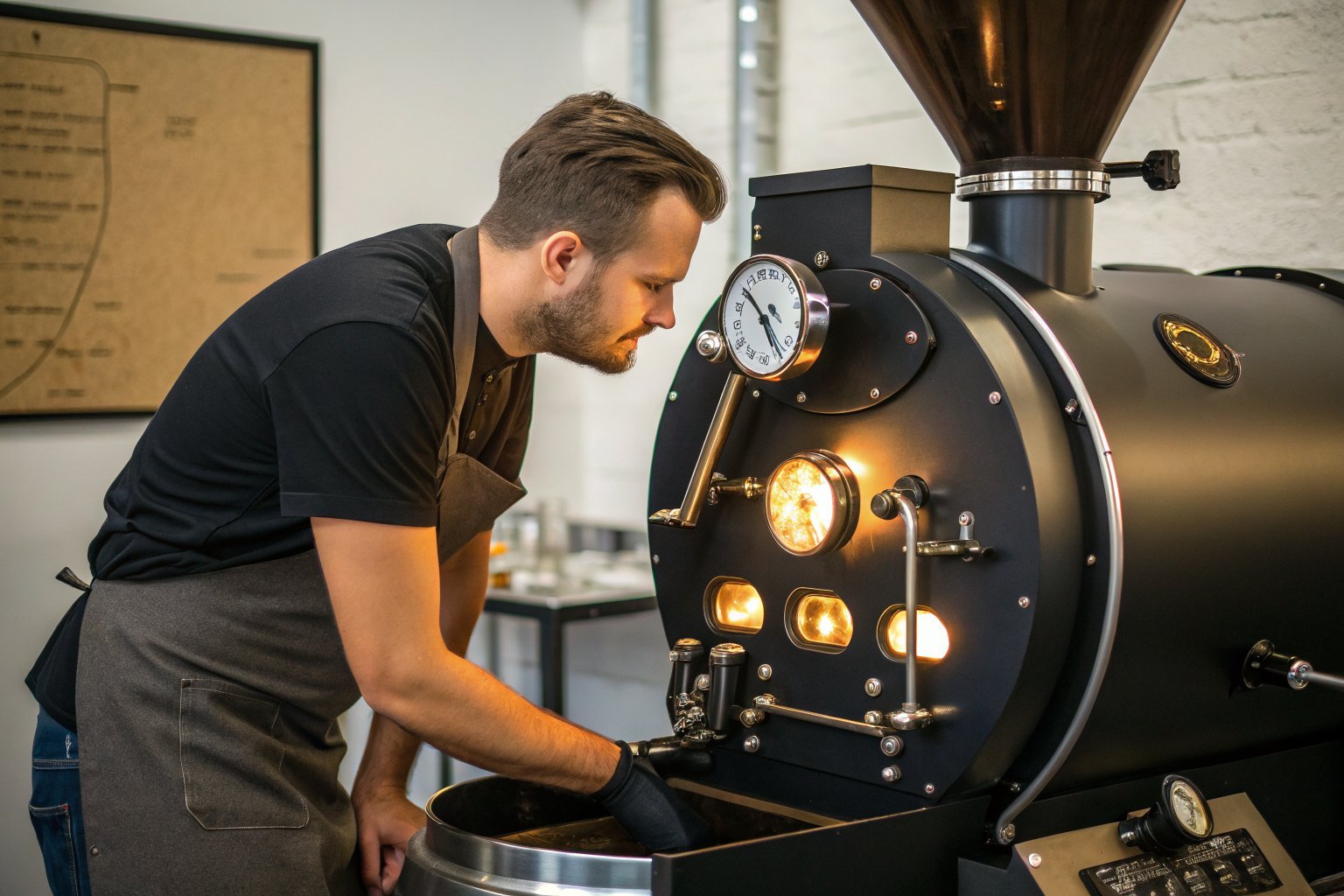
The relationship is roughly linear in the moisture range typical for green coffee. For each 1 percent increase in moisture content above 10 percent, the specific heat capacity increases by approximately 0.1 to 0.12 joules per gram per degree Celsius. A bean at 10 percent moisture has a capacity of roughly 1.7. A bean at 13 percent moisture has a capacity of roughly 2.05. The International Coffee Organization's thermal properties reference provides a simplified formula: specific heat capacity equals 1.2 plus 0.1 times the moisture percentage. For example, a bean at 11.5 percent moisture: 1.2 + 1.15 = 2.35 joules per gram per degree Celsius. This formula is accurate enough for practical roasting adjustments and is widely used by roasters who calculate their energy budgets.
Does Bean Size or Density Affect Specific Heat Capacity?
Density does affect it, but indirectly. Denser beans have more solid material per unit volume, and the solid material has a lower specific heat capacity than water. So a denser bean at the same moisture content will have a slightly lower specific heat capacity per gram. The effect is small — approximately 0.05 to 0.1 joules per gram per degree Celsius between a very low density and very high density bean at the same moisture level. The Coffee Quality Institute's physical properties database confirms that density has a secondary effect on specific heat capacity, accounting for about 10 to 15 percent of the variation between samples. Moisture accounts for the remaining 85 to 90 percent. If you only measure one thing to predict thermal behavior, measure moisture. If you want the best accuracy, measure both moisture and density and use a thermal properties calculator.
How Can You Calculate the Specific Heat Capacity of Your Green Coffee?
You do not need a calorimeter to estimate specific heat capacity. A simple formula based on moisture content gives you a number that is accurate enough for practical roasting adjustments.
What Is the Simple Formula for Estimating Heat Capacity?
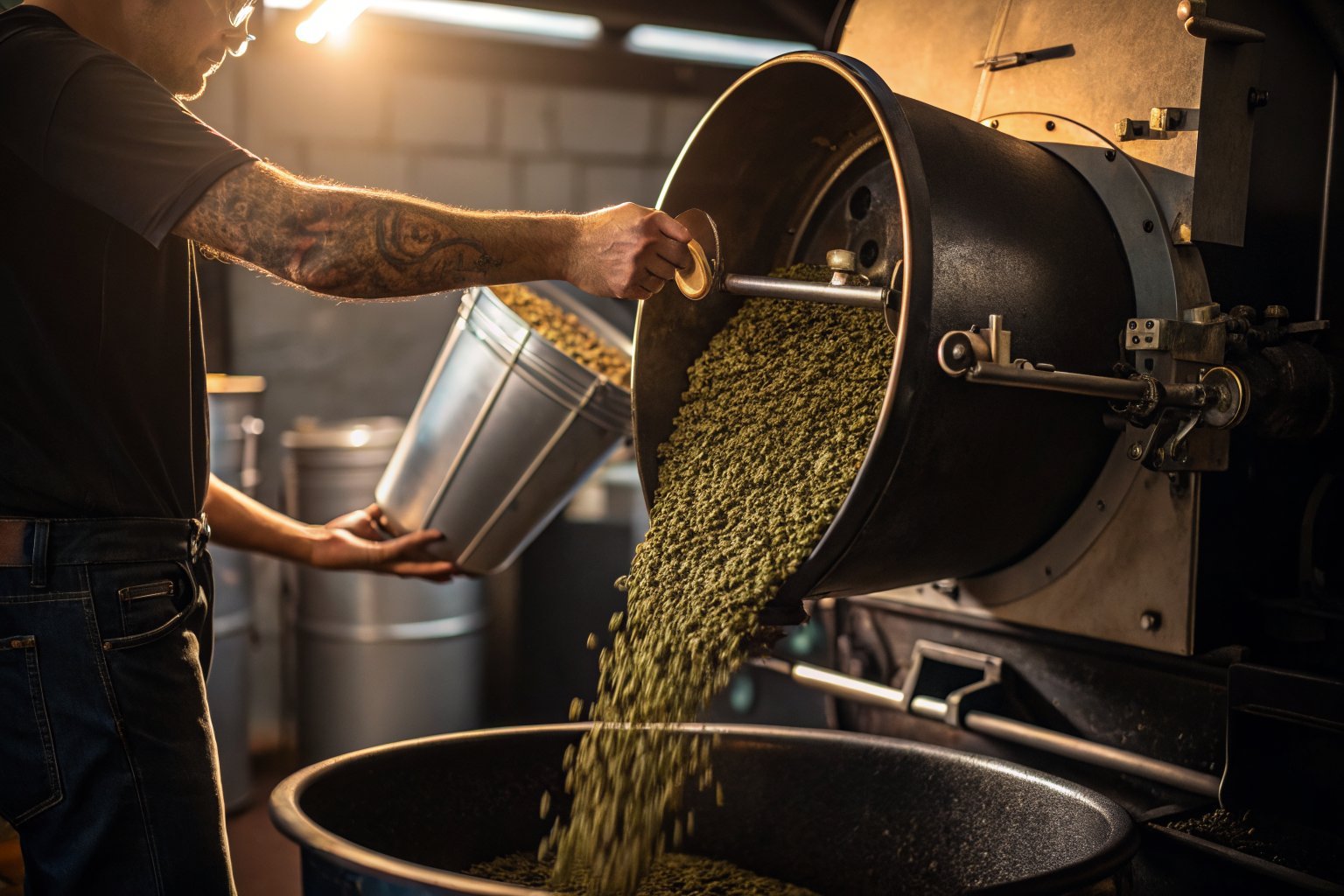
The most practical formula for coffee roasters is: Cp equals 1.2 plus 0.1 multiplied by the moisture percentage. Cp is the specific heat capacity in joules per gram per degree Celsius. The 1.2 represents the heat capacity of bone-dry coffee solids, and the 0.1 times moisture accounts for the water content. For a more precise calculation, you can use a weighted average: Cp equals (mass of dry solids times 1.3 plus mass of water times 4.18) divided by total mass. A bean with 12 percent moisture and 88 percent dry solids: Cp equals (0.88 times 1.3 plus 0.12 times 4.18) divided by 1.0, which equals 1.144 plus 0.502, or 1.646 joules per gram per degree Celsius. This is slightly lower than the simplified formula, but it is based on actual component heat capacities and is preferred for engineering calculations.
How Do You Use Specific Heat Capacity to Adjust Your Roast Profile?
Once you know the specific heat capacity of your batch, you can estimate the total energy required to reach any target temperature. For a 12-kilogram batch with Cp of 2.0 joules per gram per degree Celsius, starting at 25 degrees Celsius and targeting 200 degrees Celsius at first crack: energy equals 12,000 grams times 2.0 times 175 degrees, which equals 4,200,000 joules or 4.2 megajoules. If the same batch had a Cp of 1.7, the energy requirement drops to 3.57 megajoules — a 15 percent difference. If your roaster delivers a fixed power, the lower-Cp batch will reach first crack roughly 15 percent faster. Shanghai Fumao provides moisture and density data with every shipment so roasters can calculate the specific heat capacity before the beans arrive. A batch-specific energy calculation takes 30 seconds and eliminates the guesswork from charge temperature and airflow decisions.
What Happens to Specific Heat Capacity During the Roast?
Specific heat capacity is not static. It changes throughout the roasting process as water evaporates, the bean expands, and chemical reactions transform the solid structure.
How Does Heat Capacity Change from Green to First Crack?
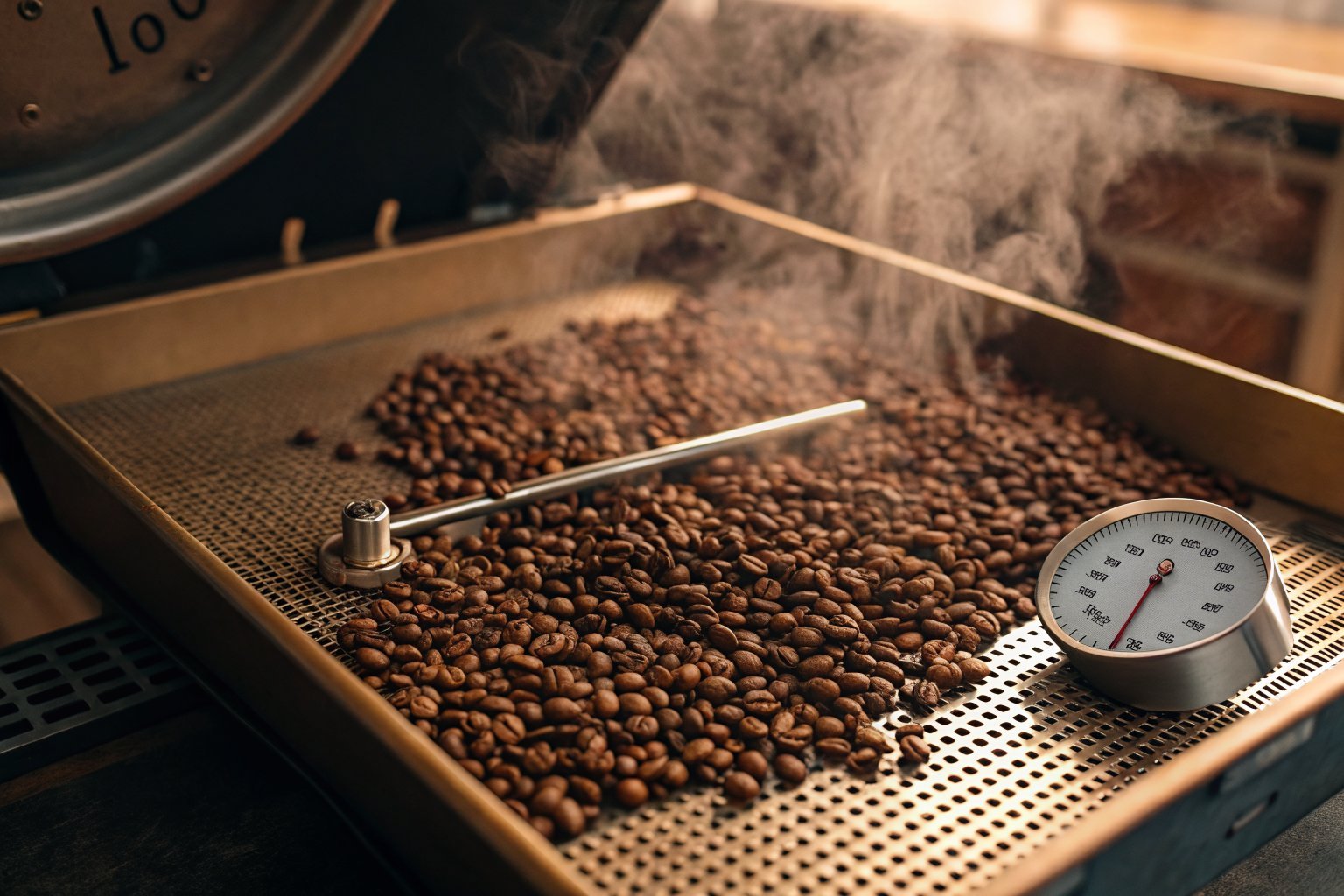
As the bean loses moisture during the drying phase, its specific heat capacity decreases. At the start of the roast with 12 percent moisture, Cp might be 2.0. After the drying phase when moisture drops to 2 percent, Cp has fallen to approximately 1.35. The bean requires less energy per degree of temperature increase as the roast progresses. The World Coffee Research thermal modeling study tracks this change in real time. The specific heat capacity decreases roughly linearly with moisture loss during the first 60 to 70 percent of the roast, then stabilizes during the development phase after first crack when most moisture has been driven off. This is one reason why the development phase is more predictable than the early stages — the thermal properties are more stable.
How Does Specific Heat Capacity Affect the Development Phase?
During the development phase after first crack, the bean's specific heat capacity is low and stable. This means the energy you put in during development has a larger effect on internal temperature than the same energy input during the drying phase. A small increase in airflow or drum temperature during development can push the roast from medium to dark very quickly. The Roast Magazine's development phase energy management guide recommends reducing energy input by 20 to 30 percent after first crack for most coffees, because the lower specific heat capacity means the same energy produces more temperature rise. Roasters who do not adjust for this often accidentally over-develop their coffee, thinking they are giving it more time when they are actually giving it more heat than the physics of the bean requires.
Conclusion
Specific heat capacity is the hidden variable that determines how each batch of coffee responds to heat in the drum. It ranges from approximately 1.6 to 2.2 joules per gram per degree Celsius for green coffee, with moisture content as the dominant driver. A simple calculation based on moisture content — Cp equals 1.2 plus 0.1 times moisture percentage — gives you the number you need to adjust your charge temperature, energy input, and expected roast time before you drop the first bean. At BeanofCoffee, we provide the moisture and density data you need to calculate specific heat capacity for every lot. Shanghai Fumao provides all the data you need. Understanding the thermal physics of your green coffee is the difference between roasting by guess and roasting by knowledge. Contact Person: Cathy Cai Email: cathy@beanofcoffee.com