You're on Alibaba. You type in "Yunnan green coffee beans." Pages of results flood your screen. Rows of gleaming "Gold Supplier" badges. Stock photos of impossibly perfect coffee cherries. Prices that seem almost too good to be true. You click on a profile. The English is broken but enthusiastic. They promise you the world: "Premium AAA Grade, Best Price, Fast Shipping." You've heard the success stories of finding great partners on Alibaba. But you've also heard the horror stories. The bait-and-switch. The vanished deposit. The container of low-grade filler beans. You're a business owner, not a gambler. You're asking: How do I use this massive platform to find a legitimate supplier without getting scammed?
Avoiding scams on Alibaba when sourcing coffee beans requires a systematic, evidence-based approach that moves far beyond the surface-level "Gold Supplier" badge. The key is to treat the platform as a starting point for discovery, not as a source of validation. Your defense is built on three pillars: (1) Deep Verification of Identity and Assets: Use the platform's tools, but more importantly, demand a live, unscripted video tour of the farm and mill. (2) Independent Certification and Data Validation: Never trust a PDF; verify every organic, sustainability, or quality claim through the official, third-party public databases. (3) Secure, Staged Transactions: Never pay 100% upfront; leverage the platform's own Trade Assurance for trial orders, and transition to secure, industry-standard T/T or L/C terms only after trust is established.
Honestly, I know the landscape on Alibaba can be a minefield. At Shanghai Fumao, we maintain a presence there precisely to offer buyers a legitimate, verified alternative to the noise. Let me give you the insider's playbook for separating the real farms from the fake traders and scammers.
What Does a "Gold Supplier" Badge Actually Mean on Alibaba?
This is the first and most dangerous misconception. The "Gold Supplier" badge and the "Verified" checkmark look official. They inspire a false sense of security. You need to understand exactly what Alibaba actually verifies, and, more importantly, what they do not.
A "Gold Supplier" badge on Alibaba means the company has paid a membership fee and has undergone a basic onsite check by a third-party verification service. This check confirms that the business legally exists at a registered address and has a valid business license. It is NOT a verification of the company's manufacturing capabilities, product quality, or export experience. A "Verified" badge is even more limited; it may only confirm the existence of the business license. Crucially, neither badge verifies that the company actually owns the coffee farm or the processing mill they claim to operate. A trading company with a small office in Kunming can easily obtain these badges.
So, what's the takeaway? The badges are a starting point, a filter to weed out completely fake entities. But they are absolutely not a guarantee of anything related to coffee. You must dig much, much deeper.
How Can I Spot a Trading Company Posing as a Coffee Farm on Alibaba?
This is the most common form of misrepresentation on the platform. A trading company creates a profile that mimics a farm or a factory. They use stolen or stock photos of coffee fields. Their "about us" section is filled with vague, flowery language about their "deep connection to the land." Here's how to unmask them.
First, scrutinize their Product List. A real coffee farm exports coffee. Maybe some tea as a sideline in Yunnan. A trading company will often have a bizarre, unrelated product catalog. If they sell coffee, LED lights, and dried mushrooms, they are a trader. Second, examine their Company Profile under the "Business Type" field. A genuine farm-owner will be listed as a "Manufacturer." A trader will be listed as a "Trading Company." Third, look at the Address. Is it a physical address in a rural, coffee-growing county like Baoshan or Pu'er? Or is it a generic office address in a major city like Kunming or Shanghai? These are all clues. But the ultimate test is the next one.
What Is the "Virtual Farm Tour" and Why Does It Defeat 99% of Scammers?
This is your single most powerful weapon against fraud on Alibaba. It's simple, free, and incredibly effective. You request a live, unscripted video call with the supplier. This is not a pre-recorded, edited promotional video.
You ask them to take their smartphone, open WeChat or WhatsApp video, and show you three things:
- The Coffee Trees: "Walk outside and show me your coffee trees. Show me the cherries." A real farmer can do this in 30 seconds. A trader in an office building will stammer and make excuses.
- The Processing Mill: "Now show me inside your wet mill or dry mill. Show me the machinery in operation." Again, a real factory owner can do this. A trader cannot.
- The Warehouse with a Specific Marker: "Show me the stacks of coffee bags in your warehouse. Can you hold up a piece of paper with today's date written on it next to the bags?"
This live, interactive test is virtually impossible for a scammer or a pure middleman to pass. It provides irrefutable visual proof of their operational assets. At Shanghai Fumao, we proactively offer these virtual tours to any serious buyer. We have nothing to hide, and we want you to see our farm and our mill.
How Can I Verify Organic or Other Certification Claims Made on Alibaba?
Scammers know that certifications like "Organic" and "Rainforest Alliance" command premium prices. So they fake them. They copy a logo from the internet, slap it on their Alibaba profile or a PDF "certificate," and hope you won't check. You absolutely must check, every single time.
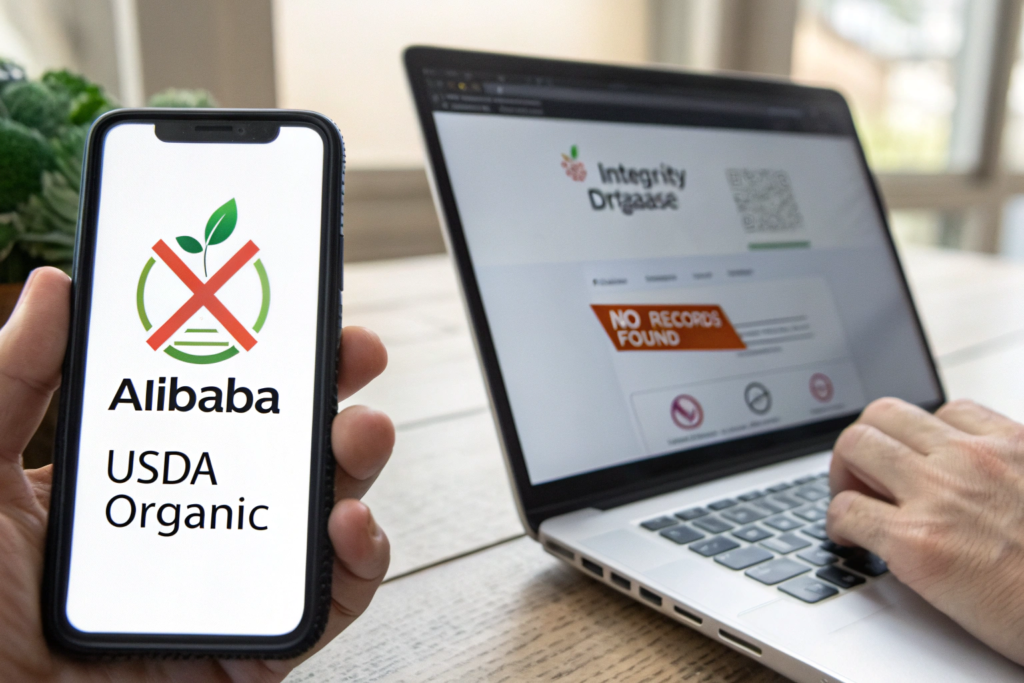
The only reliable way to verify a certification claim made on Alibaba is to bypass the supplier's documents entirely and go directly to the official, public-facing database of the certification scheme. For USDA Organic, this is the USDA Organic Integrity Database. For Rainforest Alliance, it's their "Check a Certified Product" tool. For EU Organic, you use the search tool of the accredited certifier listed on the certificate. A legitimate certification will be listed in these independent, public systems. If it's not, it's fake, regardless of how convincing the supplier's PDF looks.
This is a non-negotiable, 5-minute check that can save you from a costly legal and reputational disaster. You can access the official database here: USDA Organic Integrity Database .
What Is the Step-by-Step Process for Verifying a USDA Organic Claim on Alibaba?
Let's say a supplier's Alibaba profile proudly displays the USDA Organic seal. Here is your exact verification protocol.
- Request the Official Certificate: Ask the supplier to send you a copy of their current USDA NOP Organic Certificate via Alibaba's message center. They must provide it.
- Find the Key Information: On the certificate, locate the exact Operator Name (the legal company name) and the Certificate Number.
- Go to the USDA Database: Open a new browser tab and go to the USDA Organic Integrity Database .
- Search and Verify: Enter the exact Operator Name in the search field and select "China" from the country dropdown. Click search. The result must show the company's name, a "Certified" status, and "Coffee" listed in the scope. If the company does not appear, or if the status is anything other than "Certified," the claim is fraudulent.
A legitimate, certified operation like Shanghai Fumao will provide this information readily and encourage you to verify. We are listed in the public database. A scammer will make excuses or send a Photoshopped document.
What Are the Visual Red Flags of a Fake Certificate PDF?
Even without a database check, fraudulent certificates often have tell-tale visual signs of sloppy forgery. Look for:
- Expired Dates: The "Valid To" date is in the past.
- Vague Scope: The "Scope" or "Products" section does not specifically list "Green Coffee."
- Unaccredited Certifier: The name of the "Certification Body" is unfamiliar, and a quick Google search shows they are not USDA-accredited.
- Mismatched Names: The company name on the certificate doesn't perfectly match the name on the Alibaba profile or the invoice.
- Spelling and Grammar Errors: Legitimate certificates are professionally proofread.
Trust your instincts. If the document feels "off," it probably is. Verification through the public database is the only way to be certain.
What Are the Safest Payment and Ordering Practices for a First Alibaba Coffee Order?
You've done your virtual tour. You've verified the certifications. The supplier seems legitimate. Now comes the moment of financial risk: placing the first order. This is where you must be most disciplined. Do not let the excitement of a good price override your financial safety protocols.
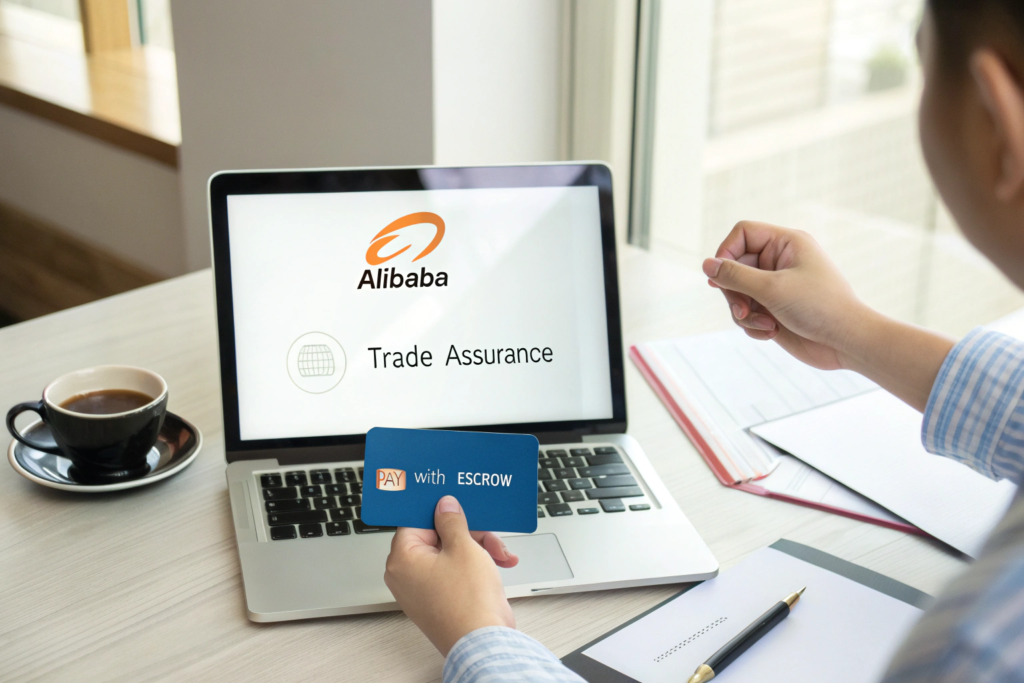
For a first transaction with any new supplier found on Alibaba, the non-negotiable best practice is to use the platform's own secure payment system: Alibaba Trade Assurance. This acts as a digital escrow service. You pay Alibaba, not the supplier directly. Alibaba holds the funds. The supplier ships the coffee. You receive and approve the goods. Only then does Alibaba release the funds to the supplier. This provides you with significant protection against non-shipment and gross misrepresentation. Never, ever pay 100% upfront via a direct wire transfer (T/T) to a new, unproven Alibaba supplier.
This is your insurance policy for the trial order. It's worth its weight in green coffee.
How Does Alibaba Trade Assurance Protect Me?
It's a simple but powerful mechanism. You and the supplier agree to the product specifications, quantity, price, and shipping date on the Alibaba platform. You pay the invoice amount through Alibaba's secure payment gateway. The funds are held in escrow. The supplier is then obligated to ship the goods by the agreed date and upload valid tracking information. Upon delivery, you have a set period (e.g., 30 days) to inspect the coffee. If the coffee matches the order, you confirm receipt and the funds are released. If there is a major problem—the coffee is significantly different from the agreed spec, or it never arrives—you file a dispute. Alibaba's mediation team reviews the evidence (the original contract terms) and makes a ruling.
This system gives you, the buyer, real leverage and protection. At Shanghai Fumao, we are comfortable using Trade Assurance for initial trial orders. It's a fair and secure way to begin a new relationship.
When Is It Appropriate to Move from Trade Assurance to Standard T/T Terms?
Trade Assurance is a tool for building initial trust. It is not a long-term financing model for established B2B relationships. Once you have successfully completed one or two trial orders with a supplier, and you have verified their reliability, it is standard and appropriate to transition to industry-standard payment terms.
This is typically a Telegraphic Transfer (T/T) with a 30% deposit to secure the order and the 70% balance paid against a scanned copy of the Bill of Lading. This structure is more efficient and has lower transaction costs for both parties. The key is that you only make this transition after the supplier has proven themselves through the Trade Assurance process. A supplier who pressures you to skip Trade Assurance and wire money directly for a first order is showing a major red flag. A trustworthy partner understands the need for a secure trial and will work with you to establish the relationship.
Conclusion
Sourcing coffee on Alibaba is not a lottery. It's a skill. It's a process of disciplined verification. The platform is filled with both opportunity and risk. Your success depends entirely on your ability to separate the signal from the noise.
You must move beyond the shiny badges and the stock photos. You must become an investigator. Demand the live virtual tour. Verify every certification claim through the independent public database. And protect your capital with the secure escrow of Trade Assurance for that critical first order. These steps transform a risky gamble into a calculated, professional sourcing strategy.
At Shanghai Fumao, we understand this process because we've been on the other side of it for years. We welcome the scrutiny. We encourage the virtual tour. We're proud to be verifiable in the public databases. We built our business to be the legitimate, transparent partner you're searching for amidst the noise.
If you're ready to experience a transparent and secure sourcing process with a verified Yunnan coffee farm, I invite you to connect with us on Alibaba or directly. My email is cathy@beanofcoffee.com.