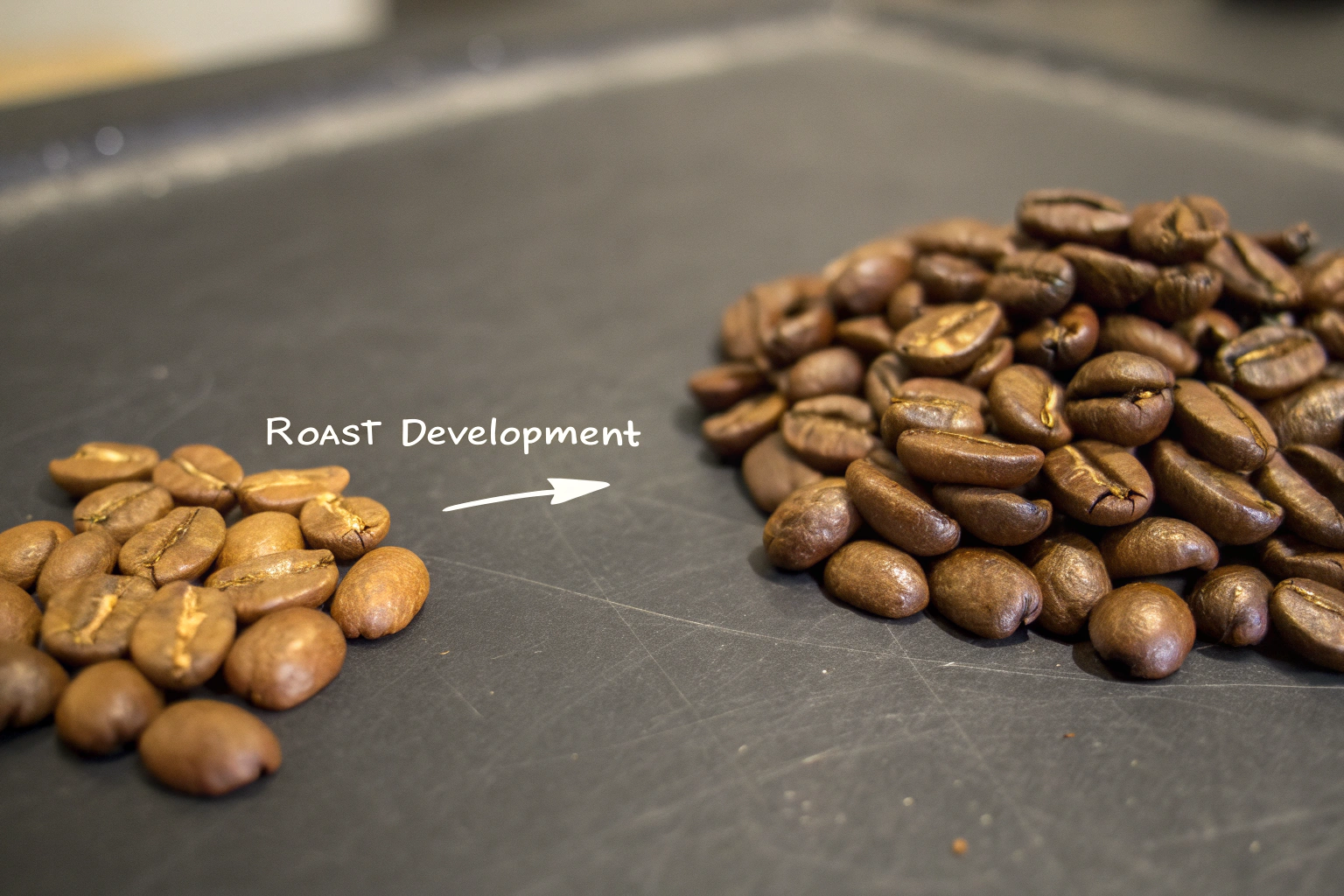
You open a fresh bag of coffee. You pour the beans into your hopper. And you see it. A slick, glossy sheen on the surface of the beans. They look almost wet. Your first thought might be, "Wow, that looks rich and flavorful." Or, if you've been around coffee for a while, your first thought might be, "Uh oh. Is this a dark roast that's been sitting on the shelf for six months? Is this a sign of poor quality?" You've seen oily beans on cheap, bulk coffee and on a premium, freshly roasted espresso blend. So you're confused. You're asking the practical question: What does that oil actually mean? And as a buyer or a roaster, when is it a sign of excellence and when is it a red flag?
Oil on the surface of roasted coffee beans is not an indicator of quality by itself; it is a physical byproduct of the roasting process. Coffee beans contain naturally occurring lipids (fats and oils). During roasting, the bean's internal cell structure breaks down and expands. The darker and longer the roast, the more this internal structure degrades, allowing the trapped oils to migrate to the surface. Therefore, oil is primarily an indicator of roast degree and time since roast. A dark roast will be oily immediately after roasting. A medium roast may develop a light sheen after several weeks. A light roast will almost never look oily. The presence of excessive oil on a light or medium roast is a sign of stale, aged coffee, which is a quality defect.
Honestly, this is one of the most common points of confusion I hear from our roasting partners at Shanghai Fumao . They'll call me and say, "Cathy, this new lot looks different from the last one. Is something wrong?" Let's clear this up once and for all. Let me give you a roaster's-eye view of what oil means, so you can use it as a diagnostic tool, not a source of anxiety.
What Actually Causes Coffee Beans to Become Oily?
Let's get the science straight. Coffee oil isn't some additive or a sign of spoilage. It's a fundamental component of the bean itself, and its journey to the surface is a story of heat and structure. Understanding this process removes the mystery.
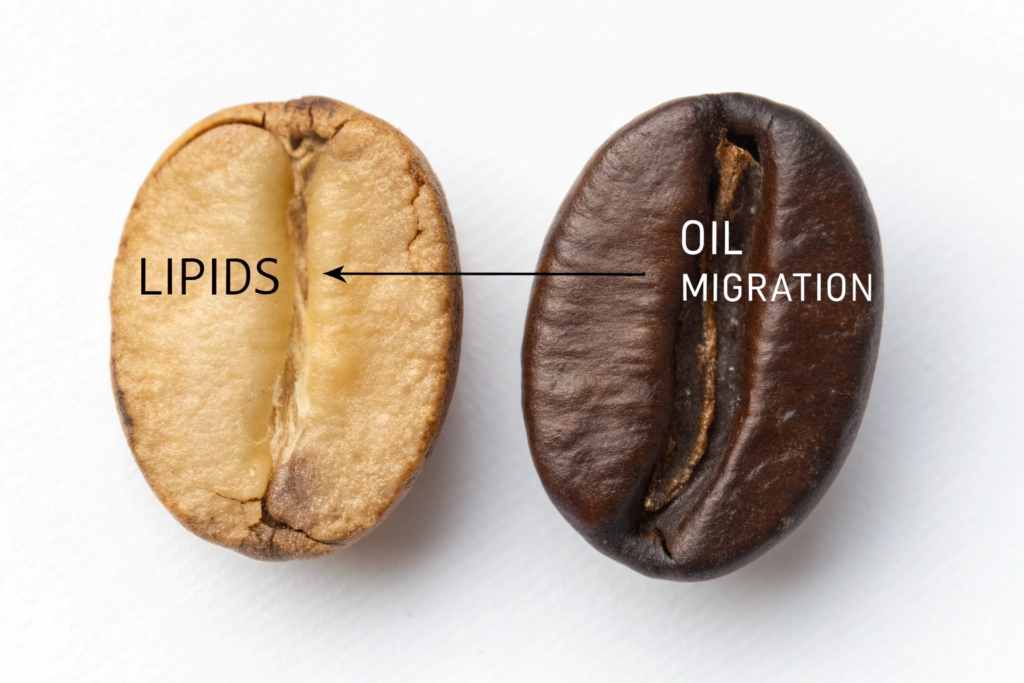
Green coffee beans contain a significant amount of lipids—fats and oils—that are crucial carriers of aroma and flavor. In their raw state, these oils are locked within the bean's dense, rigid cellular matrix. During the roasting process, two things happen simultaneously: the intense heat generates high internal pressure, and it breaks down the cellulose structure of the bean, making it porous and brittle. In a dark roast, this structural degradation is so extensive that the internal pressure easily forces the now-fluid oils through the newly formed pores and fissures to the bean's surface, where they cool and become visible.
Another way to look at this is to think of a sponge. A brand new, dense, dry sponge (a green bean) holds no water on its surface. If you soak it and squeeze it gently, it might feel damp, but water doesn't pool on the outside. If you tear that sponge apart, breaking its structure, water will easily seep out. Roasting dark is like tearing the sponge apart; the oils have nowhere to hide.
Why Do Dark Roasts Look Oily Immediately After Roasting?
This is the key. If you roast a batch of coffee to a Vienna or French roast level, you are fundamentally changing its physical structure. You are taking the bean beyond the "second crack," a point where the cellulose matrix of the bean fractures violently.
At this level of roast development, the bean's internal structure is heavily compromised. It's porous and brittle. The high internal temperature has made the coffee oils highly fluid. The combination of a broken structure and fluid oil means the oil migrates to the surface very rapidly, often within hours of the roast finishing. Therefore, a shiny, oily surface on a dark roast is perfectly normal and expected. It's a sign that the roaster achieved the intended degree of development. It is not an indicator of poor quality green coffee. You can actually learn more about the chemical breakdown of lipids during the roast process from the educational resources provided by the Specialty Coffee Association (SCA) . At Shanghai Fumao , our green coffee is dense and high-quality, but if a client roasts it dark, it will absolutely develop surface oils.
Why Do Medium Roasts Sometimes Develop a Sheen After a Few Weeks?
This is where the "time since roast" factor comes into play. A medium roast (City+ to Full City) is not roasted long enough or hot enough to cause the immediate, catastrophic structural breakdown of a dark roast. The bean's cellular structure remains largely intact.
However, it is now more porous than green coffee. Over time—weeks, not hours—the internal oils will slowly, gently migrate through the bean's natural pore structure via capillary action. This is a much slower process. So, a medium roast that looks dry and matte on day two might develop a subtle, light sheen or a few tiny spots of oil by day twenty. This is normal and expected. It's a sign of age, but not necessarily staleness. It simply means the coffee has rested. In fact, many baristas find that a medium roast espresso with a slight sheen produces a more viscous, syrupy body and a more integrated flavor than a bone-dry, two-day-old roast. This is a visual cue that the coffee is in its prime resting window, much like how a well-rested green coffee from the Yunnan Coffee Catalog behaves in the roaster.
When Is Oil on Coffee Beans a Definite Sign of Poor Quality?
Now that we know oil can be normal, let's talk about the red flags. There are specific scenarios where surface oil is a clear and unmistakable indicator of a quality problem. You should be able to identify these instantly.
Oil is a red flag for poor quality in two specific scenarios: (1) Excessive oil on a Light or Medium-Light Roast. This indicates the coffee is old, stale, and likely past-crop. The oils have been forced out not by roast heat, but by the slow, relentless pressure of time and oxidation as the cellular structure of the aged bean naturally degrades. (2) Spotty or Uneven Oil on Any Roast. This is a sign of an inconsistent roast. The beans that are darker and more developed will show oil, while the underdeveloped beans will remain dry. This visual inconsistency is a guarantee of an uneven, muddled flavor in the cup.
So, what's the takeaway? It means you have to look at the whole bean and the whole context. A uniform sheen on a dark French roast is quality execution. A spotty, greasy look on a light Yirgacheffe is a sign you should probably not serve that coffee.
What Does "Past-Crop" or Aged Coffee Look Like?
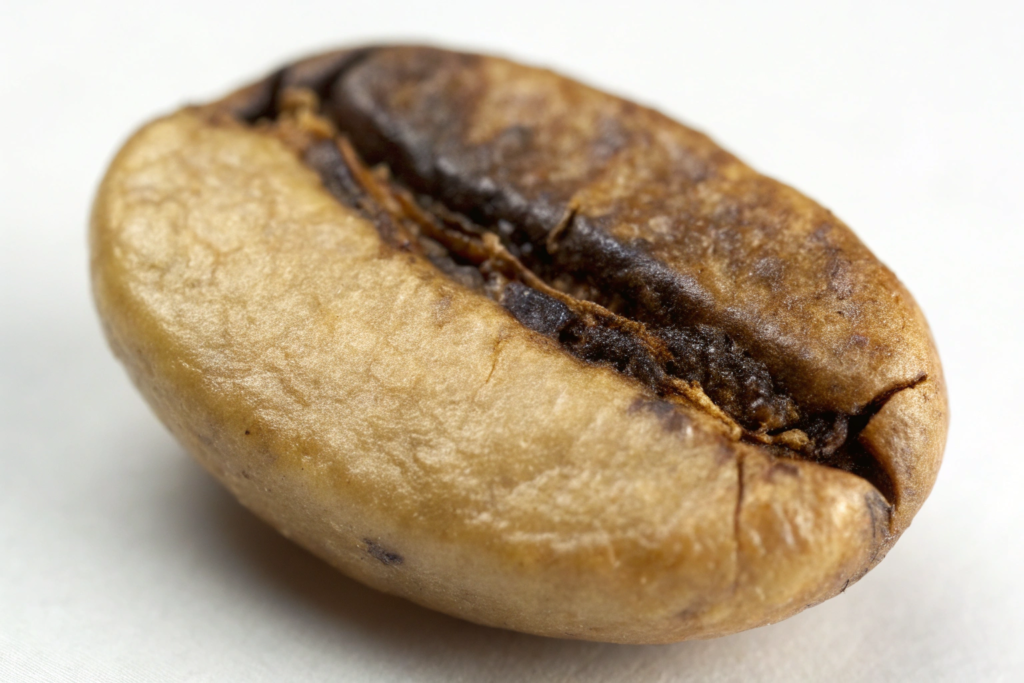
This is the classic scenario for the "bad oil" red flag. You open a bag of what is supposed to be a bright, lively, light-roasted Ethiopian or a washed Central American coffee. Instead of a dry, matte, light-brown surface, the beans are covered in a dull, greasy film. They might even have large, dark, sticky-looking spots.
This is the visual manifestation of a coffee that is well past its prime. The green coffee was likely from a previous harvest (past-crop) and/or was stored in poor conditions (too warm, too humid). Over many months, the bean's internal structure slowly broke down on its own, even without the intense heat of a dark roast. The oils have been forced to the surface through sheer age and cellular decay. When you cup this coffee, it will not be bright or complex. It will taste flat, woody, and papery. The oil is a visual warning of the sensory disappointment to come. This is precisely why we emphasize crop year transparency in our supply chain at Shanghai Fumao , and why we follow strict storage protocols aligned with World Coffee Research best practices.
Why Does Spotty or Uneven Oil Indicate a Roasting Problem?
This is a problem created in your roastery, not at the farm. You roast a batch of coffee to what you think is a uniform medium roast. But when you look at the cooled beans, you see a messy mix. Some beans are dry and pale. Some beans have a dark sheen. Some have spots of oil only on one side.
This is the classic visual signature of an uneven roast. The beans that are shiny and oily were exposed to more heat and are more developed. The beans that are dry and matte were exposed to less heat and are underdeveloped. This can happen for several reasons: an inconsistent charge temperature, poor drum airflow, or, most commonly, a physically inconsistent green coffee (a mix of different bean sizes and densities). The oily spots are not the problem; they are a symptom of the real problem, which is a lack of roast uniformity. This batch will cup with a confused mix of sour, vegetal notes (from the underdeveloped beans) and ashy, bitter notes (from the overdeveloped beans). It's a roaster's nightmare. A uniformly oily dark roast is fine. A patchy roast is a failure of process.
How Should I, as a Roaster or Buyer, Interpret Oily Beans?
Okay, now you know the science and the red flags. How do you put this into practice? The next time you look at a batch of beans, I want you to stop asking "Is this oily?" and start asking a more specific set of questions. Use the oil as a data point in a larger diagnostic process.
When interpreting oily beans, always consider the "Holy Trinity" of Roast Degree, Age, and Uniformity. First, assess the roast level. Is it a dark roast? Oil is expected and often desirable. Is it a light or medium roast? Oil is a warning sign of age or poor storage. Second, assess the age. Is this a fresh dark roast or a medium roast that's a month old? A light sheen on an older medium roast is normal. Third, assess the uniformity. Is the oil evenly distributed across the batch, or is it spotty and inconsistent? Spotty oil signals a roast defect. Use this framework, and you'll never be confused by a shiny bean again.
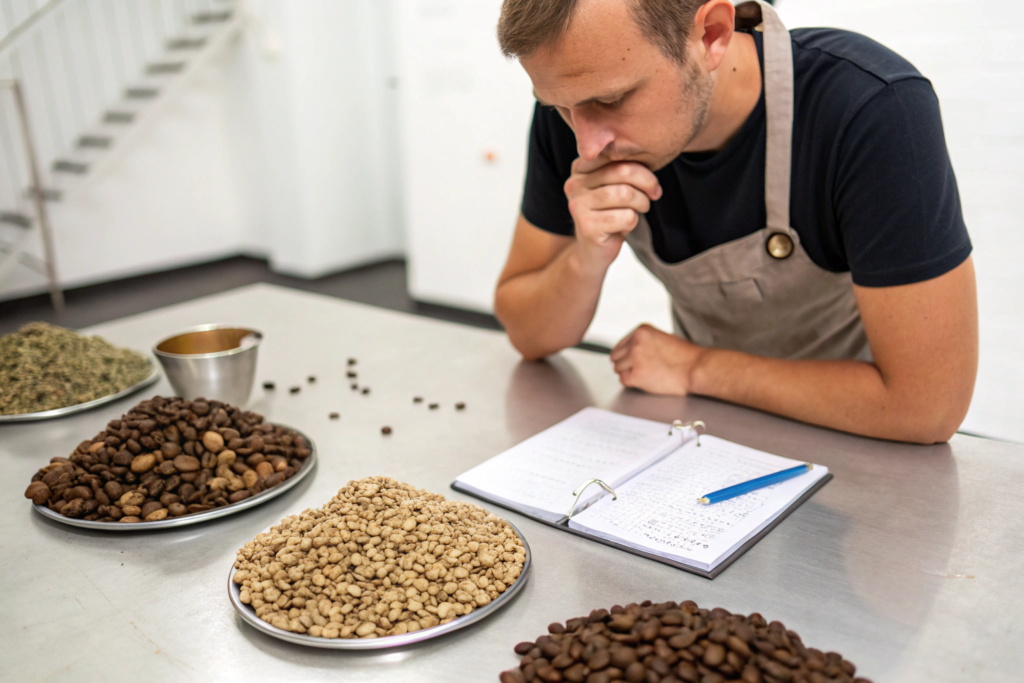
Scenario 1: The Shiny Espresso Blend
You receive a shipment of your signature espresso blend from your co-packer or your own production team. The beans have a uniform, glossy sheen. They are a deep brown color, edging toward dark.
Diagnosis: This is almost certainly normal and high-quality. The blend was intentionally roasted to a Full City or Vienna level to maximize body, sweetness, and crema production for espresso. The uniform sheen indicates an even roast development and fresh coffee. The oil will contribute to a richer mouthfeel and a more intense flavor. There is no quality issue here. In fact, a matte, dry espresso blend might be a sign that it was underdeveloped. If you are sourcing green coffee for this blend, you know the importance of a consistent Yunnan Green Coffee Supplier to achieve this perfect roast development batch after batch.
Scenario 2: The Greasy Single-Origin Light Roast
You open a bag of a single-origin coffee you bought from a new supplier. It's labeled as a "Light Roast," but the beans have a dull, greasy film and a few dark, sticky patches. The overall color is faded.
Diagnosis: This is a major red flag for poor quality. The green coffee is almost certainly old, past-crop, or was improperly stored. The oil has been forced to the surface by age, not by roasting. Do not expect this coffee to taste bright, clean, or complex. It will likely taste flat, woody, and papery. This is a sign that you should reconsider that supplier relationship or, at the very least, demand a detailed crop-year and storage report before placing another order. This is the kind of coffee that erodes customer trust. Always look for suppliers who adhere to the green coffee grading protocols of the Specialty Coffee Association .
Conclusion
The oil on a coffee bean is not a simple "good" or "bad" indicator. It's a story. It's a visual narrative of the bean's journey through heat and time. A uniform, glossy sheen on a dark roast tells a story of intentional, full development and fresh, bold flavor. A few spots of oil on a two-week-old medium roast tell a story of gentle aging and mellowing. But a greasy film on a light roast tells a story of neglect, of time marching on too long, of a coffee that has lost its voice.
As a coffee professional, your job is to learn to read that story. Don't fear the oil. Understand it. Use it as one of many tools—alongside your cupping spoon, your moisture meter, and your trusted supplier relationships—to build a consistently delicious and transparent coffee program.
If you're looking for a partner who provides the clear, consistent, and traceable green coffee that allows you to write your own perfect roast story—whether it's matte or glossy—I invite you to connect with us at Shanghai Fumao. My email is cathy@beanofcoffee.com.