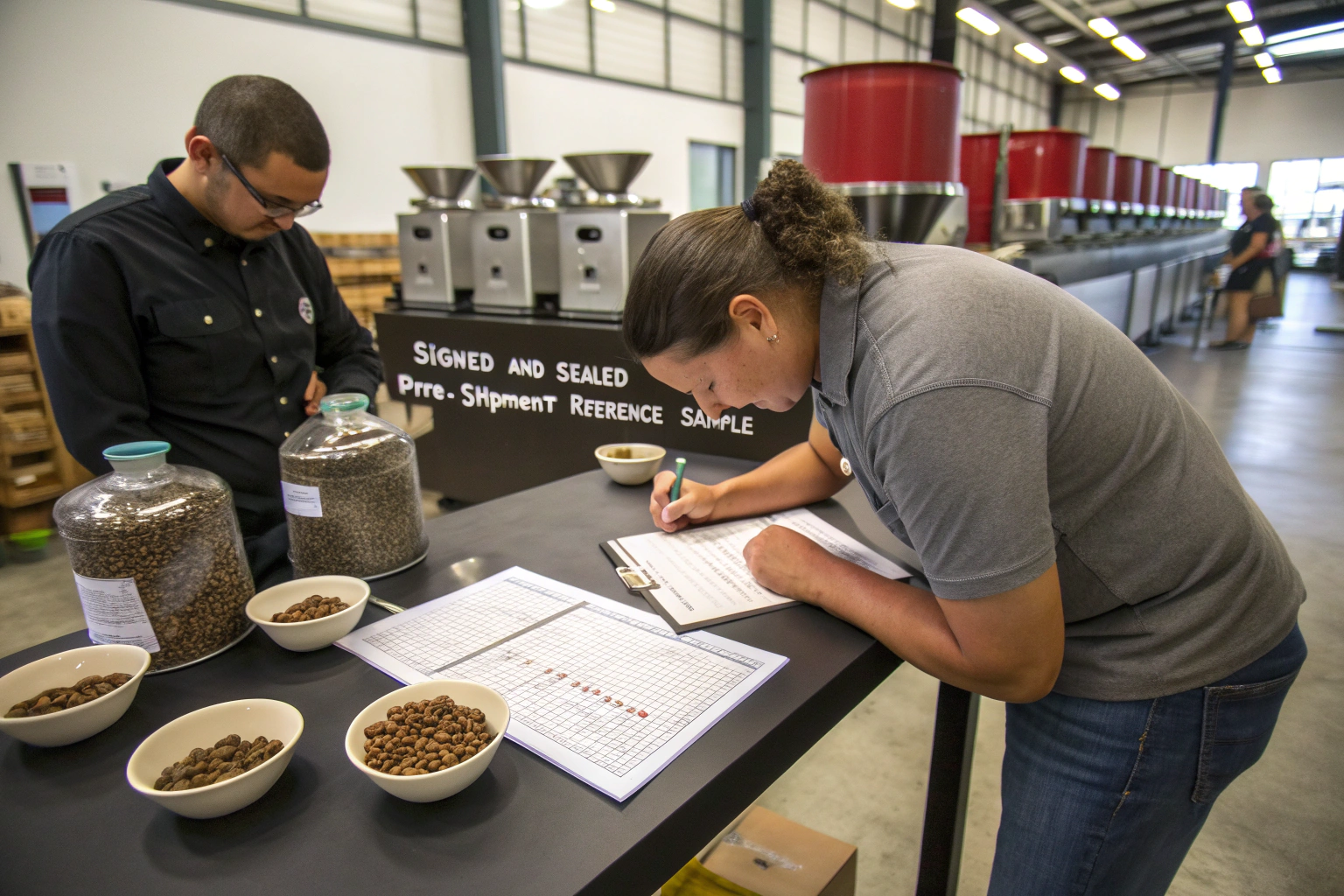
You finally did it. You found it. That perfect coffee. It cupped at an 85, with an intoxicating blend of milk chocolate, toasted almond, and just a whisper of dried cherry. Your customers went crazy for it. You built a blend around it. It became your signature. Then you re-ordered the same coffee, from the same supplier, with the same spec sheet. The new batch arrives. You roast it, cup it... and it's different. The magic is gone. The chocolate is muted. The cherry note has vanished. You're standing in your roastery, staring at two piles of beans that are supposed to be identical, and you're asking the question that haunts every coffee buyer: Why isn't it the same? And how do I stop this from happening again?
Ensuring a consistent flavor profile across multiple batches of the "same" coffee requires shifting from a passive acceptance of a supplier's name to an active, verification-based partnership. The key lies in three non-negotiable pillars: (1) Securing a binding quality benchmark through a jointly signed and sealed pre-shipment reference sample. (2) Demanding and verifying objective physical data—specifically screen size distribution, moisture content, and water activity—for every single batch, not just the first one. (3) Building a direct relationship with a vertically integrated supplier who has the operational control and integrity to prevent the "bait and switch" or the slow, accidental drift in quality that occurs when a middleman sources from multiple anonymous farms.
Honestly, I hear this frustration from new buyers all the time at Shanghai Fumao. They come to us after being burned. They thought they were buying a "Yunnan AA" and discovered that "Yunnan AA" from a trader can mean coffee from a dozen different farms, blended together to hit a price point. Consistency isn't an accident. It's a discipline. It's a system. Let me walk you through the exact, practical steps that professional buyers use to ensure that batch three tastes exactly like the batch one they fell in love with.
What Is the "Reference Sample" and Why Is It My Most Powerful Tool for Consistency?
This is the single most important piece of advice I can give you. Forget the spec sheet for a moment. Forget the cupping score. The physical, signed, and sealed reference sample is your legally defensible and sensorily irrefutable anchor of quality. Without it, you are operating on trust and hope.
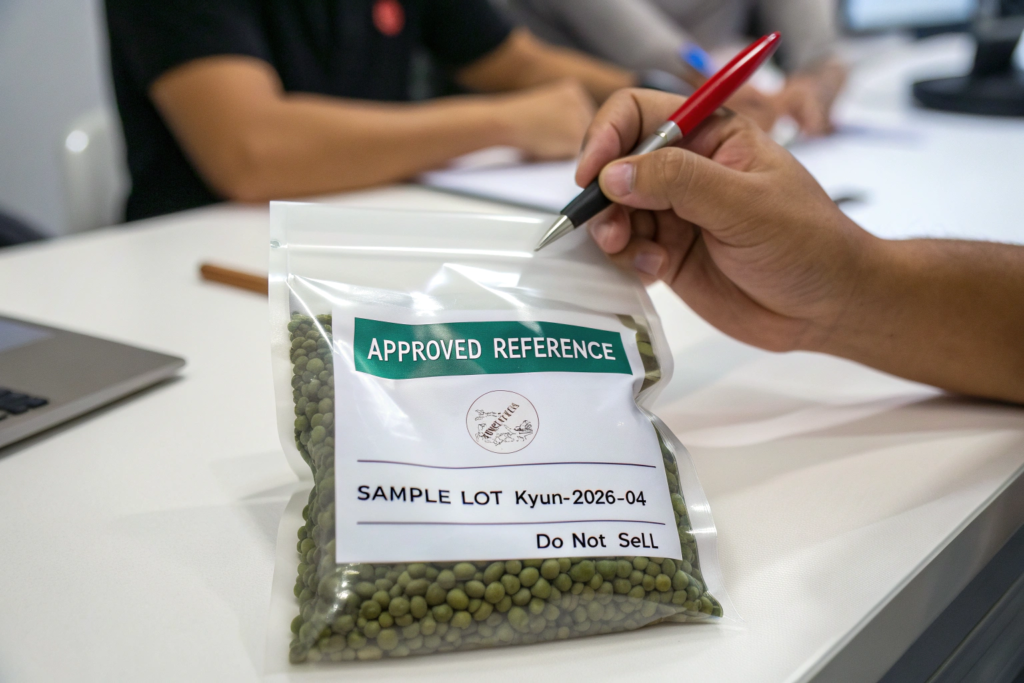
A true Reference Sample is a 350-500 gram portion of green coffee drawn from the exact homogenized lot that will fill your container, vacuum-sealed, and signed across the seal by both the buyer and the supplier (or sealed with a unique, tamper-evident holographic tag). This sample is the physical embodiment of your contract. It is the standard against which all future arrivals are judged. When a new batch arrives, you do not compare it to your memory of the coffee or to a new spec sheet. You roast and cup the arrival sample side-by-side, blind, against this physical Reference Sample. Any significant deviation is grounds for a quality claim.
This is how professionals take the subjectivity out of consistency. It's a simple tool, but it's incredibly powerful. At Shanghai Fumao, we insist on this practice for all our long-term partners. It protects both of us.
How Do I Properly Create and Store a Reference Sample with My Supplier?
You can't just ask for a "sample." You need a specific, repeatable protocol that creates a legally binding piece of evidence. Here is the exact process I recommend to our partners.
First, the sample must be drawn after the entire lot has been fully processed and homogenized. This is critical. A sample from before final blending is not representative. The supplier should use a trier to pull from multiple bags in the stack to create a composite sample. Second, the sample is vacuum-sealed immediately. This locks in the moisture and aroma. Third, the seal is signed. The supplier and the buyer (or their appointed surveyor) should sign their names directly across the heat-sealed edge of the bag, or a unique, numbered tamper-evident sticker should be applied. Take a photo of the signed and sealed bag. Then, you, the buyer, must store this sample properly: in a cool, dark, and stable environment, away from strong odors. This isn't just a tasting sample; it's a contract. You can learn more about these industry-standard sampling protocols from the green coffee grading resources available through the Specialty Coffee Association (SCA).
What Is the Exact Cupping Protocol for Comparing a New Arrival to the Reference Sample?
Okay, the new container has arrived. You have your precious, signed Reference Sample in your office. Now comes the moment of truth. You must eliminate all bias. This requires a blind, side-by-side cupping.
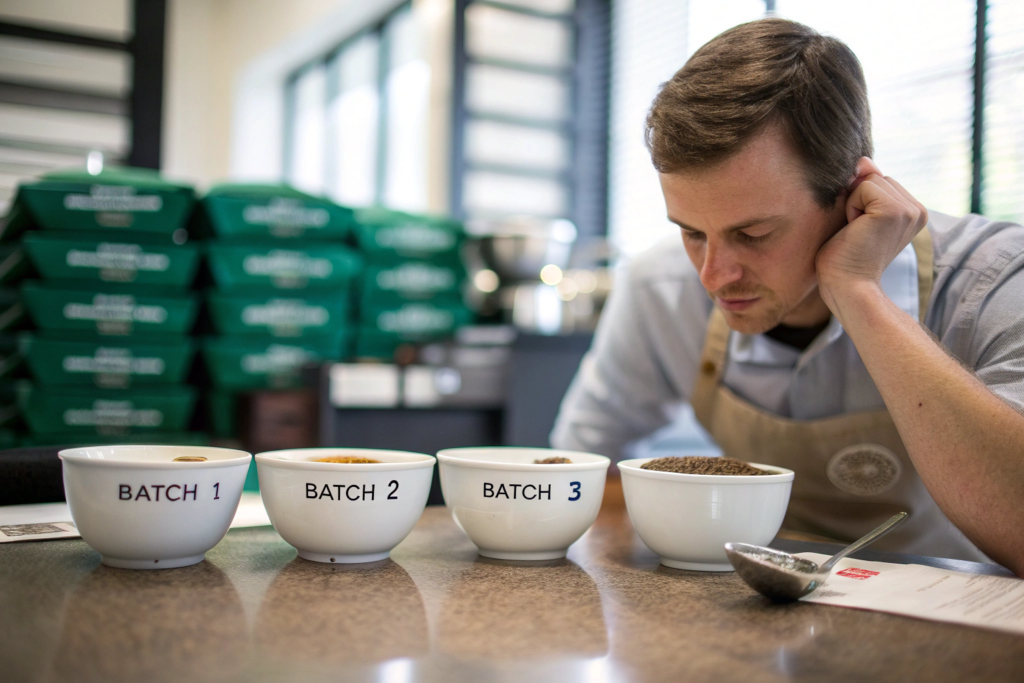
Here is the protocol. First, have one person (who is not cupping) assign random three-digit codes to both the Reference Sample and the new Arrival Sample. They record which code is which and keep it secret. Second, roast both samples together, back-to-back, using the exact same roast profile. Third, set up your cupping table with the coded bowls. You should have at least three bowls of each sample for triangulation. Fourth, you and your team cup the coffees. Evaluate them for fragrance, aroma, flavor, acidity, body, and aftertaste. Compare the coded samples to each other. Are they identical? Are they very close? Or is there a clear, noticeable difference? Only after you have written down your independent assessments do you reveal the codes. This blind protocol removes expectation bias. It's the only way to be sure. If the arrival sample cups significantly lower or differently, you have a documented, objective basis for a conversation with your supplier.
What Objective Data Points Must I Demand for Every Single Batch?
The Reference Sample anchors the flavor. But flavor is the result of underlying physical realities. If the physical properties of the green bean change from batch to batch, the flavor will change, no matter how skilled your roaster is. You must demand and verify the objective data for every single shipment.
For every batch of the "same" coffee, you must request a Certificate of Analysis (COA) that includes three specific data points: (1) Moisture Content (MC) - The ideal range is 10.5% to 11.5%. (2) Water Activity (Aw) - This must be below 0.55 for long-term stability and safety. (3) Screen Size Distribution - You need the exact percentage of beans retained on the specified screen (e.g., "92% Screen 18"). A shift in any of these three numbers from the established baseline will directly result in a different flavor profile and a different roasting experience.
You know, a detail that is often overlooked is that a coffee with the same name but a different moisture content will roast differently. It seems obvious, but I see buyers ignore this data all the time. They focus only on the cupping notes. But the data tells you why the cup might change.
How Do Shifts in Moisture Content and Water Activity Change the Roast and the Cup?
Let's say your first batch was perfect at 11.0% moisture and 0.52 Aw. It roasted evenly and tasted sweet and balanced. Your new batch arrives with a COA showing 12.5% moisture and 0.61 Aw. This is a major red flag, even if the cupping score is the same.
Here's what will happen. The higher moisture content means the bean has more water to drive off. You will need to apply more energy during the drying phase, extending your roast time. The high Water Activity indicates the water is "free" and mobile. This can lead to an uneven roast, with some beans drying faster than others. The result in the cup? It will taste muted, "baked," and lack the vibrant acidity of the first batch. It might even have a slightly vegetal or papery finish. Conversely, if the new batch arrives at 9.5% moisture, it will be brittle, roast too fast, and taste flat and hollow. This is why you can't just rely on the name of the coffee. You need the data. At Shanghai Fumao, our COA for every export lot is non-negotiable. We measure these parameters because they are the foundation of consistency.
Why Does Screen Size Distribution Matter for Batch-to-Batch Consistency?
You might think, "It's all Screen 18, what's the difference?" The difference is in the details. A spec that reads "Screen 18" could mean 95% retention, or it could mean 75% retention with the rest being a mix of smaller beans and fragments.
The first batch you loved might have been a pristine 95% Screen 18. The new batch might be a more variable 80% Screen 18. That 15% difference represents a significant amount of smaller beans and broken pieces mixed into the lot. As we've discussed before, these smaller beans have a different surface area-to-mass ratio. They will roast faster. In your drum, they will scorch while the larger beans are still developing. This will introduce ashy, bitter notes into your otherwise clean, chocolatey cup. The flavor will be "rougher" and less refined. A professional buyer looks at the exact percentage retention on the COA and demands that it remains consistent batch over batch. A variation of more than 3-5% is a sign that the supplier's dry milling and sorting processes are not tightly controlled.
How Does the Supplier's Sourcing Model Impact My Chances of Consistency?
This is the structural, behind-the-scenes factor that determines everything. You can have the best cupping protocol in the world, but if your supplier's business model is built on inconsistency, you are fighting a losing battle. You are managing the symptoms, not the cause.
A supplier who is a trader or a middleman, sourcing coffee from dozens or hundreds of anonymous smallholders to fulfill a generic contract, is structurally incapable of guaranteeing long-term, batch-to-batch consistency. Their business model is based on aggregation and price. A vertically integrated supplier who owns and controls the farm, the wet mill, and the dry mill operates a "closed-loop" system. They control the genetics, the picking, the processing, and the sorting. This control is the only true foundation for delivering the same sensory experience, batch after batch, year after year.
So, what does this mean? It means you have to ask the hard question: Who actually grew this coffee? If the answer is a vague story about "local farmers," you are buying from a model that prioritizes volume over consistency. You can read more about the impact of supply chain structure on coffee quality in the market analyses published by Perfect Daily Grind. The structure of the chain dictates the quality of the cup.

What Is "Vertical Integration" and Why Is It the Secret Weapon for Consistency?
Vertical Integration is a fancy term for a simple concept: one company owns and controls multiple steps of the supply chain. In coffee, the gold standard is a company that owns the land (the farm), owns the processing facility (the wet and dry mill), and manages the export process.
Here is the practical impact for you, the buyer. When you buy a lot from a vertically integrated farm like Shanghai Fumao, you are buying from a single, controlled source. The coffee from "Block 7" is kept separate from "Block 12." The processing parameters are documented and repeated. The dry milling is done to exacting, consistent standards. There is no mysterious "blending" of beans from unknown farms that happens in a trader's warehouse. The lot integrity is absolute. This is how we can offer a "Yunnan Catimor, Block 7" that tastes virtually identical, container after container. It's not magic. It's control. It's the difference between a carefully prepared single-origin meal and a stew made from whatever was left in the market that day.
What Questions Should I Ask a Supplier to Uncover Their True Sourcing Model?
Don't be fooled by a beautiful website or a stock photo of a farm. You need to ask direct, penetrating questions that reveal the reality of their operation. Here is your vetting script.
Ask them: "Can you provide me with a GPS map of the specific farm plot where this exact lot was grown?" A vertically integrated farm will say "yes" and provide it. A trader will stammer and talk about "proprietary information." Ask them: "Can you give me a live video tour of your dry mill and show me the lot number on the bags that are being prepared for shipment?" Again, a real farm can do this in five minutes. A trader will have excuses. Ask them: "What is the name of the farm manager who oversaw the harvest of this lot?" If they can't answer, they are not connected to the source. These questions cut through the marketing and reveal the true structure of the supply chain. They separate the genuine, integrated producers from the marketing-savvy middlemen.
Conclusion
Ensuring a consistent flavor profile across multiple batches of coffee is not a matter of luck or hope. It's a systematic discipline. It's the discipline of establishing an unbreakable quality anchor with a signed and sealed reference sample. It's the discipline of demanding and verifying the objective physical data—the moisture, the water activity, the screen size—for every single shipment. And most fundamentally, it's the strategic discipline of partnering with a supplier whose very business model—vertical integration and direct control—is built upon the foundation of consistency.
You can stop chasing the ghost of a great coffee you once tasted. You can build a reliable, predictable, and consistently delicious coffee program that your customers will trust and your roasters will love. It starts with choosing the right partner and implementing the right systems.
If you're ready to experience a supply chain built for consistency, I invite you to put our systems to the test at Shanghai Fumao. Ask us for the data. Ask us for the reference sample. We're ready. My email is cathy@beanofcoffee.com.