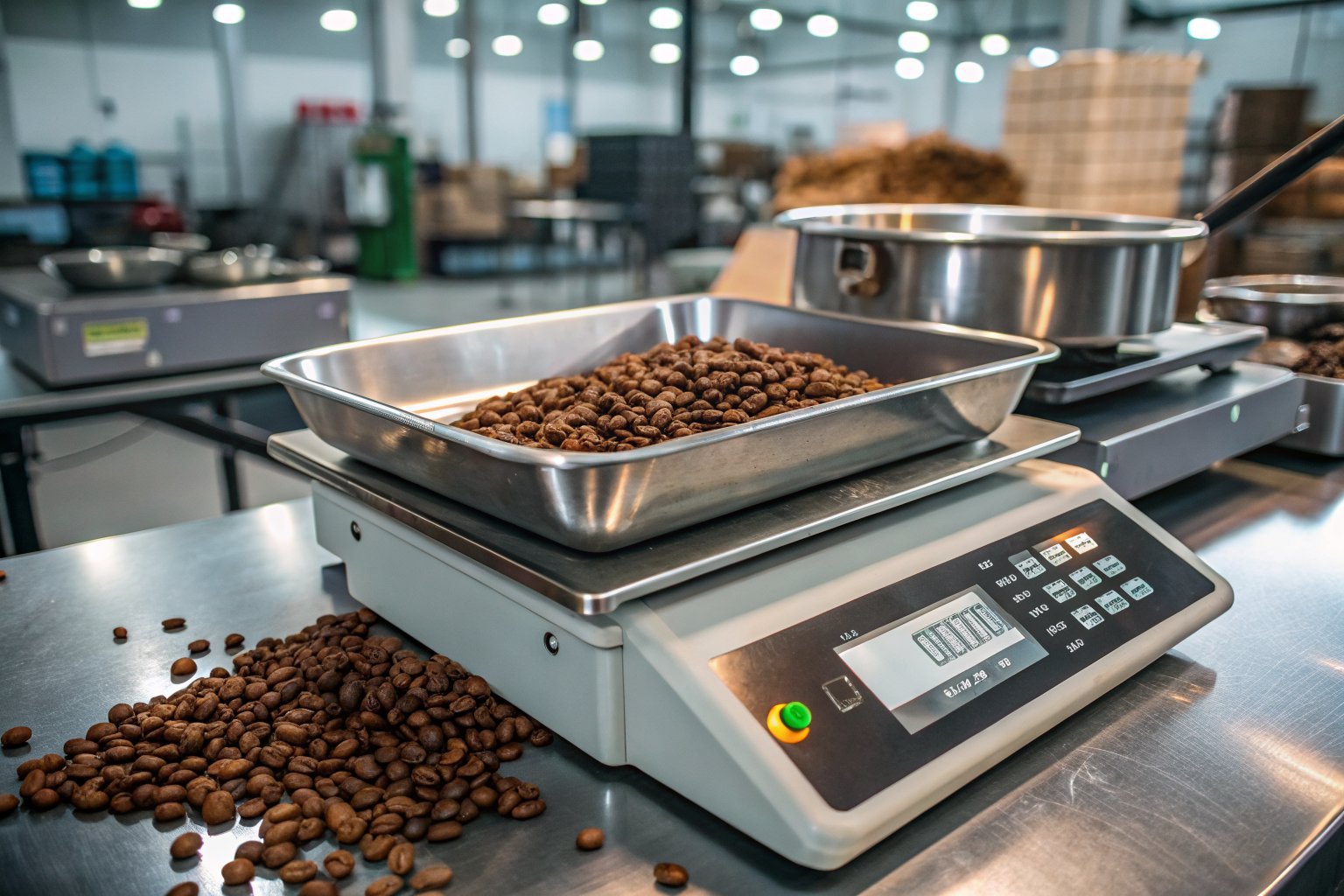
I had a buyer from Texas call me furious last year. He ordered 1,000 pounds of green coffee and expected to get about 850 pounds of roasted output based on his standard calculation. He got 780 instead. He thought I had shorted him on weight. The problem was not the green weight. It was his shrinkage calculation. He was using a generic 15 percent moisture loss assumption, but his specific beans had higher moisture content and his roast level was darker than his standard. Green-to-roasted shrinkage varies significantly based on moisture content, roast degree, and bean density. If you are not calculating it correctly, you are either losing money or mispricing your coffee. Let me walk you through the exact formula.
What Factors Determine Green-to-Roasted Shrinkage?
Shrinkage is not a fixed number. It depends on three variables: the moisture content of the green beans, the target roast level, and the bean density. Change any one of these and your shrinkage percentage changes.
How Does Green Moisture Content Affect Shrinkage?
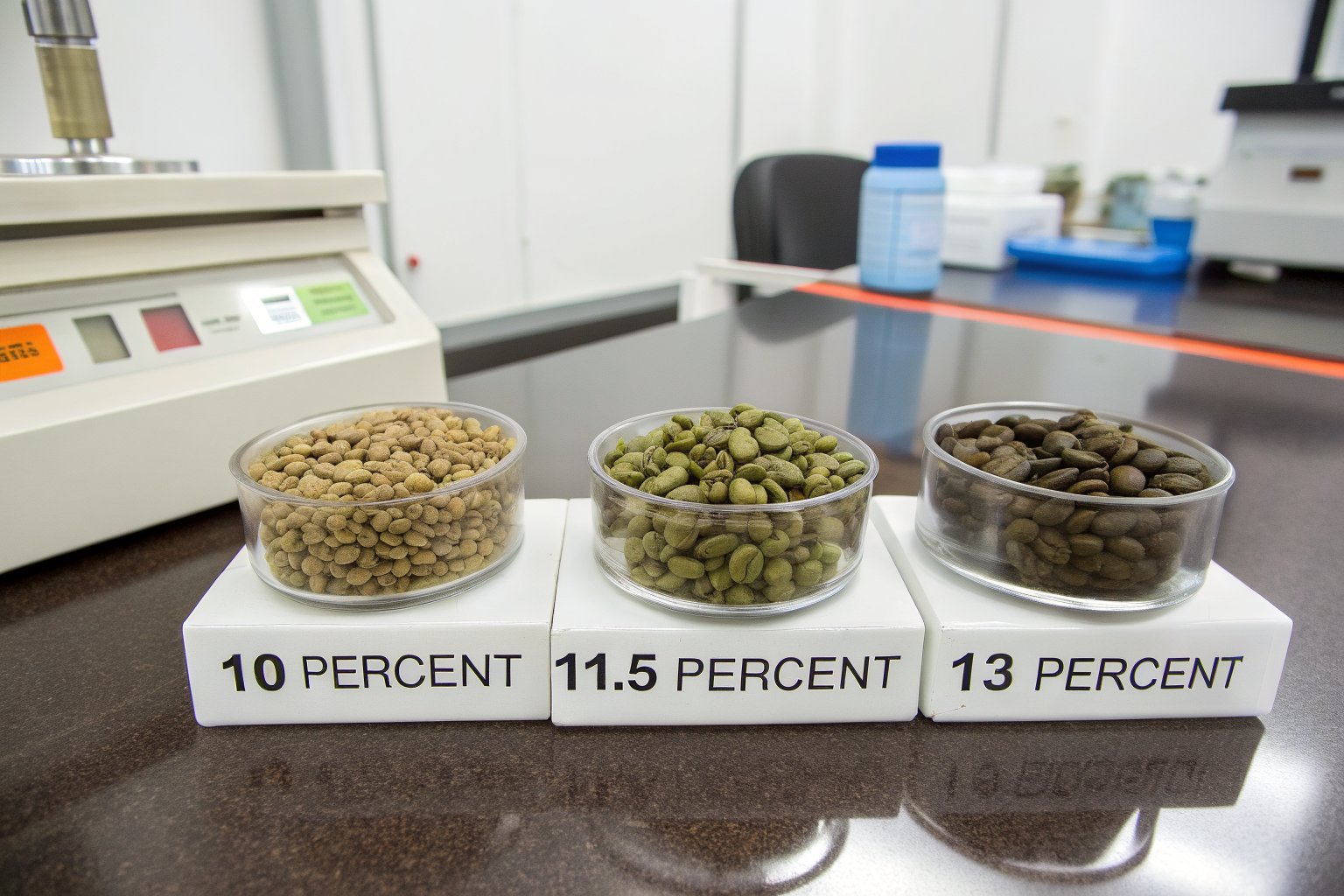
Water makes up 10 to 12 percent of green coffee weight by standard industry specification. During roasting, nearly all of that water evaporates. A green bean at 12 percent moisture will lose more weight than a bean at 10 percent moisture simply because there is more water to drive off. The relationship is roughly one-to-one: each 1 percent increase in green moisture adds approximately 1 percent to the shrinkage. The Specialty Coffee Association's roasting weight loss study specifies that moisture content accounts for approximately 60 to 70 percent of total shrinkage. For a bean at 11.5 percent moisture roasted to a medium level, moisture loss contributes roughly 10.5 percentage points of the total 15 to 17 percent shrinkage. If your green coffee has 13 percent moisture, expect shrinkage around 17 to 19 percent for the same roast level.
How Much Does Roast Level Change Shrinkage?
Dark roasts lose more weight than light roasts because more organic matter is burned off during the extended development time. A light roast might lose 13 to 15 percent of the green weight. A medium roast loses 15 to 17 percent. A dark roast can lose 18 to 22 percent or more. The extra weight loss in dark roasts comes not from additional moisture loss — all the water is already gone by first crack — but from thermal degradation of the bean solids. The Roast Magazine's roast level shrinkage table provides the following benchmarks: City roast loses 13 to 14 percent, Full City loses 15 to 16 percent, Vienna loses 17 to 19 percent, and French roast loses 19 to 22 percent. If you are buying green coffee from Shanghai Fumao at 11.5 percent moisture and roasting to Full City plus, budget for 16 to 17 percent shrinkage. That is the reliable range for our washed Catimor.
What Is the Correct Formula for Calculating Shrinkage?
The formula is simple but requires accurate inputs. Most roasters use an approximate formula that is close enough for production planning but not precise enough for cost accounting.
What Is the Standard Shrinkage Calculation Formula?
The basic formula is: shrinkage percentage equals (green weight minus roasted weight) divided by green weight, multiplied by 100. For example, if you start with 100 pounds of green coffee and end with 84 pounds of roasted, your shrinkage is 16 percent. A more precise formula that accounts for moisture and roast level is: shrinkage equals green moisture percentage plus 0.4 times the delta between your Agtron reading and a City roast baseline. For a bean at 11.5 percent moisture with an Agtron whole-bean reading of 55 (which is a Full City roast), the calculation is 11.5 plus 0.4 times 8 equals 14.7 percent shrinkage plus approximately 1.5 percent for organic matter loss, totaling 16.2 percent.
How Do You Calculate Your Actual Shrinkage for a Specific Batch?
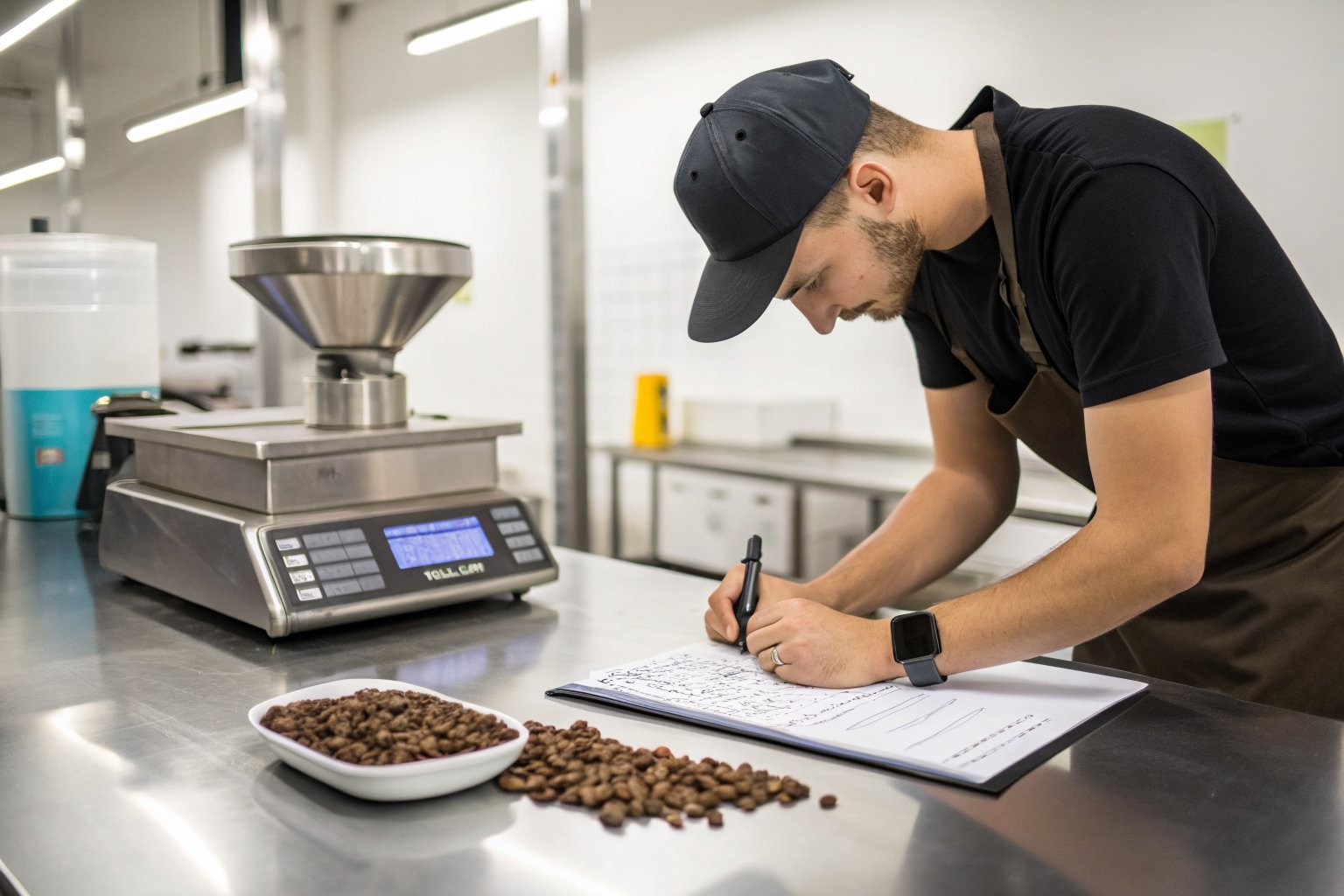
The only way to know your exact shrinkage for a specific coffee is to measure it. Weigh your green charge precisely. Weigh your roasted output after cooling. Record both numbers and calculate the difference. Do this for every batch for at least a week to establish your baseline for each bean type and roast level. The National Coffee Association's cost accounting guidelines recommend tracking shrinkage separately for each origin and roast profile you use. A roaster handling 50,000 pounds annually who assumes 15 percent shrinkage when actual is 17 percent is overestimating their yield by 1,000 pounds per year. At 8 dollars per pound retail, that is 8,000 dollars of phantom inventory that does not exist.
How Does Bean Density Change the Shrinkage Equation?
Density plays a secondary but measurable role in shrinkage. Dense beans lose a slightly lower percentage of their weight during roasting because they have more solid material per gram of water.
Do Dense Beans Have Lower Shrinkage Than Low-Density Beans?
Yes, but the difference is small. A dense bean at 0.72 grams per cubic centimeter might show 15.5 percent shrinkage, while a low-density bean at 0.62 from the same farm might show 17 percent shrinkage at the same roast level. The dense bean has more dry matter that remains after roasting, so the percentage weight loss is lower. The Coffee Quality Institute's density-shrinkage analysis found that for every 0.05 grams per cubic centimeter increase in green bean density, shrinkage decreases by approximately 0.5 percentage points at the same roast level. The difference is consistent enough that roasters who measure density can adjust their shrinkage estimates before the first batch. At Shanghai Fumao, we provide density data with every lot because we know it helps roasters plan their yields more accurately.
How Should You Adjust Your Cost Model for Dense Beans?
If you routinely buy dense high-grown beans, adjust your shrinkage assumption downward by 1 to 2 percentage points compared to standard tables. A dense Yunnan washed bean at 0.72 density and 11.5 percent moisture roasted to Full City should shrink approximately 15 to 16 percent, not the 16 to 17 percent you might expect from a standard table. This adjustment matters for pricing. If your competitor assumes 17 percent shrinkage and you assume 15.5 percent, your cost per roasted pound is lower. On a 40,000-pound container, that 1.5 percent difference means 600 more pounds of roasted output. At 12 dollars per pound wholesale, that is 7,200 dollars in additional revenue from the same green coffee investment. The density data pays for itself many times over.
How Can You Use Shrinkage Data to Improve Pricing and Inventory Management?
Shrinkage is not just a production metric. It is a financial tool. Accurate shrinkage data lets you price your roasted coffee with confidence and manage inventory without surprises.

How Do You Calculate the True Cost per Roasted Pound?
The formula is: cost per roasted pound equals green cost per pound divided by (1 minus shrinkage percentage). If you pay 3.50 dollars per pound green and have 16 percent shrinkage, your real cost per roasted pound is 3.50 divided by 0.84, which equals 4.17 dollars. That 0.67 dollar gap between green cost and roasted cost is your shrinkage cost. If you underestimate shrinkage and calculate 15 percent instead of 16 percent, your assumed cost is 4.12 dollars. You are pricing your coffee 5 cents per pound lower than your actual cost. On 50,000 pounds of annual production, that is 2,500 dollars of margin you are giving away. The Roast Magazine's profitability calculator shows that a 1 percent underestimation of shrinkage reduces net margin by 0.5 to 0.8 percent for most specialty roasters.
How Should You Use Shrinkage Data for Inventory Planning?
If you know your roast plan for the next quarter, multiply your planned roasted output by the inverse shrinkage factor to determine how much green coffee to order. If you plan to sell 10,000 pounds of roasted coffee at 16 percent shrinkage, you need 10,000 divided by 0.84, or approximately 11,905 pounds of green coffee. Ordering too little green coffee means running out of stock. Ordering too much means tying up capital in excess inventory. Accurate shrinkage data eliminates the guesswork. At Shanghai Fumao, we provide moisture and density data for every lot so roasters can calculate their expected shrinkage before the container arrives. A roaster who orders based on their actual shrinkage rather than industry averages will have more consistent inventory levels and fewer surprises.
Conclusion
Green-to-roasted shrinkage ranges from 13 to 22 percent depending on moisture content, roast level, and bean density. The formula is straightforward: start with the green moisture percentage, add adjustments for roast level and density, and measure actual shrinkage by weighing before and after each batch. Track shrinkage separately for each bean type and roast profile, and use the data to calculate your true cost per roasted pound and plan your green coffee orders. At BeanofCoffee, we provide the moisture and density data you need to calculate shrinkage before the coffee arrives. Knowing your shrinkage is not just about production planning — it is about protecting your margin on every pound you sell. Contact Person: Cathy Cai Email: cathy@beanofcoffee.com Website: https://beanofcoffee.com/