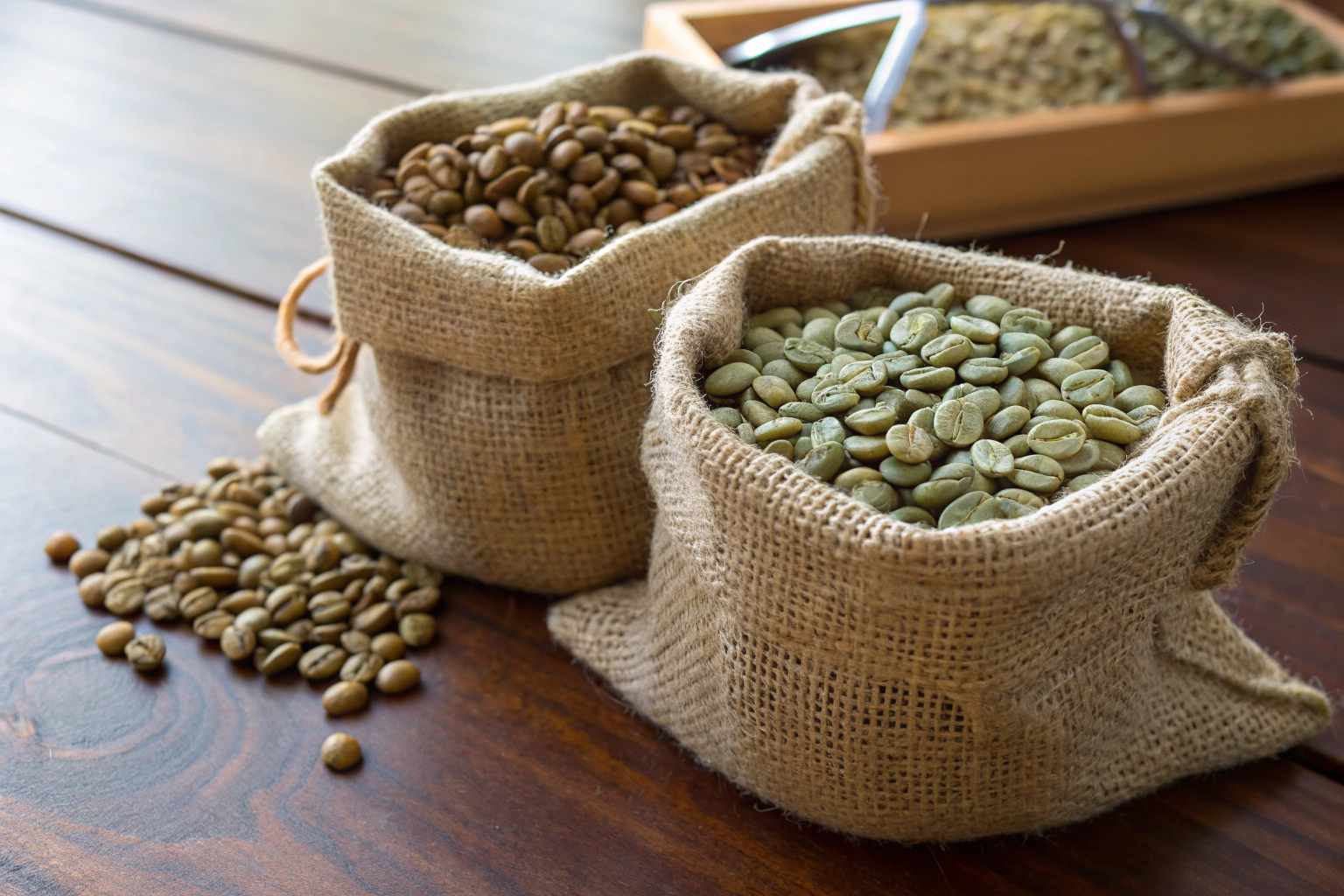
I run BeanofCoffee, a coffee exporter in Yunnan, China. We own more than 10,000 acres in Baoshan City. We sell Catimor, Arabica, and Robusta. Buyers like Ron ask me a hard question all the time. They say, “Why should I look at Chinese Arabica when Brazilian Arabica is everywhere?” It is a fair question. Brazil is a giant. Its coffee is famous. Its supply chain is mature. But blends are not about one origin. They are about balance. They are about price, taste, and timing. And Chinese Arabica can play a real role in that mix.
The best way to compare Chinese and Brazilian Arabica for blends is to look at five things: cup profile, price, shipping, certification, and supply stability. Chinese Yunnan Arabica often brings bright acidity, clean body, and a tea-like finish. Brazilian Arabica often brings nutty, chocolate, and caramel notes with lower acidity. For blends, Chinese coffee can add lift. Brazilian coffee can add base. The right answer depends on your recipe, your market, and your risk plan.
So, what does this mean for a buyer? It means you should not pick an origin based on a flag. You should pick based on the cup. You should pick based on the landed cost. You should pick based on the shipping window. You should pick based on the backup plan. At BeanofCoffee, we tell buyers to test both origins side by side. Do not guess. Cup them. Then build the blend. That is how you protect your brand.
How Do Chinese and Brazilian Arabica Differ?
Ron once told me he thinks all Arabica is the same. I laughed. Then I poured him two cups. One was from Yunnan. One was from Brazil. He stopped laughing. The difference was clear. That is the first lesson. Arabica is a species, not a flavor. The soil, altitude, weather, process, and variety change everything. So when you compare Chinese and Brazilian Arabica, you are not comparing two brands. You are comparing two growing worlds. You are comparing two harvest calendars. You are comparing two ways of farming.
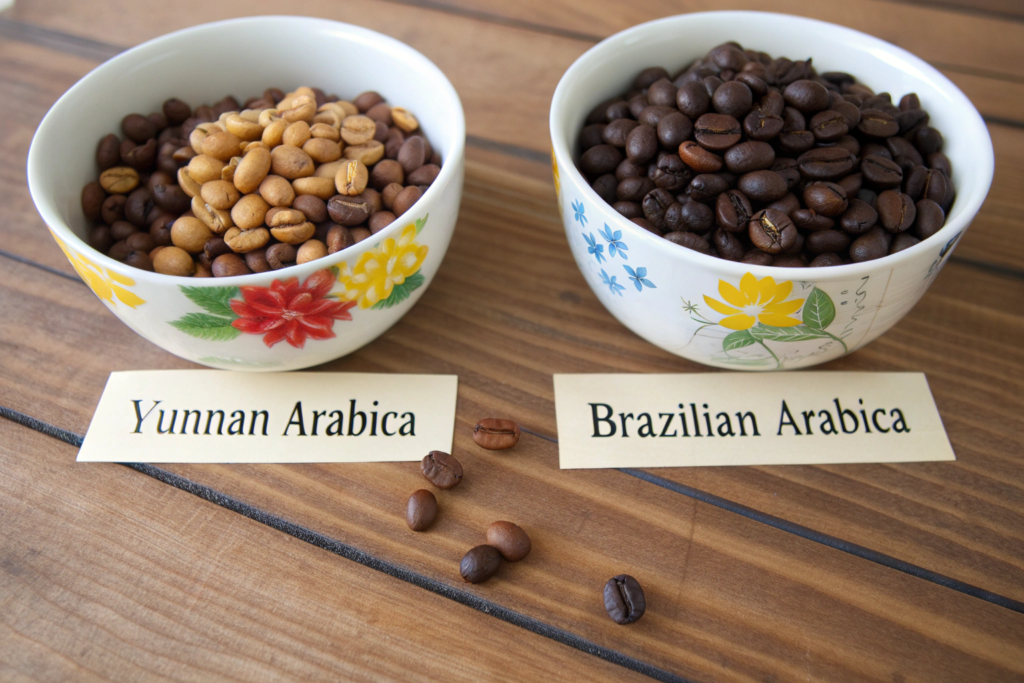
Chinese and Brazilian Arabica differ in flavor, altitude, harvest timing, processing, and market position. Yunnan Arabica usually grows at high altitude. It often has bright acidity, floral notes, and a clean finish. Brazilian Arabica often grows on lower plateaus. It usually has lower acidity, heavier body, and notes of chocolate, nuts, and caramel. Both can be excellent. They simply do different jobs in a blend.
Another way to look at this is to think about a music band. Brazilian Arabica is the bass and drums. It holds the rhythm. Chinese Arabica is the lead guitar. It adds brightness and energy. If you use only bass, the song may feel heavy. If you use only lead, the song may feel thin. A good blend uses both. That is why comparing them matters. It is not about which one is better. It is about which one fits your recipe.
What Does Yunnan Arabica Taste Like?
Yunnan Arabica usually tastes clean and bright. It often has notes of citrus, red apple, tea, and mild floral tones. The body is medium. The acidity is lively but not sharp. The finish is often sweet and clean. I have cupped many lots from Baoshan. The best ones remind me of a light black tea with a squeeze of orange. They are not as heavy as Brazilian coffee. They are not as earthy as some Indonesian coffee. They sit in a nice middle place. That makes them useful in filter blends and modern espresso.
The International Coffee Organization tracks global coffee production and trade. The Specialty Coffee Association shares cupping standards and education. These are good places to learn more about flavor evaluation. I use similar methods in our own lab. We cup every lot. We check moisture. We check defects. We do not rely on one person’s taste. We use a team. That gives us a fair view of the coffee. Ron likes that because he wants proof, not poetry.
What Makes Brazilian Arabica So Popular?
Brazilian Arabica is popular because it is consistent, abundant, and familiar. It often has low acidity, medium to full body, and sweet notes of chocolate, peanut, and caramel. It works well as a base in espresso. It also works well in grocery blends. Buyers know what they will get. That consistency is powerful. Brazil also has a huge infrastructure. It can ship large volumes all year. That makes it a safe choice for many roasters.
The Cecafe represents Brazilian coffee exporters. The BSCA promotes Brazilian specialty coffee. These groups show why Brazil is a global leader. But safe does not mean perfect. Brazilian coffee can be expensive when the crop is short. It can also face port delays and currency moves. So even a giant has risks. That is where a second origin like China can help. It gives your blend a backup and a different flavor.
How Do Price and Shipping Compare for Blends?
Price is not one number. It is a stack of numbers. The farm gate price is only the start. Then you add milling, packing, inland trucking, port fees, ocean freight, insurance, tariffs, and storage. A low farm price can become a high landed cost. A high farm price can become a fair deal if the shipping is fast and stable. Ron cares about price and timeliness. He is right to care. A blend that saves ten cents per pound but arrives three weeks late is not a saving. It is a problem.
Chinese and Brazilian Arabica compare differently on price and shipping. Brazilian coffee often has a lower base price because of scale. But it can face long ocean transit, port congestion, and currency swings. Chinese coffee often has a competitive price for specialty grade, and it can reach Asian ports faster. For U.S. and European buyers, the total landed cost depends on freight rates, tariffs, and the shipping window. You must compare the final number, not the headline price.
So, what should you do? Ask for a landed cost estimate. Ask for a sailing schedule. Ask for the tariff code. Ask for the payment terms. Then compare. Do not compare a Brazilian FOB price with a Chinese CIF price. That is not fair. Compare the same terms. Compare the same quality. Compare the same delivery date. When you do that, the picture becomes clear. Sometimes Brazil wins. Sometimes China wins. Sometimes the best answer is a blend of both.

Why Does Chinese Arabica Cost What It Costs?
Chinese Arabica costs what it costs because of altitude, labor, processing, and scale. Yunnan is not flat. The farms are often on hills. Picking is done by hand. Good processing takes time. Our farm in Baoshan has more than 10,000 acres, but we still manage lot by lot. That care costs money. It also creates quality. A clean, specialty-grade Yunnan Arabica is not the same as a cheap commercial coffee. It should not be priced like one.
The Embrapa Coffee page shares research on coffee farming. The Daily Coffee News covers market trends and prices. These sources help buyers understand cost drivers. I tell buyers to look at the cup score, moisture, defect count, and certification. If the coffee scores well, the price may be fair. If the coffee is ordinary, the price should be lower. Do not pay specialty prices for commercial coffee. Do not expect specialty quality at commercial prices. That rule works in every origin.
How Do Freight and Tariffs Change the Math?
Freight and tariffs can change the math more than the farm price. Ocean rates move up and down. Port congestion can add days. Tariffs can add a percentage to the landed cost. For U.S. buyers, the Harmonized Tariff Schedule code matters. Green coffee, roasted coffee, and packaged coffee may fall under different lines. A wrong code can cause delays or extra fees. So you must check the rules before you book.
The USITC provides tariff and trade data. The CBP explains U.S. customs rules for imports and exports. I use these sites when I prepare quotes. I also work with customs brokers. A good broker saves money. A bad broker creates problems. For blends, you may ship coffee from two origins. That means two sets of documents. It also means two sets of rules. Plan for that early. Do not wait until the container is at the port.
How Do You Cup and Blend Them Together?
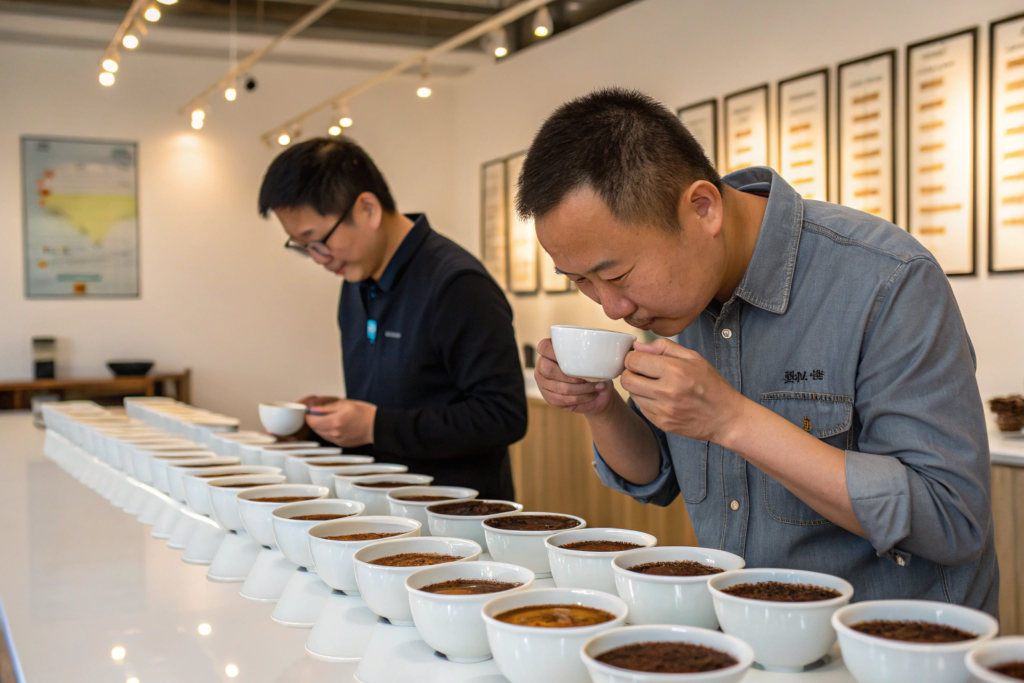
Cupping is the only honest way to compare coffee. You can read all the marketing you want. But your tongue knows the truth. I like to cup Chinese and Brazilian Arabica side by side. I use the same roast level. I use the same water. I use the same grinder. I use the same spoon. I do not tell the tasters which cup is which. That is a blind test. It removes bias. It helps you see the real difference. Then you can build a blend with a clear goal.
You cup and blend Chinese and Brazilian Arabica by testing them blind, scoring them fairly, and then trying different ratios. Start with a base blend. Use Brazilian coffee for body and sweetness. Add Chinese coffee for acidity and aroma. Try 70/30, 60/40, and 50/50. Taste each one. Check the espresso and the filter. Then pick the ratio that fits your market. Do not copy someone else’s recipe. Build your own.
Another way to look at this is to treat the blend like a recipe. You would not add salt without tasting. You would not add sugar without measuring. The same rule applies to coffee. A small change in ratio can change the cup. A 10% shift can add brightness or reduce bitterness. So measure. Write it down. Cup again. That is how you make a blend that repeats. A blend that repeats is a blend that sells.
How Do You Test a Blend Without Guesswork?
You test a blend without guesswork by using a clear protocol. First, cup each origin alone. Score fragrance, flavor, acidity, body, sweetness, and aftertaste. Second, cup the blend at different ratios. Third, test the blend in the final brew method. If you sell espresso, test it as espresso. If you sell filter, test it as filter. Do not test only one way. The same blend can taste great in a French press and terrible in an espresso machine.
The SGS coffee inspection and Intertek coffee pages explain third-party testing. These services help you verify moisture, defects, and quality. I also keep a simple log. I write down the lot number, the ratio, the roast date, and the score. That log helps me repeat a good blend. It also helps me fix a bad one. Ron likes this because he wants stable quality. A log is not fancy. It is just smart.
What Ratios Work for Espresso and Filter?
For espresso, many roasters use Brazilian Arabica as the base. A common starting point is 70% Brazilian and 30% Chinese. That gives sweetness and body from Brazil. It adds acidity and aroma from China. If you want more brightness, try 60/40. If you want more chocolate, try 80/20. For filter, you can use more Chinese coffee. A 50/50 blend often works well. It gives a balanced cup with tea-like notes and a sweet finish. But these are starting points. Your water, roast, and grinder will change the result.
The Perfect Daily Grind and Barista Hustle share practical brewing and blending guides. These are useful for roasters and cafe owners. I tell buyers to test at least three ratios. Then pick two. Then test again. Do not rush. A blend is not a one-time decision. It is a living recipe. As crops change, the blend may need a small change. That is normal. Plan for it. Do not fight it.
How Can You Build a Stable Supply Plan?
A good blend is not enough. You also need a stable supply. I have seen buyers build a perfect blend and then lose the origin. A crop fails. A port closes. A price jumps. The blend changes. Customers notice. Sales drop. So the supply plan matters as much as the recipe. Ron cares about timeliness and security. He is right. A blend without a backup is a risk. A blend with two origins is stronger.
You build a stable supply plan by using both origins as partners, not competitors. Keep a main supplier and a backup supplier. Keep safety stock. Keep clear contracts. Keep an eye on harvest calendars. Keep communication open. For blends, you can adjust the ratio when one origin is short. That flexibility protects your brand. It also gives you more power in price talks.
So, what does this mean? It means you should not put all your beans in one basket. Brazil may be your base. China may be your lift. But if Brazil is late, China can carry more. If China is short, Brazil can carry more. That is the power of a two-origin blend. It is not just a flavor choice. It is a risk choice. At BeanofCoffee, we help buyers plan both. We share our harvest dates. We share our capacity. We share our shipping options. That helps buyers build a plan that works.

How Do You Balance Two Origins Across Seasons?
You balance two origins across seasons by tracking harvest calendars and shipping windows. Brazil harvests at a different time than China. Yunnan usually harvests from November to March. Brazil harvests from May to September. That difference can be useful. When one origin is off-season, the other may be available. You can plan your buying around those windows. You can also store green coffee. Green coffee can keep for months if you control moisture and temperature.
The Fairtrade coffee and Rainforest Alliance coffee pages explain certification and sustainability. These can help you meet buyer needs in Europe and North America. I also use a simple table. It shows origin, harvest month, shipping time, and quality risk. That table helps me plan. You can do the same. A calendar is a cheap tool. It prevents expensive surprises.
What Should Be in a Backup Contract?
A backup contract should include product, volume, quality spec, price, payment terms, shipping window, and inspection rules. It should also include a trigger. What event lets you move volume to the backup? Is it a missed shipment? A failed quality test? A price increase? Write it down. Then both sides know the rules. Do not rely on trust alone. Trust is good. But a contract is better. It protects both sides.
The Trade.gov website offers export and import guidance. The FDA prior notice page explains U.S. food import rules. These are useful for American buyers. I also recommend a small trial order before a big contract. A trial shows how the supplier packs, ships, and communicates. If the trial goes well, increase the volume. If it fails, you learned a cheap lesson. That is how you build a stable supply without disruption.
Conclusion
Comparing Chinese and Brazilian Arabica for blends is not about picking a winner. It is about understanding what each origin does. Brazilian Arabica often gives body, sweetness, and chocolate notes. Chinese Yunnan Arabica often gives acidity, aroma, and a clean finish. Together, they can create a blend that is balanced and stable. You should compare cup quality, price, shipping, tariffs, certification, and supply risk. You should cup them blind. You should test different ratios. You should build a backup plan. If you do these things, you can create a blend that tastes good and survives real-world problems.
At BeanofCoffee, we know both sides of this comparison. We own more than 10,000 acres in Baoshan City, Yunnan. We export Catimor, Arabica, and Robusta. We work with large buyers, brand owners, distributors, and trading companies. We can supply raw beans and packaged products. We can send samples, test reports, and shipping plans. If you want to compare Chinese and Brazilian Arabica for your blend, please contact Cathy Cai at cathy@beanofcoffee.com. She will help you with samples, pricing, specifications, and logistics. You can also visit BeanofCoffee to learn more. Let us build a better blend together.