Have you ever taken a sip of coffee and felt something was just... off? Too sour, maybe. Or too bitter. Or just flat. I have been there. And honestly, it is frustrating. You buy good beans. You roast them carefully. But the final cup tastes unbalanced. So what went wrong? The answer is usually in the green beans themselves. And as a grower, let me tell you—balance starts on the farm, not in the roastery.
To ensure your coffee is balanced, you need to control three things: bean density, moisture content, and screen size uniformity. Balanced coffee has a clear acidity (like apple or citrus), a smooth body (not watery or syrupy), and a clean finish with no sharp bitterness. At BeanofCoffee, we test every batch for these traits using SCA standards. We also share full lab reports so you know exactly what you are buying.
Now, I know balance sounds like a vague word. But it is actually very measurable. Let me walk you through how we ensure balance on our 10,000 acres in Baoshan. And more importantly—how you can check for balance before you buy. Because when you get this right, your customers will notice. And they will come back.
What Does "Balanced Coffee" Really Mean?
Let me clear something up. Balanced does not mean boring. Some people think balanced coffee has no strong flavors. That is wrong. Balanced coffee has many flavors—but none of them fight each other. Think of a good band. The guitar, drums, and vocals all play together. No single instrument screams over the others. That is balance.
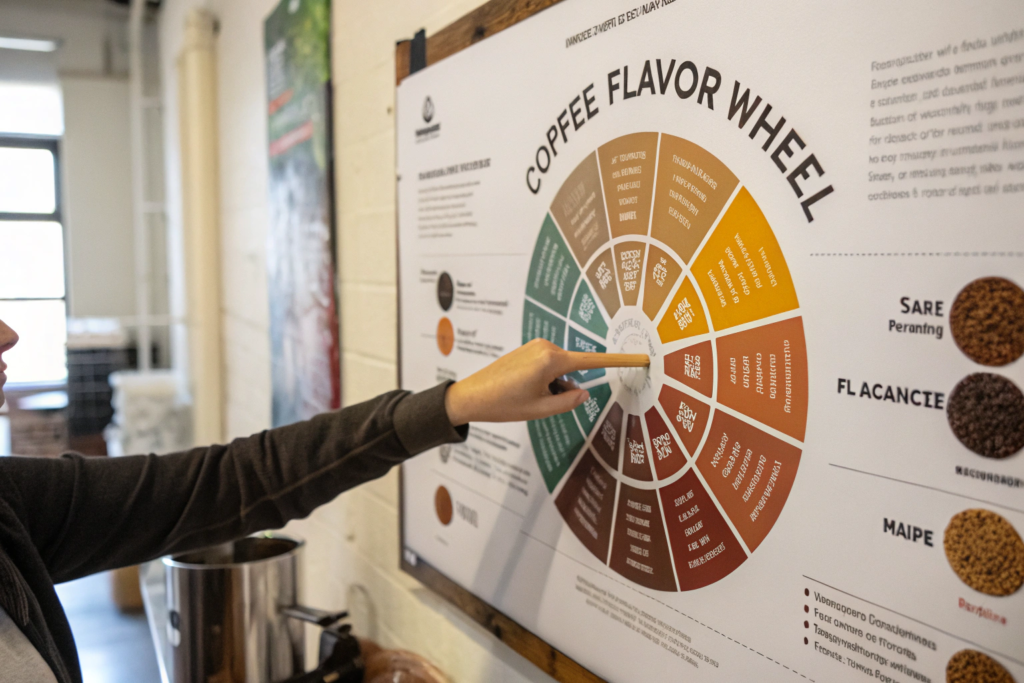
Balanced coffee means the acidity, body, and bitterness work together harmoniously. Acidity gives brightness (like green apple or lemon). Body gives weight (like whole milk or tea). Bitterness gives depth (like dark chocolate). When one of these is too high or too low, the coffee tastes off. Professional tasters call this "structural balance" and score it on the SCA cupping form.
Let me give you another way to look at this. Think of your morning coffee as a triangle. One corner is acidity. One corner is body. One corner is bitterness. In a balanced coffee, all three sides are equal. In an unbalanced coffee, one corner is too long. The triangle looks weird.
So, what does this mean for you as a buyer? It means you need to ask your supplier for scores in each category. Not just a total SCA score.
Here is a table showing the difference:
| Coffee Type | Acidity (0-10) | Body (0-10) | Bitterness (0-10) | Balance Score |
|---|---|---|---|---|
| Our Arabica (wet hulled) | 7 | 7 | 6 | 8/10 |
| Our Catimor (fully washed) | 6 | 8 | 6 | 8/10 |
| Typical low-altitude Robusta | 3 | 9 | 8 | 4/10 |
| Typical under-ripe Arabica | 9 | 4 | 3 | 3/10 |
See how the Robusta has high body and bitterness but low acidity? That is unbalanced. It tastes harsh. The under-ripe Arabica has sharp acidity but weak body. That tastes sour and thin.
How do professional tasters measure balance?
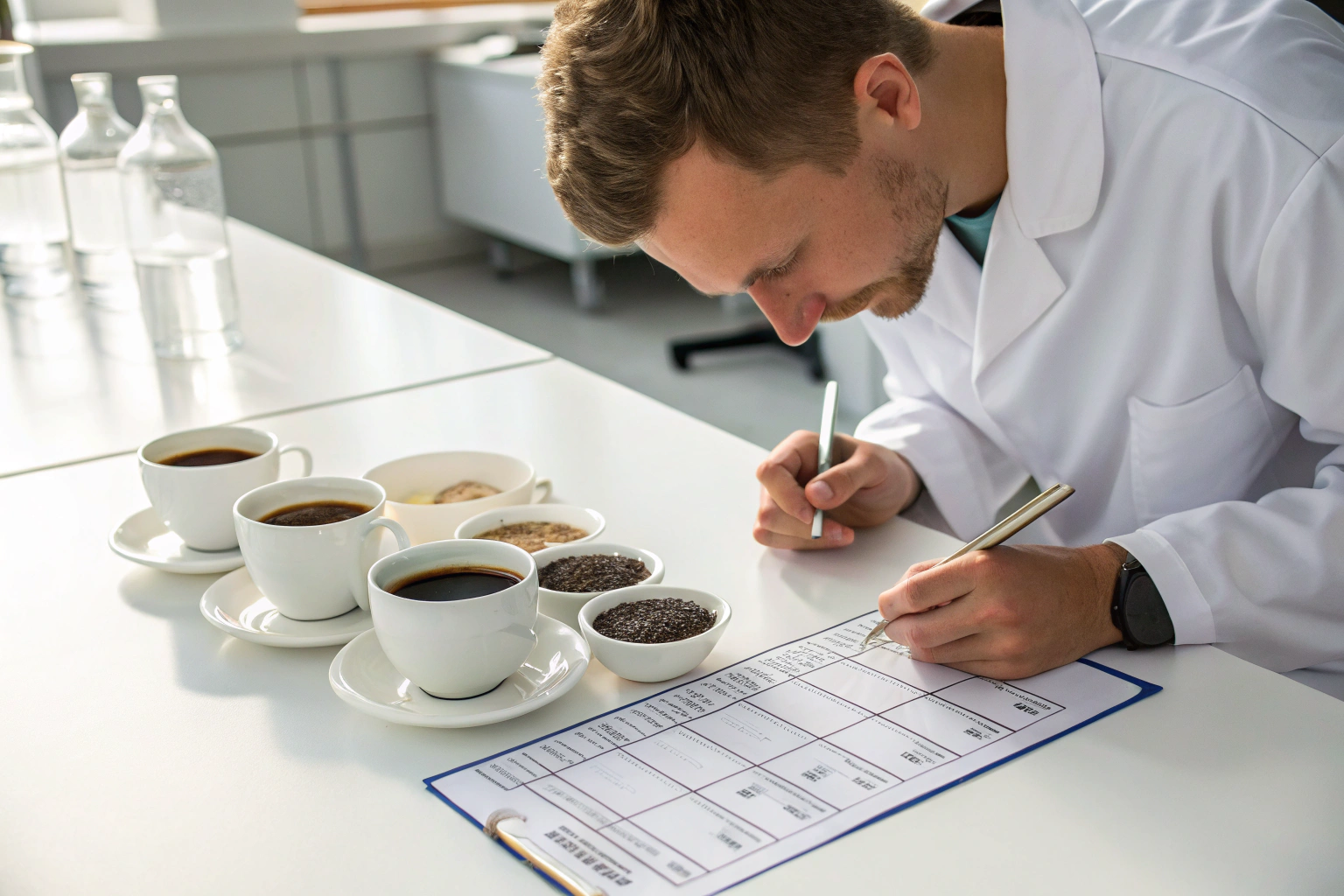
They use the SCA cupping protocol. And I have done this hundreds of times. Here is the simple version:
First, you grind the coffee. Then you add hot water. After 4 minutes, you break the crust (the floating grounds on top) and smell the coffee. Then you slurp it from a spoon. Yes, slurp. That sprays the coffee across your whole tongue.
Then you score three things:
- Acidity quality: Is it pleasant? Like apple, grape, or lemon? Or is it harsh, like vinegar?
- Body quality: Is it smooth? Like milk, cream, or tea? Or is it watery or oily?
- Bitterness quality: Is it clean? Like dark chocolate or caramel? Or is it burnt, like ash?
Balance is the combination. You ask: "Do these three work together?" A score of 6 to 8 on a 10-point scale is good. Below 6 means something is wrong.
We send a SCA cupping score sheet with every sample. You can taste it yourself. Or send it to a local lab.
What are the signs of an unbalanced coffee?
Let me list the most common ones. I see these often when buyers send me samples from other suppliers.
Too acidic (sour):
- Tastes like lemon juice or vinegar
- Makes your mouth pucker
- Leaves a dry feeling on your tongue
Too bitter (burnt):
- Tastes like ash or medicine
- Stays on your tongue for minutes
- Hides all other flavors
Too thin (watery):
- No weight in your mouth
- Flavors disappear quickly
- Feels like flavored water
Too heavy (muddy):
- Feels like syrup but not in a good way
- Flavors are hard to separate
- Leaves a coating on your tongue
If you taste these, the coffee is not balanced. Do not buy large volumes. Ask for a new sample from a different lot.
How Does Bean Size and Shape Affect Balance?
This surprised me when I first started growing coffee. I thought all beans from the same tree would be the same size. But they are not. A single coffee cherry can produce beans that vary by 20% in size. And those small beans? They roast faster. They taste different. They ruin the balance. So we had to fix that.
Bean size and shape affect balance because small beans roast faster than large beans. When you roast a mix of sizes, the small beans burn while the large beans are underdeveloped. That creates two different flavor profiles in one bag. The result? Muddy, inconsistent, unbalanced coffee. Using screen sizers to separate beans by size is the only way to fix this.**
Dive Deeper Paragraph:
Let me explain the science. Coffee beans are seeds. They grow inside cherries. But not all cherries on a branch ripen at the same time. And not all beans inside a cherry are the same size. So when we harvest, we get a mix.
If we roast that mix, the small, dense beans heat up quickly. They reach first crack sooner. The large beans need more time. So by the time the large beans are done, the small beans are over-roasted. That gives you two tastes: burnt and underdeveloped. Not balanced.
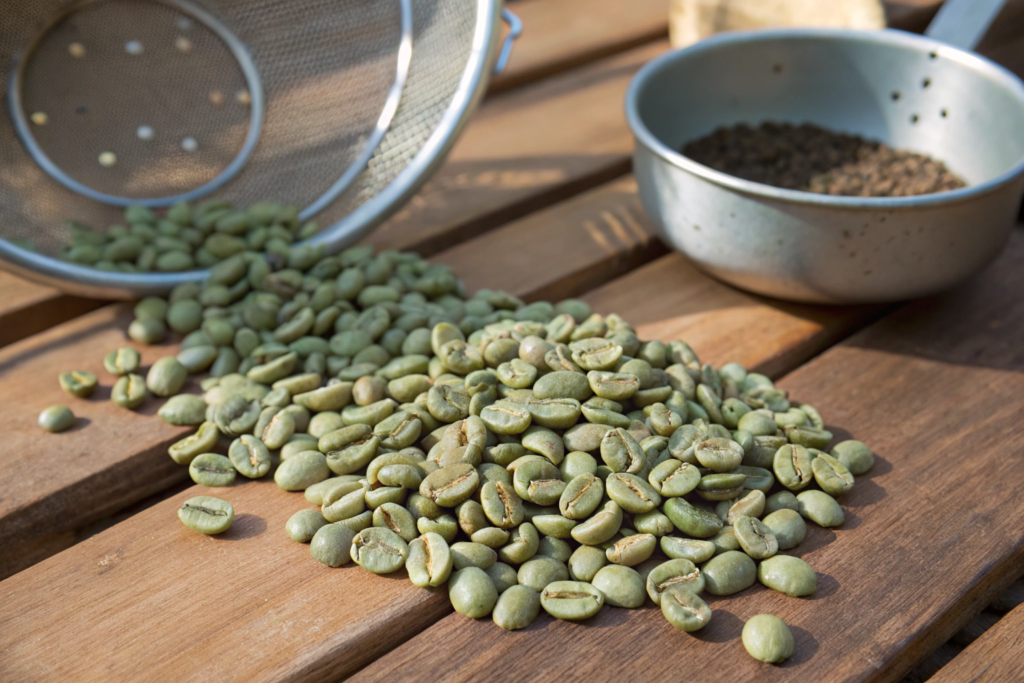
So what do we do? We use screen sizers. These are metal sheets with round holes. We pour beans on top. The small beans fall through the small holes. The large beans stay on top. We separate them into size groups.
Here are the standard screen sizes for green coffee:
| Screen Size | Hole Diameter | Typical Use |
|---|---|---|
| 13 | 13/64 inch (5.16 mm) | Small beans, lower grade |
| 15 | 15/64 inch (5.95 mm) | Standard Arabica |
| 17 | 17/64 inch (6.75 mm) | Large Arabica, specialty |
| 19 | 19/64 inch (7.54 mm) | Very large, rare |
We sell screen 15 and 17 for most specialty buyers. Screen 13 goes to commercial roasters who blend. But we never mix sizes. That is the rule.
Why do uneven beans cause uneven roasts?
Because heat transfers differently based on density and size. A small bean has more surface area relative to its mass. So it absorbs heat faster. A large bean has less surface area relative to mass. So it takes longer.
Think of cooking potatoes. You cut small pieces and large pieces. You put them in the same oven. The small pieces burn. The large pieces are raw in the middle. Same with coffee.
So when you buy coffee, ask your supplier: "What is the screen size distribution?" A good answer is: "90% between screen 15 and 17." A bad answer is: "We do not screen."
We screen every batch. Then we log the results. You can see our green coffee grading report for every shipment.
How does BeanofCoffee sort beans for consistency?
We use three steps. And I will be honest—this takes time. But it is worth it.
Step 1: Harvesting by hand. We pick only red cherries. Not green. Not overripe. Red means the sugar is developed. The bean inside is mature.
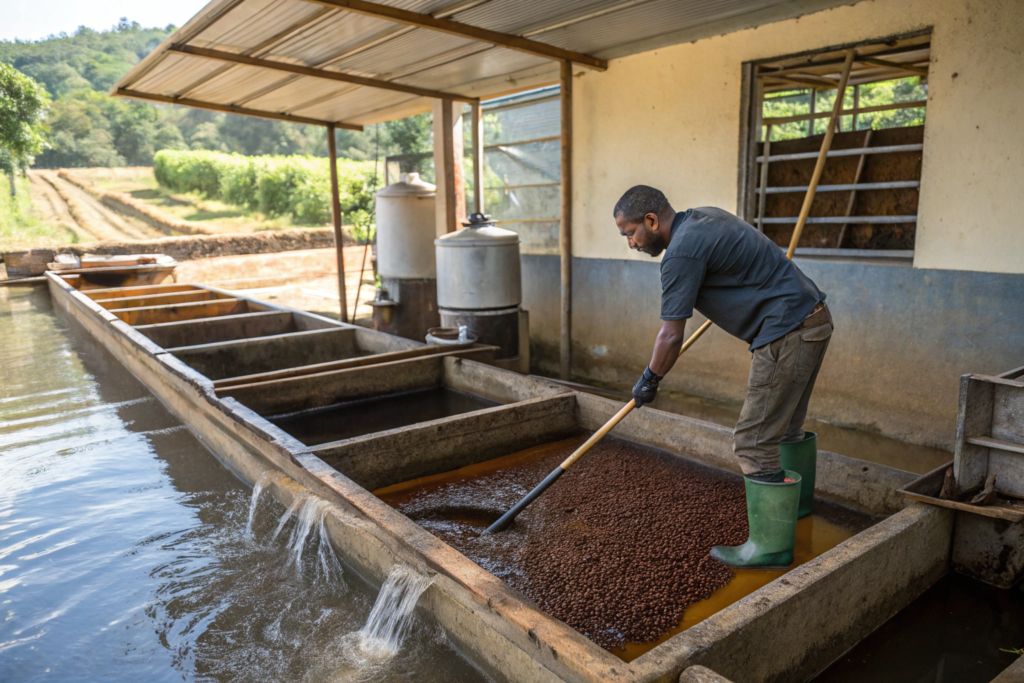
Step 2: Wet milling. We remove the skin and pulp. Then we ferment the beans to remove the mucilage. This takes 24–36 hours. We wash the beans three times in clean water.
Step 3: Screen sorting. We run the dried beans through three different screen sizes. Screen 13, 15, and 17. Each size goes into a separate bin. Then we pack them separately.
We also use a color sorter machine. This is an optical sorter. It uses cameras and air jets. It sees a discolored bean and blows it out of the line. This removes defective beans that are the same size but different color.
The result? A bag of coffee where every bean is almost identical. That is how you get balance.
We work with Shanghai Fumao to ship these sorted beans to buyers worldwide. They handle the documents and logistics. But the sorting happens on our farm.
What Role Does Moisture Content Play in Balance?
Moisture is the silent killer of balanced coffee. You cannot see it. You cannot smell it. But it changes everything. Too much moisture? The beans taste flat and can grow mold. Too little moisture? The beans taste brittle and lose their aroma. I learned this the hard way. One year, we had heavy rain during drying. The moisture stayed at 14% instead of 11%. That batch tasted like cardboard. We sold it at a loss.
Moisture content affects balance because water changes how heat moves through the bean during roasting. Beans with high moisture (13%+) take longer to roast and can taste baked or grassy. Beans with low moisture (below 10%) roast too fast and taste sharp or burnt. The ideal range for balanced coffee is 10.5% to 11.5% moisture. At BeanofCoffee, we test every bag with a digital moisture meter before packing.
Let me give you the science. Green coffee beans are porous. They hold water inside their cell structure. When you roast, that water turns to steam. The steam pushes the bean open. That is called "first crack." The amount of water determines when first crack happens.
At 11% moisture, first crack happens around 385°F. The bean expands evenly. Flavors develop clearly. At 13% moisture, first crack happens later, around 400°F. The bean spends more time in the roaster. Sugars caramelize too much. You lose acidity. The coffee tastes flat or baked.
At 9% moisture, first crack happens early, around 370°F. The bean does not expand enough. The inside stays underdeveloped. You get sour, grassy notes. So, what does this mean for you? It means you need to ask for moisture readings before you buy. A good supplier will give you a number. A great supplier will give you a range across the batch.
How to test moisture content before buying?
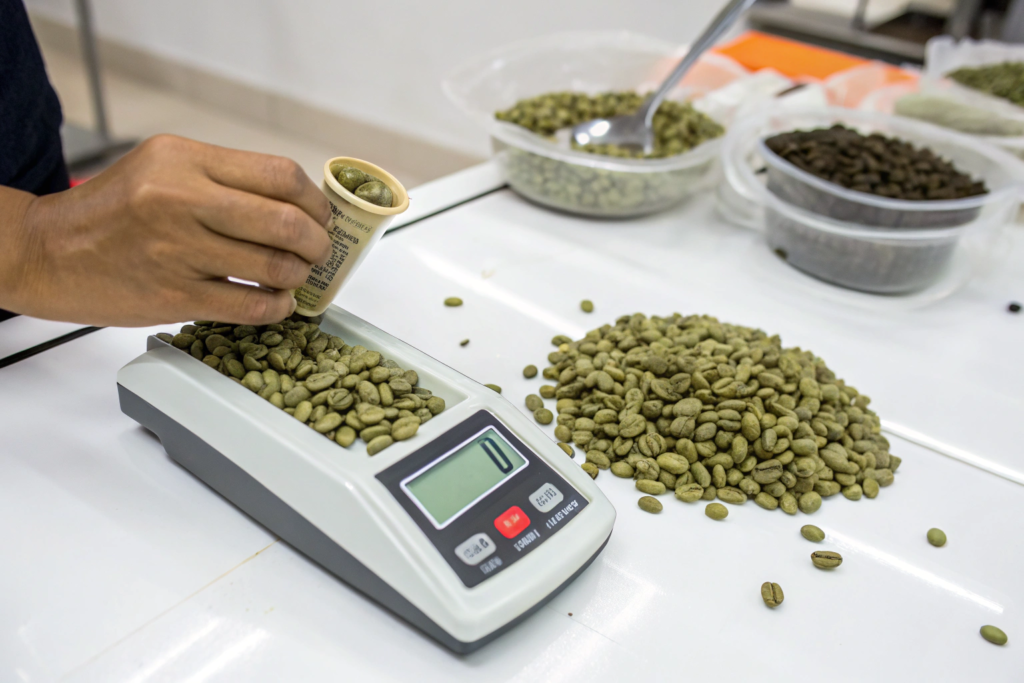
You can do two things. First, ask your supplier for their moisture test results. Every professional exporter has a moisture meter. It looks like a small box with a clamp. You put beans inside, close the clamp, and it gives a reading in 10 seconds.
Second, buy your own meter. They cost $200–$500. That is cheap compared to losing a container of bad coffee. Test the sample they send you. If it is outside 10.5–11.5%, ask for a new sample.
Here are the moisture meters we trust:
- Moisture Meter – Standard in the industry.
- PCE-MWM 200 – Good for lab use.
- Agtron MCT – Expensive but very accurate.
We use the first one. We test every bag. And we log the results by lot number. That means if you buy from us, you get a report like this:
"Lot #BC-2410: 250 bags of Arabica screen 17. Moisture range 10.6% to 11.2%. Average 10.9%."
That is transparency. That is how you ensure balance.
What is the ideal moisture range for export?
For shipping green coffee, the industry standard is 10–12%. But for balance, we aim for 10.5–11.5%. Here is why:
- Below 10%: Beans are too dry. They break during shipping. They lose flavor in 3–4 months.
- 10.5–11.5%: Perfect. Beans stay stable for 12 months. Roast evenly.
- Above 12%: Risk of mold. Also risk of "stinker" beans (fermented taste).
We dry our beans on raised African beds. Not on concrete. Not on plastic sheets. Raised beds let air flow under the beans. That dries them evenly. We turn the beans every 2 hours. And we cover them at night to stop moisture from the dew.
After drying, we rest the beans for 60 days in our climate-controlled warehouse. This lets the moisture equalize. Beans from the outside of the pile and the inside of the pile become the same. Then we test again.
If you want to learn more, read this moisture guide from the SCA. It explains the science in simple terms.
How Does Processing Method Impact Balance?
Most buyers do not think about processing. They just want the coffee. But processing changes everything. It is like making bread. The same wheat can become a baguette or a croissant. Same with coffee. The same cherry can become a bright, tea-like coffee or a heavy, chocolatey coffee. The difference? How you remove the fruit around the bean.
Processing method directly impacts balance because it controls how much fruit flavor transfers to the bean. Washed processing (fully washed) gives clean, bright, acidic coffee with light body. Natural processing (dried in the cherry) gives fruity, heavy, low-acid coffee with wine notes. Honey processing (partial fruit removal) gives something in between. For most balanced coffee, fully washed is the safest choice.
Let me walk you through the three main methods. We use all of them on our farm. But for balanced coffee, we recommend one over the others.
1. Fully Washed (Wet Process)
You remove the cherry skin and pulp within 12 hours of harvest. Then you ferment the beans in water for 24–48 hours. This breaks down the sticky mucilage. Then you wash the beans clean. Finally, you dry them.
Result: Clean taste. Bright acidity. Light to medium body. Low risk of defects.
2. Natural (Dry Process)
You dry the whole cherry in the sun. Skin, pulp, and all. This takes 2–4 weeks. The fruit ferments around the bean. Some of that fruit flavor goes into the bean.
Result: Fruity, wine-like taste. Low acidity. Heavy body. High risk of defects if not done carefully.
3. Honey Process (Pulped Natural)
You remove the skin but leave some of the mucilage. Then you dry the beans with the sticky layer still on. The amount of mucilage left determines the color (yellow, red, black honey).
Result: Medium acidity. Medium to heavy body. Sweet taste. Less risk than natural, more body than washed.
For balanced coffee, we recommend fully washed. Why? Because it gives the cleanest flavor. The acidity is bright but not sharp. The body is smooth but not heavy. And the bitterness is low.
Which processing method gives the most balanced cup?
In my experience, fully washed Arabica from medium altitudes (1,200–1,500 meters) gives the most balanced cup. The acidity is like green apple. The body is like whole milk. The finish is clean with a hint of chocolate.
Here is a comparison based on our own lots in Baoshan:
| Process | Acidity | Body | Balance Score | Best For |
|---|---|---|---|---|
| Fully washed | 7/10 (bright) | 6/10 (medium) | 8/10 | Daily drinking, espresso blends |
| Honey (yellow) | 5/10 (mild) | 7/10 (medium-heavy) | 7/10 | Filter coffee, single origin |
| Natural | 3/10 (low) | 8/10 (heavy) | 5/10 | Specialty, fruit-forward profiles |
You see? Natural has low acidity and heavy body. That is unbalanced for most drinkers. It works for some specialty shops. But for the average customer? They want balance.
We offer all three processes. But when a buyer asks for "balanced coffee," we send fully washed samples first.
How does BeanofCoffee control processing for balance?
We do three things that most small farms cannot do.
First, we harvest by ripeness. We pick red cherries only. We leave green and overripe cherries for a second pass. This means the sugar content is consistent.
Second, we ferment in small tanks. Each tank holds only 500 kg of beans. That is small. But it allows us to control the fermentation time precisely. If the weather is hot, we ferment for 24 hours. If cold, 36 hours. We check the beans every 6 hours.
Third, we wash with clean spring water. Our farm has a natural spring. The water is low in minerals. That means no off-flavors from chlorine or iron.
After washing, we soak the beans in clean water for 12 hours. This slows down fermentation and cleans the beans further. It also hydrates the beans evenly. That helps with moisture balance later.
We also work with Shanghai Fumao to document every step. So when you buy from us, you get a processing report. It says when we harvested, how long we fermented, and what the water temperature was.
That is the level of detail that ensures balance.
Conclusion
Balanced coffee is not luck. It is not magic. It is the result of careful decisions at every step. From harvest to screen sizing to moisture control to processing method. When you get all of these right, the coffee tastes harmonious. The acidity, body, and bitterness work together. No single flavor fights for attention.
As a buyer, you do not need to grow coffee yourself. But you do need to ask the right questions. Ask about screen size distribution. Ask for moisture readings. Ask about processing methods. And ask for lab reports.
At Shanghai Fumao, we do all of this for you. We own our farms. We control our processing. And we test every batch. Then we share the data. No secrets. No marketing fluff. Just good, balanced coffee. If you want to try a balanced coffee from our farm in Yunnan, reach out to us.
Contact Cathy Cai directly. Email: cathy@beanofcoffee.com. Tell her your roast level preference and volume. She will send you a sample, a lab report, and a price quote. Try it for yourself. You will taste the balance.