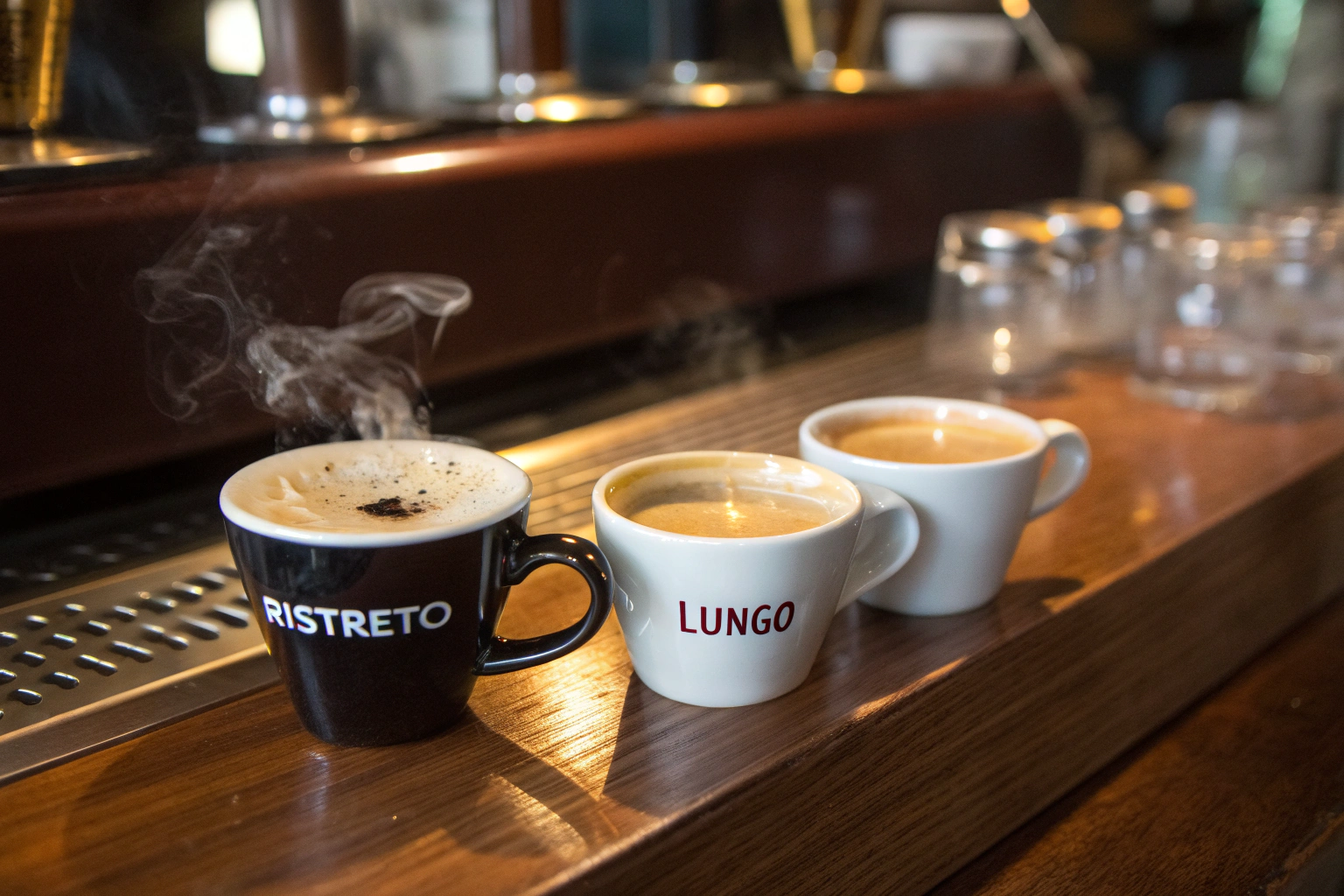
I remember the first time a customer asked me for a ristretto. I had no idea what he meant. I just pulled a normal shot. He took one sip and gave it back. He said, "This is too long." I felt embarrassed. Later, I learned the difference. A ristretto and a lungo are not the same. They use the same coffee and the same machine. But the water amount changes everything. Now, after training baristas across China and talking to buyers in Europe, I want to share what I have learned.
The difference between ristretto and lungo is the amount of water used to pull the shot. A ristretto uses half the normal water. It is shorter, stronger, and sweeter. A lungo uses double the normal water. It is longer, weaker, and more bitter. Both start with the same dose of coffee. But the extraction time and flavor profile are completely different.
Let me break this down for you. I will explain the numbers, the taste, and when to use each one. By the end, you will never confuse them again.
How Much Water Goes into a Ristretto vs. a Lungo?
The easiest way to tell them apart is the water volume. But you need a scale to get it right. Do not trust your eyes. Trust the numbers.
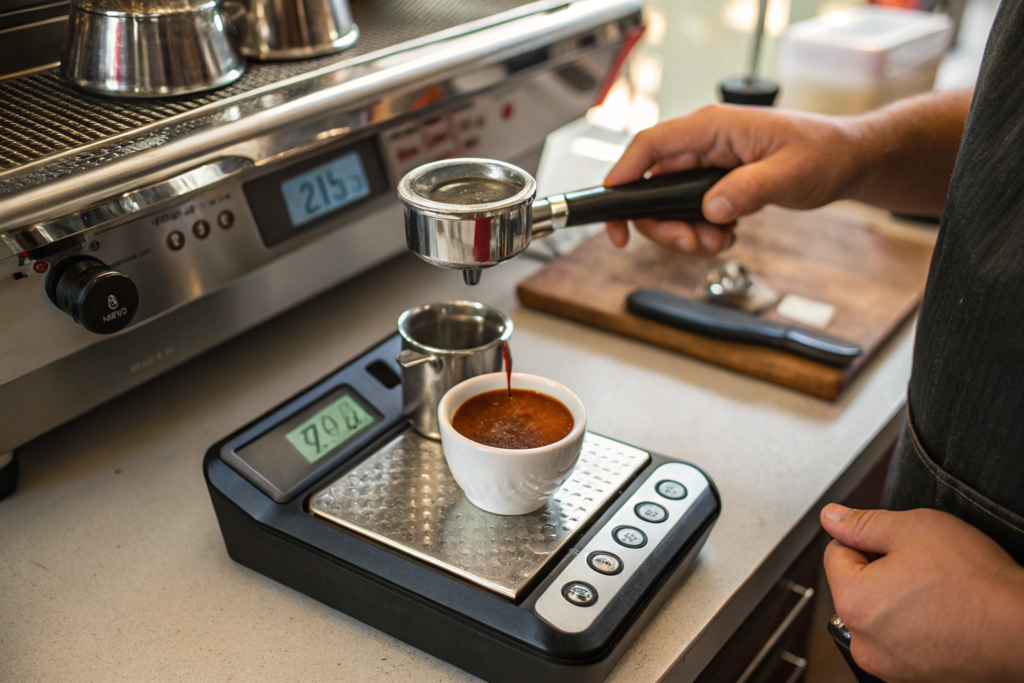
A standard espresso uses a 1:2 ratio of coffee to water. That means 18 grams of coffee gives you 36 grams of liquid. A ristretto uses a 1:1 to 1:1.5 ratio. That is 18 grams of coffee giving you 18 to 27 grams of liquid. A lungo uses a 1:3 to 1:4 ratio. That is 18 grams of coffee giving you 54 to 72 grams of liquid. Less water for ristretto. More water for lungo.
I learned this from a barista in Milan. He never used a scale. He watched the color. But for beginners, a scale is better. It gives you consistency.
What Is the Exact Recipe for Ristretto?
Start with the same dose as espresso. Let us say 18 grams of ground coffee. Pull the shot. Stop it when the liquid weight reaches 18 to 27 grams.
The time will be shorter too. A ristretto usually takes 15 to 20 seconds. A normal espresso takes 25 to 30 seconds. The flow looks different. Ristretto comes out slower. The stream is thin.
Why Does Water Amount Change the Taste?
Water is the solvent. It pulls out different compounds at different times. At the start of the shot, you get acids and sugars. That gives sour and sweet flavors. In the middle, you get body and balance. That gives the coffee its weight.
At the end, you get bitter compounds and tannins. That gives drying, astringent flavors. A ristretto stops early. You get mostly the sweet and sour notes. Very little bitterness. A lungo goes long. You get everything, including the bitter end. That is why it tastes harsher. Our Arabica beans from Yunnan work beautifully as ristretto. The natural sweetness shines.
How Does the Taste Differ Between Ristretto and Lungo?
Numbers are useful. But taste is what matters. So let me describe what you will actually smell and taste. I have pulled hundreds of shots of each. Here is what I notice.
Ristretto tastes sweeter, thicker, and more intense. It has a syrupy body. The acidity is bright but balanced. There is almost no bitterness. Lungo tastes thinner, more bitter, and more watery. It has less body. The acidity is lower. The finish is dry and sometimes ashy. If you like dark chocolate and dried fruit, try ristretto. If you like tea-like coffee, try lungo.
I served a ristretto to a buyer from Australia. He said, "This tastes like liquid chocolate." That is the power of stopping early.

What Does Ristretto Smell Like?
The aroma is concentrated. You get strong notes of caramel, dark berries, or flowers depending on the bean.
Because the shot is short, the oils are not broken down by too much heat. The smell stays rich. Our Catimor coffee as ristretto smells like dark cherry and brown sugar. It is very pleasant.
How Does Body Compare?
Body means the weight of the liquid in your mouth. Ristretto is heavy. It feels like whole milk or cream. The oils are concentrated.
Lungo is light. It feels like skim milk or tea. The extra water dilutes the oils. Think about this. A ristretto is like a reduction sauce. A lungo is like a weak broth. Same starting ingredients. Very different result.
When Should You Use Ristretto vs. Lungo?
Now that you know the difference, you need to know when to use each one. They are not interchangeable. Different drinks need different shots.
Use ristretto for milk-based drinks like lattes and flat whites. The concentrated flavor cuts through the milk. Use ristretto for dark roasts that would taste bitter as a normal shot. Use lungo for Americanos or long blacks. The extra water balances the strength. Use lungo for light roasts that need more extraction to taste sweet. Also, use lungo when you want a larger drink without adding hot water.
I have seen baristas make mistakes here. They pull a lungo for a cappuccino. The drink tastes weak. They pull a ristretto for an Americano. The drink tastes too strong. Match the shot to the drink.

Why Is Ristretto Better for Milk Drinks?
Milk adds volume and sweetness. It also hides some flavors. A normal espresso can get lost in a large latte. A ristretto is stronger. It stands up to the milk.
The lower bitterness of ristretto also helps. Bitterness and milk do not always mix well. Sweetness and milk are perfect together. Try this at home. Make a latte with a normal shot. Then make one with a ristretto. The ristretto latte will taste richer.
How Does Roast Level Change Your Choice?
Dark roasts are easier to over-extract. They already have less sugar and more bitter compounds. So use ristretto for dark roasts. Stop before the bitterness comes out.
Light roasts are harder to extract. They need more water to pull out the sugars. So use lungo for light roasts. Give the water time to do its job. Our medium roast Arabica works well for both. It is forgiving.
How Do You Dial In a Ristretto or Lungo?
Switching from a normal espresso to a ristretto or lungo is not just about changing the water. You also need to adjust your grinder. Let me show you how.
To dial in a ristretto, grind finer than your normal espresso. The finer grind creates more resistance. That slows the flow even with less water. To dial in a lungo, grind coarser than normal. The coarser grind lets water pass faster. That prevents over-extraction even with more water. Always keep the dose the same. Only change the grind and the water volume.
I learned this the hard way. I tried to make a ristretto with the same grind as my espresso. The shot choked. Nothing came out. Then I ground finer. It worked.

How Do You Train Your Staff?
Train them on one thing at a time. First, teach them to pull a consistent normal espresso. Same dose. Same time. Same weight.
Then teach them ristretto. Show them the shorter time and lower weight. Then teach them lungo. Show them the longer time and higher weight. Give them a dosing and extraction chart to keep near the grinder. We use these in our lab.
What Equipment Do You Need?
A scale is mandatory. You cannot measure ristretto or lungo by volume. The crema changes the volume. A timer is also helpful. Most espresso machines have one built in.
A good grinder is essential. You need precise adjustments. We work with Shanghai Fumao to supply commercial grinders to our wholesale buyers. The right tool makes training easier.
Conclusion
Ristretto and lungo are two sides of the same coin. Same coffee. Same machine. Different water amounts. Ristretto is short, strong, and sweet. Lungo is long, weak, and bitter. Ristretto works best for milk drinks and dark roasts. Lungo works best for Americanos and light roasts. The key is controlling your grind. Finer for ristretto. Coarser for lungo. Always use a scale. Always time your shots.
At BeanofCoffee, we grow premium Arabica, Robusta, and Catimor on our 10,000 acres in Yunnan. We export to North America, Europe, and Australia. We work with logistics partners like Shanghai Fumao to ship fresh green beans and roasted coffee worldwide.
If you want to learn more about espresso or need a reliable coffee supplier, reach out. Contact Cathy Cai. My email is cathy@beanofcoffee.com. Tell me about your coffee shop or roastery. I will send you samples. You can taste the difference between ristretto and lungo yourself.