You type "China coffee supplier" into Google. The results are a mess. Page one is all Alibaba links with flashy gold supplier badges and stock photos of coffee cherries that look suspiciously like they were taken in Colombia. Page two is a graveyard of broken websites and email addresses that bounce back. You click on a few profiles. The English is broken. The prices are suspiciously low. And you have no idea if you're about to wire money to a legitimate farm or a guy with a laptop in a Kunming apartment who's never touched a coffee tree. You need a reliable, wholesale source of Chinese Arabica. Not a gamble. So where do you actually start looking?
The most reliable wholesale coffee bean suppliers in China are found through a combination of verified B2B platforms like Alibaba's Verified Supplier program, targeted LinkedIn searches focusing on Yunnan-based export managers, and direct engagement with the Yunnan Coffee Exchange and provincial coffee associations. However, the highest level of security and value for large-volume buyers comes from identifying vertically integrated operations that own both the farmland and the export license. These are the suppliers who control the product from cherry to container, eliminating the quality and price inconsistencies of middleman trading companies.
Look, I've been on both sides of this search. I've been the buyer, sifting through the noise. And now, as the owner of Shanghai Fumao with 10,000 acres in Baoshan, I'm the one trying to be found by serious buyers like Ron. Let me give you the insider's roadmap. Not the generic advice. The real pathways that lead to actual coffee, actual contracts, and actual containers on the water.
How Do I Use Alibaba Safely to Find a Real Coffee Farm and Not a Trading Company?
Alibaba is the front door for most buyers. It's where Ron goes first. And it's a minefield. For every legitimate farm like ours, there are fifty trading companies pretending to be farms. They use the same keywords: "Factory Direct," "Manufacturer," "Own Plantation." How do you separate the wheat from the chaff?
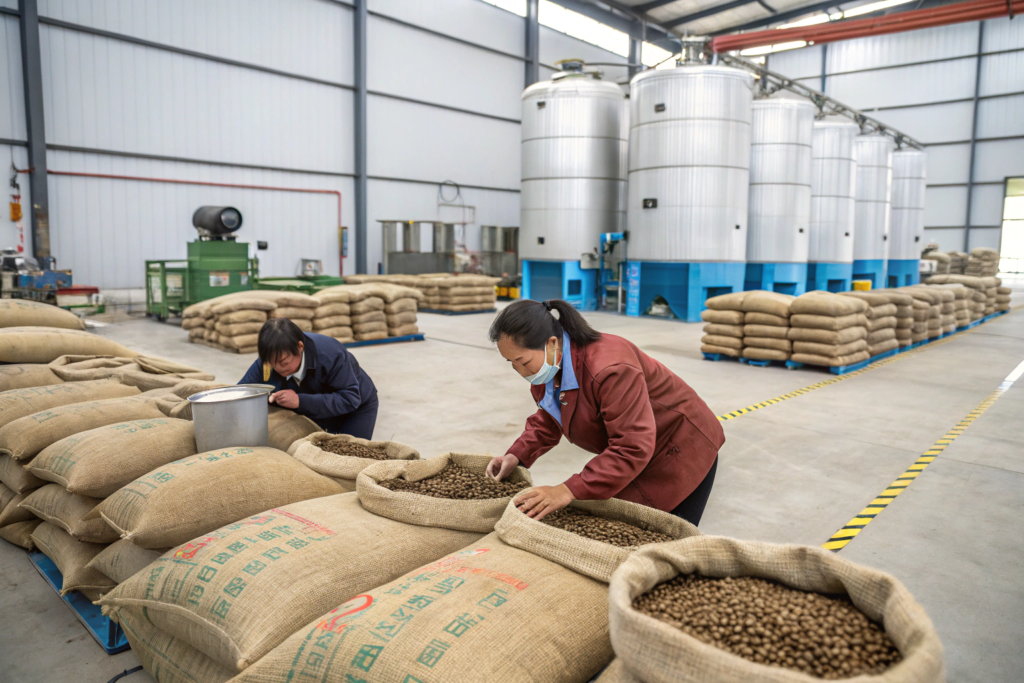
Using Alibaba safely requires bypassing the surface-level "Gold Supplier" badge and drilling into the "Company Profile" and "Business Type" verification. A genuine farm-owned exporter will have "Manufacturer" listed as their primary business type, and their profile will show the actual address of a processing facility in a coffee-growing region like Baoshan or Pu'er, not just a sales office in Kunming or Shanghai. The ultimate verification is requesting a live video call showing the supplier walking through their own dry mill and warehouse, not a rented facility.
What Does the "Verified Supplier" Badge Actually Mean in China?
It means Alibaba has checked that the company legally exists. That's it. It's not a quality guarantee. It's not a farm verification. A third-party inspection company visited a registered address and confirmed there's a business license on the wall.
This badge is better than nothing. It confirms you're not dealing with a completely fake entity. But it does not confirm that the company owns farmland. Many trading companies have a valid business license and a small warehouse. They pass the verification easily. They buy coffee from the same farms you're trying to find and mark it up. The key is to look beyond the badge. Look at the "Year Established." A farm that has been exporting for 10+ years has survived market cycles. A trading company that popped up 18 months ago during a price spike might disappear just as fast. You can read more about Alibaba's specific verification tiers and what they entail on the Alibaba Verification Services Page. The more you understand their system, the better you can spot the gaps.
How Can I Spot a Trading Company Disguised as a Plantation?
They slip up in the details. Look at their product list. Do they sell coffee, tea, dried mushrooms, and LED lights? That's a trading company. A real coffee farm exports coffee. Maybe tea as a side business in Yunnan, but not electronics.
Look at their photos. Are the images of the "farm" generic stock photos? Do the mountains in the background look like Hawaii or Costa Rica instead of Yunnan? Reverse image search them. Ask for a specific photo: "Can you send me a picture of your fermentation tanks with today's date written on a piece of paper?" A farm owner can do that in 10 minutes. A trader has to call the farm, ask for the photo, wait for the farmer to figure out how to write the date in English... it takes days, and the excuses start. Another tell: Ask for the GPS coordinates of the farm. A real farm knows its coordinates. We use them for EUDR compliance. A trader will stammer and say "proprietary information." At Shanghai Fumao, our Alibaba profile shows our Baoshan address. When a buyer asks for a live video tour, we walk outside with the phone. That's the difference.
What Role Does the Yunnan Coffee Exchange Play in Connecting Me With Growers?
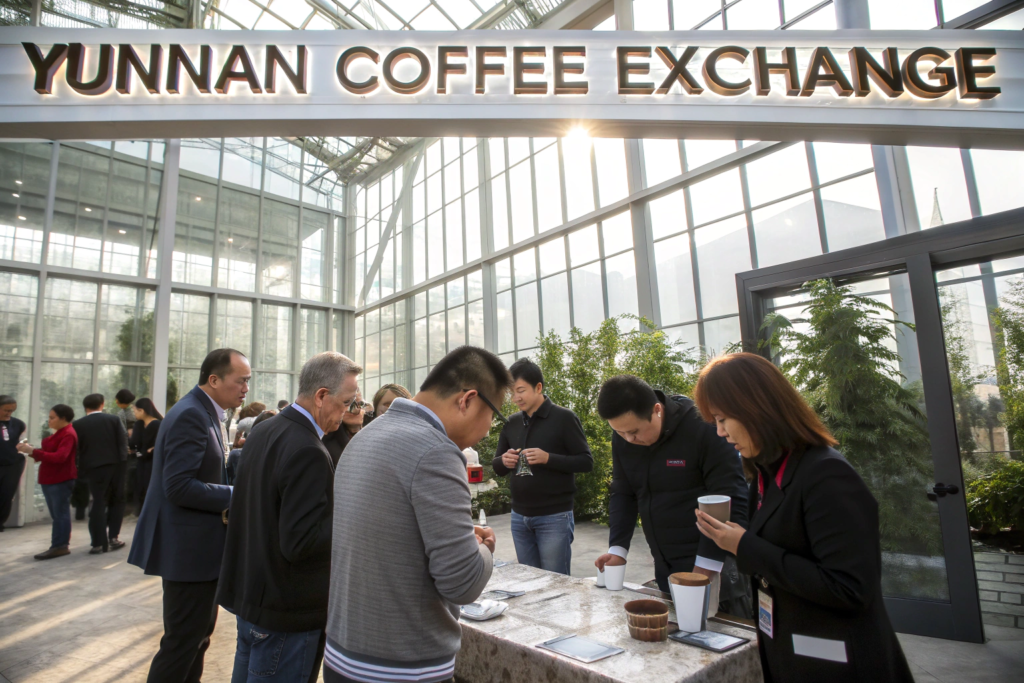
The Yunnan Coffee Exchange (YCE) is a physical and digital marketplace based in Pu'er. It's a government-backed initiative to modernize and professionalize the Yunnan coffee trade. For a buyer like Ron, it's an underutilized resource that can provide a layer of institutional trust.
The Yunnan Coffee Exchange serves as a centralized platform where registered growers, cooperatives, and exporters list their available lots with standardized quality assessments and starting prices. It operates a licensed warehouse system and provides financing and logistics services. For an international buyer, the YCE offers a curated, vetted directory of suppliers who have met certain operational and quality benchmarks. Engaging with the YCE directly or using their member directory is a way to bypass the anonymous chaos of open B2B platforms.
Can I Access the Yunnan Coffee Exchange's Supplier List Remotely?
The YCE has an online portal, though much of the detailed trading interface is designed for domestic Chinese buyers and registered members. However, their English-language presence has been growing.
The most effective remote strategy is to identify the YCE's international promotion partners. They often exhibit at global trade shows like the SCA Expo in the U.S. or World of Coffee in Europe. They publish lists of "YCE Certified Members" or "Recommended Exporters" in their promotional materials. These lists are gold. They represent companies that have been vetted by a quasi-governmental body for having real production capacity and meeting quality standards. You can find this information by visiting the official website of the Pu'er City Government or searching for Yunnan Coffee Exchange presentations on industry platforms like the Specialty Coffee Association. It requires a bit of digging, but the list you find will be far more reliable than a random Google search result.
Does Buying Through the Exchange Guarantee Better Quality or Just Better Paperwork?
It guarantees better paperwork and a standardized quality assessment. The YCE has its own cupping lab and grading standards. Coffee lots stored in YCE warehouses are sampled and graded by their in-house Q-graders.
This doesn't mean every lot is 85+ points. It means the description of the lot—screen size, defect count, moisture—is reliable. You're not relying solely on the seller's word. The YCE acts as a neutral third-party verifier. This is incredibly valuable for a first-time buyer. It reduces the risk of receiving a container that doesn't match the sample. The price discovery mechanism on the exchange also provides transparency. You can see the prevailing market price for different grades of Yunnan coffee, which prevents you from being wildly overcharged by a trader. You can learn more about how commodity exchanges function in stabilizing agricultural markets from resources like the International Trade Centre. The YCE brings a level of institutional structure to Yunnan coffee that simply didn't exist a decade ago.
Are LinkedIn and Facebook Viable Channels for Finding Legitimate Chinese Coffee Exporters?
LinkedIn and Facebook feel very "Western." You might assume Chinese suppliers aren't active there. You'd be wrong. The smart ones are. They know their buyers are on these platforms. For a buyer like Ron, who is a company owner and used to taking the lead, these platforms offer a direct line to the decision-maker.
LinkedIn is an effective channel for finding legitimate Chinese coffee exporters because it allows you to vet the individual professional behind the company. You can see their work history, their connections within the global coffee industry, and their activity. A serious export manager will have a complete profile, engage with industry content, and be a member of relevant coffee trade groups. Facebook, particularly industry-specific groups, serves as a more informal but useful channel for initial introductions and gauging a supplier's responsiveness and communication style.
How Can I Use LinkedIn to Bypass the Generic "Info@" Email Address?
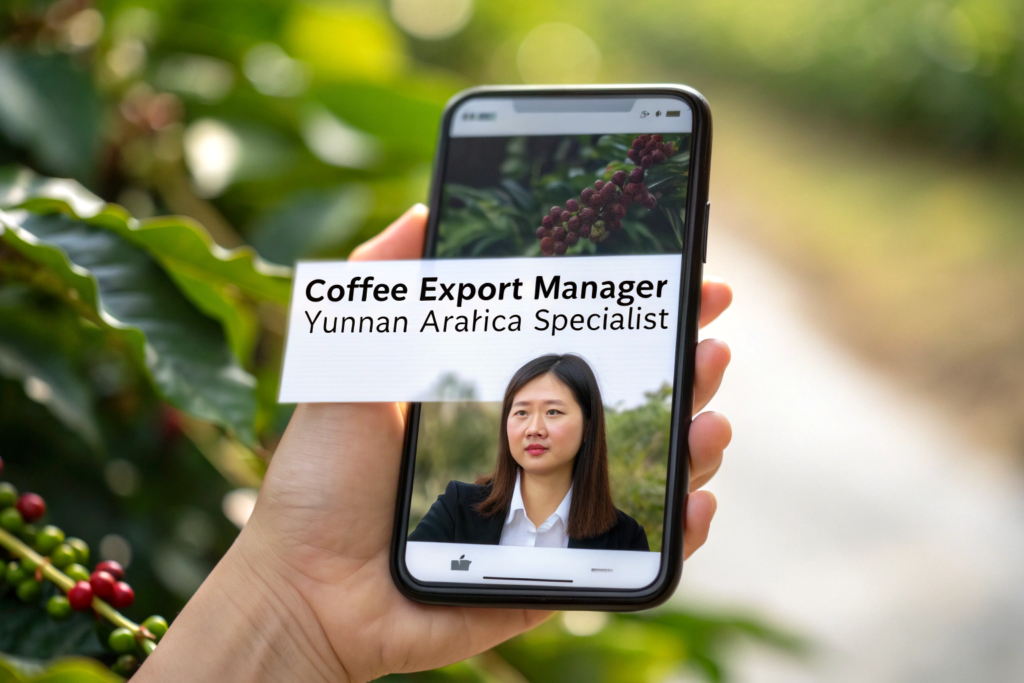
Stop emailing info@. It goes to a junior salesperson who copies and pastes a price list. On LinkedIn, you can find the person with the title "Export Director" or "Owner."
Search for terms like "Coffee Export Yunnan" or "Green Coffee China." Filter by people. Look at their profiles. Do they have a history in the coffee industry? Do they have recommendations from other industry professionals? Send a personalized connection request. Mention you're a roaster in the U.S. looking for direct farm relationships. A real farm owner will accept and engage. They're on LinkedIn precisely to find buyers like you. I'm on LinkedIn. Many of my initial conversations with international clients start there. It's a way to establish a human connection before the sample request. You can also see if they are connected to people you know in the industry. A mutual connection is a powerful trust signal. You can find more professional networking strategies for the coffee industry by following the National Coffee Association on LinkedIn, where industry discussions often happen.
What Are the Best Facebook Groups for Vetting Chinese Coffee Sources?
Facebook Groups are the modern coffee trade's water cooler. There are several large, active groups where green buyers and sellers connect. "Green Coffee Buyers and Sellers" is a major one. "Coffee Roasters" is another.
In these groups, you can post an "In Search Of" (ISO) for Yunnan coffee. You'll get responses. Some will be from legitimate exporters like us. Some will be from brokers. The value of these groups is the community vetting. You can search the group's history for a supplier's name. You can ask the group, "Has anyone worked with Supplier Name in Baoshan?" The responses you get—both public and in private messages—will tell you a lot. A supplier with a good reputation will have buyers who vouch for them. A supplier with a history of late shipments or quality issues will be known. This informal, peer-to-peer due diligence is incredibly powerful. At Shanghai Fumao, we don't advertise heavily in these groups, but we monitor them and respond to ISO posts when we see a good fit. It's a way to find buyers who are actively looking, not just browsing.
What Documents and Certifications Should I Request Before Signing a Wholesale Contract?
You've found a promising supplier. The samples were good. The communication was solid. Now comes the moment of commitment. Before you sign a contract and wire a deposit, there's a specific stack of paperwork you need to see. This is your insurance policy.
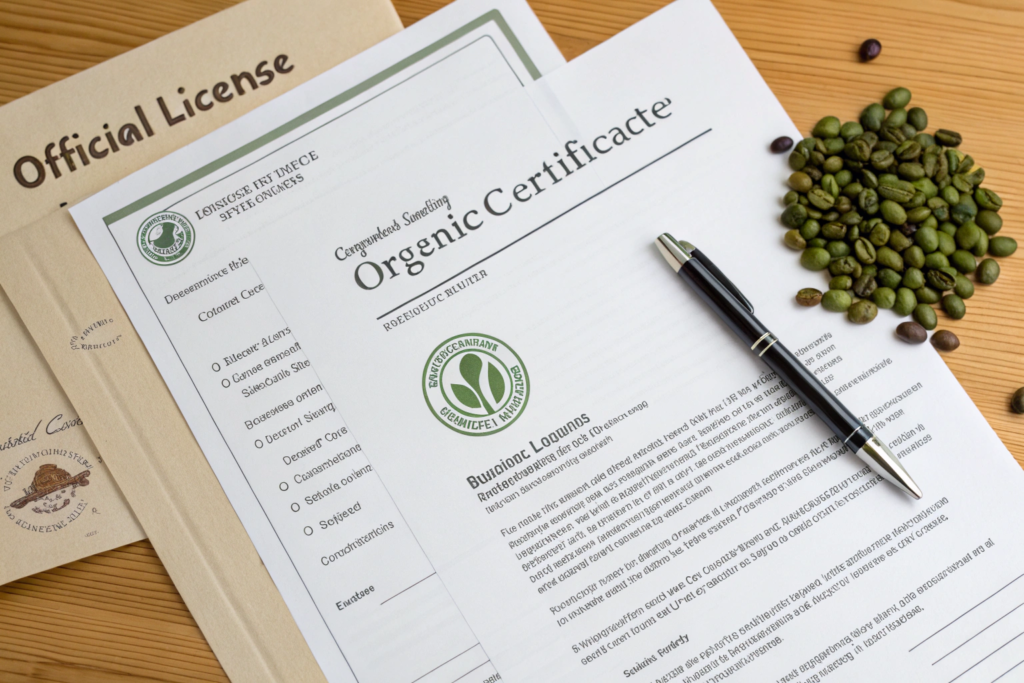
Before signing a wholesale contract with a Chinese coffee supplier, you must request and verify three core documents: the company's unified Business License with English translation, a recent third-party pesticide residue analysis report (GC-MS/MS), and proof of export history such as a redacted Bill of Lading. If organic or other certifications are claimed, request the actual certificate from an accredited certifier like Ecocert or CERES. A legitimate supplier will provide these documents promptly. Evasion or delay is a red flag.
What Information on the Chinese Business License Matters for a U.S. Buyer?
The Chinese Business License is the company's legal identity card. You want to see a clear scan or photo. The most important field is the "Legal Representative". This is the person ultimately responsible for the company.
The second most important field is "Registered Capital". A company with a registered capital of a few thousand dollars is likely a small trading desk. A company with millions in registered capital, like a farm and processing operation, has more skin in the game. The third key field is "Business Scope". It should explicitly mention "Coffee planting", "Processing", and "Import and Export". If it only says "Wholesale of agricultural products," they are a trader. You can verify the existence and basic details of a Chinese company through public databases, though navigating them in English is challenging. A reliable supplier will provide a translated copy of the license and explain these key fields to you. It's part of the transparency process. You can learn more about Chinese business structures from the U.S. Commercial Service which offers guides on due diligence in China.
Why Is a Recent Pesticide Screen More Important Than a "Food Safety Certificate"?
A generic "Food Safety Certificate" issued by a local authority is a baseline hygiene check. It confirms the facility is clean and has basic procedures. It does not confirm the absence of specific chemical residues that matter to your market.
The document that provides real security is a multi-residue pesticide screen performed by an ISO 17025 accredited laboratory. This report should be dated within the last 12 months for the specific product (green coffee). It should test for at least 400 compounds and show "Not Detected" or results below 0.01 mg/kg for the vast majority. This is the data that protects you if a customer ever questions the safety of your Chinese coffee. At Shanghai Fumao, we run these screens on every export lot. We share the full report, not just a summary. It's the most concrete piece of evidence we can provide regarding the "safety and reliability" of our product. You can find a list of accredited labs globally on the ISO Website. Insist on a report from an accredited lab.
Conclusion
Finding a reliable wholesale coffee supplier in China is not about luck. It's about knowing where to look and, more importantly, knowing what questions to ask. Alibaba is the starting point, but only with deep verification. The Yunnan Coffee Exchange offers an institutional layer of trust. LinkedIn provides a direct line to the people behind the company. And the right paperwork—the business license, the lab reports, the redacted Bill of Lading—provides the hard evidence.
The good news is that the legitimate, vertically integrated farms like ours want to be found. We're investing in traceability, quality, and professional communication because we know that's what buyers like Ron demand. We're not hiding behind a generic email address. We're on the platforms, we're answering the video calls, and we're sharing the documents.
If you want to shortcut this process and connect directly with a farm that owns 10,000 acres, a dry mill, and an export license, I invite you to reach out. No middlemen. No mystery. Just a direct conversation about your coffee needs. My email is cathy@beanofcoffee.com.