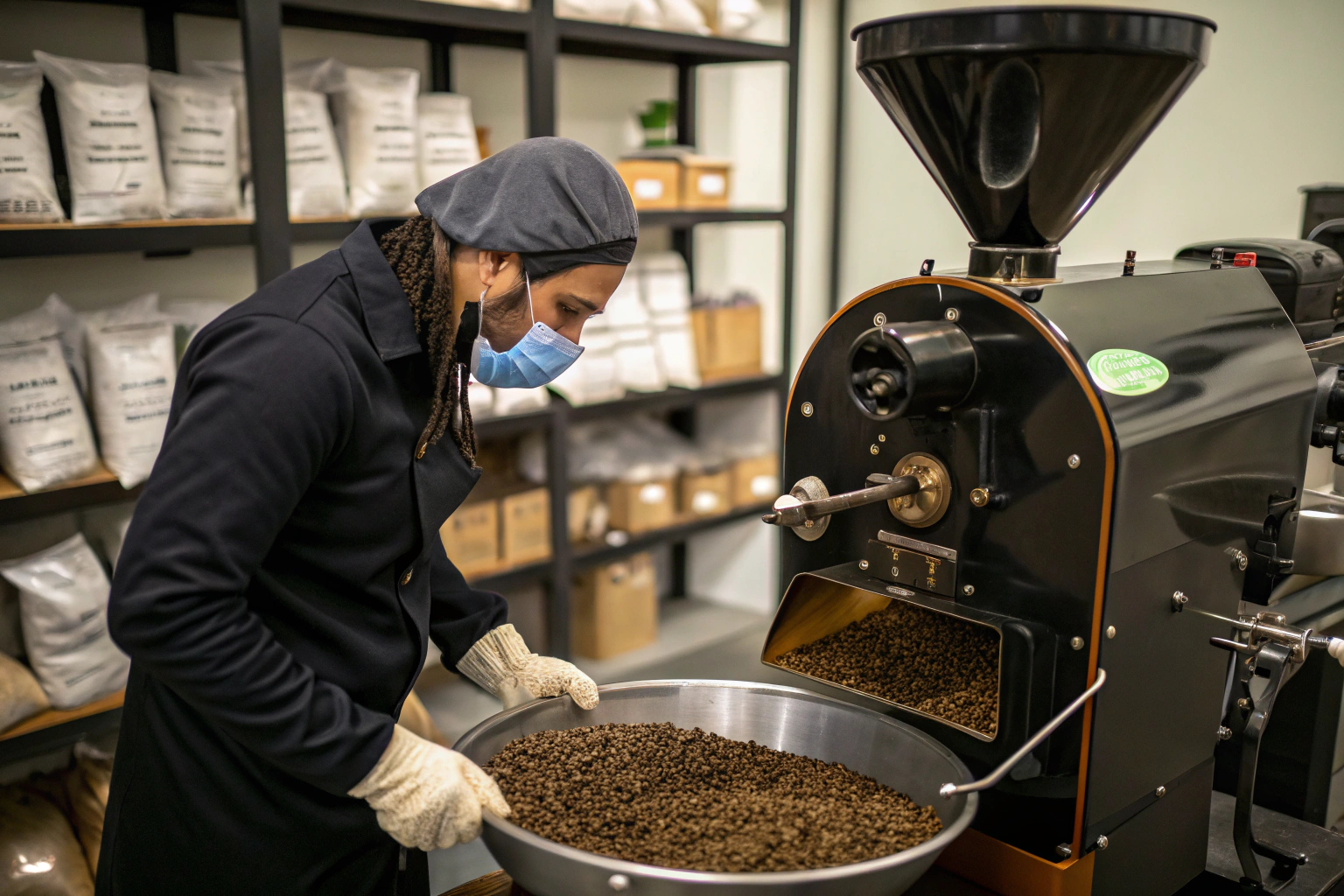
You see the word "Specialty Grade" slapped on every bag, every offer sheet, every broker email. It's become wallpaper. A buzzword. Your green supplier says their 82-point Catimor is "specialty." The guy on Alibaba selling $1.80/lb past-crop Brazil says his is "specialty" too. And you're standing in your roastery, looking at a cupping score that says 80.5, wondering: Does that half-point actually change anything about how I run my business? Or is this just a marketing tax I'm paying for a word?
Specialty Grade coffee is a specific, quantifiable classification defined by the Specialty Coffee Association (SCA) requiring a green coffee sample to have zero Primary Defects and five or fewer Secondary Defects in a 350-gram sample, and to score 80 points or above on a standardized cupping form. For a roaster, this matters because it is the single most reliable predictor of cup consistency, roast uniformity, and the absence of off-flavors that can ruin a batch and damage a brand's reputation. It is not a marketing term; it is a quality control specification with measurable, enforceable parameters.
I'm going to be direct with you. I've cupped thousands of lots in Baoshan. Some from our own farm at Shanghai Fumao. Some from neighbors. Some from samples sent to me by hopeful traders. And I can tell you with absolute certainty: The difference between an 82-point lot and a 79-point lot is not subtle. It's the difference between a coffee that tastes like chocolate and nuts, and a coffee that tastes like burlap and dirt. Let me break down exactly what this grade means for your roastery floor, not just for your marketing copy.
How Does the SCA Green Grading Protocol Actually Define "Specialty"?
This is where the rubber meets the road. "Specialty" is not a vibe. It's a math problem. The SCA Green Arabica Coffee Classification is a two-part test. Part one is visual: the defect count. Part two is sensory: the cupping score. You must pass both to legally and ethically call the coffee "Specialty Grade."
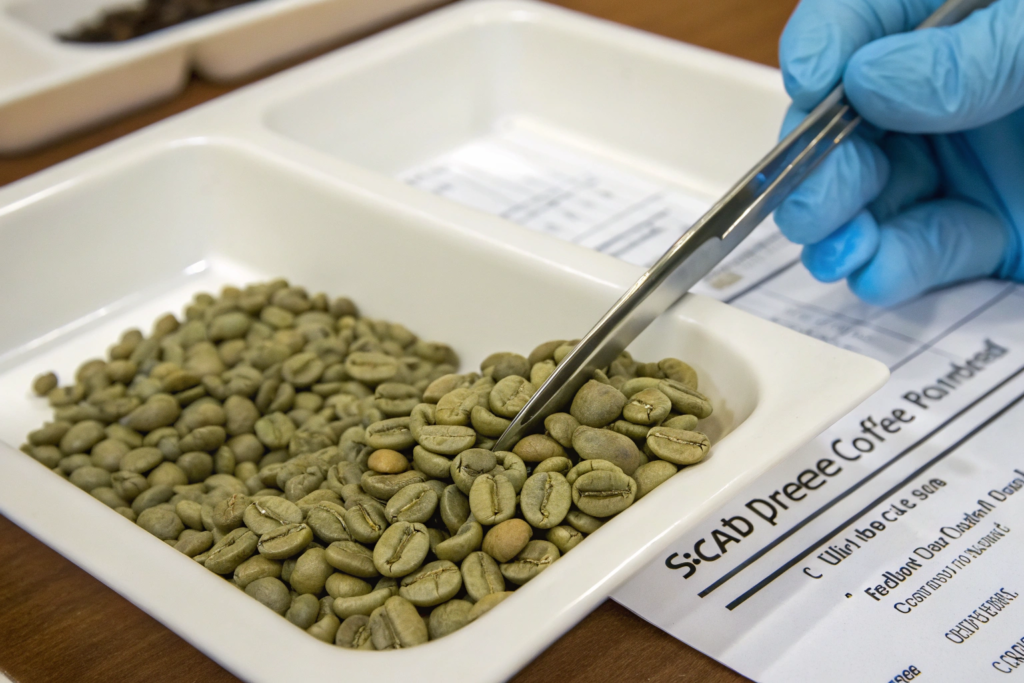
The SCA protocol defines Specialty Grade through a rigorous physical inspection of a 350-gram green sample. A Primary Defect—such as a Full Black, Full Sour, or large stone—is an automatic disqualification if even one is found. Secondary Defects—such as Partial Black, Broken, or Insect Damaged—are counted and weighted; more than five total Secondary Defect equivalents also results in disqualification, regardless of how good the coffee tastes. This physical grading ensures that the coffee is clean and mechanically sound before it ever touches a roaster's drum.
What Exactly Is a "Primary Defect" and Why Is One Bean a Dealbreaker?
A Primary Defect is a bean (or foreign object) that carries a high risk of producing a severe off-flavor—ferment, mold, phenol, or worse, physical damage to your grinder. One single Full Black bean in 350 grams is a disqualification. Full stop.
What does a Full Black look like? It's shriveled, opaque, and black as charcoal. It's the result of a cherry that fell on the ground, got infected with fungus, and was accidentally swept up and processed. When you roast that bean, it doesn't smell like coffee. It smells like an ashtray. And it taints the entire batch. One bean in 350 grams might not seem like much. But scale that up. In a 60kg bag of green coffee, that's roughly 170 of those rotten beans. In a full container, it's thousands. The impact on cup cleanliness is massive. The SCA sets the tolerance at zero because the damage is disproportionate. You can study the exact visual characteristics of each defect in the SCA Green Coffee Defect Handbook. It's essential reading for any green buyer. It's the rulebook we use on the sorting floor at our Baoshan dry mill every single day.
What Are the Most Common Secondary Defects That Push a Lot Below 80 Points?
Even if a lot has zero Primary Defects, it can still fail on Secondary Defects. The most common culprits are Partial Black, Partial Sour, and Broken/Chipped beans. You're allowed five Secondary Defect equivalents in 350 grams.
A Partial Black is a bean that is less than 50% black. Two Partial Blacks equal one Full Black equivalent. A Partial Sour is a bean with a yellowish-brown, fermented appearance. It smells like vinegar. Three Partial Sours equal one Full Black equivalent. Broken beans are less severe—five broken beans equal one Secondary Defect. At Shanghai Fumao, our optical sorter is programmed to identify and eject every single one of these defect categories based on RGB color values and shape recognition. A gravity table alone cannot do this. This is why true Specialty Grade coffee commands a premium. The labor, the technology, and the sheer volume of rejected beans required to achieve a clean 350-gram sample is significant. You can learn more about the statistical probability of defects in coffee lots from research published by World Coffee Research. The cleaner the sample, the more rigorous the sorting process.
Why Does an 80+ Cupping Score Translate to a Better Roast Curve?
Okay, the green sample is clean. No defects. Now comes the sensory part: the cupping score. The SCA cupping form evaluates ten attributes: Fragrance/Aroma, Flavor, Aftertaste, Acidity, Body, Balance, Uniformity, Clean Cup, Sweetness, and Overall. You need an average score of 80 or higher.
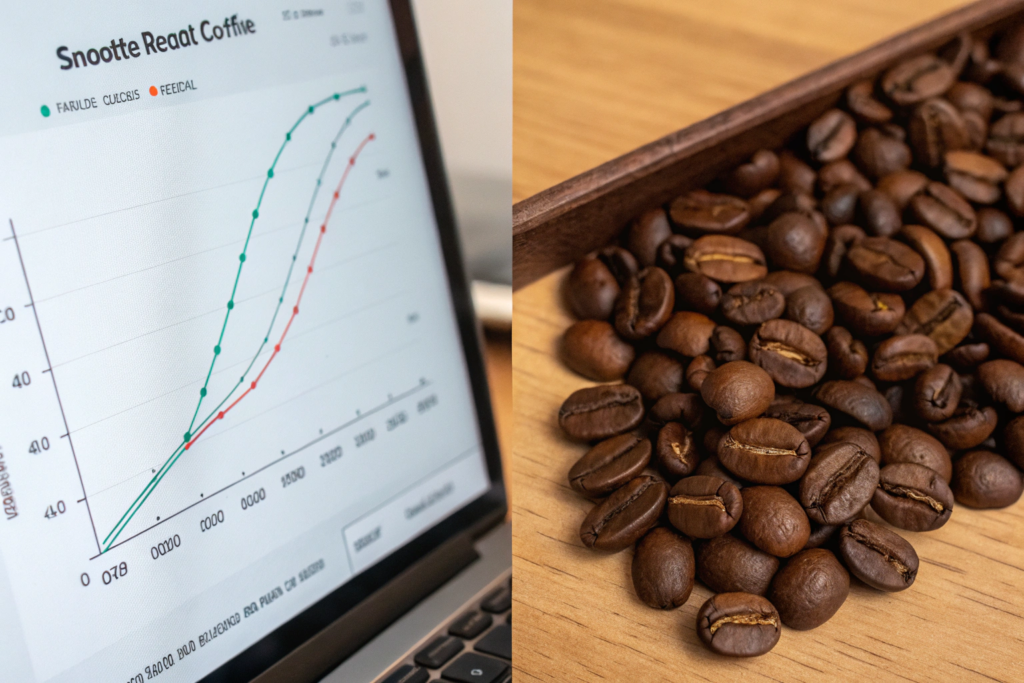
An 80+ cupping score translates to a better roast curve because the underlying green coffee has the density, moisture content, and cellular integrity to withstand and respond predictably to thermal energy. Coffees that score below 80 often exhibit "fading" acidity, hollow body, or baggy, woody notes—all indicators of lower density, inconsistent moisture, or past-crop age. These physical deficiencies cause the bean to react erratically in the roaster, leading to uneven development, scorching at high charge temperatures, or "baked" flavors from stalled momentum.
How Does Bean Density Relate to That "Clean Cup" Score on the Form?
The "Clean Cup" and "Sweetness" boxes on the SCA form are directly tied to bean density and processing quality. A clean, sweet cup comes from a bean that fermented correctly and dried evenly.
Dense beans, typically grown at higher elevations like our 1,400-meter plots in Baoshan, have tightly packed cell structures. This density gives them thermal momentum. They can absorb a higher charge temperature without scorching. They carry heat through the drying phase and into first crack with stability. A lower-density, lower-scoring bean is like a piece of popcorn. It heats fast, pops early, and burns easily. If you try to roast an 84-point high-density Catimor and a 78-point low-density Catimor on the same profile, the low-density bean will be under-roasted and grassy on the inside while the outside is dark. It's a roaster's nightmare. You end up "roasting to the middle"—compromising the profile to avoid burning the weak beans while trying to develop the dense ones. That compromise shows up in the cup as muted acidity and a flat finish. You can explore the relationship between growing altitude, bean density, and roasting performance in technical papers available through the Roasters Guild. The science is clear: density drives consistency.
Why Does a "Balanced" Score Matter More Than a High "Flavor" Score?
A coffee can have a big, punchy flavor—intense blueberry, say—and still score an 80. But if it lacks balance, if that one note dominates and the acidity is harsh or the body is thin, it's a one-trick pony.
For a commercial roaster, balance is more valuable than a single exotic note. A balanced coffee is versatile. It plays well in blends. It works as a single-origin espresso or a drip coffee. It doesn't fatigue the palate. The "Balance" score on the SCA form asks: "How well do the Flavor, Aftertaste, Acidity, and Body work together?" A coffee that scores high in Balance is a coffee that is forgiving to roast. If you pull the roast 15 seconds early or 10 seconds late, it still tastes good. It has a wide "sweet spot." A coffee that is all acidity and no body has a razor-thin sweet spot. Miss it by a few degrees, and it's sour lemon juice. For a roaster managing multiple accounts, that reliability is gold. At Shanghai Fumao, we target that balanced, chocolatey, nutty profile with a clean finish because we know it's what commercial roasters need for their core blends. It's not the flashiest coffee on the cupping table, but it's the one that pays the bills.
What Is the Difference Between "Premium" and Actual Specialty Grade Coffee?
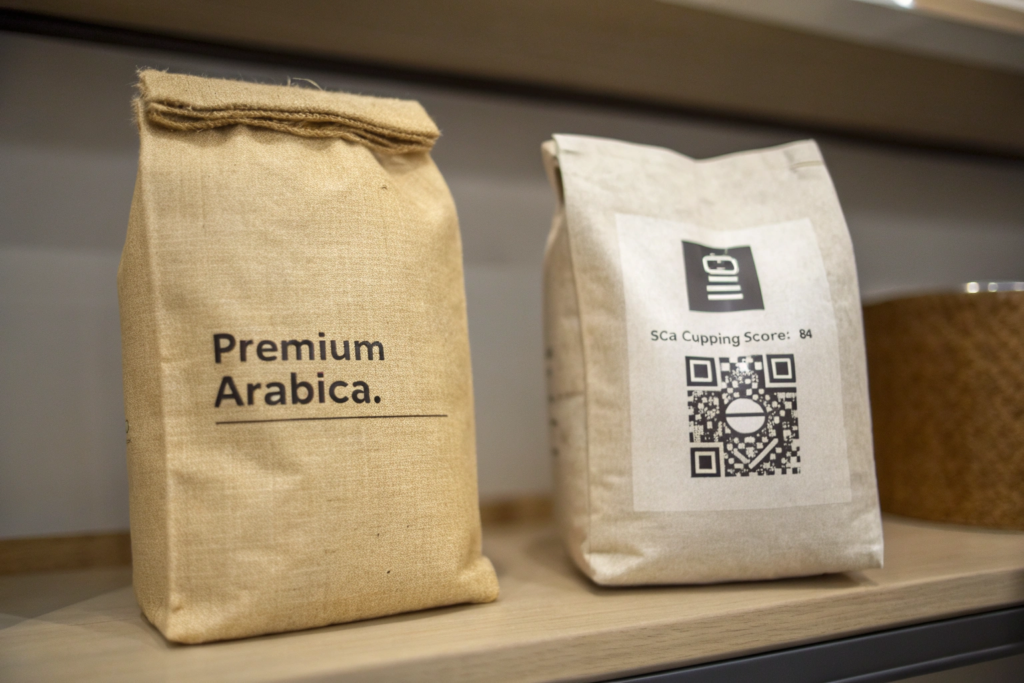
This is where the marketing smoke gets thick. "Premium." "Gourmet." "Estate Grown." "AA Grade." These are all words. They have no legal definition in the coffee trade. A trader can call anything "Premium" and not get sued. They cannot call it "Specialty Grade" if it fails the SCA protocol without risking their reputation—or worse, a contract dispute.
The difference between "Premium" and actual Specialty Grade is the difference between a subjective marketing claim and an objective, third-party verifiable standard. "Premium" suggests a higher level of quality but guarantees nothing. "Specialty Grade" implies that the lot has been evaluated against the specific, published SCA standards for defect count and cup score. A roaster buying "Specialty Grade" has a contractual and quality benchmark to hold the supplier accountable to. Buying "Premium" means you're taking the supplier's word for it.
If a Supplier Calls It "Specialty," What Proof Should I Demand?
The proof is the cupping score sheet and the green grading analysis. Not just a number in an email. The actual, filled-out SCA form with the cupper's name, the date, and the scores for all ten attributes.
A legitimate supplier will have this. We cup every export lot at least three times before shipment. We have the forms on file. If a supplier says the coffee is "Specialty Grade" but cannot produce a recent score sheet from a Q-Grader, they are guessing. Or worse, they are lying. Even better, request the score sheet from a third-party lab, not just the supplier's in-house cupper. There are SCA-certified labs around the world that provide this service. It adds a layer of independence. You can find a directory of certified Q-Graders and labs on the Coffee Quality Institute (CQI) Website. This is the network of professionals trained to apply the SCA standards consistently. A score from a CQI Q-Grader carries weight.
Can a Coffee Be Excellent but Not Technically "Specialty Grade"?
Yes. And this is where the nuance lives. A coffee might have a beautiful, complex flavor profile—say, a natural process with intense fruit notes—but fail the green grading because of too many broken beans or insect damage.
The SCA system is designed to be a minimum quality standard for the cleanest coffees. It doesn't always capture the full potential of a rustic, wild coffee. There are "Micro-Lot" coffees that score 86 points but have a few too many insect bites to technically be called Specialty Grade under the strict letter of the protocol. A skilled roaster might buy that coffee anyway because the flavor is worth it. But they know what they're getting into. They're accepting the risk of a few off-flavors in exchange for a unique sensory experience. For a large commercial roaster buying containers for a core blend, that risk is unacceptable. They need the consistency and cleanliness guaranteed by the Specialty Grade specification. They need to know that every bag, every pallet, every container will perform exactly the same way. That's what the protocol provides.
How Can I Use Specialty Grade Certification to Market My Roasted Coffee More Effectively?
You've done the work. You've sourced a true Specialty Grade coffee. You've paid the premium. Now, how do you make sure your customer knows why your coffee is worth the extra dollar on the shelf? You don't just put "Specialty Grade" on the bag and hope for the best. You tell the story.
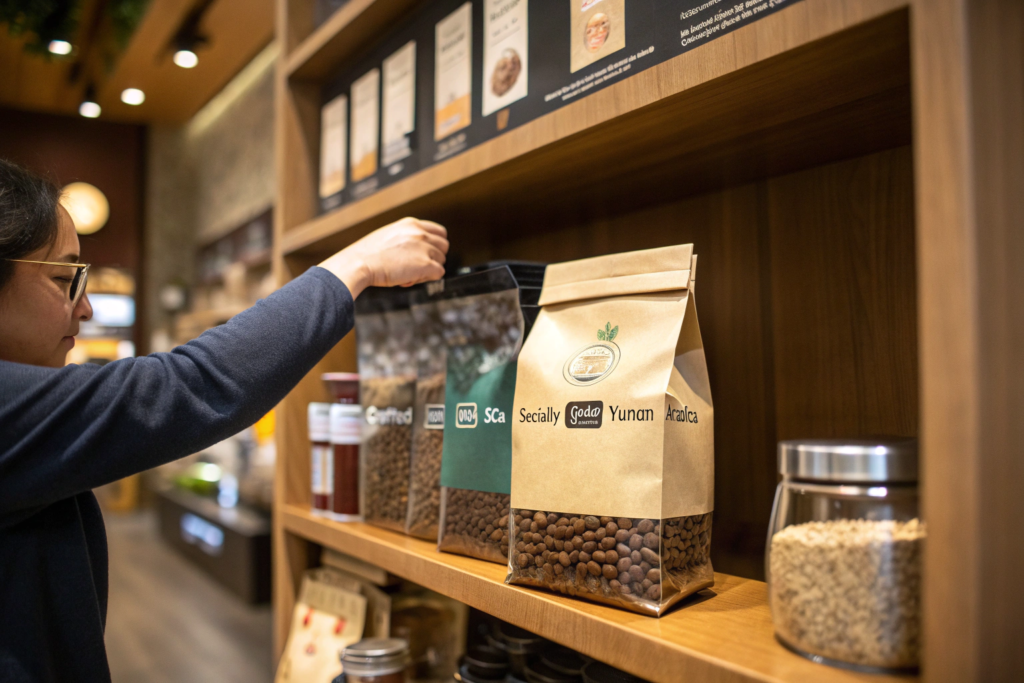
Specialty Grade certification is a powerful marketing tool when translated into consumer-friendly language. Instead of just using the term "Specialty Grade," roasters should communicate the tangible benefits: "Zero Defects Guarantee" and "Q-Grader Certified 84-Point Score." These phrases translate the technical standard into promises of a cleaner, sweeter, more consistent cup. Furthermore, linking the certification to the specific origin—such as "Single Estate Yunnan Specialty Grade"—differentiates the coffee from generic "Specialty" blends and builds a narrative of transparency and quality sourcing.
What Consumer-Friendly Language Replaces "Zero Primary Defects"?
Don't say "Zero Primary Defects." That sounds like a tire warranty. Say "Hand-Sorted for Purity." Say "No Rotten Beans. Ever." Say "The Cleanest Cup You'll Brew Today."
The consumer wants to know that the coffee is clean. They've had a bad cup of coffee. It tasted like dirt or ashtray. They don't know it was a Full Black defect. They just know they didn't like it. Your marketing should address that subconscious fear. "Our green coffee is sorted by optical lasers to remove any bean that doesn't meet our color and density standards. You taste only the sweet, clean flavor of high-altitude Yunnan Arabica." That's the translation. It takes the technical rigor of the SCA protocol and makes it a promise the consumer can taste. At Shanghai Fumao, we provide our roaster partners with this technical data, but we also help them craft the consumer-facing story. We provide photos of the optical sorter. We provide the GPS coordinates of the farm. These are marketing assets built on the foundation of the Specialty Grade standard.
How Do I Explain an "84-Point Score" to a Customer Who Isn't a Q-Grader?
Most consumers have no idea what a cupping score is. They see "84" and think it's a B-minus. You need to provide context.
A simple way to explain it is: "This coffee was blind-tasted by a licensed professional coffee taster and scored in the top 5% of all coffees produced worldwide." That's accurate and impactful. You can also use a simple rating scale on your bag: "Exceptional" for 85+, "Outstanding" for 82-84. This gives the consumer a frame of reference. Another approach is to link the score to a specific flavor experience. "Our 84-point Yunnan Arabica delivers consistent notes of dark chocolate and toasted almond—a profile verified by independent sensory analysis." This assures the customer that the flavor description on the bag is not just marketing fluff. It's a documented, professional assessment. You can find more resources on consumer coffee education from organizations like the National Coffee Association USA. The more you educate your customer, the more they appreciate the value of the Specialty Grade in their cup.
Conclusion
Specialty Grade coffee is not a luxury. For a serious roaster, it's a tool. It's a quality control specification that reduces the variables in your production process. It ensures that the green coffee you're loading into your hopper is clean, dense, and free of the defects that cause roast defects and off-flavors. It's an insurance policy against the "Mystery Container" that tastes nothing like the sample.
And when you translate that technical specification into a consumer promise—a promise of a cleaner, sweeter, more consistent cup—it becomes a brand asset. It justifies a premium price. It builds trust and loyalty.
If you're looking for a partner who treats "Specialty Grade" as a measurable, verifiable standard, not a marketing slogan, I invite you to review our cupping data and green grading reports. We put the numbers behind the words. My email is cathy@beanofcoffee.com.